
Optimizing Loom Settings for High Modulus Flax Yarn Width Contraction
Optimizing temple grip and early shed timing minimizes flax yarn width contraction, securing finished width tolerances and reducing raw material cost per meter.
Optimizing temple grip and early shed timing minimizes flax yarn width contraction, securing finished width tolerances and reducing raw material cost per meter.

Calculating reed width requires multiplying target greige width by weft crimp and finish shrinkage allowances tailored to flax yarn modulus.

Verifying dual-country greige fabric weaving claims relies on matching loom telemetry and sizing mass balance against customs entry documents.

Multi cycle linen contraction is resolved by increasing reed width and lowering loom pick density to allow structural crimp equilibrium before compaction.

Scouring raw flax reduces mass by 9-12% while yarn crimp increases fabric density, requiring exact reed width allowances to reach finished weight target.

Anisotropic hydration swelling and crimp interchange drive linen contraction, requiring accurate warp allowances to guarantee finished dimensions and cost.
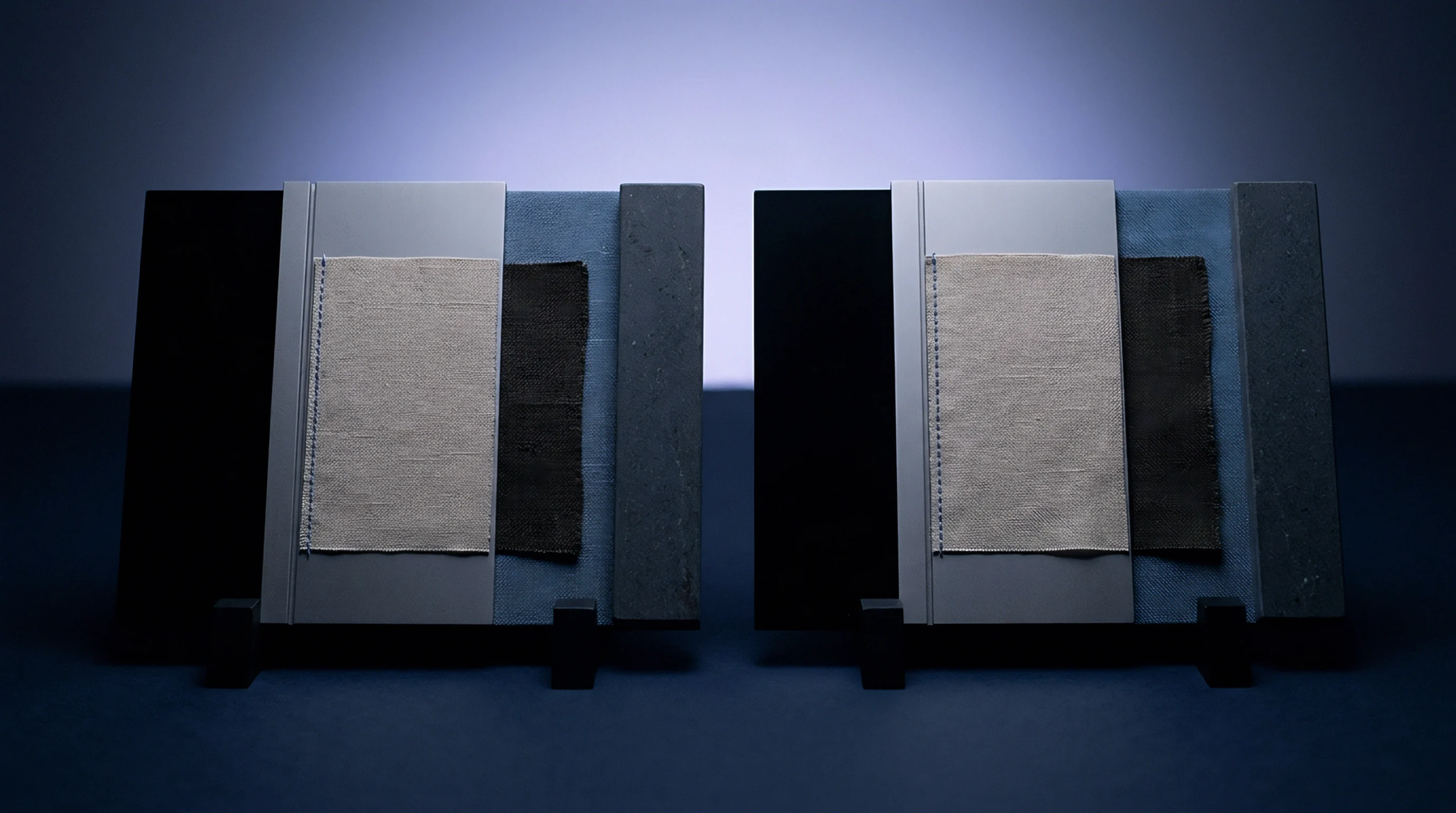
Determine woven linen weight and thread density by converting yarn Lea to Tex, applying cover factor equations, and accounting for finishing shrinkage.

Exact yarn mass calculation for plain weave greige linen requires converting Lea to Tex, factoring warp crimp, reed width, and 12% standard moisture regain.

Converting hand-loom swatches to rapier loom specs requires rebalancing warp crimp, sizing single yarns, and setting weft brakes to hold cover factor at speed.

Calibrating warp end density within cover factor limits and aligning loom shed geometry prevents thread chafing, maintains loom efficiency, and controls metre cost.

Deriving finished linen mass metrics requires transforming greige thread density using dimensional shrinkage and chemical scouring mass loss coefficients.

Jacquard harness setup dictates woven repeat limits by mathematically mapping electronic hook capacity and comber board pitch against reed density and yarn crimp.
Expertise is a utility, not a secret. sentiention™ publishes its working knowledge as open reference: intelligence layer covering the materials it sources, the markets it enters, and the reference that serves both.