Linen Greige Weight Calculation and Wet Processing Shrinkage Allowances
Linen finished GSM equals unsized greige GSM multiplied by mass retention yield and divided by combined longitudinal and transverse area contraction factors.
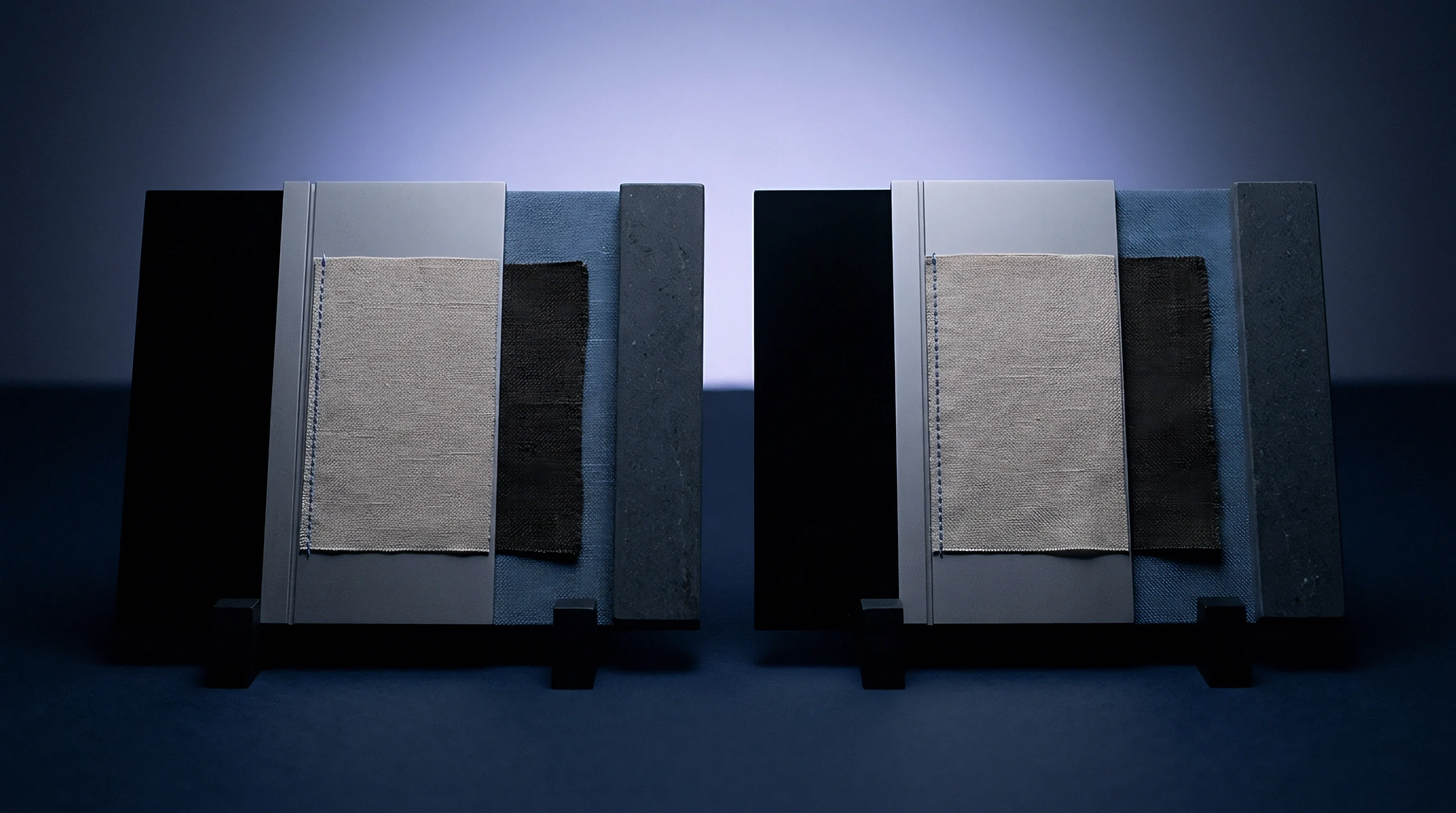

Draft
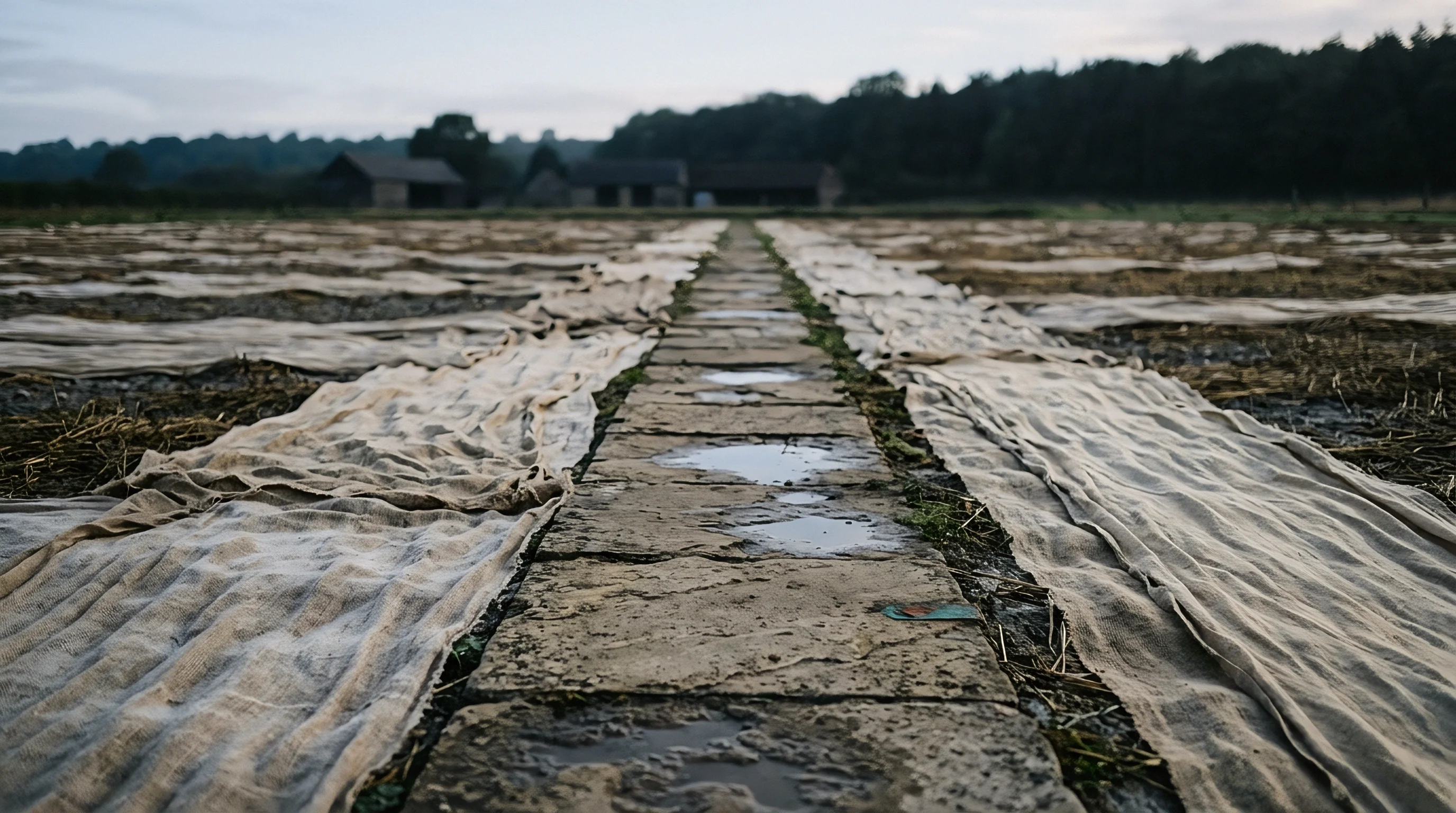
Greige Mass Construction and Yarn Count Geometry
Calculating greige cloth weight per square metre depends on the traditional yarn count system for flax. Linen relies on the Lea system, defined as the number of 300-yard hanks per pound. Converting Lea to metric yarn count (Nm) uses a constant factor of 1.693, making a 14 Lea yarn equivalent to Nm 23.7.
To find accurate greige mass, linear thread density must be adjusted for the structural take-up that occurs during shedding and beating. Warp and weft crimp turn straight yarn into wavy interlacements; ignoring weave crimp causes weight estimates for plain weaves to understate yarn consumption by six to twelve percent.
Thread density is measured as ends and picks per centimetre directly on the loom under tension, then adjusted for off-loom relaxation. Warp sizing adds non-fibrous mass that temporarily inflates these greige figures. In fact, wet-spun linen yarns contain two to four percent natural wax and pectin in addition to sizing agents like potato starch or polyvinyl alcohol.
Determining true dry, unsized yarn weight means subtracting this size add-on from the measured mass of the greige roll.
A plain weave construction loses three percent warp length upon relaxation immediately after beam tension releases at the loom take-up roller.
Calculating unsized greige mass requires applying thread density, metric yarn count, and crimp factors to both fabric directions. To calculate unsized warp mass per square metre, multiply warp ends per centimetre by one hundred, divide by the warp metric yarn count, and multiply by one plus the warp crimp percentage divided by one hundred. The same approach yields weft mass using pick density and weft yarn count.
Combining unsized warp and weft masses gives the baseline dry weight before chemical finishing.
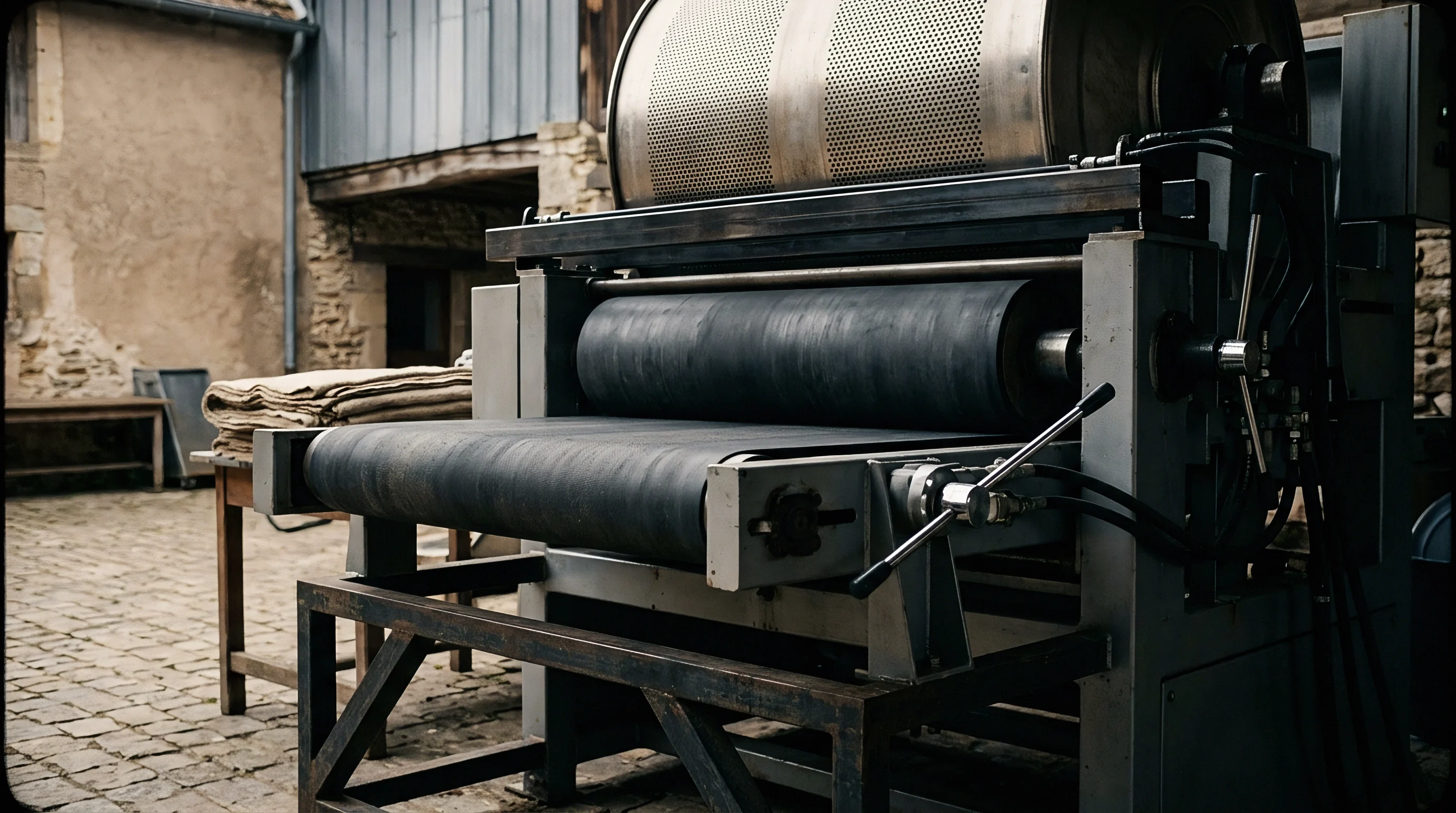
Structural Calculation Model for Unsized Greige Linen
Accurate loom calculations prevent yarn shortages and improper reed selection. Thread densities inevitably change between reed and cloth roller as warp tension relaxes and beat-up compacts the picks.
| Construction Parameter | Target Nominal Value | On-Loom Under Tension | Off-Loom Relaxed Greige |
|---|---|---|---|
| Warp Density (threads/cm) | 18.0 | 18.0 | 18.8 |
| Weft Density (picks/cm) | 16.5 | 16.5 | 17.1 |
| Warp Crimp (%) | 7.5 | 4.2 | 8.1 |
| Weft Crimp (%) | 5.0 | 3.1 | 5.6 |
| Warp Yarn Count (Lea / Nm) | 14.0 Lea / Nm 23.7 | 14.0 Lea / Nm 23.7 | 14.0 Lea / Nm 23.7 |
| Weft Yarn Count (Lea / Nm) | 14.0 Lea / Nm 23.7 | 14.0 Lea / Nm 23.7 | 14.0 Lea / Nm 23.7 |
| Calculated GSM (g/m²) | 155.0 | 148.5 | 163.2 |
The cover factor determines how yarns displace during wet processing by measuring the fraction of fabric area covered by yarn. High cover factors restrict fiber swelling, forcing additional crimp into the yarn and driving severe dimensional contraction in water. Looser constructions with lower cover factors let flax fibers swell sideways into open spaces between yarns, which reduces overall length shrinkage.
Balancing cover factor against target finished mass prevents structural jamming during finishing.
Calculating reed width requires multiplying the target off-loom greige width by the weft contraction factor, while loom take-up settings fine-tune pick spacing. Variations in warp tension across the beam width create density gradients, as edge ends undergo greater draw-in than center ends. Because of this stress, selvages need higher twist or heavier yarn counts to withstand temple pin tension without tearing.
A slight deviation in yarn count ripples across thousands of woven metres. Coarser shipments increase fabric mass and consume yarn allocations faster than planned. Mills verify count using cut skeins weighed under standardized moisture regain conditions per ISO 2060.
Raw flax moisture can fluctuate by up to twelve percent with ambient humidity, so calculations adjust moist weights back to commercial mass using the official twelve percent linen regain allowance.
A practical rule governs initial grey weight sizing: lighter unsized grey structures need greater finishing compaction to hit target finished weights.
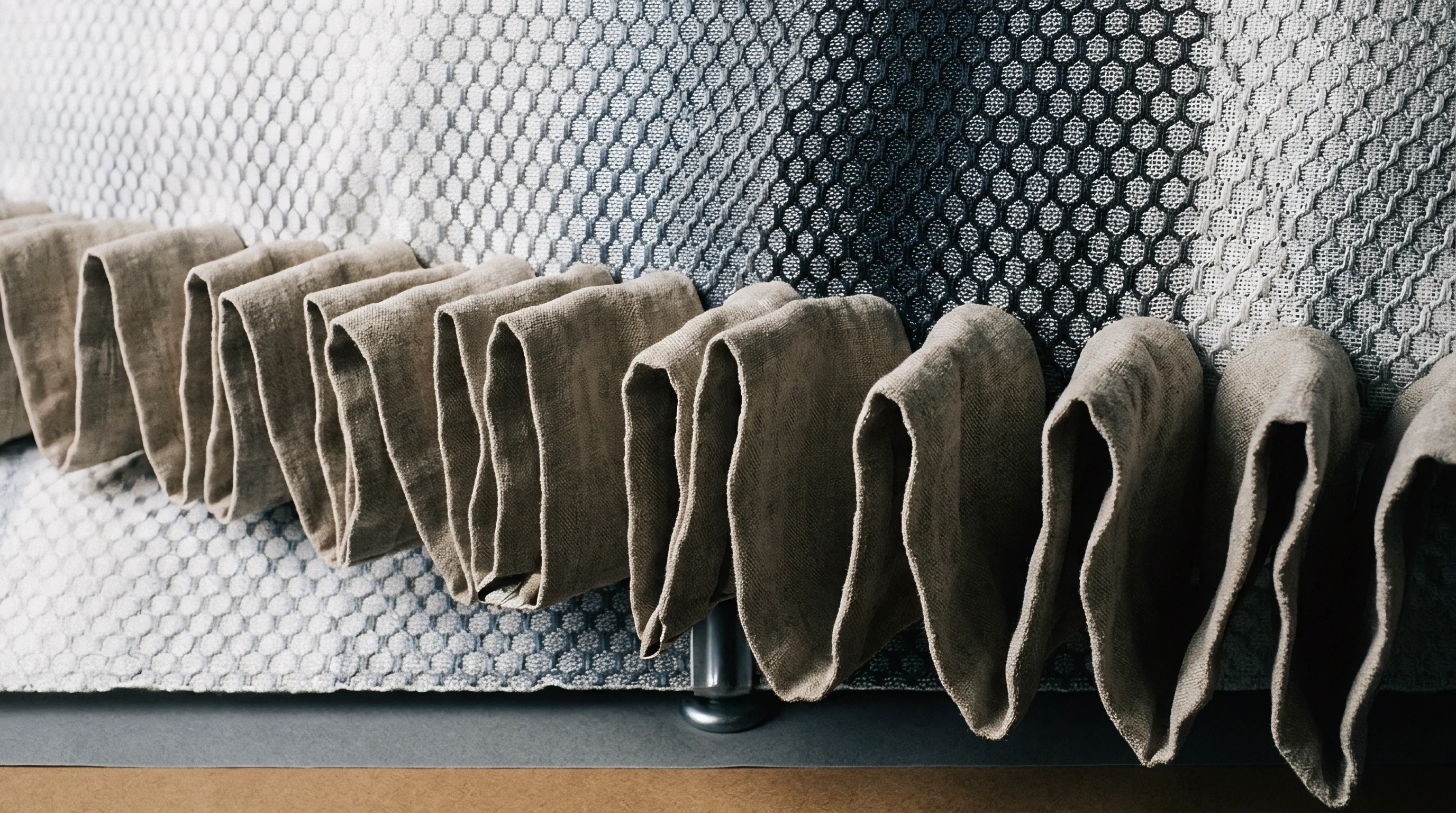

Scour

Chemical Mass Reduction and Non-Cellulosic Extractables
Raw flax consists of cellulose bound up with non-cellulosic impurities that directly affect wet-processing yield. Pectin, hemicellulose, lignin, fats, and waxes must be removed during chemical preparation to develop absorbency and whiteness. Because mass loss during boiling-off and bleaching reshapes finished fabric weight, processing without tight weight-loss controls regularly pushes finished goods out of spec.
Scouring with sodium hydroxide degrades pectins and saponifies natural waxes, with total mass loss dictated by caustic concentration, liquor ratio, bath temperature, and dwell time. Mild enzymatic scouring targets specific pectin layers while leaving waxes mostly intact, keeping overall weight loss low. In contrast, aggressive continuous caustic kier boiling strips away almost all non-cellulosic matter, significantly lowering grey mass.
Mills project expected yields using standardized extraction percentages matched to the intensity of the treatment.
| Processing Phase | Primary Chemical Agents | Extracted Components | Typical Mass Loss (%) |
|---|---|---|---|
| Desizing | Alpha-amylase enzymes, detergent | Starch sizes, surface dirt | 1.5 – 3.5 |
| Enzymatic Scouring | Pectinase, chelating agents | Primary wall pectins, hemicellulose | 3.0 – 5.0 |
| Caustic Scour (Semi-Bleach) | Sodium hydroxide (20-30 g/L) | Pectins, fats, waxes, low-MW lignin | 7.0 – 10.0 |
| Full Bleaching | Hydrogen peroxide, sodium hypochlorite | Residual lignin, natural pigments | 10.0 – 14.0 |
| Heavy Caustic Mercerization | Sodium hydroxide (200-240 g/L) | Cellulose III conversion, hemicellulose | 12.0 – 16.0 |
Bleaching uses hydrogen peroxide, sodium hypochlorite, or peracetic acid to oxidize natural pigments. Alkaline hydrogen peroxide bleaching breaks down residual lignins and trace impurities. While aggressive bleaching yields high whiteness, it also causes the heaviest mass reduction, leading finishing plants to track cumulative weight loss by weighing dry samples before and after each sequence.
ISO 105-F02 dictates standard cotton and linen rubbing cloths to evaluate crocking fastness after chemical extraction sequences.
Enzymatic biopolishing uses cellulases to shear surface microfibrils and curb pilling. The enzyme hydrolyzes exposed cellulose chains into soluble sugars that rinse away. Treatment time must be closely controlled; uncontrolled cellulase action degrades tensile strength and strips off enough fiber mass to push finished goods below weight targets.

Worked Yield Analysis for Scoured Linen Goods
A production example clarifies how mass loss balancing works in practice. Take a 1,000-kilogram lot of unsized greige linen entering continuous preparation. Initial dry mass analysis shows 10.5 percent native moisture and 11.2 percent non-cellulosic impurities.
The target is a full white finish achieved through hot caustic scouring and alkaline hydrogen peroxide bleaching.
- Dry Mass Baseline Establishing initial bone-dry mass requires adjusting the gross greige weight for moisture. At 10.5 percent moisture, the 1,000 kg delivery yields 895 kg of bone-dry flax fiber.
- Size Removal Loss Warp yarns carry applied starch size equal to 2.8 percent of dry warp mass. On a 50/50 warp-to-weft construction, size accounts for 12.5 kg, leaving 882.5 kg of unsized dry fiber.
- Caustic Extraction Loss Hot caustic scouring extracts 8.5 percent of non-cellulosic matter from the unsized fiber base. Removing these 75.0 kg of pectins, hemicellulose, and waxes leaves 807.5 kg of scoured dry mass.
- Peroxide Bleaching Loss Alkaline peroxide oxidation targets remaining pigments and lignins, cutting scoured dry mass by another 2.1 percent. Removing this 17.0 kg leaves 790.5 kg of bleached dry mass.
- Finished Moisture Regain Applying the official 12.0 percent commercial moisture regain to the 790.5 kg bleached dry mass yields a final invoice weight of 885.4 kg.
Across the complete preparation sequence, total dry-to-dry mass yield is 88.3 percent, while commercial mass yield is 88.5 percent relative to the original greige delivery. These cumulative processing losses reduce unit weight per square metre before factoring in dimensional contraction during drying and tentering.
Weight loss variations frequently stem from natural fiber crop differences beyond the control of the finishing house.

Contraction

Dimensional Movement Mechanics during Wet Treatment
When flax fibers encounter aqueous baths during scouring, dyeing, or washing, they swell radially. As yarn diameter increases, adjacent warp and weft threads must travel a longer physical path around each other. This extended geometry increases thread crimp, drawing the length and width of the fabric inward as stored processing stresses relax.
Spinning and weaving place considerable longitudinal tension on warp yarns, which sizing agents lock into the greige cloth. Once wet processing dissolves these adhesives, internal stresses release. Warp threads contract along their length, increasing picks per centimetre, while weft threads undergo similar compaction during tensionless wet processing, increasing ends per centimetre.
On continuous open-width ranges, high tension suppresses warp shrinkage while accentuating transverse weft contraction.
Standard ISO 5077 testing specifies five repeated laundering cycles at sixty degrees Celsius to quantify complete relaxation shrinkage in linen fabrics.
Finishing equipment directly influences final contraction ratios. Continuous rope washing permits unconstrained relaxation in all directions, yielding maximum length and width contraction. Jig dyeing pulls the fabric under heavy warp tension, stretching the length while forcing width loss.
Winch and jet dyeing run under lower tension, allowing moderate warp shrinkage. Stenter frames pin the selvages to hold a fixed finished width, pulling weft threads back out while setting warp compaction.

Which Processing Parameters Control Linear Shrinkage?
Controlling linear contraction requires balancing machine tension, temperature, and drying methods. Releasing structural strain during finishing is what keeps garments from shrinking severely during laundering.
- Warp Processing Tension Excess tension on continuous processing lines suppresses warp contraction and elongates the fabric, leading to high residual laundering shrinkage in garments.
- Drying System Dynamics Relaxed loop dryers permit unconstrained thread relaxation, whereas high-tension cylinder drying freezes internal strains inside the yarn.
- Sanforizing Compaction Mechanical compressive shrinkage units force warp crimp into the fabric before cutting, reducing dimensional movement down to two percent.
- Resin Crosslinking Chemistries DMDHEU resin finishes form chemical crosslinks between cellulose chains, restricting fiber swelling and stabilizing fabric dimensions.
Determining finished fabric weight per square metre means accounting for both chemical mass loss and dimensional contraction. For instance, a cloth undergoing ten percent mass loss alongside ten percent warp shrinkage and ten percent weft shrinkage actually ends up with a higher finished GSM than its greige baseline. Area contraction compresses the remaining mass into a smaller surface, overriding weight loss when shrinkage is high.
To calculate finished mass per square metre, multiply greige mass per square metre by one minus fractional mass loss, then divide by the product of one minus fractional warp contraction and one minus fractional weft contraction. Ignoring dimensional contraction in weight projections invariably leads to underestimating finished mass, resulting in rejected batches and expensive re-finishing penalties.
Structural relaxation in flax yarn becomes permanent once mechanical crosslinks or thermal stress-relief finishes lock thread undulations in place.

Audit
Verification Protocols for Incoming Greige and Finished Cloth
Verifying compliance requires standardized sampling of incoming greige rolls and finished fabric lots. Standards such as ISO 2859-1 dictate sample sizes and acceptance quality limits, while lab procedures test thread count, unit mass, width, and dimensional stability under controlled conditions. Discrepancies between targeted and actual weights usually trace back to raw material variations, inconsistent sizing, or improper loom setup.
Specimen conditioning is essential for reliable weight measurements. Standard laboratory conditions under ISO 139 call for 20 degrees Celsius (plus or minus two degrees) and 65 percent relative humidity (plus or minus four percent). Because flax absorbs and releases moisture so quickly, weighing unconditioned samples skews roll calculations ~ a mere two percent shift in moisture alters total lot weight by dozens of kilograms on commercial orders.
| Property Tested | Standard Test Method | Standard Condition Range | Commercial Tolerance Limit |
|---|---|---|---|
| Mass Per Unit Area (GSM) | ISO 3801 / ASTM D3776 | 20°C / 65% RH, conditioned 24h | ± 5.0% of nominal spec |
| Threads Per Centimetre | ISO 7211-2 / ASTM D3775 | Counting glass, 5 areas minimum | ± 3.0% of nominal density |
| Weave Crimp Percentage | ISO 7211-3 | Manual thread unravelling under tension | ± 1.0% absolute crimp variation |
| Dimensional Stability | ISO 5077 / ISO 6330 | 5 cycles washing at 60°C, flat dry | – 3.0% warp / – 2.0% weft max |
| Usable Width Determination | ISO 22198 / ASTM D3774 | Full roll unwound flat without tension | + 10 mm / – 0 mm of nominal width |
Four-point inspection systems under ASTM D5430 assign penalty points for defects in greige bolts. Faults like slubs, thick ends, thin places, reed marks, and oil spots accumulate points per hundred square metres; exceeding threshold limits results in roll rejections or price debits. Catching greige faults early avoids wasting processing costs on sub-standard cloth.
Quality audits cross-check physical roll weights against invoice documentation. Unsized greige rolls should be weighed continuously before entering scouring baths, and post-finishing audits reconcile final mass against initial greige input to separate processing losses from yarn variations.
Under standard international textile trading terms, buyers must accept weight variations within three percent of nominal contract specifications without financial adjustment.

Tariff

Loom Economics and Financial Mass Conversions
Linen trading translates yarn geometry and loom occupancy into unit costs. Mills book capacity in loom-hours or pick counts, whereas finished fabric is sold by the linear or square metre. Balancing loom run time against processing weight loss reveals the true landed cost per finished metre.
High-pick constructions run slowly, driving up greige cost on the loom well before finishing losses enter the equation.
Minimum order quantities depend on warping beam capacity and dye vessel limits. A continuous dyeing range, for example, requires run lengths of at least two thousand metres to stabilize shade consistency. Short warps increase downtime during beam changes and waste yarn allowances, spreading fixed setup costs over limited production.
Calculating minimum warp length requires factoring in loom waste, sampling tails, continuous finishing end-waste, and targeted roll yields.
Standard commercial purchase contracts enforce a five percent overage or underage margin on finished linen delivery volumes.
Calculating the true cost per finished square metre requires accounting for cumulative mass loss and dimensional shrinkage. The financial formula divides greige price per metre by the product of warp yield percentage and width contraction factor, then adds chemical finishing costs per metre. Leaving shrinkage factors out of cost models erodes gross margins on finished apparel orders.
A major question in commercial practice remains unresolved: how should mills and buyers share financial risk when climate-driven crop variations shift natural fiber losses beyond standard published limits?