Integrating Warp Crimp Contraction into Loom Yield Calculations
Integrating warp crimp contraction converts fabric design specifications into precise yarn mass requirements and accurate linear loom output schedules.

Beam
Linear yarn consumption during weaving exceeds off-loom fabric length because of structural undulation. As warp threads travel through the loom, they interlace over and under inserted weft picks, forming a series of waves along the longitudinal axis. This geometric bending shortens the effective forward reach of the thread sheet, so the loom consumes more raw yarn from the supply package than the final length of cut cloth produced.
In flax processing, where rigid fibers allow little elastic stretch, this structural bending accounts for almost the entire length difference between the unwinding beam and the take-up roll.

Geometric Mechanics of Warp Crimp
When weft picks interlace with longitudinal ends, the thread line curves above and below each insertion. Because flax fibers resist high mechanical strain, the degree of curvature depends directly on yarn diameter, pick density, and weave float length. In a tight plain weave, every thread crosses the central cloth axis at every pick, creating maximum undulation.
Twill and satin structures feature longer floats that reduce crossing frequency, letting longitudinal yarns follow a flatter path through the fabric matrix.
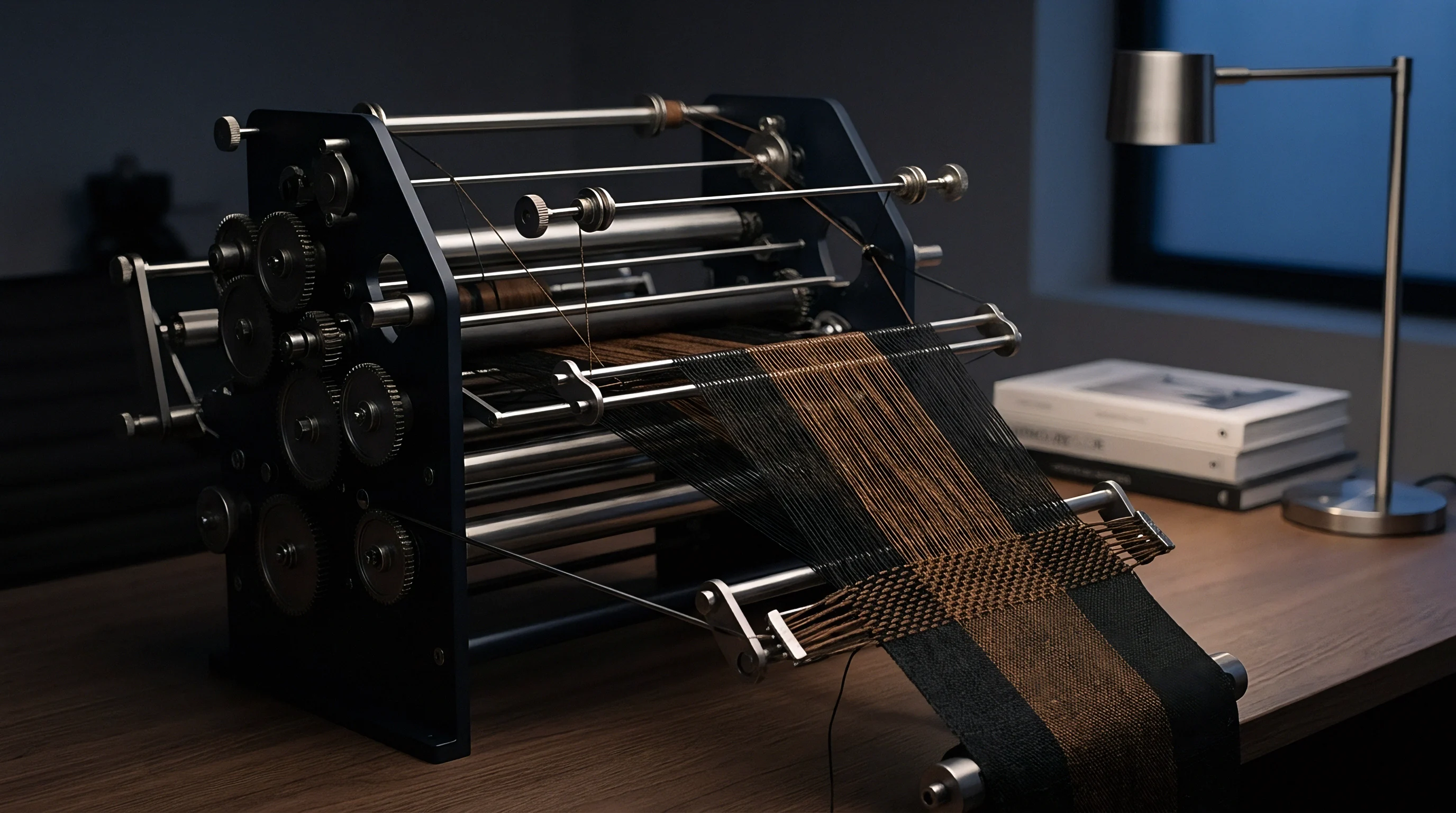
The relationship between yarn path length and fabric length follows established structural crimp models. Thread axis displacement produces a wave height set by the combined diameters of warp and weft yarns, modified by shedding tension. High tension on longitudinal threads pulls them taut, forcing the weft picks to bend around them.
Conversely, lower warp tension allows deeper warp bending, increasing total yarn consumption per linear metre of cloth. Higher pick counts forced by beat-up pack weft threads more tightly, bending the ends into steeper vertical curves and raising structural contraction.
Calculating structural contraction requires clear definitions, as textile standards distinguish between crimp percentage and take-up percentage. Crimp measures yarn elongation relative to fabric length, whereas take-up measures yarn contraction relative to the original unwound thread length.
A heavy plain weave flax cloth consumes significantly more yarn length per woven metre than a loose twill of equal yarn weight.
Converting between Crimp and Takeup
Textile calculations rely on two distinct percentages to define structural thread contraction. Crimp percentage represents the extra thread length in a unit length of fabric, expressed relative to fabric length. Take-up percentage represents the length loss the thread undergoes when woven, expressed relative to initial straight yarn length.
Confusing the two introduces systemic errors into yarn mass calculations and warp purchasing allocations.
The mathematical relationship between crimp percentage and take-up percentage remains fixed across all fabric constructions. Where C represents crimp percentage and T represents take-up percentage, the conversions apply as follows:
Crimp Percentage (C) = ((Yarn Length – Fabric Length) / Fabric Length) 100
Take-up Percentage (T) = ((Yarn Length – Fabric Length) / Yarn Length) 100
Crimp from Take-up ~ C = (T / (100 – T)) 100
Take-up from Crimp ~ T = (C / (100 + C)) 100
A warp crimp value of 10.0 percent corresponds to a take-up value of 9.09 percent. If an estimator mistakenly uses 10.0 percent take-up instead of 9.09 percent when converting grey cloth requirements into yarn order volumes, the raw material calculation overstates warp demand by nearly one percent. On a ten-thousand-metre run of 220 GSM linen, that mistake adds hundreds of kilograms of unnecessary yarn to the order.
Conversely, ignoring warp crimp contraction altogether leaves the mill short of raw material before the final hundred metres of cloth leave the loom.

Calculus
Integrating structural thread contraction into loom yield formulas requires converting fabric specifications into total yarn mass and machine hours. Accurate yield figures determine raw yarn purchasing volumes, warping creel setup sizes, reed width selections, and scheduled machine time. Omitting crimp contraction from initial costing artificially depresses projected yarn requirements while overestimating hourly linear output.
Integrating Contraction into Metre Equations
Calculating gross yarn demand per linear metre of woven grey cloth relies on three core parameters: total ends in the sheet, yarn linear density, and the contraction factor. Warp density sets the number of threads across the reed, yarn count establishes weight per unit length, and the contraction factor scales straight yarn length to woven fabric length.
Because fabric contracts during wet processing, achieving a specific finished cloth width requires denting the warp sheet across a wider reed to accommodate loom take-in and finishing shrinkage. Total warp ends equal reed width in centimetres multiplied by ends per centimetre in the reed. Calculating warp mass per woven metre requires multiplying total warp ends by the warp crimp factor and dividing by the yarn metric count (Nm).
Warp Mass (g/m) = (Total Warp Ends (1 + (Crimp Percentage / 100))) / Yarn Count (Nm)
Linear yield per machine hour depends on picks per minute, pick density per centimetre, and loom operational efficiency percentage. This output rate directly sets machine occupancy costs per finished metre.
Linear Yield (m/hr) = (Loom Speed (PPM) 60 (Efficiency Percentage / 100)) / (Picks per cm 100)
Worked Construction for Plain Linen
Consider a target batch of 5,000 metres of 100 percent flax fabric specified at 220 grams per square metre with a finished width of 150 centimetres. Construction calls for 18 ends per centimetre and 16 picks per centimetre finished, woven from Nm 26 wet-spun flax yarn in both directions. Laboratory swatches indicate a finished warp crimp of 8.5 percent, a finishing width contraction of 4.0 percent, and a finishing length relaxation shrinkage of 2.5 percent.
Delivering 150 centimetres of finished width with 4.0 percent finishing shrinkage requires a grey cloth width of 156.25 centimetres off the loom. Accounting for 3.5 percent reed take-in during weaving brings minimum reed width to 161.9 centimetres. Rounding up to a standard reed denting layout puts reed width at 162 centimetres with 16.5 ends per centimetre in reed, yielding 2,673 total warp ends.
| Weave Structure | Ends x Picks (per cm) | Yarn Count (Nm) | Warp Crimp (%) | Reed Width (cm) | Gross Warp (g/m) | Linear Output (m/hr) |
|---|---|---|---|---|---|---|
| Plain Weave 1/1 | 18.0 x 16.0 | 26.0 | 8.5 | 162.0 | 111.5 | 11.25 |
| Twill 2/1 | 22.0 x 18.0 | 26.0 | 6.2 | 158.0 | 141.2 | 10.00 |
| Twill 2/2 | 24.0 x 20.0 | 26.0 | 5.5 | 156.5 | 151.8 | 9.00 |
| Satin 5-End | 28.0 x 22.0 | 26.0 | 4.1 | 155.0 | 170.4 | 8.18 |
| Data assumes a constant loom speed of 300 picks per minute at 85 percent operational efficiency on a rapier shedding machine. | ||||||
Calculating gross warp consumption per grey metre on the plain weave specification uses 2,673 ends multiplied by the 1.085 crimp factor, divided by the Nm 26 yarn count. This yields 111.54 grams of warp yarn per linear grey metre. Adding 1.5 percent unseen warping waste raises the warp allocation to 113.21 grams per grey metre.
To produce the 5,128 grey metres needed for a net 5,000 finished metres after 2.5 percent length shrinkage, total warp yarn purchasing volume comes to 580.5 kilograms.
At 300 picks per minute and 16 picks per centimetre off the loom (adjusting for 15.6 grey picks per centimetre), theoretical maximum speed reaches 11.54 metres per hour. At 85 percent operational efficiency, net production comes out to 9.81 linear grey metres per hour per machine. Meeting the 5,128 grey metre order requires 522.7 loom hours.
If yarn friction increases during shedding, warp contraction rises while reed width stays fixed.
Shed
Machine dynamics and tension settings directly alter thread contraction while the loom operates at production speed. Theoretical crimp calculations based on static geometric models frequently understate actual yarn consumption on running production lines. Real-time thread bending depends on the physical interplay between let-off motion, back-rest roller height, heald frame shed opening, and reed beat-up force.

Which Loom Dynamics Drive Warp Crimp Variations?
Raising the back-rest elevates top-sheet tension during beat-up, forcing weft picks to bend more than the longitudinal ends. Lowering the back-rest roller equalizes tension between the top and bottom shed lines, allowing deeper longitudinal bending and increasing warp crimp. Conversely, excessive warp sheet tension flattens longitudinal ends, forcing weft picks to take on structural undulation instead.
This mechanical trade-off alters fabric hand and structural cover factor without changing yarn counts.
Because wet-spun linen yarn stretches less than 2.5 percent before breaking, dynamic tension spikes during shed opening immediately displace the thread line. Automatic electronic let-off systems continuously adjust beam rotation via load cell feedback to hold target tension constant from full beam to empty core. Uncalibrated load cells drift over long production runs, causing warp crimp percentage to shift by up to 1.8 percentage points across a single warp beam.
- Heald Shaft Misalignment causes unequal tension across the yarn sheet, generating localized crimp variations that distort fabric squareness.
- Inconsistent Sizing Pick-Up alters thread flexibility, leading to unexpected contraction spikes that reduce finished cloth width.
- Suboptimal Let-Off Control permits tension spikes during shedding, stretching wet linen fibers beyond their elastic limit.
- Excessive Beat-Up Force packs weft picks tighter than calculated, increasing warp contraction and reducing linear hourly yield.
A three percent elevation in warp contraction on an air-jet loom running at 600 picks per minute reduces linear daily output by 18 metres per machine.

Impact on Loom Speed and Machine Hours
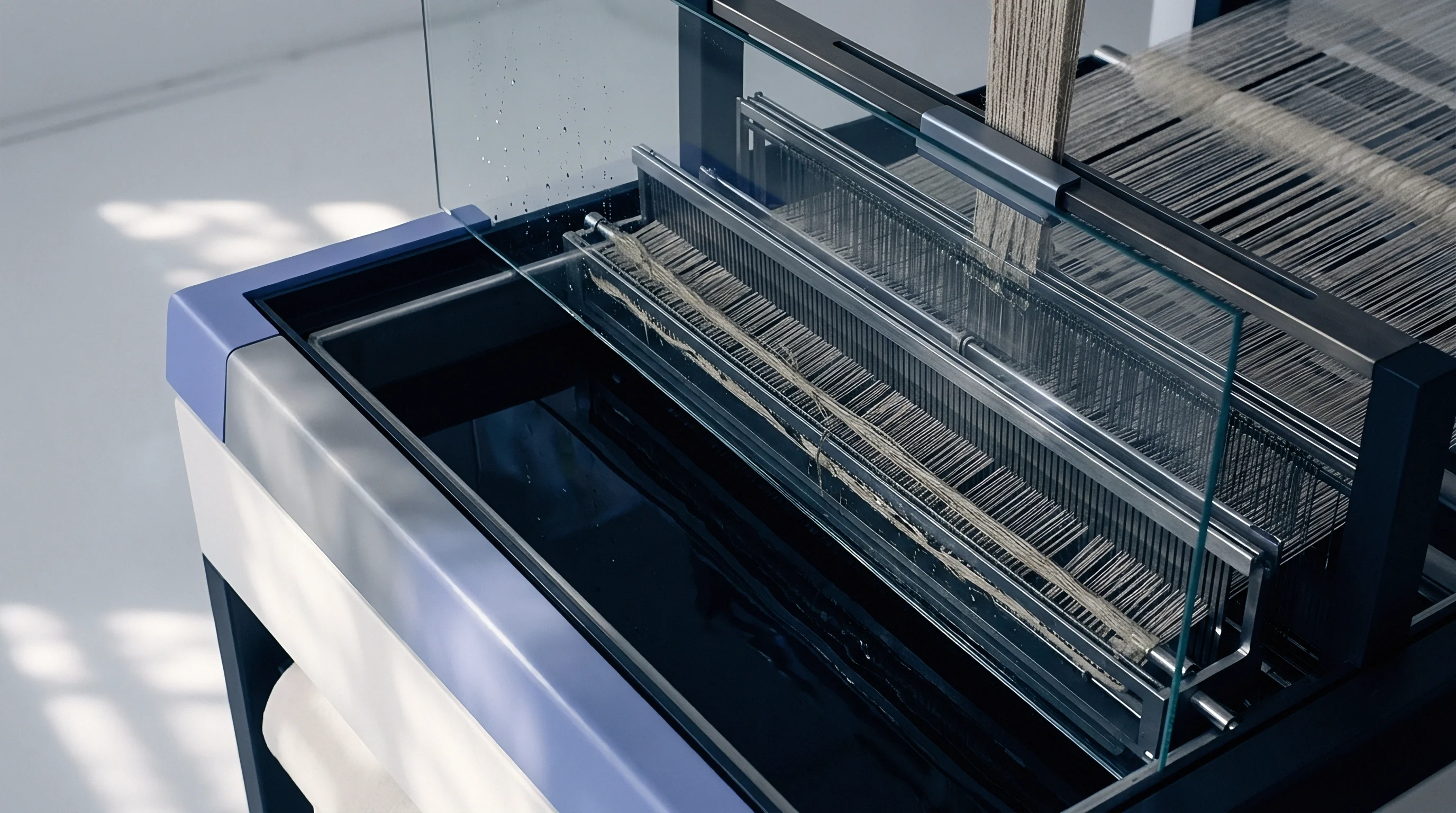
Heavy contraction increases warp end density per centimetre at the fabric fell, requiring higher beat-up force from the reed. When weaving high-density linen, high beat-up resistance causes fell displacement ~ the fell pushes forward during reed impact and recoils backward during the shed change. This movement reduces net take-up roll advance per pick cycle, raising actual pick density above calculated gear ratios.
| Loom Parameter | Baseline Setting | Adjusted Setting | Warp Crimp Change (%) | Finished Width Impact (cm) |
|---|---|---|---|---|
| Back-Rest Height | Level (0 mm) | Elevated (+15 mm) | -1.2 | +0.8 |
| Warp Sheet Tension | 220 cN/end | 280 cN/end | -1.5 | +1.1 |
| Shed Timing | Standard (300 deg) | Early (280 deg) | +0.9 | -0.6 |
| Asymmetric Shedding | Disabled | Enabled (12 mm offset) | +1.4 | -0.9 |
Higher insertion rates reduce dwell time for thread positioning during beat-up. On rapier looms running thick linen yarns, accelerating speed from 240 PPM to 340 PPM elevates dynamic warp tension spikes, straightening warp threads and increasing weft crimp instead. Weaving mills frequently attribute unexpected width loss and yarn shortfalls to natural flax fiber variability rather than uncalibrated let-off brakes.
Discrepancy
The difference between grey fabric dimensions off the loom and wet-processed finished linen creates substantial yield variances. Raw fabric straight off the loom retains structural stresses induced by shedding tension, sizing starches, and take-up pulling. Wet processing releases these mechanical strains through fiber swelling, starch removal, and thread relaxation, meaning warp crimp measured on greige cloth will not match final crimp on finished rolls.

Greige to Finished Cloth Transformations
Scouring, bleaching, and tumbling remove natural pectins and waxes from flax yarns, inducing structural relaxation that allows locked thread intersections to settle into geometric equilibrium. Desizing permits longitudinal threads to swell by 10 to 15 percent in diameter, forcing ends to bend further around adjacent weft picks. This post-loom relaxation increases warp crimp percentage above off-loom values.
A fabric measuring 1,000 metres off the loom take-up roll may shrink to 960 metres following continuous open-width scouring and tumbling. Concurrently, width contracts as weft threads relax, reducing off-loom grey width from 158 centimetres down to 150 centimetres finished width. Sourcing specifications must incorporate both loom-stage contraction and finishing shrinkage into raw warp purchasing equations.
Audit Protocol for Crimp Contraction
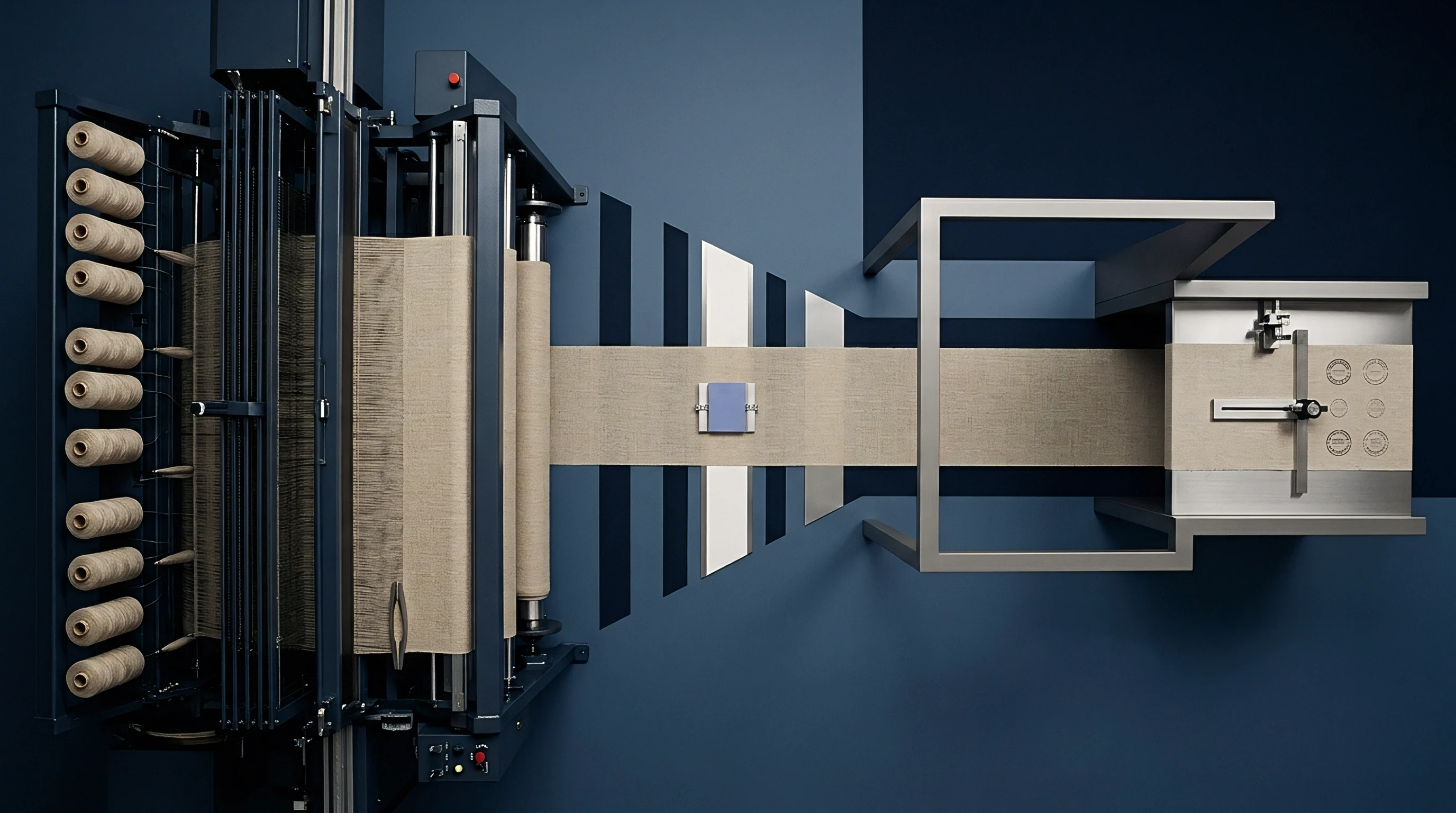
Testing raw yarn contraction requires removing thread samples directly from grey fabric without stretching the relaxed fiber path. Standardized test methods establish strict pretension levels during measurement to ensure repeatable data across testing laboratories.
- Cut a 500 millimetre length of grey cloth parallel to the warp direction using a razor blade along a pick line.
- Ravel twenty individual ends carefully from the middle section of the strip to prevent unravelling damage.
- Mount each end in a direct crimp tester under a standardized pretension of 0.5 centinewtons per tex according to ISO 7211-3.
- Measure the extended straight thread length against a calibrated scale to determine raw yarn consumption.
- Calculate the mean contraction percentage and record the coefficient of variation across the sample set.
Under ISO 7211 standards, failure to condition yarn samples at 20 degrees Celsius and 65 percent relative humidity invalidates warp contraction claims in commercial disputes.
Accurate verification prevents commercial friction over yarn mass deficiencies. When lab audits reveal a warp crimp of 9.2 percent against a contracted value of 7.5 percent, total raw material consumption increases by 19.5 kilograms per thousand woven metres. Whether mill monitoring systems can dynamically adjust real-time warp let-off speeds to compensate for wet-finishing shrinkage remains an open engineering challenge.
Tariff
Pricing woven cloth accurately depends on allocating raw yarn expenditure and loom occupation time into the final bill of materials. Sourcing managers buying greige or finished linen purchase machine capacity converted into linear metres. Unbudgeted warp contraction degrades gross margins by increasing yarn mass consumption per metre while decreasing linear output per machine hour.
Financial Allocations for Yarn Loss and Contraction
When warp threads contract during interlacing, extra yarn length must be purchased to achieve one metre of finished cloth. Raw yarn prices for wet-spun flax (Nm 26) sit at significant price points per kilogram, making yarn consumption errors financially material. A two percent underestimation of warp crimp on a 50,000-metre contract increases direct raw yarn costs substantially.
Loom occupation costs incorporate hourly machine amortization, energy consumption, floor space, and direct operator labor. On air-jet and high-speed rapier machinery, shed hourly rates form a core baseline component of fabric production expense. Higher warp crimp requires more picks per centimetre at beat-up to maintain structural stability, slowing linear metre production per hour and elevating machine occupancy expense per finished unit.
- Base Contraction Auditing verifies yarn length consumption per target metre before committing full yarn lots to the warper.
- Loom Efficiency Indexing links machine hourly rates directly to beat-up resistance and pick insertion capacity.
- Finishing Allowance Adjustment incorporates wet-processing width and length contraction factors into grey fabric specifications.
- Waste Factor Allocation separates invisible sizing loss from true structural warp take-up on final cost sheets.

Commercial Terms for Contraction Tolerances
Sourcing contracts that fail to establish acceptable bands for warp take-up create friction during invoice reconciliation. Weaving mills quote prices based on standard contraction assumptions. If raw fiber variances or machine dynamics drive warp crimp above quoted levels, mills attempt to bill buyers for excess yarn mass consumed.
Conversely, if mills reduce warp tension to cut yarn usage, fabric cover factor drops and finished weight falls below target specifications.
| Cost Component | Omitted Crimp Model ($/m) | Integrated Crimp Model ($/m) | Variance per Metre ($) | Variance on 10k Run ($) |
|---|---|---|---|---|
| Warp Yarn Raw Cost | 1.82 | 1.98 | +0.16 | +1,600.00 |
| Weft Yarn Raw Cost | 1.45 | 1.45 | 0.00 | 0.00 |
| Loom Hours Amortization | 1.15 | 1.24 | +0.09 | +900.00 |
| Finishing Relaxation Shrinkage | 0.22 | 0.28 | +0.06 | +600.00 |
| Total Landed Metre Cost | 4.64 | 4.95 | +0.31 | +3,100.00 |
Clear contract clauses bind both parties to verified crimp tolerances linked to physical fabric weight standard ISO 3801. Specifying an allowable warp crimp range of plus or minus 0.5 percentage points establishes clear commercial grounds for batch acceptance or price adjustment.
Unbudgeted warp take-up adds directly to raw material cost per metre while simultaneously reducing total loom output per shift.
Incorporating ISO 3801 mass tolerances alongside an explicit five percent warp take-up variance clause in the purchase contract shifts financial liability for yarn overruns back to the weaving mill.