Linen Greige Density Conversion Factor Calculations
Greige linen conversion multiplies off-loom GSM by the mass loss fraction divided by total area contraction to yield exact finished fabric weight.
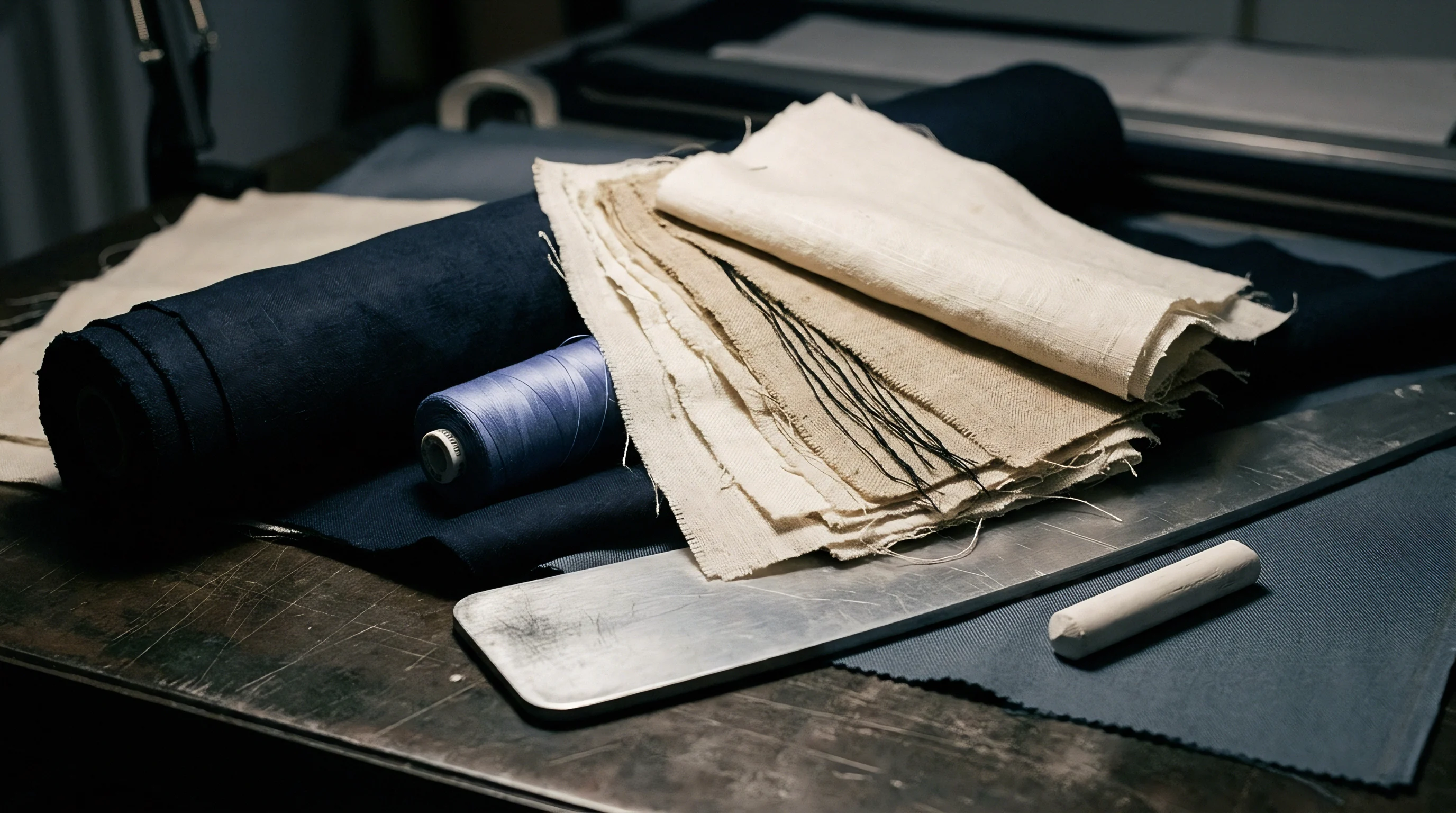

Crimp
Tension relaxes the moment unfinished flax fabric leaves the take-up roll on a rapier loom. Yarns held under thousands of Newtons of warp tension during shedding draw back into an interlaced geometry, lifting the ends and picks per centimetre while shortening the piece. That drop in loom tension turns engineered reed spacing into an off-loom density, establishing the initial baseline for greige fabric specifications.
Greige geometry differs sharply from finished fabric dimensions because bast fibers behave so differently from synthetics, combining a high wet modulus with low stretch recovery. Warp take-up happens as warp ends bend around straight weft picks ~ or the reverse ~ depending on yarn count and warp tension. Heavy picking accentuates thread curvature.
In plain, balanced weaves, warp crimp generally runs from four percent to eight percent, while weft crimp stays lower at high insertion speeds. If weft tension falls, weft crimp rises, pulling the selvedges inward and narrowing the width off the reed.
Denser picking in the loom bed increases weft thread curvature while forcing warp ends to spread across the reed width.
Calculating this structural shift means measuring both warp take-up and weft contraction before wet finishing. Warp take-up compares the length of yarn consumed to the linear cloth produced, whereas weft contraction tracks the drop from harness reed width to untensioned greige width. The table below outlines typical shifts from on-loom reed plans to off-loom greige dimensions across common bast constructions.
| Cloth Construction | Yarn Count (Lea) | Reed Sett (ends/cm) | Greige Sett (ends/cm) | Warp Crimp (%) | Weft Crimp (%) |
|---|---|---|---|---|---|
| Plain Heavy Duck | 14 Lea / 14 Lea | 14.0 | 14.8 | 6.2 | 3.1 |
| Medium Plain Sheeting | 25 Lea / 25 Lea | 18.5 | 19.6 | 5.5 | 2.8 |
| Fine Apparel Twill 2/1 | 40 Lea / 40 Lea | 24.0 | 25.4 | 7.1 | 4.0 |
| Coarse Dobby Huckaback | 10 Lea / 10 Lea | 12.0 | 12.6 | 4.8 | 2.2 |
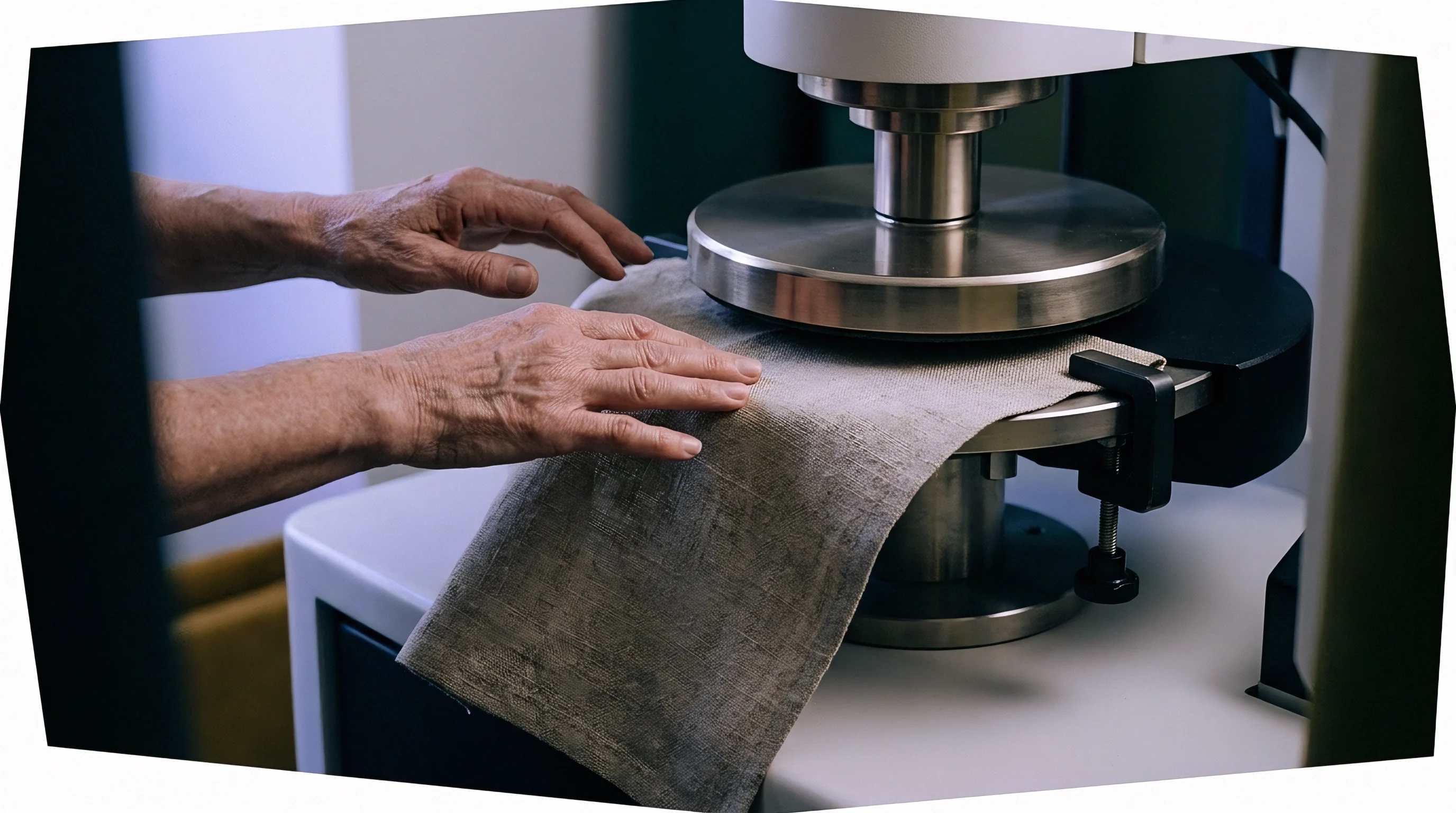
Off-Loom Structural Relaxation Dynamics
Tension applied during warping and weaving pulls flax yarn straight, masking its natural tendency to crimp. Once fabric clears the cloth fell, the warp contracts, raising the picks per centimetre even though the inserted pick count hasn’t changed. Winding contracts the yarns further.
High shed humidity adds moisture, swelling individual cell walls and slightly expanding yarn diameter. This internal swelling alters the weave geometry, pushing crimp values higher before the roll even arrives at the inspection frame.
Determining true off-loom weight requires measuring thread density as soon as the roll is unwound. Mechanical tension does not alter yarn linear density, but weight per unit area increases directly with combined warp and weft crimp percentages. Modeling this density requires separating mechanical crimp from wet-process shrinkage to keep dimensional errors from compounding in later conversion calculations.
Off-spec finished density often stems from incorrect reed calculations rather than atmospheric variation during weekend loom shutdowns.

Scour
Continuous boiling and batch scouring alter the mass and density of raw bast textiles substantially. Raw unbleached flax carries non-cellulosic impurities ~ pectins, waxes, lignins, and hemicellulose ~ that make up eight to twelve percent of total dry fiber mass. Warp yarns also retain sizing agents like starch or polyvinyl alcohol applied during slashing to withstand harness abrasion.
Removing these impurities and sizes during wet finishing results in a clear net loss of fabric weight.
Thermal aqueous processing reduces fiber mass while increasing thread density. As scouring baths remove plant waxes, boiling water swells individual flax filaments, releasing internal stress locked in the crystalline regions of the cellulose polymer chains. This swelling triggers substantial warp and weft shrinkage.
As yarns shorten, warp ends and weft picks crowd closer together per centimetre, raising thread density per unit area. The final fabric weight per square metre reflects the balance between fiber mass lost and area lost to contraction.
Continuous alkaline boiling removes eight to eleven percent of unrefined flax fiber mass while warp contraction increases thread density by six percent.
Isolating fiber weight loss from area reduction is essential for accurate density conversion factors. Getting this balance wrong leads to wide discrepancies between target specifications and landed fabric rolls. The list below outlines common physical failure modes caused by omitting wet-process mass changes from greige density formulas.
- Target Weight Deficiency yields finished fabric below contractually specified weight minimums due to uncompensated pectin and wax extraction during alkaline boiling.
- High Thread Density Exceedance creates an uncharacteristically stiff hand when warp shrinkage drives picks per centimetre beyond design limits.
- Dimensional Width Shortfall reduces usable cutting width when weft contraction exceeds reed allowance during high-temperature relaxation baths.
- Color Depth Instability causes dye shade variation when uneven size removal leaves variable non-cellulosic residue across the roll.

Non-Cellulosic Mass Loss during Wet Finishing
Unrefined flax fiber bundles hold individual ultimate cells together through a middle lamella rich in calcium pectates. Industrial scouring uses sodium hydroxide and chelating agents near one hundred degrees Celsius to hydrolyze these pectins, causing fiber mass to drop sharply during the first twenty minutes of boiling. Sizing materials add temporary dry weight; if omitted from greige mass accounting, the resulting conversion factor will overestimate final fabric yield.
Removing pectin improves absorbency while slightly reducing fiber bundle tenacity. Because coarser tow-derived yarns carry higher initial pectin concentrations than fine wet-spun line yarns, they lose a greater percentage of mass during full bleaching cycles. Finishing lines must hold alkali concentration, bath temperature, and dwell time steady to maintain a consistent mass loss ratio across production lots.
Underestimating fiber mass loss leaves finished fabric below contractually specified weight minimums, risking rejection during cutting or triggering contractual financial penalties.

Arithmetic
Converting greige density metrics into finished fabric weights requires combining mass loss fractions with dimensional shrinkage factors. Raw linen specs define weight in grams per square metre, so converting directly requires a single formula linking yarn count in Lea or Tex, off-loom thread count, wet-process shrinkage, and boil-off mass loss. Without this calculation, buyers routinely encounter discrepancies between ordered greige metreage and usable finished stock.
The calculation starts with the mass ratio between raw greige cloth and scoured finished fabric. Total greige weight equals raw fiber mass plus sizing. The mass loss factor represents extracted size, pectins, and waxes as a decimal fraction, while warp and weft shrinkage fractions are drawn from lab bath trials.
The equation below gives finished mass per square metre based on greige inputs:
Finished Weight = Greige Weight x (1 – Mass Loss Factor) / ((1 – Warp Shrinkage) x (1 – Weft Shrinkage))
Take a greige fabric with a mass of two hundred grams per square metre. Laboratory tests show a mass loss factor of zero point zero nine (nine percent mass loss) after a caustic scour and hydrogen peroxide bleach. Dimensional tests give a warp shrinkage factor of zero point zero six (six percent length reduction) and a weft shrinkage factor of zero point zero four (four percent width reduction).
Applying the formula yields:
Finished Weight = 200 x (1 – 0.09) / ((1 – 0.06) x (1 – 0.04))
Finished Weight = 200 x 0.91 / (0.94 x 0.96)
Finished Weight = 182 / 0.9024 = 201.68 grams per square metre.
Here, the finished fabric ends up slightly heavier than the greige cloth because area shrinkage (nine point seven six percent) outweighs fiber mass loss (nine percent). The density conversion factor for this route works out to one point0084, derived by dividing 201.68 by 200. Multiplying any greige roll weight by one point0084 predicts its final finished density under the same processing conditions.
The table below summarizes conversion factors calculated across various combinations of mass loss and shrinkage rates.
| Processing Level | Mass Loss Factor (%) | Warp Shrinkage (%) | Weft Shrinkage (%) | Area Shrinkage (%) | Conversion Factor |
|---|---|---|---|---|---|
| Light Scour / Natural Finish | 5.0 | 4.0 | 3.0 | 6.88 | 1.0202 |
| Standard Scour / Semi-Bleach | 8.5 | 6.0 | 4.0 | 9.76 | 1.0139 |
| Full Bleach / Softened Finish | 11.0 | 8.0 | 5.0 | 12.60 | 1.0183 |
| Heavy Caustic Mercerized | 12.5 | 10.0 | 6.0 | 15.40 | 1.0343 |
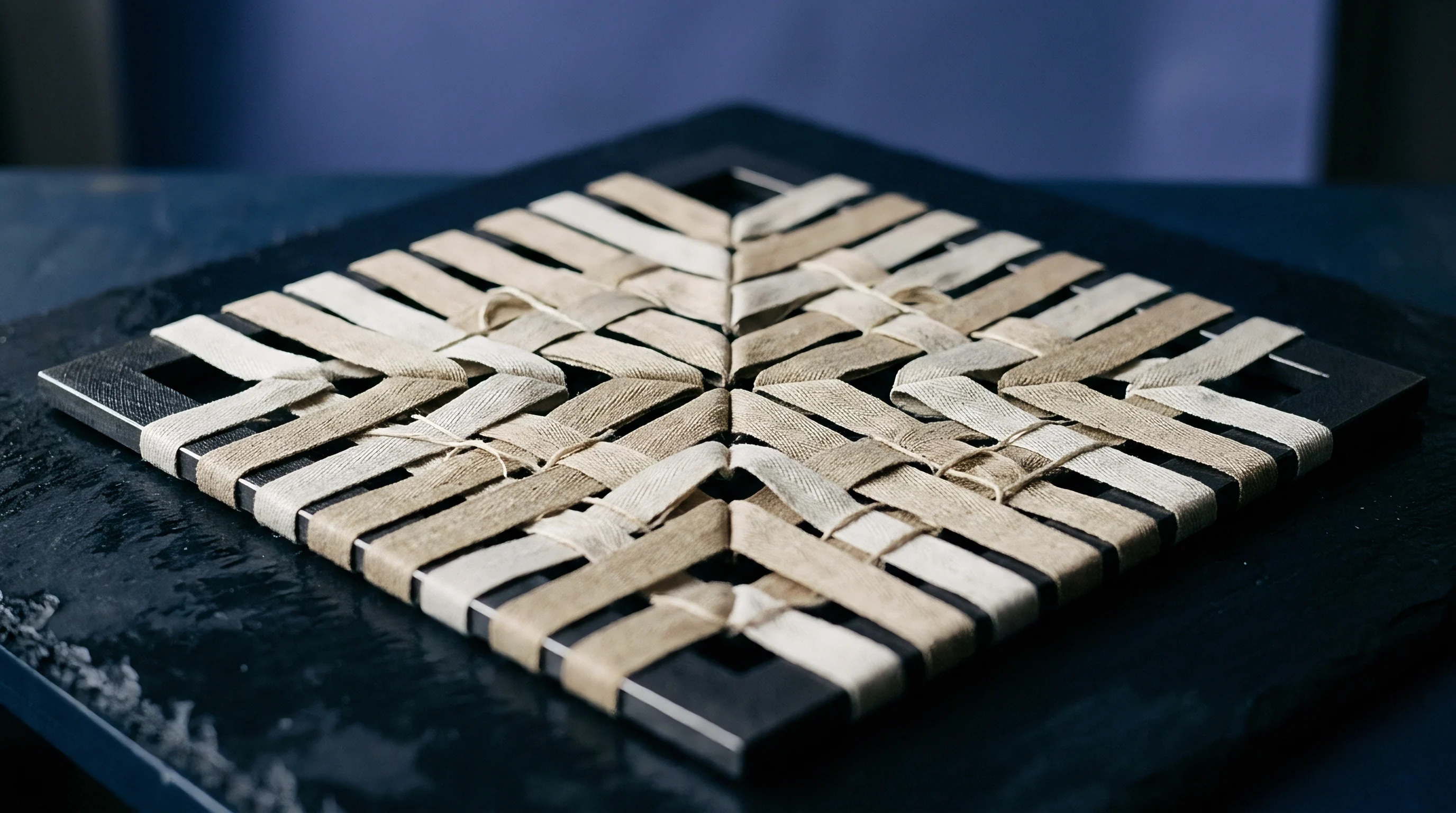
Deriving the Integrated Density Conversion Factor
Establishing dependable conversion factors requires systematic verification of raw mill data. The numbered procedure below walks through the steps for determining density factors on production lots.
- Extract three sample swatches from different greige rolls across the batch, cutting at least ten centimetres inside the selvedge edges.
- Measure sample dimensions under ambient conditions and weigh each on an analytical balance to find dry mass per square metre.
- Desize and scour swatches in a lab bath matching production liquor ratios, chemical concentrations, and dwell times.
- Dry the swatches flat without tension, recondition them at twenty degrees Celsius and sixty-five percent relative humidity, and measure final dimensions.
- Weigh conditioned swatches to calculate scoured mass per square metre and determine net area change.
- Divide finished mass per square metre by original greige mass per square metre to derive the master density conversion factor.
Sizing compounds applied during warp preparation must be subtracted separately from natural pectin loss when evaluating dry mass.

Are Scour Loss Percentages Constant across Flax Lea Counts?
Because coarse yarns spun from tow fiber contain higher proportions of cortical cell debris and cuticle fragments than fine wet-spun line yarns, lower lea counts lose a larger percentage of dry mass during caustic processing. Fine line yarns of forty Lea and above feature parallel fiber alignment and less exposed surface area, leading to lower chemical extraction loss.
Weave structure also affects liquor penetration. Tight plain weaves restrict bath flow at yarn crossover points, slowing pectin extraction relative to open twills. Consequently, a conversion factor calculated for a coarse tow duck cannot be applied to a fine line plain weave without introducing serious mass errors.
Every yarn count class and weave pattern requires its own baseline calibration in the lab.
Standard procurement contracts incorporating ISO 3801 test parameters enforce a strict two percent maximum mass deviation threshold before triggering price renegotiations.
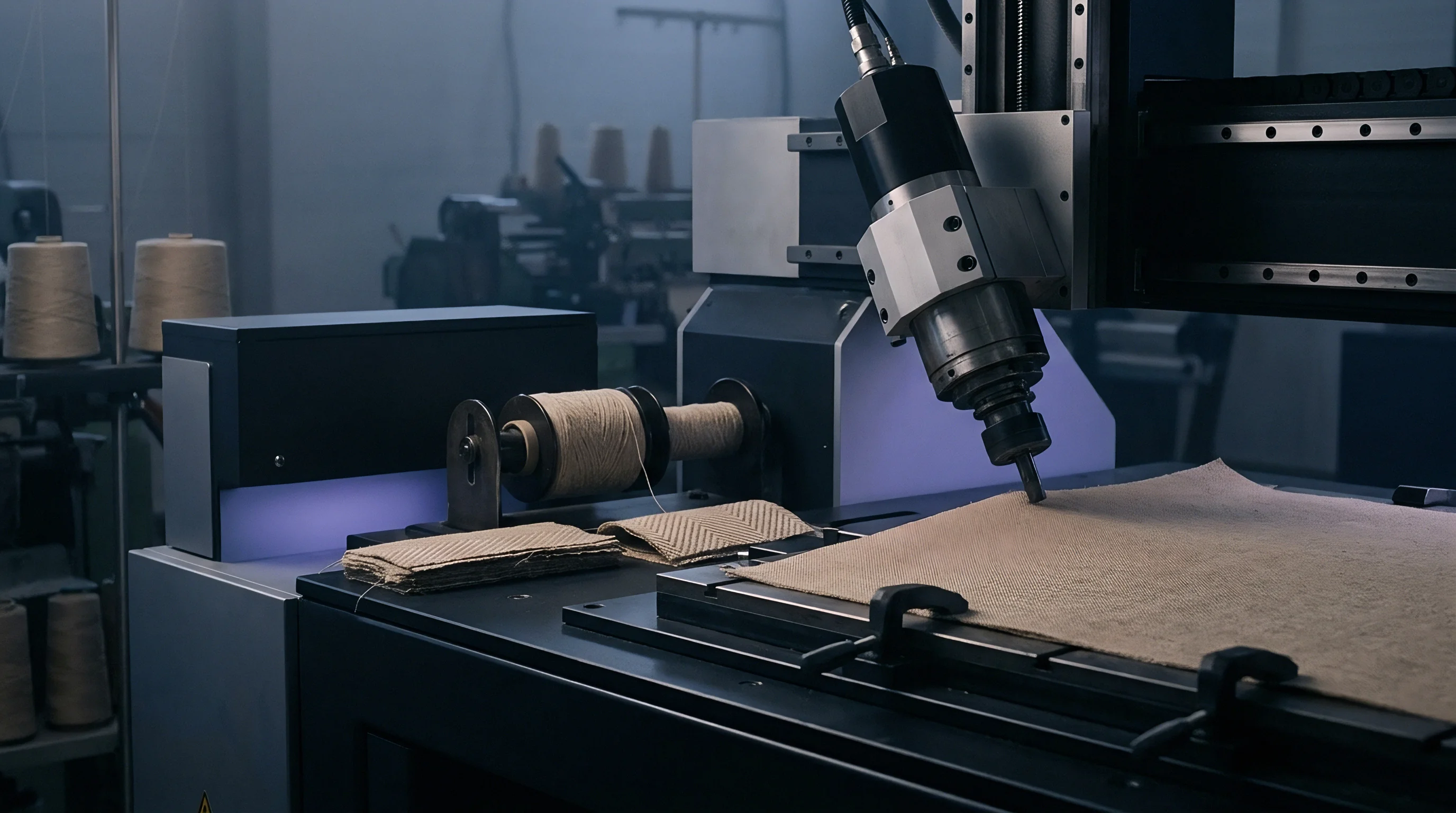

Bench
Verifying density metrics requires standardized laboratory protocols conducted under controlled atmospheric conditions. Linen fiber is highly hygroscopic, absorbing up to twelve percent of its dry mass in moisture under standard commercial environments. Weighing samples without proper conditioning introduces substantial errors into conversion factor calculations, whereas standardized testing grounds raw material trade in consistent physical measurements.
ISO 7211 and ISO 3801 govern international testing standards for woven fabric construction and mass determination. ISO 7211 covers methods for counting threads per centimetre, crimp percentages, and yarn linear density pulled from fabric samples, while ISO 3801 specifies procedures for determining mass per unit area using cut swatches or full-width rolls. Test specimens must equilibrate at twenty degrees Celsius and sixty-five percent relative humidity for at least twenty-four hours before testing.
ISO 3801 test specifications mandate ambient conditioning at twenty degrees Celsius and sixty-five percent relative humidity before taking density measurements.
Determining oven-dry mass establishes an absolute baseline independent of ambient moisture regain. Samples are dried in a ventilated oven at one hundred and five degrees Celsius until they reach constant weight. Commercial dry mass is then calculated by adding the official twelve percent standard moisture regain allowance to the oven-dry weight, allowing laboratories to isolate true fiber content from absorbed environmental water.
| Test Parameter | Standard Designation | Sample Size | Target Precision | Tolerance Limit |
|---|---|---|---|---|
| Mass Per Unit Area | ISO 3801 / ASTM D3776 | 100 cm2 circular cutter | +/- 0.5 GSM | +/- 2.0% |
| Thread Density (Ends/Picks) | ISO 7211-2 / ASTM D3775 | 5 cm counting glass | +/- 0.2 threads/cm | +/- 1.5% |
| Crimp and Take-Up | ISO 7211-3 | 10 individual threads | +/- 0.1% crimp | +/- 3.0% relative |
| Commercial Mass Determination | ISO 6348 / ISO 1833 | 5 g extracted sample | +/- 0.1% dry mass | +/- 0.5% mass fraction |

Standardized Laboratory Density Verification
Qualifying new greige linen suppliers requires structured audits before issuing volume purchase contracts. The checklist below outlines essential verification steps for incoming fabric assessment.
- Conditioning Chamber Validation confirms that laboratory temperature remains at twenty degrees Celsius and relative humidity stays at sixty-five percent while logging specimen weights.
- Sizing Extraction Protocols specify enzymatic or mild acid desizing prior to dry mass determinations to isolate synthetic sizes from natural pectin loss.
- Multi-Roll Sampling Geometry requires swatches cut across the full usable width, excluding two metres from roll ends and ten centimetres from the selvedges.
- Oven-Dry Mass Baseline Standard applies the official twelve percent moisture regain allowance to dry weights instead of relying on variable mill-floor moisture readings.
Upcoming eco-design water conservation rules may alter continuous scouring chemical concentrations and their resulting mass loss ratios.
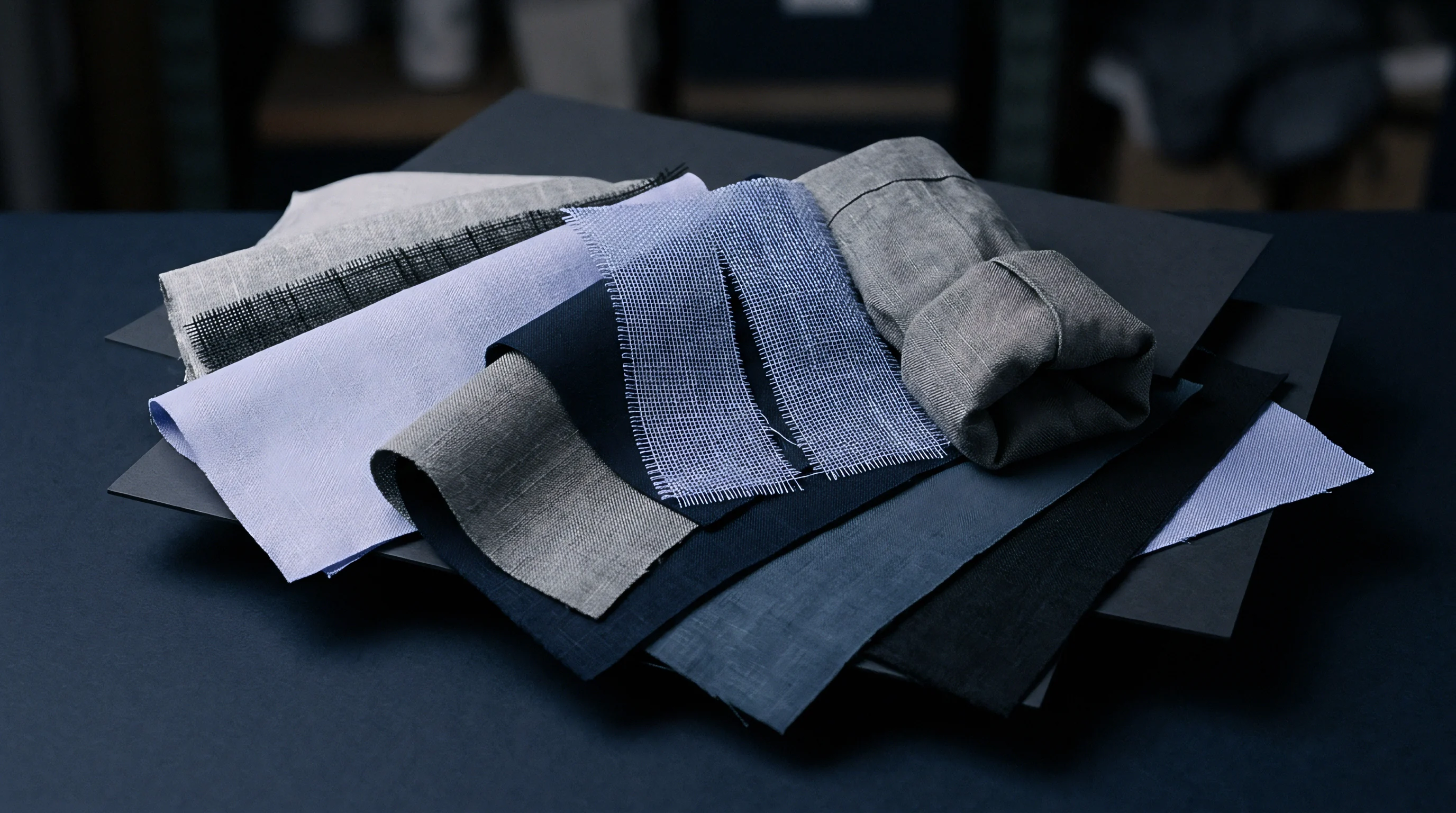

Settlement
Commercial execution turns density calculations into financial transactions and loom scheduling. Woven fabric orders are quoted per finished linear metre, but mills operate and bill against greige output. Calculating greige density metrics accurately prevents cost overruns from miscalculated yarn requirements, excessive warp allowances, or understated reed widths.
Landed cost sheets rely directly on the accuracy of this initial conversion factor.
Loom hours form the core unit of capacity in a weaving shed. High-density finished fabrics demand higher pick counts per centimetre, slowing linear production per loom hour. Underestimating weft contraction during initial planning forces the weaving shed to widen the reed and adjust harness denting, which alters picking efficiency and increases yarn consumption per linear metre.
Buying unbleached greige rolls for third-party commission finishing introduces financial risk. Purchase contracts need to state exact density conversion factors along with maximum mass loss limits and minimum thread count thresholds. If a finisher over-shrinks the warp to hit a target weight per square metre, usable roll length drops, raising the landed cost per linear metre.
Explicit technical terms written into contracts clarify financial liability for process variations among mill, converter, and buyer.

Loom Capacity and Landed Cost Adjustments
Calculating landed cost involves multiplying the greige metre price by the length contraction ratio, then adding commission finishing charges and scrap allowances. Accurate conversion factors let buyers optimize yarn commitments without holding excess buffer stock. Combining desizing loss, scour mass reduction, and dimensional shrinkage into a single master factor protects margins across production runs.
High-density flax constructions woven on high-speed rapier equipment require wider reed allocations to compensate for heavy weft beat-up shrinkage.