Cut Length Staple Fineness Distribution in Bast Fiber Spinning
Controlled staple cut length and narrow decitex distributions below twenty-two decitex prevent card loading and sustain spinning frame efficiency.


Feed
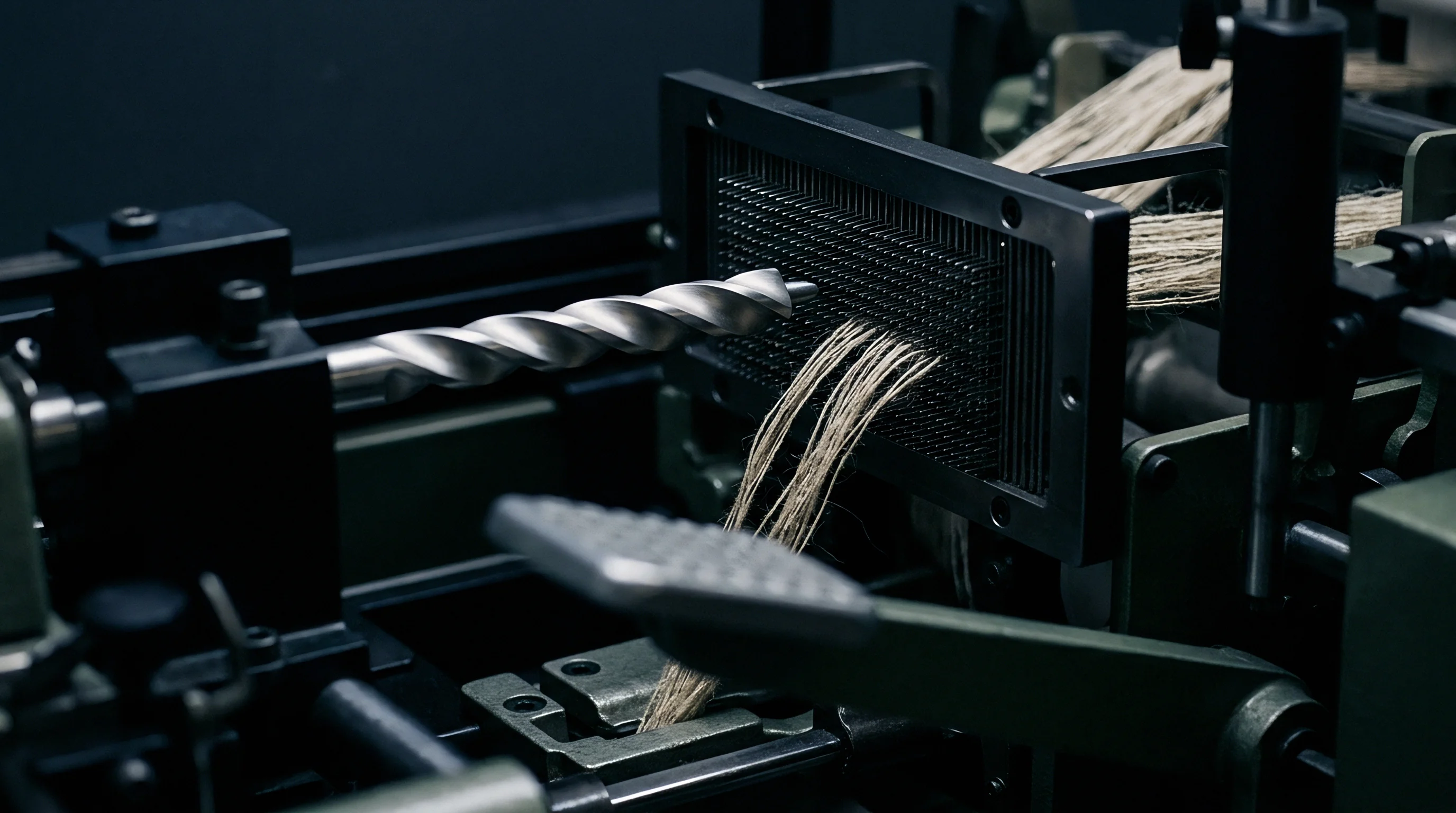
Bale ties snap under tension across the opening room floor. Raw scutched tow and decorticated bast ribbons enter the cutter head as dense, entangled masses carrying varied moisture levels, woody shive fragments, and uneven gum content. Processing bast fibers on modified cotton machinery hinges on converting long, variable bundle strands into a predictable cut staple format.
The mechanical cutter establishes target length, while chemical or enzymatic degumming dictates the final linear density of the filaments. When mills attempt to spin bast fibers without mastering this distribution, spinning efficiency drops within the first hour of production.
Fiber processors cut green or dew-retted bast fiber to specific lengths, typically 38 millimeters for cotton-system ring frames or rotor spinning machines, and 51 to 60 millimeters for synthetic drafting systems. The physical cut length alone does not guarantee processability. A sharp guillotine knife creates clean ends at 38 millimeters, yet the bundle diameter distribution across the cut mass varies wildly.
Coarser bundles contain dozens of elementary cells cemented by residual pectin and lignin, resisting drafting rollers and choking rotor grooves. Finer bundles draft smoothly, distributing evenly into the yarn cross-section.
A lot displaying twenty-two percent bundle variance above forty-five decitex generates twice the normal ring frame end breaks under identical draft settings.
Because dry bast fibers shatter under impact, the opening line requires careful atmospheric regulation. Relative humidity below sixty percent causes dry filaments to snap transversely rather than separate longitudinally during mechanical opening, multiplying the proportion of unspinnable dust and short fiber fragments. The cutter must slice uniform lengths without crushing the ends, which resist subsequent chemical penetration during degumming.
Opening Room Bale Density and Moisture Equilibrium
Incoming raw stock arrives compressed at four hundred kilograms per cubic meter. Dense bales store internal stress from hydraulic baling presses, creating tight clumps that defy gentle opening. Opening room lines employ multi-stage spiked lattice openers and revolving beaters to gently pick tufts apart without breaking longitudinal fibers.
Moisture equilibration takes forty-eight hours inside holding bays held at sixty-five percent relative humidity and twenty-two degrees Celsius. Balanced moisture levels lubricate the pectin matrix, allowing mechanical pins to pull fiber bundles apart along natural cleavage lines.
Uneven moisture creates severe drafting faults. Wet patches cling to licker-in wire, creating clumps that pass into the sliver as slubs. Dry patches disintegrate into fly, filling the card room air and lowering final yarn yield.
The classer inspects moisture levels across every bale layer with a calibrated resistance probe before feeding material onto the weigh pan conveyors.
The operational specifications for cut staple bast fibers in short-staple spinning systems govern incoming acceptance testing:
- Target staple cut length determines the drafting zone gauge settings across draw frames and roving machines, maintaining thirty-eight millimeters within a two-millimeter tolerance.
- Decitex distribution profile reflects the extent of chemical bundle division, keeping the mean linear density between sixteen and twenty-two decitex for fine yarn counts.
- Residual shive content quantifies non-fibrous woody core fragments, holding trash below one-half percent by dry mass to prevent rotor deposition.
- Moisture regain percentage regulates fiber flexibility during high-speed mechanical opening, maintaining eleven to twelve percent regain on conditioned lots.
Processing lines without automated weigh-pan blenders exhibit cyclical sliver weight fluctuations. Variations in bulk density across raw bales translate directly into uneven feed rates at the cutter infeed table. Modern opening lines counter this variance by utilizing optical level sensors coupled with inverter-driven feed rolls, keeping the mass flow rate constant within two percent of target.

Fiber Tuft Metering across Mechanical Openers
Spiked aprons pull compacted clumps into high-speed beaters. Pinned rollers rotating at eight hundred revolutions per minute pick individual bundles from the feed fringe, releasing them into pneumatic transport ducts. Excessive beater speeds generate fiber breakage, converting valuable thirty-eight-millimeter staple into ten-millimeter scrap.
Insufficient beater speeds leave heavy clumps intact, overloading the carding machine infeed rolls.
The mass flow rate into the mechanical cutter determines knife wear and cutting accuracy. Feeding an oversized mat into the cutting head deflects the rotary blades, yielding diagonal cuts that vary between thirty-two and forty-six millimeters in length. This wide length spread induces uncontrolled floating fibers during subsequent roller drafting, terminating in yarn thick spots and low tensile strength.
Neglecting feed mat density control damages card clothing, loads cleaning rolls with undrafted clumps, and elevates sliver mass variation to unmanageable levels across downstream processes.

Cleavage
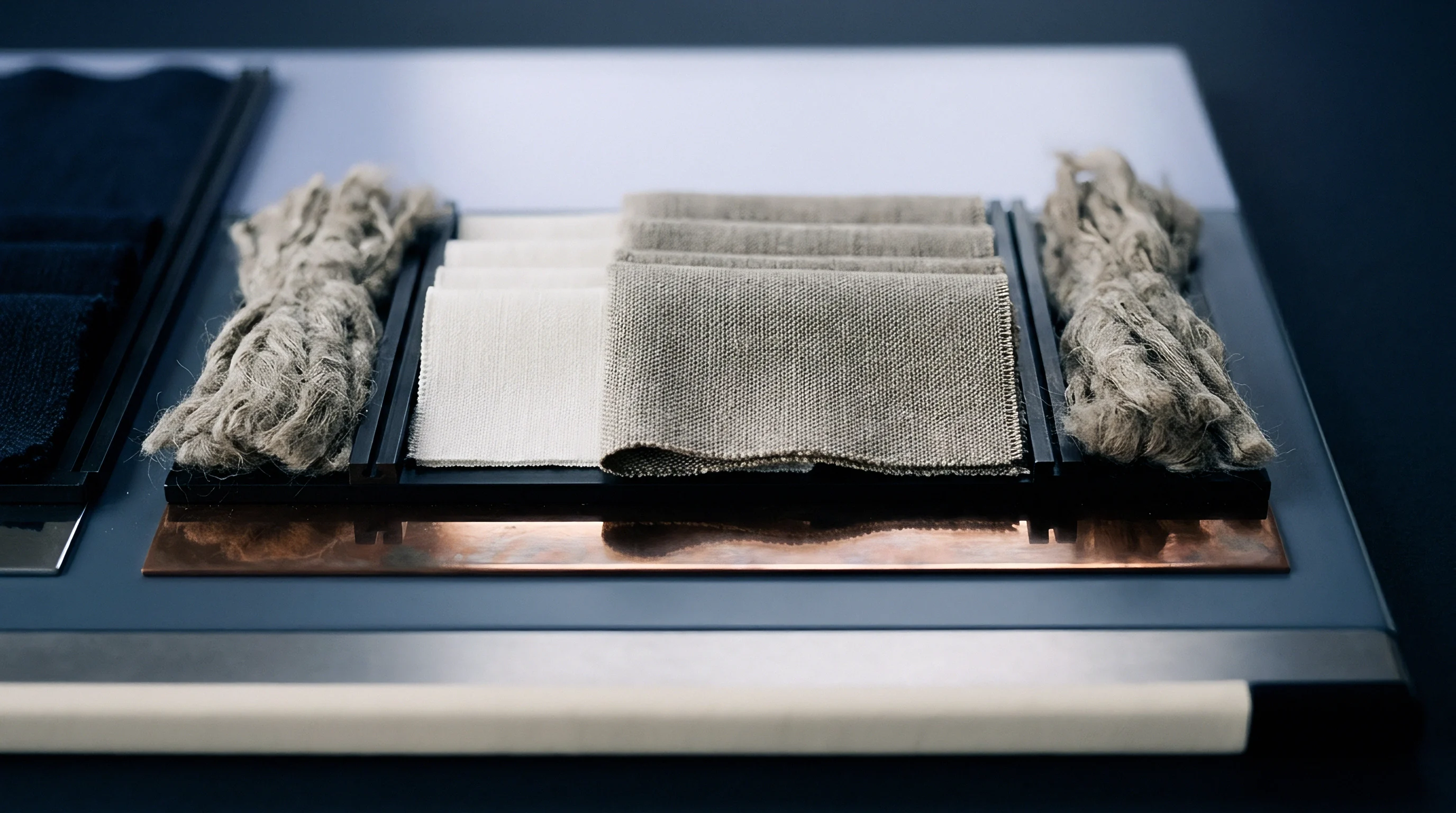
Alkaline digestion targets the inter-cellular middle lamella binding elementary bast cells. Raw flax or hemp fibers do not exist as solitary hairs; they grow as complex concentric rings of bundle structures embedded in the plant phloem. Pectin macromolecules, enriched with polygalacturonic acids and neutral sugar side chains, bond elementary fibrils together into bundles measuring anywhere from fifty to two hundred micrometers in diameter.
Elementary bast cells themselves measure ten to twenty micrometers across, with individual cell lengths ranging from twenty to forty millimeters. Splitting the bundle down to controlled subdivisions represents the primary chemical objective in cottonisation.
Caustic scouring hydrolyzes ester linkages inside the pectin chains. Sodium hydroxide concentrations between eight and twenty-four grams per liter dissolve rhamnogalacturonans at temperatures reaching one hundred and twenty degrees Celsius under pressure. The reaction must be carefully timed.
Over-scouring degrades cellulosic amorphous regions within the secondary cell wall, reducing intrinsic fiber tenacity. Under-scouring leaves heavy gum concentrations, resulting in stiff, coarse fibers that break rather than bend around spinning frame spindles.
Mild alkaline scouring preserves elementary cell tenacity while splitting coarse technical bundles into soft, spinable groupings.
Chemical degumming alters the fineness distribution curve. Untreated scutched flax displays a broad, bi-modal linear density profile centered around sixty decitex, with a long tail extending beyond one hundred decitex. Effective cleavage shifts this distribution toward a narrow, Gaussian profile centered at eighteen to twenty-four decitex.
The narrowed spread permits smooth drafting alongside upland cotton or modal fibers during yarn formation.

Thermal Caustic Scouring Parameter Control
Autoclave pressure vessels operate at one hundred and twenty degrees Celsius. Kier boiling under pressure accelerates liquor penetration through compressed fiber bundles, displacing trapped air inside the bast lumen. Adding non-ionic wetting agents reduces surface tension, driving sodium hydroxide molecules deep into the middle lamella.
Liquor ratios of ten to one ensure adequate chemical volume to saponify plant waxes, dissolve hemicelluloses, and rinse away fragmented pectins.
Neutralization follows immediately after alkaline drainage. Residual caustic left inside the drying fiber leads to alkaline oxidation, turning fibers yellow and brittle. Rinsing baths employ dilute acetic acid at two grams per liter to stabilize the fiber pH at six point five.
Processors then apply an antistatic spin finish containing polyoxyethylene lubricants, lowering the fiber-to-metal friction coefficient for subsequent carding.
Chemical cleavage systems follow rigorous step sequences to preserve cellulosic integrity:
- Pre-washing immersion removes dirt, loose earth, and water-soluble sugars at sixty degrees Celsius.
- Pressurized caustic boiling hydrolyzes inter-fiber pectins under two atmospheres of steam pressure.
- Acidic neutralization rinse stabilizes internal fiber core pH, halting alkaline degradation of secondary cell walls.
- Finishing emulsion application deposits synthetic fatty acid esters to establish optimal inter-fiber cohesion during carding.
Degummed fibers dry inside multi-drum perforated dryers. Air temperatures must not exceed seventy degrees Celsius. Overheating bakes remaining hemicelluloses into hard resinous plaques that glue adjoining fibers together, undoing the cleavage accomplished inside the autoclave.

Enzymatic Pectin Extraction Thresholds
Polygalacturonase formulations digest methyl ester links inside the gum complex. Unlike harsh caustic solutions, enzymes operate at mild temperatures between forty-five and fifty-five degrees Celsius and neutral pH ranges. Pectin lyases and endo-polygalacturonases cut pectin polymer backbones without attacking crystalline cellulose.
This enzymatic precision maintains the inherent sixty to eighty centinewtons per tex tensile strength of pristine flax fibrils.
Enzyme access remains limited by the dense architecture of outer cuticle waxes. Raw bast ribbons require mechanical pre-opening or mild surfactant washing before enzyme bath entry. Without uniform surface wetting, enzymes act exclusively on outer bundle perimeters, leaving bundle cores glued together.
The resulting fiber stock exhibits an unworkable bi-modal fineness distribution: very fine surface hairs mixed with rigid, unprocessed woody sticks.
While biological retting and enzymatic softening lower linear density under controlled conditions, production lots frequently retain insoluble residual pectins that deposit on draw frame aprons during humid shifts.


Airflow
Pneumatic resistance registers the specific surface area of compressed fiber plugs. Measuring the fineness distribution of cut staple bast fibers presents unique metrological challenges absent in round, uniform synthetic fibers. Bast fibers are polygonal, irregular, and non-uniform along their length, exhibiting wide variation in wall thickness and lumen area.
Airflow instruments, including modified Micronaire and Wira testers, pass dry compressed air through a plug of known mass. Finer fibers present greater surface area, throttling airflow and registering lower flow rates. Coarse bundles offer less total drag, permitting higher air passage volumes.
Airflow readings fail to capture multi-modal distributions. A sample composed entirely of medium-fineness fibers can yield the exact same airflow resistance as a blend of fifty percent coarse woody bundles and fifty percent over-degummed elementary fibrils. The single numerical value masks the presence of coarse bundles that disrupt yarn formation.
Laboratory technicians combine airflow testing with optical scanning methods to expose true distribution spreads.
| Processing Route | Mean Cut Length (mm) | Length CV (%) | Mean Fineness (dtex) | Fineness CV (%) | Short Fiber Content (<12.7 mm %) |
|---|---|---|---|---|---|
| Mechanical Scutched Tow Cutter | 38.2 | 28.4 | 48.6 | 62.1 | 18.5 |
| Caustic Scoured Cottonised Flax | 37.9 | 14.2 | 19.8 | 34.5 | 7.2 |
| Enzymatic Degummed Bast Staple | 38.1 | 16.8 | 22.4 | 38.2 | 8.6 |
| Green Decorticated Unrefined Hemp | 39.5 | 34.1 | 68.2 | 74.8 | 24.1 |
Optical instruments scan thousands of individualized filaments per minute. Automated testers disperse fibers across glass plates or past high-speed camera sensors, capturing silhouette images to compute length and width profiles simultaneously. This dual data collection exposes the presence of coarse tails on distribution histograms, allowing spinners to reject lots that would cause high yarn unevenness.
Where Does Cut Length Uniformity Break Down?
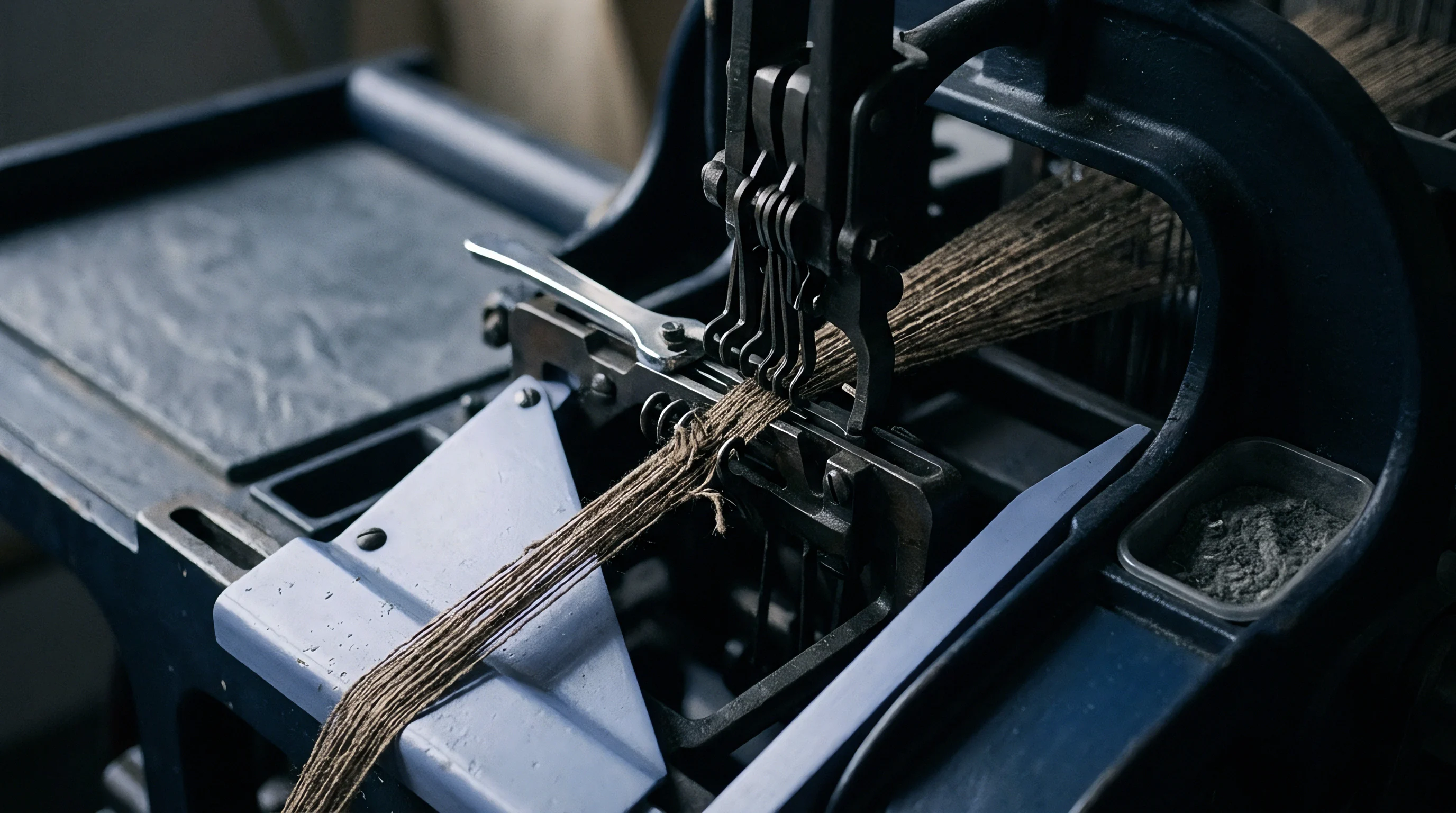
Rotary guillotine knives dull across continuous tow processing runs. When knife edges lose their keen hone, they pull and stretch elastic bast ribbons before shearing them against the stationary ledger plate. The stretching action introduces severe length variation: fibers cut under longitudinal tension snap back into shorter lengths once severed, while slipping strands pass through uncut at double the target staple length.
Dull blades also fracture brittle bundles longitudinally, generating high proportions of dust and short fiber fragments below twelve millimeters. These short fragments provide zero contribution to yarn strength. During drafting, fragments slip uncontrollably through roller nips, accumulating as floating lint or gathering inside drafting roll clearances.
High short fiber content directly degrades yarn evenness, expressed as elevated thin spots and thick spots on capacitive yarn testing equipment.
Aerodynamic sorting inside testing flumes mirrors the physical classification seen in agricultural seed cleaning elevators. In both domains, variations in particle density and geometry upset basic Stokes law assumptions, requiring empirical correction factors to account for turbulent drag across non-spherical bodies.

Optical Array Measurements of Decitex Dispersion
High-resolution CCD sensors measure projected fiber diameters across increments down to one micrometer. Because bast fibers possess non-circular cross-sections, instruments apply optical calibration models to convert projected two-dimensional widths into equivalent gravimetric linear density values in decitex. The resulting histogram displays the distribution spread, standard deviation, and coefficient of variation.
The shape of the decitex distribution curve predicts spinning stability. A tight distribution with a positive skew toward the fine side indicates complete, uniform degumming. Conversely, a wide distribution displaying secondary peaks above forty decitex points to uneven chemical liquor penetration inside the scouring kier.
Lots showing secondary peaks cause severe drafting waves during draw frame passes, producing cyclic yarn thinness.
How do mills effectively isolate fiber fineness from length variations when both parameters shift dynamically across seasonal harvest lots?

Card
Wire points seize individual strands against revolving flats. The carding machine forms the operational fulcrum of the short-staple spinning line, tasked with separating remaining fiber bundles, extracting residual shive particles, and aligning fibers into a cohesive web. Bast fibers present a higher rigidity and higher abrasive potential than cotton, exerting tremendous friction against card clothing.
Taker-in rollers covered with aggressive saw-tooth wire pluck tufts from the feed roller, beating them against mote knives to dislodge heavy woody matter through centrifugal ejection.
Card clothing selection determines fiber survival. Standard cotton card wire easily bends under the force required to open stiff flax bundles, leading to wire hook deformation and premature clothing wear. Bast fiber carding employs hardened alloy wire points with lower forward rake angles and reinforced tooth bases.
The clearance between cylinder wire and revolving flats is gauged tightly, typically to eight-thousandths of an inch, maximizing the combing action that splits remaining bundle groupings into spinable units.
Under standard mill conditions, card waste extraction must increase by four percent for every ten decitex increase in raw bast bundle fineness.
Cylinder loading signals processing failure. When residual pectins soften under frictional heat generated inside the carding zone, gummy residues glaze the wire teeth. Glazed clothing cannot comb fibers; instead, it rolls filaments into tight entanglements termed neps.
Once formed, neps cannot be drafted out, passing into the card sliver as permanent yarn defects that absorb dye poorly and degrade finished fabric appearance.

Will Rotor Spinning Tolerate Coarse Bundle Tails?
Centrifugal forces inside the fifty-millimeter grooved cup fling heavy contaminants into collector rings. Rotor spinning handles short-staple bast fibers better than traditional ring spinning, utilizing an opening roller to singulate incoming sliver fibers before pneumatic transport into the rotor chamber. Heavy shive particles and coarse fiber bundles possess high inertia, causing them to separate from the air stream and discharge into the trash box beneath the opening roller.
Coarse bundles that escape trash ejection enter the spinning rotor, lodging inside the V-shaped groove. A single fifty-decitex bundle sitting in the groove disrupts the smooth landing of subsequent fibers, generating a periodic yarn defect with each rotor revolution. As the rotor accumulates dust and debris, twisting tension spikes, terminating in yarn breakage.
Modern open-end machines utilize ceramic-coated navels and aggressive opening roller clothing to counter bast fiber abrasiveness, yet rotor groove choking limits the maximum bast fiber blend ratio to thirty percent in commercial operations.
The mechanical parameters governing carding and drawing of cottonised bast fibers reflect rigorous floor controls:
- Taker-in surface speed balances cleaning efficiency against fiber shattering, running between eight hundred and one thousand meters per minute.
- Flat settings to cylinder govern bundle splitting and nep removal, held at zero point two zero millimeters along the primary carding arch.
- Drafting zone roller gauges prevent fiber clamping and breakage, set four millimeters wider than the maximum staple cut length.
- Rotor opening roller speed regulates single-fiber separation, maintaining six thousand five hundred revolutions per minute with saw-tooth wire clothing.
Drafting zones on draw frames require wider roller settings for bast fibers. Bast filaments lack the natural crimp and elasticity of cotton, exhibiting steep stick-slip friction profiles during roller drafting. Tight nip roller settings crush brittle bast fibers, while loose settings allow bundles to slip through uncontrolled, generating long mass waves along the drawn sliver.

Drafting Wave Dynamics on High-Draft Ring Frames
Apron nip zones suppress uncontrolled floating fibers during attenuation. Ring spinning machines utilize double-apron drafting systems to control fibers as they pass from the middle rolls to the front delivery rolls under drafts ranging from twenty to forty. Short bast fibers, lacking surface crimp, tend to float between the aprons, accelerating prematurely toward the front roll before the slower rear rolls release their tail ends.
This premature acceleration creates drafting waves, observed as cyclical thin-and-thick spots along the roving. Increasing the cradle nose spacer thickness permits better apron flex, adapting to the stiffness of bast bundles. Setting front roller weighting above twenty-two decanewtons prevents fiber slippage under heavy drafting resistance, maintaining drafting stability across fine yarn counts.
The speed of the front drafting roller sets the upper limit for spinning stability across high-count bast yarns.

Margin
Landed cost calculations hinge on the raw fiber mass surviving into saleable packages. Sourcing cut staple bast fiber requires understanding the steep yield losses that accumulate from raw baled tow to wound yarn cones. Raw decorticated bast fibers carry purchase prices significantly lower than combed cotton or fine synthetic polymers.
Processing losses quickly erode this initial raw material price advantage if fiber fineness distribution and shive levels are poorly managed.
Card waste removes ten to fifteen percent of incoming mass through licker-in drops, flat strips, and vacuum suction. Combing processes, employed when manufacturing high-grade cotton-bast yarns, extract an additional twelve to eighteen percent of short, unaligned fibers. If the initial cut staple exhibits high length variation or inadequate bundle cleavage, total waste fallout routinely tops thirty percent before the roving stage.
Mills must absorb these raw material mass losses, shifting the effective cost per clean kilogram into parity with long-line linen fibers.
| Process Stage | Caustic Refined Flax (18 dtex) | Mechanically Cut Tow (45 dtex) | Standard Upland Cotton Baseline | |
|---|---|---|---|---|
| Incoming Mass (kg) | 1000 | 1000 | 1000 | |
| Opening and Cleaning Loss (kg) | 45 | 110 | 25 | |
| Carding Waste Extraction (kg) | 115 | 195 | 55 | |
| Combing Short Fiber Loss (kg) | 130 | Not Feasible | 110 | |
| Roving and Spinning Scrap (kg) | 25 | 65 | 18 | |
| Final Delivered Yarn Mass (kg) | 685 | 630 | 792 | |
| Effective Fiber Cost Conversion Factor | 1.46 | 1.59 | 1.26 |
Waste values alter the balance sheet. Card flat strips and licker-in drops from bast fiber processing carry minimal resale value, frequently ending up in coarse non-woven felts or thermal insulation battings at scrap pricing. Unlike cotton comber noils, which command seventy percent of virgin cotton price in open markets, bast fiber noils contain heavy shive fragments and irregular cut lengths, rendering them unsuitable for open-end spinning reuse.

Waste Fallout Arithmetic from Licker-In to Comber
Dropping boxes beneath the cylinder capture unspinnable short fragments. A mill purchasing raw cottonised bast fiber at three dollars per kilogram faces an immediate cost escalation as material passes through the spinning preparation line. If incoming shive content measures three percent and cut length variation generates twelve percent short fiber, the carding machine drops fifteen percent total waste.
The clean sliver now represents three dollars and fifty-three cents per kilogram, excluding machine run cost.
Combing drives the price escalation further. Removing remaining coarse bundles to ensure acceptable ring spinning performance strips out another fourteen percent by mass. The combed sliver base cost climbs past four dollars and ten cents per kilogram.
When machine electricity, labor, clothing depreciation, and overhead are amortized over the surviving output, the cost per kilogram of processed sliver exceeds initial purchase estimates by more than forty percent.
The finished textile pricing absorbs every scrap loss. Spinning a metric count thirty yarn into a lightweight shirting material consuming one hundred and twenty grams per square meter requires precise raw material cost controls. High end breakage at the spinning frame cuts operator productivity, forcing mills to slow spindle speeds by fifteen percent to hold break rates below thirty breaks per thousand spindle hours.
Finished Metre Pricing across Linear Density Grades
Weaving mills calculate warp break penalties directly into contract settlement balances. Coarse bundle tails in the yarn cross-section cause weaving machine stops when warp yarns fail under the shedding action of rapier looms. A single warp stop per hour costs a commercial weaving shed twelve cents per loom meter in lost efficiency and mending labor.
Yarns spun from poorly degummed bast fibers with broad decitex distributions carry high nep and slub frequencies, multiplying loom stops by a factor of three compared to pure combed cotton warps.
Loom stops slash loom efficiency from ninety-two percent down to seventy-eight percent. The resulting loss of weave room output elevates conversion costs per finished linear meter, driving finished fabric costs higher than projected fabric sales margins allow. Buyers specifying bast-cotton blended textiles must lock fiber fineness and staple length distributions at the raw material purchase point to preserve margin integrity across finished retail goods.
Commercial purchase contracts establish strict defect penalties governing non-conforming staple shipments.
Standard delivery contracts enforce price deductions when delivered lots deviate from specified fineness baselines. Clause 4.2 of the International Bast Fiber Purchase Agreement dictates that shipments exhibiting more than five percent fibers exceeding forty decitex incur an immediate six percent invoice deduction, compensating the spinning mill for the secondary carding runs required to break down coarse bundles.