Predictive Modeling of Inter Fiber Lamellar Shear Failure in Ultrafine Wet Spun Linen Fabrics
Calibrating inter-elementary pectin matrix cohesive parameters against dynamic loom tension spikes prevents shear failure in ultrafine wet spun linen.


Kinematics
Flax technical fibers consist of parallel elementary cells bound by a continuous pectic matrix. Processing ultrafine wet spun linen at yarn grists from NeL 80 to NeL 140 (13.8 to 7.9 tex) requires high drafting ratios in hot water, which leaches out soluble galactan and arabinan polysaccharides so fiber bundles can attenuate into finer cross sections. Between elementary fibers lies a thin middle lamella ~ mostly highly esterified pectin, hemicellulose, and structural proteins, usually 100 to 500 nanometers thick.
Individual elementary cells feature tensile moduli above 60 GPa and strengths over 800 MPa, but the surrounding lamellar matrix yields at much lower shear stresses. Tensile failure in high-count wet spun linen rarely breaks the crystalline cellulose microfibrils directly; instead, the inter-elementary interface yields through lamellar shear sliding.
Axial loads during weaving or fabric testing generate shear stress across the overlapping ends of neighboring elementary fibers. Because these cells are discontinuous, averaging 20 to 40 millimeters long, all tensile load transfer between them relies on shear through the middle lamella. Finer yarns carry far fewer elementary fibers per cross section: a NeL 100 yarn contains only 15 to 25 fibers in any slice, compared with over 150 in a coarse NeL 14.
In thin strands, losing even a single inter-fiber lamellar bond abruptly redistributes internal stress, often triggering a cascading shear failure across remaining interfaces.

Ultrastructure of Ultrafine Wet Spun Flax Bundles
Scanning electron micrographs show tightly packed cross sections in ultrafine wet spun flax bundles, displaying far lower porosity than dry spun fibers. Drafting in water at 60 to 70 degrees Celsius softens the middle lamella, allowing elementary fibers to shift into compact polygonal arrangements. That close packing expands contact area between adjacent cell walls.
Inside the secondary cell wall, microfibrils align within 6 to 10 degrees of the fiber axis, creating a stiff elastic reinforcement within a compliant viscoelastic matrix. Under axial tension, these rigid cell walls slide past one another, concentrating stress almost entirely inside the soft pectin layer.
Microstructural variation inside natural flax bundles produces clear differences in lamellar thickness and matrix composition. Middle lamellae toward the outside of a bundle contain lower concentrations of calcium-crosslinked pectins than inner interfaces. While warp sizing alters the surface energy and bonding capacity of these outer zones, inner lamellae remain untouched by sizing agents due to tight fiber packing.
Failure prediction must therefore model the yarn cross section as a composite of variably bonded interfaces rather than a uniform continuum.

Interfacial Pectin Matrix Cleavage under Uniaxial Stress
Uniaxial tension on an ultrafine linen yarn produces apparently uniform macroscopic strain, but local inter-fiber shear strains concentrate sharply at specific points. Matrix cleavage begins at tapered fiber ends where shear stresses peak. Much of the middle lamella’s integrity depends on crosslinked homogalacturonan domains; when wet spinning, bleaching, or caustic scouring hydrolyzes these pectin chains, the critical shear strain energy release rate drops.
Failure unfolds in three distinct stages: elastic extension of the pectin matrix, micro-void formation along the primary wall boundary, and final macro-slip sliding.
Inter-fiber shear failure in ultrafine linen yarns originates within the un-lignified middle lamella before elementary cells reach their ultimate tensile yield point.
The average lamellar shear strength in ultrafine NeL 100 flax bundles is 14.2 MPa. Below this threshold, the matrix deforms elastically and redistributes stress along the overlap length. Once local shear stress exceeds 14.2 MPa, micro-cracks open along the pectin-hemicellulose boundary and merge into continuous sliding planes, pulling the elementary fibers apart.
Fiber pull-out dominates tensile failure in ultrafine wet spun yarns; where coarse linen breaks through bundle splitting and microfibril fracture, fine counts fail almost exclusively through inter-elementary shear sliding.
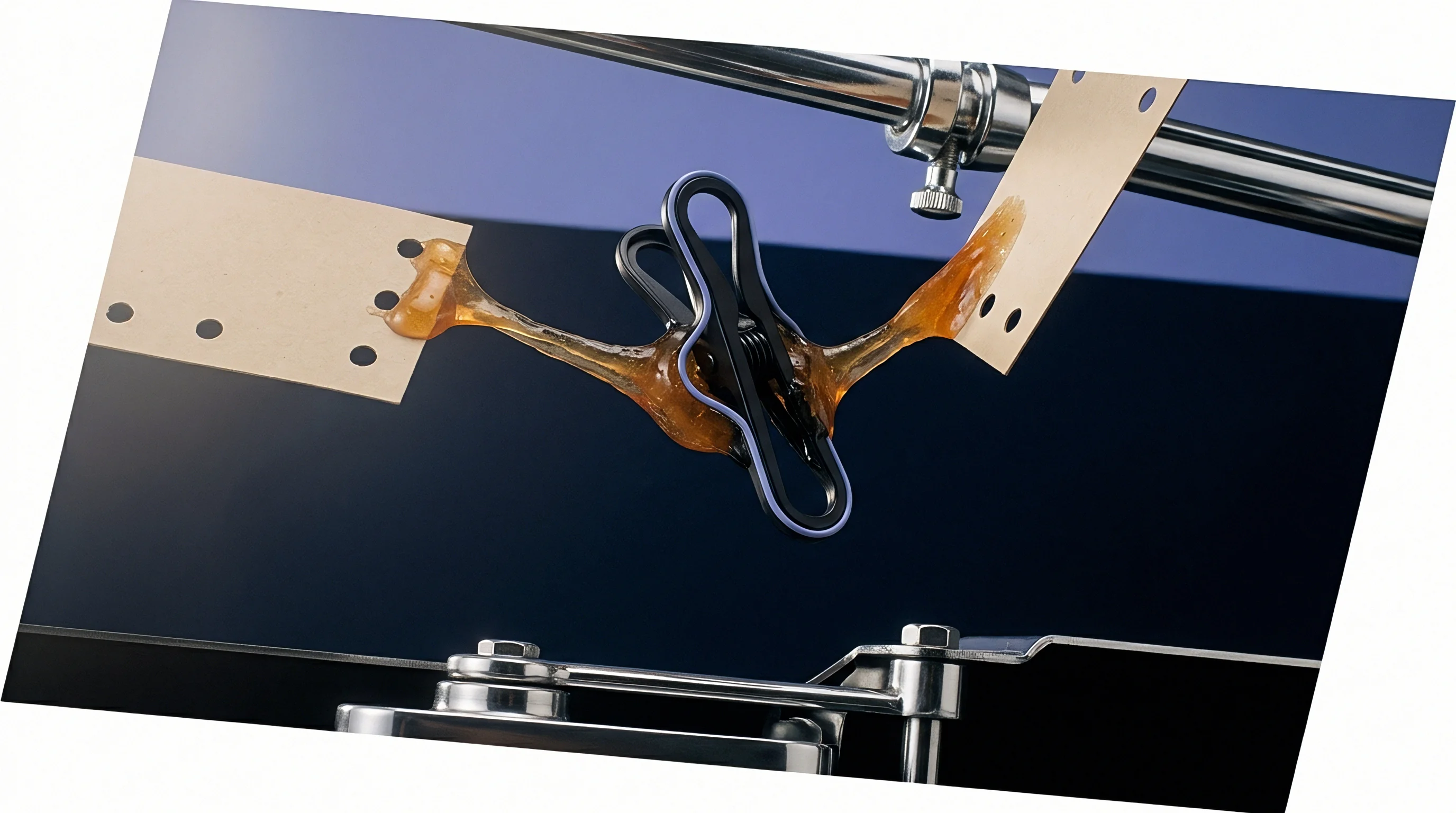
Stress Transfer Length along Short Elementary Fibers
Transferring load through a discontinuous fiber composite requires a minimum embedded length: the critical stress transfer length. Shear stress along an elementary flax fiber in a pectic matrix follows modified shear-lag kinetics, with axial stress rising from zero at the tip to a maximum at the midpoint. The rate of stress transfer depends on the ratio between matrix shear modulus and fiber axial modulus.
In ultrafine wet spun linen, stiff elementary cells paired with a degraded matrix shear modulus increase the required stress transfer length substantially.
If an elementary fiber is shorter than this critical threshold, it cannot carry enough load to reach its breaking strength. Instead, the middle lamella yields along its full length, pulling the fiber out under low stress. Weaving subjects warp yarns to dynamic tension spikes that easily exceed the static shear yield strength of short overlaps.
Ultrafine yarns containing many short elementary cells develop heavy hairiness and low tenacity under the dynamic loads of loom shedding; reducing yarn hairiness during wet spinning does not inherently guarantee structural cohesion in the shed.


Constitutive
Formulating lamellar shear in bast fiber bundles requires non-linear stress-strain relations that account for viscoelastic matrix sliding. Linear elastic models fail near ultimate load because the middle lamella undergoes plastic deformation and shear thinning prior to separation. Temperature, moisture, and strain rate strongly govern the shear modulus of the inter-elementary matrix.
Under standard conditions of 20 degrees Celsius and 65 percent relative humidity, an undamaged pectin matrix exhibits an initial shear modulus of 0.8 to 1.4 GPa. Moisture absorption swells the hemicellulose network, reducing that modulus by up to 60 percent under humid conditions.
Constitutive models treat the middle lamella as a zero-thickness cohesive interface governed by a traction-separation law. The traction vector across this interface comprises one normal and two orthogonal shear components, with shear tractions driving failure in ultrafine wet spun yarns. A bilinear traction-separation relationship links shear stress to relative displacement: elastic loading increases shear traction linearly up to the critical yield strength, after which linear or exponential softening captures progressive damage through the pectin matrix.
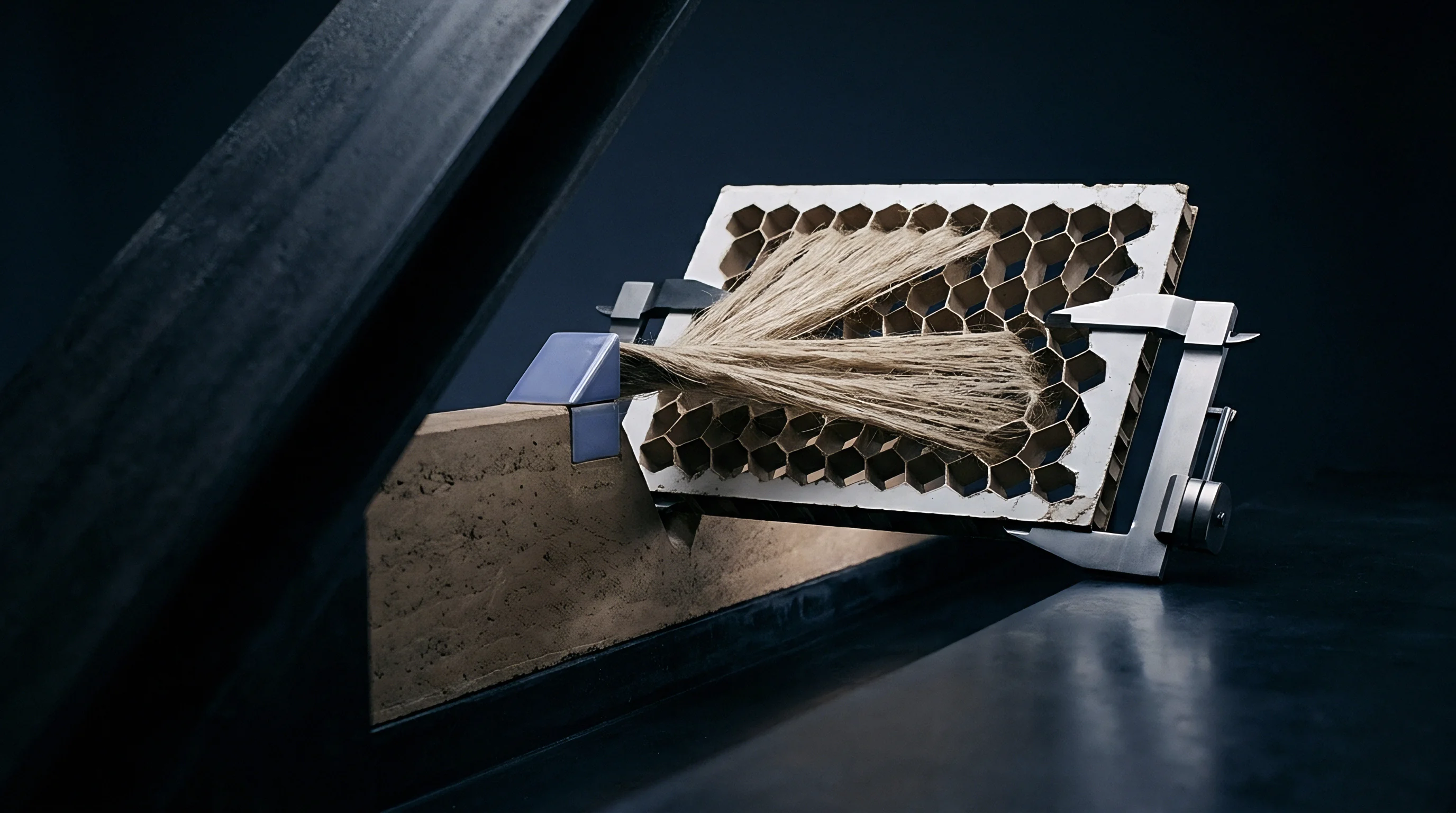
Bilinear Traction Separation Formulation for Interfacial Lamellae
Formulating a realistic cohesive interface model relies on three parameters: initial penalty stiffness, peak shear strength, and total fracture energy. Penalty stiffness must be sufficiently high to prevent artificial compliance before damage initiates. Peak shear strength corresponds to the stress required to rupture non-covalent hydrogen bonds at pectin-pectin and pectin-cellulose interfaces.
Total fracture energy represents the area beneath the shear traction-displacement curve, quantifying the work needed to separate adjacent elementary fiber surfaces completely.
The softening phase describes the degradation of the inter-elementary bond. As damage accumulates, local shear stiffness decreases according to a scalar damage variable ranging from zero in pristine material to one at full separation. This continuum mechanics approach accounts for energy dissipated during fiber pull-out.
Calibrating cohesive zone parameters experimentally requires pairing single-fiber pull-out tests with inverse finite element optimization, since standard mechanical tests overestimate interfacial toughness by introducing transverse compression into shear measurements.
| Yarn Count (NeL) | Lamellar Shear Strength (MPa) | Inter-Fiber Friction Coefficient | Critical Shear Fracture Energy (J/m2) | Matrix Moisture Sensitivity Index |
|---|---|---|---|---|
| NeL 80 (13.8 tex) | 16.8 | 0.38 | 210 | 0.72 |
| NeL 100 (11.0 tex) | 14.2 | 0.34 | 185 | 0.81 |
| NeL 120 (9.2 tex) | 12.5 | 0.31 | 160 | 0.88 |
| NeL 140 (7.9 tex) | 10.1 | 0.28 | 135 | 0.94 |

Pressure Dependent Yield Criteria in Compacted Bundles
Lamellar shear failure between fibers responds directly to normal compressive stresses acting perpendicular to the sliding plane. Twist and weave geometry generate substantial radial packing pressure inside the bundle, increasing the effective shear yield strength of the middle lamella as rough cell wall surfaces interlock. A modified Mohr-Coulomb or Drucker-Prager yield criterion effectively captures this pressure dependence within cohesive surface models.
Under compression, microscopic asperities on cell walls interlock, delaying the onset of matrix shear cracks. The yield criterion defines critical shear strength as baseline cohesion plus a pressure-dependent friction term. In dense plain weaves, crimp interchange creates high contact pressure at warp and weft intersections.
This local compression elevates the internal shear failure threshold, preventing ultrafine fibers from pulling out prematurely during multidirectional fabric extension.

Viscoelastic Rate Sensitivity during High Speed Deformations
At high insertion speeds, looms subject warp yarns to strain rates exceeding 100 per second during shedding and beat-up. Because the pectic middle lamella is viscoelastic, its effective shear yield strength increases with strain rate; rapid loading provides insufficient time for viscous polymer chains to relax within the matrix, rendering it stiffer and more brittle than under quasi-static conditions.
Wet spun NeL 100 flax bundles exhibit a critical lamellar shear fracture energy of 185 Joules per square metre under standard atmospheric conditions of sixty-five percent relative humidity.
Accounting for rate sensitivity requires incorporating a strain-rate dependence factor into the cohesive traction-separation model. Higher strain rates increase peak interfacial shear strength while decreasing total fracture energy. Under dynamic impact or rapid shed motion, failure shifts from ductile matrix sliding to brittle interfacial cleavage, elevating the incidence of sudden yarn breakages during high-speed weaving.
Whether nano-indentation of the middle lamella can isolate temperature-induced softening from moisture plasticization during high-speed sizing remains an open question.

Slip
Friction between technical fibers governs how shear forces redistribute across the yarn cross section. Once the cohesive middle lamella breaks under elevated shear, inter-fiber friction alone maintains structural integrity in the ultrafine bundle. Dry flax cells display a Coulomb friction coefficient between 0.25 and 0.40, though spinning lubricants and sizes alter this value considerably.
Friction forces depend on normal contact pressure, surface topology, and liquid or wax films present at the interface.
Yarn twist directly converts axial tension into transverse radial pressure. In ultrafine wet spun yarns, twist angles range from 15 to 25 degrees; under tension, the helical geometry of outer fibers forces radial pressure inward toward the core. This compression clamps adjacent fibers together and increases resistance to longitudinal slip, though fine counts limit maximum twist levels before torque induces snarling during weaving.
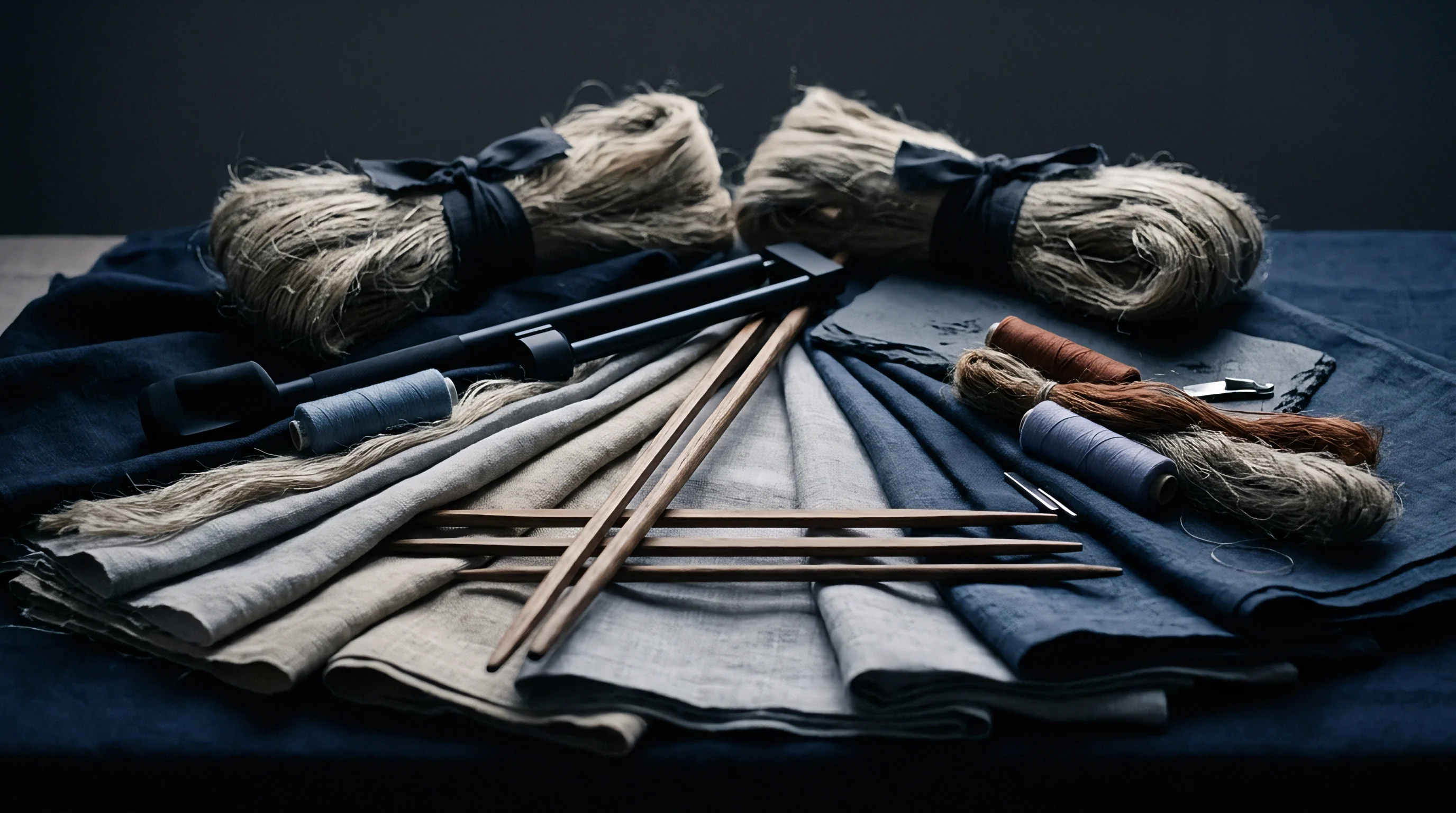
Normal Pressure Distribution Generated by Yarn Helicity
Normal pressure across a twisted yarn cross section varies radially from zero at the outer surface to a maximum along the central axis. Fiber migration during wet spinning shifts elementary fibers between surface and core positions, producing mechanical interlocking. Calculating radial pressure requires mapping fiber helix geometry against local tension vectors.
At the core, high compressive forces press adjacent fibers together and displace remaining matrix material into interstitial voids.
The chosen twist multiplier determines whether a yarn fails via brittle matrix shear or ductile frictional sliding. A low twist multiplier leaves the bundle relying primarily on pectin cohesion, causing fine yarns to disintegrate once the middle lamella yields. Higher twist multipliers supplement matrix cohesion with mechanical friction, though excessive twist reduces ultimate tensile strength by placing outer fibers under significant pre-tension prior to external loading.
- Interfacial Cleavage Cascades begin at surface defects where local radial clamping pressure drops close to zero.
- Pectin Degradation Delamination spreads along neighboring cell walls where chemical washing during wet spinning has stripped the matrix.
- Transverse Compression Softening flattens elementary fiber polygons under heavy beat-up force on dense looms.
- Stick Slip Shear Instability creates localized tension spikes during fast warp shedding motions.

Can Cohesive Zone Elements Capture Matrix Degradation?
Numerical models of composite interfaces typically consolidate microstructural damage into a single scalar variable. Accurately modeling ultrafine wet spun flax, however, requires isolating mechanical matrix cracking from chemical and environmental degradation. Moisture absorption swells the pectin matrix and alters penalty stiffness independently of mechanical strain, whereas chemical leaching during wet spinning extracts low-molecular-weight carbohydrates, creating micro-cavities along the middle lamella.
Modified cohesive zone formulations employ coupled damage variables to track matrix void fractions and chemical scouring intensity. These parameters adjust both the cohesive initiation threshold and the post-failure friction coefficient. Standard cohesive zone models assume constant friction post-failure, but experimental testing demonstrates that sliding fibers generate pectin debris that collects within surface asperities, causing dynamic friction fluctuations.
Incorporating debris accumulation into cohesive traction laws produces substantially improved finite element shear predictions.

Contact Geometry across Float Crossovers in Dense Weaves
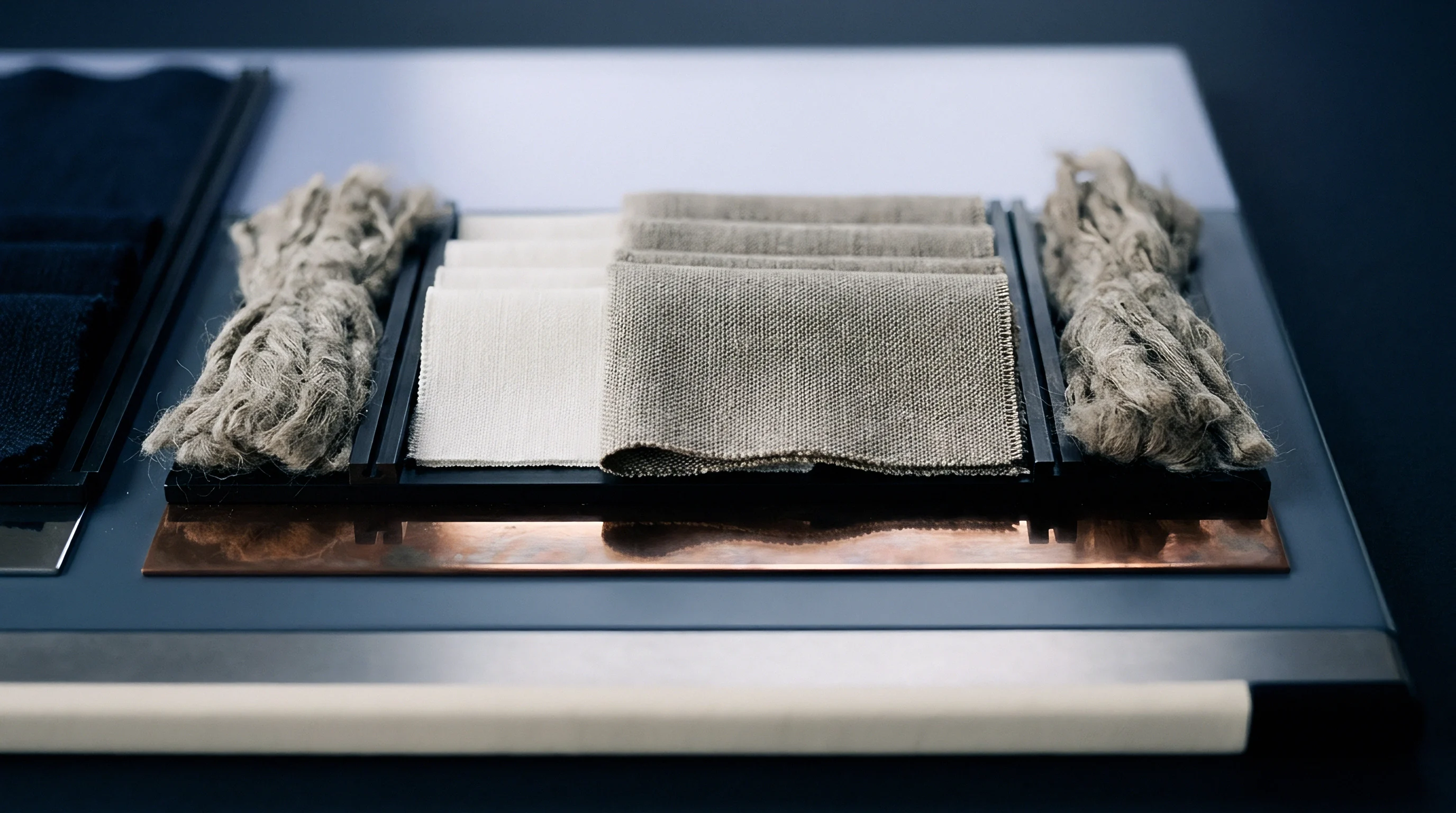
Fabric construction governs the external normal pressures exerted on wet spun yarns within a weave. In high-density plain linens, warp and weft intersect at steep angles, concentrating transverse contact forces. Crimp interchange flattens yarns at crossover points, altering internal fiber geometries from circular or polygonal profiles into flattened ellipses.
Specifications referencing ISO 3374 for mass verification bind suppliers to a minimum inter-fiber friction threshold that prevents seam failure in high-density linens.
Yarn flattening expands the contact area between neighboring elementary fibers inside the crossover zone, locally increasing resistance to shear sliding. Warp floats in satin or twill weaves experience less transverse compression than plain weave crossovers, permitting ultrafine yarns to slip under surface abrasion and leaving un-clamped middle lamellae vulnerable to shear failure. Designing these fabrics requires balancing float length against inter-yarn contact pressure to maintain structural stability without excessive stiffness.
Elevating the warp twist multiplier compensates for limited sizing penetration in ultrafine bundles without degrading fabric hand.

Simulation
Finite element analysis of ultrafine flax yarns requires multi-scale representative volume elements (RVEs) that explicitly discretize individual fiber interfaces. Continuum models treating the yarn as a uniform transversely isotropic rod fail to capture lamellar shear failure. Multi-scale frameworks integrate three distinct scales: the micro-scale fiber bundle, the meso-scale yarn cross section within the weave, and the macro-scale fabric unit cell.
Information transfers between scales, passing homogenized stress states down to micro-interfaces and returning localized damage metrics up to the structural model.
Micro-scale RVEs construct realistic fiber geometries directly from high-resolution micro-computed tomography (micro-CT) scans of wet spun yarns. Elementary fibers are discretized as irregular polygons with anisotropic elastic properties corresponding to oriented cellulose microfibrils, while surrounding pectin lamellae use zero-thickness 3D cohesive elements (COH3D8). Mesh generation requires strict control to prevent distortion along thin interfacial layers, maintaining element sizes between 0.1 and 0.5 micrometers along cohesive boundaries.

Representative Volume Element Discretization at the Bundle Scale
Constructing a micro-scale RVE begins by importing spatial centerlines and cross-sectional contours from tomographic data. Elementary cells are assigned a longitudinal elastic modulus of 70 GPa, a transverse modulus of 8 GPa, and a longitudinal shear modulus of 4 GPa. Cohesive elements within the middle lamella receive bilinear or exponential traction-separation laws calibrated from micro-tensile pull-out tests.
Boundary conditions applied to the micro-RVE capture combined axial tension, transverse compression, and torsional shear. Simulating a NeL 110 yarn requires an RVE containing 20 distinct elementary fibers over a 5-millimeter length, yielding a mesh of over 1.2 million continuum elements for fibers and 400,000 cohesive elements for interfaces. Explicit dynamic solvers execute these models to resolve high-frequency kinetic energy dissipation during matrix fracture and fiber sliding.
- Extract elementary fiber geometry and cross-sectional aspect ratios from high-resolution micro-computed tomography scans.
- Assign anisotropic elastic properties to secondary cell walls and viscoelastic cohesive traction-separation laws to inter-elementary middle lamellae.
- Apply sinusoidal warp tension profiles representing loom shed cycles at 600 picks per minute.
- Compute shear stress distributions across fiber overlaps to locate potential lamellar failure zones.
- Map predicted yarn strength degradation factors onto weaving shed efficiency projections.

Mesh Sensitivity and Cohesive Surface Discontinuity
Numerical convergence in cohesive zone models depends heavily on element size relative to cohesive zone length ~ the distance behind a crack tip over which cohesive tractions operate. If the mesh is overly coarse, stress concentrations pass through elements without triggering damage formulation rules, artificially elevating predicted yarn shear strength.
Determining cohesive zone length depends on matrix shear modulus, interface fracture energy, and ultimate shear strength. In ultrafine wet spun flax, this zone spans 15 to 45 micrometers. Accurate crack propagation modeling requires four to six cohesive elements across that distance, maintaining maximum element edge lengths below 5 micrometers.
Non-local damage formulations or embedded mesh refinement prevent artificial energy localization during full-scale yarn failure simulations.
| Model Scale | Element Type | Mesh Resolution (um) | Primary Boundary Condition | Computational Solver Type |
|---|---|---|---|---|
| Micro (Bundle) | C3D8R + COH3D8 | 0.5 to 2.0 | Periodic Micro-Strain Displacement | Explicit Dynamic |
| Meso (Yarn Cross Section) | C3D8R Continuum | 10.0 to 25.0 | Crimp Interchange Contact Pressure | Implicit Static |
| Macro (Fabric Unit Cell) | S4R Shell / C3D8R | 50.0 to 100.0 | Biaxial Tension and In-Plane Shear | Implicit Static |

Multi Scale Coupling from Fiber Interface to Loom Shed
Simulating yarn behavior during weaving involves transferring damage variables from the micro-scale RVE to a meso-scale fabric shell model. Meso-scale models represent individual yarns as flexible conduits with cross-sectional contact properties derived from micro-scale compaction experiments. As shedding machinery opens, tension pulses propagate along the warp ends.
The meso-scale model converts macroscopic warp stretch into axial strain profiles along the yarn, querying a pre-calculated micro-RVE failure surface database. When local strains exceed the cohesive initiation threshold, the model reduces local tensile and bending stiffness. Coupling explicit micro-mechanics with macro loom kinematics allows accurate prediction of warp break rates per 100,000 picks.
Tracking yarn tension via piezoelectric load cells mounted before the heddle eyes shows that ignoring lamellar shear initiation leads directly to underestimated warp break frequencies, increasing loom downtime and efficiency losses on high-speed rapier sheds.

Shed
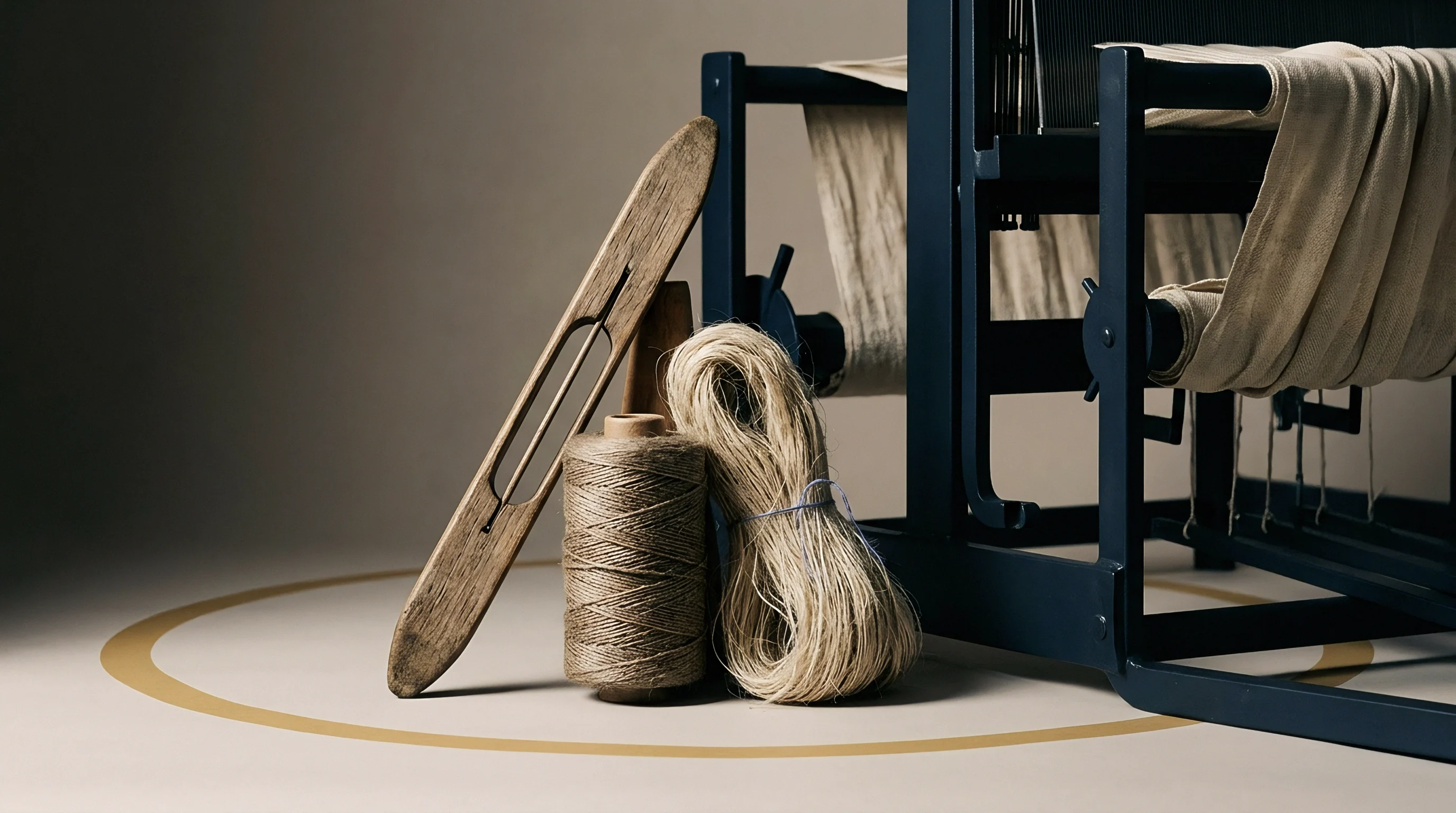
Dynamic tension profiles during warp displacement deliver sharp cyclic shear pulses within ultrafine linen bundles. High-speed rapier looms operating at 550 to 700 picks per minute (ppm) complete shedding motions in under 40 milliseconds per cycle. Opening the shed displaces warp ends vertically from the fabric fell, stretching the warp and inducing rapid tension spikes.
In ultrafine wet spun warps (NeL 80 to 120), peak tension regularly reaches 35 to 50 grams per end, compared to baseline tensions of 15 to 20 grams.
Repeated tension peaks subject the middle lamella to dynamic fatigue. Pectin matrices fail under cyclic stress amplitudes far below their static shear yield strength. By the time a warp end travels from the backrest roller to the fell point, it undergoes up to 5,000 tension cycles in the heddle eye.
This accumulated micro-damage degrades inter-fiber bonding, causing the middle lamella to cleave prematurely during beat-up.

Dynamic Warp Tension Spikes during Rapier Insertion
Warp tension during shedding follows a non-linear curve driven by eccentric loom kinematics, peaking near maximum shed opening where elongation is highest. Because ultrafine linen combines a high tensile modulus with low elasticity (breaking elongation between 1.5 and 2.2 percent), geometric displacement generates sharp tension spikes.
Yarn twist increases transverse clamping force inside the reed. When tension spikes hit, axial load forces internal fibers to slide; if tension rises faster than the pectin matrix can relax viscoelastically, shear stress concentrates at surface defects. Dynamic tension fluctuations exceeding 15 percent of breaking strength trigger progressive delamination, forcing elementary fibers out of the yarn body to form nep-like tangles in the heddle eye.
Sizing Film Penetration and Core Lamellar Protection
Chemical sizing shields ultrafine warps during weaving by binding surface fibers into a cohesive skin. Standard formulations rely on polyvinyl alcohol (PVA), modified starches, and carboxymethyl cellulose (CMC). Sizing viscosity determines whether the polymer remains on the surface or penetrates the core: high-viscosity formulations coat only the outer perimeter, leaving an unreinforced core enclosed within a tough exterior shell.
Sizing formulations that coat only the exterior yarn surface fail to prevent internal lamellar shear failure during peak shedding extension.
Low-viscosity sizes penetrate deeper into internal voids to reinforce core middle lamellae. Sizing polymers require high adhesion to cellulose and sufficient flexibility to tolerate cyclic flexure. Over-sizing renders yarns excessively rigid, causing brittle cracking of both the sizing film and the pectin matrix during bending, whereas under-sizing leaves outer lamellae exposed to mechanical abrasion against metallic loom components.
- Polyvinyl Alcohol Binding Formulations produce strong surface films but require low-viscosity grades to achieve deep core penetration.
- Modified Potato Starch Formulations offer excellent biodegradability and cost efficiency, though they respond brittly to shear under dry shed conditions.
- Carboxymethyl Cellulose Formulations provide superior film elasticity and moisture re-absorption, protecting core lamellae against dynamic fracture.
- Acrylic Co-Polymer Formulations improve interfacial shear adhesion in high-count bundles, cutting nep generation during high-speed insertion.

Abrasion Fatigue at the Reed and Drop Wire Interface
Passage through drop wires, heddle eyes, and reed dents subjects warp yarns to continuous surface abrasion. Friction against metallic components strips sizing films and exposes raw exterior fibers, while reed dent impacts during beat-up subject yarns to combined transverse compression and longitudinal shear.
Once the outer lamella fails, abrasion strips exterior elementary fibers away from the bundle core. These loose fibers accumulate behind the heddle eye into neps that impede clean shed opening, causing the rapier tape to snag adjacent ends and break the warp. Controlling abrasion fatigue requires optimizing shed geometry, reducing shed height, and applying wax lubricants during warping.
Incorporating a maximum warp tension variability clause under ISO 13934 testing protocols reallocates the commercial risk of fiber micro-cleavage to the sizing operator.

Settlement
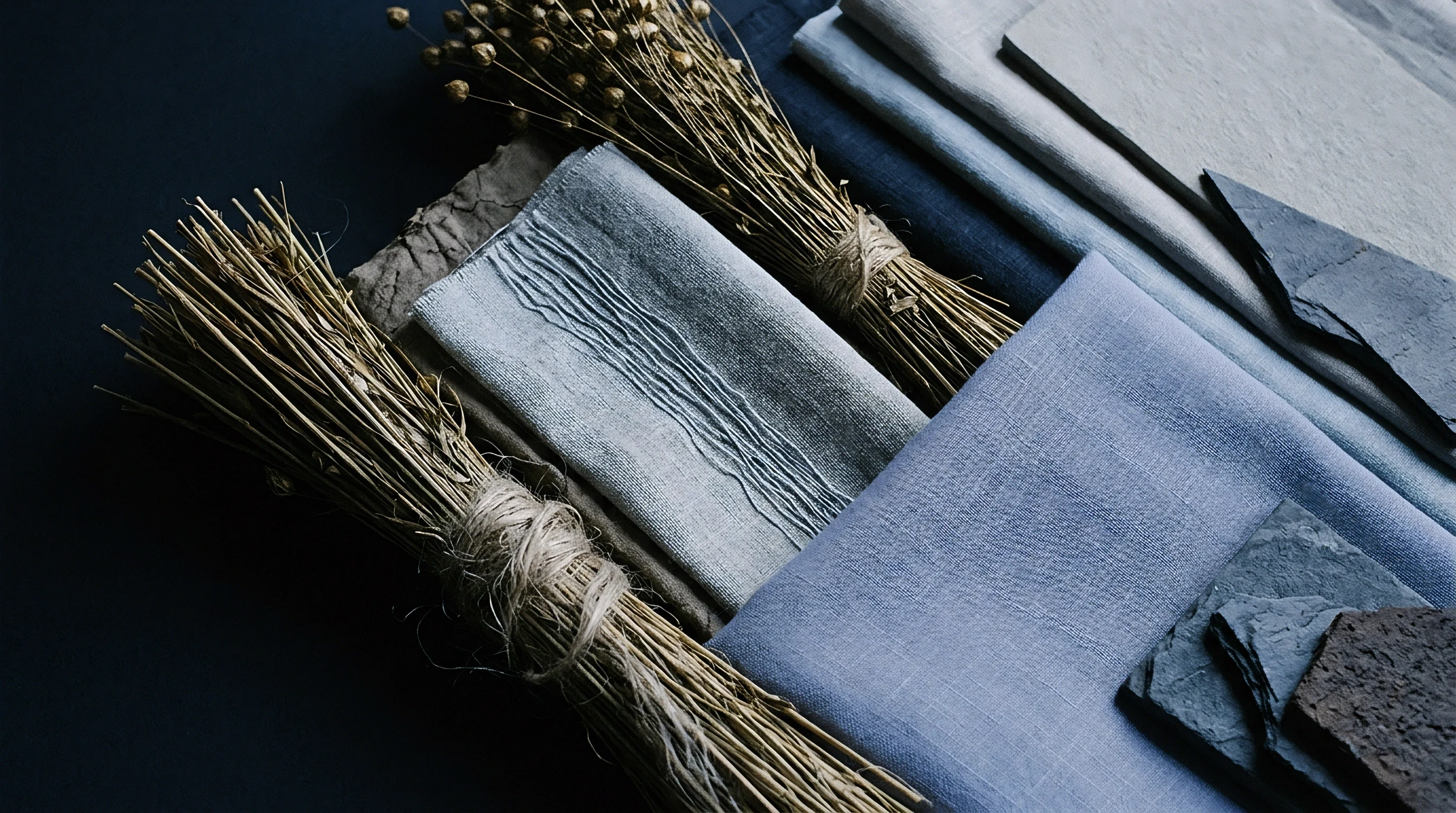
Structural parameters in finished cloth dictate whether internal yarn shear leads to fabric instability or seam failure. Engineered for high-end shirting, apparel, and lightweight home textiles requiring specific drape and hand, fine linen constructions demand high thread densities (36 to 48 ends per centimeter, 32 to 44 picks per centimeter) to maintain structural integrity. Lower thread densities permit yarn shifting under light transverse loads, causing seam slippage and localized fabric distortion.
Designing ultrafine linen constructions requires balancing cover factor against inter-yarn contact pressure. Calculations apply modified Peirce geometry adapted for non-circular wet spun yarns. A plain weave with a cover factor between 68 and 74 percent generates sufficient crimp interchange pressure to lock warp and weft threads together, suppressing internal lamellar shear sliding during fabric flexure.

Cover Factor Optimization to Maximize Inter Yarn Clamping
Fabric cover factor correlates directly with clamping forces acting at warp-weft crossovers. Higher cover factors increase warp crimp amplitude, forcing warp yarns to bend sharply over weft picks. This curvature induces inward radial compression within bent yarn segments, increasing internal fiber friction.
Increasing cover factor beyond 76 percent in ultrafine linen creates excessive warp density, elevating beat-up resistance and requiring higher loom forces. Heavy beat-up impacts subject warp ends to severe shear shocks at the fell line, triggering widespread lamellar failure in NeL 120 and NeL 140 warps. Practical design limits maximize cover factor up to the threshold where beat-up forces begin degrading yarn integrity.
| Construction Spec (Ends x Picks / cm) | Yarn Count (Warp / Weft) | Cover Factor (Percent) | Loom Speed (PPM) | Loom Hour Cost per Metre ($) | Seam Slippage Force (N) |
|---|---|---|---|---|---|
| 42 x 38 (1/1 Plain) | NeL 100 / NeL 100 | 72.4 | 620 | 1.85 | 112 |
| 46 x 42 (1/1 Plain) | NeL 120 / NeL 120 | 71.1 | 580 | 2.15 | 98 |
| 48 x 44 (2/1 Twill) | NeL 110 / NeL 110 | 74.8 | 600 | 1.98 | 135 |
| 38 x 34 (1/1 Plain) | NeL 80 / NeL 80 | 73.2 | 650 | 1.62 | 140 |
| Data normalized to 150 cm finished width on rapier looms under standard operating efficiencies. Costs reflect standard European mill hourly capacity rates. Seam slippage tested according to ISO 13936-1 standard opening threshold of 6 mm. | |||||

Weave Draft Selection and Crimp Interchange Dynamics
Weave pattern strongly influences shear stability. A 1/1 plain weave provides the highest intersection density per unit area, maximizing transverse contact and preventing slip, though producing stiffer fabric. Fine 2/1 twill or 3/1 satin weaves reduce intersection density to yield softer, more fluid drape.
Twill and satin weaves reduce normal clamping pressure along long float yarns. In an ultrafine NeL 120 satin, un-clamped warp floats slip under surface friction during laundering or wear, inducing fuzzing, pilling, and localized thinning. Resolving float instability in fine counts requires increasing pick density or introducing micro-interlocking floats into the jacquard draft.
Elevating the warp twist multiplier also compensates for reduced size penetration in ultrafine wet spun bundles without compromising fabric hand.

Loom Hour Cost Accounting for Fine Count Linen Production
Production costs for ultrafine wet spun linen rise non-linearly as yarn count and thread density increase. Weaving high-count warps (NeL 100 to 140) requires reduced loom speeds to maintain dynamic shedding tension below the lamellar shear fracture threshold; reducing loom speed from 680 ppm to 550 ppm increases machine runtime per linear meter by 23.6 percent, raising overhead costs proportionally.
Accounting for set-up losses involves pricing loom capacity directly against stoppage frequencies. Fine-count flax warps average 1.8 to 3.2 breaks per 100,000 picks, compared to 0.5 breaks in medium warps. These stoppages reduce loom efficiency from 92 percent to 81 percent, adding direct labor costs and unabsorbed overhead to the landed cost sheet.
Specifying ultrafine wet spun linen requires evaluating landed costs against physical limits of inter-fiber shear: balancing weave density against loom speed establishes where fabric achieves target shedding efficiency without compromising required shear strength.