Verifying European Flax Scope Certificates against Chinese Mill Intake Records
Reconciling European Flax certificates against Chinese mill intake requires balancing physical bale tags, mass-loss conversion yields, and transaction papers.


Bale
Container seals arrive intact at the warehouse gate in Changzhou, yet opening the container doors often reveals the first break in custody. Flax straw grown in Normandy or Flanders is scutched in local European mills, where mechanical beaters separate long line flax from short tow. Scutchers bundle long line fiber into raw bales weighing between 200 and 220 kilograms, bound with steel wire or plastic strapping.
A paper tag wired to the packaging or a thermal barcode sticker on the outer wrap identifies each scutching lot. Forty days at sea expose these labels to high humidity, container condensation, and constant physical abrasion, tearing tags free long before arrival. In Ningbo or Shanghai, dock handlers restack loosened bundles onto wooden pallets, and warehouse receiving clerks sign off on gross bill-of-lading weights rather than auditing individual tags.
Verification starts on the asphalt apron outside the raw fiber warehouse. Receiving teams log container serial numbers against the commercial invoice, sea waybill, and European exporter packing list. Weighbridges record gross truck mass before unloading, then capture tare weight once the container chassis clears the scales ~ a figure that excludes container strapping.
Gross intake weight on the mill scale must match export documents within the standard commercial tolerance of 0.5 percent. Because natural flax absorbs atmospheric moisture quickly, its moisture content shifts between 8 percent and 12 percent depending on ambient humidity en route and in storage. European scutchers invoice long line flax at a standardized commercial moisture regain allowance of 12 percent under International Bureau for the Standardisation of Man-Made Fibres rules, which apply by convention to bast fibers.
Underwriters accept a 0.5 percent mass variation between the export packing list and the mill weighbridge ticket when accompanied by an unbroken container seal.
Gaps between packing lists and warehouse intake weights point to moisture loss or drayage pilferage. A container loaded during a humid European autumn frequently discharges light during a dry northern Chinese winter. Mill intake clerks in Jiangsu track these variances on paper stock cards that record internal lot codes, arrival dates, truck license numbers, bale counts, and precise aisle and bay locations.
The intake ledger rarely records original European scutcher lot numbers unless buyer contracts explicitly penalize their omission. Intake teams assign localized Chinese batch prefixes, cutting the European traceability sequence before bales reach the warehouse racks.

Physical Checkpoints for Long Line Intake
- Container bolt seal integrity matches manifest documentation verified before stevedores break the lock mechanism.
- Scutcher bale identity tags remain attached to inner strapping bands, showing the registered European producer code alongside the harvest year.
- Moisture regain measurements taken with calibrated bast-fiber probe meters average 12 percent across ten sampled locations per shipping unit; higher readings force immediate weight adjustments.
- Bale wire tension confirms the bundle stayed compressed since initial packing in Europe. Broken wires indicate repackaging during transit.
Warehouses storing uncarded flax maintain strict environmental separation to protect fiber condition. Bales remain stacked on pallets six inches above concrete flooring to prevent moisture wicking from ground condensation. Storage bay assignments dictate whether uncertified fiber can contaminate an incoming shipment, yet mills processing conventional flax alongside certified fiber routinely stack bales of divergent origin within the same open bay.
Missing tags turn physical segregation into guesswork. Mismatched bale counts frequently result when customs inspectors detach tags during border phytosanitary sampling and misplace them during re-crating.


Certificate
The Alliance for European Flax-Linen and Hemp operates the European Flax certification standard, setting provenance rules for Western European bast fiber. Only scutched flax cultivated in France, Belgium, and the Netherlands qualifies. Certification bodies accredited under ISO 17065, including Bureau Veritas and Control Union, conduct annual on-site audits of scutchers, yarn spinners, and weavers to establish compliance.
These audits produce Scope Certificates, which validate that a facility possesses the systems, machinery, and segregation protocols needed to process certified fiber. While a Scope Certificate confirms operational capability over a twelve-month validity window, it never certifies a specific commercial delivery of yarn or cloth.
Commercial trade relies on Transaction Certificates rather than Scope Certificates. A Transaction Certificate confirms the transfer of a specific lot of certified fiber between two named entities, establishing exact mass, product category, commercial invoice number, and physical dispatch date. Chinese spinners bidding on export contracts often present a valid Scope Certificate as sufficient proof of compliance for greige yarn or woven linen.
This practice constitutes a structural breakdown in the chain of custody. A Scope Certificate held by a spinning mill in Zhejiang confirms that the enterprise has certification to process European Flax, but it still permits the mill to buy uncertified domestic fiber from Heilongjiang or import non-certified dew-retted flax from Egypt. The mill can spin conventional fiber eleven months of the year while displaying its Scope Certificate to international buyers.

Why Do Scope Certificates Fail at Port Intake?
Importers discover documentary gaps as soon as customs officers demand trace evidence connecting an arrived consignment to European farm cooperatives. The European Flax standard requires that every shipment of certified fiber moving from a European trader to an overseas processing plant carry a Transaction Certificate referencing the original seller and purchaser. Processing mills must reconcile incoming Transaction Certificates with ERP inventory records before issuing outgoing Transaction Certificates for spun yarn.
Certification bodies check volumes during annual surveillance visits, comparing incoming certified raw fiber against outgoing certified sales. The verification loop breaks down because audits occur retrospectively on an annual cycle.
| Document Instrument | Issuing Authority | Temporal Scope | Physical Entity Covered | Critical Failure Mode |
|---|---|---|---|---|
| Scope Certificate | Accredited Body (ISO 17065) | 12 Months | Processing facility and production lines | Presented as proof of batch origin without accompanying transaction data |
| Transaction Certificate | Accredited Body (ISO 17065) | Per Shipment | Discrete fiber mass and identified lots | Delayed issuance leaves delivered yarn uncertified for months post-delivery |
| Customs Import Declaration | China Customs (GACC) | Single Clearance | Declared container mass and tariff code | Declared mass exceeds Transaction Certificate volume due to mixed packing |
| Warehouse Stock Card | Mill Receiving Clerk | Continuous | Individual bale stack and internal batch | Omission of European scutcher lot numbers during internal code reclassification |
| Weighbridge Ticket | Port or Mill Scale Operator | Single Event | Truck gross, tare, and net mass | Unadjusted moisture weight variations masked as physical fiber content |
Discrepancies compound when European trading houses split large scutching runs across multiple Chinese spinning clients. A merchant purchases 500 metric tons of scutched long line flax from French scutchers, consolidating the fiber in an Antwerp transit depot under a single master Transaction Certificate. The trader subsequently sells forty metric tons to a spinner in Yixing and sixty metric tons to a separate facility in Tongxiang.
Issuing divided Transaction Certificates requires submitting distribution records to the certification body, a process taking six to ten weeks after ocean transit. The yarn spinner receives physical bales at the factory dock weeks before the certifier releases the corresponding electronic Transaction Certificate. Mill managers feed raw fiber straight into blending lines to fulfill weaving contracts, assigning temporary internal tracking numbers that yield zero matching records in official databases while the fiber transforms into yarn.
A certificate covering a facility confirms the presence of compliant equipment but confirms nothing about the origin of raw material sitting on the carding apron.
Auditors check paper flows by comparing certificate validity windows against delivery dates. If a Chinese mill takes delivery of raw scutched fiber on March 14, the seller Scope Certificate must demonstrate unbroken validity covering that exact calendar date. Furthermore, the volume stated on the supporting Transaction Certificate must equal or exceed the physical net mass entered into the mill intake registry.
Date mismatches frequently occur when renewal audits take place on schedule while certifiers delay publishing updated paperwork. In paper-based trading systems, an unverified certificate operates as no certificate at all.

Yield
Raw scutched flax cannot travel directly onto spinning frames without mechanical refinement. The conversion of raw baled fiber into wet-spun linen yarn involves significant mass loss that shifts reconciliation mathematics at every machine pass. Long line flax entering a Chinese spinning mill passes first through hackling machines, where rotating pinned cylinders comb out short fibers, dirt, weeds, and remaining woody shive.
Hackling separates the intake mass into two distinct outputs: hackled long line sliver, which proceeds to wet spinning, and hackled tow, which drops into collectors beneath the comb beds. The yield of hackled sliver ranges from 45 percent to 55 percent of initial baled scutched flax mass, depending on flax retting quality, tensile fiber strength, and the target yarn count. Hackling waste percentages rise when processing fine yarns.
Mass-balance models verify whether a mill consumed sufficient certified raw fiber to produce a declared volume of export cloth. Consider a typical commercial scenario: an apparel brand orders 20,000 meters of plain-weave linen fabric with a finished areal weight of 160 grams per square meter. The total finished fabric mass equals 3,200 kilograms.
Weaving, bleaching, scouring, and finishing introduce cumulative operational fiber losses averaging 8 percent across industrial wet processing and loom warp preparation. The mill requires 3,478 kilograms of greige yarn to deliver this finished lot. Producing 3,478 kilograms of single 36 Lea linen yarn (equivalent to 21.3 metric yarn count or Nm) through wet spinning demands an intake of hackled sliver adjusted for wet-spinning waste.
Wet spinning leaches natural flax pectins. Roving preparation, drawing frames, and ring-spinning frames produce drawing waste and broken ends, consuming 1.15 kilograms of hackled sliver per kilogram of spun yarn. The wet-spinning division requires 4,000 kilograms of hackled sliver.
| Processing Phase | Input Material Form | Output Material Form | Nominal Stage Yield | Cumulative Raw Flax Demand |
|---|---|---|---|---|
| Mechanical Hackling | Scutched Long Line Bales | Drawn Hackled Sliver | 52.0% | 100.0% (Base: 7,692 kg) |
| Sliver Preparation & Drawing | Hackled Sliver | Roving Bobbins | 93.5% | 52.0% (4,000 kg) |
| Wet Ring Spinning | Boiled Roving | Cops / Ring Yarn | 92.8% | 48.6% (3,740 kg) |
| Yarn Winding & Twisting | Spinning Cops | Cones / Cheese Packages | 93.0% | 45.2% (3,478 kg) |
| Warping & Weaving | Wound Yarn Packages | Greige Loom Fabric | 95.0% | 42.9% (3,304 kg) |
| Scouring, Bleaching & Finish | Greige Woven Cloth | Finished Piece Goods | 96.8% | 41.6% (3,200 kg) |
| Yield figures reflect standard industrial norms across modern ring-spinning operations at 12% moisture regain allowance. | ||||
Working backward through the mechanical hackling stage reveals the initial baled fiber requirement. At an average hackling efficiency yield of 52 percent long line sliver, generating 4,000 kilograms of sliver requires 7,692 kilograms of raw scutched flax bales delivered to the carding shed. Hackling generates 3,384 kilograms of hackled tow (44 percent) alongside 308 kilograms of non-recoverable dust, shive, and fiber trash (4 percent).
The mill must demonstrate an intake of 7,692 kilograms of certified European Flax to support a claim on 3,200 kilograms of finished linen apparel fabric. A mill inventory record displaying an intake of only 5,000 kilograms of certified raw fiber for this production lot indicates substitution. The shortfall means the factory introduced 2,692 kilograms of conventional uncertified fiber to complete the delivery.
A mass balance showing 5,000 kilograms of scutched fiber transformed into 3,200 kilograms of 36 Lea finished cloth assumes impossible mechanical efficiencies that violate basic processing dynamics.
Auditors test these calculations by demanding machine run logs from the preparation shed. Spinning cards and hackling machines operate with mechanical loggers or automated enterprise software recording input bale weights, operating hours, sliver run meters, and collected waste masses. Combing noils drop into secondary lines as valuable byproducts diverted into coarse spinning lines for tow yarns or carded blendings.
Mill ledgers track these secondary streams separately. A mill that cannot account for its certified hackling tow byproduct either discards traceability protocols or blends certified tow with uncertified domestic stocks. Mass balances must reconcile across both primary sliver outputs and secondary tow streams.
When yields exceed standard technical limits, anomalous extraction rates are sometimes credited to superior European straw quality, though blending with uncertified stock produces the exact same statistical bump.


Spool
Traceability on paper breaks down most frequently at the ring frame. Wet spinning draws hackled sliver through hot water troughs heated between 60 and 70 degrees Celsius. Hot water softens the natural pectin bonds binding individual flax ultimate fibers, allowing drafting rollers to slide the filaments into fine yarn structures.
Mills operate spinning sheds containing dozens of spinning frames running simultaneously across continuous shifts. Wet-spinning frames processing certified European Flax sit adjacent to frames running conventional Chinese fiber or Russian imports. Plant managers face commercial incentives to maintain maximum loom utilization, leading to fiber consolidation on the spinning floor.
Color-coded roving bobbins provide the primary physical defense against line crossover. Mills dedicated to chain-of-custody protocols assign distinct bobbin colors, such as blue spools for European Flax certified sliver and white spools for uncertified stock, updating lot codes daily. Operators mount bobbins on overhead creels, feeding individual ends through drafting zones down to the spindles.
Machine vibrations, operator substitutions during shift changes, and bobbin shortages disrupt this segregation. When blue bobbins run out during an active contract run, spinning operators routinely mount white bobbins carrying uncertified roving onto certified frame sectors to avoid machine downtime. Uncertified fiber twists into the final yarn package without visual distinction.
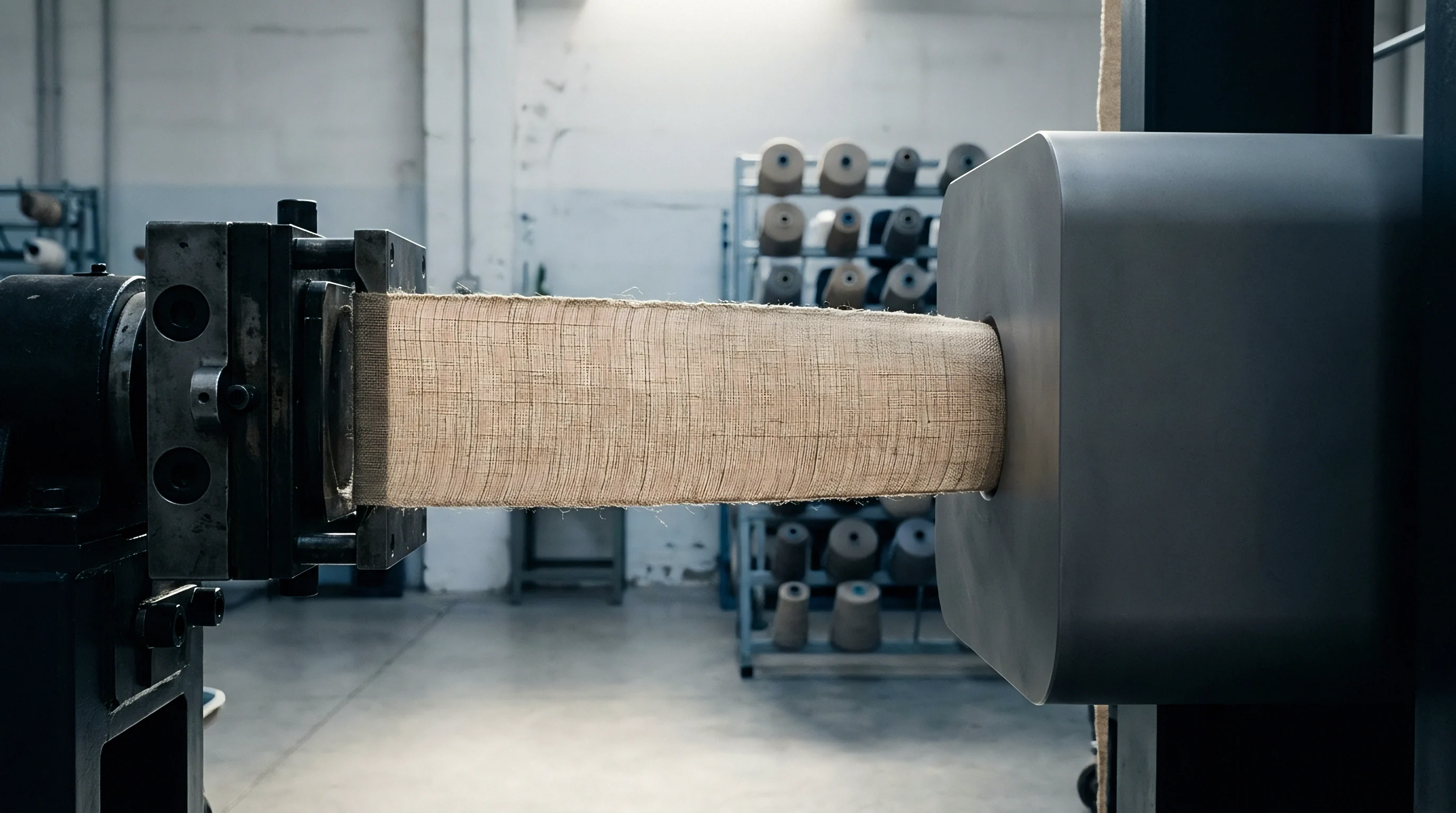
Whose Records Prove Batch Identity during Wet Spinning?
Verifying fiber segregation requires examining shift production tallies against spinning frame allocation logs. Mill floor supervisors complete physical shift reports recording specific frame numbers, operator identifiers, yarn count specifications, twist directions, and assigned batch identification numbers. These tallies link spinning bobbins directly to doffing boxes.
Doffing teams collect spun yarn cops from spindle banks, placing them into plastic transit totes marked with chalk lot codes. Yarn winding machines then transfer fiber from cops onto conical paper spools or cross-wound cheeses suitable for warp beams and weft shuttles.
- Shift spinning logs detail operating hours, mechanical frame identifiers, draft ratios, and spindle counts assigned to certified lot numbers.
- Doffing collection records verify the gross and tare weight of individual yarn boxes transferred from the spinning floor to the winding department.
- Winding room electronic ledgers track optical yarn clearing data, knot counts, and total package weights wound per shift.
- Waste yarn reconciliation books record wet-spinning slub waste, broken ends, and test cut lengths discarded during spindle resets.
Subcontracting introduces another major point of failure in Chinese manufacturing centers. Integrated spinning mills frequently lack internal weaving capacity to satisfy seasonal volume spikes, shipping wound yarn cones on open pallets to external contract weavers in nearby townships without tamper-evident outer wrapping or serialized lot identification. Contract loom sheds operate hundreds of rapier or air-jet looms weaving varied textile orders for multiple trading entities.
Weaver inventory systems often rely on paper chalk marks on loom headstocks to identify yarn origins. Sourcing managers examining weave-room practices observe certified yarn packages stored alongside cheaper linen blends. Because yarn cones look identical once removed from shipping cartons, physical segregation is all that prevents fiber mixing.
Without continuous third-party supervision at subcontracted weaving sheds, origin integrity collapses entirely, resulting in product rejections that strand finished inventories at destination customs checkpoints.
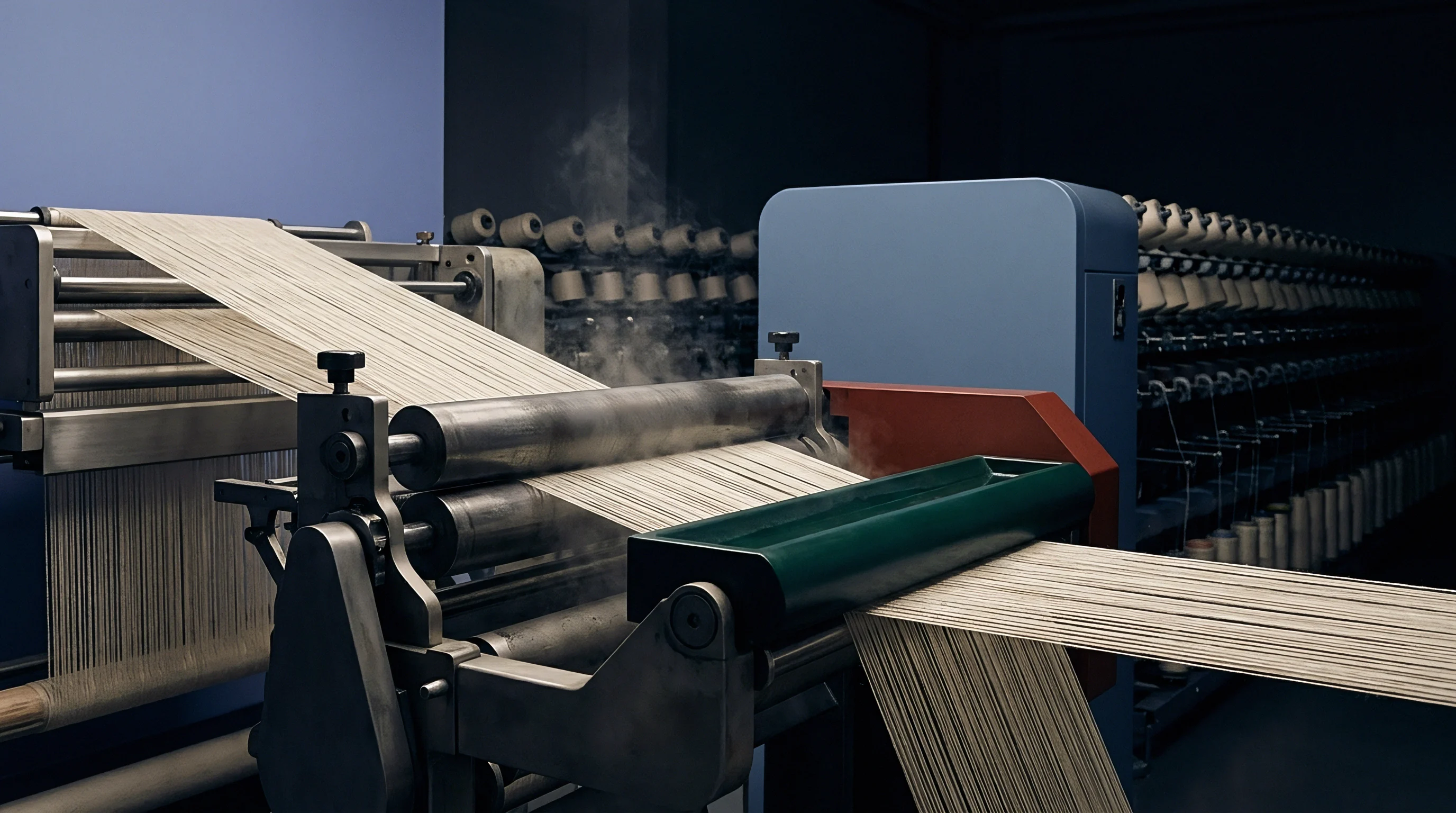
Dossier
Documenting provenance for commercial shipments demands an unbroken chain of physical custody backed by cross-referenced trade paperwork. Importers serving strict regulatory markets compile comprehensive import dossiers before presenting customs declarations. Destination authorities, including United States Customs and Border Protection and European Union customs administrations, inspect entry filings with increasing scrutiny.
Origin documentation must prove not only compliance with voluntary industry certification programs, but also clear statutory origin rules under non-preferential trade regimes. Linen goods imported into the United States encounter rigorous origin reviews under Section 307 of the Tariff Act of 1930, where authorities cross-examine bast fiber origins to enforce forced labor prohibitions.
The import qualification packet brings together disparate operational documents into a single chronological ledger. Customs brokers reject blanket letters. A valid dossier opens with the original purchase order placed with the European scutching facility, followed by the bill of lading tracking sea freight from Europe to China.
The dossier integrates China Customs import declaration sheets, known as GACC import customs declarations, proving physical entry of European raw flax under Harmonized System code 5301.10 or 5301.21. Mill intake weighbridge tickets, internal warehouse stock transfer cards, mechanical hackling logs, and wet-spinning production sheets follow sequentially. Each document must display matching batch references that correlate with the Transaction Certificate issued by an accredited ISO 17065 certification body.
| Dossier Component | Document Source | Key Data Points Verified | Cross-Reference Requirement |
|---|---|---|---|
| Export Clearance Form | European Port Customs | HS Code, Gross Weight, Container ID | Must match ocean bill of lading vessel details |
| Chinese Intake Declaration | China Customs (GACC) | Customs Entry Number, Net Weight | Tally against certified Transaction Certificate mass |
| Mill Raw Material Ledger | Spinning Plant Warehouse | Internal Batch Code, Bay Assignment | Ties European bale lot to internal mill batch code |
| Mechanical Processing Log | Hackling & Spinning Shed | Input Fiber Mass, Sliver Weight Output | Proves processing yield matches standard formulas |
| Subcontract Weaving Docket | Weaving Contractor Office | Yarn Delivery Cone Mass, Greige Metres | Confirms warp and weft yarn link to spinning run |
| Final Commercial Invoice | Chinese Manufacturing Exporter | Fabric Yardage, Net Mass, HS Code 5309 | Matches landed commercial packing slip values |
Commercial contracts protect buyers against documentary failure by shifting financial responsibility for origin compliance back to the manufacturer. Standard purchase order terms frequently fail to address the specific mechanics of fiber tracing. Sophisticated buyers insert specific provenance warranty clauses that condition payment acceptance on complete dossier validation.
Under these terms, the buyer reserves the right to withhold final letter-of-credit settlements or commercial balances until the mill delivers an audited Transaction Certificate verified directly against the official Alliance for European Flax-Linen and Hemp registry. When testing laboratories analyze finished linen cloth, trace elements such as isotopic signatures or pesticide residue profiles can identify uncertified agricultural inputs. If laboratory testing or customs audits disprove an origin statement, the contractual warranty shifts all freight costs, customs demurrage penalties, and recall liabilities directly onto the manufacturing mill.
Under these contractual mechanisms, the purchase specification incorporates a specific standard warranty clause: The seller warrants that all flax fiber utilized in the fulfillment of this order originates exclusively from certified European Flax agricultural sources verified by valid Transaction Certificates issued under ISO 17065 accreditation. The seller assumes total financial liability for any customs detentions, import rejections, or commercial penalties resulting from unverified fiber substitution, documentation lapses, or mass-balance variances. This warranty clause alters commercial leverage, compelling Chinese mills to maintain rigid segregation in raw fiber warehouses and spinning sheds.