Force Regulation
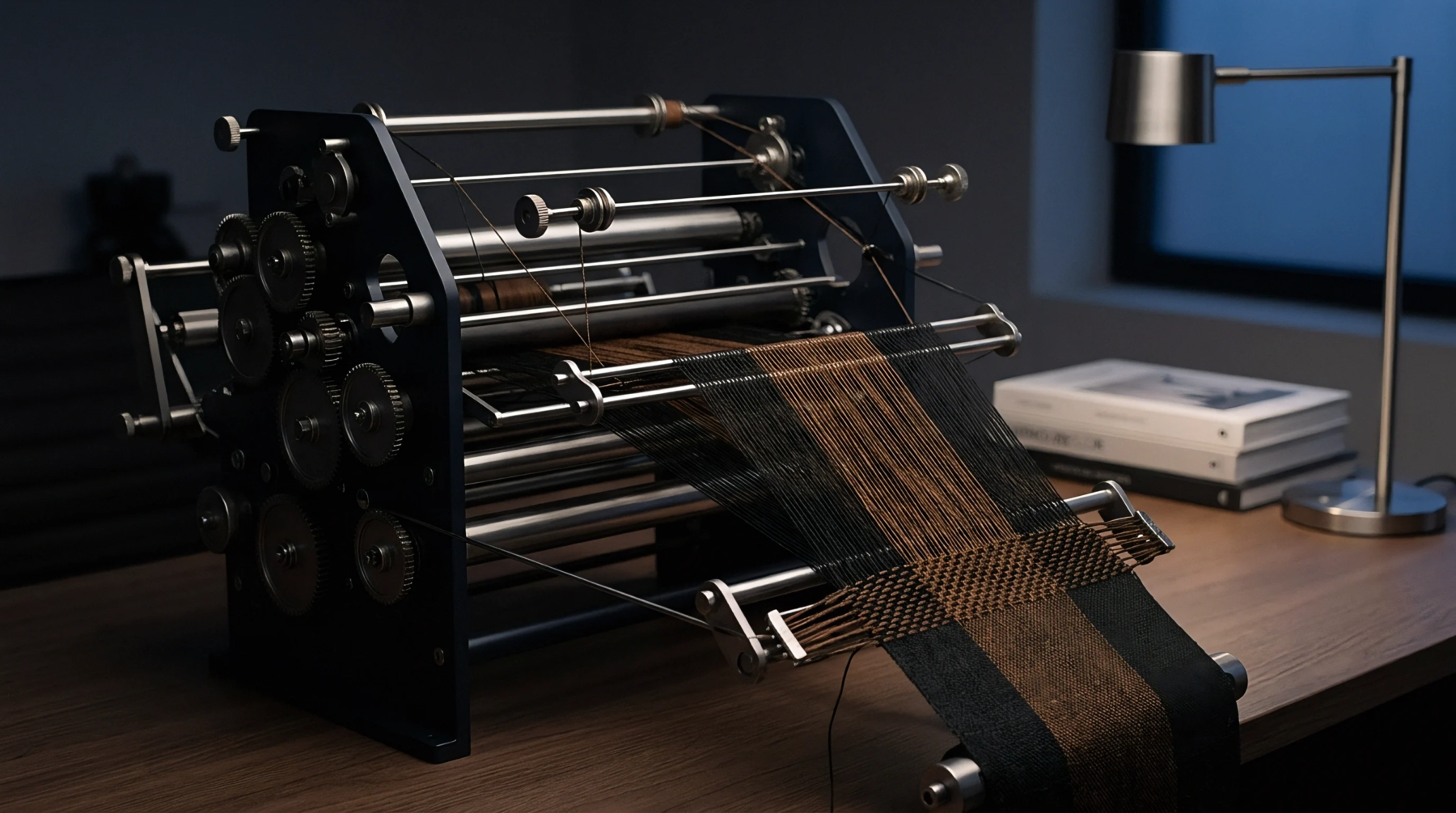
Mechanical control systems in high precision weaving machinery manage the longitudinal pull exerted on two separate sets of warp yarns. Managing dual beam tension is necessary when a fabric construction uses yarns with different shrinkage properties or crimp levels. The primary beam handles the ground weave while the secondary beam provides yarn for decorative effects or pile structures.
Differential Control
Electronic let off motions adjust the release rate of each beam independently to prevent puckering or structural instability in the finished linen. Sensors monitor the yarn path and provide feedback to the motor drives to maintain a constant force even as the beam diameters decrease during the production run. Because flax fibres possess low elasticity, the dual beam tension must be calibrated with extreme precision to avoid yarn breakage.
Structural Impact
Inconsistent force between the two yarn sources leads to dimensional defects that become apparent only after the fabric undergoes scouring or bleaching at the finishing mill. If the ground warp is too tight relative to the effect warp, the fabric may exhibit unlevel surfaces or unexpected width loss. Operators record the specific tension settings in grams or centinewtons on the loom setup sheet to ensure repeatability for future orders.
Correct calibration remains the determining factor for producing complex jacquard linen textiles.