Chinese Weaving Capacity and Seasonal Loom Allocation
Seasonal Chinese loom allocation demands mapping construction pick counts into hourly machine costs to secure capacity before Q3 peak congestion.


Rhythm
Chinese weaving centers follow clear regional geographic patterns and calendar cycles, with specific loom tech and fiber specialties concentrated in distinct hubs. Nantong and Wuxi in Jiangsu province host dense clusters of high-speed air-jet and fine-reed rapier looms running combed cotton, high-count poplins, and fine shirtings. In Zhejiang, Shaoxing and Keqiao run vast sheds full of filament water-jet and air-jet frames set up for synthetic suitings and blended circular-woven draperies.
Binzhou and Weifang in Shandong anchor heavy yarn-dyed, linen-blend, and wide industrial weaving on heavy rapier machinery.
Capacity swings sharply across the four quarters. Lunar New Year causes the biggest break between late January and early March: mills shut down completely for two to three weeks, but the operational drag lasts much longer. Re-staffing delays keep weaving sheds at 60 to 70 percent of rated capacity through March as mills replace and retrain weavers.
The resulting drop in greige output creates backlogs that spill right into spring delivery windows.
By the third quarter, demand shifts heavily to winter apparel, clogging capacity from July through October. Heavy twills, multi-shaft dobby weaves, yarn-dyed plaids, and intricate jacquards consume far more loom hours per linear metre than basic plain weaves. Loom speeds slow, warp breaks multiply, and open machine hours shrink fast across every major weaving province.
Seasonal workforce migration during the spring holiday cuts weaving shed efficiency by one third for up to six weeks.
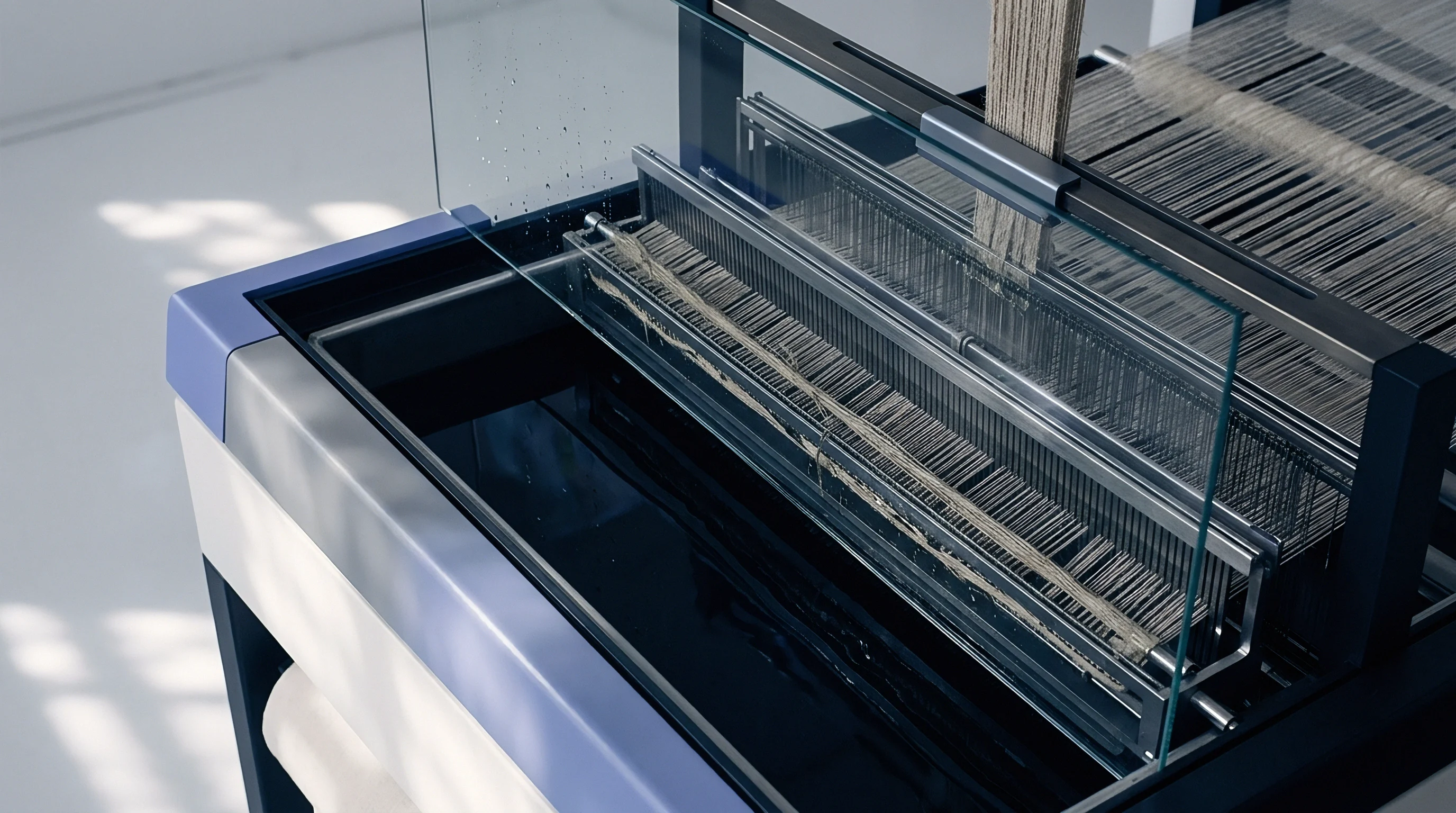
Regional Concentration across Primary Chinese Weaving Hubs
Industrial clustering lets individual textile districts specialize in particular yarn counts and loom widths based on local infrastructure, water access, and regional dye-house capacity. Jiangsu looms work fine-denier warps at high pick counts, requiring strict climate control ~ between 65 and 75 percent relative humidity ~ to prevent static on high-speed air-jet beams. Zhejiang sheds focus on high-volume filament warps, relying on water-jet insertion for maximum picks per minute at low unit cost.
Shandong plants run wide rapier looms built for heavy flax blends and multi-ply spun yarns that would constantly trip air-jet sensors.
| Region and District | Dominant Machinery | Primary Fabric Focus | Annual Peak Window | Capacity Bottleneck |
|---|---|---|---|---|
| Jiangsu (Nantong, Wuxi) | Air-Jet, Fine Rapier | Combed Cotton, Fine Poplin, Down-Proof Batiste | August to November | Fine Yarn Warping and Sizing |
| Zhejiang (Shaoxing, Keqiao) | Water-Jet, High-Speed Air-Jet | Synthetic Filament, Blended Suitings, Lining Material | September to December | Dye-House Package Capacity |
| Shandong (Binzhou, Weifang) | Heavy Rapier, Wide Air-Jet | Linen Blends, Canvas, Wide Home Textiles | May to August | Slub Yarn Quality and Reed Width |
| Hebei (Gaoyang, Baoding) | Dobby Rapier, Shuttleless Towel Looms | Toweling, Coarse Yarn-Dyed Sheeting | March to June | Shed Thermal Regulation |
Annual Allocation Cycles and Seasonal Capacity Shifts
Mill managers balance seasonal order flows by setting beam allocations months ahead of target delivery dates. European and North American autumn buying cycles trigger huge capacity reservations starting in April, with large retail programs booking entire weaving sheds for three to five months straight. Buyers looking for uncommitted loom slots during peak windows face high unit prices, strict deposit terms, and steep minimum order quantities.
Unbooked capacity opens up between April and June, offering better lead times and lower setup surcharges for custom constructions.
Regional environmental enforcement campaigns also interrupt capacity without much warning. Inspections of sizing facilities and yarn dye houses periodically throttle greige production across entire industrial zones. Facilities operating without complete compliance certificates face sudden temporary shutdowns, forcing pre-booked warp schedules onto secondary regional markets.
Late deliveries during post-holiday restarts stem from incomplete weaving crews on night shifts and raw yarn lots stuck in regional dye houses awaiting steam allocations.
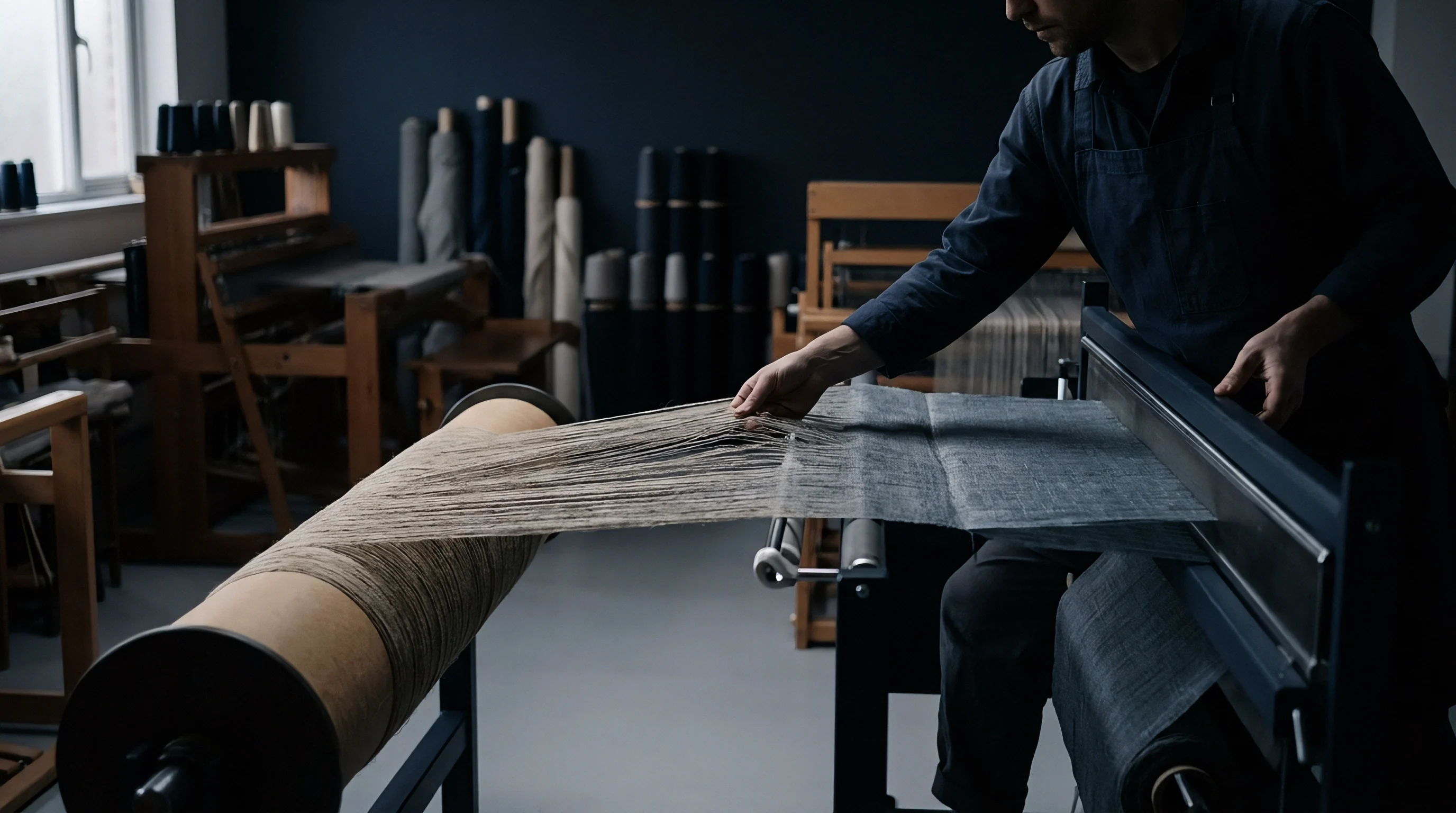

Grid
Equipment choice sets the technical boundaries of seasonal loom availability. High-volume Chinese sheds rely heavily on air-jet insertion running main shaft speeds between 800 and 1,200 picks per minute, using profiled reeds and auxiliary nozzles to blow fill yarn across the shed. Smooth, uniform yarns handle this pneumatic force well.
Slub yarns, high-twist crepes, and irregular flax fibers cause mispicks and constant machine stops, so heavy or textured fabrics get moved to rapier looms that transfer fill yarn with mechanical grippers.
Rapier frames run slower, between 350 and 600 picks per minute, which raises operating costs per loom hour. Shed schedules reflect these mechanics directly: high-speed air-jet capacity books solid months ahead for standard commodity sheeting and basic twills, while rapier capacity stays more flexible, handling complex multi-color yarn-dyed patterns, heavy dobby weaves, and linen blends that require regular operator attention.
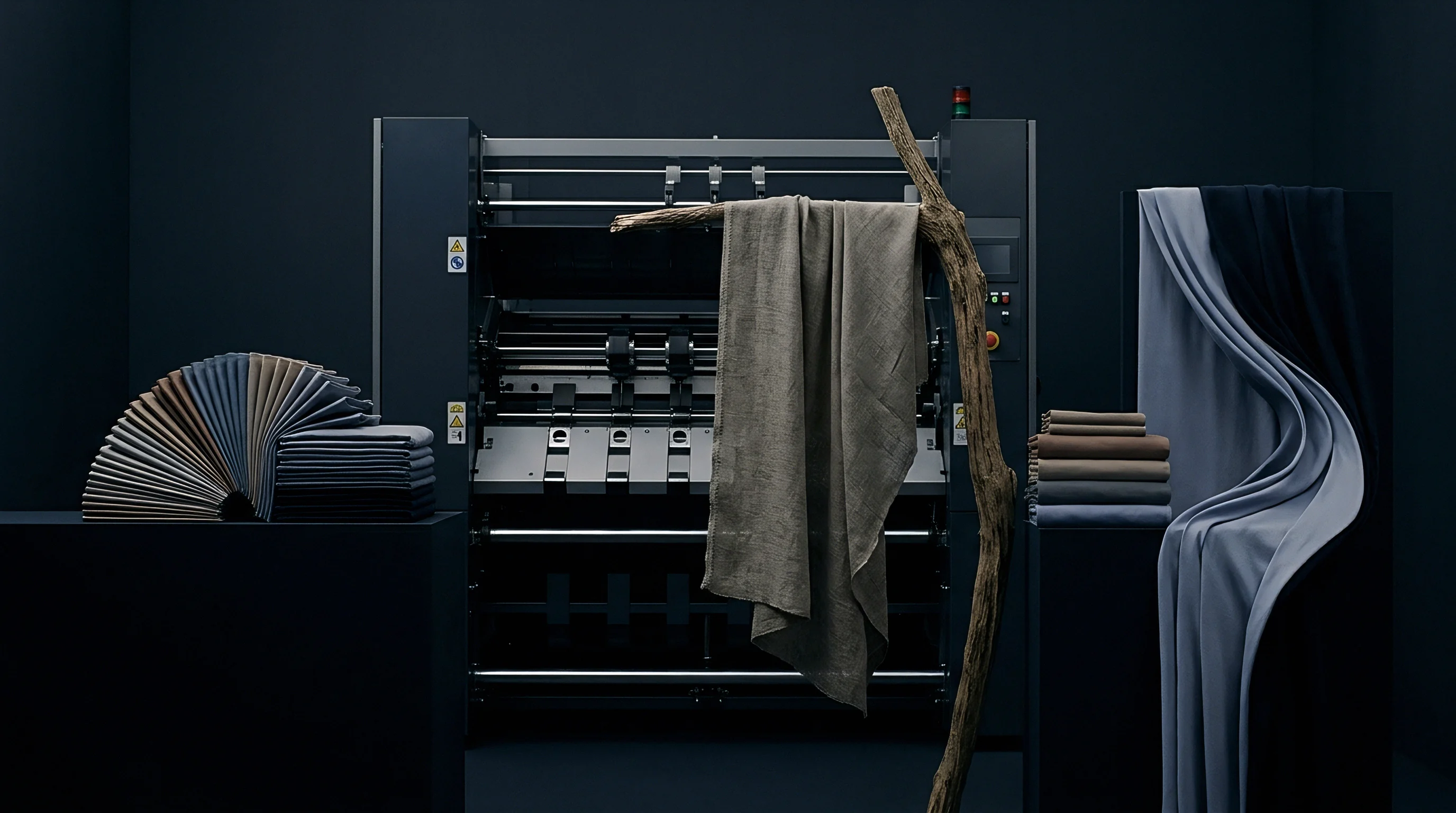
Shed Allocation by Machinery Type and Insertion System
Planners match incoming fabric specs against machinery groups to keep shed efficiency as high as possible. Air-jet operations target continuous efficiency above 92 percent; a single style that triggers frequent stops will crash that metric and burn money quickly. For that reason, planners route high-pick or coarse-yarn orders away from air jets and into rapier sheds.
- Air-Jet Loom Priority fits uniform combed cottons, light poplins, standard print-cloth greige, and high-density down-proof fabrics that need clean, high-speed single-weft insertion.
- Flexible Rapier Preference suits yarn-dyed plaids, uneven flax and hemp blends, multi-color dobby shirtings, heavy denim, and structural upholstery fabrics.
- Water-Jet Shed Allocation goes strictly to 100 percent synthetic hydrophobic filament warps, lining materials, and light rainwear shells.
- Projectile Loom Reservation is saved for extra-wide industrial canvas, heavy filter cloth, and dense technical textiles up to 540 centimetres in reed width.
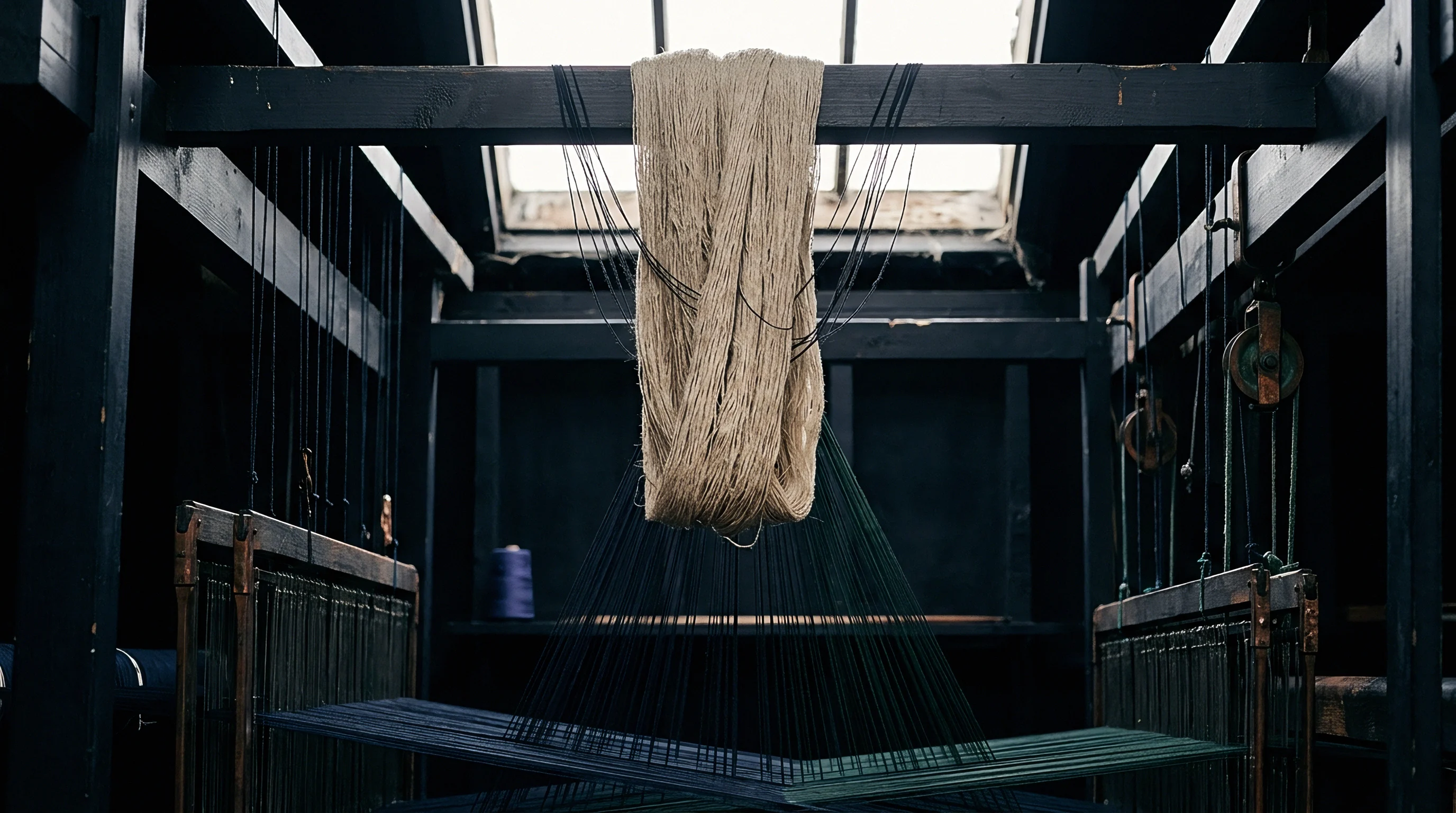
Width Constraints and Multi-Beam Setups
Loom width constraints create severe seasonal bottlenecks for home textiles and wide garment panels. Standard looms in Chinese sheds run 190 to 230 centimetres wide, delivering finished fabric widths of 140 to 160 centimetres after trimming and shrinkage. Extra-wide looms at 280 to 340 centimetres are much harder to come by.
Late-summer home textile surges fill these wide frames completely, raising conversion costs for apparel buyers competing for 280-centimetre rapier time.
Dual-beam weaving adds another layer of scheduling friction. Fabrics that combine stretch and non-stretch warp yarns, or ground warps with pile loops, need two separate beams running under different tension profiles. Reconfiguring a single-beam loom for dual-beam operation takes three to six hours of technician setup time.
Mills limit these conversions during peak months, usually requiring minimum order volumes of at least 10,000 metres per construction before approving frame modifications.
Putting coarse slub yarns or high-friction spun flax onto high-speed air-jet beams without increasing sizing wax concentrations guarantees warp break rates that wreck mill schedules.
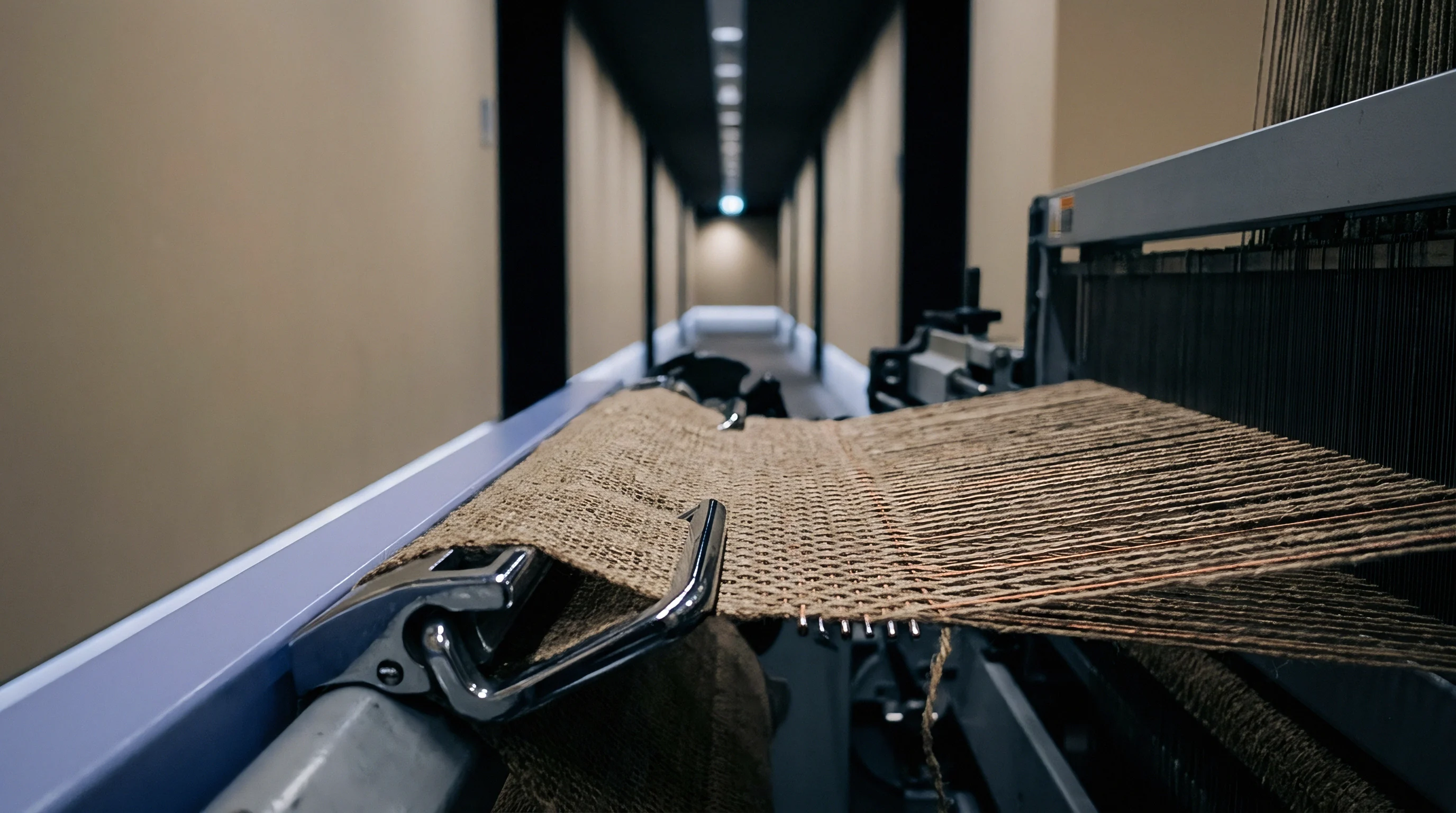
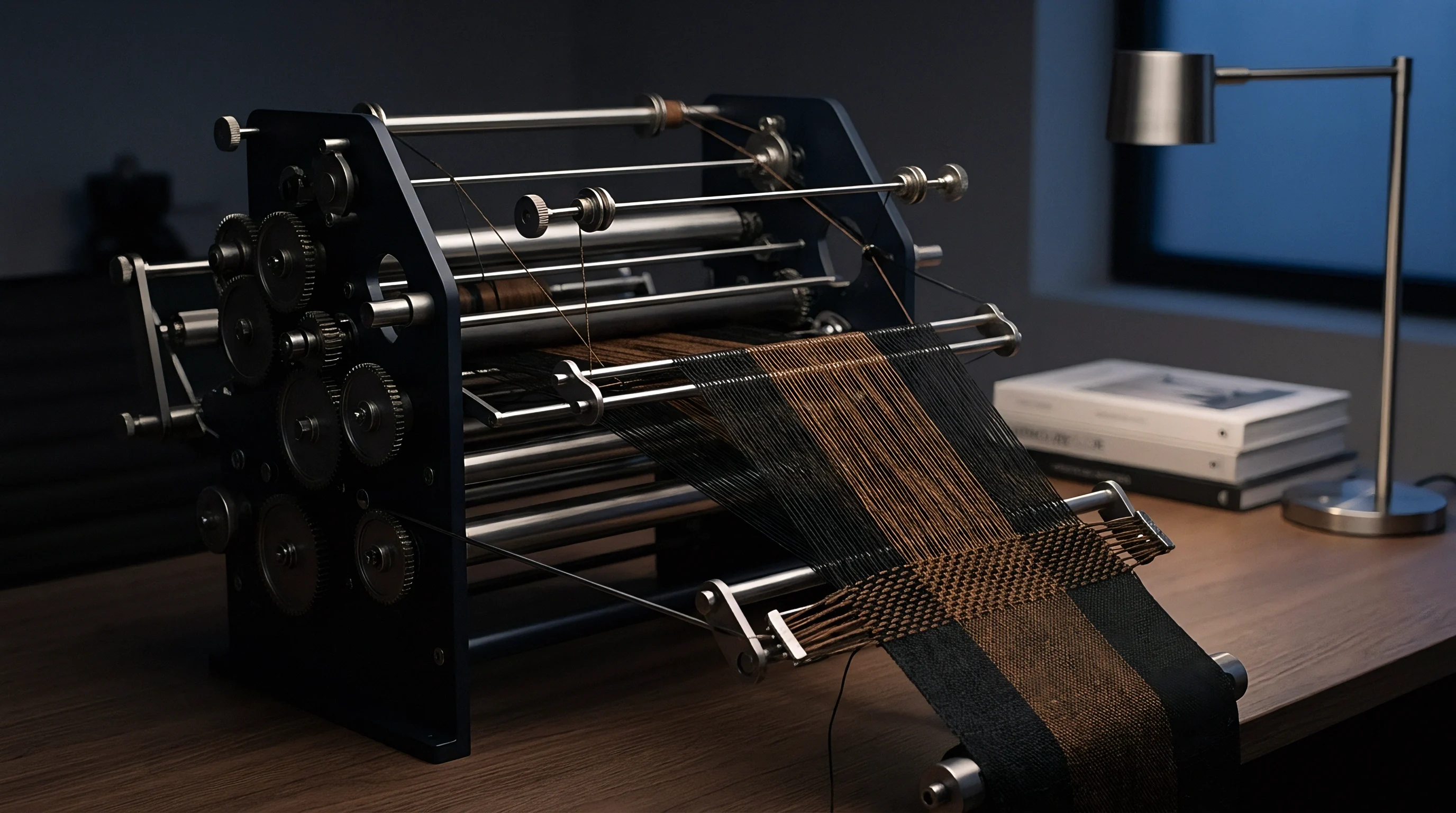
Queue
Order placement timing determines position in a mill’s rolling schedule. Reserving loom hours requires firm commercial commitments long before warp yarn ever reaches the reed. Order entry sets off spinning, warping, sizing, and beam drawing sequences, each taking up factory processing time before a beam can be mounted on the frame.
Lead times stretch quickly as capacity fills. Off-peak orders finish weaving and greige inspection in 30 to 35 days, whereas peak-season orders placed in August or September regularly take 60 to 75 days. Small-batch orders submitted late in peak season risk flat rejection or getting passed off to sub-contractors.

When Does Peak Season Loom Congestion Force Minimum Order Quantity Creep?
Peak congestion routinely pushes mills to hike minimum order quantities. In off-peak months, mills accept rapier warp runs as short as 1,500 to 2,000 metres per colorway. When seasonal demand picks up, they consolidate schedules to cut down on changeover downtime: setting up a frame, denting the reed, and threading drop wires burns up to eight hours of unbilled labor per frame.
| Loom Insertion Type | Off-Peak Minimum Order | Peak Season Minimum Order | Standard Warp Setup Fee | Deposit Term Expectation |
|---|---|---|---|---|
| Air-Jet (Standard Width) | 3,000 metres | 10,000 metres | Waived above minimum | 30% down, balance against BL |
| Rapier (Standard Width) | 1,500 metres | 5,000 metres | Calculated per warp change | 30% down, 70% LC at sight |
| Rapier (Extra-Wide 280cm+) | 2,500 metres | 6,000 metres | Fixed beam loading surcharge | 50% down prior to warping |
| Electronic Jacquard | 1,000 metres | 3,000 metres | Pattern carding fee applied | 50% down, balance pre-shipment |
Mills enforce higher order thresholds during peak months to keep main drive shafts turning without interruption. Small orders waste too much time on setup relative to their total fabric yardage. To protect margins, planners either group smaller orders onto shared warp runs or turn down anything under peak minimums.
A mandatory warp-commitment clause six weeks before main production locks down loom space against sudden order shifts.
Deposit expectations rise right alongside seasonal congestion. Standard terms of 30 percent down with the balance due against bill of lading move to 50 percent upfront during extreme peak periods. Mills use that cash to secure raw yarn lots from spinning suppliers, hedging against yarn price spikes during busy production runs.
A lead-time penalty clause specifying liquidated damages calculated per loom-day of unexcused downtime turns estimated delivery dates into actual shed priorities.
Metrics
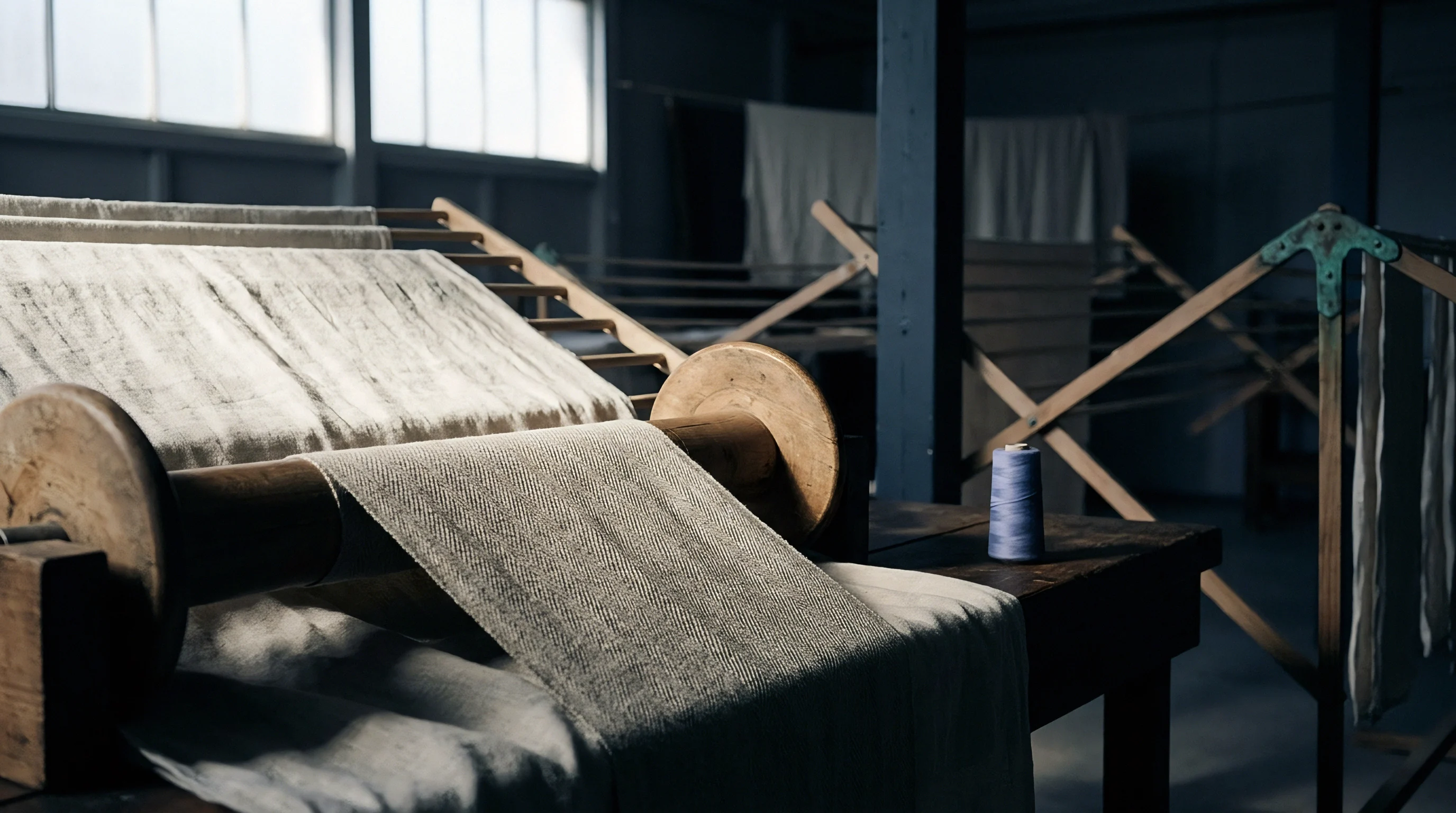
Loom hours are the absolute pricing currency of woven fabric production. Converting a raw fabric spec into machine occupancy time shows the exact cost of shed utilization based on picks per centimetre, operating speed in picks per minute, and expected shed efficiency.
Pick density directly dictates run-time. A fabric with 30 picks per centimetre takes twice as many shaft revolutions as one with 15 picks per centimetre. Higher pick counts slow linear output per hour, raising both machine time and landed cost per finished metre.
Loom-Hour Calculations and Efficiency Loss Factors
Shed efficiency measures actual pick count against theoretical maximum speed over a 24-hour running period. Stops for warp breaks, mispicks, maintenance, and beam loading cut into output. High-quality combed yarn runs at 90 to 94 percent efficiency on modern air-jet looms, while coarse, uneven slub yarns on rapier frames often drag efficiency down to 78 or 82 percent.
- Theoretical linear output equals main shaft RPM divided by picks per centimetre, multiplied by 60 minutes to get theoretical metres per hour.
- Actual hourly production applies the shed efficiency percentage to theoretical linear output to adjust for expected mechanical downtime.
- Total required loom hours equal total ordered metres divided by actual hourly production metres.
- Loom allocation cost multiplies total loom hours by the shed’s hourly overhead rate, adding warp prep fees and yarn costs.
Running a 40 pick per centimetre twill at 82 percent efficiency consumes 24.3 loom hours per thousand metres produced.
Worked Derivation of Production Time and Metre Cost
Comparing two fabric styles shows how loom-hour calculations drive landed costs. Consider a standard contract for 10,000 linear metres of cloth produced on a 190-centimetre rapier loom, with shed overhead running at 8.50 USD per loom hour.
Option A specifies a balanced 2/2 plain weave cotton sheeting: 24 ends per centimetre, 20 picks per centimetre, using 30s combed cotton yarn in warp and weft. Shaft speed is set at 500 picks per minute, with expected shed efficiency at 90 percent.
Theoretical output comes to 25 centimetres per minute, or 15 linear metres per hour. At 90 percent efficiency, actual yield is 13.5 metres per loom hour. A 10,000-metre run takes 740.7 loom hours, resulting in a total loom overhead cost of 6,295.95 USD, or 0.63 USD per linear metre.
Option B specifies a heavy yarn-dyed slub twill: 36 ends per centimetre, 32 picks per centimetre, using 14s slub yarn in the fill. The irregular slub yarn forces a speed reduction to 400 picks per minute to prevent excessive weft breaks, while lower yarn uniformity drops shed efficiency to 80 percent.
Theoretical output drops to 12.5 centimetres per minute, or 7.5 linear metres per hour. At 80 percent efficiency, that gives 6.0 actual metres per loom hour. A 10,000-metre run takes 1,666.7 loom hours.
Total loom overhead cost jumps to 14,166.95 USD, or 1.42 USD per linear metre ~ more than doubling the conversion cost on running time alone.
| Construction Variable | Option A: Plain Cotton Sheeting | Option B: Heavy Slub Twill |
|---|---|---|
| Yarn Count (Warp x Weft) | 30s Combed x 30s Combed | 20s Carded x 14s Slub Flax-Blend |
| Thread Density (Ends x Picks / cm) | 24 x 20 | 36 x 32 |
| Loom Insertion Type | Air-Jet (500 RPM) | Rapier (400 RPM) |
| Shed Efficiency Rating | 90 Percent | 80 Percent |
| Actual Output per Loom Hour | 13.5 Metres | 6.0 Metres |
| Total Loom Hours per 10,000m | 740.7 Hours | 1,666.7 Hours |
| Conversion Overhead per Metre | 0.63 USD | 1.42 USD |
| Method Note: Shed overhead calculated at a fixed benchmark of 8.50 USD per running loom hour, excluding raw fiber cost and wet finishing processing. | ||
Underestimating pick insertion speed on high-density twills leaves shed time unallocated and loom overhead unrecovered, which usually leads to retroactive surcharges billed back to the buyer.
Audit
Rigorous greige inspection protects buyers when mills push loom speeds beyond recommended yarn tolerances to clear peak backlogs. As fault rates rise, automated stop motions sometimes fail or get bypassed by operators trying to hit daily quotas, letting weaving defects roll straight onto the take-up beam.
Greige inspection follows standard grading frameworks like the ASTM D5430 four-point system, which assigns penalty points based on defect length. Catching defects in the greige state before wet finishing is essential, since wet processing permanently locks structural faults like starting marks and reed streaks into the cloth matrix.
A four-point defect score exceeding 28 points per one hundred square metres warrants immediate batch isolation prior to wet processing.
Fault Manifestations during Peak Capacity Shed Acceleration
Excessive machine speed causes predictable mechanical faults. High tension on weak warp ends leads to snap-offs, leaving floating threads and end-out streaks along the roll. Accelerated drop-wire mechanisms generate starting marks when a loom restarts after a stop, leaving dense thick or thin bars across the fabric width.
- Starting Marks show up as dense horizontal bands from poor take-up motion synchronization following an automated stop.
- Reed Marks run as continuous vertical streaks caused by bent or misaligned reed wires distorting warp spacing.
- Slub Drag-In happens when loose lint pulled into the shed line gets woven into clean fabric.
- Mispicks and Broken Picks leave empty filling channels across the width from failed insertion signals or snapped fill yarns.
Verification Steps before Warp Commitment
Technical verification should start long before main weaving begins. Pulling a certified loom-state sample allows lab analysis of reed width, crimp percentage, finished weight, and cover factor. Testing greige swatches for sizing content is equally vital; residual PVA sizing compounds cause uneven dye penetration and blotchy finishing down the line.
Third-party inspectors should evaluate at least 10 percent of the greige roll lot under standard inspection lighting. Documenting point counts per roll provides objective backing for commercial credit claims or full lot rejections before committing fabric to dye houses or shipping.
Whether Chinese weaving operations absorb rising energy tariffs through automated loom monitoring or pass them into base loom-hour rates remains an open question across major regional sheds.