
Linen Greige Fabric Origin Verification across Processing Facilities
Greige linen origin requires batch-level transaction certificates, strict weaving shed mass balance logs, and adherence to customs substantial transformation laws.
Greige linen origin requires batch-level transaction certificates, strict weaving shed mass balance logs, and adherence to customs substantial transformation laws.

Verifying European Flax origin requires matching annual scope certificates to batch transaction certificates while enforcing mill mass balance yield limits.

Mass balance chain of custody requires dry-weight intake reconciliation, facility-specific yield factors, and valid transaction certificates at every border.

Origin enforcement for made-up linen rests on tariff shift rules, mill mass-balance records, and statutory processing criteria across trading blocks.

Continuous woven linen fabric classification under HS Heading 5309 requires minimum 85 percent flax content by dry weight and uncut continuous roll edges.

Contractual European Flax verification demands valid transaction certificates reconciled against physical mill mass-balance ledgers and tariff shift rules.

Mass balance reconciliation requires adjusting gross fiber intake to dry commercial mass standards and applying empirically verified process loss factors.

Certified Western European flax tracing demands transaction certificates for every owner change and precise mass balance auditing across all hackling steps.

Reconciling multi-site tow bleaching and spinning losses demands correcting gross bale weights for chemical extractive drop and official moisture regain baselines.

Audits of offshore linen convert wet mass to oven-dry baseline under ISO 6741, stopping regain shifts from masking fiber substitution.

Mass balance integrity in Asian flax mills requires core-moisture corrections and process-yield loss adjustments on raw receipts before balancing volume credits.

Customs origin reconciliation requires mathematical proof that multi-stage processing losses from scutched flax to finished cloth stay within strict technical bands.

Split input transaction certificates by applying hackling mass loss factors to isolate tow co-product balances accurately.

Raw flax fiber mass balance verification requires converting physical scale weights to bone-dry mass plus official twelve percent commercial regain under ISO 2060.

Customs clearance of imported foreign goods relies on validating issuing chamber authorization, matching physical invoices, and verifying mill trace records.

Enzymatic dissolution of residual homogalacturonan matrix in fine flax roving balances bundle separation against strand tenacity for fine yarn spinning.

Alkaline chelant kinetics optimize middle-lamella pectin removal, stabilizing fiber bundle cohesion during high-draft wet spinning and preserving yarn tenacity.

Controlled drafting and chemical middle-lamella pectin extraction convert raw hackled flax sliver into boiled roving engineered for wet spinning attenuation.
Reconciling Transaction Certificates with customs origin rules requires declaring the weaving mill country as origin while citing certificates for fibre provenance.

Reconciling European Flax in Chinese wet mills demands tracing intake weights through hackling loss and trough dissolution directly to verified yarn certificates.

Audit flax mass balance by verifying moisture-adjusted fiber intake, mechanical hackling yields, and temporal credit allocations against Transaction Certificates.

Enforce raw flax yield guarantees and cross-border origin compliance by linking invoice payments directly to mass balance audits and valid transaction certificates.

Unverified yarn admixtures strip preferential duty rates, triggering retroactive transaction value rejection, dumping penalties, and mandatory cash deposits.
Importers bear strict regulatory liability and unrecoverable commercial loss when overseas spinning mills commingle certified flax without batch transaction records.

Establishing unspun flax origin requires reconciling scutching mass balances, valid Transaction Certificates, and isotope tests against strict customs rules.

Carded greige yarn isotope models require Soxhlet pre-wash to eliminate batching oil shifts and physical card-room audits to constrain Bayesian blend priors.

Flax origin verification couples pure alpha-cellulose isolation with multi-isotope and strontium ratio mass spectrometry to map fiber against regional isoscapes.
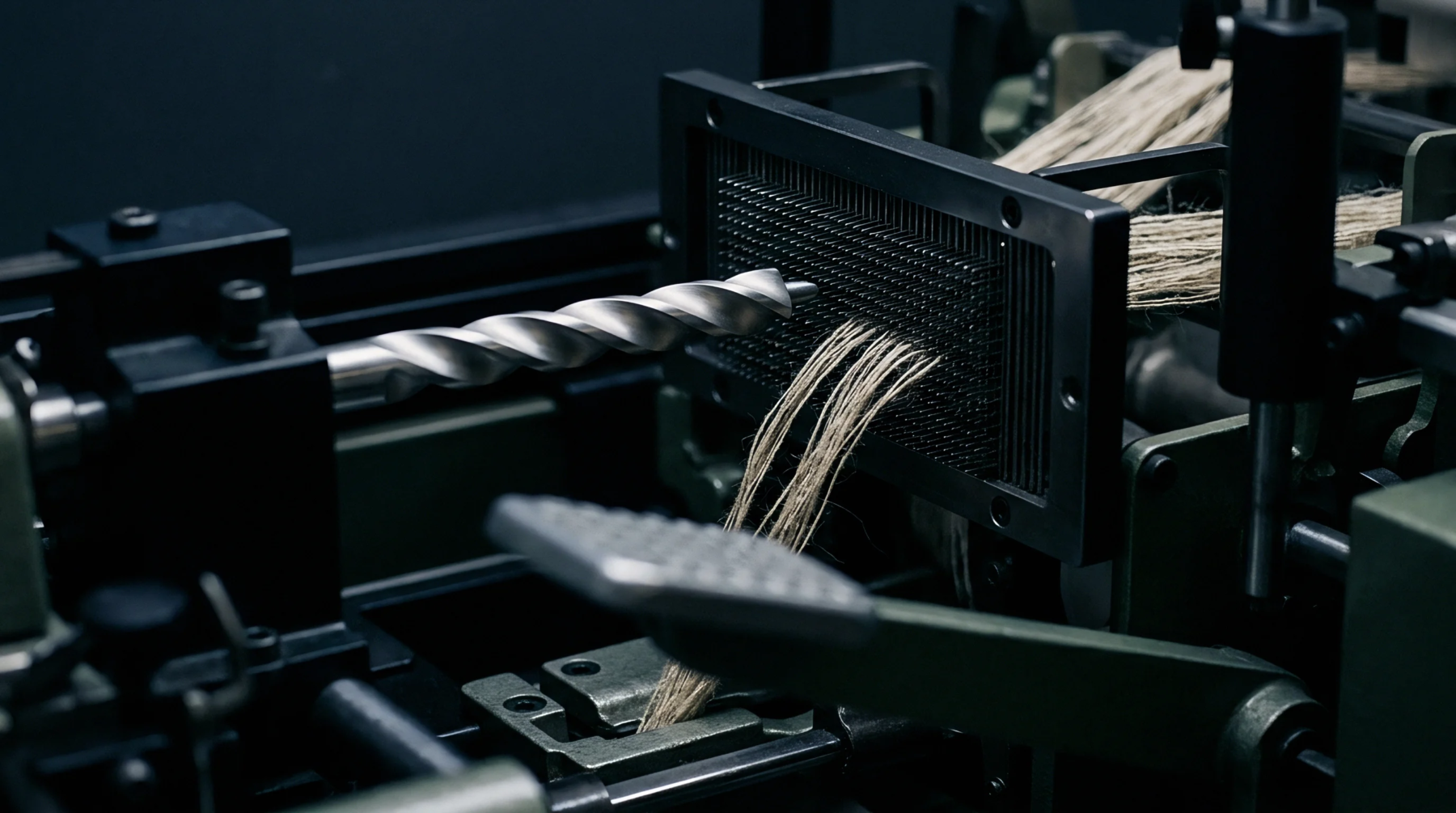
Scutched flax hackling requires progressive pin densities up to 20 pins/cm to maximize sliver tenacity without increasing tow loss or cutting fiber length.
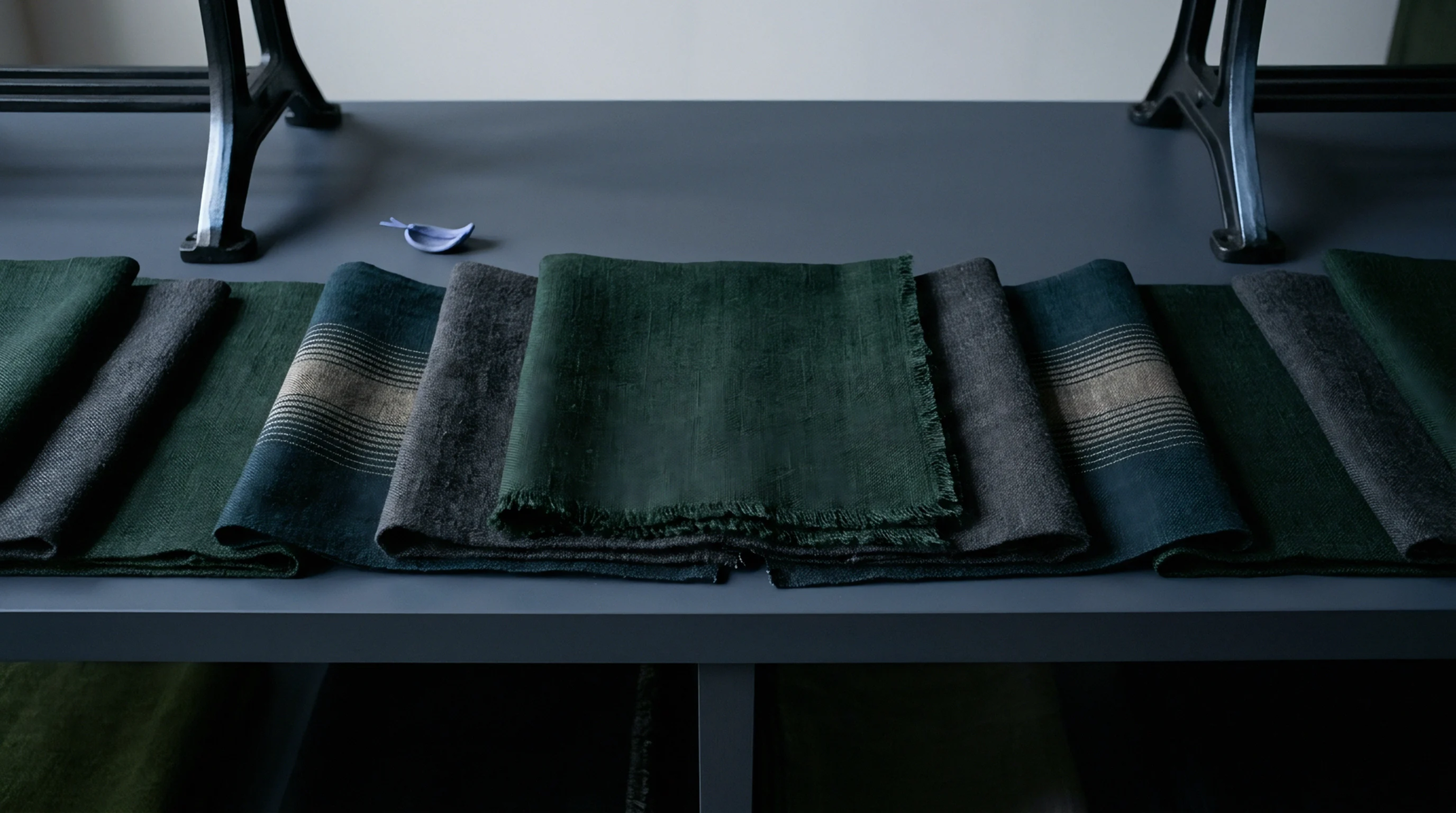
Reconciling offshore linen weaving discrepancies requires oven-dry mass balance models that strip volatile sizing and ambient moisture from physical scrap ledgers.

Mass balance accounting in offshore linen spinning succeeds only when spinners isolate comber noil and verify dry weight loss at each draw frame stage.
Expertise is a utility, not a secret. sentiention™ publishes its working knowledge as open reference: intelligence layer covering the materials it sources, the markets it enters, and the reference that serves both.