Transaction Certificate Audit Protocols for Cross Border Linen Processing Chains
Transaction certificate verification requires moisture-adjusted mass-balance reconciliation across processing nodes, backed by isotopic testing and contractual warranties.


Scope
Transaction certificates issued under global chain-of-custody standards document material moving between specific businesses, but their legal and physical reach stops where the certificate boundary ends. A transaction certificate from an independent certifier authenticates that a given mass of raw or intermediate flax fibre moved from a named seller to a named buyer within an audit scheme. It does not guarantee that a downstream spinning mill actually converted that specific lot into the woven grey goods delivered to the port.
In cross-border linen supply networks spanning Western European agricultural cooperatives, East Asian spinning mills, and Southeast Asian garment factories, coverage frequently breaks down at intermediate processing steps.
A scope certificate simply verifies that a production facility has the systems, equipment, and physical segregation setup needed to process certified fibre under standards like European Flax, Masters of Linen, Global Recycled Standard, or Organic Content Standard. Holding a valid scope certificate does not mean a spinner or weaver’s invoice contains certified material. That batch-level accounting is handled by the transaction certificate, which ties a specific net weight of material to both parties’ scope certificates and underlying freight documents like bills of lading and weighbridge receipts.
Sourcing managers who mistake facility scope validation for lot-level authentication leave their supply chains open to conventional flax substitution.

Documentary Hand-Offs across International Jurisdictions
Turning raw flax straw into finished woven linen takes a series of separate physical steps across multiple tax and customs borders. Primary scutching converts retted straw into long line fibre and tow. Hackling aligns that long line fibre into continuous sliver.
Wet spinning turns sliver into yarn, which then moves through weaving, wet processing, finishing, and assembly. Every transfer along the line creates audit risks where records can easily detach from the physical fibre.
European Flax certification tracks scutched long line fibre grown exclusively on farms in France, Belgium, and the Netherlands. When this material leaves European ports for spinning mills in Jiangsu or Zhejiang, the export bill of lading and original transaction certificate from the European certifier must match the Chinese import customs filings. Gaps open up when mills combine certified European bales with uncertified domestic flax or imported Russian fibre in their bale storage.
At that point, the audit trail rests entirely on strict physical segregation or an approved mass-balance allocation ledger.
A facility scope certificate validates production infrastructure, whereas a batch transaction certificate authenticates material mass delivered under a specific commercial invoice.
Mass-balance accounting protocols allow facilities to blend certified and conventional raw materials as long as total certified output does not exceed certified input after adjusting for processing yield losses. Mechanical yield loss in linen processing varies significantly at each step. Scutching yields roughly 15 percent long line fibre from green straw.
Hackling leaves 25 percent to 35 percent comb waste and tow. Wet spinning adds yarn yield losses between 3 percent and 7 percent depending on yarn count and roving twist, while weaving losses run between 2 percent and 5 percent. When checking transaction inputs against output volumes, auditors have to determine whether a mill relies on standard default yield ratios or empirically measured shop-floor losses.
| Transformation Stage | Input Material Form | Output Material Form | Typical Yield Range (%) | Audit Reconciliation Metric |
|---|---|---|---|---|
| Field Scutching | Retted Straw Bales | Long Line Fibre & Tow | 14.0 – 18.0 | Straw Weight to Scutched Fibre Mass |
| Mill Hackling | Scutched Long Line | Hackled Sliver & Comb Tow | 65.0 – 75.0 | Sliver Net Weight to Hackling Waste Logs |
| Roving & Wet Spinning | Hackled Sliver | Wet-Spun Linen Yarn | 93.0 – 97.0 | Spinning Frame Yield to Tare-Adjusted Bobbin Mass |
| Warping & Weaving | Spun Yarn Package | Woven Grey Fabric | 95.0 – 98.0 | Yarn Consumption Ledger to Weave Shed Mass |
| Wet Finishing & Bleaching | Grey Fabric Bolt | Finished Linen Fabric | 88.0 – 94.0 | Boil-Off Weight Loss to Scour-Shrinkage Mass |
Scheme Integrity and Geographical Rules
Different certification frameworks enforce fundamentally distinct geographic and processing boundaries. Masters of Linen sets a hard rule: every stage from flax harvest through yarn spinning and fabric weaving must occur within Europe. An operation claiming Masters of Linen status cannot spin yarn in China or weave fabric in Vietnam, even if the raw flax came directly from Normandy.
The certificate scope is geographically locked.
European Flax allows cross-border processing. Raw long line fibre grown in Western Europe keeps its certified identity when exported to Asian mills, provided every intermediate handler holds a valid scope certificate and issues transaction certificates for each commercial transfer. In a multi-country setup, auditing European Flax requires uninterrupted document links through every entity involved.
If a yarn trader takes title between the European scutcher and the Asian spinner without a scope certificate, the chain breaks permanently right there. Any downstream transaction certificate issued to the spinner is then invalid for passing on certified claims.
Audit failures often happen because buyers take supplier declarations at face value without asking for the transaction certificate volume balance statement. Certifiers only issue transaction certificates after reconciling incoming invoices, bills of lading, and shipping records against outbound sales orders. A three- to six-month gap between material shipment and certificate issuance is common in international trade.
During that delay, finished fabric can cross borders and enter retail distribution before the underlying transaction certificate is ever approved or rejected. This lag creates genuine commercial risk for brands making provenance claims on retail items.
Certifier scope limits determine who can request transaction documents. Independent traders, freight forwarders, and customs brokers who take legal title to material without physically handling it still need to be integrated into the audit footprint. If an uncertified intermediate trader invoices an importer, the certification body cannot issue a transaction certificate naming that importer as recipient because the paper trail runs through an uncertified entity.
To avoid broken nodes, sourcing agreements must explicitly map the commercial invoicing path alongside the physical freight route.
Verification protocols also have to account for scheme rules on recycled content and fiber blends. Under the Global Recycled Standard, products combining flax with pre- or post-consumer recycled fibres must maintain separate batch records for each component, and the transaction certificate must list the exact weight percentage of certified virgin flax and certified recycled material. If flax yarn is spun with conventional cotton, viscose, or synthetic filaments, certificate coverage applies only to the certified flax portion.
Destination market labels must accurately reflect these percentage calculations to comply with US FTC textile labeling rules or EU Regulation 1007/2011.
Introducing uncertified material during processing invalidates claims for the entire batch downstream. A mill running five spinning lines cannot claim certified status for yarn off Line 3 if raw material from an uncertified store got mixed in during sliver drafting. Standard auditing requires inspecting machine allocation logs, clean-down records between runs, and warehouse issue slips.
Documented proof of physical segregation is strictly mandatory whenever a plant handles both certified and conventional flax on shared machinery.
A chain of custody is broken whenever an uncertified entity holds legal title, even if physical container seals stay intact throughout transit.

Shed
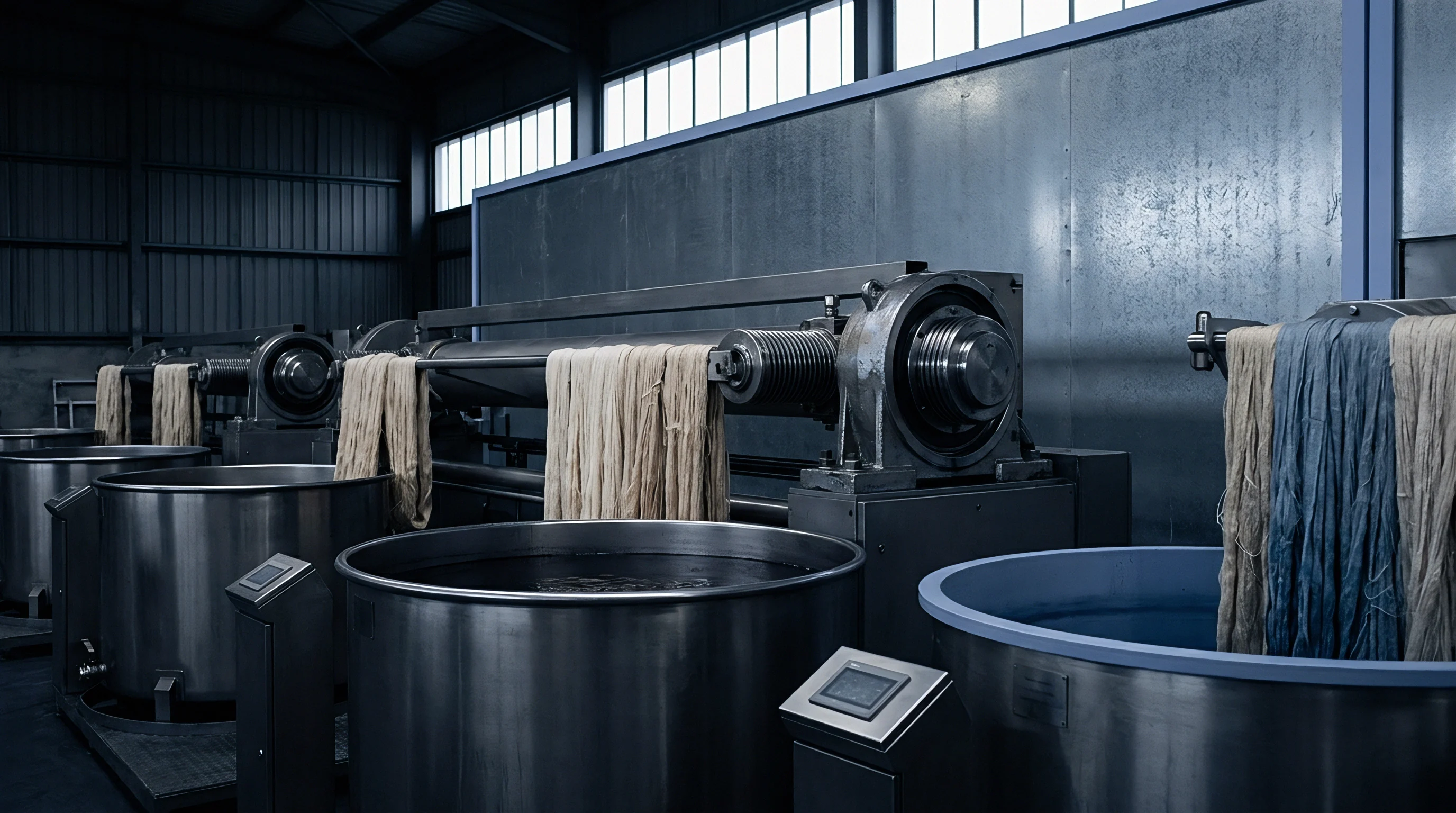
Spinning floors and loom sheds are where paper certificates meet operational reality. In a high-capacity wet spinning plant processing long line flax, yarn drafting takes place under controlled ambient humidity ~ typically 75 percent to 85 percent relative humidity ~ to manage moisture regain and limit fibre breakage. Raw storage holds high-density bales bound with steel strapping, each carrying a mill tag with gross weight, moisture percentage, lot code, and scutcher identity.
An auditor checking the bale store compares these physical tags directly against the input schedules attached to incoming transaction certificates.
Bale tags in Asian spinning mills frequently feature internal factory tracking codes instead of external certification numbers. Reconciling them requires checking the mill’s receiving registers, where external bill of lading numbers, container seal identifiers, and certification batch codes are cross-referenced to internal inventory keys. If an auditor finds untagged bales or raw fibre stored in unsegregated bays without clear batch identification, the physical integrity of the certified lot is compromised.
Audit protocols therefore require visual checks across raw material bays, roving frame assignments, and loom shed allocations.

Physical Tracing from Fibre Store to Weave Room
Tracing material through a mill means following physical lot movement step by step through each mechanical phase. Long line flax arrives in scutched hanks, which are dressed and hackled into continuous sliver coils. The sliver passes to gills for drafting and doubling to achieve weight uniformity, is twisted into roving packages, boiled in a caustic bath to remove pectins, and moves to wet spinning frames where hot water softens residual lignin during final drafting.
Machine allocation records show whether certified lots stayed isolated during processing. Wet spinning frames running continuous shifts require physical clean-downs between certified and conventional runs to clear out fly fibre, slubs, and waste sliver from draft rollers, flyer guides, and spinning pots. Auditors check shift logs to confirm clean-downs were completed and signed off by quality controllers before a certified run began.
Missing clean-down records point directly to potential cross-contamination between certified European flax and conventional domestic stock.
Weave room auditing focuses on warp beam preparation and bobbin creel setup. A standard air-jet or rapier loom weaving 100 percent linen fabric uses hundreds or thousands of warp ends wound onto a single weaver’s beam. Warping logs must track the exact yarn lot numbers moved from winding to the warping creel.
If a mill combines warp yarn from Lot A (certified European Flax) and weft yarn from Lot B (conventional flax) without clear allocation records, the grey cloth loses its single-origin claim. Production logs must tie specific yarn lot identifiers to every loom number and roll ticket.

Bale Storage and Mill Floor Inventory Protocols
Plant inventory systems rely on barcode tags, RFID inserts, or manual ledger entries. Raw flax bales absorb ambient moisture quickly. Under ISO 6741, scutched flax is traded at a standard baseline regain of 12 percent.
Bales kept in humid storage can gain scale weight without any actual increase in dry fibre mass, which is why floor audits require moisture readings taken with calibrated resistance probes inserted deep into the bale core.
Moisture testing prevents artificial weight inflation at receiving. A 20,000 kilogram shipment of certified long line flax at 12 percent regain contains 17,857 kilograms of dry fibre mass. If that shipment absorbs water during transit and arrives at 15 percent moisture, the scale will read 20,525 kilograms.
The receiving mill cannot log 20,525 kilograms into its certified mass balance account ~ it must adjust the weight back to the 12 percent baseline. Failing to normalize for moisture inflates input quotas, allowing a mill to issue certificates for more finished yarn than the raw fibre can actually yield.
ISO 6741 defines standard moisture regain for commercial flax fibre mass calculations at 12 percent by weight under standard testing atmospheres.
Floor inspectors check waste bins under hackling machines and carding frames. Hackling waste ~ short fibres, comb tow, and shives ~ is gathered, weighed, and logged. Under proper chain of custody, these waste volumes must be deducted immediately from the primary long line lot balance.
If 10,000 kilograms of certified long line input produces 3,000 kilograms of comb tow and 6,800 kilograms of hackled sliver, the mill’s allocation for long line yarn is capped strictly at those 6,800 kilograms minus spinning loss. Shifting tow mass back into long line spinning accounts is mass balance fraud.
Roll tracking in the weave shed forms the final physical link to finished fabric. When grey cloth is cut from the loom, a permanent ticket is attached to the core and selvedge listing loom number, operator ID, weave date, warp and weft lot numbers, construction code, and piece length. Auditors compare these grey roll numbers against receiving logs at the dye house.
When rolls enter wet processing, batch tickets must preserve those original roll numbers; any re-ticketing that drops original references cuts the trace between grey fabric and finished goods.
Subcontracting wet processing introduces major chain-of-custody risks. Mills often send grey fabric to independent commission dyers for scouring, bleaching, dyeing, and finishing, but these third-party dyers rarely hold scope certificates under voluntary standards. Once fabric leaves the certified weaver for an uncertified dye house, certificate coverage ends unless the dyer is formally listed as a certified subcontractor under the weaver’s scope certificate.
Managing subcontractors requires annual on-site audits and segregation checks at the third-party plant.
Input-output discrepancies are frequently attributed to temporary bale weight spikes from high monsoon humidity that were corrected later during carding.

Reconciliation
Mass-balance reconciliation is the mathematical core of a transaction certificate audit. Auditors must calculate the physical mass balance through every stage, balancing total certified raw material inputs against finished certified output while accounting for process waste and work-in-progress inventory. The math tests a simple premise: whether the reported output could actually have been produced from the documented certified inputs over a given audit period.
The basic mass-balance relationship over an audit period follows a conservation of mass equation adjusted for moisture regain and processing waste:
Input Certified Dry Mass + Opening Certified Dry Inventory = Output Certified Product Dry Mass + Process Waste Dry Mass + Closing Certified Dry Inventory
When physical weights are recorded at different moisture regain levels, every mass term in the equation must be converted to dry mass: Dry Mass = Measured Mass divided by (1 plus Moisture Content Ratio). Failing to normalize moisture distorts the accounting, creating artificial surpluses or deficits in certified inventory balances.

Yield Loss Formulas and Mass Balance Conversion Factors
Turning raw long line flax into finished woven linen involves steady yield losses at each mechanical stage. Auditors must apply realistic yield factors when checking inventory ledgers, keeping in mind that actual factors depend on target yarn count (Lea or Nm), fibre grade, roving twist, loom speed, and fabric density.
Hackling yield efficiency (Yh) tracks the conversion of scutched long line fibre into hackled sliver, typically running between 0.65 and 0.75; the rest becomes comb tow (Wt) and shive waste (Ws). Spinning efficiency (Ys) covers sliver converted to wet-spun yarn packages, ranging from 0.93 to 0.97, with losses to bobbin waste, flyer fly, and bath sludge. Weaving yield (Yw) measures yarn turned into grey fabric, between 0.95 and 0.98.
Finishing yield (Yf) reflects boil-off weight loss during scouring, bleaching, and washing ~ typically 0.88 to 0.94 as pectins, waxes, and non-cellulosic matter are removed.
Total theoretical yield (Ytotal) across an integrated mill processing long line flax into finished dyed fabric is the product of these individual stage yields:
Ytotal = Yh × Ys × Yw × Yf
Using baseline median yields (Yh = 0.70, Ys = 0.95, Yw = 0.96, Yf = 0.91), cumulative conversion yield is calculated as:
Ytotal = 0.70 × 0.95 × 0.96 × 0.91 = 0.581 (or 58.1 percent)
Producing 1,000 kilograms of finished dyed linen fabric therefore requires a theoretical minimum input of 1,721 kilograms of certified scutched long line fibre at equivalent moisture regain. If mill records claim 1,000 kilograms of finished fabric from an input of just 1,200 kilograms of scutched long line, the resulting 83.3 percent yield far exceeds the physical limits of wet-spun long line flax ~ pointing directly to uncertified material mixing or fraudulent certificates.
| Processing Stage | Stage Input Mass (kg) | Stage Yield Factor | Prime Output Mass (kg) | By-Product Waste Mass (kg) | Cumulative Yield (%) |
|---|---|---|---|---|---|
| Scutched Fibre Receiving | 10,000.0 | 1.000 | 10,000.0 | 0.0 | 100.0 |
| Hackling & Combing | 10,000.0 | 0.685 | 6,850.0 | 3,150.0 (Comb Tow/Shive) | 68.5 |
| Roving & Wet Spinning | 6,850.0 | 0.948 | 6,493.8 | 356.2 (Spinning Waste) | 64.9 |
| Warping & Weaving | 6,493.8 | 0.962 | 6,247.0 | 246.8 (Weave Waste/Thrum) | 62.5 |
| Scouring, Bleaching & Dyeing | 6,247.0 | 0.905 | 5,653.5 | 593.5 (Boil-Off Loss) | 56.5 |

Worked Mass-Balance Verification Scenario
Take an audit at a spinning and weaving plant in Shaoxing, Zhejiang Province. The mill claims to have produced 45,000 linear metres of 100 percent European Flax fabric (180 grams per square metre at a woven width of 1.50 metres) for an international retailer under explicit transaction certificate claims. Step-by-step physical calculations reveal whether their documentation holds up.
Step 1: Calculate Total Net Fabric Weight Delivered
Fabric Area = 45,000 linear metres x 1.50 metres width = 67,500 square metres
Total Net Fabric Mass = 67,500 square metres x 0.180 kilograms per square metre = 12,150 kilograms
Step 2: Adjust Fabric Mass for Finishing Moisture Regain and Chemical Additives
Commercial fabric weight includes moisture regain (around 8.5 percent) and chemical finish pickup (softeners and resins adding roughly 1.5 percent dry pickup). The net dry cellulosic fibre mass in the finished fabric is calculated as:
Dry Cellulosic Mass = Total Net Mass / (1 + 0.085 + 0.015) = 12,150 / 1.100 = 11,045.45 kilograms
Step 3: Calculate Required Wet-Spun Yarn Mass
Applying wet processing boil-off loss factor (Yf = 0.905) and weaving efficiency (Yw = 0.962):
Required Grey Fabric Mass = 11,045.45 / 0.905 = 12,204.92 kilograms dry mass
Required Yarn Mass = 12,204.92 / 0.962 = 12,687.03 kilograms dry yarn mass
Correcting Dry Yarn Mass to Commercial Regain Baseline (12 percent for yarn):
Commercial Yarn Weight = 12,687.03 x 1.12 = 14,209.47 kilograms yarn input
Step 4: Calculate Required Raw Scutched Long Line Fibre Input
Applying wet spinning yield (Ys = 0.948) and hackling yield (Yh = 0.685):
Required Hackled Sliver Dry Mass = 12,687.03 / 0.948 = 13,382.94 kilograms
Required Scutched Fibre Dry Mass = 13,382.94 / 0.685 = 19,537.14 kilograms
Converting Scutched Fibre Dry Mass to Commercial Regain Baseline (12 percent standard regain):
Commercial Fibre Mass Input Required = 19,537.14 x 1.12 = 21,881.60 kilograms
Step 5: Compare Calculated Requirement Against Supplier Transaction Certificate Records
The auditor reviews incoming Transaction Certificates (TCs) for European Flax raw long line fibre over the production window. The supplier presents two TCs:
TC-EF-2023-0891: Net Weight 12,000 kilograms (12 percent regain baseline)
TC-EF-2023-1104: Net Weight 6,500 kilograms (12 percent regain baseline)
Total Certified Fibre Input Provided = 18,500 kilograms
Discrepancy Calculation:
Required Input: 21,881.60 kilograms
Provided Certified Input: 18,500.00 kilograms
Shortfall: 3,381.60 kilograms certified fibre (a deficit of 15.45 percent relative to physical requirement)
The facility ran a certified fibre deficit of 3,381.60 kilograms. To finish the 45,000 metres of fabric, the mill blended 3,381.60 kilograms (commercial weight) of uncertified flax into its hackling lines. The certifying body must therefore reject the transaction certificate application for the 45,000 metres, or reduce its scope to a maximum of 38,040 linear metres and reclassify the remaining 6,960 metres as conventional linen fabric.
Mills under-report hackling comb tow yields by 4 to 8 percent to artificially inflate long line yarn quotas.
Accepting unverified yield loss assumptions in mass balance accounting leads directly to corporate claims that fail regulatory customs audits, triggering mandatory product recalls and enforcement actions under destination market rules.

Variance
Discrepancies between paperwork and physical material show up at familiar failure points along cross-border supply chains. Spotting these failure modes allows auditors to run targeted checks instead of relying on broad sampling routines. Issues range from simple record-keeping gaps to deliberate schemes designed to capture certified fibre price premiums.
Chain-of-custody breakdowns happen most often at key transition points: ownership transfers, multi-country transshipments, subcontracted wet processing, waste stream accounting, and batch split-offs. Audit protocols need to focus on these vulnerable nodes with verification procedures tailored to each specific issue.

Typology of Chain-of-Custody Failure Modes
- Transaction Certificate Expiry Disconnect happens when a transaction certificate is issued against a scope certificate that expired before the material shipped, invalidating downstream claims for the entire lot.
- Uncertified Intermediate Trader Interposition occurs when an uncertified entity buys certified yarn or fabric and invoices the downstream buyer directly, breaking the paper chain of custody between certified plants.
- Moisture Regain Inventory Inflation occurs when mills record incoming fibre weight at elevated moisture levels without adjusting for dry weight, artificially boosting input quotas in their accounting software.
- Tow Waste Re-injection Substitution happens when low-value comb tow or scutching waste is blended back into long line sliver drafting lines to stretch certified inputs beyond verified yields.
- Subcontracted Process Segregation Leakage occurs when grey cloth goes to uncertified commission dye houses where certified rolls get mixed with conventional production during wet processing shifts.
- Batch Split-Off Tracking Collapse happens when a large certified yarn lot is split across multiple weaving subcontracts without unique sub-lot tracking codes, leading to double-counting or over-assignment of certificate balances.
- Retroactive Transaction Certificate Assignment involves requesting transaction certificates months after goods have shipped, cleared customs, and entered distribution, making timely physical verification impossible.
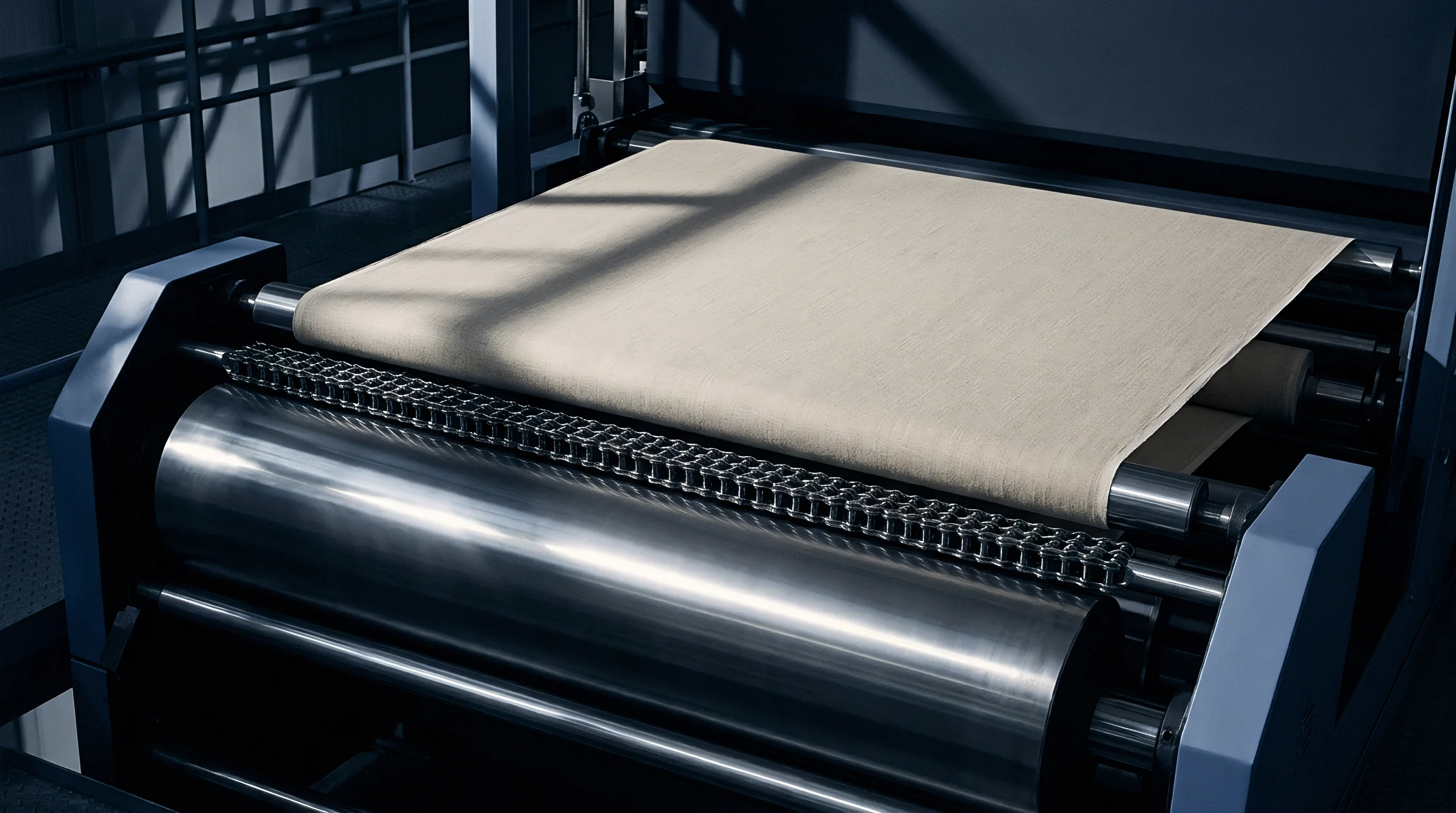
Analytical Testing and Isotopic Origin Authentication
Paper audits can be paired with laboratory testing to verify origin claims independently of commercial shipping documents. Stable Isotopic Ratio Analysis (SIRA) measures light isotope ratios (Hydrogen-2 to Hydrogen-1, Carbon-13 to Carbon-12, Oxygen-18 to Oxygen-16, Nitrogen-15 to Nitrogen-14, and Sulfur-34 to Sulfur-32) inside flax cellulose. These isotopic profiles reflect regional climate, latitude, proximity to the coast, precipitation, and local soil geology where the crop was grown.
European Flax grown in coastal Normandy, Picardy, Flanders, and Zeeland carries a distinct isotopic signature compared to flax cultivated in Heilongjiang Province in northeastern China, North Dakota in the US, or central Russia. Oxygen-18 and Hydrogen-2 values in plant cellulose track closely with local meteoric water. Flax grown in Western European oceanic climates shows characteristically enriched Oxygen-18 levels compared to crops grown in continental Asian climates with cold winter precipitation.
Trace element analysis using Inductively Coupled Plasma Mass Spectrometry (ICP-MS) complements isotopic testing. ICP-MS measures rare earth elements (Lanthanum, Cerium, Neodymium) and trace metals (Strontium, Rubidium, Barium) absorbed by flax roots from local soils. The Strontium-87 to Strontium-86 isotope ratio acts as a geological footprint tied to underlying bedrock, allowing laboratories to verify origin claims down to specific agricultural regions.
Stable isotope ratio analysis of plant cellulose provides empirical verification of geographical origin independent of shipping manifests and transaction papers.
Testing protocols require careful sampling guidelines. Fabric samples should be taken from multiple rolls across a consignment, avoiding selvedge edges treated with sizing or waxes. Chemical pretreatment must strip out non-cellulosic components ~ like dyes, softeners, optical brighteners, and starch sizes ~ using Soxhlet extraction with organic solvents followed by mild alkaline scouring, so isotopic measurements reflect pure flax cellulose rather than finishing additives.
Discrepancies between isotope test results and submitted certificates provide clear grounds for rejecting provenance claims. If fabric accompanied by a European Flax certificate returns an isotopic profile typical of continental Asian flax, the paper trail has been compromised by false certification or physical substitution. Sourcing teams use analytical testing to audit high-risk suppliers and verify suspicious certificate flows.

Can Audit Protocols Prevent Linen Origin Fraud?
Audit protocols lower origin risk by creating verification hurdles, but they cannot eliminate fraud when the financial incentive for substitution outweighs the chance of detection. Certified European flax straw commands a 20 to 40 percent price premium over conventional imported flax in Asian spinning markets, creating continuous commercial pressure to swap in cheaper fibre while retaining certified paperwork.
Audits that rely solely on quarterly accounting reviews leave room for operators to manipulate mass balance numbers across reporting cycles. Real prevention requires real-time digital ledgers, unannounced site visits, mandatory moisture-adjusted weighbridge logs, and routine isotopic sampling of incoming raw fibre and finished goods. Until customs authorities in destination markets routinely combine isotopic screening with entry inspections, paper transaction certificate schemes will remain vulnerable to supply chain fraud.
The open question is whether global brands will fund ongoing isotopic testing and unannounced floor audits, or continue relying on paper transaction certificates that verify document trails while leaving physical material substitution unchecked.


Classification
Cross-border trade in linen fibre, yarn, and fabric is governed by national customs regulations, tariff classifications, and rules of origin that run entirely separate from commercial certification schemes. Customs authorities judge origin claims under statutory standards set out in trade agreements. A commercial transaction certificate from a voluntary scheme like European Flax or Masters of Linen carries no legal weight with agency authorities like US Customs and Border Protection (CBP) or EU customs directorates.
Under non-preferential origin rules, country of origin depends on where the last substantial transformation occurred, marked by a shift in tariff classification under the World Customs Organization Harmonized System (HS). In textiles, these rules are strict and specific. Spinning raw flax fibre into yarn counts as a substantial transformation, shifting classification from HS Chapter 5301 (flax fibre) to HS Chapter 5306 (flax yarn).
Weaving yarn into fabric is another substantial transformation, moving the code from HS Chapter 5306 to HS Chapter 5309 (woven fabrics of flax).

Harmonized System Code Mapping and Tariffs
Importers must navigate HS classification codes carefully to ensure accurate tariff assessments and stay compliant with trade rules. Raw, scutched, and hackled flax fibres fall under HS Code 5301, spun yarns under HS Code 5306, and finished fabrics under HS Code 5309.
Understanding tariff classification across processing stages is essential for building compliant customs dossiers and managing landed costs across international trade lanes.
| HS Code Subheading | Material Description | Processing State | Rule of Origin Criterion (Non-Preferential) | Customs Origin Determination |
|---|---|---|---|---|
| 5301.10 | Flax, raw or retted | Un-scutched Field Straw | Wholly Obtained | Country of Agricultural Harvest |
| 5301.21 | Flax, broken or scutched | Scutched Long Line Fibre | Substantial Transformation / Scutching | Country of Scutching Plant |
| 5301.29 | Flax, hackled or processed | Hackled Line / Comb Tow | Substantial Transformation / Hackling | Country of Hackling Mill |
| 5306.10 | Single flax yarn | Wet-Spun Single Yarn | Change in Tariff Heading (5301 to 5306) | Country of Spinning Frame Operation |
| 5306.20 | Multiple or cabled flax yarn | Plied / Cabled Linen Yarn | Change in Tariff Heading (5301 to 5306) | Country of Plying / Spinning Mill |
| 5309.11 | Woven fabric >= 85% flax, unbleached | Grey Woven Linen Cloth | Change in Tariff Heading (5306 to 5309) | Country of Loom Weaving Shed |
| 5309.19 | Woven fabric >= 85% flax, dyed/finished | Finished Woven Linen Cloth | Change in Tariff Heading (5306 to 5309) | Country of Loom Weaving Shed |
Note: Under US customs rules, dyeing and finishing grey fabric does not constitute a substantial transformation for origin determination; origin remains tied to the country of loom weaving.

US and EU Customs Origin Rules Vs Scheme Protocols
A common compliance mistake occurs when sourcing managers assume that fabric woven in China using 100 percent European Flax certified fibre can be declared as European origin when imported into the US or EU. Under US Customs Regulations (19 CFR 102.21), origin for woven linen fabric is determined strictly by where the weaving took place. If European flax is exported to China, spun into yarn, and woven in a Chinese mill, the official country of origin for customs marking is China.
Declaring European origin on entry filings based on European Flax transaction certificates is a misdeclaration of origin, exposing the importer of record to civil penalties, seizure of goods under 19 USC 1592, and liquidated damages. Transaction certificates support voluntary sustainability claims, whereas customs declarations require compliance with statutory origin laws based on where physical processing occurred.
US Customs Regulations 19 CFR 102.21 assign origin of woven linen fabric strictly to the country where weaving occurred, regardless of raw flax fibre origin.
Similar principles apply under EU Customs Code non-preferential origin rules (Delegated Regulation 2015/2446). Woven fabric under HS 5309 imported into the EU takes origin from the country where complete weaving occurred. If grey fabric woven in China from European flax is sent back to Europe for bleaching, dyeing, and finishing, that European processing does not grant European non-preferential origin unless specific value-added thresholds or processing rules in Annex 22-01 are met.
Finishing operations like scouring, dyeing, printing, or softening generally do not confer origin.
Under US enforcement regimes, including the Uyghur Forced Labor Prevention Act (UFLPA), customs scrutiny focuses heavily on raw material provenance for shipments coming from or processed in East Asia. Importers of Chinese-manufactured linen products must maintain supply chain dossiers tracing raw flax back to specific farms outside restricted regions. A valid European Flax transaction certificate showing raw long line flax was harvested in France and shipped directly to a Chinese mill serves as key supporting evidence to rebut forced labor presumptions, provided the importer can prove an unbroken physical chain of custody through weighbridge records, container seals, bills of lading, and machine processing logs.
Customs compliance requires importers to maintain an audit-ready dossier covering six core document sets: agricultural harvest receipts, export transaction certificates from the origin country, ocean bills of lading with container seal numbers, import entry declarations in the processing country, mill production and batch allocation ledgers, and finished product commercial invoices with shipping manifests.
Standard commercial purchase contracts incorporate mandatory origin language: “Seller warrants that all goods supplied under this agreement carry country of origin declarations derived strictly from statutory customs substantial transformation rules, and that possession of voluntary transaction certificates shall not substitute for legal customs origin documentation.”


Covenant
Protecting an enterprise from provenance misrepresentation and compliance liability requires writing audit protocols directly into enforceable contracts. Generic purchase order clauses referencing organic or certified linen offer little protection when transaction certificates fail, scope certificates expire, or customs authorities challenge origin filings. Sourcing teams must embed clear warranties, audit access rights, certificate delivery timelines, and breach remedies directly into vendor master agreements and purchase orders.
Contractual risk management must reflect the fact that transaction certificates are issued post-shipment by third-party certifiers. If a contract ties payment solely to physical delivery without requiring verified transaction certificates for final settlement, the buyer gives up crucial leverage. Once funds are wired to an overseas supplier, recovering costs for uncertified or mislabeled goods becomes notoriously difficult across international jurisdictions.

Purchase Agreement Warranty Structures
Strong vendor agreements set clear provenance warranties. Contracts should require suppliers to guarantee that every delivered batch fully complies with designated scheme standards, carries unbroken chain-of-custody documentation, and contains no conventional or secondary fibre except where explicitly allowed in written specifications.
Contracts must set clear delivery deadlines for transaction certificates. A standard clause mandates: “Seller shall deliver to Buyer an authentic, certifier-validated Transaction Certificate corresponding to each shipped purchase order within forty-five (45) calendar days of the bill of lading date. Delivery of valid Transaction Certificates constitutes an express condition precedent to Buyer’s final payment obligation for the applicable shipment.”
Financial remedies for breach should be explicitly quantified to avoid disputes over indirect damages. Standard remedies include price claw-backs, indemnification against customs fines, coverage of lab testing costs, and seller-funded returns of non-compliant inventory.
Vendor contracts should include explicit audit access terms that grant independent auditors unannounced entry to mill premises, inventory registers, machine allocation logs, and raw material stores during regular operating hours.

Standard Provenance Warranty and Indemnity Clause
The following contract clause demonstrates standard legal architecture for cross-border linen purchasing contracts:
“1. Provenance Warranty: Seller warrants and represents that all goods delivered under this Contract conform precisely to the certified provenance claims specified in Purchase Order Schedule A (e.g. 100% European Flax Certified).
Seller warrants that all material has been processed in strict compliance with applicable certification scheme rules, that all intermediate handlers hold valid Scope Certificates, and that no uncertified fibre, tow, or secondary material has been introduced into the production stream.
2. Documentary Precedent: Seller shall furnish to Buyer official Transaction Certificates issued by an accredited ISO 17065 certifying body, naming Buyer (or Buyer’s designated importer) as recipient, within forty-five (45) days of bill of lading issuance. Failure to deliver valid Transaction Certificates within the specified timeframe shall entitle Buyer, at its sole discretion, to (a) withhold up to thirty percent (30%) of the total invoice value until delivery; or (b) reject the shipment, return goods at Seller’s expense, and receive a full refund of any deposit paid.
3. Isotopic and Analytical Testing Rights: Buyer reserves the right to conduct random analytical testing (including Stable Isotope Ratio Analysis and ICP-MS trace element screening) on delivered fabric samples. If testing indicates physical material signatures inconsistent with declared geographical origin or scheme standards, Seller shall reimburse Buyer for all testing costs and pay a liquidated administrative fee equal to twenty-five percent (25%) of the total shipment value, without prejudice to Buyer’s rights to reject non-conforming goods.
4. Customs Compliance Indemnity: Seller agrees to defend, indemnify, and hold harmless Buyer, its affiliates, and their respective officers and agents from and against any liabilities, claims, customs penalties, fines, legal fees, or lost profits arising out of false, inaccurate, or invalid origin documentation, transaction certificates, or customs declarations provided by Seller or its subcontractors.”

Execution Framework for Cross-Border Audit Protocols
Putting transaction certificate audit protocols into practice across international linen supply chains requires systematic execution at key commercial milestones. Sourcing teams must enforce operational checklists during vendor qualification, contract execution, pre-shipment inspection, customs clearance, and post-delivery reconciliation.
A structured execution framework lays out the operational steps needed to maintain provenance integrity across processing nodes.
- Vendor Scope Qualification verifies that all primary mills, spinners, weavers, and subcontracted wet processors hold active scope certificates from ISO 17065 accredited certifiers for target standards before purchase orders are placed.
- Commercial Route Mapping aligns invoicing paths with physical transit routes, ensuring no uncertified traders take title to goods along the way.
- Moisture-Adjusted Mass Booking requires that raw material weight logged into mill software is normalized to dry mass using calibrated moisture testing under ISO 6741 regain standards.
- Pre-Shipment Yield Verification checks mill batch records against theoretical mass balance models, flagging input deficits that exceed waste tolerances before shipment approval.
- Customs Dossier Assembly compiles complete document sets ~ farm receipts, export TCs, ocean manifests, import entries, mill logs, and finished goods TCs ~ before filing customs entries at destination ports.
- Post-Delivery Analytical Screening subjects random fabric lots to stable isotope ratio analysis and elemental trace testing, cross-referencing lab signatures against submitted paper certificates.
Cross-border sourcing operations that combine physical reconciliation, laboratory testing, and enforceable contracts build supply chains capable of standing up to customs scrutiny and protecting brand reputation in international markets.