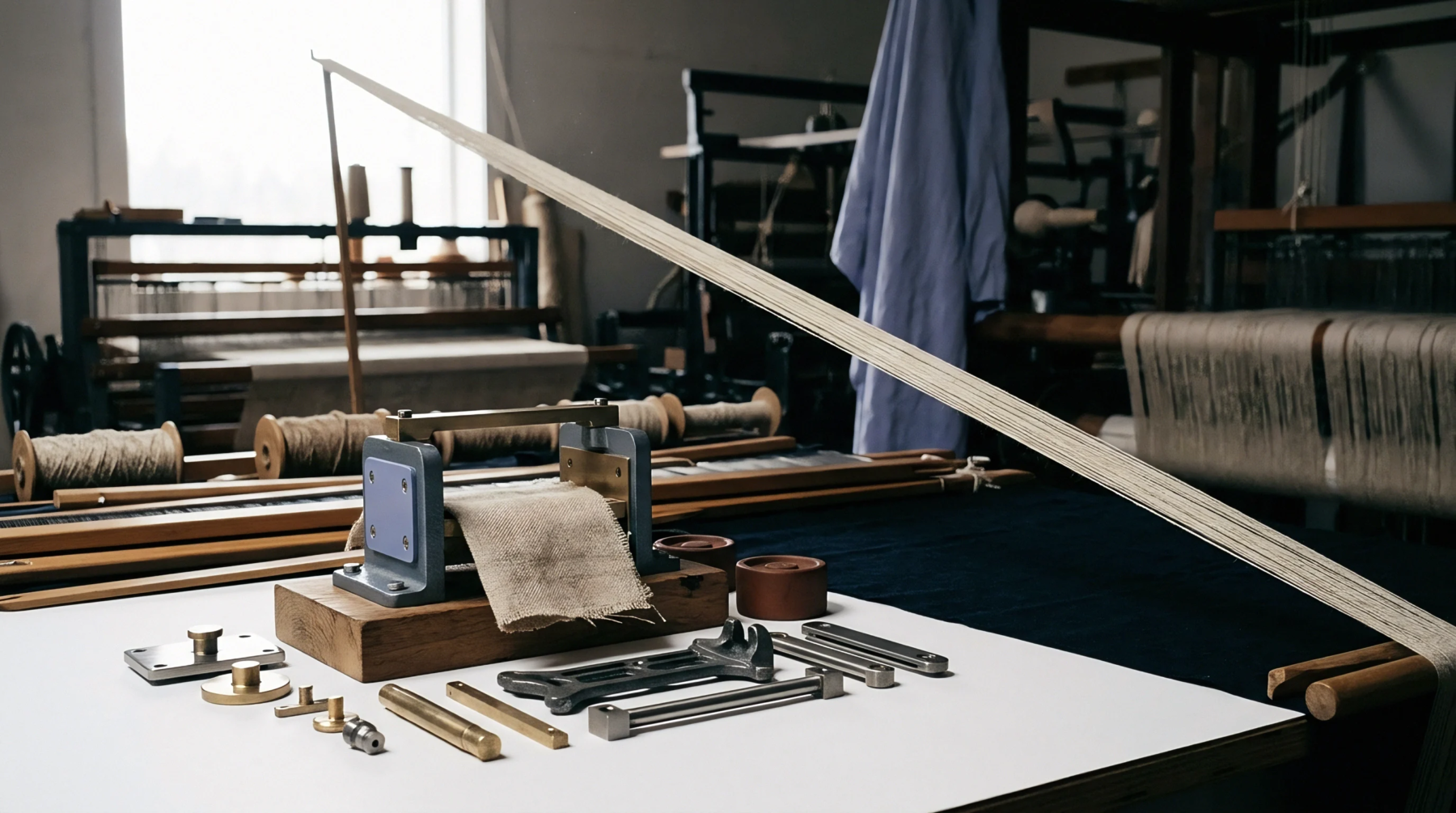
Mechanical Shedding
Metal structures within a loom hold the heddles that guide longitudinal yarns during the creation of linen cloth. These harness frames facilitate the controlled lifting and lowering of specific warp groups to create the open gap known as the shed. Correct calibration ensures that the movement remains consistent throughout the production of high-density textile rolls.
Rigid vertical alignment prevents excessive tension on individual flax fibres as they pass through the eyes of the heddles. Uniform distribution of weight across these components minimizes the risk of warp breakage during high-speed operations. Precise synchronization with the shuttle travel determines the overall structural integrity of the finished fabric.
Production Calibration
Technicians verify that the harness frames move in perfect phase with the secondary mechanisms of the weaving apparatus. Proper spacing between the bars allows for a clean transition of yarns from the upper position to the lower position without catching or fraying the raw material. Wear patterns on the heddles suggest misalignment if the marks appear uneven across the width of the machine.
Frequent monitoring of these physical paths reduces the probability of defects like thin spots or inconsistent crossings in the final textile inspection record. Every adjustment influences the geometric stability of the shed, which dictates the uniform quality of the resulting linen output across multiple shifts.
Operational Variance
Industrial standards require that the mass of the harness frames remains within specified limits to prevent excessive inertia during rapid shedding cycles. Heavy or imbalanced components force the motor to work harder, which introduces vibration and reduces the lifespan of the drive linkages. Practitioners assess this performance by measuring the acceleration forces at the peak of the shedding stroke against the baseline energy consumption of the loom.
Lightweight construction materials often replace older steel assemblies to improve responsiveness while maintaining the necessary stiffness for heavy flax yarn. Consistent motion control maintains the integrity of the shed geometry regardless of the speed at which the equipment operates.