Quantifying Fine Linen Yarn Abrasion Mechanics in High Speed Weaving Sheds
Quantifying fine linen abrasion mechanics requires matching sizing film strength to dynamic shed tension to maintain loom efficiency above ninety percent.


Fray
Wet-spun linen yarns finer than NeL 40 are structurally vulnerable because technical fiber bundles vary along their boundaries. These flax strands consist of individual ultimate fibers, 20 to 40 millimetres long, held together by matrices of pectin, hemicellulose, and lignin. Unlike continuous synthetics or uniform staple cotton, fine flax varies in cross-sectional geometry along the yarn axis.
Running these warps through rapier shedding mechanisms at 500 to 700 picks per minute creates constant friction at every mechanical contact point.
Surface shear strips loose fibrils from the yarn. Friction against adjacent warp strands, drop wires, heddle mail eyes, and reed dents builds mechanical stress that breaks down the yarn’s outer protective layers. Because flax fibers have low elasticity, surface shear readily breaks the pectin bonds binding the ultimate fibers.
Peak warp end tension reaches 0.45 grams per denier at a shed opening angle of twenty-two degrees under standard atmospheric conditions.
Cyclic mechanical scraping causes fibrillation, splitting technical fiber bundles into individual ultimate filaments. These detached fibers gather into microscopic clusters ~ fuzz balls ~ that accumulate behind the heddle mail eyes. Continued shedding interlocks fuzz balls across adjacent ends, preventing clean shed opening and forcing the insertion rapier head to strike misaligned warp ends.
Once surface hairiness crosses critical thresholds, frictional peeling accelerates rapidly and turns minor defects into full end breakages.
If boundary friction resistance is inadequate, fuzz balls build up at the reed, pushing warp stop frequencies above seven failures per hundred thousand picks and crippling shed productivity.
Sheath
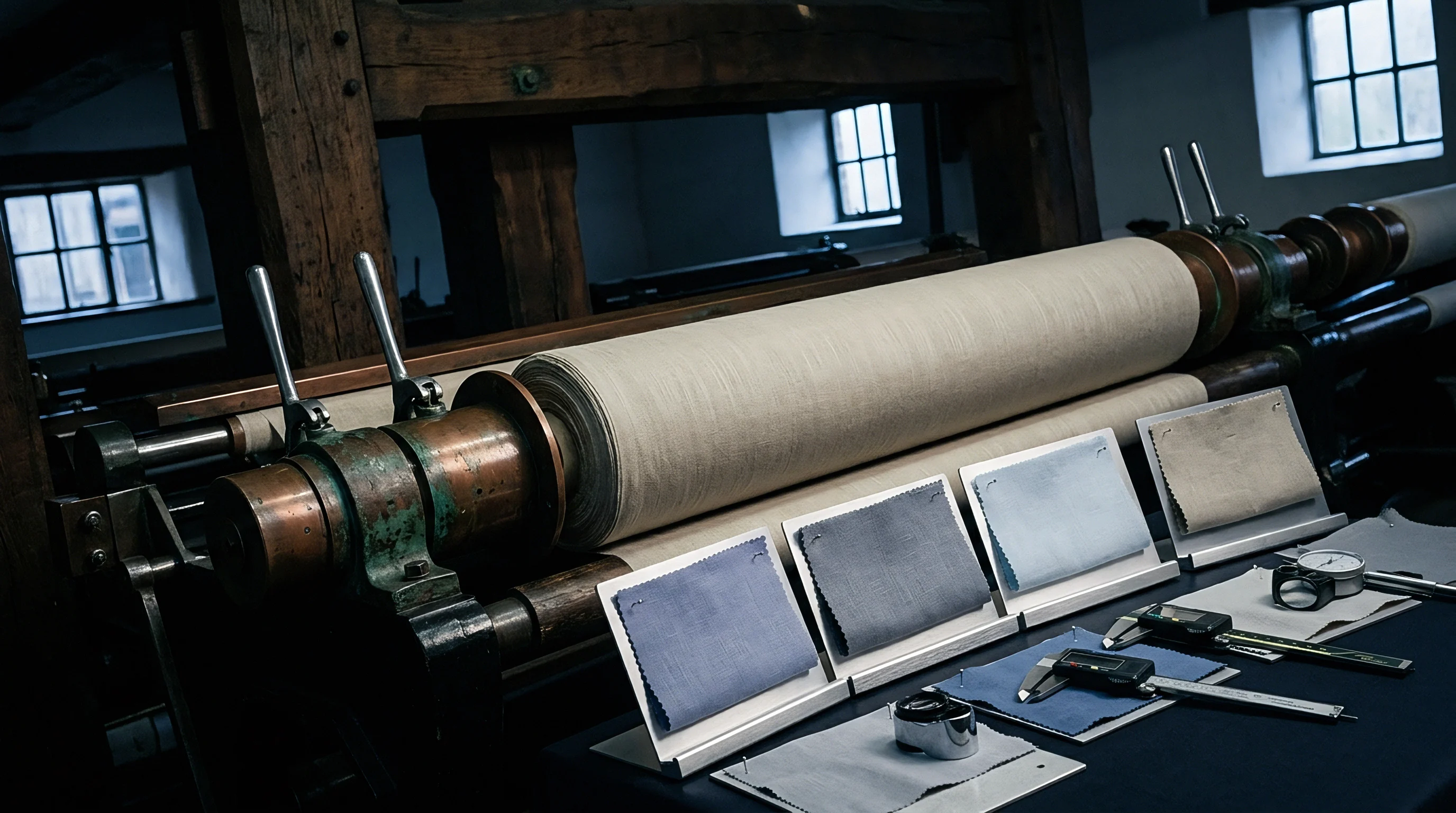
Sizing formulations for fine wet-spun flax aim to encapsulate the surface while limiting liquor penetration into the core. Fine linen warps, especially from NeL 50 to NeL 80, lack the natural elongation to handle modern rapier shedding stresses without modified surfaces. Encapsulation forms a sacrificial film against shear, keeping surface fibrils flat against the yarn body during rapid shed inversion.

Viscoelastic Properties of Polymeric Sizing Formulations
Sizing formulations that balance film toughness with flexural elasticity prevent premature size flaking under rapid tension cycles. Native starches adhere well to cellulosic flax, but they form rigid, brittle films that crack under cyclic bending loads. Hydroxyethylated starches blended with high-viscosity polyvinyl alcohol and synthetic acrylic binders provide greater tensile strain capacity while keeping film viscosity tightly controlled.
| Polymer Chemistry | Film Elongation at Break (%) | Core Penetration Depth (%) | Abrasion Cycles to Fuzzing | Desizing Washability |
|---|---|---|---|---|
| Native Potato Starch | 1.2 | 45 | 380 | Hot Water / Enzymatic |
| Modified Hydroxyethyl Starch | 2.8 | 32 | 850 | Hot Alkaline Wash |
| PVA / CMC Blend (60:40) | 4.5 | 22 | 1420 | Hot Water Soluble |
| Acrylic Copolymer Compound | 5.8 | 18 | 1890 | Warm Water Soluble |
Too much liquor penetration fills internal fiber voids, stiffening the core and drastically lowering work-of-rupture limits. Target add-on levels for fine flax warps range between 8 and 12 percent by dry weight, which creates an outer encapsulation layer 2 to 4 micrometres thick without compromising core flexibility.
Which Sizing Polymers Preserve Flax Filament Structure?
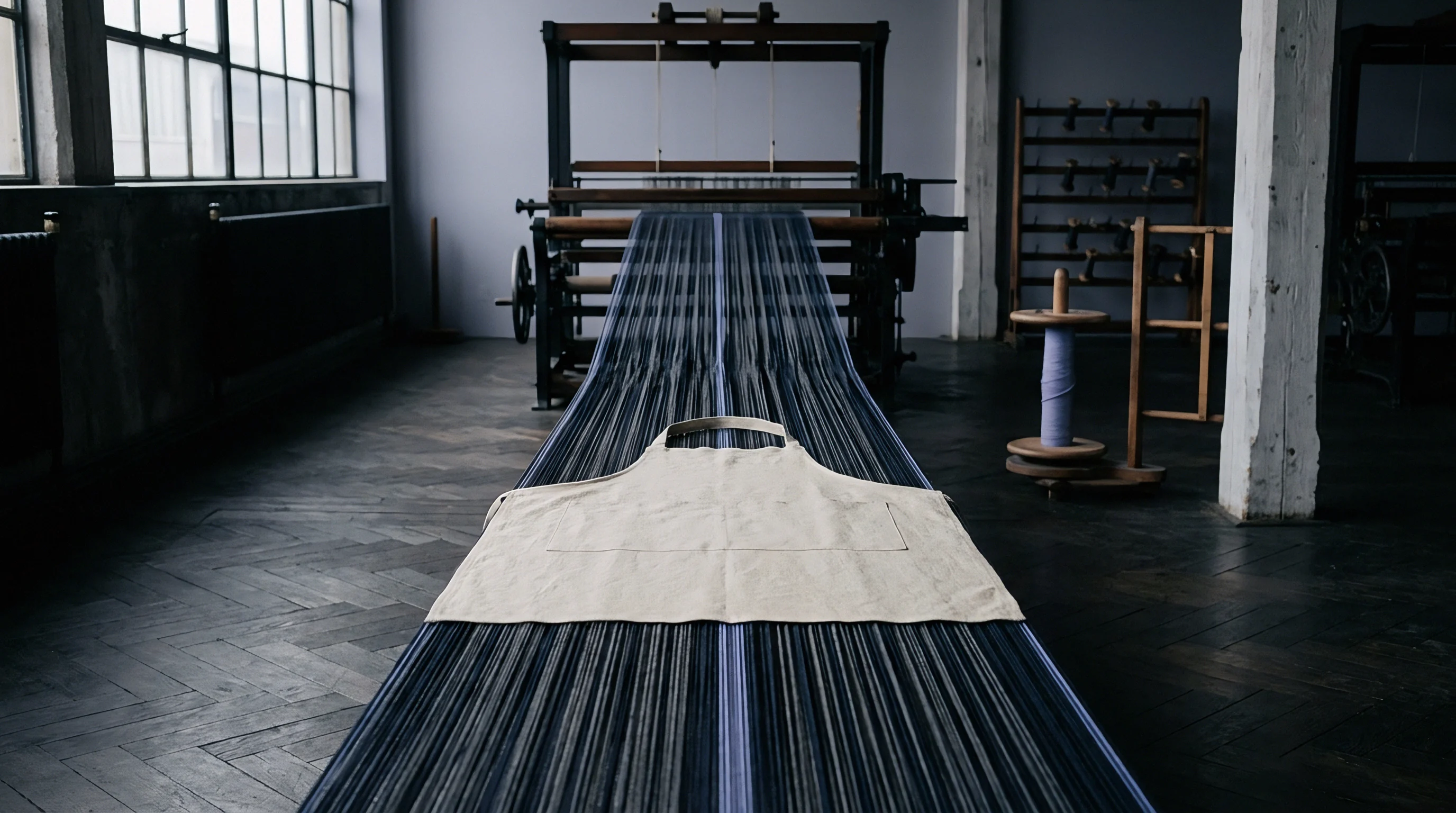
Synthetic acrylic binders combined with partially hydrolyzed polyvinyl alcohol yield more flexible films than unmodified plant starches. Pure starches produce a rigid cross-linked film that fractures as warp strands pass over drop wire bends at high frequencies. Formulations containing plasticized carboxymethyl cellulose let fine flax bundles to flex without shedding size dust into the drop wire bank.
Regulating moisture in the size box keeps viscosity stable and maintains uniform pick-up across the entire beam width.
A size add-on variance exceeding one point five percent from specification invalidates standard loom efficiency guarantees under ISO 10390 guidelines.
Severe shed dusting is frequently driven by excessive loom vibration rather than chemical degradation during size box immersion.

Stress
High-speed rapier kinematics subject individual warp yarns to repeated tension cycles, friction against steel mail eyes, and lateral impact from beat-up. On modern looms running at 600 picks per minute, a single meter of warp yarn undergoes roughly 1,800 shed cycles before reaching the cloth fell. Dynamic tension spikes right at maximum shed opening, precisely when frictional contact against heddle mail surfaces peaks.
Mechanical stress accelerates when shed opening angles exceed 20 degrees. Higher tension increases end breaks as drop wires generate continuous friction and steel mail eyes abrade the fibers. Because yarn count dictates necessary sizing add-on, abrasion resistance ultimately governs shed output, while loose micro-fibrils cause neighboring ends to cling together.
Consider an NeL 60 wet-spun linen warp with a linear density of 14.78 tex, woven at 32 ends per centimetre across a 180-centimetre reed width at 550 picks per minute. Dynamic tension meters show a baseline warp tension of 18 grams per end, peaking at 34 grams during shed inversion. The total mechanical work imparted to each yarn end per meter of fabric combines flexural fatigue and boundary friction:
Total Cyclic Mechanical Work = N multiplied by (F_peak minus F_base) multiplied by S_amplitude
Where N equals the pick density (28 picks per centimetre, yielding 2,800 cycles per meter), F_peak equals 0.333 Newtons, F_base equals 0.176 Newtons, and S_amplitude represents total harness displacement (0.045 metres). This gives 19.78 Joules of mechanical work imparted to each yarn end per meter produced. Unless the sizing film dissipates this energy effectively, the load exceeds the yield point of fine flax fiber bundles and causes structural breakdown.
- Verify loom warp beam alignment and harness frame balance using dial indicators across the full 180-centimetre width.
- Set drop wire bank angle to deliver minimal entry friction while maintaining reliable electrical stop motion contact.
- Measure static warp sheet tension across selvedge, quarter, and middle sections using a calibrated electronic tensiometer prior to sizing inspection.
- Adjust harness shedding cam motion profiles to reduce peak shed dwell times by five percent while maintaining clean insertion windows.
Higher yarn bundle twist increases surface shear resistance but reduces sizing liquor absorption across wet-spun flax fibers.
Standard purchasing agreements referencing ASTM D3882 require width-wise tension variation to remain below three percent to prevent differential abrasion wear across the warp sheet.
Audit
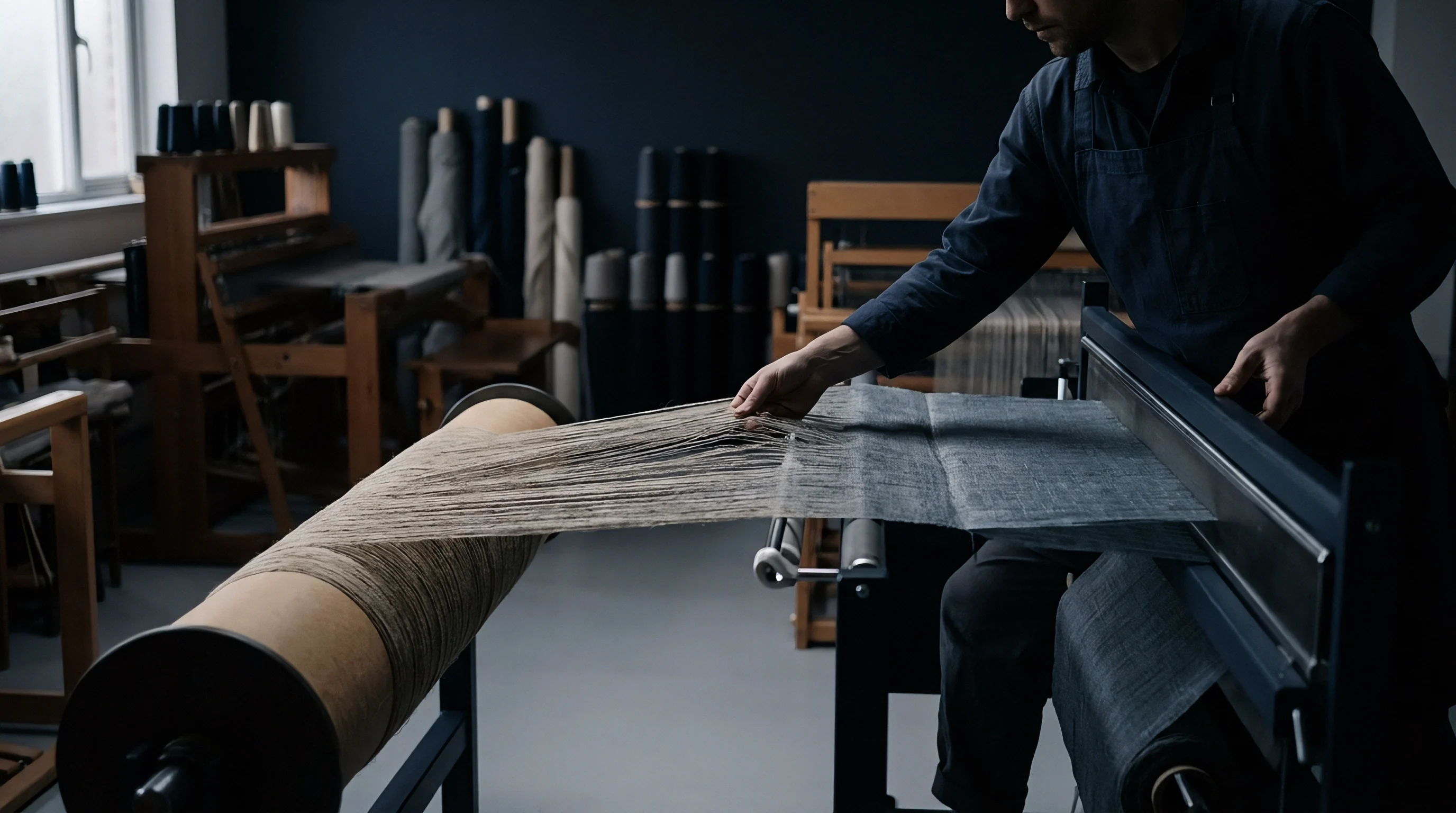
Incoming yarn parameters dictate warp survivability long before sizing liquors or beam prep lines process raw flax bundles. Quality assurance protocols evaluating fine linen yarn lots must analyze single-end strength, thin-place frequency, and baseline surface hairiness simultaneously. Uster hairiness values above H = 6.5 on NeL 60 yarns indicate extensive free fiber ends capable of generating shed entanglements.
Laboratory Abrasion Testing and Bench Correlation
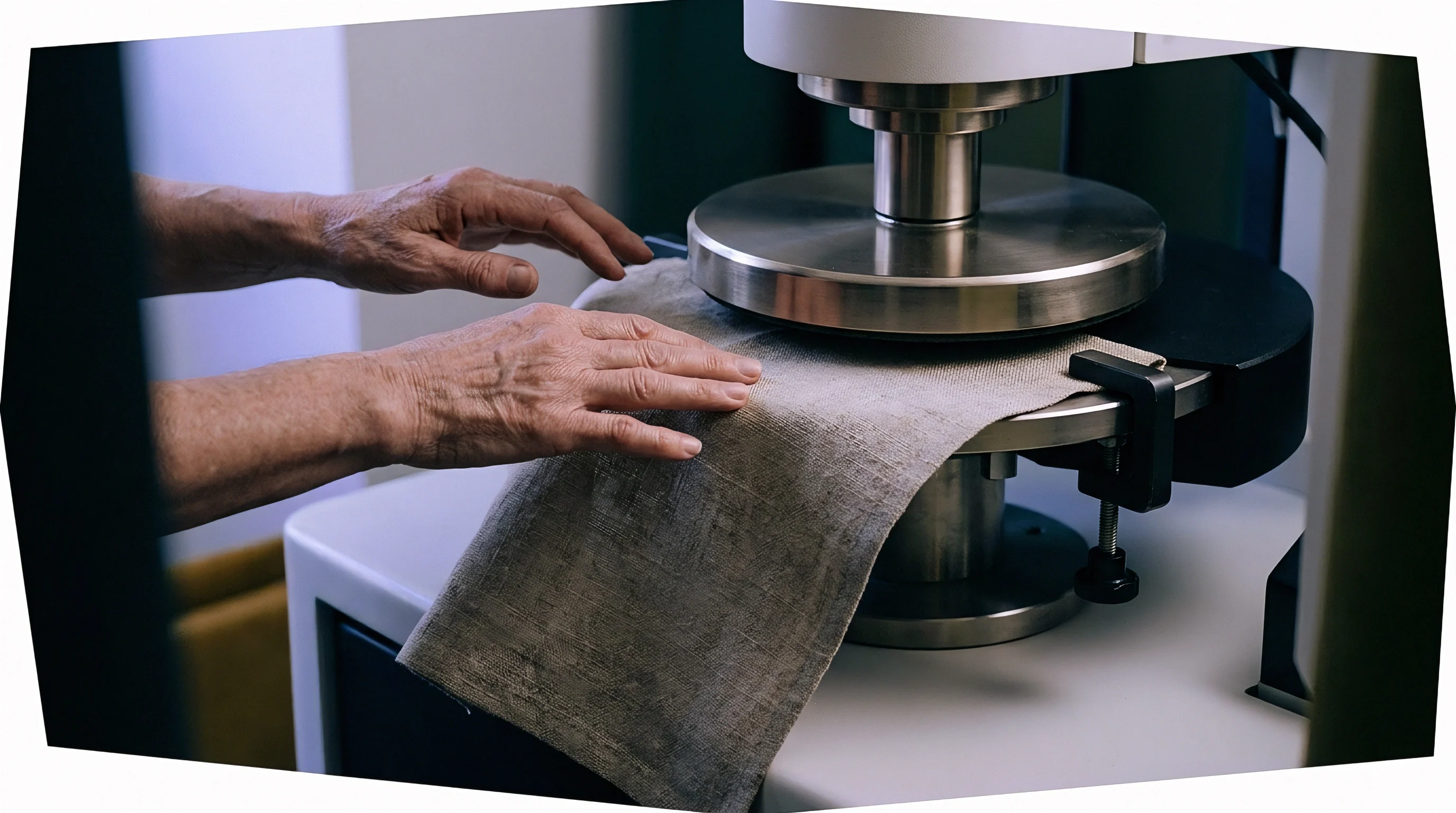
Standardized laboratory testing simulates shed friction to predict warp performance before committing beams to the loom floor. Schroeder abrasion testers apply cyclic friction under controlled tensile loads to measure mean cycles to failure. Linking these laboratory cycle counts to actual loom stop rates requires tight humidity control, as standard conditions call for 65 percent relative humidity at 20 degrees Celsius ~ higher loom speeds multiply shear, while controlled humidity stabilizes flax moisture.
| Parameter | NeL 40 Specification | NeL 60 Specification | NeL 80 Specification | Test Standard |
|---|---|---|---|---|
| Single-End Tenacity (cN/tex) | Greater than 18.5 | Greater than 20.0 | Greater than 22.5 | ISO 2062 |
| Elongation at Break (%) | 1.8 to 2.2 | 1.6 to 2.0 | 1.4 to 1.8 | ISO 2062 |
| Uster Hairiness Index (H) | Less than 5.2 | Less than 4.8 | Less than 4.2 | ISO 16549 |
| Schroeder Abrasion Resistance (Cycles) | Greater than 1200 | Greater than 950 | Greater than 750 | DIN 53851 |
| Values reflect minimum thresholds required for high-speed rapier insertion above 500 picks per minute at 65% RH. | ||||
Physical failure modes occurring during high-speed insertion display distinct visual and structural markers under optical examination:
- Reed Marks and Dent Abrasion Sharp edges on worn reed wires sever outer fibers, splitting the yarn surface longitudinally in isolated spots.
- Heddle Mail Fibrillation Steel eyelet friction creates heat and shear that scrub off size films and leave tight clusters of fuzz balls behind.
- Drop Wire Cling Static friction at drop wire touchpoints strips size flakes, leaving bare flax exposed to lateral abrasion.
- Rapier Head Drag Splits Misaligned insertion heads strike open-shed ends, causing severe transverse shear fractures across multiple warp threads.
Microscopic examination of broken warp ends distinguishes tensile rupture from frictional fiber peeling along the yarn axis.
Whether online optical sensors can accurately predict micro-fibril peeling prior to shed entanglement under variable relative humidity remains an unsettled operational question.
Ledger
Loom capacity pricing connects yarn abrasion resistance directly to stop frequency, operator intervention, and landed cost per woven meter. High-speed rapier weaving operates on tight hourly margins. When inadequate abrasion resistance drives up end breakages, loom efficiency drops exponentially as unplanned stops inflate operating costs.
At 550 picks per minute and 28 picks per centimetre, theoretical loom output is 11.78 metres per loom-hour. At 92 percent efficiency, that translates to 10.84 metres per hour. If poor abrasion resistance pushes warp break stops from 1.2 to 5.8 per 100,000 picks, net efficiency drops to 76 percent.
Hourly output falls to 8.95 metres, increasing fixed overhead allocation per finished meter.
- Shed Capacity Qualification Verify that incoming yarn lots possess certified Schroeder cycle ratings matching specified loom speed thresholds before beam warping starts.
- Warp Stop Penalty Clauses Standardize contract terms that penalize yarn suppliers when warp-related loom stops exceed 2.0 failures per 100,000 picks.
- Humidity Control Mandates Require weaving sheds to maintain relative humidity between 68 and 72 percent in warp preparation and shedding areas to preserve flax pliability.
Calculations show that a 16 percent drop in shed efficiency increases weaving cost by $0.84 per meter on standard width fine linen constructions. Sourcing managers evaluate total landed cost by factoring warp sizing quality and predicted stop frequency into raw material purchasing quotes.
Warp preparation quality determines loom efficiency far more than slight adjustments to insertion speed on the weaving shed floor.