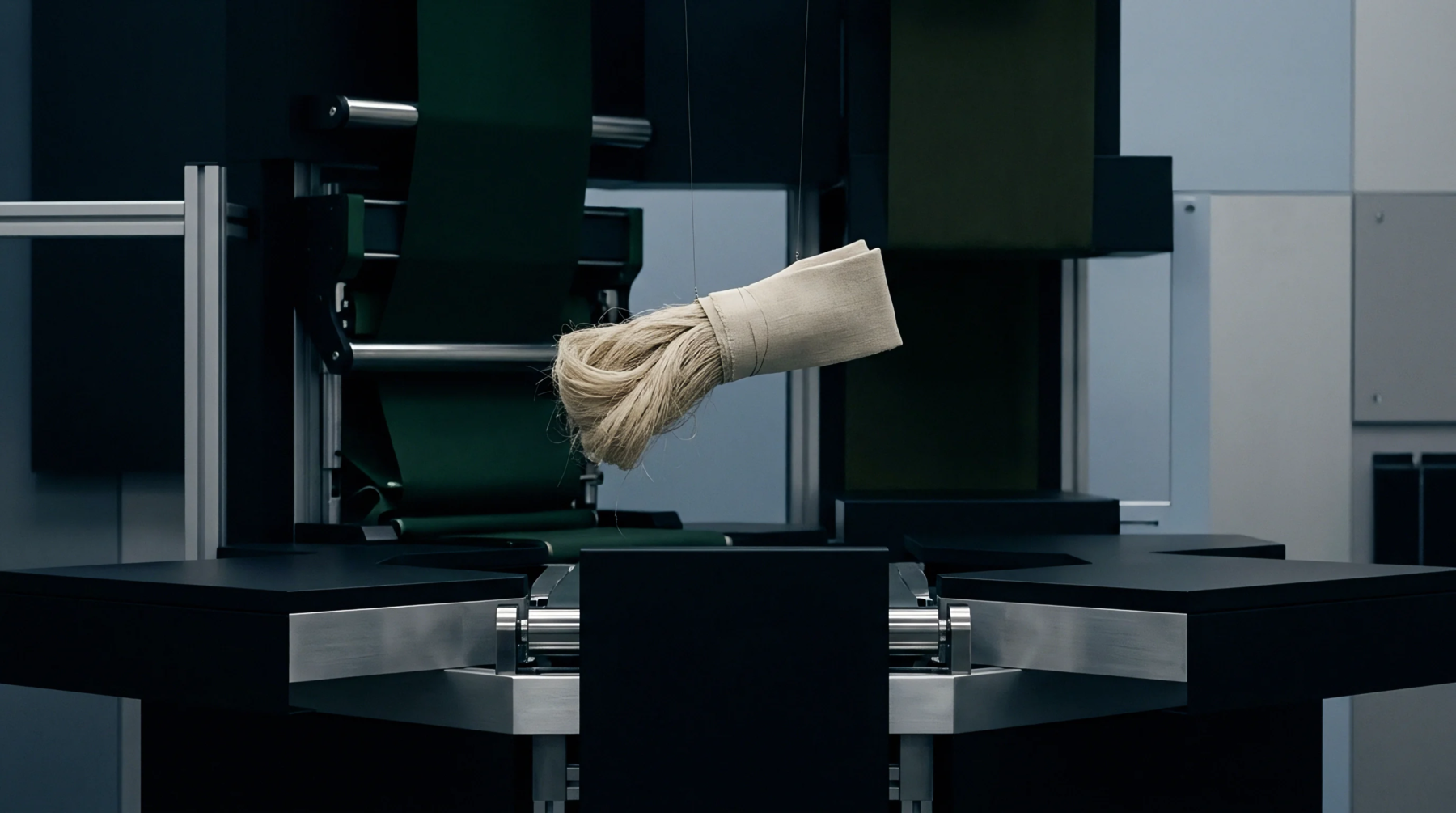
Mechanical Extension
Flax fibre resilience during the spinning process defines the capacity of a strand to stretch under tension before it snaps. Single-yarn elongation measures the percentage of length increase occurring at the moment of rupture compared to the initial gauge length. Quality control laboratories in spinning mills use this value to forecast how the material behaves under the physical demands of high-speed weaving looms.
Variations in moisture content or fibre twist modify the measured result.
Testing Procedure
Operatives perform this assessment on a constant rate of extension tester designed for textile filaments. The specimen undergoes steady stress until failure occurs, recording both the breaking force and the associated extension distance. Data management software calculates the ratio of the change in length to the original dimension to produce the final metric.
Proper calibration of the grip jaws prevents premature breakage, as any slippage inside the clamp distorts the data. Ambient humidity control remains the primary requirement for repeatability, because linen fibres absorb water that alters their mechanical properties.
Performance Expectation
Industrial specifications distinguish between raw yarn batches destined for heavy canvas production and finer goods intended for apparel. Buyers establish an acceptance threshold based on these historical laboratory results to prevent loom stoppages caused by frequent warp breakages. Mill standards set a narrow tolerance band to ensure consistent tensile behavior during the sizing phase.
Higher values indicate a fibre capable of absorbing the shock of mechanical stresses without failing. Reliable structural integrity during manufacturing depends on the consistency of this deformation property across all production lots.