Mechanical Variable
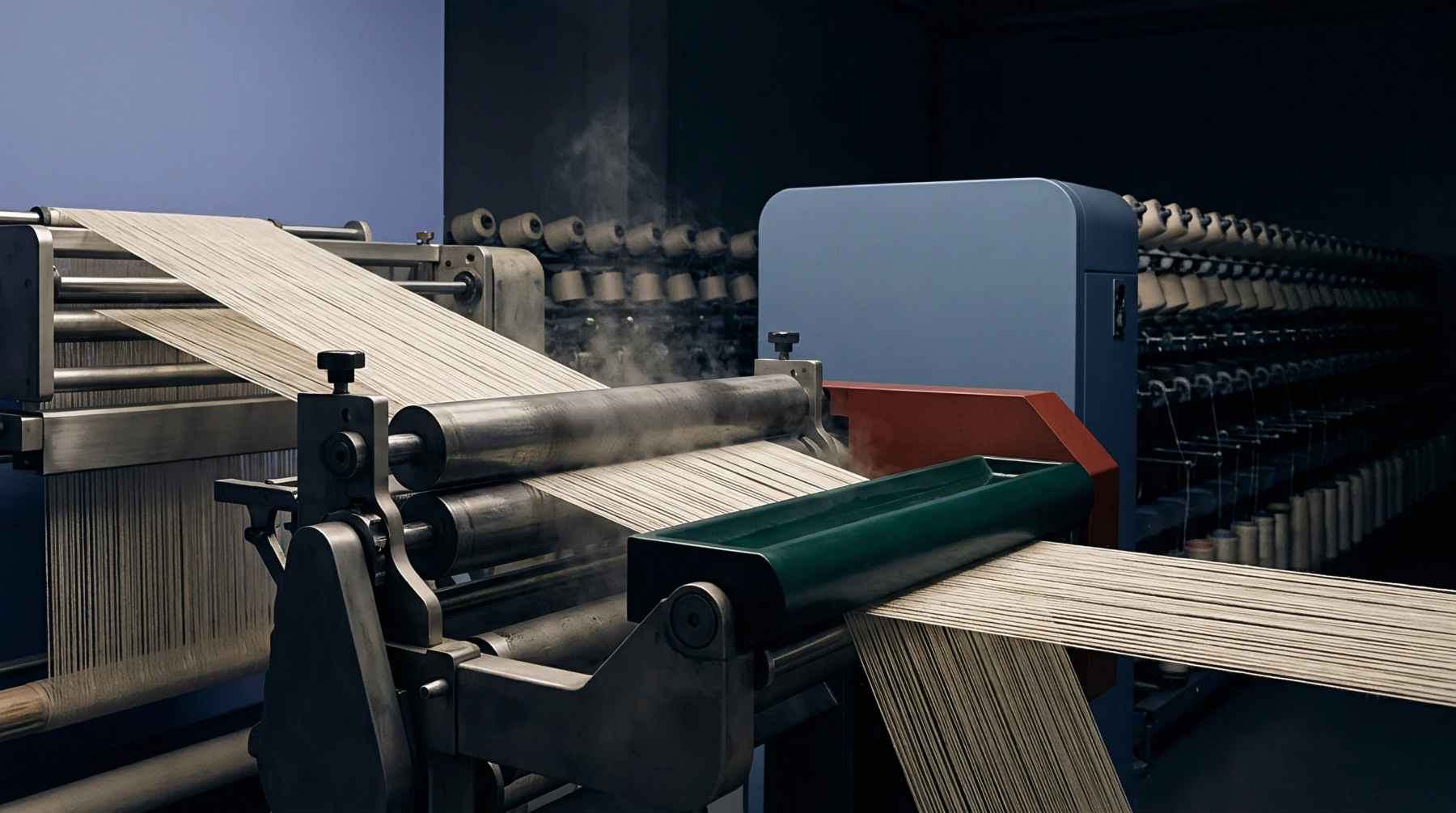
Continuous measurement of cyclic pulling force exerted on longitudinal loom yarns defines the instantaneous mechanical stress during fabric formation. Electronic sensors mounted on the whip roll capture dynamic warp tension variations throughout shedding, weft beat-up and let-off cycles. The peak force recorded during shed opening must remain below the elastic recovery limit of linen yarn to avoid structural damage and filamentation.
Inelastic natural fibres exhibit sharp tension spikes during harness movement, demanding rapid let-off regulation to balance the weave shed.
Loom Kinematics
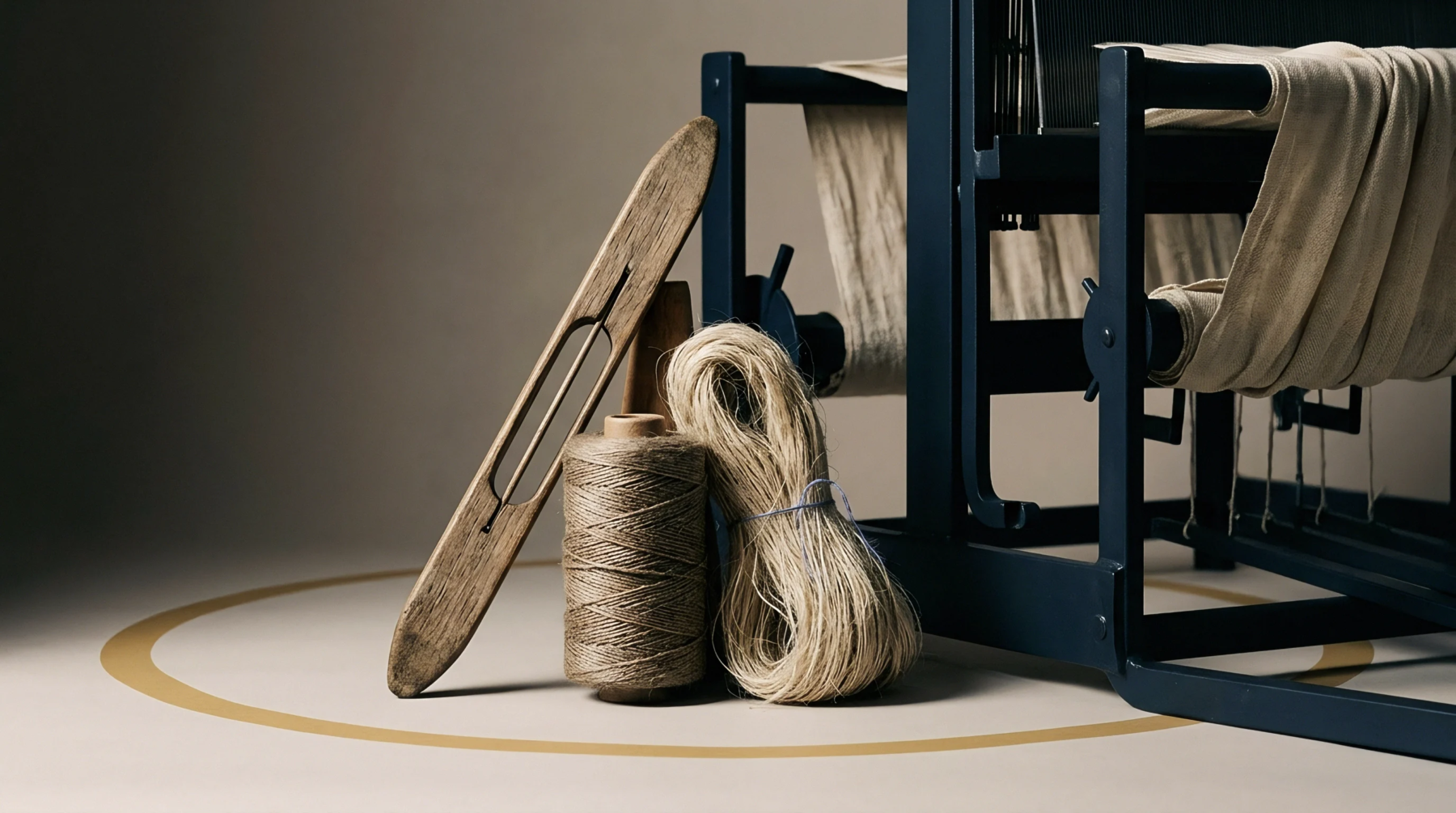
Shed geometry, back rest oscillation and take-up rates continuously alter the force profiles experienced by individual flax ends. When the loom reaches full shed opening, dynamic warp tension reaches its cyclic maximum, exerting high transverse stress against heddle eyes and drop wires. Proper synchronization of the oscillating whip roll dampens peak loads during beat-up, reducing yarn abrasion against the reed teeth.
Sizing recipes containing modified starches improve yarn elasticity, moderating mechanical shock waves that travel back to the warp beam. Industrial loom monitoring systems log tension waveforms in real time, alerting technicians when baseline loads drift beyond preset operational thresholds.
Process Stability
Warp breakage rates in linen weaving correlate with uncontrolled fluctuations in cyclic tensile loading. Mill quality control procedures establish strict tension limits on loom setup sheets to maintain uniform cover factor across the full fabric width. Weaving coarse flax yarns requires distinct tension damping profiles compared to high-count wet-spun warps that tolerate minimal peak elongation.
Fabric inspection logs record defects such as uneven pick density, reed marks and tension streaks resulting from let-off motor lag. Acceptance criteria for precision export fabrics require verification of dynamic load stability across continuous production shifts. Regular sensor calibration on the loom frame ensures that digital let-off controls accurately track physical warp consumption without causing chronic fatigue failure in brittle bast fibres.