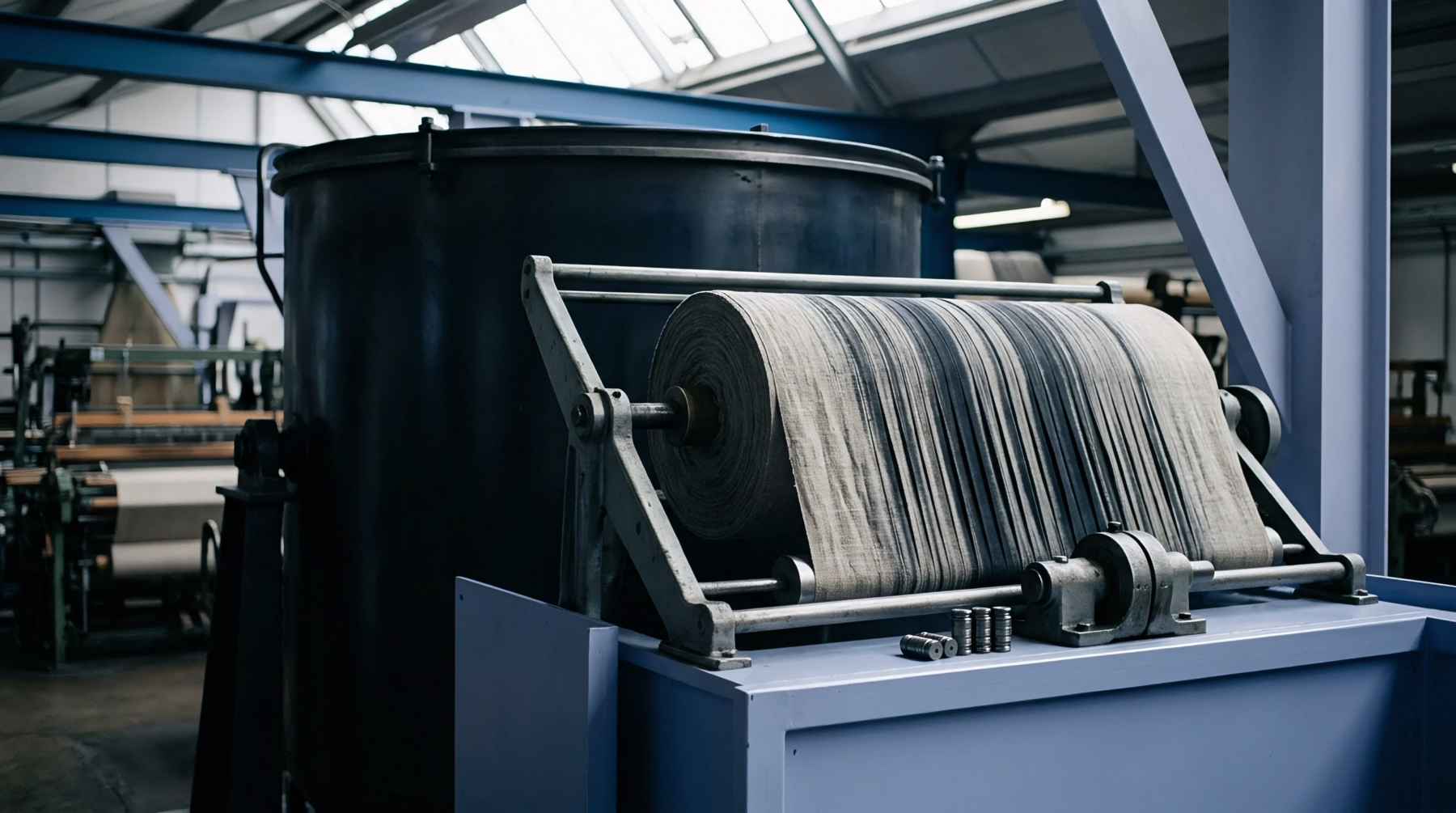
Warp Preparation
Preparatory processing involves the systematic winding of individual yarn ends onto a drum in discrete sets prior to the final assembly onto a beam. This sectional warping method allows for the creation of smaller sub-batches that are transferred in sequence to ensure uniform tension across the entire width of the creel. Such an arrangement reduces the physical footprint required for production while maintaining exact control over the winding speed of each segment.
Mills utilize this procedure when dealing with limited supplies of specialty flax or specific colour counts that preclude the use of broad mill warping systems. The resulting sequence establishes the ground for consistent fabric density in the later stage of production.
Tension Regulation
Consistent mechanical strain defines the quality of the beam produced during this stage of the production sequence. Sectional warping maintains this stability by applying calculated pressure to each distinct set of ends as the machine rotates. Variations in the diameter of these segments create uneven take-up rates during the subsequent weaving operation.
Technicians monitor the surface of the beam to detect discrepancies that signal a malfunction in the brake or the tensioning gates. Improperly calibrated segments result in stripes in the finished cloth where the density of the warp ends changes suddenly. This mechanical oversight prevents the downstream breakage of brittle flax fibres during high speed loom cycles.
Standard Verification
Quality logs record the total number of sections and the individual tension readings captured for every processed beam. These documents provide the primary evidence for mill compliance with the material requirements specified in the purchase contract. Buyers distinguish between a fibre grade that classifies raw input and a fabric grade that evaluates the final output based on the density recorded in these logs.
Production teams check the alignment of these segments against the internal specifications governing the target width of the loom state fabric. Proper segmentation guarantees that the finished material meets the dimensional stability required for final export.