Polyvinyl Alcohol Sizing Penetration Mechanics for Fine Linen Warp Yarns
Controlled PVA sizing bounds radial penetration between fifteen and twenty-five percent, preserving internal flax flexibility while suppressing shed abrasion.
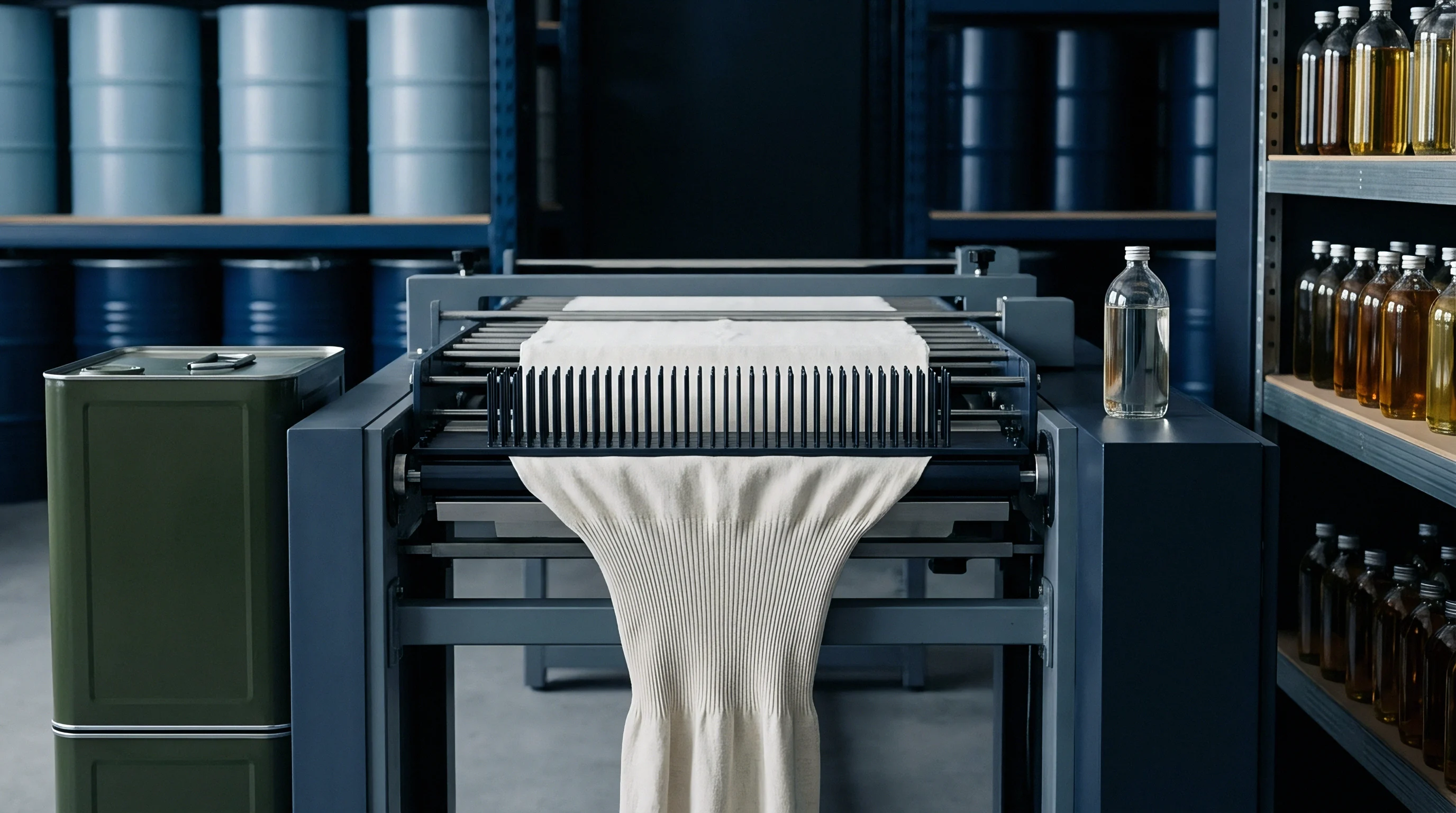
Liquor
Fine linen yarns entering a high-speed shedding machine present an unforgiving mechanical profile. Spun from bast fibres whose ultimate cells are bound together by inter-cellular pectin and residual hemicellulose, flax displays low ultimate elongation, typically between 1.8 percent and 3.2 percent at break, combined with an elevated initial modulus exceeding 1800 cN/tex. When fine counts ranging from Nm 39 (25.6 tex) to Nm 68 (14.7 tex) face the accelerated cycling of modern rapier and air-jet equipment running at 550 picks per minute, unshielded surface fibrils disintegrate under the reciprocating friction of the reed and drop wires.
Polyvinyl alcohol remains the benchmark sizing binder for these fragile yarns, yet selecting the correct polymer grade demands a balance between film ductility and solution flow.

Polymer Grade Selection and Hydrolysis Thresholds
Commercial grades of polyvinyl alcohol diverge based on their degree of polymerisation and their level of hydrolysis. Fully hydrolyzed variants, showing saponification levels of 98.0 to 99.8 mol percent, create crystalline dry films characterized by superior tensile tenacity, approaching 75 MPa at 65 percent relative humidity, alongside minimal cold-water solubility. Partially hydrolyzed variants, hovering between 87.0 and 89.0 mol percent, incorporate residual acetate groups that disrupt intermolecular hydrogen bonding, yielding flexible films with lower tensile resistance, around 45 MPa, but substantially higher breaking elongation.
Flax bundles resist uniform binder absorption.
Partially hydrolyzed polyvinyl alcohol maintained at 85 degrees Celsius delivers a solution viscosity below 18 mPa.s at eight percent concentration, restricting penetration to the outer yarn annulus.
Low bath viscosity stalls capillary migration. When sizing fine wet-spun flax, using a fully hydrolyzed polymer of medium or high molecular weight generates severe operating hazards. Elevated molecular chains induce viscosity creep inside the size box, exceeding 35 mPa.s under continuous shearing.
This high viscosity forces the film to congeal prematurely upon the yarn exterior without anchoring into the outer fibre bundles. The dry yarn emerges stiff, prone to shedding glassy flakes on the loom drop wires. Choosing a low-to-medium degree of polymerisation, equivalent to a 4 percent solution viscosity between 4.0 and 6.0 mPa.s at 20 degrees Celsius, paired with an 88 mol percent hydrolysis level, allows controlled capillary uptake through the yarn exterior while avoiding the glass-like brittleness typical of fully saponified chains.
Formulation Chemistry and Additive Ratios
Pure synthetic polymer films exhibit excessive adhesion to metal contact surfaces, precipitating split-rod cling and subsequent yarn hairiness at the head end of the sizing machine. Sizing recipes for fine linen require compound modifications using secondary lubricants and film plasticizers. Hydrogenated vegetable tallow, sulfated oils, or polyglycol ethers act as internal plasticizers, lowering the glass transition temperature of the dried polyvinyl alcohol matrix below room temperature.
- Modified Tallow Lubricant reduces interfacial yarn-to-metal friction through the drop wires when blended between 3.5 and 5.0 percent based on dry binder weight.
- Ethoxylated Defoaming Agent suppresses bubble entrapment inside the pump recirculation circuit at additions of 0.2 percent on total bath volume.
- Quaternary Antistatic Compound dissipates triboelectric charges generated during high-speed beaming operations across dry split rods.
- High-Amylose Modified Starch extends bath yield while lowering raw material costs without impairing film solubility during final washing cycles.
| Polymer Grade | Hydrolysis (mol %) | Viscosity (4% at 20°C, mPa.s) | Film Tenacity (MPa) | Elongation at Break (%) | Target Yarn Count |
|---|---|---|---|---|---|
| PVA 05-88 | 87.0–89.0 | 4.5–5.5 | 42–48 | 180–220 | Nm 50–Nm 68 (20–14.7 tex) |
| PVA 17-88 | 87.0–89.0 | 20.0–24.0 | 52–58 | 140–170 | Nm 39–Nm 45 (25.6–22.2 tex) |
| PVA 05-99 | 98.0–99.0 | 5.0–6.0 | 68–76 | 70–90 | Nm 60–Nm 68 (16.7–14.7 tex) |
| PVA 20-99 | 98.5–99.5 | 26.0–30.0 | 75–85 | 40–60 | Nm 26–Nm 36 (38.5–27.8 tex) |
Chemists at regional supply warehouses frequently advise plants that higher solid concentrations resolve yarn hairiness, overlooking how excess solids restrict binder flow into tightly packed wet-spun structures.
Sheath
Radial distribution of the dried binder matrix governs the post-sizing flexural behavior of flax strands. Unlike staple cotton yarns featuring rounded cellular cross-sections and pronounced air channels, wet-spun linen arrives as a compressed ribbon composed of polygonal ultimate cells joined by middle lamellae. Capillary flow through this composite structure does not follow simple isotropic porous equations.
The voids divide into two classes: coarse inter-bundle gaps created by yarn twist, and micro-capillaries positioned between parallel single fibres inside individual technical strands.
Can Bath Solids Overcome Flax Bundle Irregularity?
Cross-sectional variations along linen strands produce severe local fluctuations in fluid resistance. Wet spinning leaves natural waxes and insoluble pectins along the outer boundary, forming a hydrophobic barrier that repels aqueous sizing agents during brief contact intervals. If an engineer raises the solid content above 11 percent to force binder deposition, liquid migration stalls along the irregular yarn contours.
High-solid formulas form thick deposits over open sections while starving the dense nodes. Dry spinning leaves internal voids open.
Microscopic cross sections show that unanchored exterior size films delaminate during the first thousand harness cycles.
Dynamic penetration inside the yarn follows the classic Lucas-Washburn relationship, where fluid depth advances proportionally to the square root of surface tension, pore radius, and contact duration, divided by the square root of twice the dynamic viscosity. Because fine linen yarns travel through the sizing box within 0.8 to 1.5 seconds, fluid uptake occurs rapidly. Raising sizing solids from 7 percent to 12 percent quadruples the dynamic bath viscosity at 85 degrees Celsius, cutting capillary penetration depth by half.
The binder remains on the exterior perimeter, forming an unanchored shell that shears off as fine dust during harness changes.
Radial Penetration Limits and Radial Gradients
Loom efficiency hinges on the precise boundary between outer bundle encapsulation and inner strand freedom. The target sizing profile demands a radial penetration depth between 15 percent and 25 percent of the total yarn radius. This window confines the polyvinyl alcohol to the outer third of the cross-sectional area, binding loose fibril tips into a coherent, abrasion-resistant casing while preserving the untreated heart of the yarn bundle.
Excessive penetration embrittles the yarn axis. When low-viscosity sizing enters the center of the linen strand, it fills the internal voids and bonds the core fibres into a solid monolithic rod. When this rigid strand passes over the whip roll and deflects through the heald eye, the interior fibres cannot slide past one another to accommodate the local bending radius.
Tenacity drops when fibrils fracture. The yarn loses flexural compliance, leading to tensile failure at the beat-up strip. Conversely, when penetration falls below 10 percent of the radius, the size coating lacks mechanical interlock with the underlying bast fibres, peeling away under reed friction and leaving bare fibres to snag adjacent ends.
Whether modern chemical wetting agents can accelerate micro-pore entry without extracting natural bast waxes remains an open engineering question in the wet processing of European long-line flax.


Nip
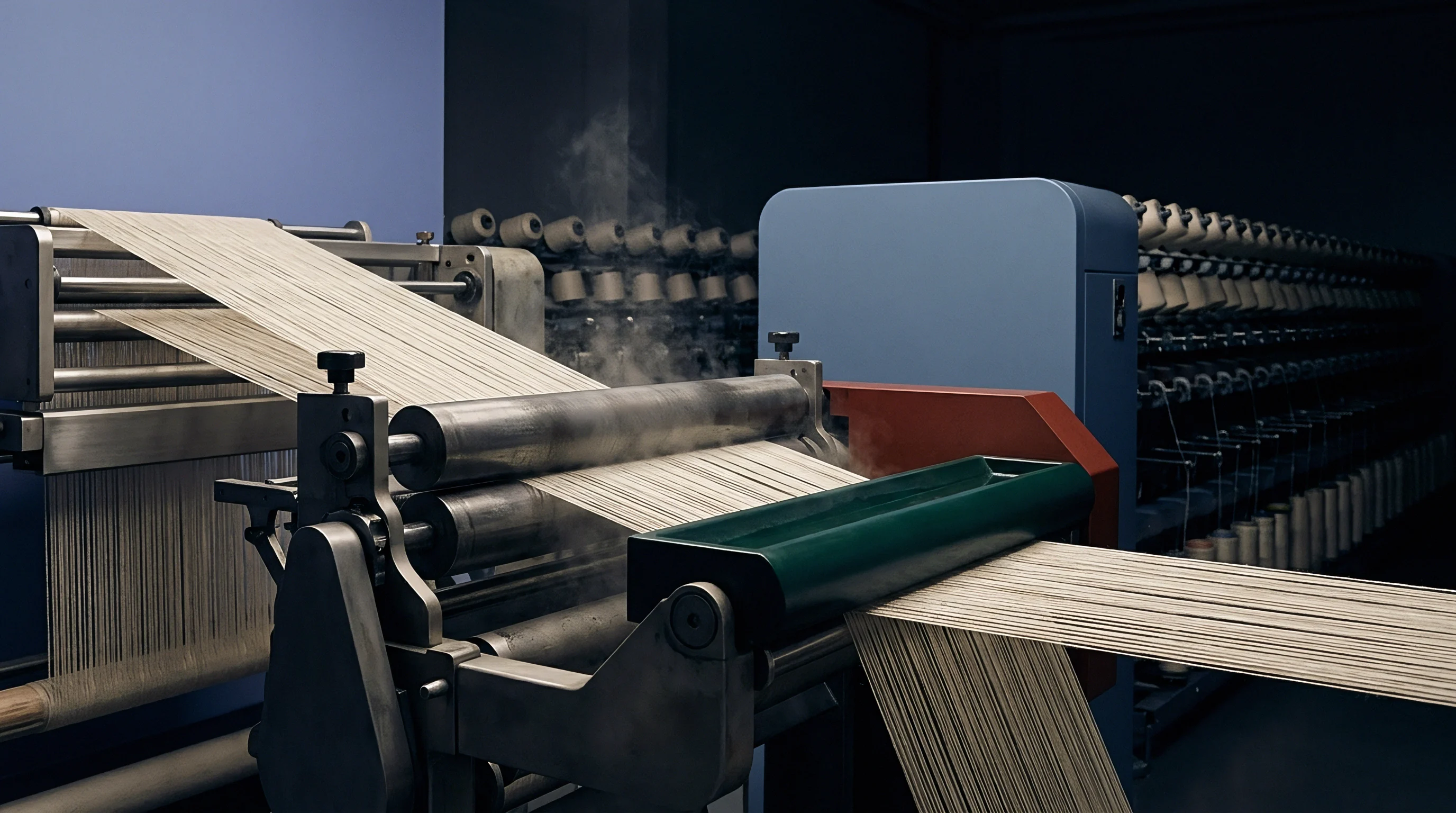
Mechanical extraction at the squeeze rolls determines the balance between size pickup and fluid displacement. As the warp sheet passes through the size box, the yarn bundle absorbs liquor through immersion before entering the high-pressure contact zone between the bottom steel roller and the top elastomeric roller. The hydrodynamic pressure generated inside this roller interface forces a fraction of the surface liquid into the internal capillary voids while stripping the surplus volume backward into the immersion tank.
Will Penetration Depth Dictate Drop Wire Abrasion?
Shed efficiency records link warp breakage at the drop wires directly to mechanical roll calibration. When the squeeze roll pressure drops below calibrated targets, the wet pickup percentage increases, leaving excess film on the yarn surface. This thick exterior crust fails to anchor into the underlying fibrils.
Heavy nip pressure forces size inward. As the dry warp reciprocates against the steel edges of the drop wires at 600 cycles per minute, an over-pressured, saturated yarn shatters from flex fatigue, whereas an under-pressured yarn loses its protective film through friction peeling.
A soft squeeze roll running below calibrated line pressure transfers surface moisture without driving binder into the inter-fibre channels.
Line speed interacts directly with roll hardness. Running fine linen counts at 40 metres per minute over a 65 Shore A rubber roll produces an extended footprint, dispersing the compressive load over a wide contact stripe. This wide contact band prolongs dwell time under low peak pressure, encouraging surface leveling over core intrusion.
Replacing the roll with a 75 Shore A elastomer narrows the contact stripe, generating a sharp, concentrated pressure pulse that drives the polymer solution into the inner capillary channels of the linen bundle.
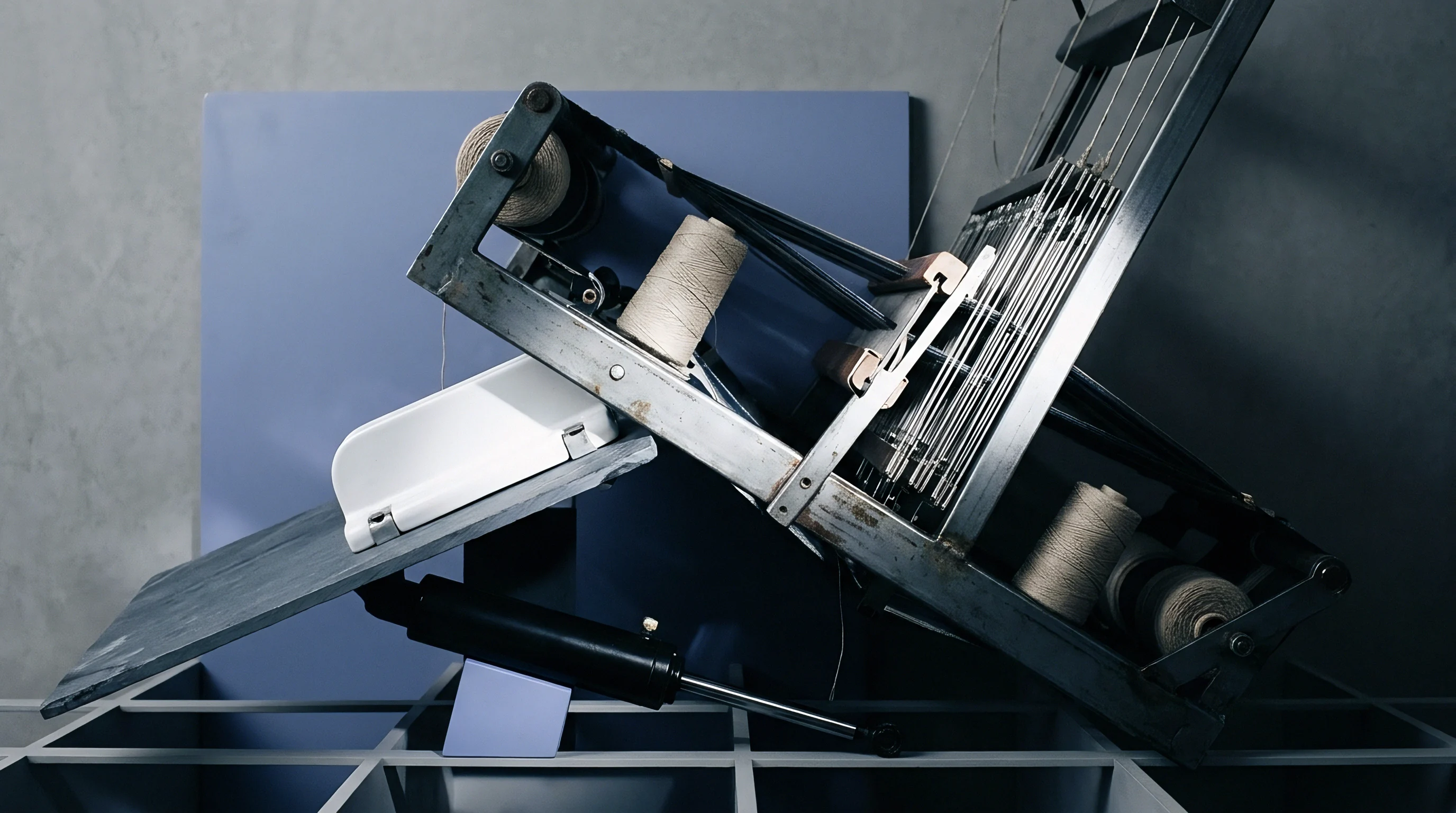
Slasher Roll Hardness and Immersion Dwell
Maintaining exact wet pickup on linen warps requires precise synchronization of roller pressure, liquor temperature, and linear throughput. The high natural moisture regain of flax, normally between 8.0 and 12.0 percent, introduces variance into initial liquid absorption. If incoming moisture fluctuates by more than two percentage points across the beam width, local wet pickup shifts, creating hard spots along the dried warp sheet.
| Nip Load (kN/m) | Roll Hardness (Shore A) | Dry Add-On (%) | Radial Penetration (%) | Yarn Bending Rigidity (mg·cm) | Warp Stops per 100,000 Picks |
|---|---|---|---|---|---|
| 8.0 | 65 | 12.8 | 8–12 | 340 | 3.8 |
| 14.0 | 70 | 9.4 | 16–22 | 210 | 0.9 |
| 20.0 | 75 | 7.6 | 26–32 | 280 | 2.4 |
| 26.0 | 80 | 6.1 | 38–48 | 420 | 5.6 |
| Data observed on Sulzer G6300 rapier loom, 190 cm width, plain weave construction, 28 ends/cm, 480 picks per minute, 65 percent relative humidity. | |||||
Operational control across the sizing box requires adherence to a defined machine protocol:
- Immersion Roller Clearance must balance fluid contact against drag tension to prevent yarn elongation past 1.2 percent before entry into the squeeze zone.
- Pneumatic Nip Calibrations set the line loading to 14 kN/m, avoiding structural flattening of the oval linen bundle.
- Box Temperature Maintenance holds the sizing bath at 85 degrees Celsius, stabilizing solution viscosity within a single mPa.s tolerance.
- Wet Split Divider Configuration cleaves congealed starch and binder films immediately before entry into the pre-drying cylinder banks.
Failure to calibrate squeeze pressure across the roll face results in uneven dry add-on, producing edge-to-center tension variations that cause continuous warp breaks and costly loom stoppages across wide shedding machines.
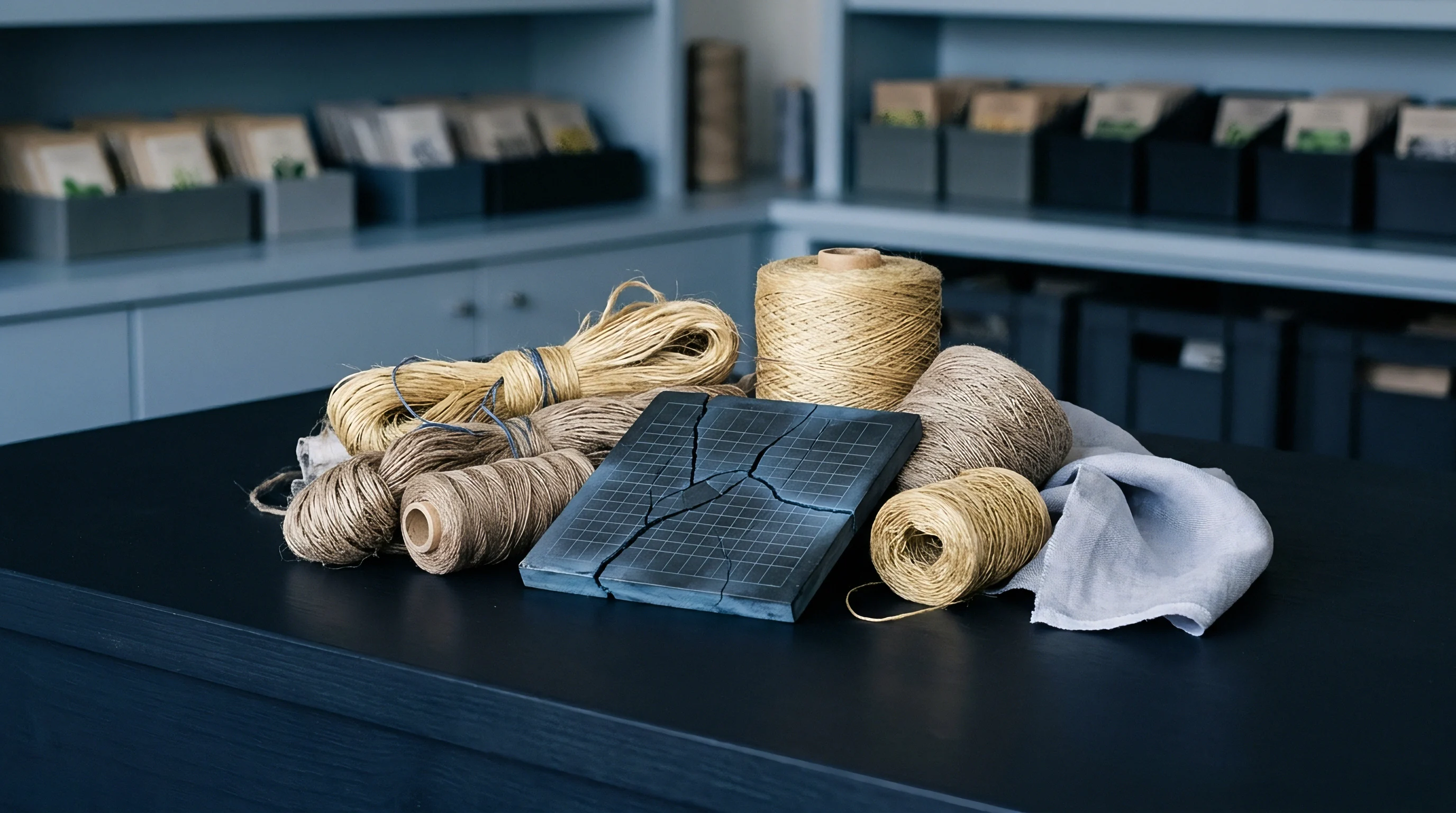
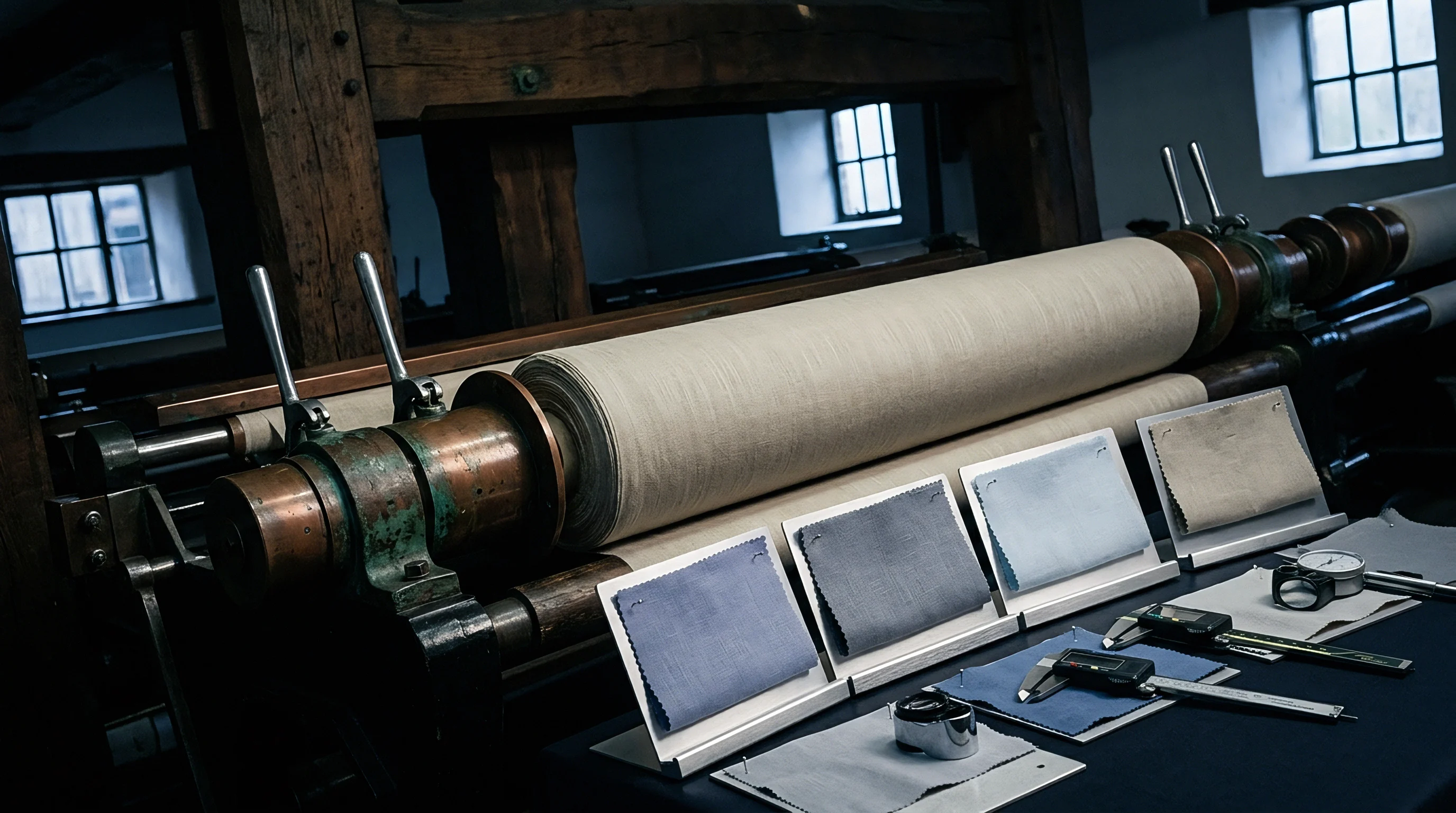
Heald
Cloth formation on high-speed equipment transforms sizing characteristics into economic realities. Linen warp yarns encounter cyclic tensile peaks, flexural fatigue, and intense abrasion within the harness frames. The heald eye presents the most severe friction point.
Each time the frame rises or falls to form the shed geometry, the yarn bends through an angle of 15 to 25 degrees while rubbing against the hardened steel eyelet under a dynamic tension cycling between 0.3 and 0.9 cN/tex.
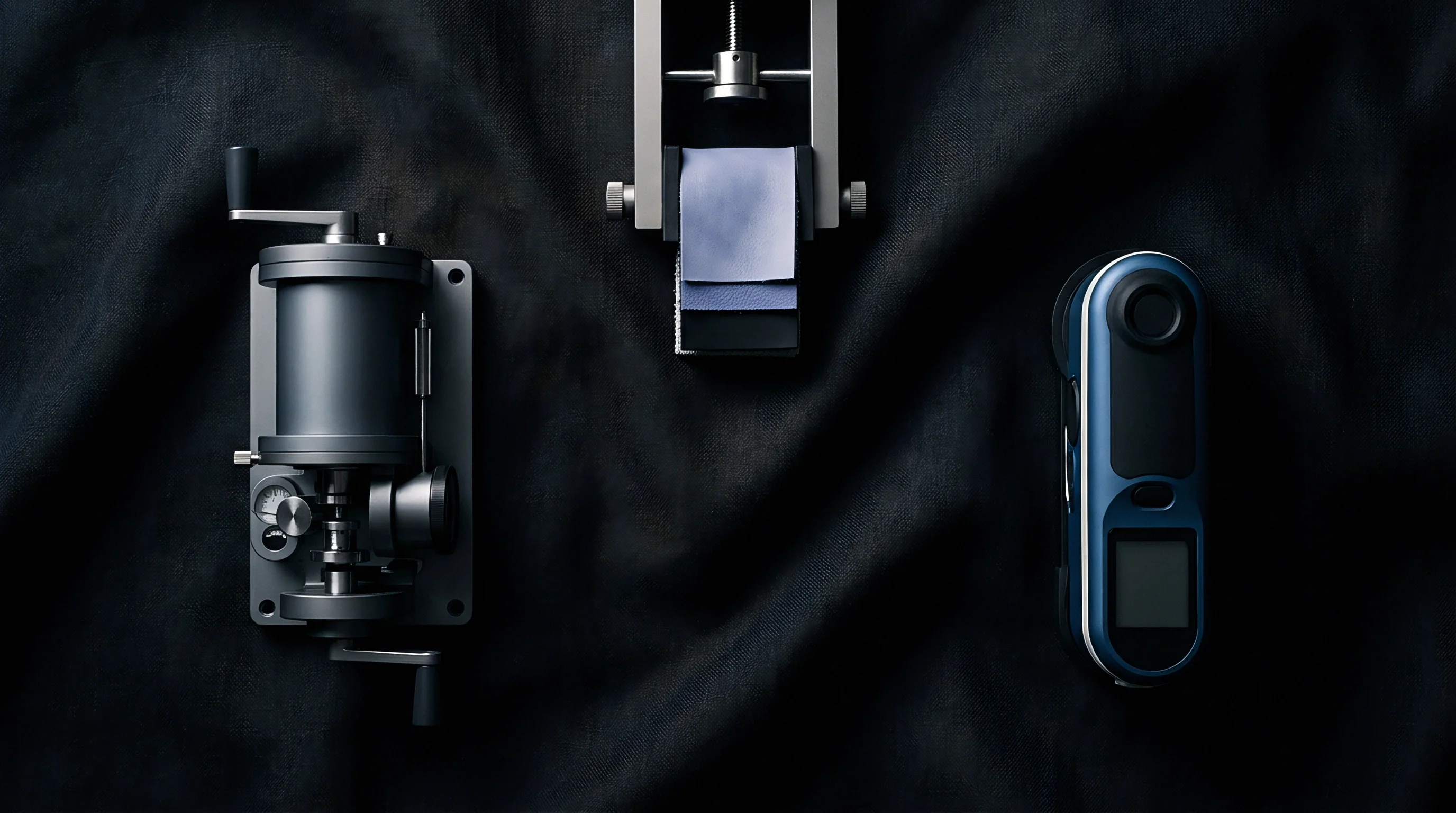
Shedding Stress and Flexural Rigidity Penalties
Yarn flexibility governs warp endurance under alternating shedding tensions. If polyvinyl alcohol penetration locks the bundle into a solid mass, the measured flexural rigidity climbs from a baseline of 110 mg·cm to over 400 mg·cm. High bending stiffness restricts the yarn from flexing cleanly through the heald eye, precipitating shear fractures at the contact point.
Shed clearance penalizes stiffened yarn. The rigid warp fails to clear the shed cleanly, causing rapier heads or air-jet air cones to snag adjacent ends.
Warp breaks consume booked loom hours. Consider a standard plain weave linen fabric, woven at 220 cm grey width, with 28 ends per centimetre of Nm 50 (20 tex) wet-spun warp and 24 picks per centimetre of Nm 39 (25.6 tex) flax filling. The total ends across the beam equal 6,160.
At an operating speed of 500 picks per minute, the machine inserts 30,000 picks per hour, producing 12.5 running metres of greige cloth at 100 percent theoretical capacity.
When improper size penetration causes warp stops to rise from 0.8 to 4.5 stops per 100,000 picks, the shed loses 1.35 loom stops per hour. With an average operator response and repair dwell of 2.5 minutes per break, the loom sits idle for 3.38 minutes every hour, shaving 5.6 percent off operational efficiency. Over an order of 25,000 metres running across twenty looms, this loss extends total production time by 112 machine hours, raising overhead costs by more than 0.38 euros per finished metre.
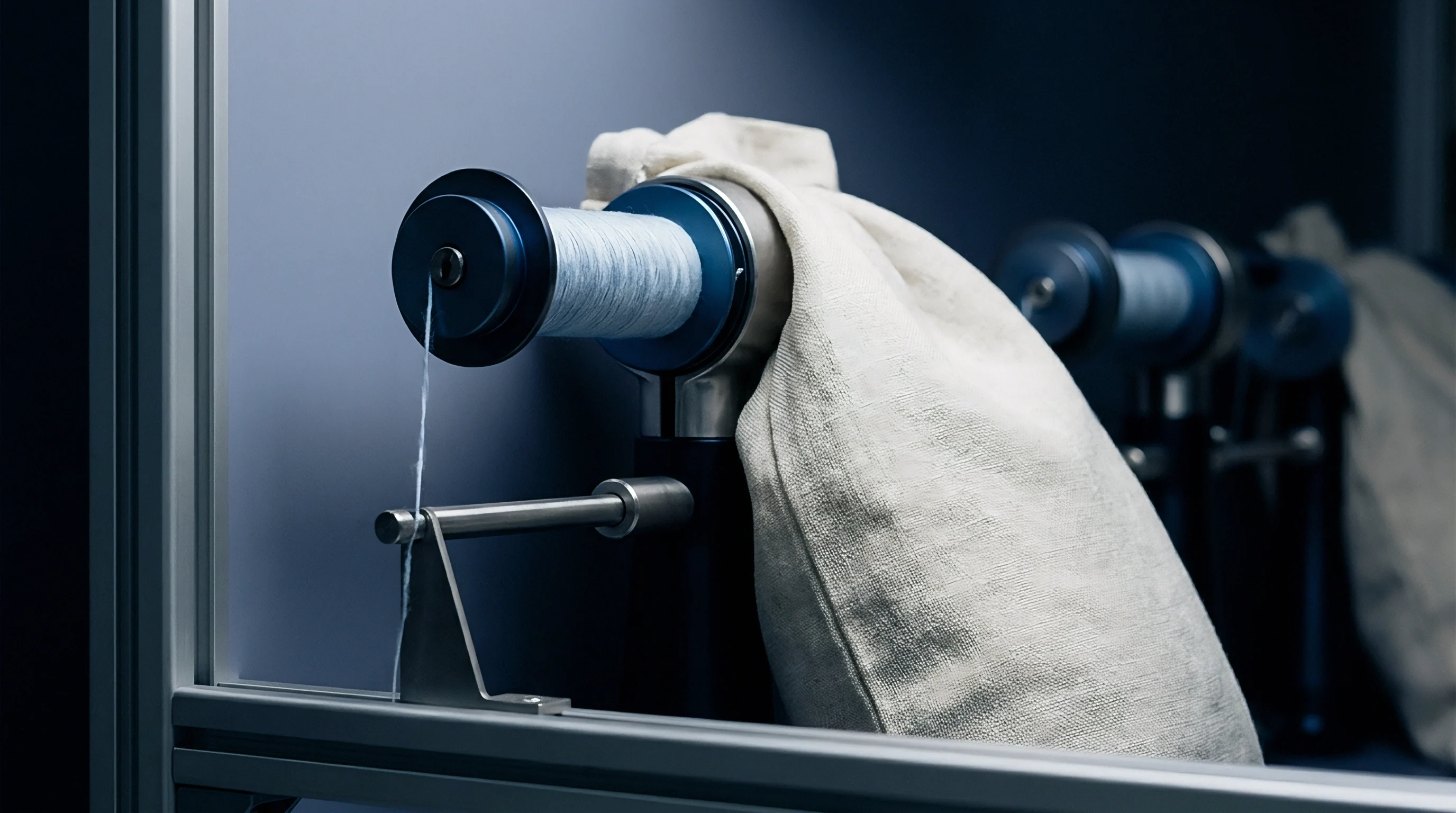
Warp Beam Inspection and Shed Cleanliness
Shed inspection lines monitor dust buildup around drop wires to assess sizing integrity long before severe breakage occurs. When polyvinyl alcohol films lack cohesive strength or anchor poorly into the flax substrate, the recurring contact with the reed strips the polymer as white flakes. Sizing protects against cyclic reed impact.
- Drop Wire Lint Density indicates whether low penetration allows loose fibrils to escape the binder matrix during cycling.
- Reed Dent Clearances must remain free from gummy binder deposits that accumulate during high-humidity night shifts.
- Heald Eye Alignment prevents unilateral edge wear across fine counts where misaligned harnesses chew the outer yarn sheath.
- Beam Flange Runout checks ensure warp sheets enter the stop motions parallel, preventing side-roll chafing along the loom frame.
A soft outer yarn sheath resists cyclic friction while a supple inner bundle absorbs continuous bending fatigue.
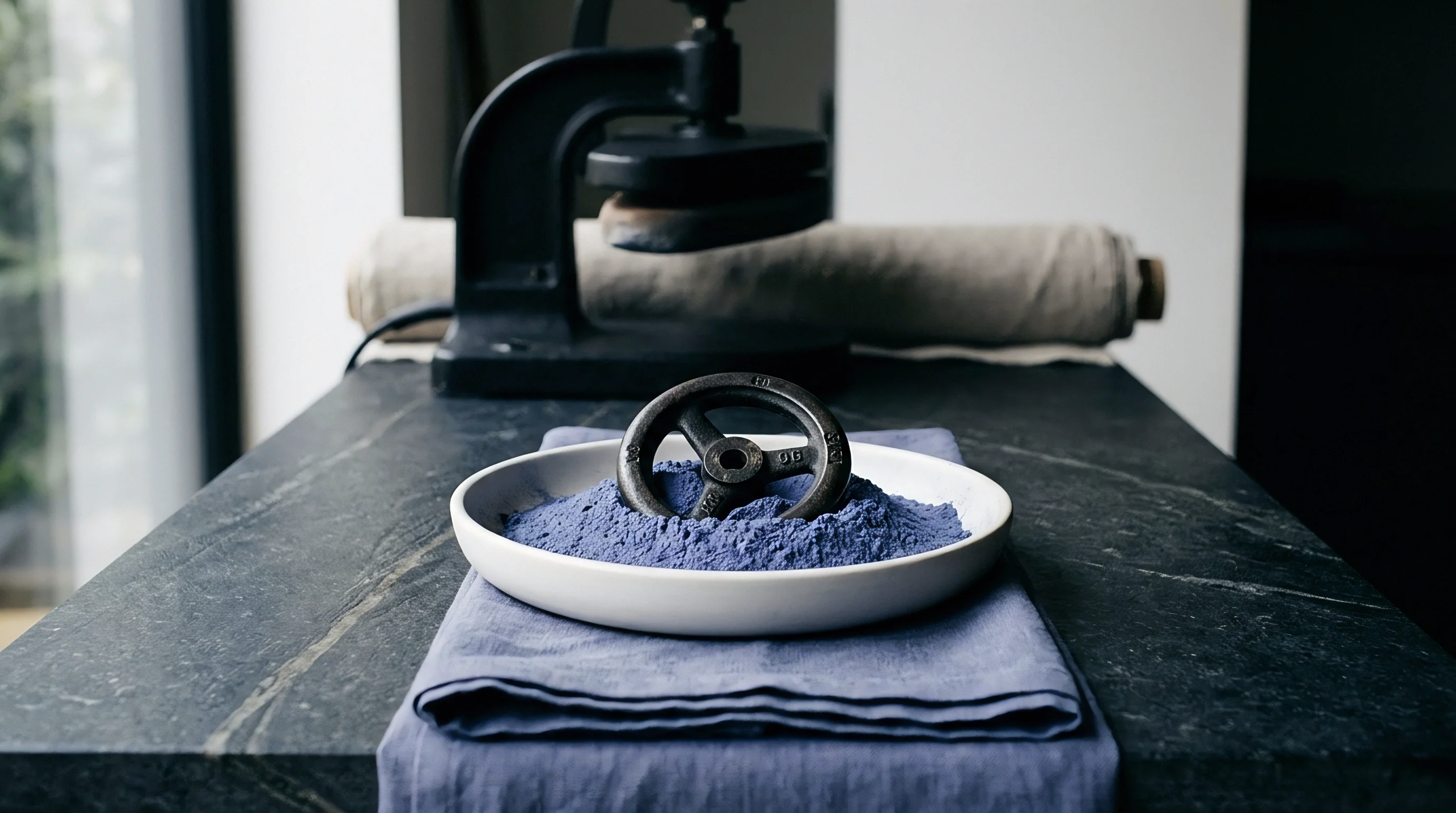
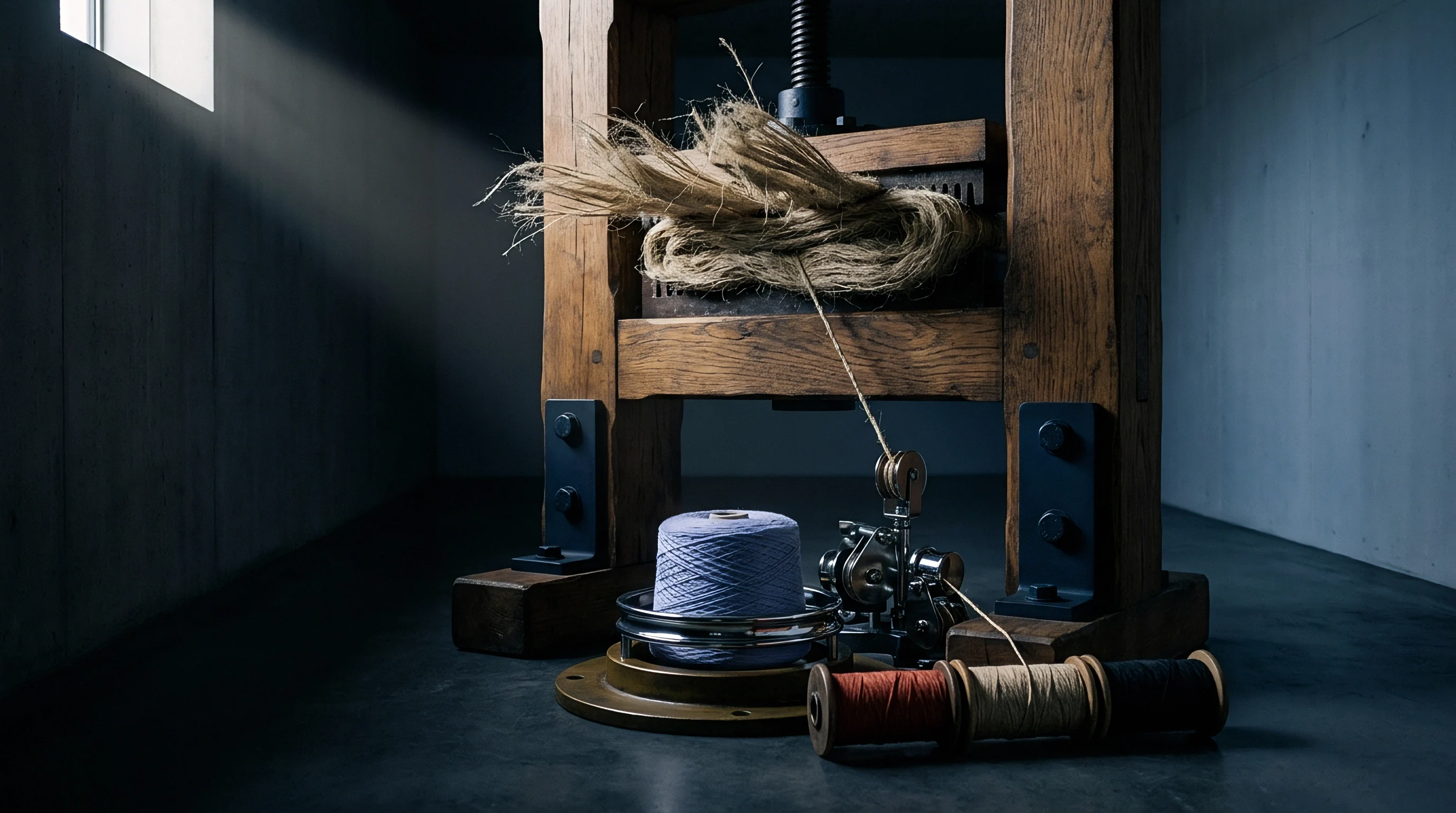
Scour
Woven greige cloth must release its protective synthetic binder during finishing without compromising natural cellulose strength. Polyvinyl alcohol offers superior water solubility compared to cross-linked starches, yet the removal mechanics depend entirely on the thermal history of the yarn and the chemical purity of the water bath. Hot water dissolves the exterior polymer.
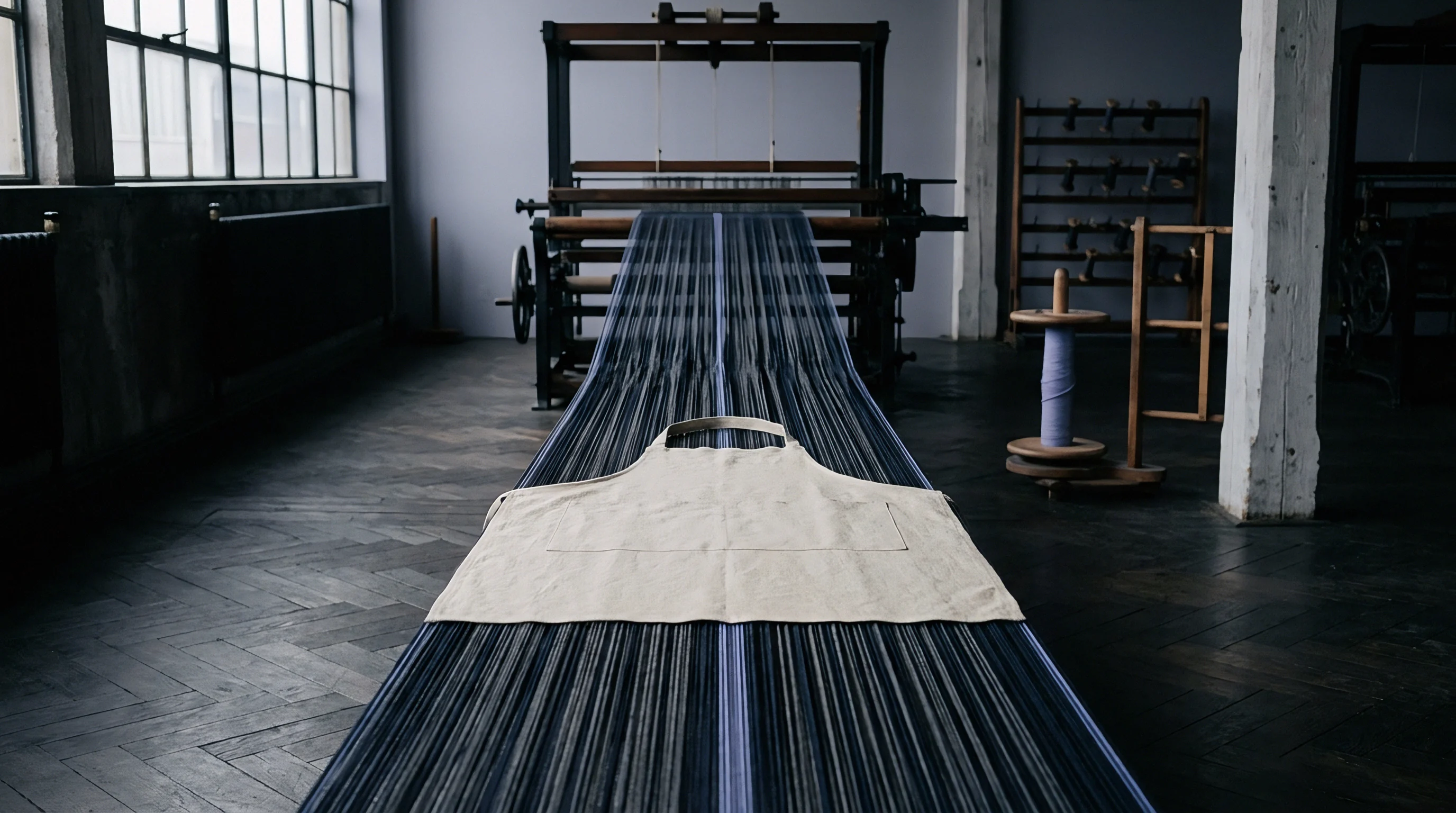
Thermal Dissolution Kinetics and Polymer Removal
The dissolution temperature of polyvinyl alcohol correlates directly with its saponification level. Partially hydrolyzed grades dissolve rapidly in water baths held at 60 to 70 degrees Celsius, whereas fully hydrolyzed grades demand thermal energy above 85 degrees Celsius to disrupt crystalline hydrogen-bonded structures. If the sizing process exposed the yarn to excessive drying temperatures, exceeding 125 degrees Celsius on the initial cylinder banks, the dry polymer undergoes partial thermal crystallization.
Low hydrolysis accelerates desizing rates.
Under standard wet processing protocols, residual polyvinyl alcohol levels must fall below 0.3 percent of dry cloth weight to prevent streaky dye absorption in downstream open-width dyeing ranges.
Prolonged exposure to alkaline scour baths above 95 degrees Celsius creates grave risks for fine linen fabrics. Natural bast fibres depend on their pectin matrix and wax mantle to maintain bundle integrity and a soft, supple hand. Aggressive boiling removes these natural lubricants alongside the synthetic size, dropping yarn breaking tenacity by up to 15 percent and leaving the cloth flat, dry, and brittle.
Wax extraction weakens the finished textile. Utilizing low-temperature, partially hydrolyzed polyvinyl alcohol permits size removal using neutral hot-water rinses containing non-ionic surfactants, entirely bypassing the destructive caustic boiling steps common in traditional cotton finishing.
Effluent Burdens and Membrane Concentration Economics
Wastewater discharge controls place stringent limits on desizing effluents containing synthetic polymers. Polyvinyl alcohol exhibits a low biochemical oxygen demand (BOD) over five days, typically below 50 mg/g of dry substance, but its chemical oxygen demand (COD) routinely surpasses 1600 mg/g. Because the long vinyl carbon backbone resists biological degradation in conventional municipal activated-sludge systems, finishing mills face heavy environmental surcharges when discharging untreated wash liquor.
Modern operations employ ultrafiltration membranes to capture and concentrate the desizing waste stream. Cloth passes through high-efficiency counter-current washing boxes at 80 degrees Celsius, producing an effluent stream with 1.5 to 2.5 percent dissolved polyvinyl alcohol. Pumping this wash liquor through polyethersulfone tubular membranes at 0.4 MPa operating pressure concentrates the size back to an 8.0 percent solution, suitable for blending directly into new sizing formulations.
Greige inspection flags powdery dust accumulation.
Contractual agreements governing greige cloth transactions incorporate standard clauses defining maximum acceptable residual size content, where testing under standard ISO 105-C06 wash conditions establishes that any fabric retaining more than 0.5 percent dry synthetic binder permits immediate debiting of downstream dyeing surcharges against the weaving mill invoice.