Crystalline Cellulose Microfibrillar Realignment and Viscoelastic Shear Dynamics
Microfibrillar realignment under shear dictates linen dimensional stability, demanding controlled loom tension and zero-tension wet relaxation to prevent skewing.

Swell
Native flax fibers derive their structural stiffness from parallel bundles of highly crystalline cellulose chains wrapped in a right-handed helix around the lumen. Inside each elementary fiber, crystalline cellulose microfibrils sit embedded in an amorphous matrix of hemicellulose, pectic polymers, and structural lignin. The microfibrillar angle relative to the long axis of the fiber strand ranges between six degrees and ten degrees in high-grade long-staple European flax.
While this steep orientation gives the fiber high longitudinal tensile strength, it leaves it vulnerable to transverse shear strain. When aqueous liquid enters the amorphous inter-fibrillar spaces, hydrogen bonds between adjacent hemicellulose chains break, forcing the matrix to expand laterally. This expansion alters the spatial geometry of the crystalline microfibrils, generating internal shear stress along the helical boundary.
Under dynamic tension, these microfibrils slip directionally and realign toward the primary loading axis, driving the viscoelastic creep and dimensional recovery of linen yarns during wet finishing.
In this architecture, cellulose microfibrils dictate overall yarn strength.
The unit cell of native cellulose, known as Cellulose I-beta, consists of parallel glucan chains organized in a monoclinic crystal lattice. Intermolecular hydrogen bonding along the 1-10 crystal planes provides shear resistance, while weaker van der Waals interactions hold the 110 stacking planes together. When mechanical shear stress hits a wet flax yarn during continuous rope washing or tension-less wet processing, the hydration layer around the microfibrils lowers the activation energy needed to shear these 110 planes.
Microfibrils slide past one another in discrete quantum increments as hydroxyl hydrogen bonds break and reform. If applied shear force exceeds the yield threshold of the amorphous matrix, irreversible plastic displacement occurs. This permanent microfibrillar realignment shortens the lateral space between microfibrils, changing yarn diameter and raising packing density.
A dense yarn structure leaves less room for internal relaxation, creating residual stress that shows up as fabric skewing or spirality once tension releases.
Crystalline Architecture and Inter-Fibrillar Matrix Dynamics
The molecular mass of native flax cellulose shows a degree of polymerization between two thousand and nine thousand units. This structural length creates extensive crystalline domains interspersed with short amorphous regions. In those amorphous zones, non-cellulosic polymers absorb moisture rapidly, expanding by up to twenty-five percent in cross-sectional area while longitudinal length changes by less than two percent.
External shear stress alters microfibrillar orientation in the wet fiber.
During mechanical processing in liquid media, differential swelling between the rigid crystalline core and the hydrated amorphous shell creates localized internal torque. The right-handed helical orientation of the microfibrils converts this radial swelling force into longitudinal rotation. As the fiber unwinds slightly under aqueous hydration, its helical pitch angle changes.
When external tension is applied at the same time, the microfibrils resist this unwinding, creating a state of triaxial shear stress. The microfibrillar realignment angle shifts permanently toward the longitudinal axis if processing temperatures rise above sixty degrees Celsius while tension remains active. This thermally assisted realignment locks the microfibrils in an extended state, holding structural stress that releases only during subsequent laundering cycles.
| Chemical Swelling Agent | Treatment Temp (°C) | Microfibrillar Helix Angle Shift (deg) | Crystallinity Index Shift (%) | Viscoelastic Relaxation Half-Life (s) | Irreversible Plastic Shear (%) |
|---|---|---|---|---|---|
| Aqueous Deionized Water | 20 | -0.8 | +0.4 | 142 | 1.2 |
| Aqueous Deionized Water | 80 | -2.4 | +1.1 | 48 | 4.8 |
| Sodium Hydroxide (18% w/w) | 15 | -6.1 | -8.5 | 12 | 14.2 |
| Liquid Anhydrous Ammonia | -33 | -4.8 | -3.2 | 18 | 2.1 |
| Enzymatic Pectinase Solution | 45 | -1.6 | +0.2 | 86 | 3.1 |
Concentrated sodium hydroxide solution transforms the native Cellulose I-beta crystal lattice into the Cellulose II polymorph. Mercerization disrupts the native parallel chain orientation, reorienting the glucan chains into an anti-parallel arrangement that widens inter-molecular spacing. Swelling here is severe; it breaks the helical microfibrillar boundary and permits massive internal shear displacement.
In contrast, liquid anhydrous ammonia treatment converts Cellulose I into Cellulose III-I. Ammonia molecules penetrate the crystalline lattice without disturbing parallel chain alignment, allowing microfibrils to uncoil smoothly without losing structural integrity. When the ammonia evaporates, the microfibrils realign into a uniform, low-stress configuration that provides excellent dimensional stability and a supple hand without permanent loss of strength.

Viscoelastic Creep and Shear Strain Distributions
Viscoelastic deformation in linen yarns comes down to time-dependent structural rearrangement under mechanical load. When a wet yarn experiences longitudinal tension, its immediate response is elastic elongation as bond angles extend within the cellulose glucan rings. This initial strain gives way to delayed viscoelastic creep, where elementary microfibrils shear past each other through the hydrated hemicellulose matrix.
Applied tension directly controls microfibrillar orientation during processing.
The time-dependent viscoelastic response follows a non-linear Maxwell-Weichert model with multiple relaxation modes. Fast relaxation times, between zero and five seconds, correspond to elastic deformation of the amorphous matrix polymers. Slow relaxation times, running from tens of seconds to several hours, reflect the physical sliding of crystalline microfibrils along slip planes.
In industrial wet finishing, running wet cloth through nip rollers under high squeeze pressure imposes severe instantaneous shear strains. If machine speed prevents the completion of these slow relaxation modes, residual shear strain stays trapped inside the yarn matrix, driving downstream fabric distortion.
Unreleased shear stress within wet-processed microfibrils manifests as permanent dimensional distortion during post-dryer relaxation.
Hydro-extraction centrifuges and vacuum extraction slots apply sharp directional shear force to hydrated flax fibers. Water trapped inside the lumen and inter-fibrillar pores experiences centrifugal or pressure-gradient displacement, pulling flexible amorphous polymers along the fluid path. This fluid drag creates localized shear gradients across the fiber cross-section.
The outer microfibrils, taking the highest shear stress, align more longitudinally than the inner microfibrils near the lumen. That differential alignment causes uneven crimp within the yarn structure. When the fabric dries, outer microfibrils shrink longitudinally at a different rate than inner ones, making the yarn curl, twist, or kink once mechanical restraint is removed.
Thermodynamic Hydrogen Bond Reorganization during Liquid Processing
The thermodynamic driving force behind microfibrillar realignment relies on the reversible cleavage of inter-chain hydrogen bonds in polar liquids. Water molecules act as plasticizers by forming competitive hydrogen bonds with hydroxyl groups at the C2, C3, and C6 positions of the anhydroglucose units. This competitive bonding breaks the direct inter-chain bridges that hold the amorphous-crystalline interface together.
Higher temperatures accelerate this bond turnover during wet treatments.
At room temperature, hydrogen bond dissociation and re-formation proceed at a steady baseline rate. As temperature rises during thermal wet processing, thermal agitation increases the kinetic energy of the glucan chains, speeding up bond breakage. Applied mechanical shear force directs where new bonds form.
As microfibrils slide past one another, hydroxyl groups on adjacent chains shift near new binding sites. If wet fabric is dried quickly under tension while hot, these new hydrogen bonds lock into place before the microfibrils can return to their equilibrium positions, freezing the realigned microfibrillar geometry and storing internal strain energy in the dry fiber.
- Fibrillar Delamination creates longitudinal micro-cracks along the boundaries of elementary fiber bundles under cyclic shear stress.
- Slip-Plane Propagation concentrates plastic strain at structural defects, generating weak nodes along the fiber length.
- Matrix Voiding forms internal cavities within hydrated hemicellulose regions when shear forces pull microfibrils apart laterally.
- Irreversible Lattice Distortion converts crystalline parallel chains into disordered amorphous regions under extreme localized shear loads.
Water removal during thermal drying occurs in two distinct phases. In the constant-rate drying phase, free water evaporates from inter-fiber voids, keeping the surface temperature steady at the wet-bulb reading. Microfibrils maintain high mobility within the hydrated matrix throughout this stage.
In the falling-rate drying phase, bound water evaporates from within the microfibrillar matrix itself. The surface temperature climbs toward ambient air temperature, and inter-chain distance drops below three angstroms. At this critical moisture level, direct hydrogen bonding between adjacent cellulose chains resumes.
Any external shear strain present during the falling-rate phase leaves the realigned microfibrillar state permanently fixed by cross-linking hydrogen networks.

Micro-Mechanical Failure Modes under Dynamic Shear Strain
Dynamic shear strain during industrial wet processing can exceed the structural yield limit of native flax fibers, causing micro-mechanical damage. The primary structural failure mode is slip-plane formation, where localized dislocation bands develop perpendicular or oblique to the fiber axis. These slip-planes mark areas where crystalline microfibrils have sheared completely past neighboring matrix bonds, buckling outward under compressive shear or snapping under tension.
When exposed to repetitive bending or torsional stress in rope processing, these slip-planes propagate across the fiber cross-section, causing longitudinal splitting and premature tensile breakdown.
In weaving operations, shed geometry dictates the baseline tension.
Micro-mechanical damage also stems from microfibrillar delamination, where the middle lamella separating elementary fibers in a technical fiber bundle fractures under high shear strain. The pectin-rich middle lamella has lower shear strength than the crystalline cellulose walls of the elementary fibers. During mechanical softening, such as high-velocity air tumbler processing, intense friction between fabrics delivers sharp shear impacts.
Controlled shear fractures the rigid middle lamella to soften the fabric, but excessive shear breaks down the cohesive structure of the technical fiber bundle. Over-softening lowers yarn tensile strength, generates lint during sewing, and promotes fabric surface pilling as loose fiber ends pull out from the yarn core.
Microfibrillar orientation inside wet flax fibers relaxes toward its natural equilibrium state only when the aqueous swelling media is removed in a zero-tension environment.
Reed
Beat-up force delivered by the sley impacts the fell of the cloth with enough dynamic pressure to induce localized shear displacement within warp and weft yarns. In high-speed weaving, beat-up drives the newly inserted weft pick into the acute angle of the open warp shed. As the reed hits the fell, kinetic energy from the sley transfers as a sharp mechanical impulse, subjecting warp and weft crossover points to instantaneous compression and transverse shear.
In heavy linen constructions, where high cover factors require dense picking, beat-up force must overcome frictional resistance between adjacent flax yarns. Because flax fibers are stiff and inelastic, beat-up energy does not dissipate through immediate elastic deformation; it transfers straight into microfibrillar realignment at the yarn crossover points.
Impact from the reed forces this realignment at the fell.
Dynamic shear stress during beat-up changes the cross-sectional geometry of warp and weft yarns alike. Upon impact, the rounded cross-section of the spun flax yarn flattens into an ellipse. This distortion forces internal microfibrils to slide laterally within the yarn matrix, shifting from the core toward the outer edge.
If warp tension is set too high, the warp yarn resists bending and forces the weft pick to take up most of the weave crimp. That uneven crimp distribution creates asymmetric shear stress across the weave structure: microfibrils in the weft yarn undergo severe bending, while microfibrils in the warp stay locked in an extended, high-tension state.

Dynamic Beat-Up Shear and Yarn Crimp Transformation
The structural transformation at the fell of the cloth during beat-up depends on the dynamic balance between warp tension, backrest roller position, and sley eccentricity. High peak beat-up forces are required to weave dense linen greige, but excessive force leads to fell jump, reed marks, and yarn damage. Fell jump occurs when the fell moves forward under the reed’s impact, then rebounds as warp yarns contract elastically.
This back-and-forth movement sends high-frequency shear oscillations through the warp sheet.
Viscoelastic creep in the warp sheet largely dictates fabric stability.
During the shed change phase, warp yarns undergo rapid strain variations as harness frames rise and fall. Shedding stretches the warp ends, driving tension from a baseline running level of fifteen centinewtons per end to peaks above forty-five centinewtons per end. This cyclic tension change subjects microfibrils in the warp yarns to continuous, high-frequency viscoelastic creep.
If shedding geometry is asymmetric ~ with the top shed line under lower tension than the bottom ~ microfibrillar realignment differs between the upper and lower halves of the warp sheet. That tension difference produces unequal warp crimp, causing structural instability and wavy selvedges in the woven greige roll.
| Loom Type | Insertion Velocity (m/min) | Shed Opening Angle (deg) | Peak Warp Tension (cN/end) | Beat-Up Dynamic Peak Force (kN/m) | Loom Efficiency @ 24/20 Sett (%) |
|---|---|---|---|---|---|
| Negative Rapier Loom | 520 | 28 | 42 | 4.8 | 84.5 |
| Positive Rapier Loom | 680 | 24 | 36 | 5.2 | 89.2 |
| Air-Jet Loom (Profile Reed) | 1200 | 32 | 51 | 6.1 | 76.0 |
| Heavy-Duty Projectile Loom | 850 | 22 | 31 | 3.9 | 92.8 |
Rapier looms maintain positive, mechanical control over weft insertion, letting low-twist linen yarns enter the shed without structural degradation. Air-jet looms, by contrast, rely on high-pressure air blasts to shoot the weft pick through a profiled reed channel. The aerodynamic drag from the air jet applies strong longitudinal friction to the surface fibers of the weft.
Because linen yarns have high flexural rigidity and stiff surface microfibrils, this air blast can strip short surface fibers, causing yarn hairiness and filling stops. Air-jet weaving also demands higher warp tension to open a clean shed, elevating peak beat-up force and speeding up microfibrillar shear slip inside the warp sheet.

Can Air-Jet Shedding Preserve Microfibrillar Alignment at High Beat-Up Densities?
High-speed air-jet weaving subjects linen yarns to aggressive dynamic forces that test microfibrillar integrity. To get clean shed separation at insertion speeds over one thousand picks per minute, the warp sheet must be held under elevated static tension. That higher baseline strain suppresses the natural elastic recovery of flax microfibrils.
When the profiled reed beats up the weft pick, the sudden impact force cannot dissipate through micro-yielding in the yarn matrix. Instead, force concentrates at crossover points, forming microfibrillar slip-planes at the outer boundary of the elementary fibers. The high velocity of air-jet insertion also generates high-frequency vibrational waves along the weft pick, untwisting it locally before beat-up.
That untwisting allows microfibrils to spread laterally, causing uneven yarn diameter, variable cover factor, and cloudiness in the finished fabric image.
Higher loom speeds accelerate microfibrillar creep.
Positive rapier shedding maintains continuous mechanical control over the weft pick, permitting lower insertion velocities while preserving yarn structural orientation. Lower insertion speeds reduce required peak warp tension during shed opening, allowing warp ends to retain internal viscoelastic mobility. Under these conditions, beat-up energy spreads evenly across yarn crossover points, encouraging smooth microfibrillar sliding without creating structural dislocations or micro-cracks in elementary fiber walls.
Positive rapier looms achieve higher efficiency on heavy, dense linen constructions because their lower dynamic stress profile reduces warp end breaks from microfibrillar shear failure.
Peak beat-up force exceeding five kilonewtons per metre creates permanent microfibrillar slip-planes in linen warp yarns when shed tension exceeds forty centinewtons per end.
The choice between air-jet and rapier shedding directly affects the hand and structural stability of the finished cloth. Air-jet woven linen, produced under continuous high tension, starts with a stiff, unyielding hand and suffers high residual shrinkage in wet processing. Its microfibrils, frozen extended by high warp tension and aggressive beat-up forces, relax rapidly when exposed to water, causing heavy fabric contraction.
Rapier woven linen, made under lower, controlled tension, maintains balanced crimp geometry and lower internal microfibrillar strain, yielding predictable shrinkage and stable dimensions through dyeing and finishing.

Structural Construction Metrics and Loom Capacity Modeling
Mathematical modeling of woven linen construction requires exact values for yarn count, thread density, crimp percentage, and cover factor. Yarn count in linen systems is traditionally specified in Lea or Metric Count (Nm), where Nm is the length in kilometers of one kilogram of yarn. To convert Lea to Nm, multiply the Lea count by 1.693.
Thread density defines the number of ends and picks per unit length, expressed as ends per centimeter and picks per centimeter. Crimp percentage quantifies the extra length of yarn woven into the fabric relative to straight fabric length, caused by warp bending over weft and weft over warp.
Differing crimp rates between warp and weft directly alter drape.
Cover factor quantifies the area of fabric obscured by yarn strands. Using the classical Peirce model adapted for flax yarn geometry, the fractional cover factors for warp and weft are calculated as follows:
Warp Cover Factor (K1) = (Ends per cm) / (10 sqrt(Nm_warp))
Weft Cover Factor (K2) = (Picks per cm) / (10 sqrt(Nm_weft))
Total Fabric Cover Factor (Kc) = K1 + K2 – (K1 K2)
When Total Fabric Cover Factor goes above 0.85, the construction enters the tight-weaving zone. Here, adjacent yarns press firmly together, restricting lateral expansion during beat-up. That spatial restriction forces microfibrils in the yarn core to deform internally, undergoing viscoelastic shear realignment to fit the tight packing.
Loom capacity drops non-linearly once cover factor exceeds 0.88, requiring lower loom speeds and frequent reed dent maintenance to prevent warp abrasion and yarn breakdown.
- Verify warp beam tension calibration using an electronic multi-end tension meter across thirty random ends across the full reed width.
- Adjust sley beat-up timing to close the shed three to five degrees before fell impact, trapping the pick to prevent weft rebound.
- Inspect backrest roller height, positioning the roller ten millimeters above the horizontal breast beam plane to balance shed line tension.
- Measure greige fabric fell displacement under continuous operation using a laser displacement sensor to confirm dynamic stability.
Loom capacity depends on the loom hours needed to produce a unit length of finished cloth. Loom hours per hundred metres of fabric are calculated as follows:
Loom Hours per 100m = (Picks per cm 10000) / (Loom Speed in RPM 60 Loom Efficiency % / 100)
High-density linen fabrics with elevated pick counts take disproportionate loom hours ~ not just from the higher pick count itself, but from the lower loom speeds required to protect microfibrillar integrity and prevent end breaks. A ten percent increase in pick density can reduce overall shed efficiency by fifteen percent, driving up production costs.
Worked Example: Reverse-Engineering a High-Density Greige Linen Specification
Consider a standard premium European utility linen specified as a 1/1 plain weave with a finished mass of two hundred and twenty grams per square metre at a usable width of one hundred and forty centimeters. The target construction requires a dry breaking strength of six hundred Newtons in the warp direction and five hundred and fifty Newtons in the weft direction under ISO 13934-1 testing. Target thread density in the finished, relaxed state is twenty-four ends per centimeter and twenty picks per centimeter.
The usable finished width ultimately governs profitability.
To work backward to the greige loom state, the designer must account for warp shrinkage, weft shrinkage, yarn crimp, and microfibrillar relaxation. Finishing trial data shows warp shrinkage of five percent and weft shrinkage of six percent under continuous open-width mechanical tumble processing. The yarn count selected for warp and weft is Nm 26 (equivalent to 38.5 tex or 15.3 Lea), spun from long-staple dew-rotted flax with a twist factor (alpha) of forty-two to maintain cohesive internal microfibrillar friction.
The greige loom specification is calculated as follows:
Greige Ends per cm = Finished Ends per cm (1 – Weft Shrinkage) = 24 (1 – 0.06) = 22.56 ends/cm
Greige Picks per cm = Finished Picks per cm (1 – Warp Shrinkage) = 20 (1 – 0.05) = 19.00 picks/cm
To deliver a usable finished width of 140 cm, plus two selvedges of two centimeters each, the finished width inside selvedges is 140 cm. Accounting for six percent weft shrinkage and three percent loom crimp, the required reed width inside selvedges is calculated as:
Reed Width = (Finished Width / (1 – Weft Shrinkage)) (1 + Weft Crimp) = (140 / 0.94) 1.03 = 153.4 cm
Total Warp Ends = Greige Ends per cm Reed Width = 22.56 153.4 = 3461 ends (plus 96 selvedge ends = 3557 total ends)
Next, we calculate the cover factors for the greige cloth on the loom:
Warp Cover Factor (K1) = 22.56 / (10 sqrt(26)) = 22.56 / 50.99 = 0.442
Weft Cover Factor (K2) = 19.00 / (10 sqrt(26)) = 19.00 / 50.99 = 0.373
Total Cover Factor (Kc) = 0.442 + 0.373 – (0.442 0.373) = 0.815 – 0.165 = 0.650
A greige cover factor of 0.650 puts this in a stable weaving zone with moderate structural restriction. This allows a negative rapier loom operating at a width of one hundred and ninety centimeters to run at four hundred and eighty picks per minute with an anticipated shed efficiency of eighty-eight percent.
The theoretical greige fabric weight per square metre is calculated using yarn tex and thread setts:
Warp Weight (g/m²) = (Ends/cm 100) (Tex / 1000) (1 + Warp Crimp) = 2256 0.0385 1.05 = 91.2 g/m²
Weft Weight (g/m²) = (Picks/cm 100) (Tex / 1000) (1 + Weft Crimp) = 1900 0.0385 1.03 = 75.3 g/m²
Total Greige Weight = 91.2 + 75.3 = 166.5 g/m²
During wet finishing, aqueous microfibrillar realignment causes the structural yarns to swell laterally and contract longitudinally. Thread density increases from 22.56 x 19.00 to 24.00 x 20.00 ends and picks per centimeter. Total fabric mass rises from 166.5 g/m² off the loom to the target two hundred and twenty grams per square metre finished ~ a thirty-two percent increase driven by area contraction and finishing chemical pick-up.
If the loom superintendent fails to keep warp beam tension within a tight two-centinewton tolerance during this run, variation in warp crimp will shift finished fabric mass by up to fifteen grams per square metre, prompting commercial rejection.
A mill’s substitution of a soft-wound warp beam that collapsed under dynamic beat-up tension threw the fell of the cloth out of alignment by twelve millimeters, losing four hundred loom hours on a night shift.
Margin
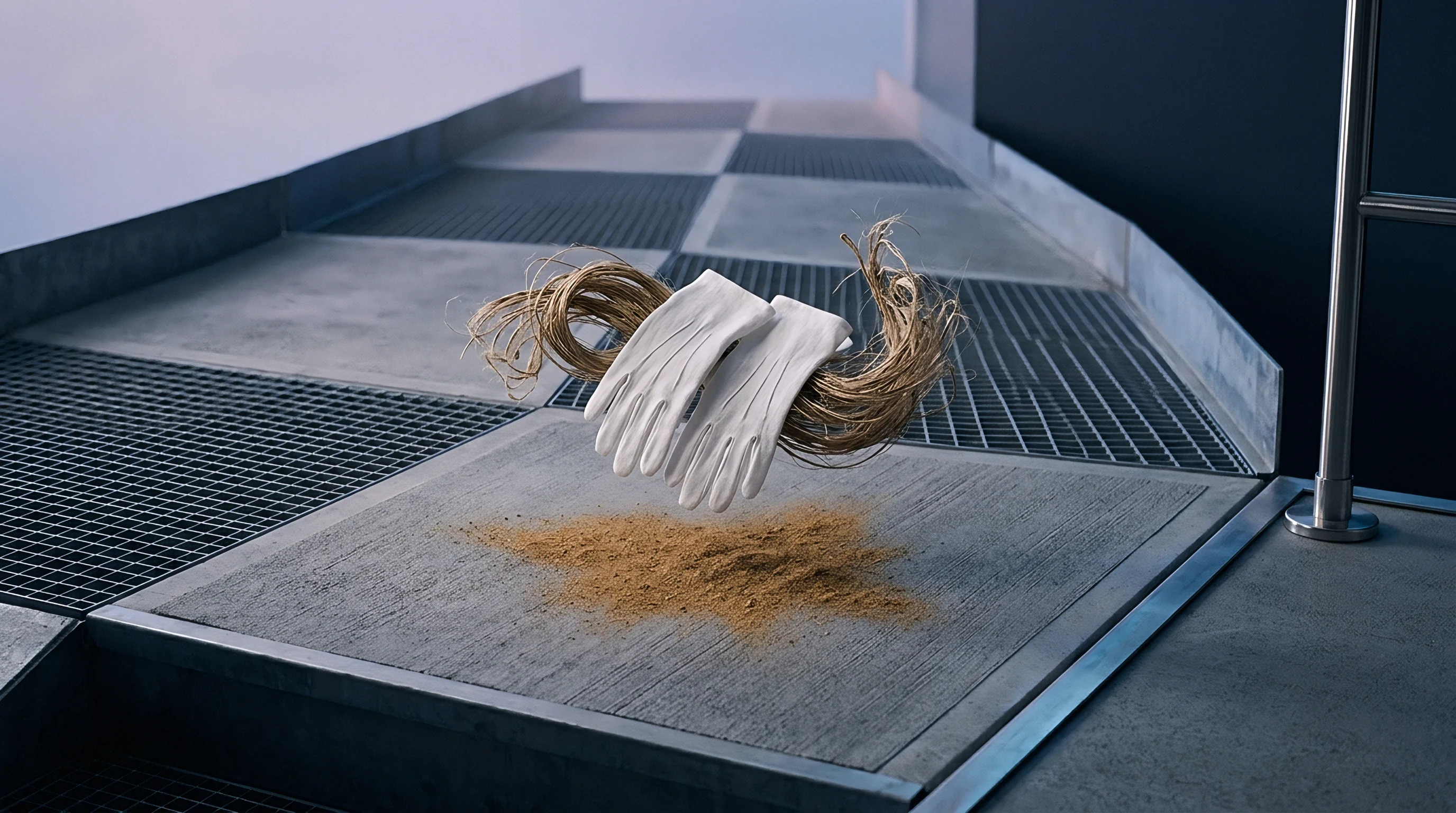
Commercial risk in linen procurement stems from the gap between unrelaxed greige dimensions and the stable state reached after full wet relaxation. When a buyer signs a contract for woven linen, the price per linear metre assumes compliance with strict tolerances for mass, usable width, tensile strength, and dimensional stability. But the microfibrillar stress state created on the loom and modified in finishing dictates how the fabric behaves during cutting, sewing, and laundering.
Unreleased shear stress in the greige state turns into shrinkage and diagonal distortion after washing, shifting commercial liability back to sourcing if technical contracts lack clear verification clauses.
Unset residual stress causes skewing across the fabric face.
Dimensional instability causes linear shrinkage along warp and weft axes, alongside structural spirality or skewing. Spirality happens when weft yarns slant across the fabric width rather than staying perpendicular to the selvedges. This skewing comes from residual torsional torque in the spun flax yarns, amplified by asymmetrical microfibrillar shear slip during beat-up.
When fabric is laundered under ISO 5077 test conditions, water relaxes trapped inter-chain hydrogen bonds, letting microfibrils spring back toward their native, un-strained alignment. If the fabric was stenter-dried under artificial widthways tension to stretch its finished width, recovery forces drive sharp width contraction and diagonal skewing. Garment panels cut from unstable cloth twist around seam lines after the first wash, rendering garments unsellable.
Dimensional Stability Metrics and Residual Torque Skewing
Standard quality control for high-grade linen mandates verification of dimensional stability over multiple wash cycles. ISO 5077 sets the procedure for dimensional change in washing and drying, defining water temperatures, liquor ratios, detergents, and drying methods. For commercial long-staple linen, acceptable dimensional change limits typically allow a maximum of minus three percent in warp and minus three percent in weft after three domestic washes at forty degrees Celsius.
Much of the financial investment is bound directly to the warp beam.
Testing for residual skewing follows ISO 16322, which measures the angular deviation of weft yarns relative to a line perpendicular to the selvedge. Expressed as a percentage of fabric width, skewing must not exceed two percent in premium apparel fabrics or three percent in home textiles. Higher skewing indicates that the finishing plant relied on aggressive stenter tension to hit width targets instead of allowing microfibrillar shear relaxation in a wet tumbler.
When skewing exceeds these thresholds, garment makers face fabric yield losses up to eight percent, as cutting patterns must be realigned with the distorted weft angle to avoid seam spirality.
| Finishing Processing Route | Chemical & Energy Cost (€/m) | Length Yield Loss (%) | Width Yield Loss (%) | Residual Skewing Max (%) | Landed Cost per Finished Metre (€) |
|---|---|---|---|---|---|
| Standard Stenter Frame Heat Setting | 0.42 | 1.5 | 1.2 | 4.5 | 4.18 |
| Continuous Open-Width Washer & Stenter | 0.85 | 4.2 | 3.8 | 2.1 | 4.62 |
| High-Velocity Air Tumbler Softening | 1.25 | 6.5 | 5.2 | 1.2 | 5.05 |
| Anhydrous Liquid Ammonia Realignment | 2.10 | 2.8 | 2.0 | 0.4 | 5.88 |
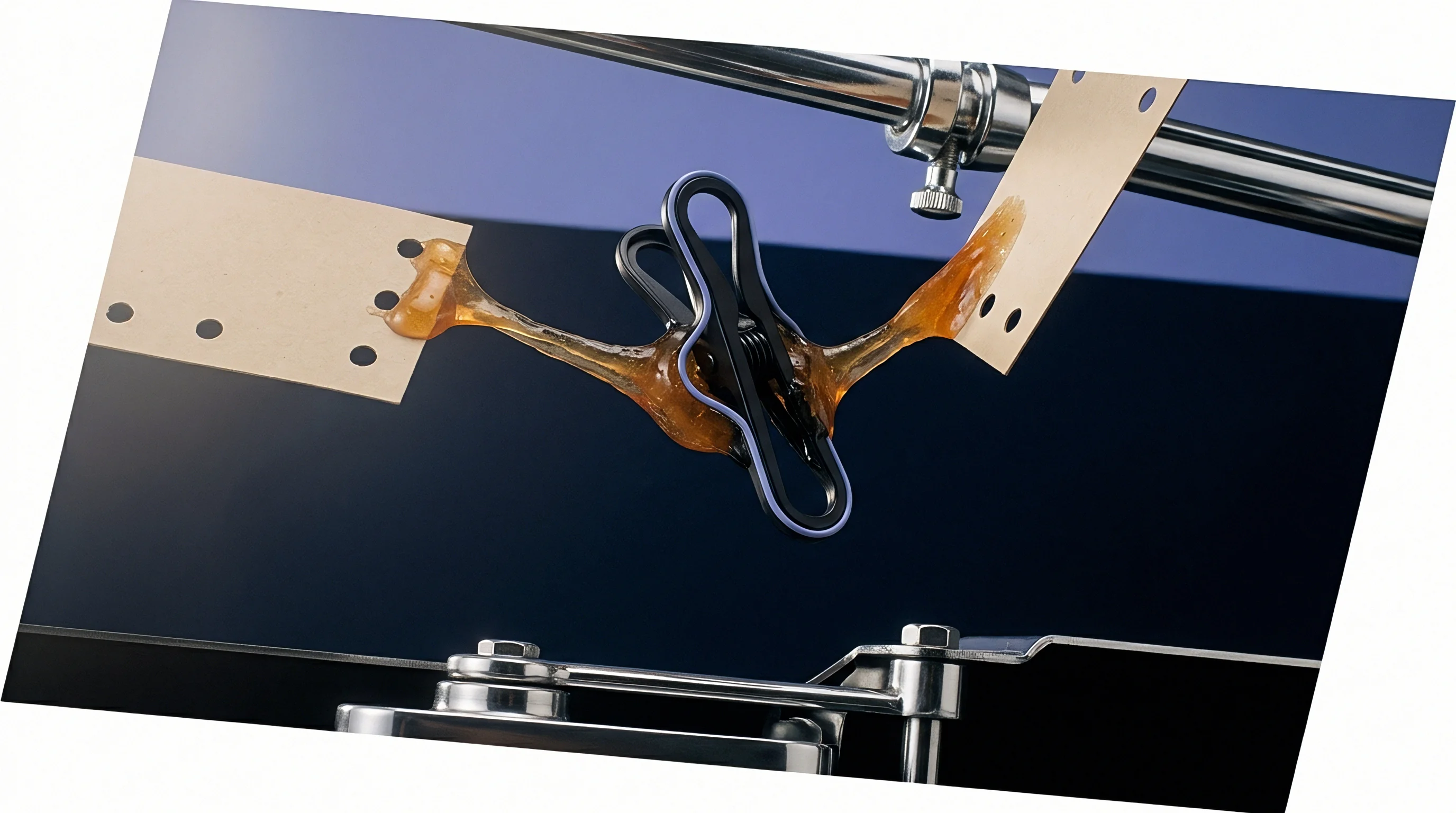
Finishing choices directly set the landed cost structure. Standard stenter drying limits length yield loss to 1.5 percent, but leaves microfibrillar stress unrelaxed, creating downstream risk of garment distortion. High-velocity air tumbler processing uses significant energy and incurs a length yield loss of 6.5 percent due to full microfibrillar relaxation, but delivers excellent hand feel, low residual skewing, and reliable dimensional stability.
Sourcing decisions should evaluate total cost of ownership rather than initial greige price; picking an incomplete finishing route to save fifty cents per metre frequently leads to costly commercial claims when finished garments fail dimensional audits.
Loom-Hour Cost Architecture and Finishing Route Economics
Loom hours are the basic unit of capacity accounting in weaving sheds. A mill operating modern rapier looms carries a fixed operational cost per loom hour that covers capital depreciation, energy, floor labor, climate control, and facility overhead. On European weaving floors, standard rapier loom hour rates range between twenty-four and thirty-two Euros per hour, depending on machine width and shedding mechanism complexity (dobby versus jacquard).
To calculate direct machine weaving cost per linear metre of cloth, the Loom-Hour Accountant uses the following capacity formula:
Direct Weaving Cost per Metre = Loom Hour Rate (€) / Metres Produced per Loom Hour
Metres Produced per Loom Hour comes from loom speed, picking density, and shed efficiency:
Metres per Loom Hour = (Loom RPM 60 (Loom Efficiency % / 100)) / (Picks per cm 100)
For the Nm 26 plain weave construction analyzed earlier (19 picks per centimeter greige on loom, operating at 480 RPM and 88% efficiency):
Metres per Loom Hour = (480 60 0.88) / (19 100) = 25344 / 1900 = 13.34 metres per loom hour
Assuming a loom hour rate of €28.50:
Direct Weaving Cost per Metre = €28.50 / 13.34 = €2.136 per linear metre
If the buyer asks for an increase in pick density from 19 to 21 picks per centimeter to improve fabric opacity, the economics change immediately. The higher pick density forces a speed reduction to 440 RPM to prevent microfibrillar yarn damage, while shed efficiency drops to 82% from increased warp friction:
Metres per Loom Hour = (440 60 0.82) / (21 100) = 21648 / 2100 = 10.31 metres per loom hour
Direct Weaving Cost per Metre = €28.50 / 10.31 = €2.764 per linear metre
That ten percent increase in pick density increases direct weaving costs by 29.4 percent. When factoring in warp yarn cost, sizing, finishing yield losses, and freight, landed cost per metre rises by over one Euro fifty. Negotiating fabric pricing without calculating underlying loom-hour consumption leads to mill rejections during peak season or hidden supplier compromises in yarn quality or finishing.
Commercial Qualification Protocols and Dossier Construction
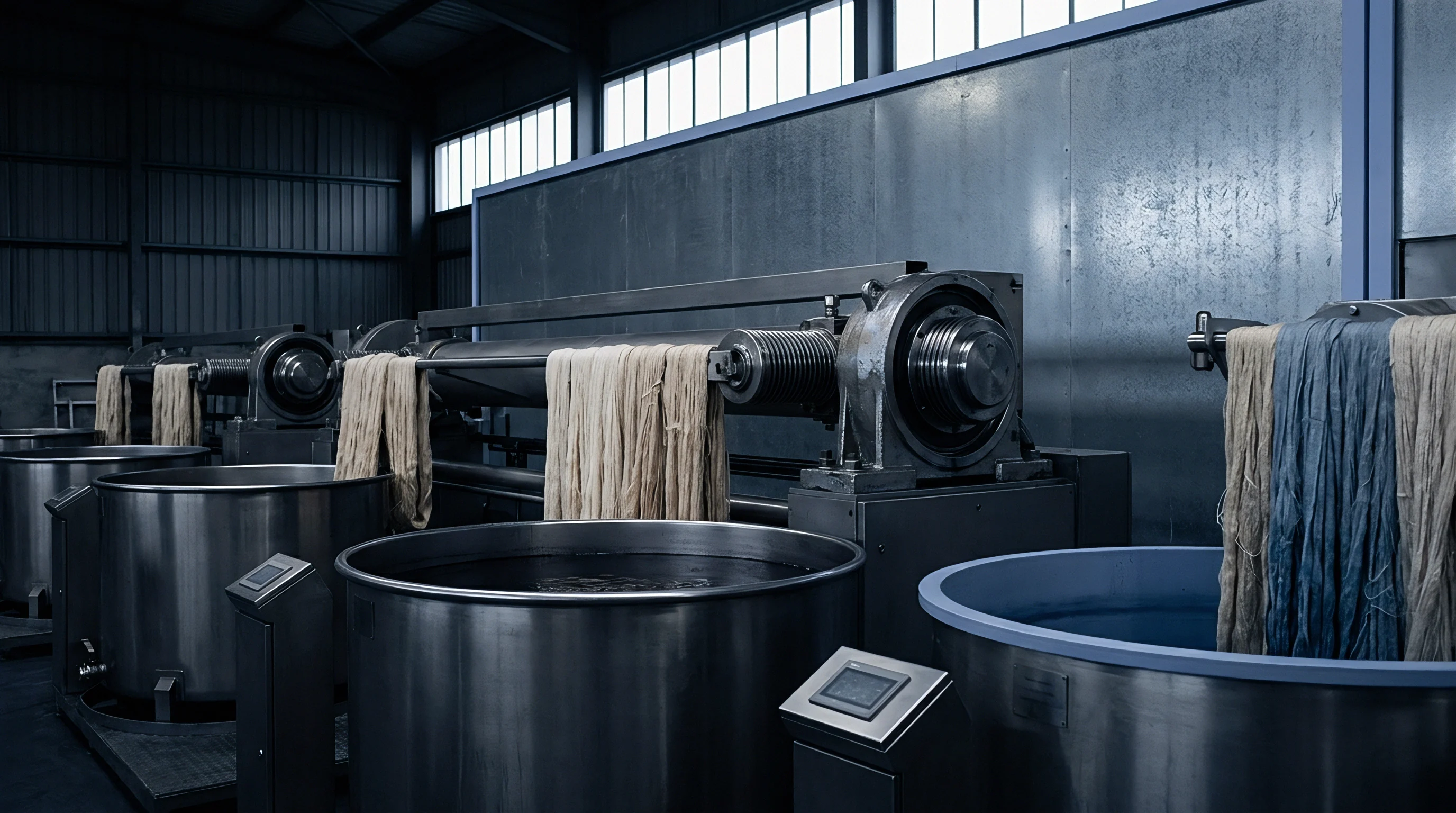
To eliminate ambiguity and protect capital, every industrial linen order requires a thorough technical qualification dossier before committing warp beams. The dossier acts as a binding specification between design intent, laboratory testing, and shed-floor execution. A dossier that omits microfibrillar relaxation standards leaves the buyer unprotected when greige fabric shows defect spikes during conversion.
A complete qualification dossier sets clear standards for raw material validation, greige weaving tolerances, and finished fabric performance metrics. Tolerances must be stated as firm numerical limits rather than sliding averages. Yarn count variation cannot exceed plus or minus three percent under ISO 2060, while single-yarn twist variations must stay within five percent under ISO 2061.
Tensile strength must be verified across five test specimens cut from selvedge to selvedge, confirming even load distribution across the usable roll width.
The technical qualification dossier must include the following structural specifications and compliance parameters:
- Yarn Traceability Certifications proving long-staple European flax origin, lot-specific lea count uniformity, and wet-spinning mill identity.
- Greige Weaving Matrix specifying precise ends and picks per centimeter, reed width, selvedge construction, and target off-loom weight.
- Finishing Route Mandate detailing exact chemical sequences, washing temperatures, mechanical relaxation methods, and maximum permitted stenter speed.
- Physical Audit Specifications establishing minimum breaking force, tear resistance, pilling resistance, dimensional stability limits, and maximum residual skewing under ISO standards.
Dispute resolution clauses in commercial weaving contracts must specify the testing methodology used for dimensional failure claims. Standard practice dictates that when a delivered consignment fails dimensional stability or skewing limits under ISO 5077 inspection, arbitration testing takes place at an independent accredited laboratory using retained sample swatches cut from both ends of the disputed rolls. If testing confirms residual microfibrillar strain exceeds limits due to aggressive stenter tension, the mill bears full financial responsibility for re-processing or credit adjustment.
Section 8.3 of the Master Sourcing Agreement stipulates that any delivered fabric roll exhibiting residual weft skewing in excess of two point two percent under ISO 16322 testing shall be rejected at the supplier’s sole expense, including all absorbed customs tariffs and inbound freight charges.