Mass Balance Auditing for European Flax Yield in Ring Spinning
European Flax ring spinning mass balance audits require moisture-adjusted dry fiber weight reconciliation across every transformation stage from raw bale to spun package.

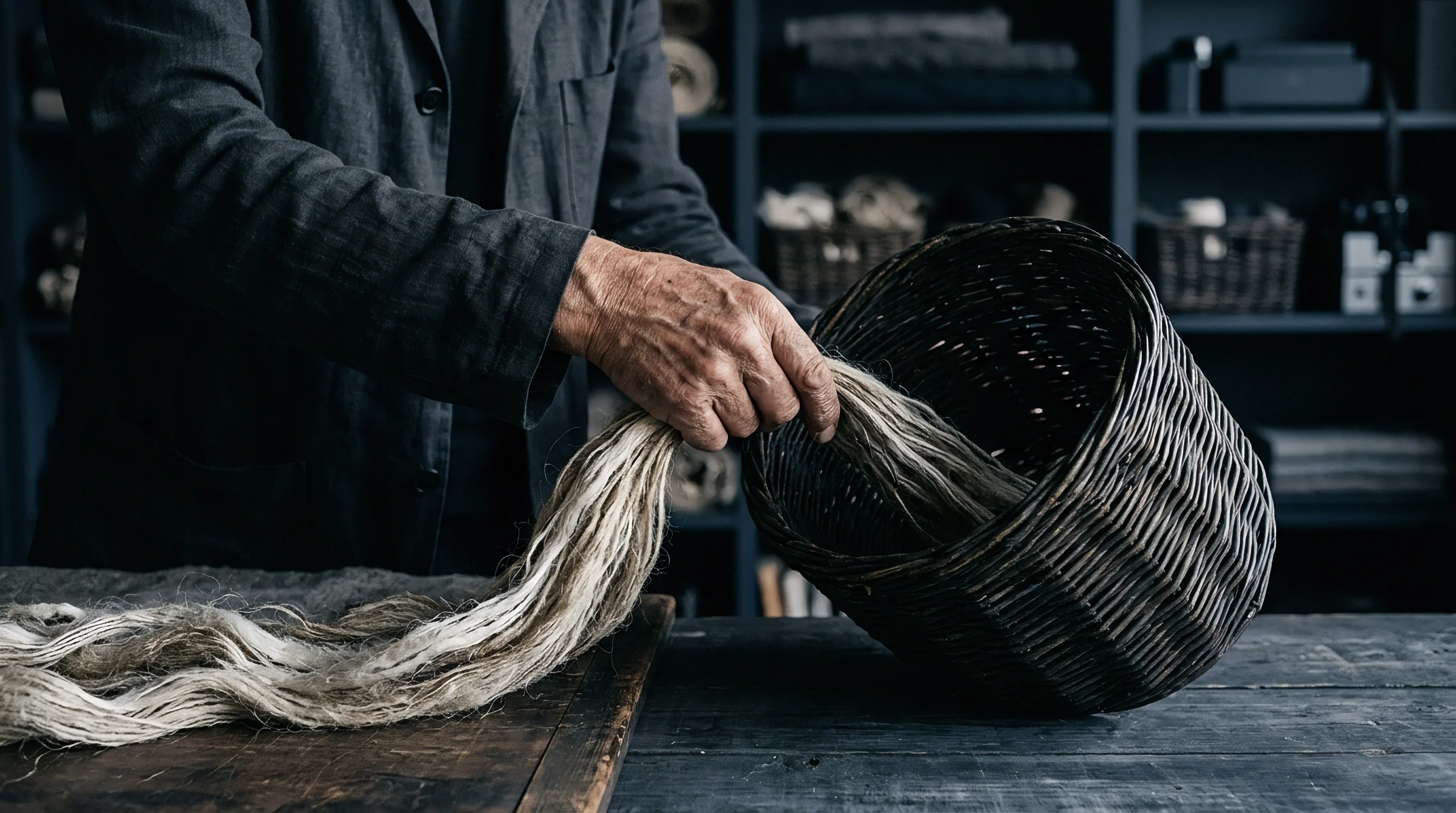
Fleece
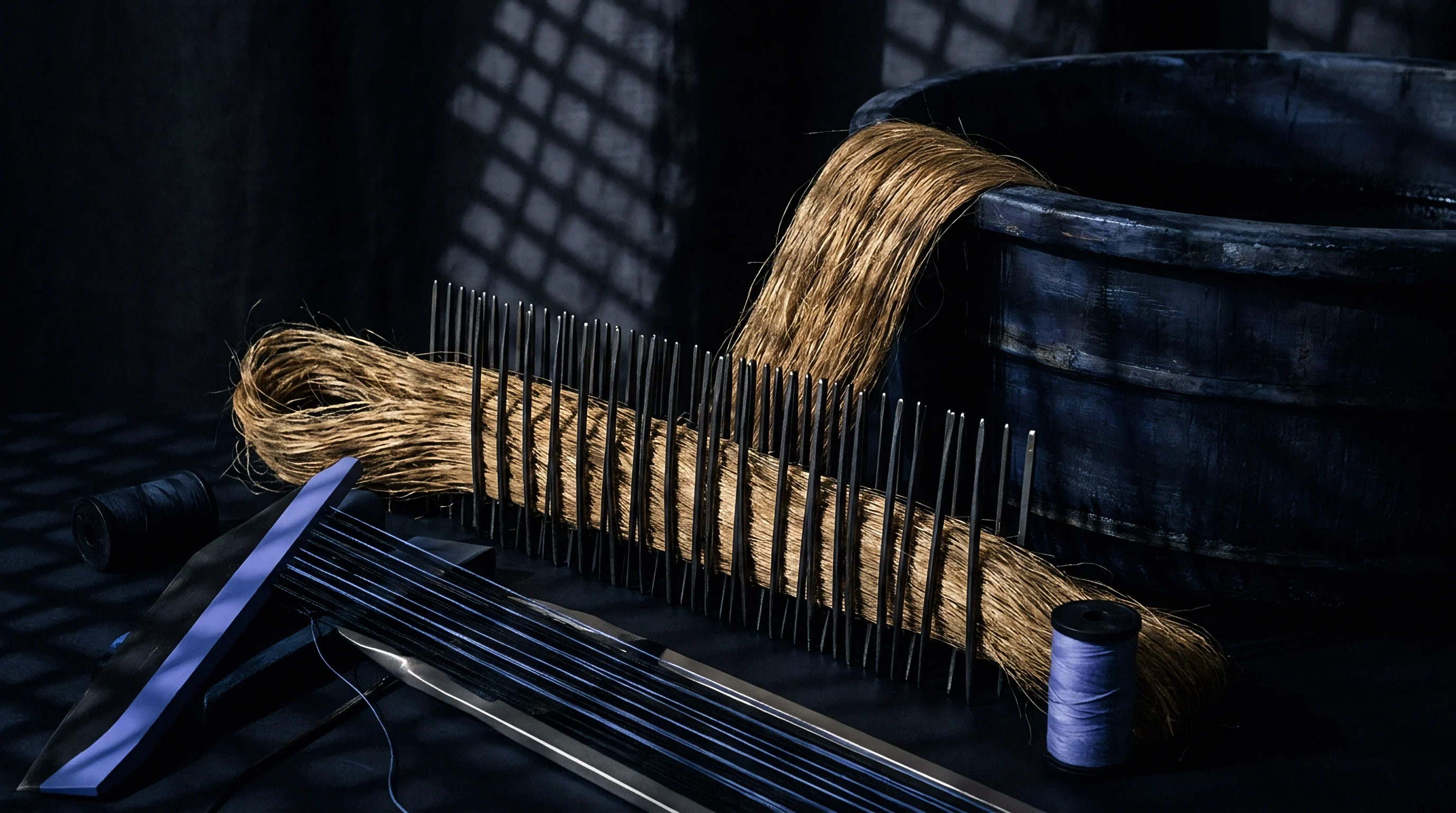
Raw Fiber Metrics and Moisture Regain Standardizations
Long staple scutched flax entering a spinning mill carries physical properties established during field retting and mechanical scutching. The raw fiber lot contains hackled line flax along with varying proportions of tow, shive, and dust. Certified European flax straw yields approximately 25 to 30 percent total scutched fiber, split between long line fiber and short tow fiber.
Standard moisture regain for dry flax fiber is fixed at 12 percent under ISO 6741 standards, yet bales stored in non-conditioned warehouse zones fluctuate between 8 percent and 16 percent moisture content depending on atmospheric ambient humidity. Unadjusted bale weights distort mass input figures before spinning begins.
A mill purchasing 10,000 kilograms of certified European flax at 14 percent actual moisture receives only 9,821 kilograms of dry fiber weight equivalent at standard regain. Auditing mass balance across ring spinning requires converting all incoming raw material weights to dry mass or standard moisture regain weight using precise lab sampling techniques.
A mill receiving raw scutched flax at fourteen percent moisture content overstates its net fibre mass input by one hundred seventy-nine kilograms per ten-tonne lot unless corrected to standard regain.
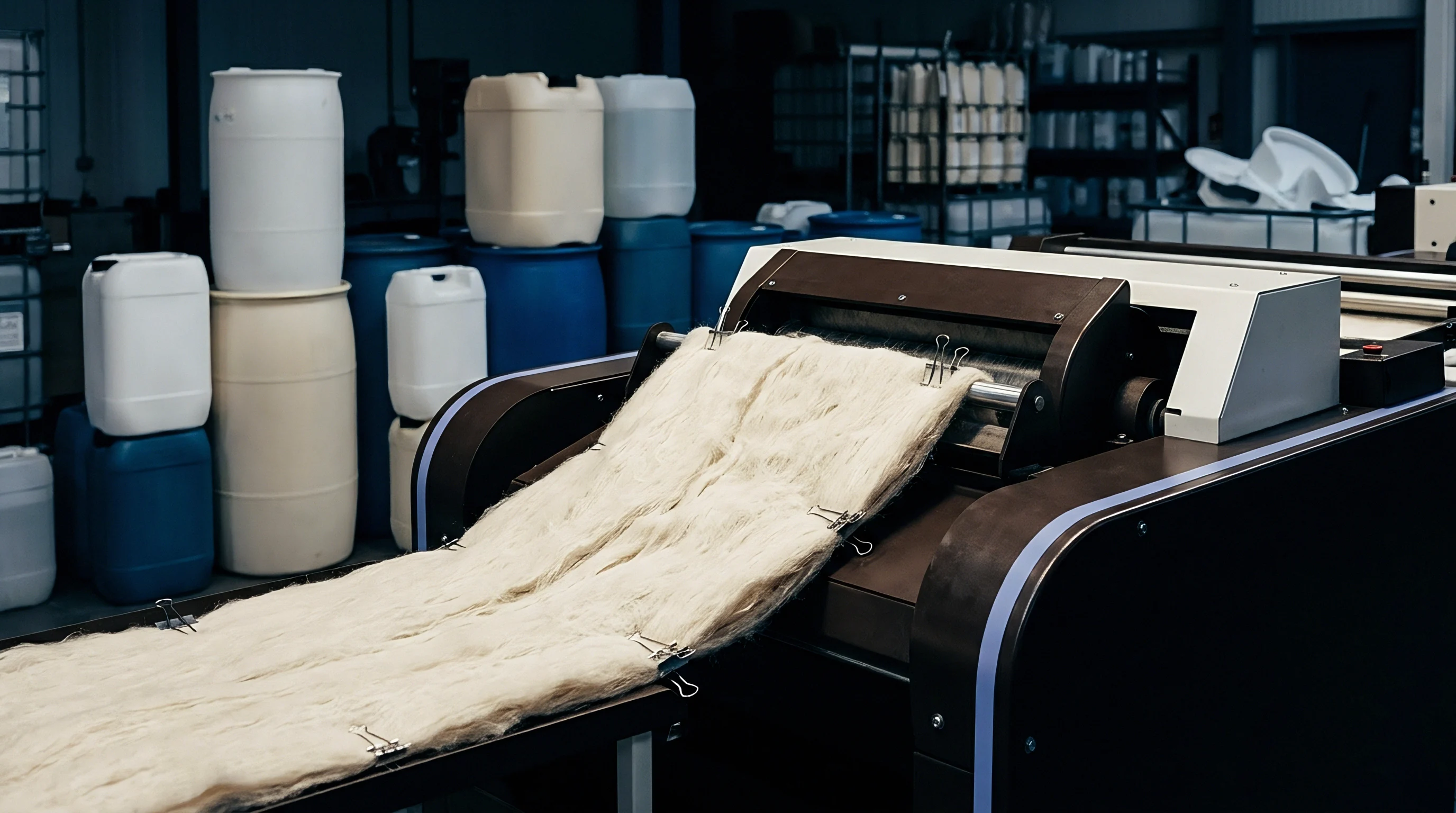
Hackling Loss Distributions and Tow Allocation
Hackling opens, combs, and parallels raw flax bundles into continuous sliver while removing short fibers and non-cellulosic impurities. The hackling operation converts scutched line flax into hackled line flax and hackling tow. Hackling yield for European flax grades ranges between 55 percent and 70 percent line fiber output, with 25 percent to 35 percent recovered as hackling tow and the remainder lost as shive, dust, and comb extraction waste.
| Process Stage | Target Output Form | Yield Percentage Range | Primary Mass Loss Mechanism |
|---|---|---|---|
| Hackling and Combing | Hackled Sliver | 58.0% – 68.0% | Short fiber comb extraction and shive drop |
| Drawing and Preparing | Drawn Roving | 94.0% – 97.0% | Fly waste and sliver piecing trimmings |
| Wet Roving Boiling | Boiled Roving Bobbin | 88.0% – 92.0% | Pectin extraction and non-cellulosic dissolution |
| Ring Spinning (Wet) | Single Yarn Bobbin | 91.0% – 95.0% | End-break fly, trough sludge, and bobbin residue |
| Winding and Clear | Cone Package | 97.5% – 98.5% | Yarn clearer cuts, slub removal, and knot waste |
Chain-of-custody tracking models split certified mass into two distinct streams at hackling: long line sliver destined for high-count ring spun yarns, and hackling tow routed toward coarse ring spinning or rotor spinning. Mixing certified tow back into line fiber lots without updating mass balance ratios invalidates yield accounting across both output categories.
Because raw bale weights fluctuate, field-retting variations can alter fiber density beyond standard mass tables, causing significant discrepancies in recorded mass.


Draft

Roving Preparation and Boiling Loss Calculations
Hackled slivers pass through multiple drawing frames to level mass per unit length before roving formation. Wet ring spinning requires converting drawn slivers into twisted roving bobbins, which undergo chemical boiling or bleaching before spinning to dissolve natural pectins and hemicellulose binder layers.
Boiling removes between 8 percent and 12 percent of dry fiber mass depending on boil temperature, caustic alkali concentration, and wetting agent additions. Mass balance formulas that fail to deduct chemical boil-off mass create an artificial yield deficit when comparing raw yarn output to incoming sliver weight.
Drafting zones on ring spinning frames apply mechanical draft ratios ranging from 10 to 25 for long-staple linen. High draft settings increase end-breakage rates and mechanical fly waste generation.

Trough Sludge and Ring Spinning Waste Mechanics
Wet ring spinning submerges roving in hot water troughs maintained at 60 to 70 degrees Celsius immediately prior to the drafting rollers. Trough immersion softens remaining pectins, enabling individual elementary fibers to slide and realign into fine, dense yarn structures. Fiber fragments, residual pectins, and short ends accumulate in spinning troughs as wet sludge.
Trough sludge recovery and pneumatic suction box collections represent non-recoverable fiber losses. Suction box waste continuously pulls broken ends away from front rollers during yarn breaks, consuming between 2 percent and 5 percent of total ring frame mass throughput depending on mechanical efficiency and operator response times.
Neglecting trough extraction waste during batch balance audits distorts calculated mill yield, creating unallocated fiber gaps that trigger automatic failure during third-party certification checks.


Loss
Ring Spinning Mass Yield Formulation
Reconciling input fiber weight against spun yarn output requires an exact mathematical yield equation. Input mass includes hackled line fiber corrected for moisture content, while output mass accounts for net spun yarn wound onto cones after clearer cutting.
The total net yield factor for dry-spun or wet-spun European flax ring spinning yarn is calculated using the following primary yield model:
Y = (M_yarn / M_fiber) (100 + R_standard) / (100 + R_actual)
Where Y represents net yield percentage, M_yarn represents total clean yarn mass packaged on cones, M_fiber represents gross incoming raw fiber mass, R_standard represents official standard moisture regain, and R_actual represents lab-measured actual fiber moisture regain upon opening bales.
- Bale Opening Correction ~ Weigh raw fiber bales immediately upon breaking straps and extract representative core samples to determine lab dry mass under ISO 6741 standards.
- Hackling Waste Separation ~ Weigh hackled line sliver output and separate recovered hackling tow from non-recoverable shive dust before transferring sliver to drawing.
- Roving Boil-Off Deduction ~ Measure dry weight differential across roving bobbins prior to and immediately following caustic boiling treatments to fix actual pectin mass loss.
- Ring Spinning Yield Tabulation ~ Tally total yarn weight collected on ring bobbins against suction box fly waste, trough sediment drop, and end-breakage records.
- Winding Clearer Reconciliation ~ Deduct yarn cut-outs, slub extractions, and bobbin tailing waste recorded by electronic yarn clearers during automatic package winding.
Mass balances across wet ring spinning remain valid only when moisture regain adjustments apply to every intermediate weighing stage between raw bale opening and final cone packaging.
Audit steps require detailed records at each transformation gate, given that yarn counts dictate draft, combing removes short fibers, and scutching yields vary widely across harvests.

Tolerance Bands and Mass Balance Reconciliation
European Flax mass balance auditing protocols establish acceptable mass yield tolerance windows for each yarn count range. Fine yarns spun to high metric counts experience higher end-breakage rates, elevated draft ratios, and increased pneumatic suction waste compared to coarse counts.
| Metric Yarn Count Range (Nm) | Standard Processing Loss (%) | Max Allowable Mass Balance Variance (%) | Audit Reconciliation Threshold |
|---|---|---|---|
| Nm 9.6 to Nm 15.0 | 22.0% – 26.0% | 2.5% | Pass with standard documentation |
| Nm 15.1 to Nm 26.0 | 26.1% – 30.0% | 3.0% | Pass with standard documentation |
| Nm 26.1 to Nm 39.0 | 30.1% – 35.0% | 3.5% | Mandatory waste bin re-weighing |
| Nm 39.1 to Nm 60.0 | 35.1% – 42.0% | 4.0% | Detailed physical audit required |
Mass balance reconciliation mandates that total output weight plus verified process waste must equal 100 percent of adjusted input weight within the allowable variance window. Unaccounted mass losses exceeding standard limits indicate uncertified fiber blending or undeclared lot substitution.
Unexplained inventory surpluses inside a certified spinning lot indicate uncertified fiber addition rather than processing efficiency gains.

Gate

Scope Certificates versus Transaction Certificates
European Flax verification rests on two distinct document tiers managed under ISO 17065 framework principles. A Scope Certificate confirms that a spinning facility possesses the mechanical infrastructure, administrative tracking systems, and mass balance accounting methods necessary to process certified fiber. Scope certificates expire annually and cover facility capabilities rather than individual physical shipments.
Transaction Certificates validate physical material movements between certified supply chain entities. Every transaction certificate specifies seller, buyer, gross weight, net weight, fiber origin year, and unique lot identification numbers tied directly to mill delivery notes and customs manifest declarations.
Mass balance auditing requires matching every transaction certificate against corresponding mill entry logs and raw bale weight records. A valid scope certificate without matching transaction certificates carries zero legal standing for origin claims on finished yarn orders, where applicable customs duties and regulatory standards apply.
The European Flax Standard version 3.0 mandates that transaction certificates for spun yarn must be issued within sixty days of invoice date to remain valid for downstream chain of custody claims.

Is a Chinese Spinning Mill Able to Certify Pure European Flax Origin?
Chinese spinning mills import substantial volumes of raw scutched European flax fiber to produce high-count wet-spun linen yarns. A mill operating in Jiangsu or Zhejiang can issue certified European Flax yarn provided the facility holds a valid Scope Certificate and secures official Transaction Certificates for every raw fiber shipment entering its warehouses.
European Flax rules permit fiber transformation outside Western Europe while preserving origin claims on the fiber itself. Chinese processors must maintain physically segregated storage areas or strict mass balance ledgers that prevent cross-contamination with non-certified flax imported from domestic Chinese, Russian, or North American growers.
Masters of Linen certification, by contrast, restricts every processing step from raw fiber scutching through final yarn spinning and fabric weaving exclusively within European geographic boundaries. A Chinese spinning mill cannot obtain or issue Masters of Linen certification under any operational condition, regardless of fiber origin.
- Documentary Linkage ~ Every incoming raw fiber bale must connect directly to an official transaction certificate issued by a recognized European scutching cooperative.
- Batch Segregation ~ Physical tags on raw fiber bales, roving bobbins, and finished yarn packages must display certified lot numbers distinct from uncertified inventory.
- Mass Balance Ledger Integrity ~ Digital inventory systems must execute real-time deductions from certified fiber balance ledgers upon spinning frame job assignment.
- Waste Bin Separation ~ Hackling tow, short fiber drop, and pneumatic suction waste from certified lots must be collected in labeled bins to prevent mix-ups.
Because purchase contracts fix specific operating tolerances, unexplained lot discrepancies routinely trigger administrative and financial penalties.

Auditing Protocols for Overseas Mill Verification
On-site audits at overseas processing facilities follow strict verification steps to reconcile digital ledger entries against physical inventory counts. Auditors execute physical bale audits, cross-examine weighbridge tickets against customs clearance filings, and perform sample dry-weight lab analyses on stored fiber.
Auditors cross-check weighbridge records, spinning room job cards, and clearer waste logs to confirm that certified yarn shipments do not exceed calculated theoretical yields from verified fiber inputs. Discrepancies between declared output volume and calculated fiber yield trigger immediate suspension of the facility’s scope certificate.
Section 8.2 of the European Flax standard requires suppliers to grant auditors unrestricted physical access to fiber stores, spinning floors, and waste processing zones during unannounced audit visits.


Margin

Certified Fiber Price Surcharges and Yield Economics
Certified European flax raw fiber commands a commercial price surcharge over uncertified fiber of identical staple length and fiber color. This raw material surcharge ranges between 15 percent and 30 percent per kilogram based on seasonal harvest volume, retting conditions, and global demand fluctuations.
Yield losses across ring spinning multiply the financial impact of raw material surcharges on finished yarn costs. Because wet spinning long-line flax incurs processing losses between 25 percent and 40 percent depending on yarn count, one kilogram of finished yarn requires approximately 1.33 to 1.67 kilograms of raw scutched line fiber input.
A raw fiber surcharge of 1.20 Euros per kilogram translates to an effective yarn surcharge of 1.60 to 2.00 Euros per kilogram of finished spun yarn after accounting for cumulative process waste. Sourcing managers calculating landed yarn costs must incorporate exact yield loss factors into contract financial models.

Regulatory Enforcement and Commercial Warranty Liabilities
Textile labeling regulations across the European Union and the United States mandate strict accuracy for origin and content claims on finished consumer goods. Misrepresenting fiber origin or claiming certified status without valid transaction documentation violates consumer protection laws and subjects importers to customs penalties, shipment seizures, and mandatory commercial recalls.
Supply agreements for certified linen yarns must contain explicit origin warranty clauses that assign full financial liability to the seller for unverified claims. Buyers protect commercial exposure by incorporating audit access rights and non-compliance penalty structures directly into purchase contracts.
What financial remedies remain enforceable when an overseas mill delivers yarn backed by valid scope paperwork but lacks matching transaction records for the specific fiber batch used?