Audit Protocols for Mass Balance Reconciliation in Linen Spinning Mills
Mass balance reconciliation in linen mills requires adjusting intake weights for moisture regain, deducting actual spinning scrap, and verifying yarn volume credits against audited baseline yield factors.


Scale
Gross weights logged at a mill receiving dock often reflect moisture picked up at sea rather than the dry fibre mass shipped from the scutcher. Bales moving from Western European scutching plants to mills in Jiangsu, Zhejiang, or Northern Italy arrive with moisture levels set by humidity during baling and ocean transit. Under International Bureau for the Standardization of Man-Made Fibres rules, trade settlement protocols for long tow and hackled line fibre base commercial mass on a standard regain allowance of 12.0 percent.
Moisture in arriving bales can swing from 8.5 percent after dry winter storage to 16.5 percent off a humid sea route. Taking weighbridge tickets at face value without moisture corrections skews the certified input baseline before carding or hackling even starts.
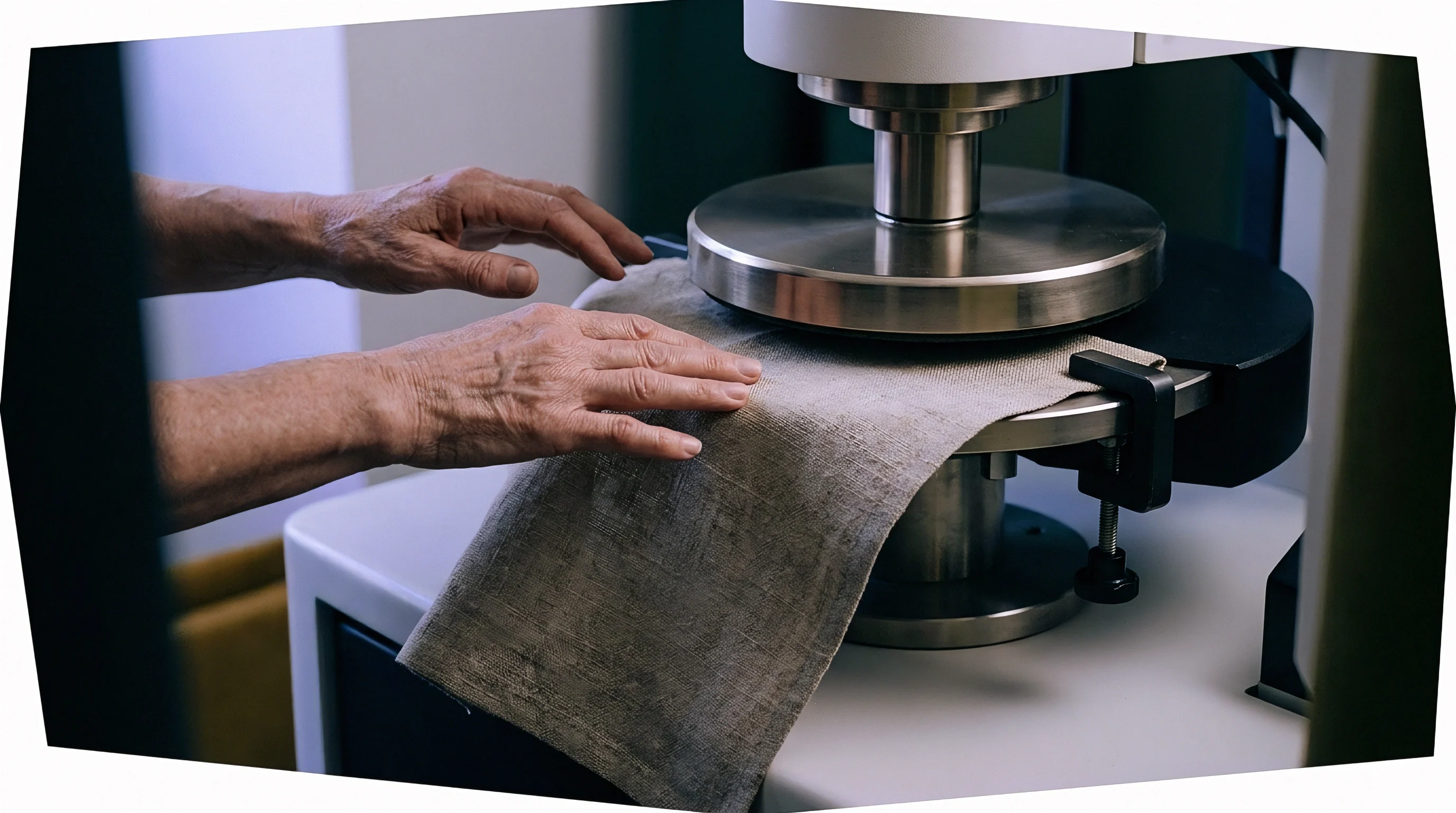
Finding actual clean dry mass requires core sampling incoming lots right away. Auditors baseline a consignment by taking cores from ten percent of the delivered bales, sealing the fibre in vapor-tight containers, and running oven-dry tests under ISO 6741 standards. The math then converts scale mass into official commercial invoice mass through the standard regain formula.
Commercial mass is calculated by multiplying actual weighed mass by one hundred plus standard regain, then dividing by one hundred plus actual tested regain. If a 20,000 kilograms shipment of certified long flax fibre tests at 15.5 percent moisture on arrival, the delivery holds far more water than standard trade rules allow. Running the numbers shows the mill actually received 19,394 kilograms of commercial mass fibre, even though the scale ticket says 20,000 kilograms.
Crediting the full 20,000 kilograms to the certified ledger without adjusting for regain adds 606 kilograms of phantom inventory to the system. Ledger integrity breaks right at the gate if scale weights bypass lab moisture correction.
| Arriving Dock Weight (kg) | Lab Tested Moisture Regain (%) | Standard Regain Baseline (%) | Calculated Commercial Mass (kg) | Mass Ledger Adjustment (kg) | Financial Exposure at 6.50/kg () |
|---|---|---|---|---|---|
| 20,000 | 8.50 | 12.00 | 20,645 | +645 | +4,192.50 |
| 20,000 | 10.00 | 12.00 | 20,363 | +363 | +2,359.50 |
| 20,000 | 12.00 | 12.00 | 20,000 | 0 | 0.00 |
| 20,000 | 14.00 | 12.00 | 19,649 | -351 | -2,281.50 |
| 20,000 | 16.00 | 12.00 | 19,310 | -690 | -4,485.00 |
Verifying physical inventory in the mill store means reconciling packaging materials along with water weight. Steel baling wire, polypropylene wrapping, and corrugated caps make up 0.8 percent to 1.3 percent of gross bale weight. Skipping the tare deduction inflates input records by more than two hundred kilograms on a typical forty-foot container.
Auditors need to make sure mill intake logs record gross weight, tare, oven-dry moisture percentage, corrected commercial weight, and supplier transaction certificate numbers in one unified system.
Mill weighbridge records without paired oven-dry moisture test certificates fail verification during physical inventory reconciliation.
Receiving floor audits follow a set sequence to keep undocumented material from slipping into production.
- Inspect physical bale straps and seals against the shipping manifest to confirm zero tamper evidence upon container unloading.
- Cross-check physical bale numbers against the accompanying transaction certificate scope details and scutcher origin tags.
- Weigh five randomly selected bales individually on calibrated platform scales to establish gross shipment weight variance.
- Extract three core samples per selected bale using a mechanical core drill operating at low speed to prevent thermal moisture loss.
- Seal core samples in airtight glass vessels immediately and record wet weight within five minutes of extraction.
- Dry samples in a forced-draft oven at 105 degrees Celsius until mass constancy indicates total moisture extraction.
- Calculate average lot moisture regain and apply the commercial mass correction formula to the weighbridge ticket gross mass.
- Deduct measured packaging tare mass to record net dry fibre mass into the certified inventory ledger.
Gaps between declared shipping weights and dock scale receipts regularly cause friction between mill buyers and scutchers. During one site audit, intake operators were logging raw bale weights straight off ocean bills of lading without taking core samples or tare deductions. Receiving wet autumn shipments over eight months created an artificial surplus of certified flax on the books.
When audited against downstream yarn output, the mill showed an impossible 88 percent mass yield on wet-spinning lines that physically run at 62 percent.
Waste
Turning raw scutcher flax into fine linen yarn causes continuous mechanical loss. Synthetic filament extrusion loses almost no material between polymer input and yarn output, but flax spinning drops weight across hackling, carding, combing, roving, wet spinning, and winding. Hackling long line fibre separates parallel filaments from coarse shive and short tow, dropping 20 percent to 35 percent of initial raw mass depending on crop quality.
Carding short tow strips out dust, woody shive, and unspinnable micro-fibres into card fly. Combing for fine linen counts between Nm 26 and Nm 60 extracts noils at rates from 18 percent to 28 percent of sliver mass.
Waste handling is a common vulnerability in mass balance systems. When processing certified European Flax or Global Organic Textile Standard raw flax, generated waste keeps its certified status under specific allocation rules. Combed noils, short tow scrap, and pneumatic fly contain real certified mass.
Fraud happens when a mill pulls certified noils off a fine line, sells them to an uncertified rotor mill or insulation maker, but leaves the volume credit on its main ledger to cover fine wet-spun yarn sales. Mass balance rules require immediate split-entry bookkeeping for all waste streams created during production.

Yield Variance Metrics across Wet and Dry Linen Systems
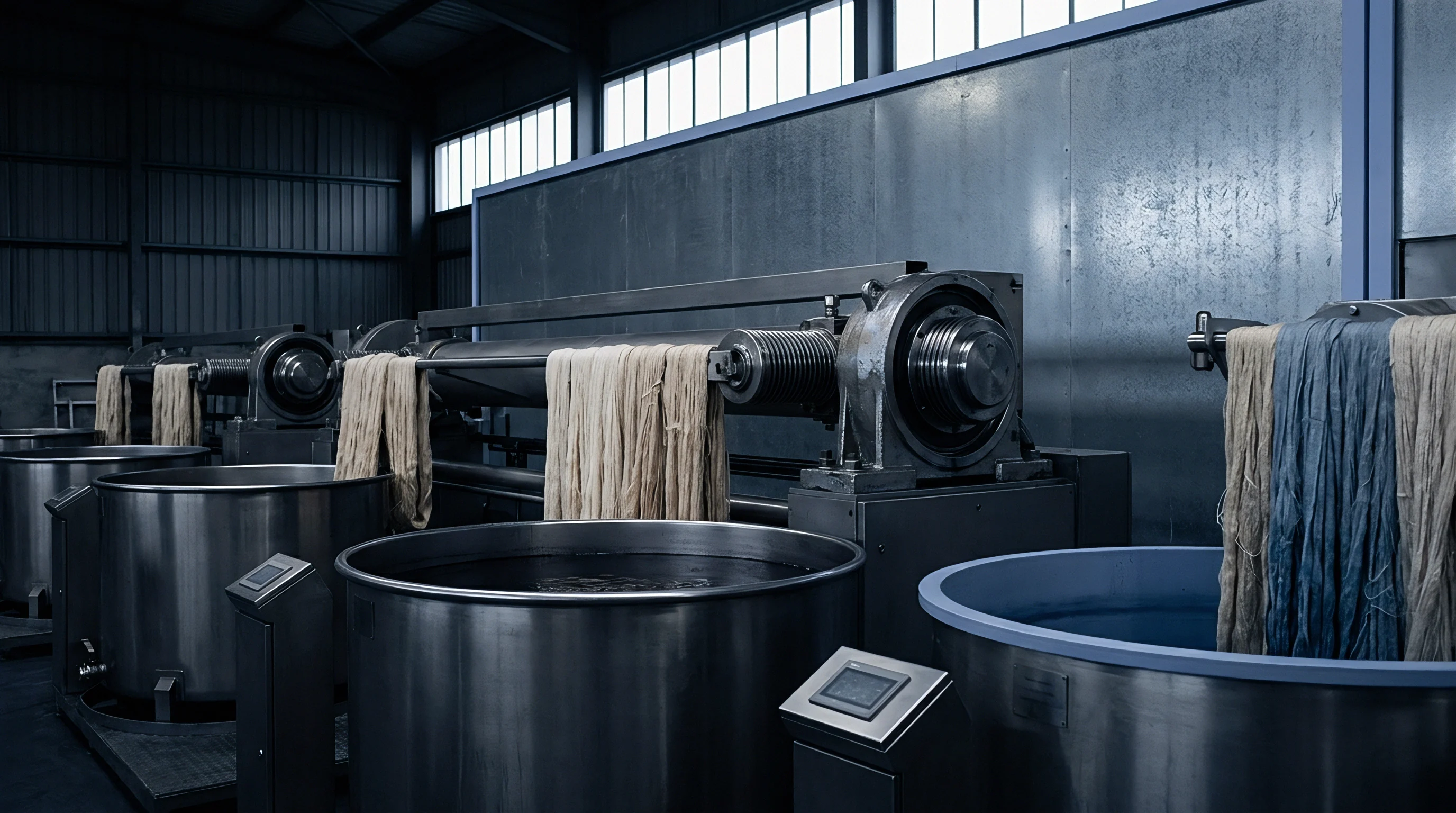
Wet spinning runs roving through hot water troughs at 60 to 70 degrees Celsius to soften pectin bonds between fibre bundles, making fine drafting possible down to high metric counts. That wet process creates unique waste: trough sludge, lint suspended in process water, and wet end-break scrap. Sludge and waterborne lint make up 2.5 percent to 4.5 percent of total throughput ~ unrecoverable loss.
Dry spinning, used for coarse yarns between Nm 1.5 and Nm 14, skips the hot water but drops more dry airborne fly and mechanical waste. Audit protocols need to evaluate yield against benchmark ranges for specific spinning methods and yarn count targets.
| Processing Stage | Wet-Spun Fine Line Yield (%) | Dry-Spun Coarse Line Yield (%) | Primary Scrap Destination | Mass Balance Accounting Action |
|---|---|---|---|---|
| Raw Hackling / Combing | 65.0 – 72.0 | 80.0 – 85.0 | Combed Noils / Tow Scrap | Deduct or reclassify as secondary certified product |
| Carding & Drafting | 92.0 – 95.0 | 88.0 – 93.0 | Card Fly / Dust / Shive | Write off as unrecoverable mass loss |
| Roving & Wet Troughs | 94.0 – 97.0 | N/A (Dry System) | Trough Sludge / Wet Ends | Write off as unrecoverable moisture/sludge loss |
| Spinning & Winding | 95.0 – 97.0 | 93.0 – 96.0 | Slub Clearance / Hard Waste | Reclassify as garnetted recycled fibre or scrap |
| Cumulative Fine Wet-Spun Line Net Yield Range: 53.8% to 64.9%; Cumulative Coarse Dry-Spun Line Net Yield Range: 74.4% to 81.9% | ||||
Secondary market diversion takes advantage of the price gap between fine linen yarn and combed noils. Certified long flax bought at $7.50 per kilogram yields roughly 60 percent fine wet-spun yarn selling at $18.00 per kilogram, alongside 25 percent combed noils worth $2.80 per kilogram. If a mill logs its combed noil output as unrecoverable processing loss, it saves 250 kilograms of certified credit per metric ton of raw fibre processed.
It can then use those extra credits to cover uncertified flax blended into certified yarn runs.
Combed flax noils extracted during fine line spinning must be written off the primary mass balance ledger or registered under a distinct secondary product category upon extraction.
Catching scrap ledger manipulation requires checking waste collection points against mill logs. Auditors inspect card room dust hoppers, combing waste balers, and trough filters to compare physical scrap volumes with ledger write-offs.

Flax Scrap Diversion and Ledger Fraud Modes
- Noil Double Counting Mill operators log combed noils as invisible process loss while issuing transaction certificates for sold secondary tow yarns.
- Moisture Inflation in Scrap Damp trough waste is weighed and logged as dry processing loss, artificially inflating allowable yield loss credits on the main ledger.
- Uncertified Tow Substitution Conventional short tow is mixed into certified combing lines, using excess long-fibre credits to cover the blended output.
- Garnet Scrap Re-injection Hard winding waste is shredded and re-injected into coarse spinning lines without updating primary lot origin ledgers.
Audit standards require that yield loss factors in mass balance equations match real mill performance verified over at least a six-month operational baseline. Fixed yield assumptions break down when raw flax quality varies. Coarse, poorly scutched flax generates far more hackling waste than uniform European long flax.
If an auditor lets a mill use a standard 30 percent waste allowance on high-grade fibre that only produces 20 percent waste, the mill gains a 10 percent credit surplus on every batch. Yield allowances on mass ledgers need dynamic recalculation from batch test sheets.
Tracking wet-spinning mass balance relies on scrap collection logs backed by scale calibration tickets. Standard operating procedure requires balers to weigh each waste bale, tag it to match the primary production run, and enter the mass straight into the central ERP system. Any scrap volume deviation beyond two standard deviations from historical line averages flags an internal audit before output transaction certificates can be issued.
Scrap protocols that allow unmeasured waste accumulation invalidate downstream certification claims.


Reconciliation
Reconciling mass balance ledgers in linen spinning requires matching verified input credits against output declarations over fixed accounting periods. Frameworks like ISO 22095 allow mills to blend certified and conventional raw materials during processing, as long as the ledger maintains strict credit parity. Certified output mass sold cannot exceed certified input mass multiplied by the verified yield factor.
A mill buying 50,000 kilograms of European Flax certified raw line flax with a net yarn yield factor of 0.62 can sell at most 31,000 kilograms of certified yarn. Selling 35,000 kilograms against that input leaves a 4,000-kilogram deficit that invalidates the mill’s chain of custody scope.
Audits run quarterly or semi-annually to check ledger integrity before mills issue transaction certificates to weavers. The auditor compares incoming certificates from accredited bodies against production orders, frame allocation sheets, package weighing logs, and delivery bills. Physical stock counts at the audit close date establish baselines for raw fibre, roving bobbins, spun yarn bobbins, and packed cartons.

Do Mass Balance Credits Expire before Yarn Conversion?
Credit expiration windows act as a key control in mass balance systems. Textile schemes enforce strict limits on credit banking so mills cannot hoard credits built up during busy periods to cover uncertified runs years later. Global Organic Textile Standard and European Flax protocols set credit rollover limits between 12 and 24 months from input certificate issuance.
If credits pass their expiration date without being assigned to yarn production or converted into physical stock, they automatically expire. Auditors have to check that mill software uses first-in, first-out logic to clear older input lots before tapping new ones.
| Certification Scheme | Max Credit Banking Window | Permitted Raw Fibre Blending | Physical Segregation Mandate | Minimum Audit Sample Size | Non-Compliance Threshold |
|---|---|---|---|---|---|
| European Flax | 12 Months | Allowed (Mass Balance) | Optional at Spinning | 100% TCs + 25% Batch Logs | > 1.0% Credit Deficit |
| GOTS (Organic) | 12 Months | Restricted (Min 70% Organic) | Mandatory Lot Separation | 100% TCs + 50% Batch Logs | > 0.0% Unmatched Mass |
| OCS (Content Standard) | 24 Months | Allowed (5% to 100%) | Optional at Spinning | 100% TCs + 30% Batch Logs | > 2.0% Credit Deficit |
| Masters of Linen | 12 Months | Prohibited (100% EU Traceable) | Mandatory European Processing | 100% Full Audit Track | Zero Tolerance |
| Methods Note: Parameters derived from scheme standard documents. Non-compliance thresholds trigger immediate scope certificate suspension or mandatory complete facility re-audit. | |||||
Verifying credit movement relies on testing inventory software against standard audit steps during site visits.
- Transaction Certificate Validation Verify incoming certificates against issuing body databases to spot forged documents.
- Regain Mass Correction Confirm gross input fibre mass is converted to standard regain weight before entering ledger credits.
- Yield Factor Calibration Recalculate yield factors from actual mill scrap weigh tickets rather than default coefficients.
- Credit Expiration Audit Check age records to ensure no expired volume credits back outgoing yarn certificates.
- Physical Stock Reconciliation Weigh stored certified bobbins to confirm physical stock matches unallocated ledger credit balances.
- Waste Credit Allocation Confirm scrap tow and combed noil sales carry matching credit deductions on the central ledger.

Worked Case Study: Wet-Spinning Mass Balance Audit
Consider an audit at a facility operating 12 wet-spinning frames dedicated to linen counts between Nm 30 and Nm 40. Over a six-month audit window, the mill bought two raw material lots: Lot A was 30,000 kilograms of certified European Flax long line fibre, and Lot B was 20,000 kilograms of conventional non-certified long line fibre. Dock weighbridge tickets confirmed gross delivery, while lab core testing showed an average moisture regain of 14.5 percent for Lot A and 11.0 percent for Lot B.
First, the auditor calculates the true commercial input mass for Lot A: 30,000 kilograms physical weight multiplied by 112 and divided by 114.5 gives 29,345 kilograms of commercial baseline mass. For Lot B, 20,000 kilograms physical weight multiplied by 112 and divided by 111 gives 20,180 kilograms.
Production logs show the mill blended Lot A and Lot B during hackling and drafting to spin a uniform Nm 36 wet-spun yarn. Total raw input to the line was 49,525 kilograms of corrected commercial mass, with certified Lot A accounting for 59.25 percent of physical fibre mass. Production scrap tickets logged during the run recorded the following waste:
Hackling and combing tow scrap extracted came to 12,380 kilograms. Carding fly and dust added 1,480 kilograms. Wet trough sludge and end-break loss totaled 1,650 kilograms, and winding slub clearance scrap added 890 kilograms.
Total mass loss across processing was 16,400 kilograms. Finished yarn bobbins packed into cartons totaled 33,125 kilograms. The net yarn yield factor achieved for this run was 33,125 divided by 49,525, which yields exactly 0.6688 (66.88 percent net yarn yield).
Now the auditor calculates allowable output credits. Multiplying the certified input of 29,345 kilograms by the verified yield factor of 0.6688 gives a maximum of 19,626 kilograms of certified European Flax Nm 36 yarn credits. The remaining 13,499 kilograms of output yarn must be sold as conventional non-certified yarn.
Outgoing commercial records showed the mill issued sales invoices and transaction certificate requests for 23,800 kilograms of certified European Flax yarn from this batch. The mill had applied a fixed yield factor of 0.8100 to Lot A (30,000 kg gross x 0.81 = 24,300 kg certified yarn credit), skipping moisture corrections, actual combing waste extractions, and trough sludge losses. That miscalculation created an unbacked over-declaration of 4,174 kilograms of certified yarn.
The auditor rejected 14.2 metric tons of wet-spun yarn shipments tied to this credit ledger once reconciliation exposed the deficit.
Fixed baseline yield assumptions fail when actual production scrap measurements reveal higher waste extraction rates during fine count spinning.
The audit ended with an immediate freeze on pending transaction certificates until the mill corrected its central inventory logic. The broader operational challenge is how certification schemes can reliably catch unbacked credit transfers when mills run un-audited subsidiaries across different customs territories.


Surcharge
Certified linen yarn commands significant price premiums over conventional flax yarn in wholesale markets. Certified European Flax long-line spun yarn carries a market premium between $1.40 and $2.80 per kilogram over conventional yarn of identical count and lea, driven by brand commitments to European origin and agricultural standards. Global Organic Textile Standard certified organic linen yarn adds even higher surcharges, pushing prices $3.50 to $6.00 per kilogram above baseline yarn costs.
When a mill sells mass-balance yarn under certified claims, the buyer pays for physical fibre quality plus documentary compliance. Catching accounting errors during post-delivery audits destroys the commercial value of that inventory, exposing importers to regulatory enforcement under customs origin rules and textile fiber identification laws.
Customs classification and non-preferential origin rulings depend on physical transformation evidence supported by complete mass balance records. Under Harmonized System Chapter 53, raw flax enters under tariff code 5301, while spun yarn moves to heading 5306. Importers bringing linen yarn into the United States or the European Union must produce supply chain dossiers proving origin declarations match actual processing locations.
If a Chinese spinning mill imports raw scutcher flax from France under HS 5301.21, spins the yarn in Jiangsu, and exports yarn under HS 5306.10, the country of non-preferential origin shifts to China under substantial transformation rules. Claiming European origin for finished yarn based only on raw fibre origin violates European Union non-preferential origin rules and United States Federal Trade Commission textile labeling laws.
Audit expenses and administrative overhead are substantial operational costs in cross-border sourcing. A full on-site mass balance audit of an overseas spinning facility runs between $4,500 and $9,500 per cycle, covering third-party lab core testing, auditor travel, scale calibration checks, and ledger verification. Issuing individual transaction certificates adds $45 to $110 per shipment batch.
Buyers who accept unverified supplier self-declarations to save on audit fees take on massive legal and financial risk when downstream retail clients run forensic isotope or DNA origin tests on finished garments.
Documentation Dossier Requirements for Certified Linen Procurement
- Scope Certificates Valid facility scope certificates for every processor in the supply chain, showing covered operations and explicit expiration dates.
- Transaction Certificates Consecutive lot-specific transaction certificates linking raw scutcher flax deliveries directly to intermediate roving and final yarn lots.
- Weighbridge Core Test Reports Independent laboratory moisture regain core test certificates for incoming raw fibre shipments matching invoice lot numbers.
- Mill Production Batch Sheets Internal mill spinning logs recording raw material lot allocations, machine frame run times, and gross yarn bobbin output.
- Scrap Ledger Reports Itemized scrap and waste extraction weigh tickets showing sales or disposal of combed noils and tow waste generated during the run.
- Customs Entry Manifests Bill of lading records, commercial invoices, and export customs declarations showing physical mass movements across borders.
Protecting investments in certified linen yarn requires inserting explicit mass balance reconciliation and warranty clauses directly into purchase contracts. Boilerplate purchase orders with simple claims of certified status offer no recourse when downstream audits uncover credit deficits.
Contracts that omit explicit mass balance audit indemnities leave buyers fully exposed to customs penalties and brand recall costs when mill ledgers fail verification.
Commercial agreements must lay out exact protocol parameters, verification rights, baseline yarn yield metrics, and financial clawback formulas for non-compliant lots. Procurement contracts need clear terms covering mass balance audit rights and yield variance liabilities.
The seller guarantees that all yarn delivered under this agreement backed by mass balance provenance claims originates from facility scope certificates valid on the date of manufacture. The seller agrees to provide complete access to raw material intake logs, moisture regain core test reports, physical waste weigh tickets, and central mass balance credit ledgers upon ten business days written notice by the buyer or its designated third-party auditor. Should an audit reveal an unallocated credit deficit or yield over-declaration exceeding 1.0 percent of delivered yarn volume, the seller shall refund the full certified price surcharge, reimburse all third-party audit costs, and indemnify the buyer against downstream regulatory fines.