Warp Yarn Tensile Thresholds in High Density Linen Weaving
Maintaining peak dynamic warp tension below thirty percent of single yarn tenacity is essential to prevent cyclic fatigue breakage in high density linen weaving.

Strain
Linen warp threads in high-density weaving endure severe mechanical stress during shed opening and beat-up. Flax fibers have a crystalline cellulose structure with minimal elongation, typically yielding between 1.5% and 2.5% strain before breaking. When a modern rapier loom running at 450 picks per minute drives the reed against a packed fell, peak dynamic tension spikes well above static warp tension.
High-density constructions ~ defined in flax weaving as end counts exceeding 28 ends per centimeter in fine counts ~ compound this stress. The shed geometry forces each warp thread to stretch across a restricted depth, raising cyclic tension variations past the elastic limit of single linen yarns.
Understanding exactly where tensile load turns into thread breakdown dictates shed efficiency. Static tenacity measurements from laboratory tensile testers give a baseline, but single yarn breaking force in centinewtons per tex under simple pulling conditions does not reflect loom shedding dynamics. In the shed, warp threads undergo repeated tension peaks, cyclic bending at the harness eyes, and surface friction against neighboring ends.
A yarn with an average tenacity of 18 cN/tex can break continuously on the loom if the standard deviation of strength across the warp exceeds 15% of the mean. Thin places, slubs, and un-attenuated fiber bundles create stress points where peak dynamic tension instantly exceeds local breaking strength.
Peak dynamic warp tension during beat-up on high-density linen looms must remain below thirty percent of average yarn single end strength to prevent progressive fatigue ruptures.
How load is distributed across the warp sheet depends on backrest roller geometry, shed timing, and harness depth. Symmetrical shed settings split tensile deformation evenly between top and bottom shed lines, keeping individual thread stretch within tolerable limits. Asymmetric shedding, often used to improve fell opening and reduce reed marks in dense plain weaves, shifts up to 65% of the tension strain onto the tight line.
Under asymmetric conditions, warp yarn strain can reach 3.2% at maximum shed clearance, crossing the failure threshold for lower-grade flax lots. The data below details measured dynamic warp tension across varying shed settings for fine wet-spun linen warp yarns running at elevated pick densities.
| Yarn Count (Nm) | Sett (ends/cm) | Static Tension (cN/end) | Peak Dynamic Tension (cN/end) | Elongation at Peak (%) | Breakage Rate (stops/100k picks) |
|---|---|---|---|---|---|
| Nm 26 | 22 | 45 | 110 | 1.6 | 1.2 |
| Nm 26 | 28 | 50 | 145 | 2.1 | 3.8 |
| Nm 39 | 32 | 35 | 105 | 2.2 | 5.4 |
| Nm 39 | 36 | 40 | 130 | 2.7 | 12.1 |
| Nm 52 | 40 | 25 | 88 | 2.8 | 18.6 |
High tension directly accelerates thread breakdown through structural fatigue. Linen fibers undergo fibrillar displacement when cyclically loaded near their ultimate tensile strength. After several thousand shedding cycles, micro-voids coalesce along the primary cell wall of the flax fiber bundle, causing the yarn to unwind or snap without warning.
High cover factors demand smooth yarn surfaces; in high-density weaving, neighboring threads rub against each other during shed crossover, generating friction that strips binder size and exposes raw fiber bundles to severe tensile degradation.
Lowering the backrest roller by 15 millimeters reduces fell bounce during beat-up and shifts peak tension timing away from maximum harness lift. This physical adjustment lowered peak tension spikes by 18% on a 36 ends per centimeter construction, immediately dropping shed stoppages. When peak strain stays below the critical yield limit, flax warps run smoothly even at maximum loom speeds.
Peak Tension Dynamics at Beat Up
Continuous force monitoring at the whip roll shows that the highest tension pulse occurs the instant the reed pushes the pick into the fell. Resistance from previously woven picks creates back-pressure against the newly inserted weft thread. In dense constructions, this forces the warp ends to stretch significantly to accommodate the pick movement.
If the yarn lacks sufficient tensile modulus or has erratic elasticity, the sudden impact causes catastrophic warp snapping along the fell line.
Shedding cam profiles dictate the acceleration curve of the harness frames. Steep acceleration curves impart sudden kinetic energy into the yarn sheet, raising transient stress far beyond static calculations. Smooth, dwell-optimized eccentric cams spread the lifting motion over a wider arc, giving the flax fibers time to distribute load along their length.
Because flax yarn has a low elastic recovery rate, fast tension spikes give the fiber matrix no time to stretch elastically, causing brittle fractures in wet-spun flax.
The position of warp stop motion droppers affects dynamic thread elasticity. Placed too close to the harness frames, droppers reduce the free length of warp yarn available to absorb tension pulses, increasing local strain rates. Moving the dropper box further back toward the beam increases the working length of thread under elongation, dampening peak load spikes.
Running un-optimized campaign profiles during high-tension trials can ruin test beams and waste sixty hours of lost loom capacity. Adjusting warp tension load cells to continuous logging mode proved vital for protecting weave efficiency.

Draft
Calculating the reed plan, heddled counts, and total end density keeps thread stresses balanced when defining structural parameters for dense flax fabrics. High-density linen weaving demands precise distribution of warp threads through the harness frames to prevent excessive friction during shed opening. When end density surpasses 30 ends per centimeter, running yarn through a standard four-shaft draft crowds the threads, causing adjacent ends to stick together from protruding fiber lint.
These sticking ends increase shedding resistance, forcing the harness frames to drag yarns apart under high tension.
Dividing the warp across 8, 12, or 16 harness shafts provides enough clearance for each thread to move independently without binding against neighboring heddles. A straight or skip draft spreads warp density over multiple parallel planes, minimizing the deflection angle for threads passing through heddle eyes. Heddle selection directly affects tensile preservation: polished duplex steel heddles with large mail eyes reduce localized bending stress on linen yarns, while standard twisted wire heddles create abrasive pinch points that slice fine flax filaments under tension.
Calculating the cover factor sets the maximum density achievable before warp break rates rise exponentially. Using the classical Peirce cloth geometry model adapted for linen, warp cover factor K1 is calculated with K1 = d1 × sqrtTex, where d1 is ends per centimeter and Tex is yarn linear density. High-density linen constructions typically push warp cover factors above 18.
Above 22, the physical space between warp ends drops below the natural diameter variation of wet-spun flax yarns, creating severe inter-yarn abrasion during every beat-up stroke.
Dent Allocation and Friction Control
Threading warp ends through the reed requires a careful balance between dent width and thread count per dent. Cramming four or five ends into a single reed dent causes heavy friction against the reed wires, shaving sizing off the yarn and creating thick lint balls behind the reed. These lint balls eventually force through the dent, wedging warp ends tight and causing high-tension breaks.
Packing two ends per dent in a finer reed distributes space far better, preserving yarn surface integrity over long weaving runs.
Reed wire thickness directly dictates open air space within each dent. Flexible, ultra-thin stainless steel reed wires maximize open width, giving flax threads room to pass smoothly during beat-up without pinching. The surface finish on reed wires must maintain a mirror polish; any micro-burrs or corrosion patches strip the yarn’s outer cellulose layers, rapidly degrading single-thread breaking strength under continuous weaving friction.
The table below summarizes optimal reed denting distributions and resulting mechanical performance metrics across high-density linen weave structures.
| Fabric Density (ends/cm) | Reed Count (dents/cm) | Ends per Dent | Air Space Ratio (%) | Abrasion Severity Score (1-10) | Warp Break Frequency |
|---|---|---|---|---|---|
| 28 | 14.0 | 2 | 58 | 2.1 | Low |
| 28 | 9.3 | 3 | 50 | 4.5 | Moderate |
| 36 | 18.0 | 2 | 54 | 3.2 | Low |
| 36 | 12.0 | 3 | 46 | 6.8 | High |
| 42 | 14.0 | 3 | 42 | 8.9 | Extreme |
Crimp balance between warp and weft influences final fabric properties and on-loom thread survival. In plain dense weaves, high warp end counts force the weft yarn to bend around straight, highly tensioned warp threads. This structure exerts immense pressure on the warp sheet, keeping ends under rigid line tension.
Introducing a 2/2 or 3/1 twill weave draft lengthens float structures, allowing warp ends to bend more freely around weft intersections. Twill drafts reduce beat-up resistance forces by up to 35% compared to plain weave structures at identical yarn counts and densities.
Shed opening clearance should be checked down to the millimeter to verify that harness lifts generate no unnecessary stretch on outer shed lines. Increasing harness lift beyond the minimum required for clean weft insertion needlessly amplifies warp tension. Modern high-speed looms require rigid harness frame guidance systems to prevent frame flex, which otherwise causes uneven dynamic tension across the width of the reed.
Twill draft configurations reduce beat resistance forces by thirty-five percent compared to equivalent plain weave setts in wet-spun linen warps.
Loom setups with improper heddle counts result in harness overcrowding that leads directly to yarn breakdown. When setting up dense warp runs, technicians must verify that heddles slide freely along harness bars without binding. Bound heddles lock warp threads into fixed lateral positions, preventing them from self-centering as the reed drives pick insertions home.
High end-break rates in fine linen weaving are often attributed to raw fiber variation, though harness draft design plays an equally decisive role.

Cohesion
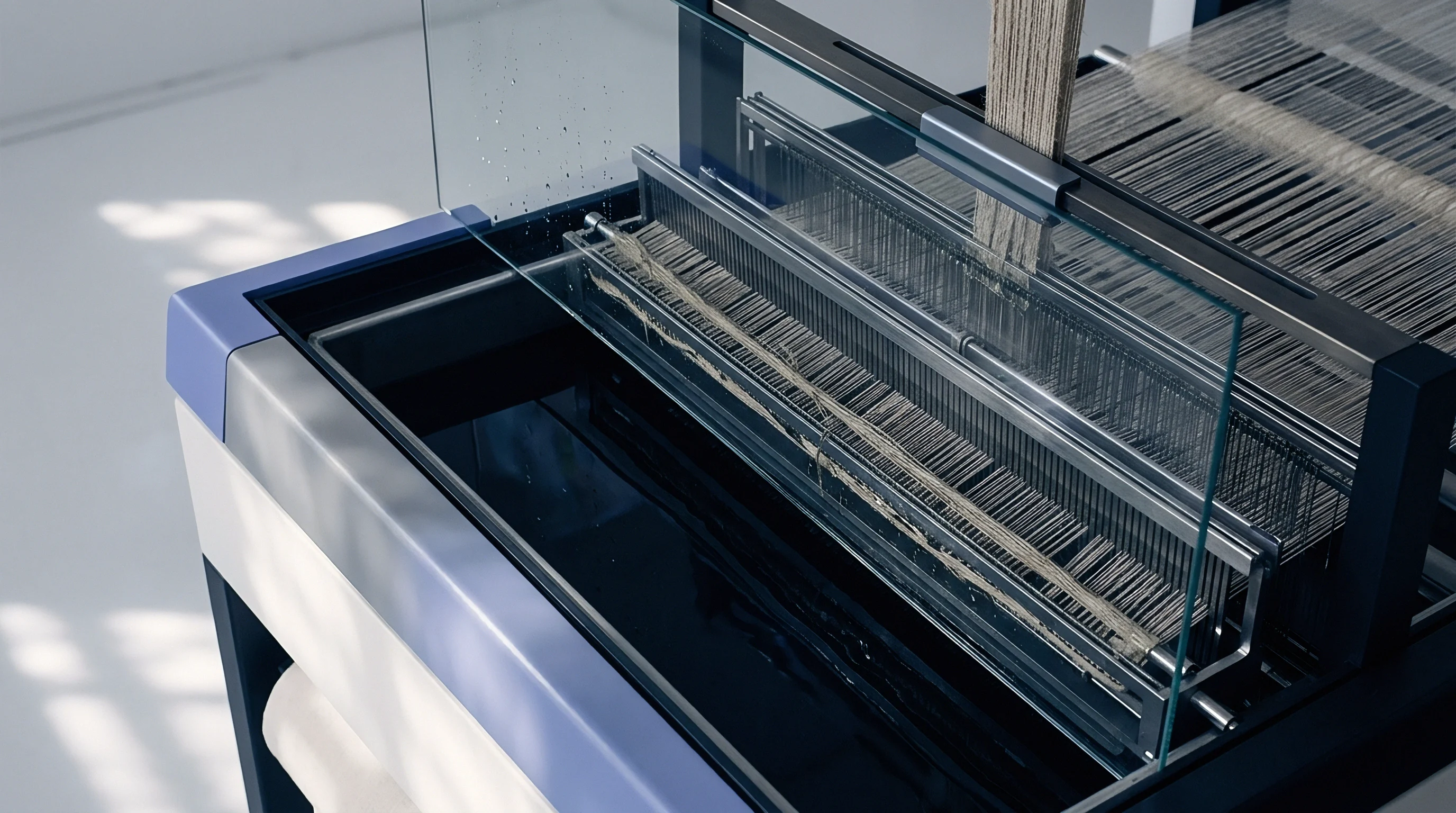
Sizing fine linen yarns establishes the inter-fiber bonding necessary to survive high-density weaving stress. Flax fibers inside a spun yarn are held together primarily by natural pectin, lignins, and surface friction. Unlike cotton, which has natural spiral convolutions that lock fibers together, flax fibers form long, smooth cylindrical bundles.
Wet spinning aligns these fiber bundles parallel to one another, yielding dense, strong yarns that lack internal elasticity. Sizing formulations must penetrate the outer fiber layers to lock floating surface fibers into the yarn core, increasing abrasion resistance without making the yarn brittle.
Polyvinyl alcohol (PVA), modified starches, and carboxymethyl cellulose (CMC) form the foundation of high-performance linen sizing recipes. Pure starch formulations lack the film flexibility required to withstand cyclic shed bending. Adding synthetic binders improves film elongation, allowing the size coat to stretch alongside the flax yarn without cracking.
Cracked sizing flakes off during weaving, depositing dust into heddle eyes and harness gear, which rapidly leads to thread chafing and tensile failure.
Size pick-up percentage must be controlled precisely based on yarn lea rating and fabric density. Low pick-up leaves fiber bundles exposed to mechanical abrasion, while excessive pick-up makes the yarn stiff and brittle, drastically reducing its fatigue life under shedding impact. Target size add-on for fine wet-spun linen warps in high-density setts ranges from 8% to 12% dry weight gain.
- Yarn desugaring and washing removes residual natural waxes and rehydrates dry fiber bundles before size immersion.
- High-pressure squeeze roll application forces the size film deep into the yarn core at 25 kilonewtons nip pressure, preventing surface pooling.
- Moisture-controlled cylinder drying maintains residual warp moisture at 8% regain to preserve natural fiber strength during size solidification.
- Wax coating application adds a thin protective lubricant film over the dried size shell to reduce inter-yarn shedding friction.
Single yarn tenacity tells only half the story. Wet flax gains strength when damp, so moisture content in the weaving shed plays a massive role in maintaining cohesion during high-density production. Operating linen weave sheds at 70% to 75% relative humidity keeps natural pectin within flax fibers pliable.
Dry shed air causes micro-cracking in both the sizing agent and the fiber matrix, dropping warp tenacity by up to 25% within hours.
Where Does Peak Cyclic Tension Degrade Wet-Spun Flax during High-Density Beat-Up?
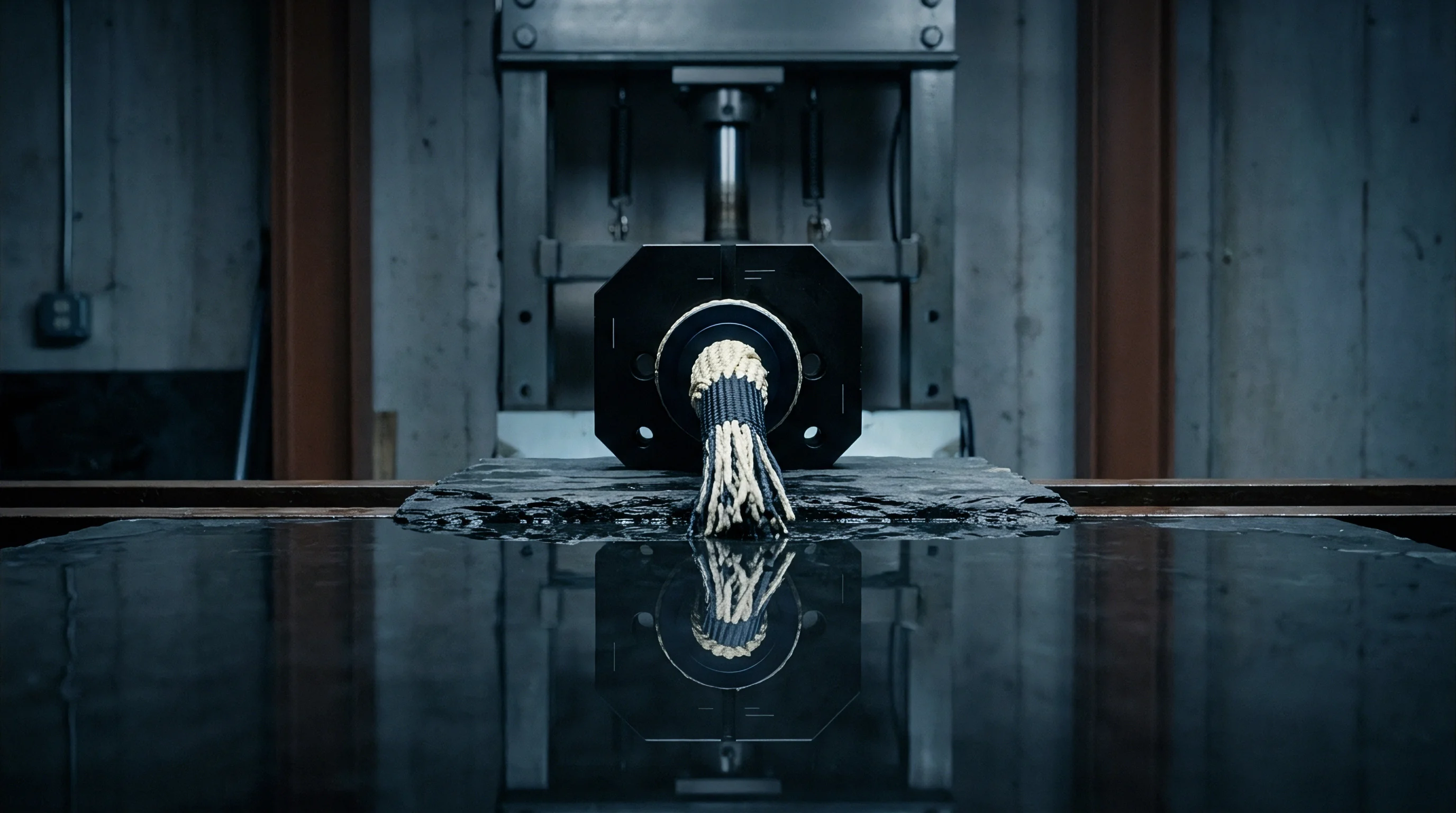
The critical point of cyclic tensile degradation occurs within the narrow zone between drop wires and the back heddle frame. Here, warp threads undergo rapid directional changes combined with high-frequency vibration. Drop wire eyes strip protective sizing if yarn lubrication is insufficient.
As the size shell wears thin, individual flax filaments break away from the main yarn body, creating micro-slubs that jam inside heddle mail eyes and drive up tension until the thread breaks.
Yarn hairiness index directly correlates with shedding cleanliness and end-break rates. Fine wet-spun linen typically features low hairiness compared to dry-spun variants, though mechanical handling during winding and warping can raise hairiness significantly. Hairiness measured on capacitance testers should show S3 values below 50 hairy ends per 100 meters for smooth weaving.
High cover factors demand smooth yarn surfaces; excess hairiness causes warp entanglements behind the harness frames, forcing threads to snap during shed separation.
Relative humidity inside the weaving shed must remain strictly between seventy and seventy-five percent to prevent pectin desiccation and premature warp fatigue.
Fluctuations in binder viscosity trigger severe shedding. In one continuous observation period, a drop in size bath temperature from 85°C to 72°C caused size film viscosity to rise unexpectedly, producing a thick surface coating without core penetration. Warp breaks on the loom quadrupled within twenty minutes, forcing an immediate strip-down and re-sizing of the entire beam batch.
Understanding yarn count systems and linear density limits helps determine yarn suitability for dense weaving schedules. The classic linen count system uses the Lea unit, defined as the number of 300-yard hanks in one pound of yarn. Metric count (Nm) expresses kilometers of yarn per kilogram.
Converting between Lea and Nm follows the relation Nm = Lea × 0.6047. Higher Lea numbers indicate finer yarns with smaller cross-sections, requiring greater chemical cohesion to compensate for the lower fiber count in the yarn cross-section.
| Formulation Type | Solid Add-On (%) | Tensile Strength Gain (%) | Abrasion Cycles to Rupture | Elongation Loss (%) | Loom Performance Rating |
|---|---|---|---|---|---|
| Native Starch Only | 10.2 | 8.5 | 1,200 | 35.0 | Poor |
| Modified Starch + PVA (70/30) | 9.8 | 18.2 | 3,400 | 12.5 | Good |
| PVA + Synthetic Wax | 8.5 | 22.4 | 4,800 | 8.0 | Excellent |
| CMC + Softener Blend | 11.5 | 14.1 | 2,900 | 15.2 | Acceptable |
Fiber bundle alignment determines ultimate tensile limits. Wet spinning yields superior fiber orientation because the water bath softens natural gums, allowing individual flax ultimates to slide past each other and align tightly along the yarn axis before twisting. Dry-spun flax yarns lack this uniform orientation, resulting in higher cross-sectional variance and significantly lower tenacity.
Dry-spun flax cannot sustain high-density warp tension, making it suitable only for low-density weft applications.
Static strength test data often deceives buyers. A yarn showing high static breaking load can fail miserably if its abrasion resistance and sizing cohesion are compromised. High-density weaving demands consistent film cohesion over sheer tensile stiffness.
Sizing formulations that prioritize flexibility over hardness consistently produce superior shed survival rates.
A size recipe that performs perfectly on medium densities will fail on tight constructions without added softeners.
Tolerance
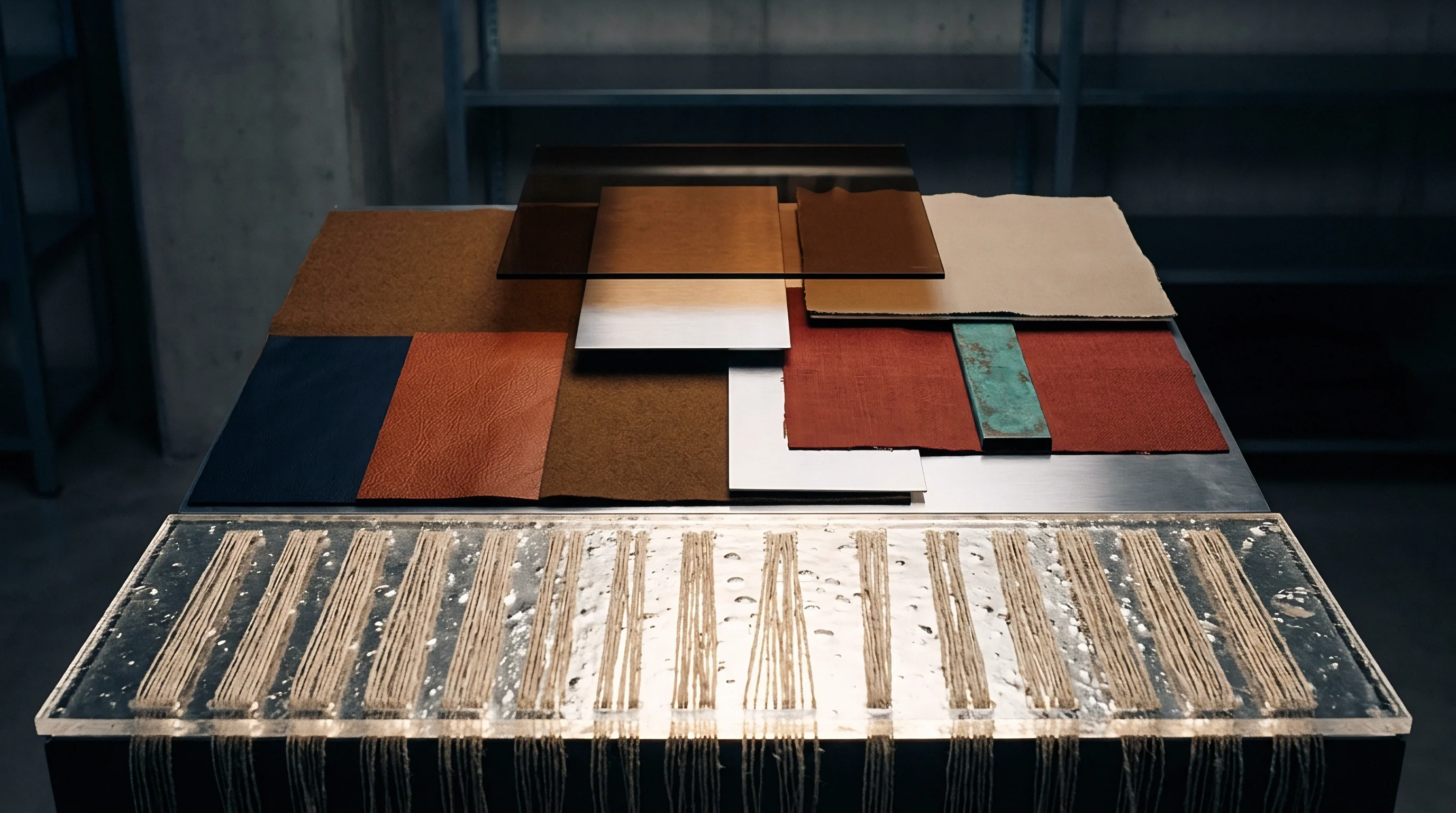
Establishing tensile property thresholds requires laboratory testing according to international standard test methods. ISO 2062 specifies procedures for determining single end breaking force and elongation using constant rate of extension (CRE) tensile testing machinery. For fine linen warps destined for high-density weaving, test parameters require a gauge length of 500 millimeters and a test speed of 500 millimeters per minute.
Testing fifty individual specimens per yarn lot establishes mean tenacity, breaking force, and coefficient of variation (CV%) for both strength and strain limits.
Statistical distribution analysis using Weibull failure probability models provides clear insight into warp yarn reliability under loom stress. The Weibull modulus (m) quantifies yarn structural homogeneity. A low Weibull modulus indicates a wide distribution of structural flaws, signaling that the yarn lot will fail frequently under cyclic dynamic load.
High-density linen weaving requires a yarn Weibull modulus exceeding 8.5. Single yarn tenacity tells only half the story; standard deviation thresholds must stay within tight boundaries to prevent high shed stoppage rates.
- Tenacity coefficient of variation must remain strictly below 11.5% across all beam lots to ensure uniform load sharing under shed opening dynamics.
- Minimum single end elongation must exceed 1.8% at break under ISO 2062 CRE test conditions to absorb fell impact forces.
- Mass variation CV% (Uster) must not exceed 13.0% on fine wet-spun yarns to eliminate thin-spot structural failures.
- Minimum tenacity rating must achieve 19.5 cN/tex for wet-spun linen warps running above 30 ends per centimeter.
Quality assurance standards govern incoming yarn inspection and warp beam acceptance before mounting onto the loom frame. ISO 13934-1 defines strip tensile testing for finished fabrics, but raw warp qualification maps strength parameters against dynamic loom load models. When incoming test results show tenacity variation exceeding tolerance limits, beam sizing parameters must be adjusted to compensate for lower baseline yarn strength.
Yarn lots displaying a Weibull modulus below eight point five will generate excessive warp breakage under high-density shedding regardless of size add-on.
Testing parameters must reflect actual shed ambient conditions. Standard testing atmospheres under ISO 139 require 20°C temperature and 65% relative humidity. Because flax physical properties vary with moisture absorption, yarn samples must undergo conditioning for at least 24 hours prior to tensile testing.
Testing dry flax yields falsely depressed elongation figures and erratic tenacity readings that fail to reflect wet-spun yarn behavior on humidified loom floors.
Tracking break rates across warp changes establishes long-term statistical process control baselines. Recording end breaks per 100,000 picks allows production engineers to separate yarn lot defects from mechanical loom timing errors. When breakage rates spike above six stops per 100,000 picks on high-density runs, immediate laboratory re-testing of reserve yarn samples isolates whether the problem stems from sizing degradation or raw fiber defects.
| Property Measured | Test Method Standard | Minimum Target Value | Maximum Permissible CV% | Impact on Weaving Efficiency |
|---|---|---|---|---|
| Single Yarn Tenacity | ISO 2062 | 19.5 cN/tex | 11.5% | Direct end breaks under load |
| Elongation at Break | ISO 2062 | 1.8% | 12.0% | Shocks absorption at beat-up |
| Yarn Unevenness (U%) | ISO 16549 | 10.2% | 13.0% | Thin spot tensile collapse |
| Imperfection Count (Thin) | ISO 16549 | 15 / 1000m | N/A | Instantaneous break points |
High-density weaving contracts should always specify single end strength standard deviation limits alongside nominal average breaking force. Contracting solely on mean breaking force permits suppliers to deliver highly variable yarn lots that hit the nominal average while containing thin, low-tenacity segments that snap instantly under shed tension. Specifying maximum coefficient of variation boundaries protects the buyer against inconsistent yarn quality.
Standard purchase contract terms should include the clause: “Yarn lot acceptance requires single-end tenacity averaging not less than 19.5 cN/tex with a coefficient of variation not exceeding 11.5% under ISO 2062 testing, failing which the lot is subject to rejection or price adjustment based on proven loom downtime cost.”

Settlement
Loom stoppages from warp breaks impose severe financial penalties on high-density linen production. Woven fabric production costs are directly bound to loom efficiency and machine operating hours. A high-speed rapier loom weaving fine high-density linen costs between $35 and $50 per operating hour in shed overhead, labor, and capital depreciation.
When poor warp quality causes breaks to rise from an acceptable 1.5 stops per loom hour to 8.0 stops, total shed efficiency collapses from 88% to under 60%.
Calculating the true landed cost of warp tensile failure requires analyzing direct machine downtime, labor intervention, and fabric quality degradation. Every warp break requires a weaver to locate the broken end, thread it through the correct drop wire, heddle eye, and reed dent, and manually tie or splice the yarn under proper tension. On high-density warps, finding and repairing a lost end takes an average of 2.5 minutes.
During this downtime, the loom sits idle while fixed operational costs accumulate.
Frequent warp stops generate severe cloth defects known as starting marks or fell line variations. When a loom stops abruptly under high warp tension, tension on the fell shifts as the warp sheet relaxes. Upon restarting, the first beat-up stroke creates a thick or thin pick density streak across the fabric width.
In high-density linen, starting marks are highly visible and cannot be corrected during finishing. Fabric containing frequent starting marks is downgraded from First Quality to Second Quality, dropping its wholesale market value by 40% to 50% per meter.
The table below presents a financial model showing how warp yarn breakage rates directly impact loom output, fabric quality grading, and total manufacturing costs per finished meter.
| Break Rate (stops/loom hr) | Shed Efficiency (%) | Daily Output (meters/loom) | First Quality Yield (%) | Loom Cost per Meter ($) | Net Landed Cost Premium (%) |
|---|---|---|---|---|---|
| 1.0 | 91.2 | 145.0 | 98.5 | 4.25 | Baseline |
| 2.5 | 84.5 | 134.3 | 94.0 | 4.82 | + 13.4% |
| 5.0 | 71.0 | 112.8 | 85.0 | 6.10 | + 43.5% |
| 8.0 | 58.2 | 92.5 | 72.0 | 8.15 | + 91.7% |
| 12.0 | 42.0 | 66.8 | 55.0 | 12.40 | + 191.7% |
Commercial allowances and chargeback calculations rely on clear, documented performance thresholds established during initial contract negotiations. When delivered yarn beams fail to meet agreed tensile tenacity or variation thresholds, buyers calculate chargebacks using a standardized Downtime Loss Formula: Compensation = (Target Efficiency – Actual Efficiency) × Operating Hours × Shed Hourly Rate. Sourcing practices must enforce these chargebacks strictly to recover lost profit margins caused by sub-standard yarn.
Minimum warp beam lengths play a critical role in beam change economics. Setting up a high-density linen loom with fine counts requires up to 16 hours of manual re-reeding and harness drawing-in labor. Spreading this set-up labor over a short warp beam dramatically inflates per-meter fabric cost.
Warps for high-density production must run at minimum beam lengths of 3,000 meters to amortize set-up charges effectively and maintain planned margins.
When evaluating supplier quotes for fine wet-spun linen warps, buyers must look beyond initial price per kilogram. A cheaper yarn lot with higher tenacity variation ultimately costs significantly more per finished meter due to efficiency losses and quality downgrades. Buying premium, fully tested, properly sized warp beams ensures maximum loom efficiency, stable First Quality yields, and protected commercial margins.
What remaining dynamic stress interactions between wet-spun flax yarn sizing formulations and high-speed air-jet beat-up mechanics will redefine tensile thresholds as weave speeds surpass six hundred picks per minute?