Mechanical Compression
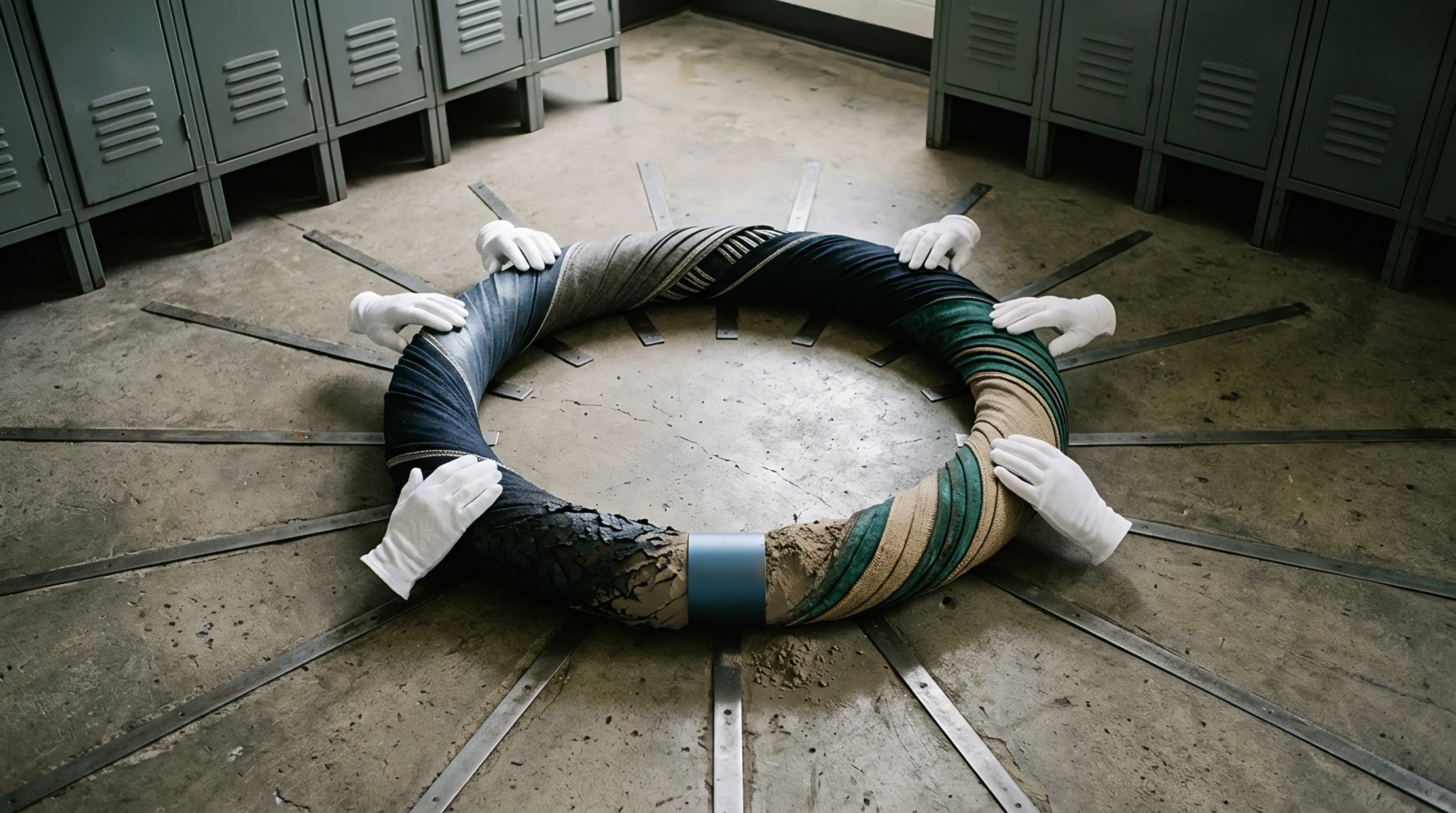
Mechanical compaction of woven textiles under controlled moisture and pressure reduces their subsequent washing shrinkage to negligible levels. Utilizing sanforizing compaction on linen fabrics forces the warp yarns to crimp and compress, which simulates the shrinkage that would otherwise occur during the first home laundering cycle. This industrial process ensures that the fabric retains its dimensional stability throughout its usable lifetime.
Process Execution
Fabric enters the machine where it is sprayed with steam to soften the fibers and make them more pliable. It is then pressed against a thick, stretched rubber blanket that is allowed to contract as it passes over a heated cylinder, which physically forces the fabric to compress along its length. This treatment must be carefully monitored to match the natural shrinkage potential of the specific weave density.
Surface Quality
Treating the fabric in this manner improves both the dimensional stability and the tactile hand of the finished linen. The compressed yarns make the fabric feel fuller and more luxurious, while the reduction in residual shrinkage protects the consumer from sizing disappointments. This mechanical finishing process achieves these results without the use of harsh chemical resins, preserving the natural breathability and hypoallergenic properties of the flax fibers for high-quality linen garments.
It also increases the resistance of the fabric to wrinkling during daily wear, which makes the apparel easier to care for and more durable over time.