Resolving Discrepancies between Laboratory Fiber Analysis and Customs Duty Subheading Declarations
Importers resolve customs fiber discrepancies by adjusting laboratory solvent dissolution dry mass with standard commercial moisture regain factors.

Bench
Determining fiber ratios in multi-component textile imports relies on standardized laboratory procedures. When customs border inspections dispute an importer’s declared Harmonized System subheading, the technical dispute turns on laboratory analytical methods. Testing facilities separate natural bast fibers from synthetic filaments, regenerated cellulosics, and other plant matter through gravimetric chemical dissolution and quantitative optical microscopy.
Discrepancies emerge when laboratory reports fail to account for structural biomass variations, surface finishing treatments, or reagent extraction limits. Importers facing customs challenges must understand how standard analytical protocols operate at the bench to spot where experimental error compromises declared fiber ratios.
Chemical Dissolution and Quantitative Solvent Extraction
Standardized testing under ISO 1833 relies on selective reagents that remove specific polymer classes while leaving bast structure intact. The primary reference protocol for separating flax from synthetic fibers like polyethylene terephthalate uses 75 percent mass fraction sulfuric acid under ISO 1833-11. A technician immerses a weighed, oven-dried fabric specimen into the acid reagent at 50 degrees Celsius for 60 minutes.
The sulfuric acid hydrolyzes and completely dissolves the cellulosic flax, leaving the polyester filaments as an insoluble residue. The technician filters this residue through a sintered glass crucible, washes it with dilute ammonia solution to neutralize residual acid, rinses it with distilled water, dries it at 105 degrees Celsius, and weighs the dry mass. The gravimetric difference gives the nominal raw fiber proportions.
Separating flax from regenerated cellulosic fibers, including viscose, modal, and lyocell, presents greater analytical complexity. Method ISO 1833-7 employs a zinc chloride and formic acid solvent system. Reagent concentration requires exact calibration: 20 grams of anhydrous zinc chloride dissolved in 80 grams of 85 percent mass fraction formic acid.
At 40 degrees Celsius, this mixture selectively dissolves regenerated cellulose within 15 minutes while preserving native flax fiber walls. Inadequate temperature control or slight deviations in solvent concentration alter the dissolution rate of native flax pectins, introducing direct errors into the calculated residual mass. Laboratories omitting precise temperature regulation frequently overstate regenerated cellulosic content by dissolving fine flax fibrils.
Removing non-fibrous matter is an obligatory pre-treatment step under ISO 1833-1. Raw linen yarns carry natural plant waxes, pectins, and fats, while processed fabrics retain synthetic sizing agents like polyvinyl alcohol or polyacrylates, paraffin emulsions, and functional finishing resins. Standard pre-treatment requires extracting the specimen in a Soxhlet apparatus with petroleum ether for 16 reflux cycles to remove lipophilic substances, followed by a warm water wash to extract water-soluble sizing compounds.
Skipping non-fibrous extraction distorts the gravimetric baseline. If non-fibrous finishes account for 3.5 percent of total fabric mass and remain on the specimen during chemical dissolution, the lab report assigns this finish weight to the dissolved fiber fraction, skewing the final percentage past critical customs tariff boundaries.
Chemical reagent selection depends on the target blend components present within the yarn structure.
| Target Blend Components | Standard Protocol | Reagent Chemistry | Dissolution Temperature | Correction Factor (d-value) |
|---|---|---|---|---|
| Flax / Polyester | ISO 1833-11 | 75% Mass Fraction Sulfuric Acid | 50 °C | 1.01 (Flax Residue Correction) |
| Flax / Viscose | ISO 1833-7 | Zinc Chloride / Formic Acid | 40 °C | 1.02 (Native Flax Protection) |
| Flax / Cotton | ISO 1833-8 | Zincate / Concentrated Sodium Hydroxide | 15 °C | 1.03 (Low Temperature Control) |
| Flax / Polyamide | ISO 1833-4 | 80% Formic Acid | 20 °C | 1.00 (Unattached Filament) |
A two-percent residual pectin mass in unbleached flax raw yarn skews gravimetric solvent dissolution calculations past the customs tolerance boundary.
Microscopic Differentiation of Flax and Hemp
Bast varieties share similar longitudinal surface structures that obscure simple visual identification. Chemical solvent extraction cannot separate flax from hemp, since both fibers consist of native Cellulose I and react identically to acidic or alkaline reagents. Customs authorities classifying shipments under HS 5309 for flax versus HS 5311 for other bast fibers rely on quantitative optical microscopy under ISO 20705 and polarized light analysis.
Polarized light microscopy utilizes birefringence differences under crossed polarizers equipped with a red plate tint insert. When aligned parallel to the slow axis of the analyzer, flax fibers display bright yellow interference colors. Under identical rotation, hemp fibers display clear blue interference colors.
This optical disparity arises from the fibrillar spiral angle relative to the fiber axis. Flax microfibrils spiral in a Z-twist orientation at an angle of 6 to 10 degrees, whereas hemp microfibrils spiral in an S-twist orientation at an angle of 2 to 30 degrees. The twist drying test confirms this orientation: when a single wet fiber element dries, flax rotates clockwise, while hemp rotates counterclockwise.
Cross-sectional morphology provides additional quantitative verification under high-magnification optical microscopy. Technicians embed fiber bundles in acrylic resin and cut ultra-thin sections 5 to 7 micrometers thick. Flax cross-sections exhibit small, polygonal shapes with 5 to 7 distinct sides and tight, well-defined central lumens.
Hemp cross-sections display larger, irregular, rounded shapes with broader, flattened lumens that frequently show thick cell wall variations. Standard sample analysis requires sectioning and evaluating at least 500 individual fiber cross-sections to establish statistical confidence for blended declarations. Optical identification remains subject to analyst skill, creating procedural vulnerability when customs authorities rely on single-specimen visual estimates.
Analytical precision degrades when specimens undergo intensive commercial processing steps.
- Unextracted Finishing Resins cross-link cellulosic fibers, preventing solvent penetration and leaving undissolved plant mass in gravimetric residue crucibles.
- Enzymatic Cottonization Treatments reduce flax fiber lengths and strip outer cell wall pectins, accelerating fiber degradation during acidic dissolution steps.
- Bleaching Aggression Variations alter the degree of polymerization in native flax, causing excessive weight loss during low-temperature zincate separations.
- Inadequate Sample Population Size under optical cross-section counting introduces sampling error when evaluating blended ring-spun yarns with high fiber migration.
Fibers undergo physical alterations during spinning. Whether automated optical cross-section analysis will eventually replace chemical dissolution as the primary reference method in customs disputes remains unresolved by international standards bodies.

Nomenclature
Harmonized tariff schedules classify linen fabrics according to strict mass composition boundaries. International customs agreements mandate specific six-digit subheadings that govern duty rates, quota restrictions, and preferential trade qualifications. Importers declaring entry under Chapter 53 must match laboratory composition findings directly against the statutory criteria defined within Section XI legal notes.
Small variations in measured fiber percentages across threshold boundaries alter subheading assignments, triggering substantial duty reclassifications and customs penalty assessments.
Harmonized System Chapter 53 Subheading Structure
Woven fabrics constructed from flax fibers fall under heading 5309 of the tariff schedule. Tariff nomenclature splits heading 5309 into two distinct sub-categories based entirely on total flax fiber content by weight. Subheading 5309.11 covers unbleached or bleached woven fabrics containing 85 percent or more by weight of flax.
Subheading 5309.19 covers dyed, printed, or yarn-dyed fabrics containing 85 percent or more by weight of flax. When the flax fiber proportion drops below the 85 percent threshold, the fabric leaves the 5309.11 and 5309.19 classifications entirely. The goods shift to subheading 5309.21 for unbleached or bleached mixed fabrics, or 5309.29 for other mixed fabrics containing less than 85 percent flax by weight.
Heading 5311 governs woven fabrics constructed from other vegetable textile fibers, including hemp, ramie, and true jute. If a laboratory determination shows that a fabric declared as flax actually contains a dominant proportion of hemp fibers, customs reclassifies the entry from 5309 to 5311.00. The commercial impact of this shift extends beyond basic duty rates.
Fabrics entering under heading 5311 may encounter different non-tariff trade barriers, distinct rules of origin under regional trade agreements, and altered trade remedy duties. Tariff classification follows strict quantitative rules established by statutory notes.
Duty differentials between pure bast declarations and lower-percentage mixed subheadings create significant financial exposure for importers.
| Declared Subheading | Fabric Description | Statutory Mass Threshold | Reclassification Subheading | Impact of Threshold Breach |
|---|---|---|---|---|
| HS 5309.11 | Unbleached / Bleached Woven Flax Fabric | Flax ≥ 85.0% by total mass | HS 5309.21 | Loss of preferential pure-linen tariff rate; shift to mixed-fabric duty schedule. |
| HS 5309.19 | Other Woven Flax Fabric (Dyed / Printed) | Flax ≥ 85.0% by total mass | HS 5309.29 | Reclassification to lower flax ratio heading; exposure to anti-dumping audit. |
| HS 5309.29 | Mixed Flax Fabric (Flax Dominant) | Flax < 85.0%, Flax > Other Fibers | HS 5407.82 or 5516.22 | Shift from Chapter 53 bast heading to Chapter 54/55 synthetic dominant heading. |
| HS 5311.00 | Woven Fabrics of Other Vegetable Fibers | Hemp / Ramie dominant by mass | HS 5309.19 | Reclassification from alternative bast classification due to microscopic fiber misidentification. |
Section XI Note 2 of the Harmonized Tariff Schedule dictates that multi-component fabrics fall under the heading corresponding to the fiber material dominant by absolute dry mass.

The Eighty-Five Percent Threshold and Essential Character
Customs classification rules established under Section XI Note 2 dictate tariff treatment for multi-component textiles. Note 2(A) mandates that goods classifiable under Chapter 53 containing two or more textile materials are classified as if consisting wholly of that one textile material covering the greatest mass proportion over any single competing material. Note 2(B) provides specific instructions for choosing between subheadings: when a heading refers to goods of a specific textile material containing 85 percent or more of that material, any fabric not meeting that 85 percent dry mass line cannot enter under that pure-blend subheading.
Consider a woven fabric declared under HS 5309.19 with a purchase specification of 86 percent flax and 14 percent polyester. If a customs laboratory tests an import sample and reports a corrected fiber content of 84.2 percent flax and 15.8 percent polyester, the shipment fails Note 2(B) and the 85 percent statutory boundary. Customs officers issue a Notice of Action reclassifying the shipment to HS 5309.29, an administrative reclassification that alters the baseline duty rate and increases landed duty under reassessment.
Evaluating import declarations containing multi-component bast fiber yarns requires following a rigid statutory sequence.
- Identify all distinct fiber types present within the warp and weft yarn systems using accredited quantitative analysis.
- Extract all non-fibrous sizing agents, finish waxes, and surface coatings to establish the absolute dry biomass baseline.
- Apply statutory commercial moisture regain allowances to raw dry mass measurements for each identified fiber component.
- Calculate the relative percentage by weight of each fiber class against total commercial fabric mass.
- Compare the calculated commercial percentage of flax against the statutory 85 percent threshold in Section XI Note 2(B).
- Assign the final 6-digit tariff subheading based on whether flax meets or falls short of the statutory mass boundary.
Composition shortfalls frequently stem from natural fiber mass variations across growing fields, where nominal yarn specs on purchase orders reflect average mill target ratios rather than exact finished fabric delivery weights.


Variance
Discrepancies between declared fabric composition and port-of-entry laboratory findings stem from systemic physical and chemical factors. Importers and customs authorities frequently arrive at conflicting composition figures from identical fabric bolts because they use different calculation conventions. The primary engine of numerical variance lies in how analytical procedures account for moisture absorption, non-fibrous surface finishes, and chemical degradation factors during testing.
Resolving customs disputes requires isolating these mathematical and procedural variables to demonstrate why port inspection results diverge from factory production documentation.
Why Do Standard Laboratory Tests Disagree with Customs Classifications?
Discrepancies between factory certificates and port inspection findings often arise from opposing mass calculation methodologies. Factory quality control laboratories routinely calculate fiber composition based on simple oven-dry mass ratios obtained directly after chemical dissolution. Customs enforcement laboratories, operating under international tariff rules, apply official statutory moisture regain allowances to oven-dry masses before computing final percentages.
Because natural flax fibers hold significantly higher ambient moisture than synthetic filaments, calculating fiber ratios on pure dry mass understates the commercial mass fraction of flax, driving the declared composition figure below statutory tariff thresholds.
Failure to reconcile oven-dry laboratory figures with statutory commercial moisture regain schedules accounts for over 60 percent of contested customs subheading reclassifications in bast fabric entries. A fabric containing 83.5 percent flax and 16.5 percent polyester by oven-dry mass easily crosses the statutory 85.0 percent threshold once legal commercial moisture regain corrections are applied. When customs analysts publish dry mass test results without applying Section XI regain adjustments, the reported percentage reflects an unadjusted laboratory state rather than the legally binding commercial mass fraction.

Moisture Regain and Non-Fibrous Weight Corrections
Natural cellulosic fibers absorb atmospheric humidity at rates distinct from synthetic filaments. Under standard atmospheric conditions of 20 degrees Celsius and 65 percent relative humidity, dry flax fibers absorb water vapor until reaching equilibrium. International standards establish commercial regain allowances for calculating trade weights: flax is assigned 12.0 percent, cotton 8.5 percent, viscose 13.0 percent, and polyester 1.5 percent per ISO 1833-1 Annex B and EU Regulation 1007/2011 Annex IX.
To compute the legal commercial mass of a multi-component fabric, the laboratory converts dry fiber mass using official regain allowances. Let mass dry flax represent the dry mass of flax obtained after solvent extraction, and mass dry polyester represent the dry mass of polyester residue. The commercial mass of flax equals mass dry flax multiplied by 1.120.
The commercial mass of polyester equals mass dry polyester multiplied by 1.015. The total commercial mass equals the sum of commercial flax and commercial polyester mass. The legal percentage of flax equals commercial flax mass divided by total commercial mass multiplied by 100.
Consider a worked calculation for a fabric specimen yielding an oven-dry mass of 83.80 grams of flax and 16.20 grams of polyester. On an oven-dry basis, the flax ratio measures 83.80 percent, which fails the 85.0 percent threshold for HS 5309.19. Applying statutory commercial regain adjustments converts the dry mass figures: commercial flax mass equals 83.80 multiplied by 1.120, yielding 93.856 grams; commercial polyester mass equals 16.20 multiplied by 1.015, yielding 16.443 grams.
Total commercial fabric mass equals 93.856 plus 16.443, totaling 110.299 grams. The corrected commercial flax ratio equals 93.856 divided by 110.299, yielding 85.09 percent flax by weight. Applying standard moisture regain elevates the fabric above the statutory 85 percent boundary, protecting the entry under HS 5309.19.
| Analytical Parameter | Flax Component | Polyester Component | Combined Total / Calculated Ratio |
|---|---|---|---|
| Oven-Dry Measured Mass (g) | 83.80 g | 16.20 g | 100.00 g Total Dry Mass |
| Oven-Dry Mass Fraction (%) | 83.80% (Fails HS 5309.19) | 16.20% | 100.00% Dry Baseline |
| Statutory Moisture Regain (%) | 12.00% (Factor: 1.120) | 1.50% (Factor: 1.015) | ISO 1833-1 Standard Regain Allowance |
| Calculated Commercial Mass (g) | 93.856 g | 16.443 g | 110.299 g Total Commercial Mass |
| Statutory Commercial Ratio (%) | 85.09% (Meets HS 5309.19) | 14.91% | 100.00% Legal Entry Basis |
| Methods Note: Calculations execute per ISO 1833-1 Annex B applying official EU Regulation 1007/2011 commercial regain factors to dry mass fractions following solvent dissolution. | |||
Non-fibrous matter extraction introduces an additional source of analytical variance. Fabric finishes, including water-repellent fluorocarbon coatings, durable press resins, and warp sizing agents, add weight to raw yarn structures. If a customs laboratory performs chemical dissolution without prior Soxhlet extraction, non-fibrous matter remains in the insoluble residue crucible or dissolves into the acid reagent.
If 3.0 percent of non-fibrous coating dissolves into the acid along with the flax, the lab report misattributes that finish weight as flax fiber mass. If the coating remains in the crucible with polyester residue, the lab report misattributes finish weight as polyester filament mass. Correcting for non-fibrous finish mass requires dual extraction pre-treatments under ISO 1833-1 to isolate net dry fiber mass prior to solvent exposure.
Tracing incoming lot numbers back to mill weighbridge records establishes pre-finish yarn weights when finish resins resist solvent extraction. Fiber structural differences further compound measurement errors during chemical separation steps. Cottonized flax, produced by shortening bast bundles through mechanical or enzymatic degumming, presents an elevated surface-area-to-mass ratio.
During 75 percent sulfuric acid treatment under ISO 1833-11, highly cottonized flax dissolves rapidly, but fine cellulosic fragments can escape sintered glass filtration crucibles. Standard laboratory procedures mandate applying a d-factor correction value, typically 1.01 to 1.02, to compensate for minor cellulosic mass loss during washing. Omitting the d-factor correction underrepresents total flax mass by 1.0 to 2.0 percent, artificially depressing reported linen content below declaration minimums.
Laboratory reports calculated on oven-dry mass without applying commercial moisture regain factors consistently overstate synthetic fiber percentages in bast blends.
Failing to adjust dry mass figures with official commercial regain factors leads directly to tariff reclassification, retroactive duty assessments, and potential civil penalties under customs enforcement statutes.
Proof
Defending an imported textile entry against customs classification challenges requires a cohesive technical dossier assembled across every stage of processing. Customs compliance auditors reject unverified commercial invoices or generic mill statements. Evidentiary files must present raw mill production logs, traceable batch sampling records, and accredited laboratory certificates that withstand legal scrutiny.
Importers establishing an auditable chain of technical custody can prove that declared subheadings accurately reflect physical fiber content.
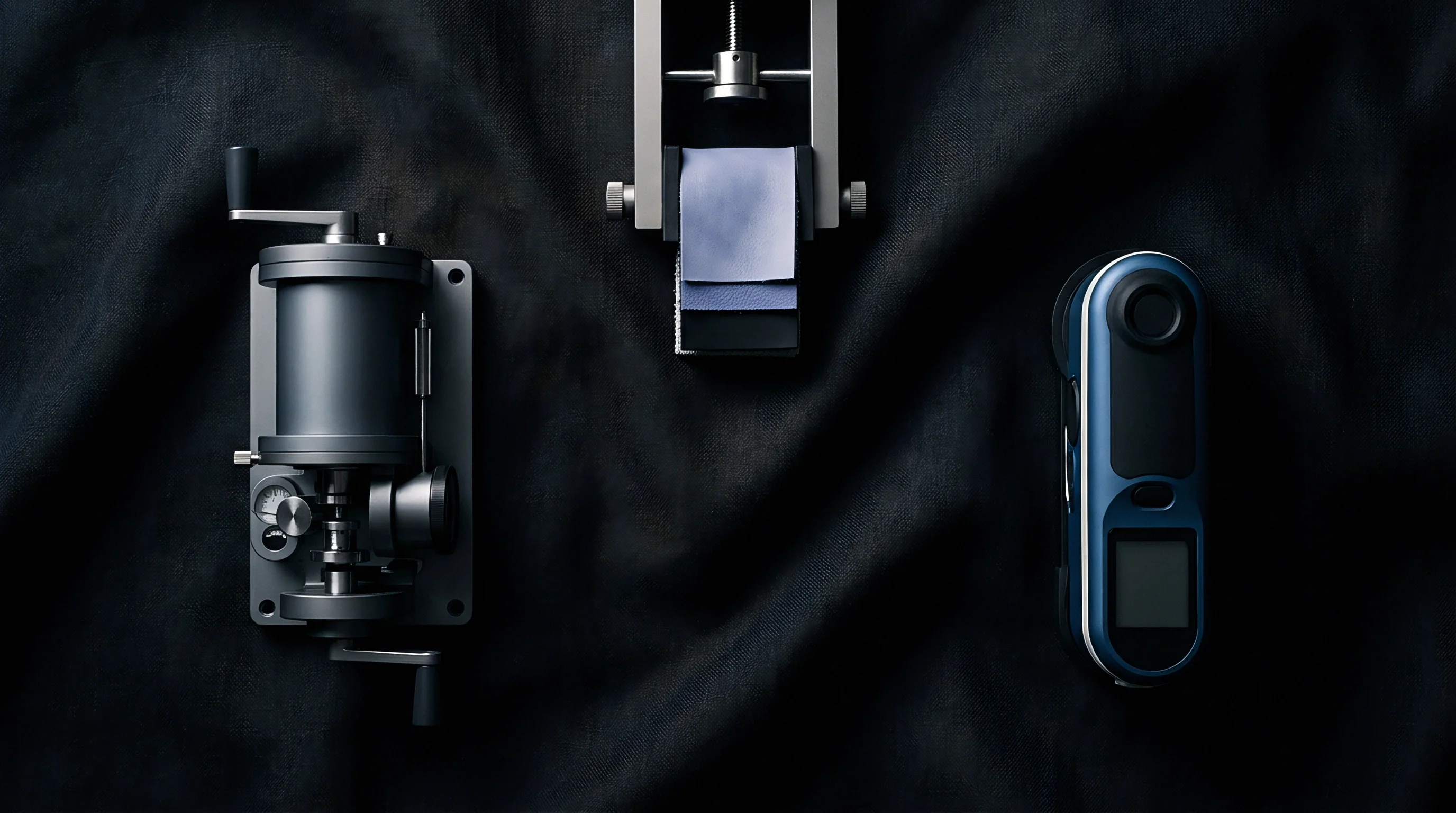
Documentary Audit Trail from Fiber Store to Bolt
Verification of raw fiber composition relies on tracing batch lots backward from finished fabric rolls to raw bale intake. The documentary audit trail begins at the spinning mill with bale store intake tickets. Each raw flax bale carries a unique batch identifier, bale weight, and scutcher yield report specifying fiber grade and moisture content.
Transferring fiber lot tracking numbers onto yarn production records creates an unbroken link to ring-spinning blend proportion sheets. Spinning room logs record exact mass input ratios of raw flax sliver to polyester or cotton tops fed into draw frames.
Mill records document batch transformations across every manufacturing stage. Auditors track production movement through weaver beam warping logs, loom shed assignment sheets, and grey fabric piece weigh tickets. Finishing plant records document greige piece numbers, desizing mass loss metrics, dyeing lot codes, and final tentering yield sheets.
Reconciling raw fiber mass input against finished bolt yardage output proves that nominal yarn specifications match physical mass output. When customs authorities challenge an entry, presenting continuous mill production logs proves that delivered fabrics derive from verified, high-flax blend batches.
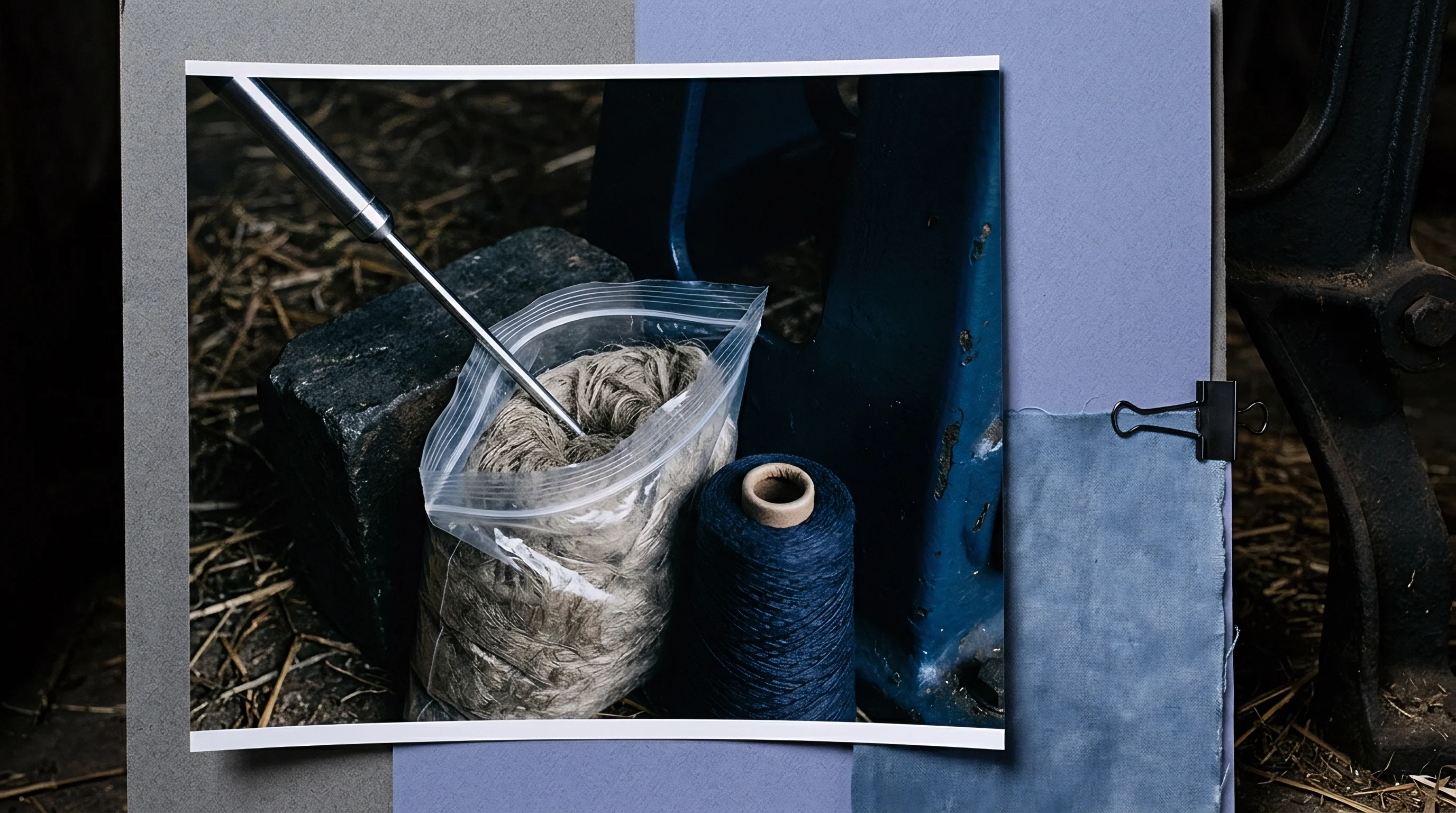
Laboratory Testing Standards and Accreditation Requirements
Customs authorities accord official evidentiary weight exclusively to test reports issued by facilities qualified under ISO/IEC 17025. Standard commercial laboratory test reports carry no legal standing unless the testing facility holds accredited scope specifically covering ISO 1833 chemical dissolution parts and ISO 20705 optical microscopy protocols. Importers sourcing fabric must confirm that issuing laboratories operate under valid accreditation certificates issued by recognized national bodies, such as the American Association for Laboratory Accreditation or equivalent International Laboratory Accreditation Cooperation signatories.
Sampling methodologies must conform to standardized statistical rules to survive administrative appeals. Sampling under ISO 5079 and ISO 2859-1 requires selecting random fabric specimens across multiple bolts within an import entry, rather than analyzing a single swatch cut from a trailing bolt end. The sampling protocol mandates cutting test specimens at least 10 centimeters away from fabric selvedges to avoid warp end-density variations.
Laboratories must perform testing across a minimum of three independent specimens per sample lot, averaging resulting gravimetric values and publishing calculated standard deviations. Test reports containing high standard deviations signal procedural inconsistency, enabling customs officers to strike down commercial counter-proof.
A comprehensive tariff defense file integrates physical, documentary, and analytical records into a single audit package.
- Mill Fiber Batch Allocation Records showing raw flax scutching receipts, spinning blend lot numbers, and draw-frame weigh scale logs.
- Continuous Fabric Conversion Ledgers linking greige weaving roll numbers to finished piece packing lists with net mass reconciliations.
- ISO/IEC 17025 Accredited Test Reports detailing dry mass dissolution results, applied d-factor corrections, and statutory commercial regain calculations.
- Quantitative Microscopic Analysis Certificates establishing fiber cross-section counts and polarized light identification logs under ISO 20705.
- Soxhlet Extraction Reports proving the isolation and removal of non-fibrous finishing resins, waxes, and sizing agents prior to testing.
Customs authorities audit physical fiber samples using official state laboratory protocols that take precedence over commercial certificate attachments.
With the administrative window closing in ninety days, standard purchasing agreements incorporate clause 14.2 of the international linen trade provisions, which binds both seller and buyer to the quantitative composition findings of a mutually agreed ISO 17025 accredited referee laboratory.
Recourse
Importers facing adverse customs reclassification notices have structured administrative mechanisms to dispute official findings. Reclassification notices under HS Chapter 53 trigger higher duty rates, back-taxes, and potential liquidated damages claims. Resolving discrepancies requires navigating formal administrative appeal channels, securing binding advance tariff rulings, and embedding robust warranty protections into international supply agreements to allocate financial exposure back to default mills.

Binding Tariff Information and Administrative Appeals
Importers can secure legally binding classification decisions prior to entry through formal application to national customs authorities. In the European Union, importers submit applications for Binding Tariff Information under UCC Article 33 to designated national customs authorities. In the United States, importers request Binding Ruling Letters from U.S. Customs and Border Protection under 19 CFR Part 177.
Binding applications present detailed fabric specifications, complete yarn processing records, and ISO/IEC 17025 laboratory analysis reports. Once issued, a binding ruling legalizes the subheading assignment across all ports of entry within the issuing jurisdiction for up to three years, insulating the holder against port-level customs reclassifications.
When border authorities issue a formal Notice of Action reclassifying an entry, importers must file administrative protests within statutory timeframes. Under U.S. customs law, importers file formal protests under 19 CFR Part 174 within 180 days of entry liquidation. The protest submission includes independent referee laboratory reports, full Soxhlet extraction data, and statutory commercial regain calculations demonstrating that the fabric meets tariff thresholds.
Importers can request independent re-testing of reserved customs sample splits by a certified referee laboratory to challenge flawed state laboratory reports. If the administrative protest is denied, the importer can file a summons in the Court of International Trade to obtain judicial review of the classification determination.

Commercial Contract Indemnities and Supplier Warranties
Sourcing contracts move financial exposure for tariff misclassification back to the fabric manufacturer. Standard purchasing agreements often fail to protect buyers because they rely on vague commercial terms such as “pure linen” or “100% flax” without defining analytical testing standards or legal composition tolerances. Commercial contracts must mandate that supplied fabrics conform to precise mass fractions measured under ISO 1833 with a maximum allowable variance of plus or minus 0.5 percent mass fraction.
Contracts should include explicit tariff compliance warranty clauses that bind the supplier to financial indemnification. If customs authorities reclassify a fabric entry due to fiber composition shortfalls verified by an accredited ISO/IEC 17025 laboratory, the supplier indemnifies the buyer for all landed costs. Indemnified costs include retroactive duty differentials, administrative penalty assessments, legal representation fees, and port storage charges resulting from entry detention.
Contracts must mandate that suppliers retain physical yarn and fabric reserves from every production lot for three years, providing available sample material for independent referee testing during customs audits.
Securing a binding tariff ruling before placing high-volume mill production orders eliminates classification exposure at the customs barrier.