Impact of Pectin Hydrolysis on Fiber Length Retention in Industrial Wet Spinning Frames
Controlled wet spinning trough hydrolysis selectively softens middle lamella pectin to optimize bundle division while retaining staple length for high tenacity.

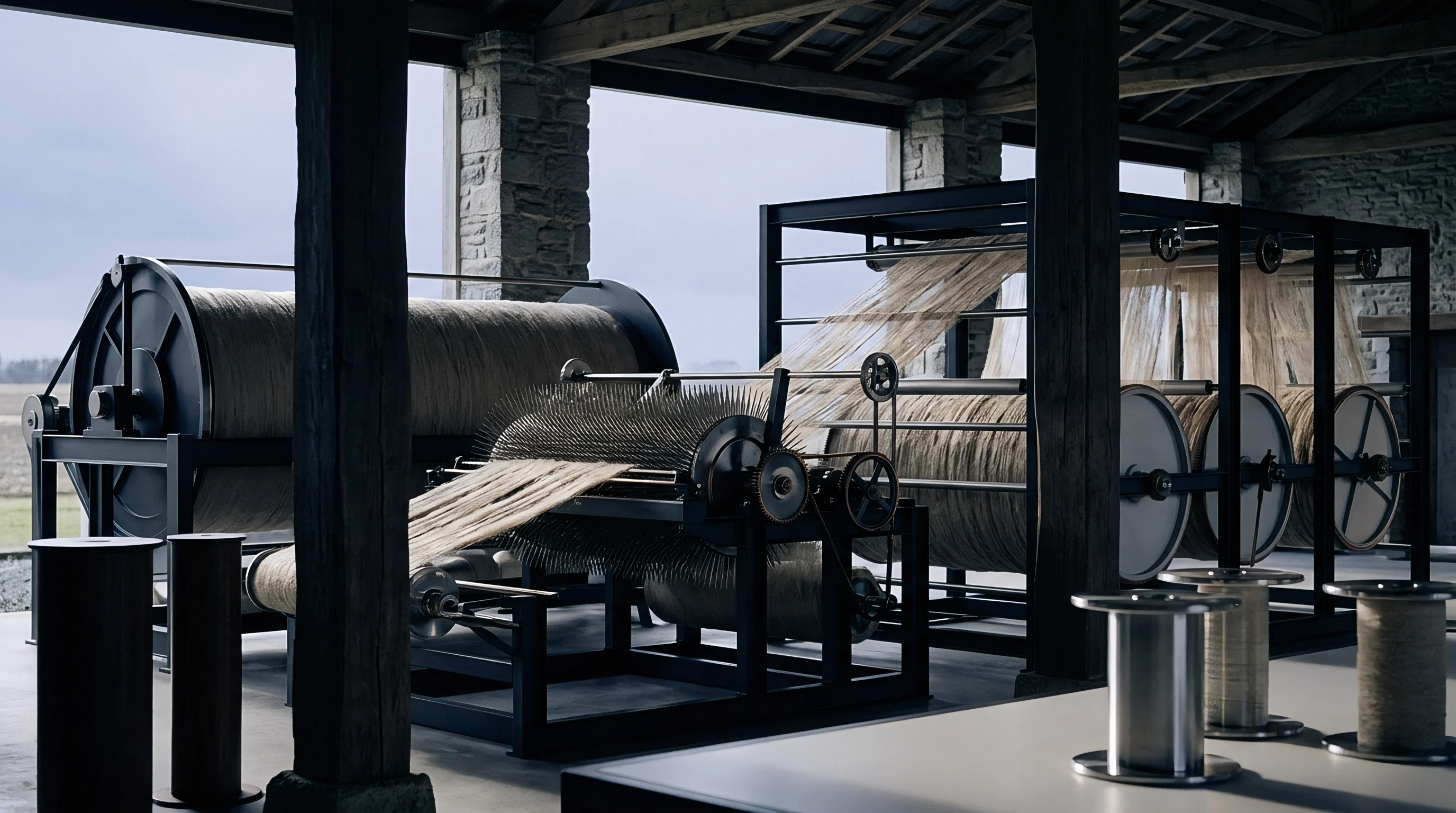
Bath
Industrial wet spinning relies on fluid-filled vats to soften the pectic binder holding flax fibre bundles together prior to drafting. Technical flax enters the spinning frame as composite bundles, where individual elementary bast cells between 15 and 45 millimetres long remain bound by intercellular pectins. Wet spinning frames submerge the roving in hot water just before drafting, hydrating the cellulosic structure and initiating thermal solubilization of the middle lamella while maintaining a high bath temperature.
Immersing the roving in hot water lowers the shear strength of the pectic matrix. If un-retted or mildly retted flax undergoes dry drafting, bundle cohesion forces outstrip the tensile failure load of individual cells, causing severe fibre snapping and coarse, uneven yarn counts. Heated water activates water-soluble homogalacturonan fractions, swelling the pectin gel and dropping its complex viscosity.
Under drafting roller tension, individual elementary fibers slide laterally past each other, drawing the strand down from an average linear density of 250 tex to 15 tex for high-count yarns.

Thermal Hydrolysis Mechanics in Trough Water
Elevated temperatures in the spinning vat accelerate the cleavage of galactans within bast cell walls. Trough water is typically kept between 60 and 75 degrees Celsius, with residence times ranging from 4 to 18 seconds depending on frame speed and trough length. Operating within this range breaks non-covalent hydrogen bonds in the pectic network while partially hydrolyzing low-molecular-weight pectin fractions.
Excessive thermal exposure causes uncontrolled depolymerization of homogalacturonan chains. Above 80 degrees Celsius, rapid glycosidic bond cleavage strips the intercellular binder that maintains bundle integrity, converting long technical strands into disconnected elementary cells before they reach the front drafting roller, which causes fibre ends to slip early.

Chemical Dissolution of Middle Lamella Pectins
Intercellular structural binders consist primarily of polygalacturonic acid chains that break down quickly under acidic conditions, making trough water chemistry critical to controlling hydrolysis rates. Unbuffered industrial water supplies often drift to an acidic pH of 4.8 to 5.5 as carbon dioxide dissolves and organic acids leach from incoming flax bales. Acid-catalyzed hydrolysis attacks alpha-1,4-glycosidic linkages in the homogalacturonan backbone, converting insoluble calcium pectates into soluble galacturonic acid monomers.
Alkaline conditions above pH 8.0 drive beta-elimination reactions that cleave the pectin backbone at esterified galacturonate residues. Both extremes destroy the cohesive shear strength required for controlled drafting. Maintaining trough water pH within a narrow window of 6.2 to 6.8 minimizes chemical degradation while permitting proper thermal hydration, ultimately controlling bundle cohesion.
Trough water maintained at 72 degrees Celsius with a residence time exceeding 14 seconds reduces technical fibre bundle length by 38 percent in Nm 26 wet drafting.
In laboratory testing of wet-drawn slivers, bundle tenacity varies significantly with bath residence time. Extending immersion from 6 seconds to 20 seconds at 70 degrees Celsius reduces single-strand bundle strength from 38.4 centinewtons per tex down to 21.2 centinewtons per tex ~ a drop that reflects progressive loss of middle lamella shear resistance, allowing filaments to separate prematurely under low draft tension.
Impact on Technical Bundle Division
As intercellular friction drops, mechanical drafting forces split large flax strands into smaller constituent filaments. Controlled pectin hydrolysis enables this lateral division, shifting fiber diameter toward finer metric counts: technical bundles averaging 80 micrometres in diameter split into sub-bundles of 15 to 25 micrometres, ideal for spinning fine linen yarns between Nm 39 and Nm 60.
When pectin hydrolysis proceeds too rapidly, lateral division turns into complete bundle disintegration. Lacking cohesive pectin bridges, individual elementary fibers no longer overlap effectively within the drafting zone, and effective staple length collapses from a technical bundle mean of 65 millimetres down to an elementary fibre mean of 22 millimetres. Short fibres exit as waste while draft tension snaps single strands.
| Trough Temp (°C) | pH Range | Dwell Time (s) | Pectin Extraction (%) | Mean Staple d50 (mm) | End Breakages (per 1000 spindle-hrs) |
|---|---|---|---|---|---|
| 50 | 6.5 – 6.8 | 6.0 | 4.2 | 68.5 | 42 |
| 60 | 6.2 – 6.6 | 8.5 | 8.7 | 62.1 | 28 |
| 70 | 6.2 – 6.5 | 12.0 | 15.4 | 51.3 | 19 |
| 80 | 5.5 – 6.0 | 15.0 | 28.9 | 31.4 | 87 |
| 90 | 4.8 – 5.3 | 18.0 | 44.1 | 18.2 | 214 |
Sliver drafting failures resulting from excessive pectin solubilization are frequently attributed to ambient humidity or pin wear.
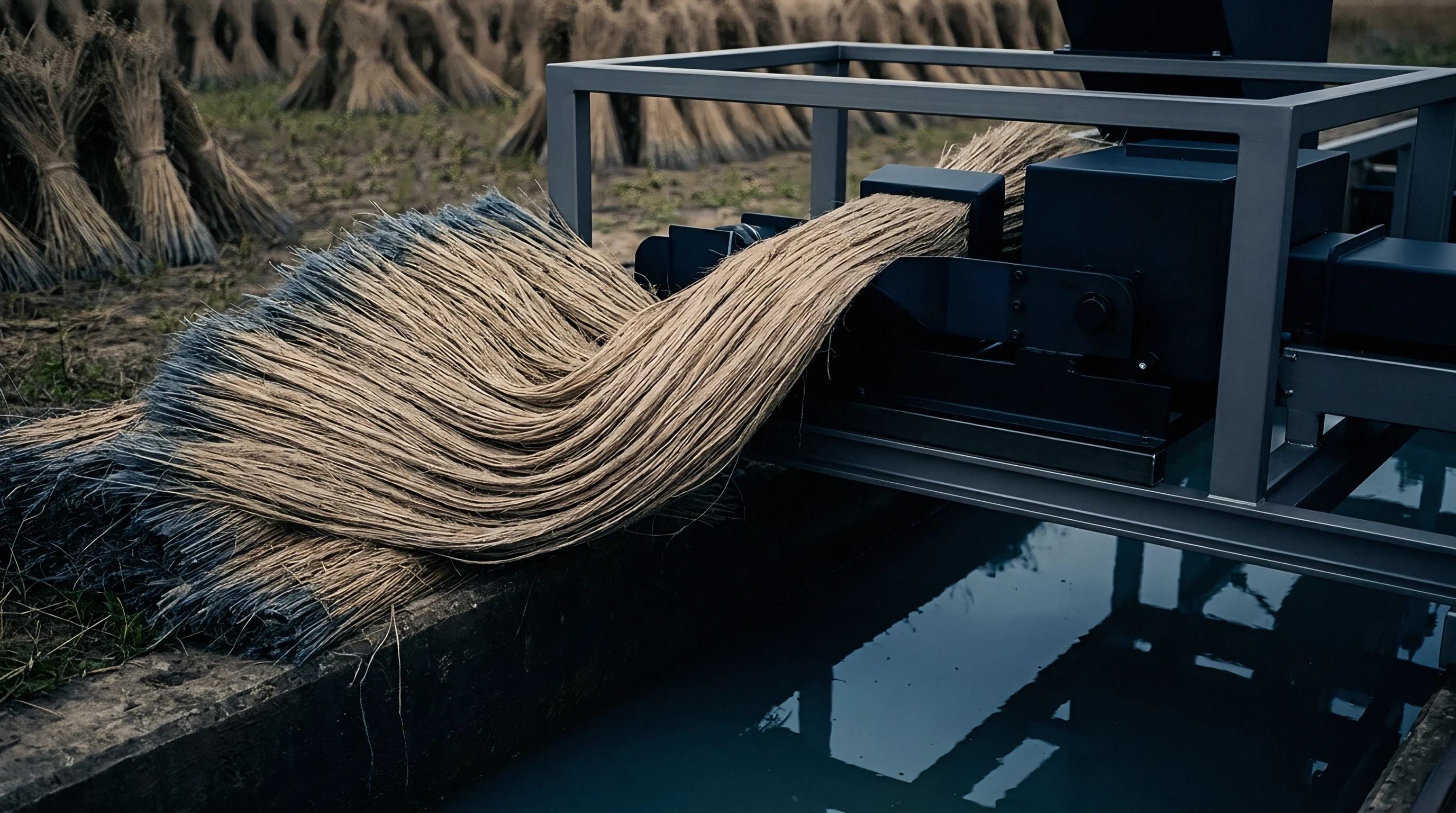

Lamella
The intercellular binder holding bast fibers into composite strands dictates how much tension a roving can withstand during drawing. In the flax stem, middle lamellae occupy the interstitial zones between primary cell walls of adjacent bast fibers ~ a complex macromolecular network composed of 60 to 70 percent pectic polysaccharides alongside hemicelluloses, structural proteins, and minor phenolic compounds. The structural integrity of this layer determines whether the flax behaves as a high-strength technical fiber or degrades into a weak assembly of short cellular fragments.
Polymeric chains within the middle lamella form a continuous hydrogel that responds dynamically to temperature, hydration, and mechanical shear. Homogalacturonan is the primary load-bearing domain in this gel; its un-esterified carboxyl groups bind divalent metal ions to form rigid egg-box junction zones that reinforce the cell boundary. Breaking these ionic cross-links alters the viscoelastic behavior of the entire fibre bundle.
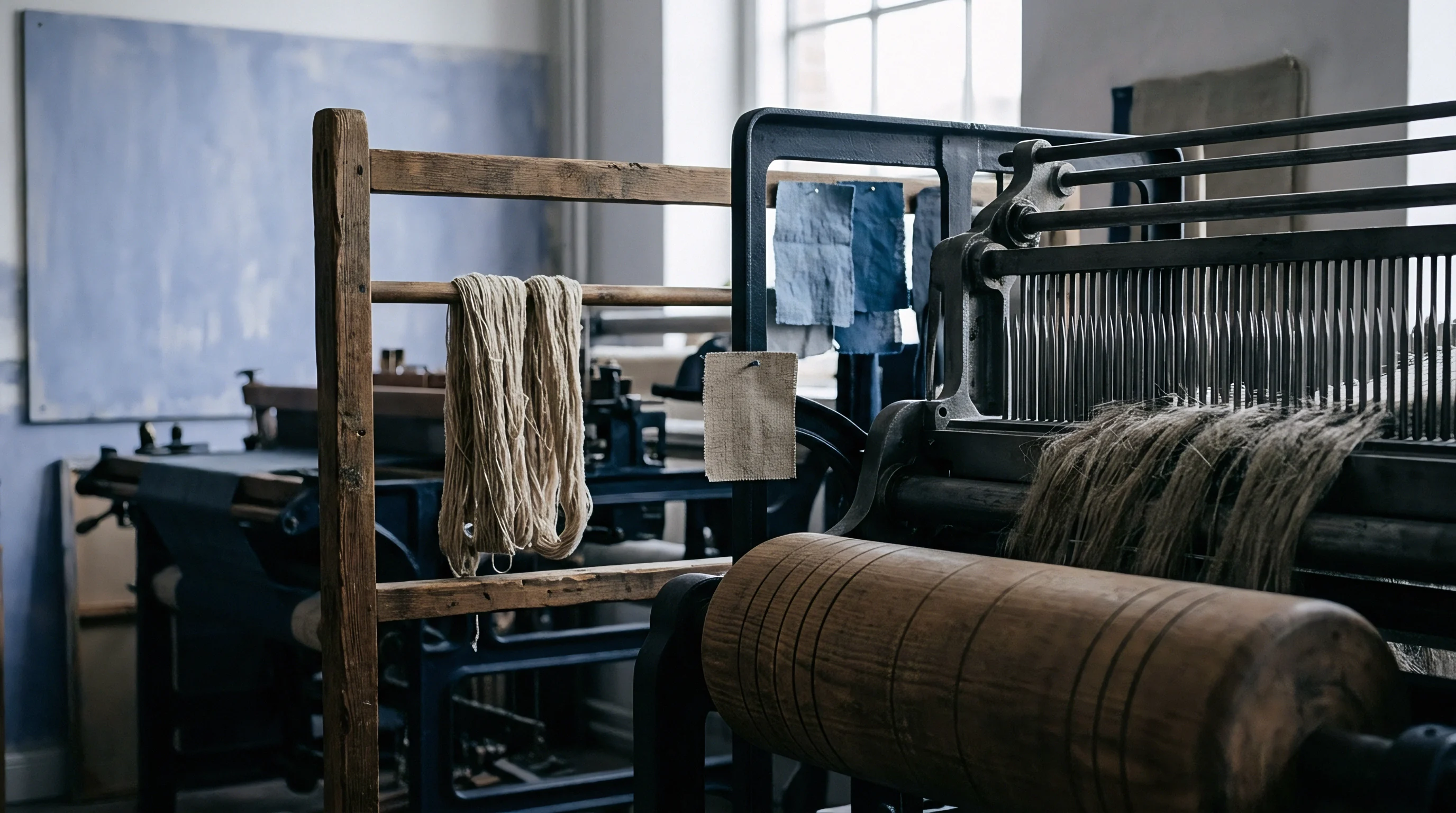
Homogalacturonan Structure and Calcium Crosslinking
Pectic polysaccharides form rigid ionic networks via divalent cation bridges that resist thermal breakdown. Homogalacturonan consists of linear chains of alpha-D-galacturonic acid units joined by 1,4-glycosidic bonds, with the degree of methylesterification dictating chemical reactivity. High-methoxyl pectins contain esterified carboxyl groups that prevent ionic bonding, relying instead on hydrophobic interactions and hydrogen bonds for matrix stability.
Low-methoxyl pectins present arrays of free carboxyl groups that coordinate with calcium ions in the middle lamella. These calcium pectate complexes form insoluble structural nodes that withstand pure thermal dissolution up to 90 degrees Celsius. However, when industrial wet spinning frames operate with softened or demineralized trough water, sodium and potassium ions displace bound calcium through ion exchange, destabilizing the matrix.
Displacing structural calcium weakens the egg-box domain, lowering the gel’s melting temperature by as much as 25 degrees Celsius and exposing the homogalacturonan backbone to rapid hydrolytic cleavage at standard trough operating temperatures. This breakdown directly alters sliver friction.
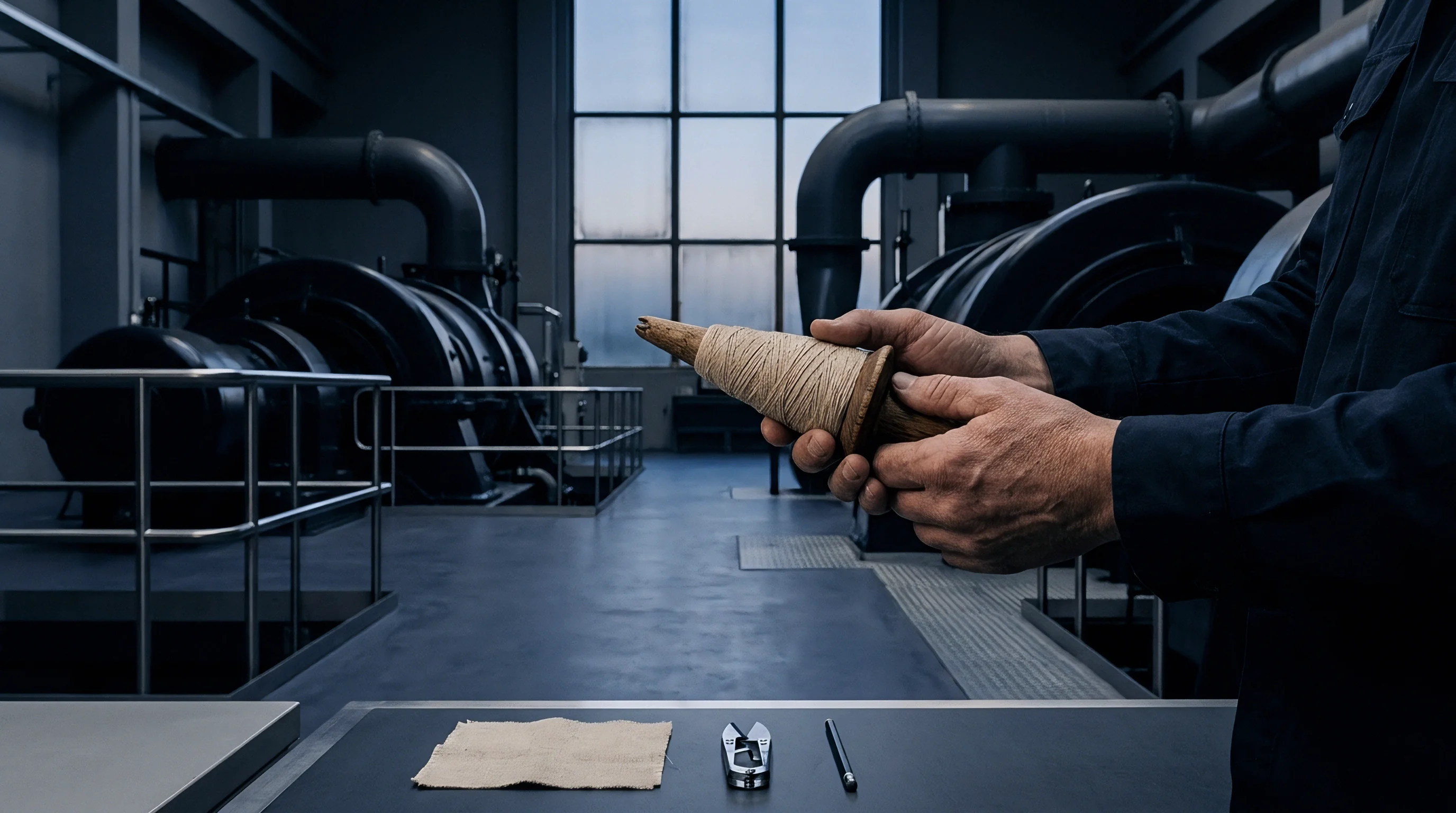
Retting Degree Variance and Hydrothermal Sensitivity
Flax straw exposed to prolonged field weathering loses its outer protective waxes, leaving binder polymers vulnerable to rapid fluid extraction. Retting history thus governs the baseline pectin content of line flax delivered to the mill: dew-retted flax harvested in humid conditions exhibits significant fungal enzyme activity, which partially degrades homogalacturonan and rhamnogalacturonan-I structures before scutching begins.
Under-retted flax retains high pectin concentrations exceeding 5 percent by weight, requiring high trough temperatures and long residence times to enable drafting. Over-retted flax enters the mill with a depleted pectic matrix containing under 1.5 percent residual pectin. When this material enters a wet-spinning trough at 70 degrees Celsius, the remaining middle lamellae dissolve within seconds, destroying bundle length.
Over-retted flax possesses weakened middle lamellae that collapse under moderate hydraulic shear inside the spinning bath.
The failure modes associated with water chemistry variations manifest as specific operational disruptions during drafting:
- Calcium Cation Depletion occurs when soft trough water strips structural calcium from homogalacturonan junction zones, reducing bundle shear strength and causing uncontrolled sliver drafting.
- Acidic Chain Cleavage happens when low water pH hydrolyzes glycosidic linkages along the pectin backbone, accelerating staple length loss and increasing fly waste.
- Chelating Agent Extraction results when industrial water additives bind trace metals, rapidly dissolving the middle lamella gel at temperatures below 55 degrees Celsius.
- Alkaline Ester Saponification emerges when high bath pH strips methyl esters from pectin chains, increasing swelling pressure and forcing elementary cells apart.
- Thermal Gel Solubilization develops when fluid temperatures exceed the phase transition threshold of the pectic matrix, causing catastrophic bundle collapse across the draft zone.
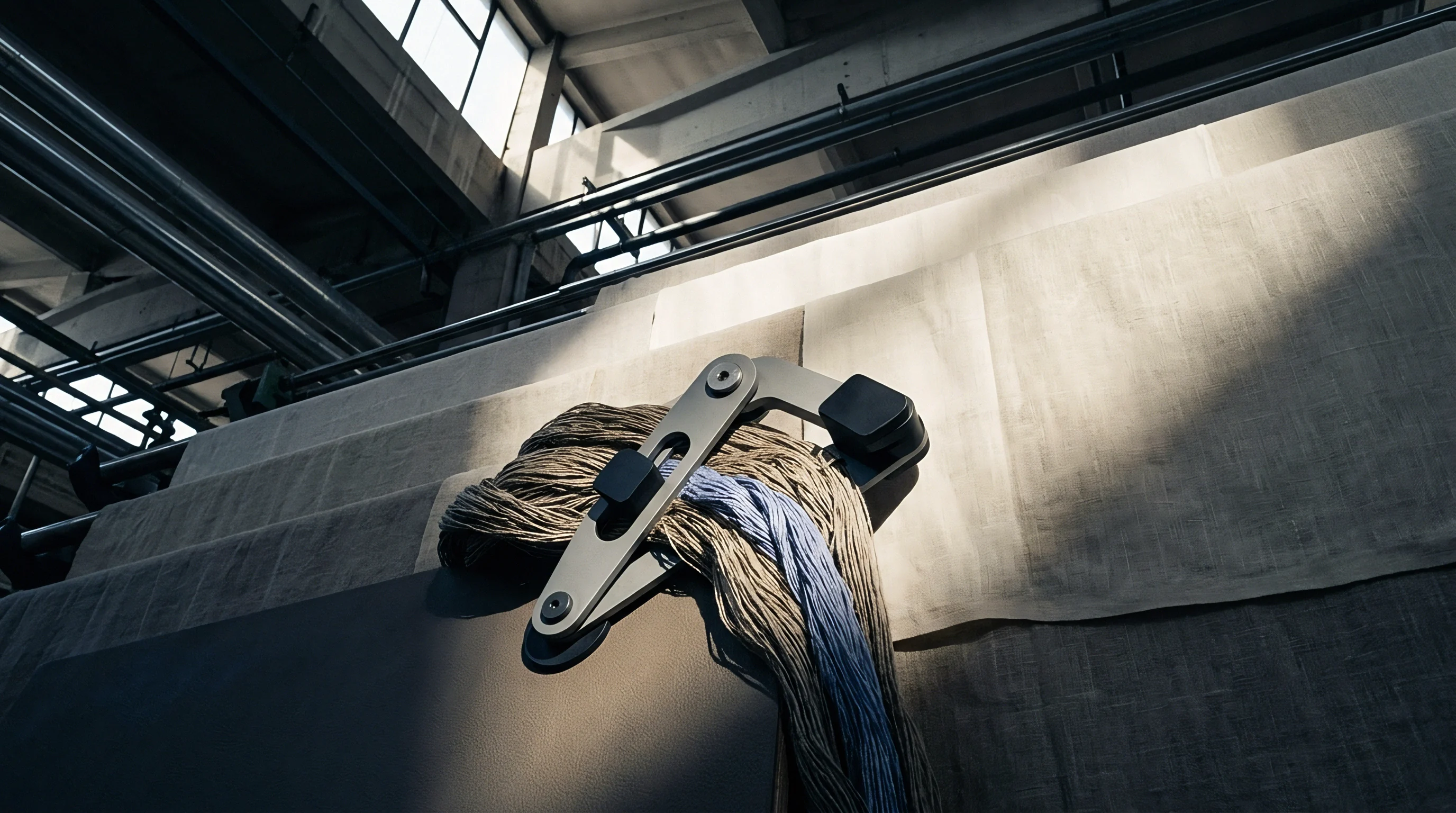
Water Quality and Chelating Effects
Dissolved mineral concentration in processing vats dictates whether pectic chains retain structural cohesion under heat. Industrial mills using municipal water treatment frequently add polyphosphates or ethylenediaminetetraacetic acid derivatives to prevent scale accumulation on heating elements, but these chelating agents strip calcium and magnesium ions directly from the middle lamella of passing flax rovings.
Stripping calcium from bast tissue converts insoluble calcium pectate into water-soluble sodium pectate. In mill trials, adding 50 ppm of a sodium hexametaphosphate chelator to trough water doubled the rate of pectin extraction at 65 degrees Celsius. The resulting sliver suffered an immediate drop in bundle tenacity, causing a 300 percent spike in end-breakages on Nm 30 spinning frames.
| Pectin Fraction | Solubility Profile | Primary Bonding Mechanism | Hydrolysis Susceptibility | Structural Role in Bundle |
|---|---|---|---|---|
| Water-Soluble Pectin | Cold/Warm Water | Hydrogen bonding | High (>45°C) | Outer sheath lubrication |
| Chelator-Soluble Pectin | Aqueous Chelators | Ionic calcium bridges | Moderate (pH dependent) | Middle lamella junction zones |
| Protopectin (Insoluble) | Hot Acid/Alkali | Covalent/Cellulose linkages | Low ( | Primary cell wall anchorage |
| Rhamnogalacturonan-I | Hot Water/Enzymes | Branched neutral sugar side-chains | Moderate (>65°C) | Matrix flexibility and swelling |
| Data obtained via sequential chemical extraction per ISO 2370 conditioning protocol. Sample batch FL-2023-B2. | ||||
High-temperature trough drafting ultimately demands hard water inputs to preserve bast fibre bundle integrity against thermal degradation.
Roller
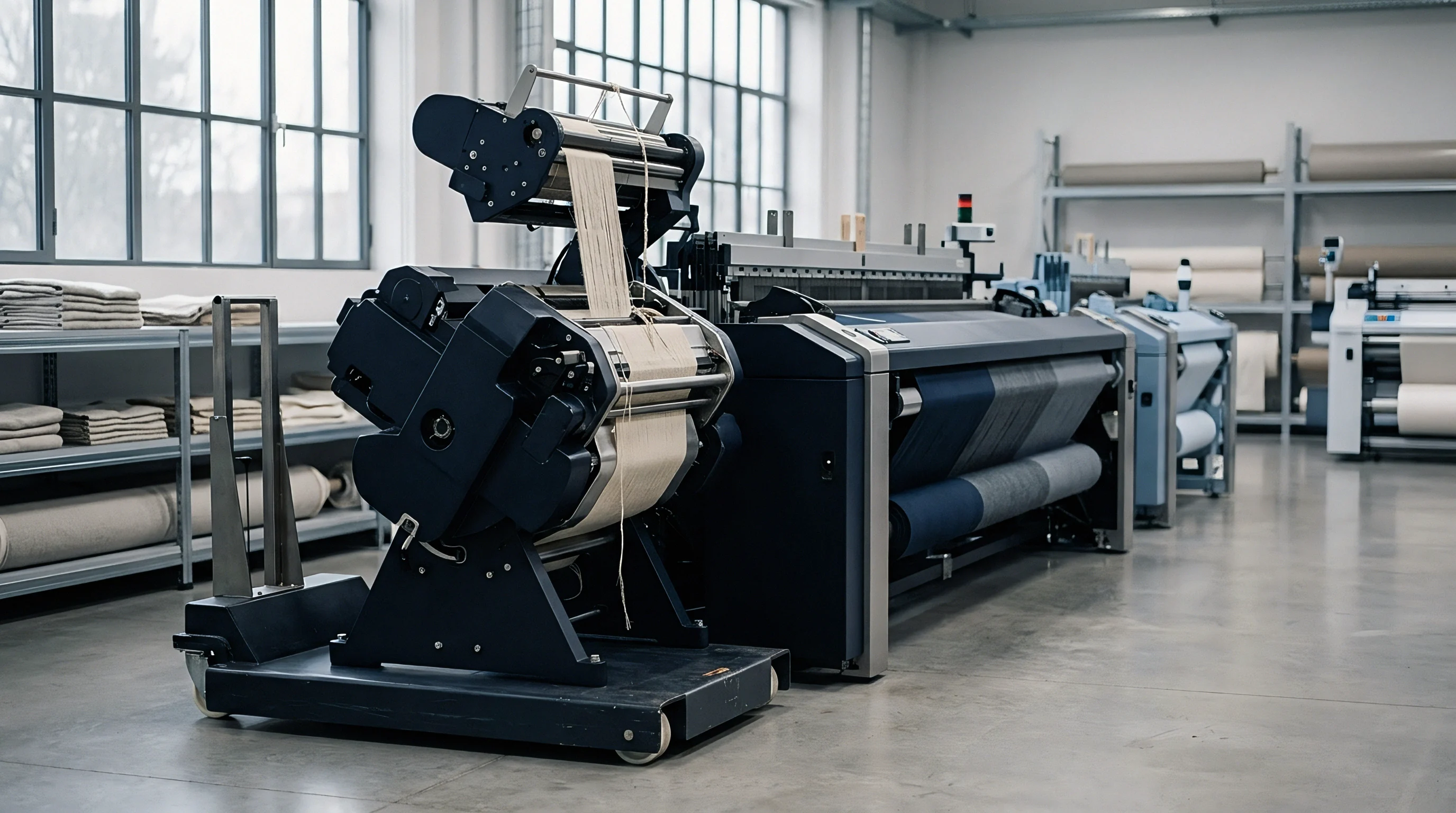
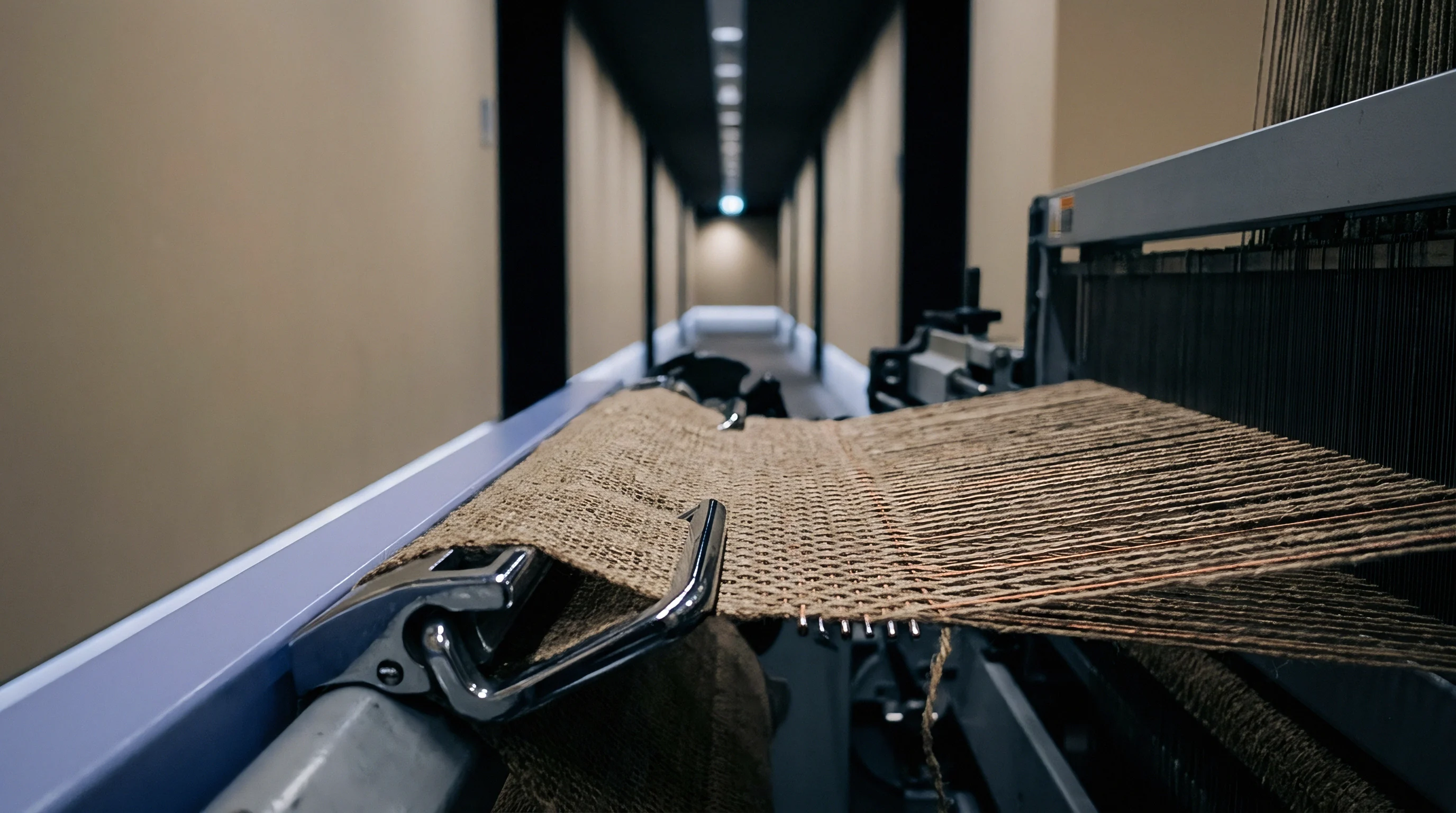
Industrial drawing frames press wet flax roving between weighted cylinders to control fibre speed through the draft field. Modern wet spinning frames employ two-zone or three-zone drafting setups featuring fluted bottom steel rollers and top pressure rollers covered in synthetic elastomer cots. Hot water carried by the roving from the immersion trough forms a fluid film at the roller nip, introducing hydraulic lubrication dynamics to the mechanical drafting zone; spinners often adjust nip pressure hourly as a result.
The mechanical force applied by the top roller must overcome fluid drag while maintaining enough friction to prevent unregulated strand slipping. As pectin solubilizes within the hot trough, the coefficient of friction between individual fibers drops significantly. If roller nip pressure remains fixed while hydrolysis weakens bundle cohesion, drafting shifts from controlled shear attenuation to uncontrolled sliver drift, as slip is dictated by the effective draft ratio.

Which Frame Adjustments Prevent Excessive Sliver Slip?
Spinning technologists adjust back-cylinder pressure settings to counter premature filament separation in hot fluid. Standard wet spinning frames permit precise adjustment of drafting parameters to match incoming fiber quality and trough chemistry, which means correcting for pectin hydrolysis requires balancing mechanical grip against thermal softening.
- Increase top roller nip loading from 18 decanewtons to 24 decanewtons to expel excess lubricating fluid from the roving core.
- Reduce drafting zone gauge setting by 3 millimetres to shorten the unsupported distance where weakened bundles undergo tension.
- Lower total draft ratio from 16.5 down to 13.2 to decrease peak longitudinal tension on hydrolyzing middle lamellae.
- Increase roving twist factor by 10 percent during roving frame production to maintain mechanical filament interlocking throughout wet drawing.

Drafting Zone Shear and Fiber Breakage
High velocity differentials between nip points create longitudinal stress along hydrated technical strands. The back roller set operates at a surface speed matching the incoming roving feed, while the front delivery roller rotates 10 to 20 times faster to set the nominal mechanical draft. Within the drafting field, control pins or aprons guide the fiber mass to maintain a uniform speed transition.
When pectin hydrolysis is properly balanced, intercellular gel shear allows sub-bundles to accelerate smoothly as they disengage from slower neighbors. When hydrolysis is excessive, inter-fibre friction drops near zero, causing short elementary fibers to detach instantly and accelerate to front-roller velocity prematurely. This generates thin draft spots followed by thick, un-attenuated slubs that ruin yarn linear density evenness (Uster CV percent).
Insufficient pectin hydrolysis leaves the middle lamella rigid and tough. The mechanical shear forces generated by the velocity gradient then exceed the tensile strength of the cellulose cell walls: instead of sliding apart at the pectic boundary, cellulose microfibrils fracture transversely across the cell axis. Fiber ends snap cleanly, shortening effective staple length and producing abrasive lint that clogs drafting aprons while roving twist holds the core.
Roving Twist and Trough Temperature Interplay
Mechanical false turn imparted during roving production counteracts the softening effect of hot fluid immersion. Roving frames apply a low level of protective twist (alpha twist factor 18 to 24) so the strand can unwind from bobbins and pass through the wet trough without breaking. Upon entering the hot water container, thermal expansion and pectin solubilization cause the twist helix to loosen.
Compliance with ISO 2370 linear density standards obligates spinners to monitor bath pH to prevent excessive pectin solubilization during drawing.
End-breakages rise immediately whenever trough fluid exceeds pH 7.8. The higher pH accelerates pectin saponification, unraveling protective twist within the first 50 centimetres of trough travel and exposing the untwisted fiber core directly to hydraulic drag, causing roving drafting failures before the strand reaches the back nip roller.
To stabilize drafting at elevated trough temperatures, spinners align roving twist levels directly with trough residence times. High trough temperatures (75 degrees Celsius) require elevated roving twist (alpha 24) to lock bundle cores, whereas moderate temperatures (60 degrees Celsius) permit lower twist (alpha 18) to maximize lateral bundle division and yarn fineness; cold water stops further hydrolysis.
Establishing the precise thermal threshold for stable drafting required three days of frame downtime and ninety kilos of wasted roving in mill trials.

Distribution
Measuring fibre length profiles before and after wet drawing establishes the extent of physical degradation caused by binder extraction. Industrial flax evaluation relies on staple length distribution parameters to predict spinnability and yarn tenacity. Raw hackled line flax presents a broad fiber length array, with technical bundles ranging from 100 millimetres to over 500 millimetres; after passing through the drafting zone of a wet spinning frame, this distribution shifts toward shorter length classes.
Staple retention defines the percentage of technical fibers that maintain structural length above a specified threshold after drafting. High staple retention indicates that pectin hydrolysis successfully facilitated lateral bundle splitting without causing transverse fiber breakage or premature bundle disengagement. Low retention signals over-hydrolysis, where middle lamella destruction lets technical strands fragment into short elementary units averaging under 30 millimetres.
Almeter Characterization of Hydrated Sliver Length
Capillarity-conditioned samples pass through electronic capacitive sensors to chart changes in mean staple span. Quantitative length measurement of wet-drawn flax requires specialized sample preparation to eliminate capillary water interference: fibres harvested immediately after the front drafting roller undergo rapid solvent exchange using ethanol and acetone to freeze pectin hydrolysis and remove water without disturbing fiber arrangement.
Dried samples then pass through an automatic fiber length sorter (Almeter AL-100) to generate cumulative length diagrams. Key metrics derived from this distribution include bar-length (mean length d50), upper-half mean length (d95), and short fiber content (percent of fibers under 25 millimetres). Over-hydrolyzed sliver displays a steep drop in d95 alongside a sharp surge in short fiber content, shifting the length curve toward patterns typical of tow waste.
Fineness Transition and Metric Number Shifts
Splitting composite bundles into single filaments increases effective surface area while lowering linear tex values. Fiber fineness and fiber length operate in direct opposition during wet drafting: while the primary objective is achieving fine linear density (high Nm counts) by dividing coarse bundles into fine filaments, aggressive pectin removal to achieve extreme fineness frequently destroys staple retention.
Tracking this fineness transition relies on ISO 2370 gravimetric linear density determination combined with microscopic cross-sectional analysis. Ideal pectin hydrolysis reduces bundle linear density from 3.5 tex down to 0.45 tex while retaining a d50 staple length above 55 millimetres. When pectin cleavage drops linear density below 0.25 tex, the strand structure shifts from technical bundles to isolated elementary fibers, collapsing effective staple length to 20 millimetres and sharply lowering yarn tenacity.
| Process Condition | Fibre Linear Density (tex) | Mean Length d50 (mm) | Upper Length d95 (mm) | Short Fibre Content (%) | Yarn Tenacity (cN/tex) |
|---|---|---|---|---|---|
| Mild Hydrolysis (55°C) | 0.85 | 72.4 | 145.0 | 4.2 | 28.6 |
| Target Hydrolysis (65°C) | 0.48 | 58.1 | 118.2 | 8.5 | 34.2 |
| Aggressive Hydrolysis (75°C) | 0.31 | 38.6 | 74.5 | 19.8 | 22.1 |
| Severe Hydrolysis (85°C) | 0.18 | 21.3 | 42.0 | 41.6 | 11.4 |
Tensile Behavior of Attenuated Technical Bundles
Load-at-break testing of individual drawn strands isolates binder degradation from intrinsic cell wall strength. Tensile testing performed in accordance with ISO 2062 reveals the mechanical consequence of staple length loss: yarns spun from over-hydrolyzed fiber exhibit low tensile strength despite high fineness because single elementary fibers fall short of the critical length required for stress transfer through twist friction.
To evaluate retention performance on incoming mill lots, technical technologists deploy a standard qualification audit:
- Sampling and Solvent Immobilization involves pulling 10-gram sliver specimens directly from the front roller nip and soaking them in anhydrous isopropyl alcohol to halt chemical degradation.
- Gravimetric Fineness Testing measures linear density per ISO 2370, verifying that bundle division reached the target tex range without exceeding safety limits.
- Capacitive Length Array Analysis plots cumulative staple diagrams, calculating the exact percentage shift in d50 and d95 values relative to incoming roving.
- End-Breakage Stress Correlation links observed frame stoppage frequencies directly to the short fiber fraction derived from the array diagram.
- Spinning Limit Boundary Mapping establishes the maximum achievable metric count (Nm) for a given fiber lot under fixed trough operating parameters.
Section 4.2 of the mill delivery standard mandates a maximum allowable staple span reduction of twelve percent between roving stage and spun yarn package.
Margin
Fibre length degradation inside wet spinning frames directly dictates the profitability of high-count linen yarn production. Operating a linen spinning mill efficiently depends on maximizing yarn yield from expensive scutched line flax while keeping spindle downtime to a minimum. Scutched line flax commands high prices ~ often exceeding 5.50 Euros per kilo for high-grade European long-staple stock.
When uncontrolled pectin hydrolysis destroys staple length inside the frame, high-value line flax degrades into low-value short fiber fly.
Every end-breakage on a wet spinning frame represents a direct financial loss. A single frame carrying 400 spindles operating at 8,000 RPM loses productive capacity every time a strand snaps. Re-piecing broken wet roving requires operator intervention, creates thick yarn slubs that must be cut out during winding, and generates wet waste that cannot be re-introduced into line spinning systems.

Waste Generation and Hackling Yield Arithmetic
Excessive bundle cleavage converts long line flax into short fly waste during drawing operations, collecting in suction tubes beneath drafting rollers and inside trough filtration units. In a well-managed mill operating at optimal hydrolysis parameters, wet spinning waste stays under 1.8 percent of throughput weight. When trough temperatures or chemical conditions degrade middle lamellae excessively, fly waste surges above 5.5 percent.
Translating this waste surge into raw material economics exposes severe profit erosion. A mill processing 100 metric tons of line flax per month at a baseline fiber cost of 5,800 Euros per ton incurs a monthly material expenditure of 580,000 Euros. Increasing wet waste from 1.8 percent to 5.5 percent diverts 3.7 metric tons of prime fiber into wet suction waste.
Because wet waste resells to non-woven manufacturers for less than 400 Euros per ton, this creates an immediate material loss of 19,980 Euros per month on raw input alone.

Spinnable Count Limits and Metre Cost Calculations
Achieving finer Nm targets demands controlled binder cleavage without sacrificing the load-bearing bundle core. Linen fabric pricing scales exponentially with yarn metric count (Nm): coarse dry-spun fabrics woven from Nm 10 to Nm 14 tow yarns yield low margins per finished metre, whereas premium fine linens woven from wet-spun Nm 40 to Nm 60 line yarns command high commercial valuations. Reaching Nm 50, however, requires precise control over pectin removal.
If a spinner attempts to reach Nm 50 by raising trough water temperature to 80 degrees Celsius without stabilizing water chemistry, staple length loss drops yarn tenacity below weaving thresholds. The resulting yarn exhibits high count variation (Uster CV exceeding 18 percent) and fails high-speed rapier loom trials. The spinner is then forced to downgrade the lot to Nm 26, selling the finished yarn at 14.50 Euros per kilo instead of the projected 24.00 Euros per kilo ~ forfeiting 9.50 Euros in margin per kilogram produced.
Fibre length retention in the wet trough establishes the ultimate tenacity of high-count linen yarn.
Commercial Sourcing Terms for Wet-Spun Flax
Procurement contracts define allowable staple length loss during wet drawing to protect fabric weavers from weak yarn lots. Experienced yarn buyers do not rely solely on yarn strength datasheets provided by spinning mills; technical supply agreements incorporate specific fiber retention parameters and water processing standards to guarantee structural yarn performance.
Standard commercial purchase contracts specify binding performance guarantees, including maximum allowable short fiber content post-spinning (capped at 10 percent for line counts above Nm 39), minimum single-strand tenacity per ISO 2062 (minimum 28.0 cN/tex), and certified trough processing conditions (pH 6.2 to 6.8, calcium hardness minimum 120 ppm). Contracts include penalty schedules that deduct 0.85 Euros per kilo for every full unit increase in Uster CV percent above baseline specifications. Selecting high-grade line flax with uniform pectin methylation ultimately ensures stable spinning performance at fine metric counts.