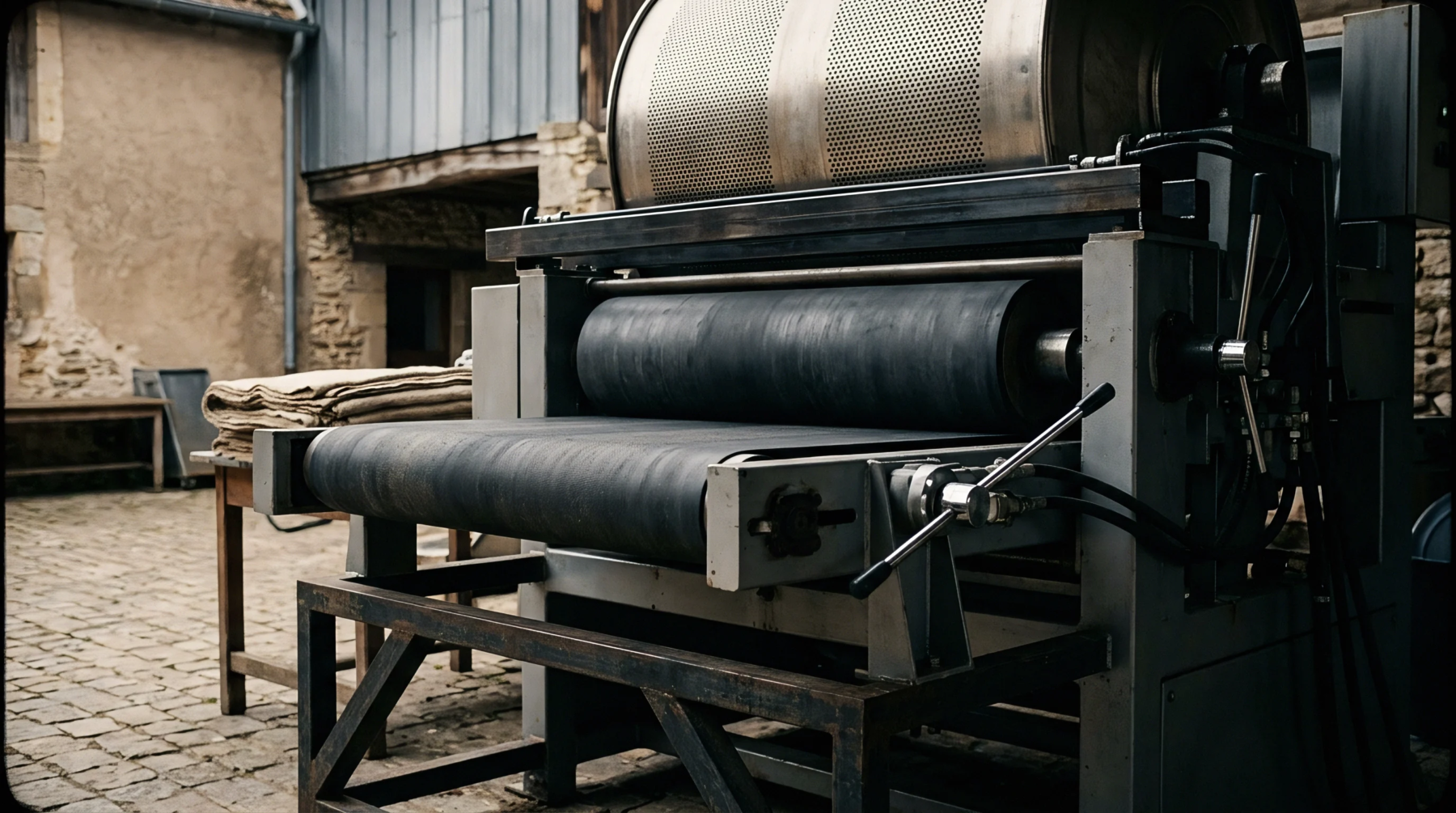
Compressive Force
Applying measured mechanical force across synthetic top rolls and fluted bottom cylinders controls fiber bundle slippage during strand attenuation. Mill technicians calculate drafting nip roller pressure in pneumatic or spring-weighted drafting systems to establish uniform friction within the drafting zone of flax spinning frames. The setting is documented on frame setup logs and spinning job cards to maintain consistent yarn linear density across production lots.
This measurement governs mechanical clamping force at the draft nip and ceases to apply once fibers leave the front roller nip point.
Attenuation Control
Load distribution along the top roller shaft prevents unattached bast fibers from moving faster than the front roller surface speed. When drafting nip roller pressure drops below prescribed kilopascal thresholds, thicker fiber bundles slip through unattenuated, producing slubs and thick places in the grey yarn. Excessive force accelerates synthetic apron wear and crushes delicate flax filaments, raising nep counts during yarn clearing.
Pneumatic pressure gauges provide continuous feedback, allowing operators to adjust load settings across all spinning positions simultaneously.
Slip Limit
Maximum load capacities depend on roller rubber hardness ratings and fiber friction coefficients. Beyond structural deflection thresholds of the top roller arm, additional force degrades yarn quality rather than improving fiber control.