Fibre Classification
Single bast cells represent the fundamental biological unit obtained after the chemical or mechanical separation of the raw flax stem into individual strands for subsequent industrial processing. These elementary flax fibre structures possess distinct morphological properties including a narrow central lumen and thick walls composed of cellulose, pectin and hemicellulose. Technicians assess these units under microscopic analysis during the initial refining phase to determine potential tensile strength for high-count spinning.
Standardized protocols define the separation point where plant stalks yield these individual cylinders rather than larger bundles. Consistent measurements of length and diameter confirm the suitability of these cells for delicate yarn production where uniformity dictates the efficiency of high-speed looms.
Extraction Parameter
Producers rely on the removal of non-cellulosic binders to isolate the elementary flax fibre from the surrounding woody shive and epidermis. This procedure dictates the performance of the resulting yarn during the subsequent combing and drawing operations. If the separation process fails to reach the individual cell level, the resulting bundles create irregularities in the spinning draft which causes frequent snapping.
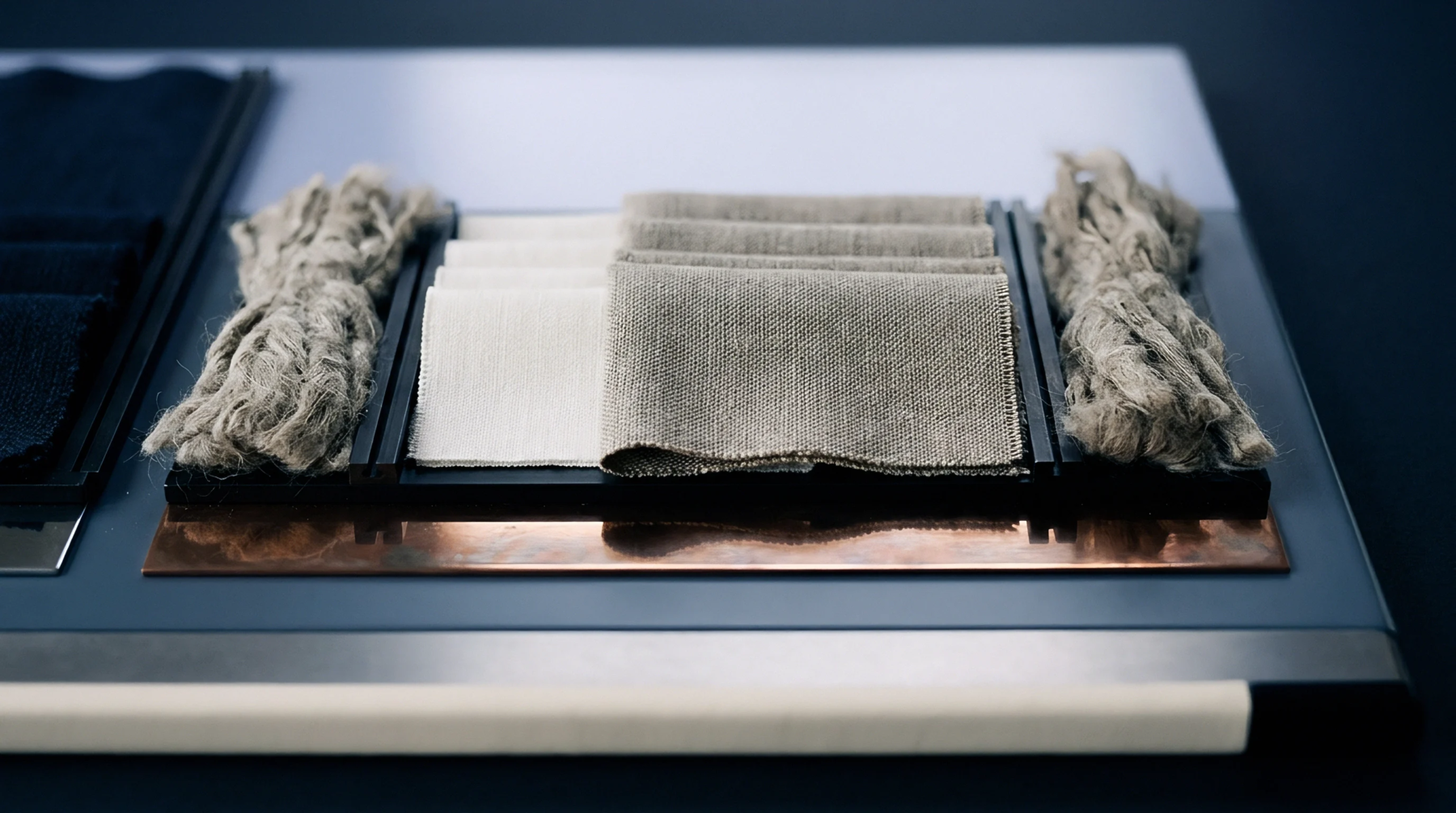
Quality control departments verify the presence of these isolated cells by examining samples against established reference imagery in the production laboratory. Each batch undergoes rigorous inspection to ensure the maceration or mechanical treatment maintains the structural integrity of the cell walls without degrading the polymer chains. High quality output requires the total liberation of these units to facilitate the creation of fine gauge linen fabric that meets global textile demands.
Production Boundary
Grading systems rely on the ratio of individual cells to technical fibre bundles to sort raw material for specific mill requirements. While technical fibres work for heavy canvas or industrial twine, the elementary flax fibre allows for the creation of luxury apparel textiles with superior moisture management and drape characteristics. Commercial value rests on the concentration of these individual units within a specific weight of processed material.
Mills differentiate between their internal quality benchmarks and the external contractual requirements imposed by buyers who demand specific micron counts. Precise separation remains the governing factor in the price of premium linen batches.