Standard Classification Mechanics for Raw Dew Retted Flax Straw
Classification of raw dew retted flax straw relies on stalk morphology, moisture limits, and chemical pectin degradation to predict mechanical scutching yields.

Stalk

Morphological Parameters and Bundle Architecture
Raw flax stems undergo strict physical evaluation upon farm-gate arrival to establish initial processing grades. Stalk length governs the maximum theoretical length of recovered long fiber ribbons after mechanical scutching. Stems ranging from seventy to one hundred centimeters yield optimal fiber bundle lengths for high-count dry and wet spinning.
Short stalks below sixty centimeters increase the proportion of tow fiber during decortication, dropping commercial value per tonne. Stem diameter distribution determines fiber fineness and uniformity across harvested lots. Stems measuring between one point two and two point zero millimeters present thin cortical layers that ret evenly across windrows.
Coarse stems exceeding two point five millimeters feature thick woody cores that demand aggressive mechanical crushing, which fractures bast fiber ribbons and reduces long fiber output.
Root end alignment within harvested bales affects processing efficiency at the scutching intake. Mechanical pulling machines stack harvested plants with root ends parallel, preserving fiber alignment along the entire stem axis. Disoriented stalks cause tangling during breaker roller feeding, increasing fiber breakage and generating excess waste.
Cortical layer integrity protects internal bast fiber bundles from premature degradation prior to processing. Stalks with unbroken epidermal surfaces prevent opportunistic mold spores from consuming internal cellulose ribbons during field storage.
| Grade Class | Mean Stalk Length (cm) | Stem Diameter Range (mm) | Root Alignment Defect (%) | Commercial Usage Target |
|---|---|---|---|---|
| Class Extra | 85 to 100 | 1.2 to 1.8 | Less than 3.0 | High-count wet spun yarn |
| Class I | 75 to 84 | 1.5 to 2.0 | 3.0 to 5.0 | Medium-count apparel warp |
| Class II | 65 to 74 | 1.8 to 2.3 | 5.1 to 8.0 | Coarse apparel and furnishings |
| Class III | Below 65 | Greater than 2.3 | Greater than 8.0 | Short tow and technical nonwovens |

Field Defects and Physical Straw Contamination
Unfavorable weather during growth or harvesting introduces mechanical and biological degradation that degrades long fiber value. Lodging occurs when severe wind or heavy rainfall flattens mature standing flax prior to pulling. Flattened stalks lie against damp soil, inducing soil contamination and localized anaerobic decay.
Biological degradation weakens bast fiber bundle tenacity while causing severe color discoloration across affected crop zones.
- Lodging damage flattens standing crop before harvest, creating localized fungal decay and uneven dew exposure across the stem core.
- Weed contamination introduces coarse foreign botanical material into straw bales that clogs scutching turbine knives and lowers line efficiency.
- Soil inclusion brings abrasive silica grit into straw bundles that accelerates mechanical scutching blade wear and compromises yarn cleanliness.
- Desiccation decay develops during protracted field drying, rendering cortical parenchyma brittle and shattering bast fiber filaments under mechanical stress.
Straight, uniformly aligned stalks with minimal branch sprouting produce the highest yield of unbroken long fiber ribbons during mechanical decortication.


Retting
Microbial Kinetics and Pectin Degradation Mechanics
Saprophytic fungal colonization transforms the intercellular matrix of harvested flax stems under ambient moisture. Fungal species such as Cladosporium herbarum and Epicoccum nigrum secrete polygalacturonase and pectate lyase enzymes that dissolve the middle lamella. The middle lamella binds cortical bast fiber bundles to the inner woody shive core.
Controlled enzymatic hydrolysis allows mechanical separation of fiber ribbons without destroying structural cellulose polymers.
Silver-grey straw coloration with loose bark adhesion indicates complete retting, whereas green cast stalks signal under-retted bast fibers.
Retting progress requires precise field monitoring to prevent under-retting or over-retting. Under-retted straw retains high pectin levels, causing bast fibers to adhere tightly to woody shive fragments. Mechanical scutching of under-retted straw demands higher impact forces, which breaks fiber bundles and reduces long fiber yield.
Over-retting occurs when fungal enzymes attack the primary cell walls of bast fibers, consuming structural hemicellulose and weakening individual filaments. Over-retted fiber turns dark grey or black, displaying reduced tensile strength and elasticity.
Weather Moisture Variation and Retting Homogeneity
Precipitation frequency and dew condensation levels govern the speed of enzyme production across field windrows. Alternating wet and dry cycles promote fungal hyphae expansion through stem tissues. Extended dry spells halt microbial action, leaving raw straw under-retted despite prolonged field exposure.
Excessive rainfall leaches soluble carbohydrates and washes fungal populations from windrows, prolonging retting times while increasing soil contact contamination.
| Retting Degree | Visual Color Signature | Fried Test Extract Color | Residual Pectin Content (%) | Fiber Tenacity Retention (cN/tex) |
|---|---|---|---|---|
| Degree 1 (Under) | Bright yellow to green | Pale yellow / clear | Greater than 4.5 | Greater than 32.0 |
| Degree 2 (Optimal) | Uniform silver-grey | Light brown / amber | 2.0 to 3.0 | 28.0 to 31.9 |
| Degree 3 (Slight Over) | Dark grey with black flecks | Dark brown | 1.2 to 1.9 | 22.0 to 27.9 |
| Degree 4 (Severe Over) | Charcoal black to dull brown | Deep black / turbid | Less than 1.2 | Less than 22.0 |
| Fried test extract color measured via spectrophotometer at 420 nm following standard sodium hydroxide digestion. Fiber tenacity measured on unhackled ribbons using ISO 3060 bundle tensile protocols. | ||||
Farming operators turn windrows mechanically using specialized equipment to achieve uniform retting throughout the straw layer. Un-turned windrows experience rapid retting on top surfaces exposed to sun and dew, while undersides remain green and under-retted. Mixed retting degrees within a single bale create severe scutching difficulties, as line adjustments optimized for one portion destroy over-retted material or fail to clean under-retted stalks.
Mishandling raw straw retting qualification leads directly to severe scutching line jams, elevated tow fiber generation, and substantial commercial price write-downs.


Bench
Quantitative Laboratory Evaluation and Chemical Methods
Standardized physical testing confirms subjective field scores before mills accept straw deliveries into long-term storage. The Fried test provides a standardized metric for pectin degradation in raw flax straw. Straw samples undergo boiling in dilute sodium hydroxide solution to dissolve unretted pectins and extract soluble phenolic compounds.
Spectrophotometric analysis of the resulting liquor measures light absorbance, yielding a numerical score directly correlated with retting completeness.
At twenty-two percent moisture content, baled raw flax straw initiates anaerobic fermentation that degrades long fiber bundle tenacity within fourteen days.
Moisture determination forms the second critical bench metric. High moisture content accelerates post-harvest fungal decay inside compressed bales, leading to heating, spontaneous combustion risks, and fiber rotting. Standard loss-on-drying oven procedures measure moisture by drying straw samples at one hundred five degrees Celsius until reaching constant mass.
Near-infrared spectroscopy delivers rapid non-destructive moisture and chemical composition estimates, enabling high-volume intake screening at scutching facilities.
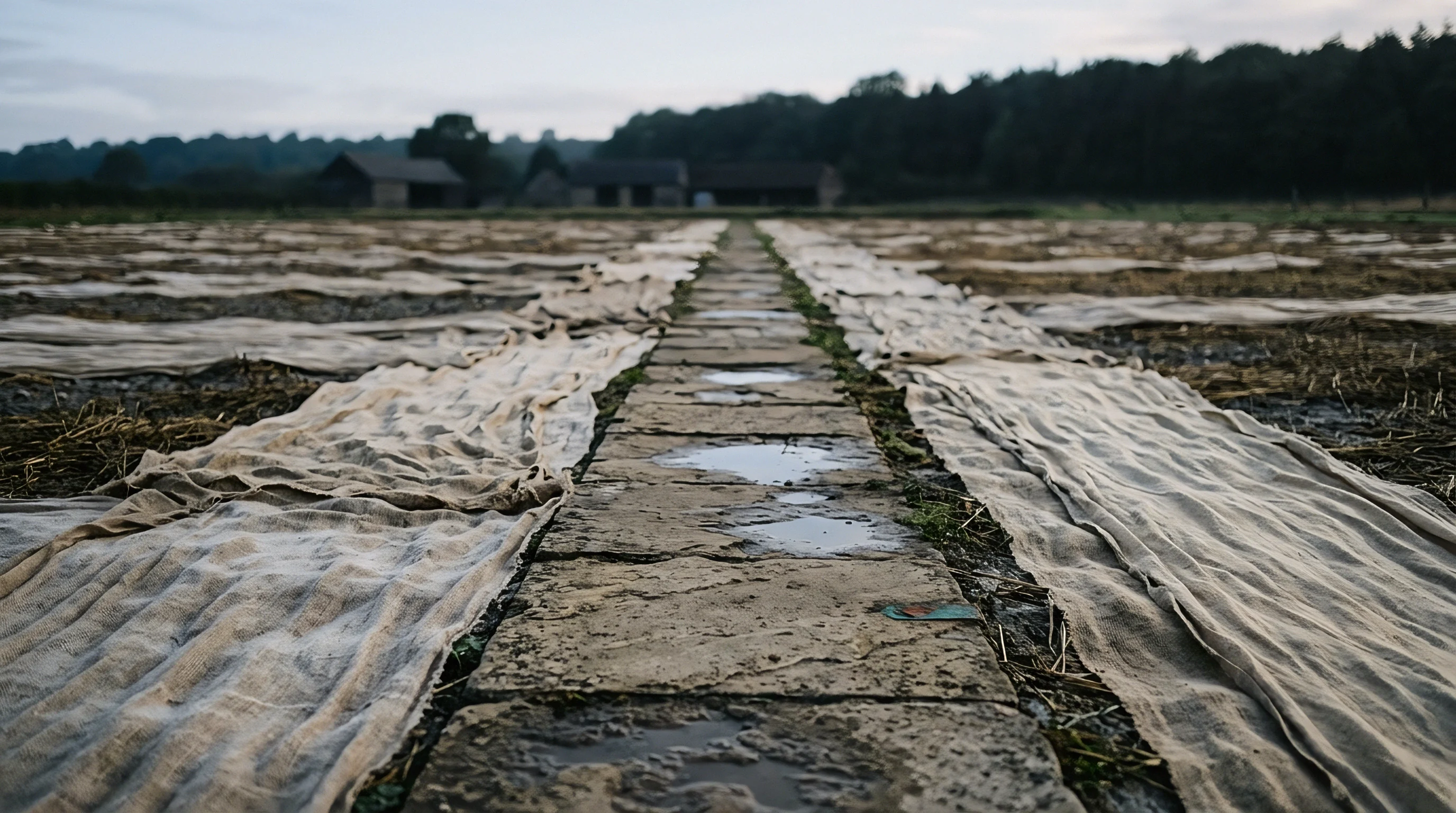
Standardized Laboratory Sample Preparation Procedure
Extracting representative core specimens from compressed agricultural packages isolates clean material for moisture and chemical analysis.
- Extract five hundred grams of raw flax straw from three distinct depths of the target bale using a mechanical core sampler.
- Condition the collected sample at twenty degrees Celsius and sixty-five percent relative humidity for twenty-four hours to stabilize moisture equilibrium.
- Separate root ends and top branch structures manually to isolate the central stem section for tensile and chemical testing.
- Measure total moisture content using calibrated loss-on-drying oven methods at one hundred five degrees Celsius until mass constancy occurs.
- Perform chemical extraction using standard sodium hydroxide solution to determine residual pectin mass percentage.
Fiber bundle tenacity testing assesses structural strength using bundle tensile testers. Technicians clamp parallel stem sections and record the force needed to cause catastrophic bundle rupture. Low breaking force indicates over-retting or biological damage during field storage.
Damp straw bales may appear to dry naturally during transit, but underlying mold growth already permanently damages internal cellulose structures.

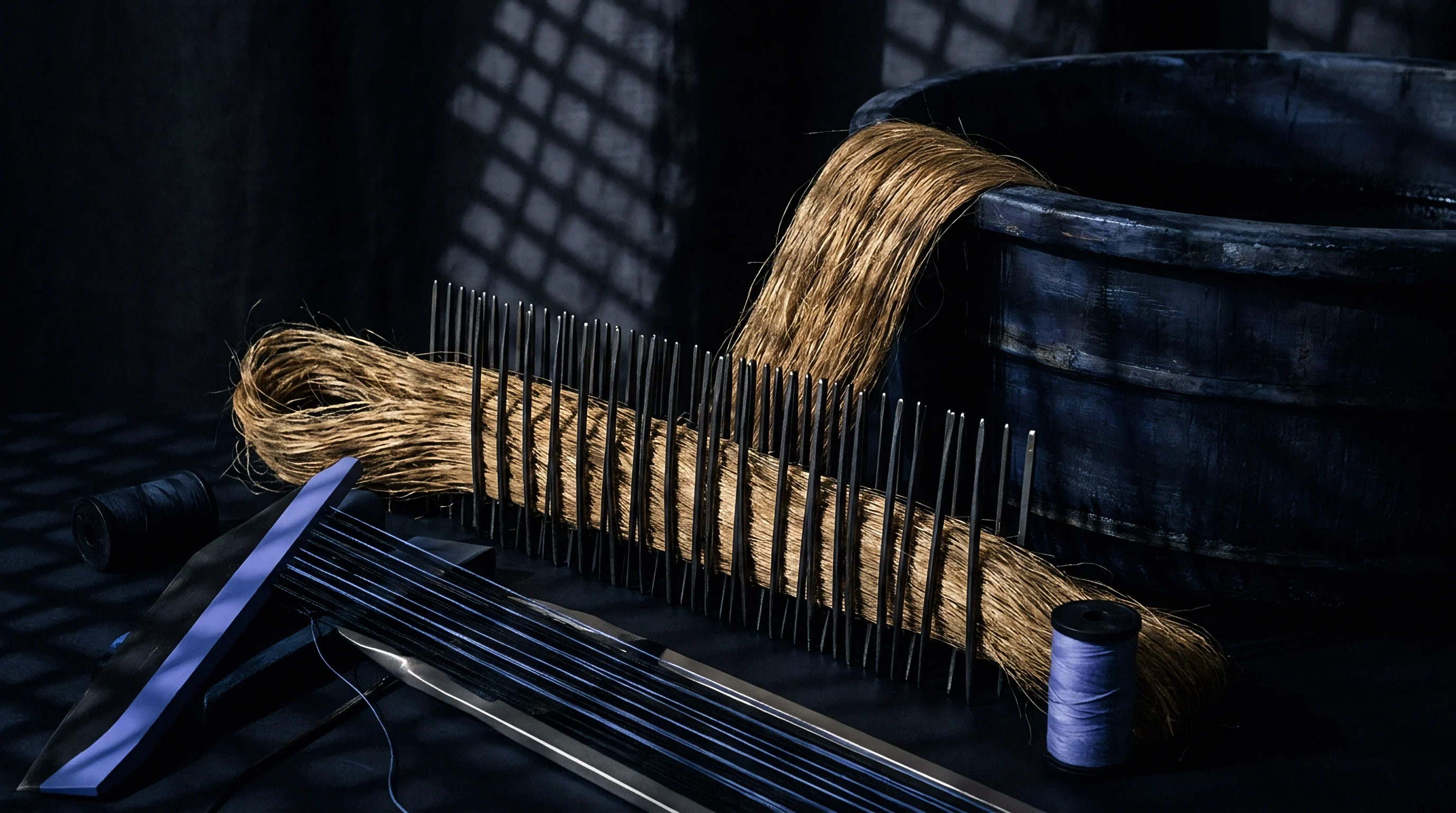
Conversion
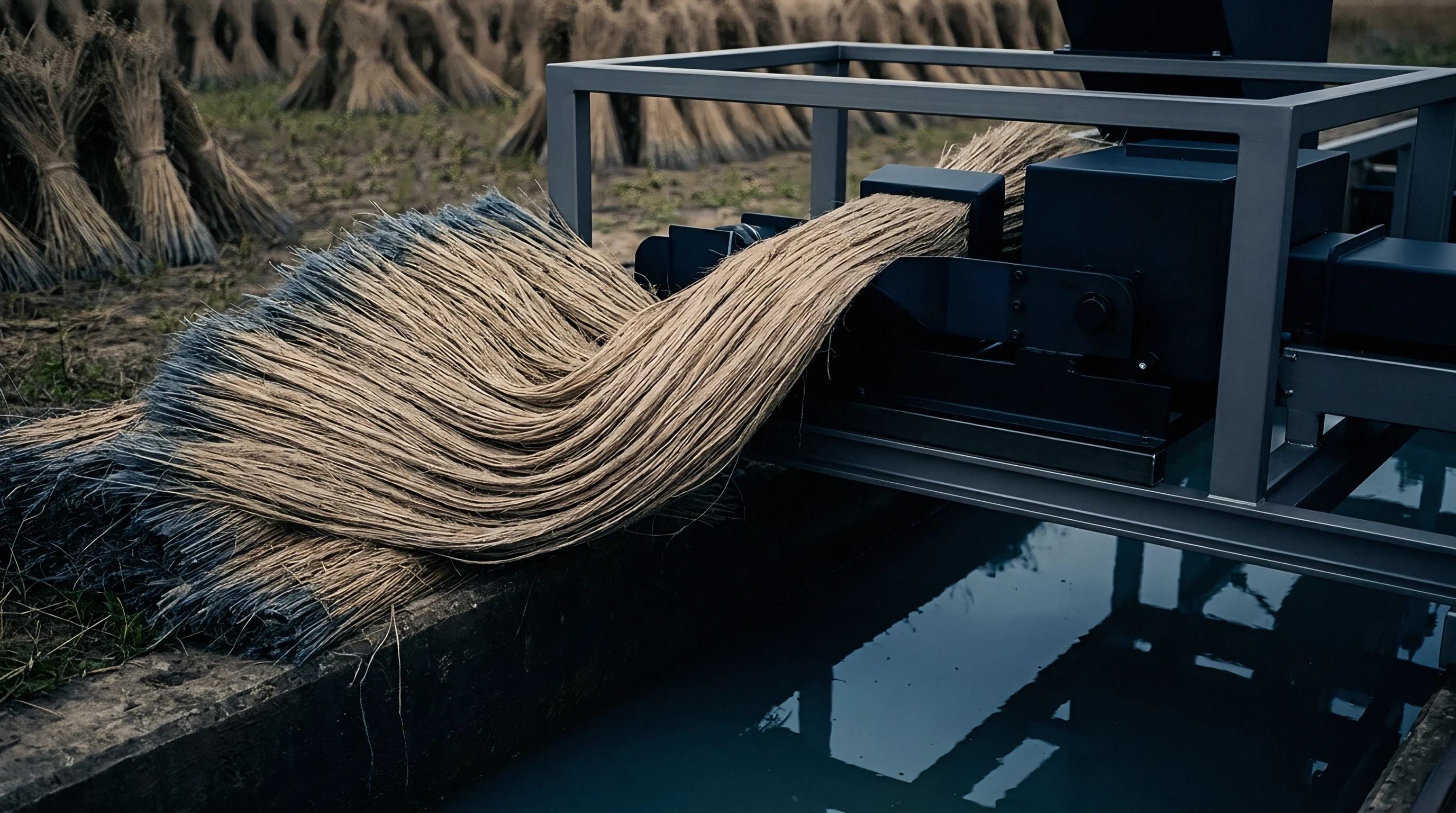
How Does Retting Uniformity Impact Scutching Yield?
Mechanical extraction processes separate woody core shives from cortical bast ribbons through sequential crushing and beating actions. The scutching mill feeds raw straw perpendicularly into pairs of fluted breaker rollers. These fluted rollers crimp and break the brittle wooden xylem stem core into short fragments called shives without severing the surrounding flexible bast fiber sheath.
Following breaker rollers, straw enters scutching turbines equipped with rotating metal blades. These turbine blades strike the dangling straw bundles, knocking loose broken shive fragments and stripping away non-fibrous epidermal tissues. Uniformly retted straw allows shives to detach cleanly under moderate striking force, preserving long fiber ribbon length and generating minimal tow waste.
Under-retted portions hold onto shives, forcing operators to increase turbine speeds. High turbine speeds smash over-retted portions into short tow fibers, reducing long fiber yield percentage and lowering overall batch value.

Industrial Scutching Line Operational Qualification
Calibrating breaker roller clearances prevents fiber filament breakage while maximizing shive separation.
- Moisture threshold validation ensures raw straw entering breaker rollers stays below fourteen percent moisture to prevent fiber wrapping around fluted drums.
- Roller gap setting aligns breaker cylinder spacing directly with mean stem diameter to fracture the woody core without severing bast ribbons.
- Turbine speed control balances scutching knife velocity against straw feed rates to maintain long fiber yield above target mechanical efficiency thresholds.
- Shive extraction efficiency monitors pneumatic exhaust suction to pull broken woody fragments clear of long fiber ribbons prior to baling.
Evaluating a ten thousand kilogram lot of raw dew-retted straw illustrates the financial consequences of retting variations during decortication. Assume the target raw straw contains twenty-four percent total fiber content by dry weight, theoretically split into sixteen percent long fiber and eight percent short tow fiber. Processing this lot at optimal retting Grade 2 achieves fifteen point two percent long fiber recovery (one thousand five hundred twenty kilograms) and seven point eight percent tow recovery (seven hundred eighty kilograms).
Processing an under-retted lot at Grade 1 under identical machine settings drops long fiber recovery to ten point five percent (one thousand fifty kilograms) while elevating tow fiber generation to eleven point two percent (one thousand one hundred twenty kilograms). The shift converts four hundred seventy kilograms of high-value long fiber into low-value short tow, reducing gross lot revenue from scutching outputs by over twenty-two percent under standard market price ratios.
Whether high-speed automated optical sorting can replace human subjective grading at the scutching intake remains unproven across commercial high-throughput mills.


Dossier

Documentary Traceability and Scope Certificate Verification
Customs declaration and market access standards rely on uninterrupted paperwork linking individual harvested lots to processing plants. Origin verification requires comprehensive documentation proving that raw straw was grown, harvested, and dew-retted within designated geographic zones, such as Western European coastal flax regions. The European Flax standard enforces field-to-fiber traceability using chain of custody protocols validated by independent third-party certification bodies.
Contractual compliance under Western European raw straw trade terms releases buyer payment obligations only after scutching yield tests verify long fiber recovery above fourteen percent.
Scope certificates (SC) confirm that a grower or scutching facility possesses the operational capability and administrative systems to produce certified materials. Transaction certificates (TC) accompany specific shipments, detailing net weight, batch identification numbers, crop year, and physical property declarations. Auditors cross-reference weighbridge intake tickets against scope certificate limits to prevent uncertified straw from entering certified production streams under mass balance accounting rules.

Mandatory Sourcing Documentation for Batch Audit
Chain of custody continuity requires concrete physical and digital records generated during each transaction step.
- Farm plot declaration specifies exact field geography, harvest date, and crop variety registration numbers linked to specific raw straw bale lot identifiers.
- Weighbridge ticket receipt captures gross weighbridge mass, tare weight of transport vehicles, and net delivered straw mass upon mill store arrival.
- Retting verification certificate documents visual grade scoring, moisture readings at baling, and field storage duration prior to transport loading.
- Transaction scope document transfers physical custody between grower and scutching mill while tracking certificate validity dates and lot volumes.
Incorporating the standard European Flax chain of custody clause 4.2 obligates sellers to maintain physical batch separation in bale stores or face immediate buyer rejection of non-segregated shipments.

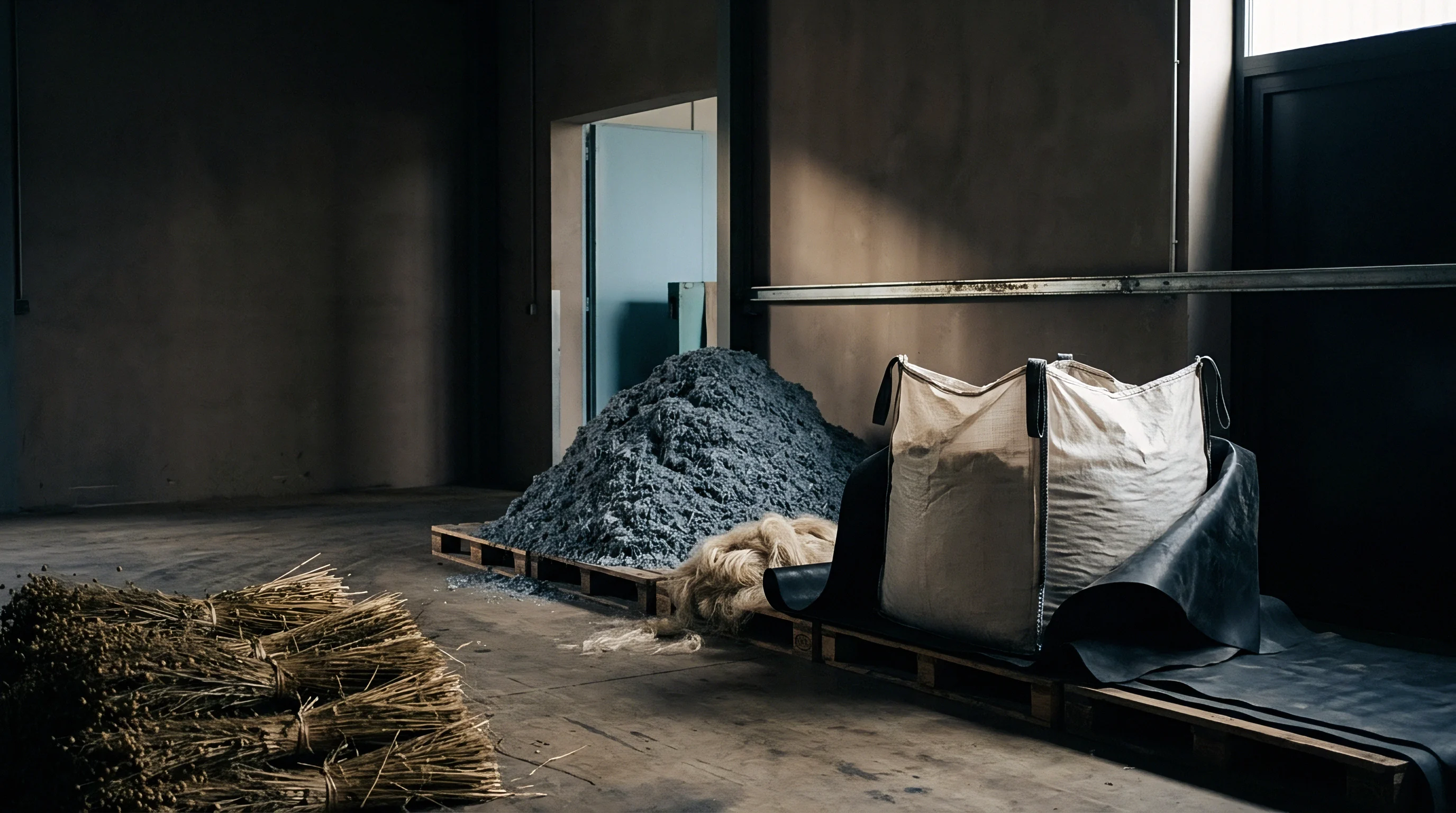
Valuation

Commercial Price Structures and Quality Adjustments
Contractual settlement prices derive from base market rates adjusted for physical defect percentages and laboratory yield metrics. Base prices apply to standard Grade Class I raw straw delivered at standard moisture levels between twelve and fourteen percent. Moisture content above fourteen percent incurs direct mass deduction penalties, adjusting invoice weights down to dry baseline equivalents to avoid paying dry-fiber rates for water mass.
| Parameter Tested | Target Specification | Penalty Threshold | Price Adjustment Metric |
|---|---|---|---|
| Moisture Content | 12.0% to 14.0% | Greater than 14.0% | 1.5% mass deduction per 1.0% excess moisture |
| Under-Retting Score | Degree 2 (Optimal) | Degree 1 (Under) | 8.0% price discount per grade level step |
| Stalk Length Shortfall | Greater than 75 cm | Less than 65 cm | 5.0% price deduction per 5 cm shortfall |
| Weed / Soil Contamination | Less than 1.0% by weight | Greater than 2.5% by weight | Rejection or re-cleaning fee of 45 EUR/tonne |
Physical contamination penalties protect mills against blade wear and fiber yield loss. Excessive weed or soil inclusion triggers financial discounts or outright batch rejection if foreign material exceeds three percent by net weight. Retting degree deviations alter unit prices significantly.
Under-retted straw incurs processing penalties to offset lower long fiber yields and higher machine power requirements during scutching operations.

Landed Cost Mechanics and Contractual Terms
Logistical transport costs and moisture shrinkage allowances alter the net financial outcome of raw straw procurement contracts. Shipping un-scutched raw straw involves moving high-volume low-density baled cargo, making transport efficiency critical to landed cost calculations. Contracts written under Incoterms FCA (Free Carrier) place freight expense and transport risk on the buyer from the farm gate, demanding tight transport coordination to prevent bale moisture absorption during transit in open flatbed trailers.
Settling commercial claims on raw flax straw requires complete physical lab records alongside original transport weighbridge tickets to defend price adjustments during invoice reconciliation.