Laboratory Oven Desiccation Testing Protocols for Scutched Line Flax
Laboratory oven desiccation at 105°C ± 2°C determines anhydrous mass to calculate commercial billing weight based on official 12.0% moisture regain allowances.

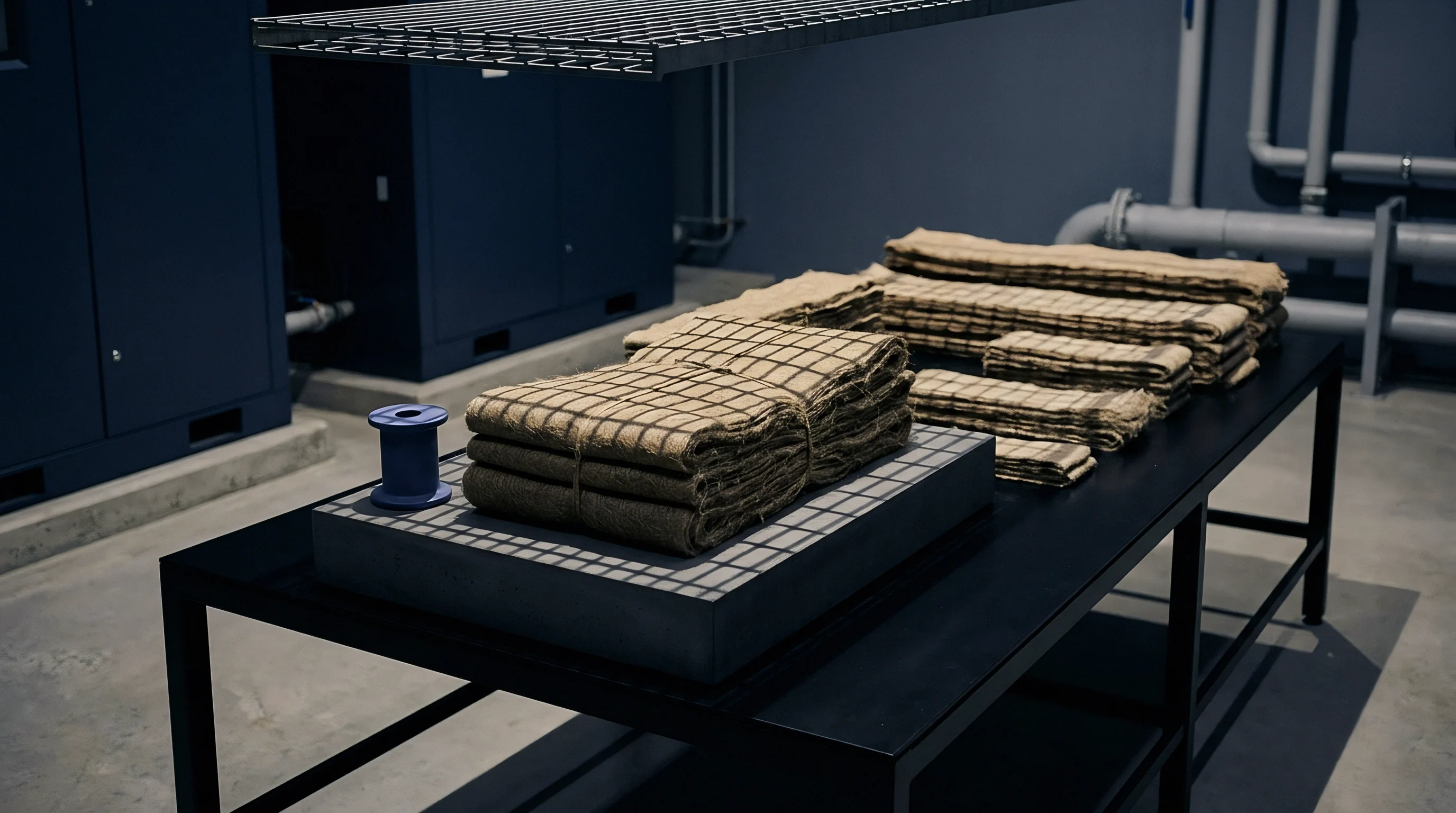
Chamber
Laboratory desiccation testing for long-staple scutched line flax relies on controlled thermal drying to drive off absorbed moisture until an absolute dry mass is established. Standard test procedures under ISO 6741-1 demand precision forced-air drying units capable of maintaining an internal air temperature of 105°C ± 2°C throughout the working space. Overall oven performance dictates whether residual water evaporates completely or remains trapped within dense strick cores.
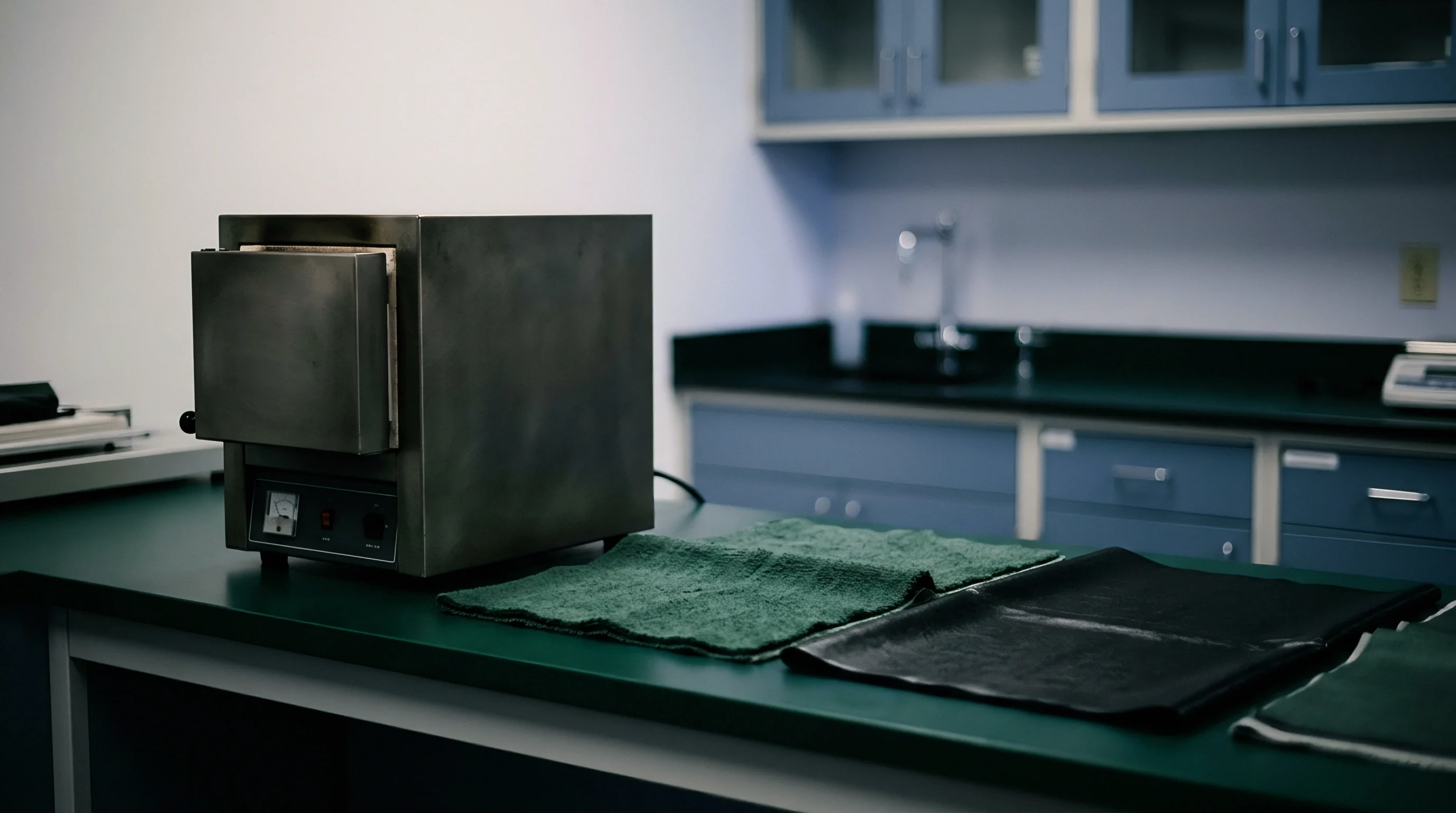
Forced Convection Dynamics and Heat Transfer
Air circulation inside the oven cabinet maintains controlled velocity between 0.5 and 1.5 metres per second across suspended fibre bundles. When airflow drops below 0.3 metres per second, boundary-layer microclimates form around dense flax stricks, retarding vaporisation and producing localized moisture retention. Excess air velocity dislodges fine flax fibril fragments or short tow elements from open bundles, generating artificial mass loss recorded as water loss.
Internal cabinet volume sustains between 20 and 30 full air renewals per minute, venting vaporized moisture out through dedicated exhaust ports while drawing preheated room air across heating elements.
| Parameter | Target Specification | Permissible Deviation | Operational Impact of Deviation |
|---|---|---|---|
| Temperature Regulation | 105.0°C | ±2.0°C | Thermal degradation of hemicellulose above 107°C; incomplete drying below 103°C |
| Air Exchange Rate | 25 exchanges/min | ±5 exchanges/min | Moisture saturation of internal atmosphere retards evaporation |
| Flow Velocity across Stricks | 0.8 m/s | ±0.2 m/s | Boundary layer insulation below limit; fibre displacement above limit |
| Integrated Balance Precision | 0.001 g | ±0.0005 g | Weighing resolution failure on 50g test specimens |
| Temperature Uniformity Zone | ±1.0°C across grid | ±0.5°C maximum spread | Uneven drying rates between top and bottom basket positions |

Thermal Uniformity across the Drying Zone
Internal temperature gradients inside uncalibrated ovens skew moisture determination values by up to 0.4 percent across identical samples. Multi-point thermocouple mapping across five internal basket tiers ensures that temperature variations remain strictly within specified limits. Heating elements placed too close to specimen shelves emit direct infrared radiation, heating surface fibres beyond ambient air temperature and driving off volatile waxes alongside moisture.
Thermally shielded baffles redirect incoming air streams around heating coils to achieve uniform convective energy distribution before contact with the flax bundle.
Laboratory moisture determination error propagates directly into the commercial invoice weight of scutched flax lots.
Historical moisture discrepancies frequently stem from ambient humidity absorption during ocean transit rather than improper oven thermal calibration during origin certified testing.


Regain
Scutched line flax exhibits marked hygroscopic behavior, absorbing atmospheric water vapor into its cell wall structure until reaching thermodynamic equilibrium with surrounding air. The cellular architecture of long-staple bast fibres consists of crystalline cellulose microfibrils embedded in an amorphous matrix of hemicellulose, pectin, and lipophilic waxes. Water molecules bind to hydroxyl groups within amorphous pectin and hemicellulose zones through hydrogen bonding, while secondary water layers condense within inter-fibrillar capillary pores.

Hygroscopic Behaviour of Bast Cell Wall Pectin
Structural polysaccharides inside flax fibre bundles dictate the rate and extent of moisture uptake under changing atmospheric relative humidity. Non-cellulosic constituents account for 15 to 25 percent of dry scutched flax mass, holding water far more tenaciously than purified crystalline cellulose. During desiccation, unbound capillary water evaporates rapidly during the initial 20 minutes of heating at 105°C, whereas tightly bound structural water held within the amorphous matrix requires sustained thermal energy to break secondary hydrogen bonds.
| Relative Humidity (%) | Absorption Regain (%) | Desorption Regain (%) | Hysteresis Lag (%) |
|---|---|---|---|
| 30% | 4.2% | 5.1% | 0.9% |
| 45% | 6.5% | 7.6% | 1.1% |
| 65% (Standard) | 10.2% | 11.8% | 1.6% |
| 75% | 12.8% | 14.3% | 1.5% |
| 85% | 16.1% | 17.9% | 1.8% |
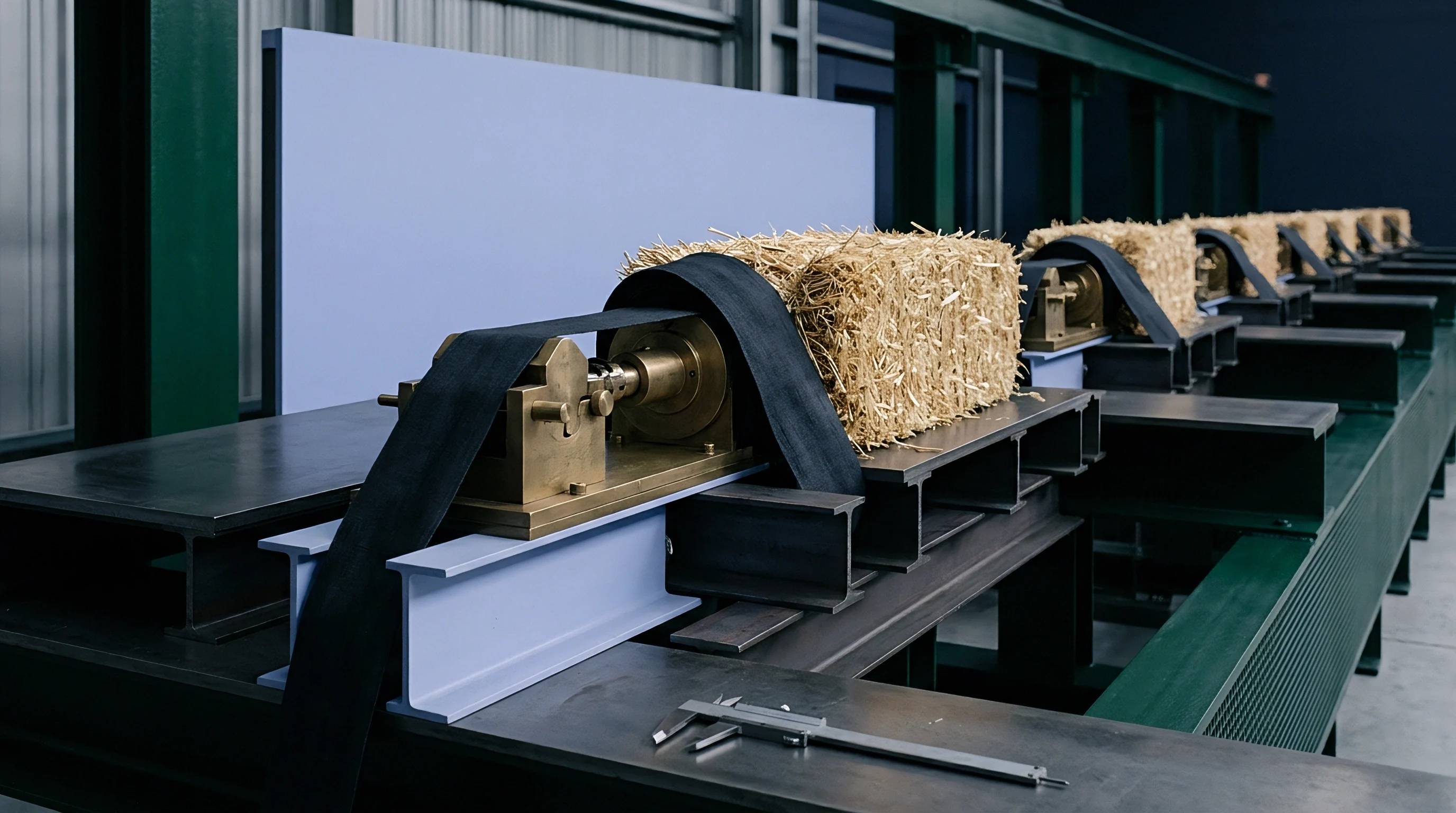
Desorption Curves in Scutched Stricks
Moisture equilibrium achieved through drying along a desiccation path yields higher water retention figures than equilibrium reached through moisture absorption from a bone-dry state. This hysteresis phenomenon means that scutched flax baled in humid retting yards retains elevated moisture levels that fail to re-equilibrate rapidly when moved to drier environments. Laboratory testing accounts for sample thermal history and initial moisture state before loading specimens into the desiccation chamber.
- Sample Exposure Delay during transfer from sampling bale to weighing vessel causes rapid moisture exchange with room air, artificially altering initial mass readings.
- Inadequate Specimen Separation within testing baskets leaves dense bundle cores isolated from hot air circulation, resulting in incomplete core desiccation.
- Balance Drift Under Heat occurs when internal oven balances lack thermal insulation, creating zero-point offset errors during hot weighings.
- Desiccant Saturation in cooling desiccators permits rapid moisture absorption by dried specimens prior to final room-temperature mass determination.
ISO 6741-2 defines standard commercial moisture regain for scutched flax at 12.0 percent by mass, adjusting final billing weight directly against dry test results.
Contractual acceptance under IWTO rules relies on Clause 12.4, which recalculates invoice weight by applying the official commercial regain figure directly to the oven-dry mass established during laboratory desiccation.


Volatility
High-temperature desiccation testing introduces thermal mass loss artifacts that distort true moisture content measurement in scutched line flax. When flax bundles undergo heating at or above 105°C, volatile organic compounds present in residual plant waxes and natural oils vaporize alongside free water. Surface waxes melt at temperatures between 60°C and 85°C, but higher thermal energy causes low-molecular-weight lipophilic fraction distillation, which records as false moisture loss on the balance.
How Does Temperature Elevation Degradation Alter Commercial Mass?
Prolonged exposure of raw plant fibres to thermal environments exceeding 105°C triggers non-enzymatic thermal decomposition of low-molecular-weight pectin and hemicellulose chains. Thermal breakdown releases volatile organic acids, traces of carbon dioxide, and structural water of crystallization bound within hemicellulose matrices. Testing protocols that extend heating cycles beyond 4 hours at 108°C systematically overestimate moisture content by 0.15 to 0.35 percent due to chemical mass degradation rather than moisture removal.
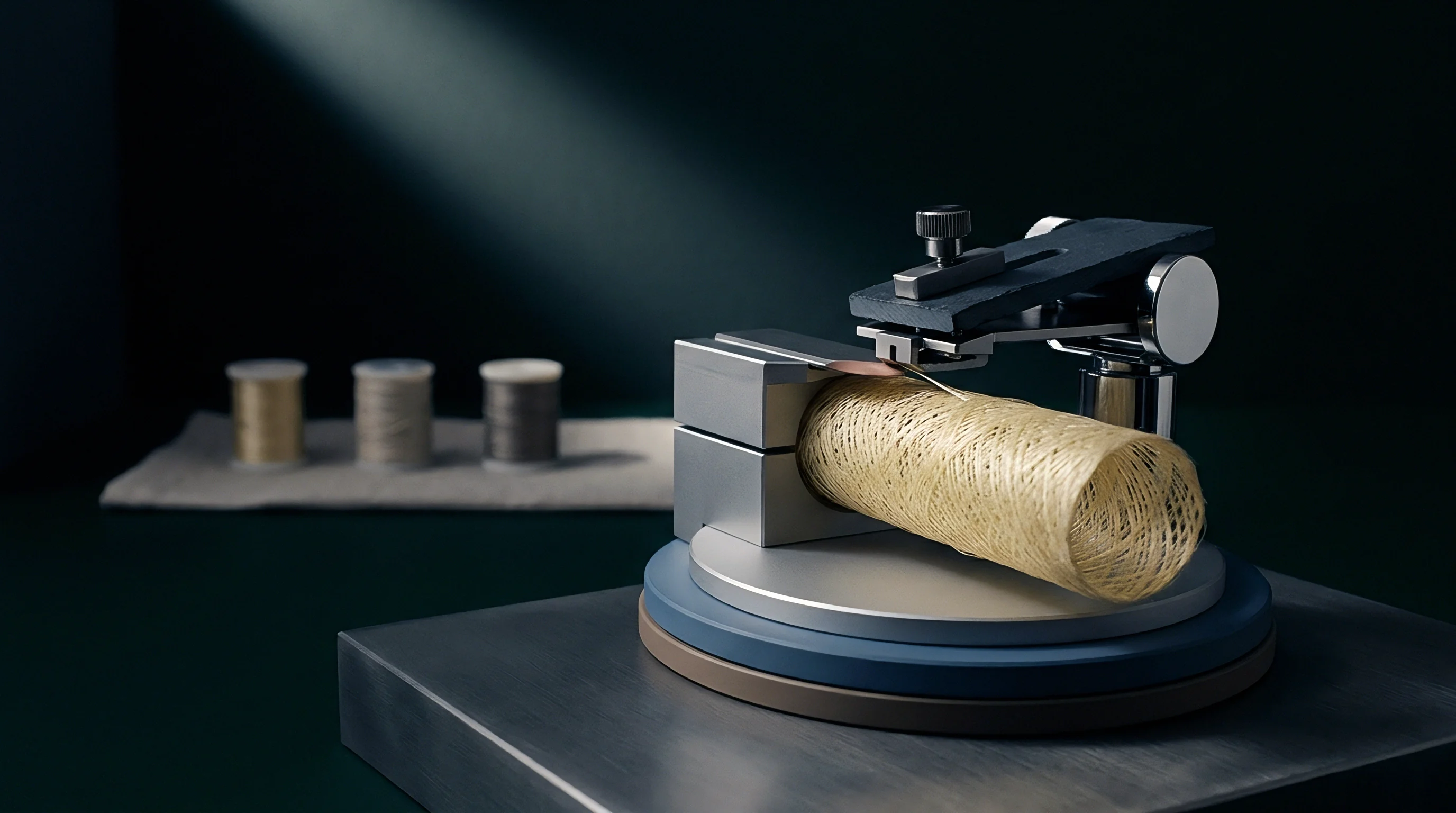
Non-Water Volatile Driven Mass Loss Errors
Quantitative extraction tests using petroleum ether demonstrate that unwashed scutched line flax contains between 1.2 and 2.4 percent wax and resin content by dry weight. Controlled gas chromatography analysis of oven exhaust gases confirms the presence of short-chain fatty acids, aldehyde breakdown products, and terpenes when drying temperatures reach 110°C. Maintaining oven control strictly at 105°C ± 1°C prevents significant wax distillation while maintaining effective water vaporisation rates.
- Extraction Pre-Check Audit verifies residual wax content prior to desiccation to establish baseline non-water volatile levels.
- Exhaust Condensate Screening captures vaporized organic compounds during heating to isolate true moisture evaporation from chemical breakdown.
- Thermal Gravimetric Tracing logs mass loss rates across ascending temperature steps to identify the exact onset of pectin pyrolysis.
- Lipid Content Compensation adjusts raw dry mass figures by deducting measured wax losses from total desiccation mass reduction.
Extending drying times past 180 minutes at 107°C yields a 0.28 percent false moisture reading through hemicellulose thermal decomposition.
Operating desiccation ovens above designated temperature limits generates cumulative thermal decomposition that inflates apparent moisture regain figures, forcing buyers to pay for destroyed plant matter disguised as excess water weight.


Equilibrium
Establishing true dry mass requires systematic monitoring of specimen mass until consecutive weighings show no further measurable change. Testing protocols define constant mass as the point where two successive weighings, performed at 15-minute or 30-minute drying intervals, differ by less than 0.05 percent of total specimen mass. Automated continuous-weighing ovens track weight decay curves in real time, identifying mass stabilization without opening the heated chamber door.

Constant Mass Criteria and Weighing Intervals
Systematic verification of drying completion follows precise time-step schedules matched to sample mass and bundle density. Initial mass checks begin after 60 minutes of uninterrupted drying at 105°C for 50-gram test specimens, or after 90 minutes for 200-gram full strick samples. High-density scutched bundles require manual combing or hand-tufting before testing to maximize surface area and ensure rapid moisture liberation.
| Time Interval (min) | Measured Mass (g) | Incremental Loss (g) | Mass Change Rate (%/15 min) | Status |
|---|---|---|---|---|
| 0 | 100.000 | 0.000 | 0.000% | Initial Unconditioned Specimen |
| 30 | 91.240 | 8.760 | 8.760% | Rapid Free Water Evaporation |
| 60 | 89.150 | 2.090 | 2.090% | Bound Water Liberation |
| 90 | 88.720 | 0.430 | 0.430% | Deep Matrix Desiccation |
| 105 | 88.610 | 0.110 | 0.110% | Approaching Dry Threshold |
| 120 | 88.580 | 0.030 | 0.030% | Constant Mass Achieved (<0.05%) |
| 135 | 88.575 | 0.005 | 0.005% | Test Terminated (Dry Mass 88.58g) |
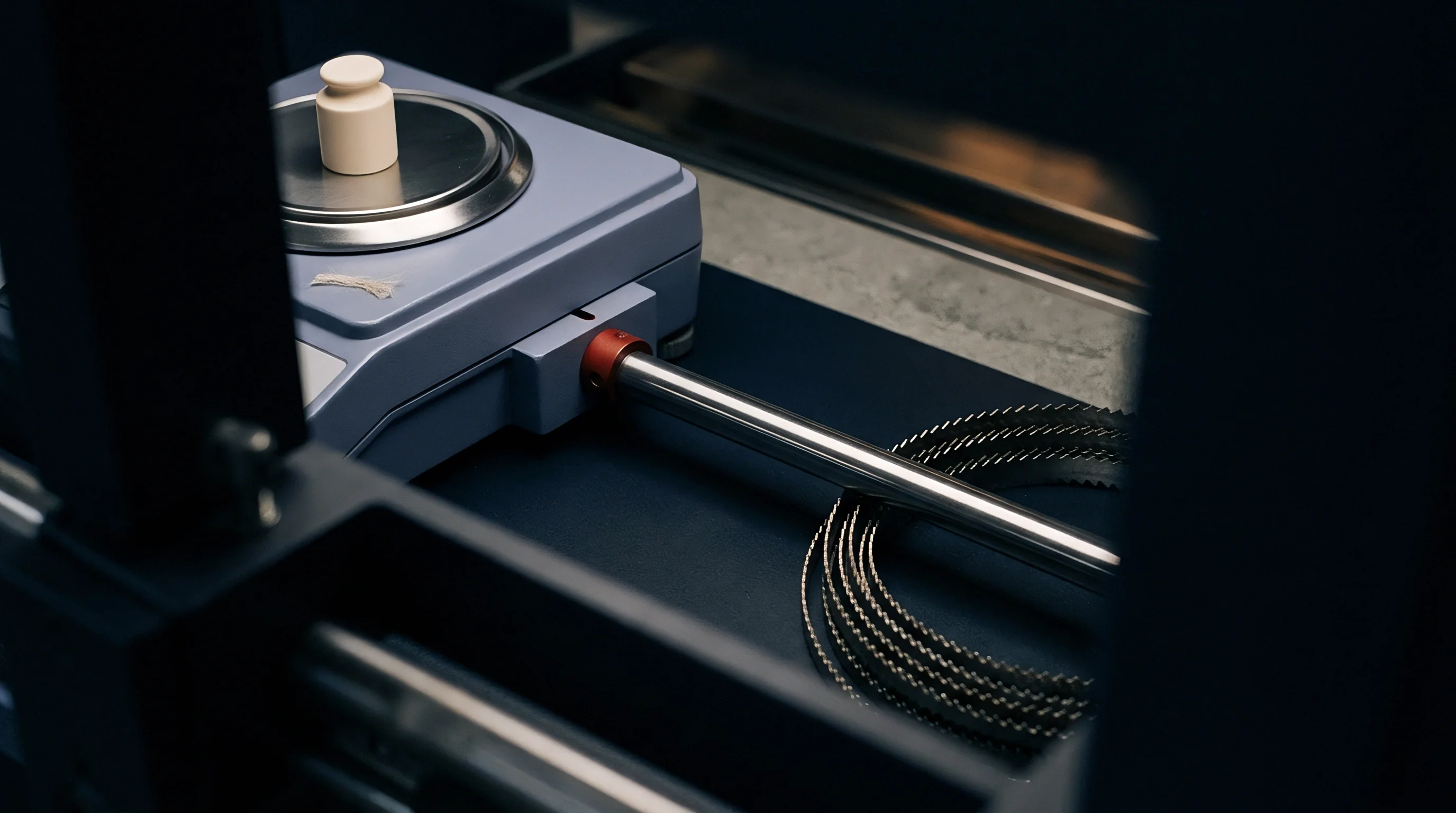
Atmospheric Exposure during Container Transfer
Transferring dried specimens from external heating cabinets to analytical balances introduces immediate moisture regain errors if samples contact ambient room air. Bone-dry flax absorbs up to 0.1 percent of its dry mass in atmospheric moisture within 30 seconds of ambient exposure at 65 percent relative humidity. Technicians enclose samples in airtight aluminum tare containers or stoppered glass weighing bottles prior to removal from the heating chamber, or perform weighings on balances integrated directly within the heated cabinet space.
- Extract representative strick samples from five distinct depths within three selected bales per 10-tonne lot, avoiding outer packaging surfaces.
- Separate individual fibre bundles into loose tufts of 15 to 20 grams, cutting long line strands to fit internal oven baskets without compaction.
- Tare the dry weighing container on an analytical balance calibrated to 0.001 gram precision before specimen insertion.
- Record initial specimen mass immediately upon sampling to prevent ambient moisture exchange with laboratory air.
- Place open specimen containers into the preheated forced-convection cabinet operating at 105°C ± 1°C.
- Initiate forced airflow at 0.8 metres per second and dry for 90 minutes before conducting the first mass verification check.
- Perform successive weighings at 15-minute intervals until two consecutive readings differ by less than 0.001 gram per 10-gram sample mass.
- Close container lids inside the heated cabinet or transfer containers immediately into a silica gel desiccator for 20 minutes before final weighing.
Fibre stricks that feel supple during sampling always harbor core moisture that demands extended drying time to reach constant mass.
Samples tested without complete bundle splitting will retain trapped core moisture despite surface dryness readings on analytical balances.
Commerce
Financial settlement of cross-border line flax shipments hinges directly on converting raw landed mass into invoice weight using laboratory desiccation test data. Raw scutched flax contracts specify a nominal commercial moisture regain allowance, typically set at 12.0 percent under ISO 6741-2. When laboratory oven desiccation reveals that delivered flax possesses moisture levels differing from the agreed allowance, contract clauses require direct pro-rata invoice price adjustments.
Commercial Mass Calculations from Anhydrous Weight
Determining correct billing mass demands rigorous application of official regain conversion formulas to laboratory dry weight determinations. Take a 20,000-kilogram lot of scutched line flax purchased at €4.80 per kilogram landed mass, with an agreed commercial regain allowance of 12.0 percent. Laboratory oven desiccation testing across representative lot samples reveals an average moisture content of 14.2 percent, corresponding to an actual moisture regain of 16.55 percent relative to dry mass.
The mathematical procedure converts raw mass to oven-dry mass, then applies the official commercial allowance factor:
Gross Delivered Mass: 20,000.0 kg Tested Moisture Content: 14.20% Calculated Oven-Dry Mass: 20,000.0 kg × (1 – 0.1420) = 17,160.0 kg Commercial Regain Allowance Factor: 1.120 (12.0% official regain) Corrected Commercial Invoice Weight: 17,160.0 kg × 1.120 = 19,219.2 kg Weight Adjustment Shortfall: 20,000.0 kg – 19,219.2 kg = 780.8 kg excess water mass Invoice Credit Adjustment: 780.8 kg × €4.80/kg = €3,747.84 deduction against supplier invoice
Conversely, if the laboratory desiccation test yields a moisture content of only 9.8 percent (10.86% regain), the calculation yields:
Calculated Oven-Dry Mass: 20,000.0 kg × (1 – 0.0980) = 18,040.0 kg Corrected Commercial Invoice Weight: 18,040.0 kg × 1.120 = 20,204.8 kg Buyer Surcharge Payable: 204.8 kg × €4.80/kg = €983.04 added to supplier invoice
Financial Impact of Moisture Deviation on Line Fiber
Uncorrected water content variations distort initial raw material costs and downstream spinning yield calculations. Line flax containing excessive moisture risks mold growth and fiber degradation during warehouse storage, while excessively dry flax suffers increased fibre breakage during hackling and drafting. Moisture determination accuracy directly protects processing margins across every subsequent mill transformation.
What structural modifications occur within bast cell wall microfibrils when line flax undergoes repeated cycles of industrial oven desiccation and re-conditioning prior to hackling?