Flax Fiber Grading and Long Staple Hackling Fundamentals
Long staple flax grading and precision hackling control sliver yield, wet-spinning yarn count limits, and delivered fabric cost per metre.
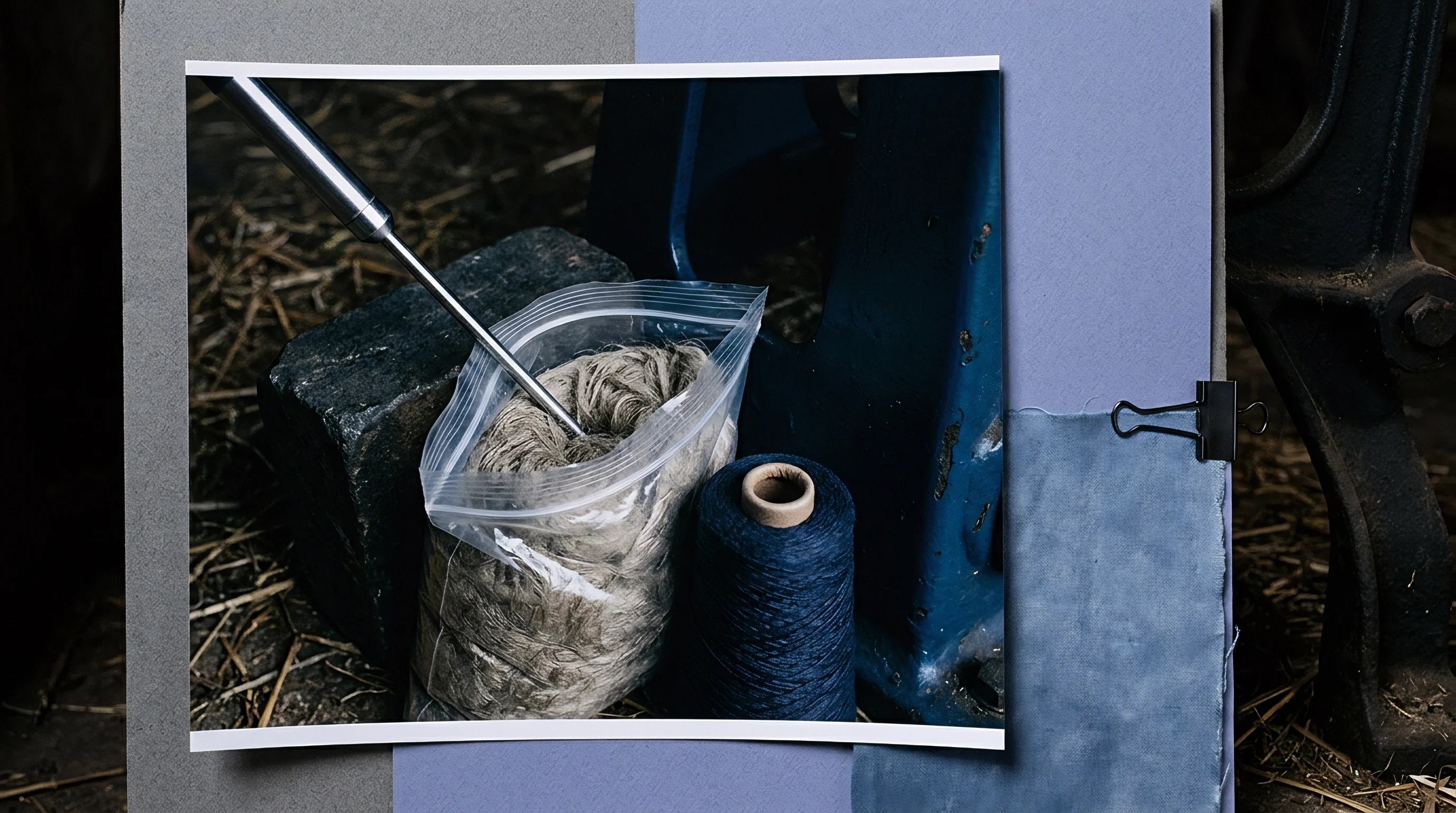

Selection
Raw bast fibre bundles delivered to a spinning mill vary in structural purity, colour, and how finely they divide. Scutched long flax arrives as parallelized strands 500 to 900 millimetres long, separated from the woody hemp stalk by decortication and scutching. Commercial grading classifies the fibre by visual appearance, tactile softness, evenness of retting, and measured bundle strength.
Bale inspection sets the spinning limit.

Physical Inspection Parameters
Graders evaluate raw flax lots by manual pulling and visual inspection under standardized lighting. Dew-retted flax takes on a silver-grey or slate tone from saprophytic fungal action, while water-retted stock displays a straw-yellow hue. Under-retted fibre retains tough pectic gums that bind cortical bundles together, leaving the material harsh and stiff with elevated shive contamination.
Over-retted fibre shows dark grey degradation and reduced bundle tenacity from excessive cellulosic breakdown.
Laboratory testing confirms what graders detect by hand. The linear density of scutched line bundles ranges from 1.5 tex to 4.0 tex for fine grades, reaching up to 8.0 tex for coarse technical stocks. Tensile strength evaluation per ISO 2370 measures single bundle breaking force across a short clamp distance of 10 millimetres.
High-grade line flax requires single bundle tenacity above 28 centinewtons per tex, while low-grade scutched tow often falls below 18 centinewtons per tex.
Under ISO 2370 test conditions at 65 percent relative humidity and 20 degrees Celsius, long-staple line flax bundles with tenacity above 28 centinewtons per tex sustain drafting speed over 40 metres per minute.
Visual evaluation precedes mechanical combing. Shive content measures the weight percentage of residual unretted woody core adhering to the fibre. Premium scutched line flax maintains shive contamination below 1.5 percent by mass, as coarser bundles can break comb needles.
| Commercial Grade | Mean Length (mm) | Linear Density (tex) | Tenacity ISO 2370 (cN/tex) | Max Shive Content (%) |
|---|---|---|---|---|
| Grade Superior Line | 750 – 900 | 1.5 – 2.2 | 30.0 – 36.0 | 0.8 |
| Grade Standard Line | 650 – 750 | 2.3 – 3.1 | 24.0 – 29.9 | 1.5 |
| Grade Utility Line | 500 – 650 | 3.2 – 4.2 | 18.0 – 23.9 | 2.5 |
| Scutched Tow (Short) | 100 – 250 | 4.5 – 8.5 | 12.0 – 17.9 | 5.0 |
Buying under-retted line stock causes excessive comb breakage during processing, pushing tow generation above thirty-five percent and driving net yarn costs past commercial viability.
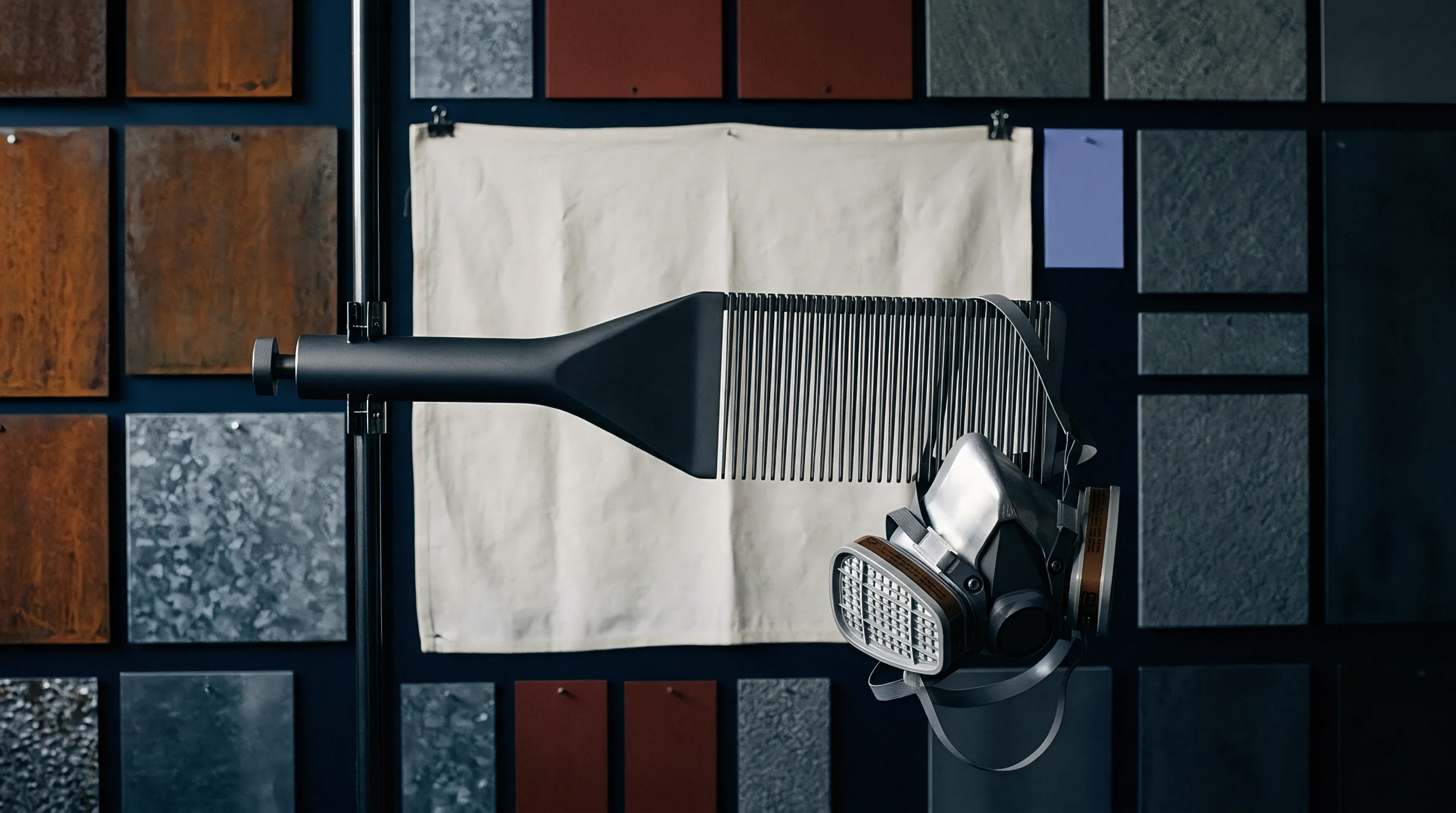
Pin
Hackling machinery separates, straightens, and cleans scutched flax strands using continuous comb fields mounted on revolving aprons. Individual flax strick bundles are clamped at their midpoint in heavy steel holders before moving sideways down a bilateral combing line. The top ends are combed first; the holders then open, shift position along the strick, and re-clamp so a second matching machine can comb the root ends.

Combing Density Progression
Comb bars transition from wide needle spacings to dense steel pin arrangements across twelve to sixteen hackling zones. Initial coarse bars use heavy pins spaced at 1.5 pins per centimetre to split large scutched bundles without snapping long fibres. Intermediate bars carry 4 to 8 pins per centimetre to strip out smaller shive fragments, while fine finishing bars use hardened pins spaced up to 14 pins per centimetre, dividing technical bundles down to elementary filaments averaging 15 to 25 micrometres in diameter.
Hackling yield measures the percentage of parallelized line sliver recovered from the original raw scutched fibre. Fine needle combing splits the material into two streams: combed line sliver held inside the clamps, and short, tangled hackling tow pulled away by the pins.
- Clamp slippage occurs when pneumatic holding pressure drops below six bar, causing fiber bundles to pull out and increasing tow output.
- Comb pin bending happens when unretted root ends hit high-density needle bars, creating irregular hackling channels.
- Fiber lapping develops on transfer rollers when static charges build up in dry spinning halls.
- Root end accumulation occurs when cleaning brushes fail to clear coarse tow from the comb bars between indexing steps.
Low hackling yield often stems from regional climate variation during field retting rather than uneven clamping pressure across processing heads.


Draft
Attenuating hackled sliver into continuous roving requires repeated passage through screw-gill drawing frames with progressively tighter needle spacing. Hackled sliver bundles pass through four sequential drawing stages to even out mass distribution. Doubling combines four to eight slivers at the entry of each frame, reducing linear mass irregularity by the inverse square root of the combined strands.
Hot water softens pectin during drafting.
Wet Spinning Trough Mechanics
Roving intended for high-count line yarn passes through a heated water bath just before entering the drafting zone of the wet-spinning frame. Trough temperatures between 60 and 75 degrees Celsius solubilize the intercellular calcium-pectate binder holding elementary fibres inside the technical bundle.
Softened pectic compounds allow elementary flax filaments to slide smoothly past one another during final attenuation under draft ratios of 10 to 18. Dry spinning lacks this water-softening step, restricting dry-spun tow operations to coarse yarns below Nm 24 (41.6 tex). Wet spinning lines routinely produce fine counts from Nm 40 (25 tex) to Nm 100 (10 tex).
| Target Count (Nm) | Spinning Route | Trough Temp (°C) | Draft Ratio | Sliver CV% (ISO 2060) | Spinnable Count Limit |
|---|---|---|---|---|---|
| Nm 10 (100 tex) | Dry Spun Tow | Ambient | 6.5 : 1 | 6.2 | Coarse Utility Yarn |
| Nm 26 (38.4 tex) | Wet Spun Tow | 55 – 60 | 9.0 : 1 | 4.8 | Medium Apparel Yarn |
| Nm 40 (25.0 tex) | Wet Spun Line | 65 – 70 | 12.5 : 1 | 3.5 | Fine Lawn & Sheeting |
| Nm 80 (12.5 tex) | Wet Spun Line | 70 – 75 | 16.0 : 1 | 2.8 | High-Lustre Shirting |
Twist insertion occurs right after the front drafting rollers using standard ring-and-traveller assemblies. Twist multipliers for wet-spun line flax range from 45 to 60 turn constants, giving the yarn cohesion before moisture evaporates from the freshly wound bobbin.
A standard purchase specification requiring maximum nep count below 15 per 1,000 metres of Nm 40 line yarn forces the mill to cap comb draft ratios at twelve to one.
Adding a delivery clause referencing ISO 2060 for linear density variation caps acceptable count deviation at plus or minus two percent, shifting re-sorting costs back to the spinner.

Moisture
Standard commercial regain for flax is 12.0 percent by mass under international trading terms. Dry bast fibres become brittle, causing widespread cell wall fractures when bent by hackling pins. Keeping relative ambient humidity between 70 and 75 percent in hackling and preparation halls maintains moisture within stable limits.
Regain Measurement Protocol
Gravimetric analysis establishes exact commercial mass for cross-border sales of scutched flax or line yarn. Testing follows procedure standards defined in ISO 6741-1 to settle discrepancies between invoice gross weight and true dry mass.
- Draw ten representative 100-gram hand samples from separate bales across the delivered batch.
- Weigh each sample immediately on a calibrated scale to record wet mass before exposure alters the reading.
- Place samples in a ventilated oven at 105 degrees Celsius until mass changes by less than 0.05 percent over twenty minutes.
- Transfer dried samples into a desiccator cabinet to cool for fifteen minutes without contact with ambient air.
- Weigh dried bundles to determine dry mass and calculate commercial regain percentage using the standard ISO formula.
Wet fibres regain structural elasticity as bound water plasticizes natural cell walls.
Flax hackled under dry atmospheric conditions generates static charges that push fine line fibres into the tow collectors.
Whether optimizing relative humidity during winter hackling fully offsets tenacity loss in stored dew-retted stock remains under active investigation in European spinning mills.

Tolerance
Technical specifications for wet-spun line flax yarn set tight limits to protect downstream weaving performance. Mass variation along the yarn directly affects fabric appearance, warp break rates, and dye uptake. Single-end strength tests conducted per ISO 2062 confirm yarn load capacity under tension.

Tensile Uniformity Standard
Automated single-strand testers pull individual yarn samples at a constant extension rate of 500 millimetres per minute. Results yield mean breaking strength and the coefficient of variation percentage (CV%). High-performance wet-spun line yarn maintains breaking strength CV% below eleven percent across fifty sample bobbins.
- Mass variation coefficient stays below twelve percent Uster CV for wet-spun line yarn targeted at high-speed rapier looms.
- Tenacity threshold maintains a minimum of 22 centinewtons per tex across fifty individual bobbin break tests under ISO 2062.
- Imperfection frequency caps combined thick places and neps at forty per 1,000 metres of spooled yarn.
- Twist multiplier accuracy keeps target turns per metre within a three percent window to prevent fabric skew during wet finishing.
Yarn showing visible streakiness on the bobbin will inevitably produce band defects across the woven fabric roll.
Outlay
Financial modeling for linen manufacturing begins at raw fiber purchasing and incorporates cumulative yield losses across processing steps. A major cost driver is the ratio of hackled line sliver output to short tow extraction. Scutched flax bought at 4.50 USD per kilogram incurs direct processing expenses through hackling, drawing, roving, and wet spinning.

Landed Cost Construction
Assuming a 10,000 kilogram raw lot of Grade Standard scutched line flax enters the mill at 4.50 USD per kilogram, processing through high-density comb lines at a 60 percent yield produces 6,000 kilograms of line sliver. The operation also yields 3,500 kilograms of hackling tow (35 percent yield) alongside 500 kilograms of unrecoverable dust and shive waste (5 percent loss). Hackling line conversion costs add 0.80 USD per kilogram of raw fibre input.
Tow recovery returns commercial value that partially offsets material costs. Hackling tow resells to rotor spinners or non-woven manufacturers at 1.80 USD per kilogram. The net material expense of hackled line sliver incorporates this byproduct credit:
Net Sliver Material Cost = (Total Raw Fiber Purchase + Total Hackling Cost – Tow Credit Revenue) / Hackled Line Mass
Applying values: (45,000 USD + 8,000 USD – 6,300 USD) / 6,000 kg = 46,700 USD / 6,000 kg = 7.78 USD per kilogram of hackled line sliver.
Subsequent wet spinning into Nm 40 line yarn involves 3 percent drawing loss and 2 percent spinning waste, producing 5,700 kilograms of spooled yarn (a 95 percent yield from sliver). Wet spinning operating costs ~ covering hot water thermal energy, ring frame power, and winding ~ add 3.20 USD per kilogram of finished yarn.
Finished Yarn Cost = (Sliver Mass Sliver Unit Cost / Spun Mass) + Spinning Operating Cost
Applying values: (6,000 kg 7.78 USD / 5,700 kg) + 3.20 USD = 8.19 USD + 3.20 USD = 11.39 USD per kilogram of wet-spun Nm 40 line yarn.
| Processing Stage | Yield Efficiency (%) | Direct Operation Cost ($/kg) | Net Material Value ($/kg) | Cumulative Cost ($/m² Fabric) |
|---|---|---|---|---|
| Raw Scutched Flax Input | 100.0 | – | 4.50 | – |
| Hackling Line (Sliver Stage) | 60.0 | 0.80 | 7.78 | – |
| Wet Spinning (Nm 40 Yarn) | 95.0 | 3.20 | 11.39 | 1.86 |
| Weaving & Finishing (150 g/m²) | 92.0 | 2.40 | – | 4.26 |
Weaving wet-spun Nm 40 yarn into a plain-weave dress linen weighing 150 grams per square metre requires 0.163 kilograms of yarn per square metre, accounting for 8 percent weaving waste. Yarn accounts for 1.86 USD per square metre. Adding weaving, scouring, bleaching, and tentering finishing costs of 2.40 USD per square metre brings the final landed cloth cost to 4.26 USD per linear metre at a one-metre width.
Tow byproduct recoveries return modest revenue per kilogram but never offset the financial damage of poor line yield on prime scutched lots.
Shifting raw material input from Grade Standard to Grade Superior increases initial bale purchase cost by 1.20 USD per kilogram while raising hackling line sliver yield from 60 to 68 percent. Higher sliver yield reduces tow generation, limits comb pin breakage, and extends spinnable count limits to Nm 60 ~ lowering final unit expenditure for premium lightweight shirting by 0.38 USD per square metre.