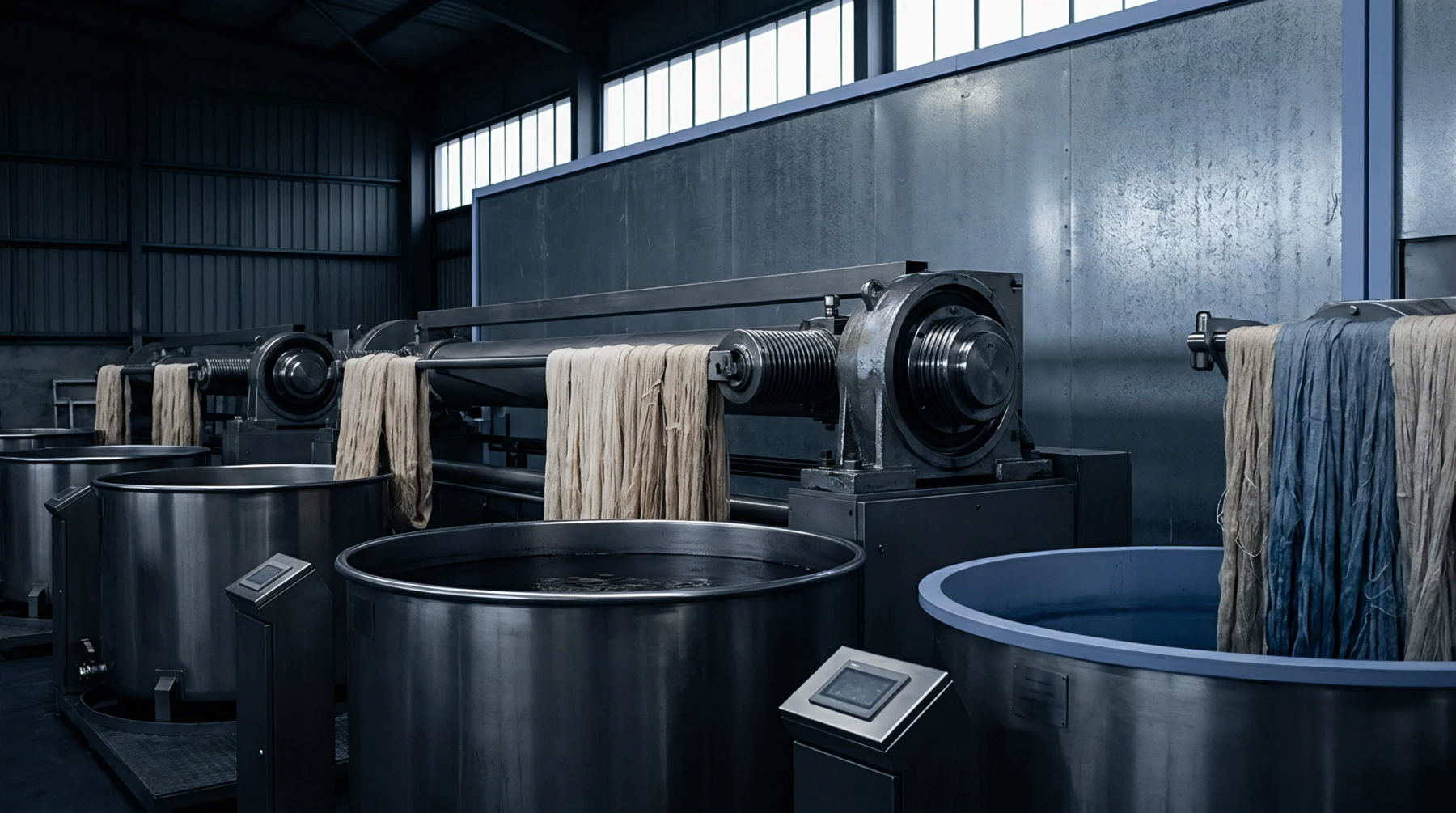
Establishing Commercial Chargeback Protocols for Loom Downtime Caused by Low Tenacity Warp Outliers
Loom downtime from low tenacity warp yarn is recovered by tying logged shed stoppages directly to ISO 2062 single strand tensile failure statistics.
Loom downtime from low tenacity warp yarn is recovered by tying logged shed stoppages directly to ISO 2062 single strand tensile failure statistics.

Air jet loom efficiency depends on sizing coat cohesion that balances film encapsulation with core penetration to prevent micro-dusting under high-velocity nozzle shear.
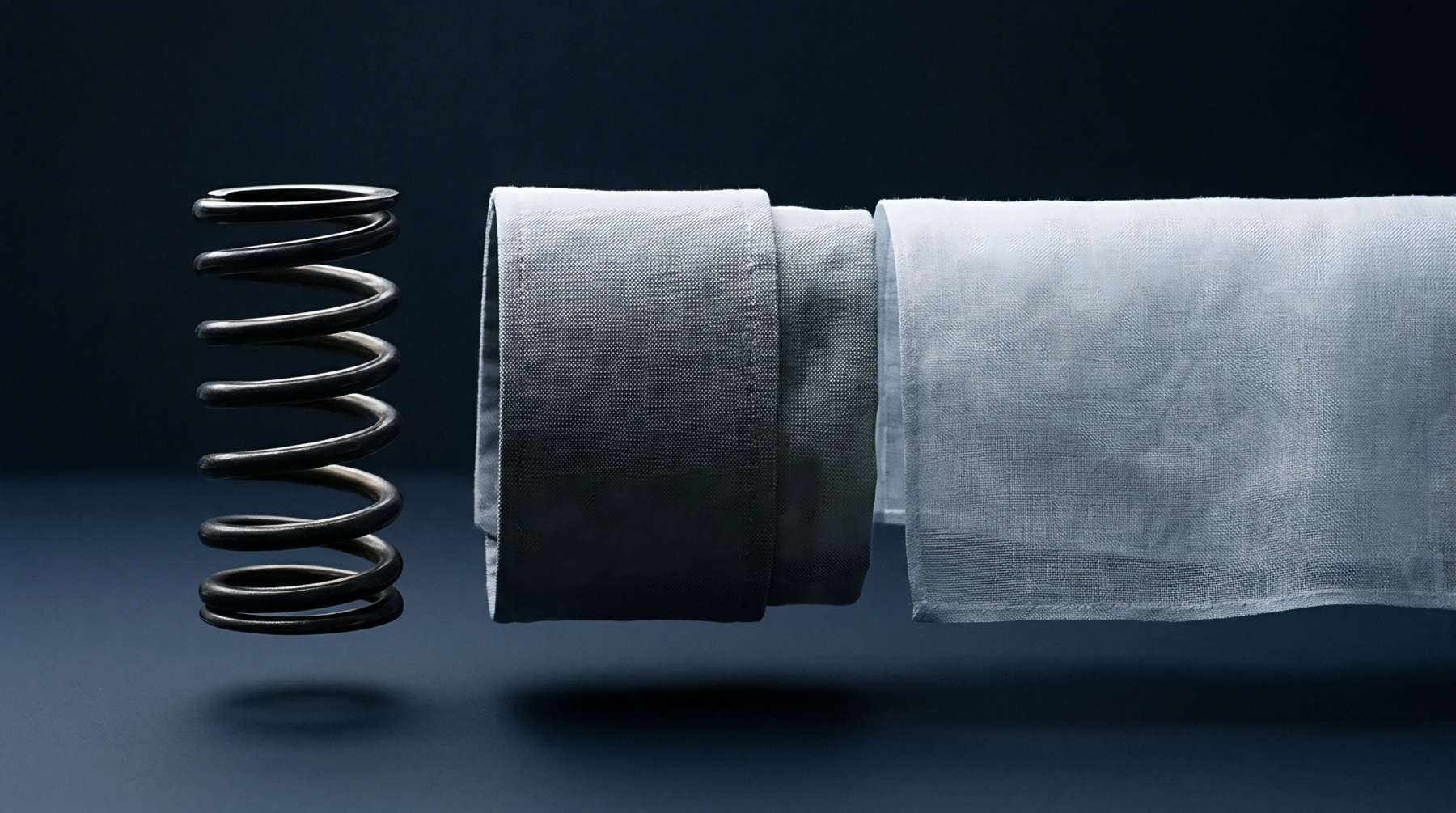
Dynamic backrest spring calibration reduces peak linen warp stress below 35 cN/tex, cutting loom stops by 80% and increasing efficiency to 96%.

Engineered sizing formulations balancing modified starch, PVA, and acrylic binders restrict penetration while preventing high-speed rapier yarn breakage.

Elevating the backrest 30mm and adopting two-end denting resolves fell bounce and reduces fiber shear in high-density flax plain weaves.
Rebalance linen crimp by lowering the backrest 25mm, delaying shed crossing to 325 degrees, and running segmented temples to suppress structural deformation.
Asymmetric shed motion curves reduce peak warp acceleration and heddle contact angles, keeping shear stress below middle lamella limits to preserve flax modulus.
Wet spun flax linear density and mechanical properties depend on strict moisture regain control, hot water pectin drafting, and CRE tensile evaluation.
Expertise is a utility, not a secret. sentiention™ publishes its working knowledge as open reference: intelligence layer covering the materials it sources, the markets it enters, and the reference that serves both.