Flax Fiber Pectin Hydrolysis Kinetics under Trough Processing
Trough pectin hydrolysis requires precise temperature and pH control to preserve flax fiber bundle tenacity while enabling uniform wet spinning drafting.


Liquor
Trough processing in wet spinning flax mills relies on controlled bath chemistry to soften middle lamella structures before drafting. Raw scutched flax roving arrives at the spinning frame as technical fiber bundles bound by an intermicrofibrillar matrix of pectin, hemicellulose, and structural proteins. Immersion in the spinning trough dissolves water-soluble pectins and hydrolyzes water-insoluble protopectins.
Maintaining bath temperatures between 55 °C and 65 °C accelerates liquid diffusion through hydrophobic cuticular waxes while keeping cellulose chains intact.
The liquor ratio dictates how quickly dissolved carbohydrates move away from the roving core. Wet spinning frames operate at liquor ratios ranging from 12:1 to 18:1 litres of water per kilogram of dry flax roving. Insufficient liquor volume rapidly saturates galacturonic acid monomers in the bath, suppressing the concentration gradient required for continued matrix dissolution.
Continuous recirculation systems equipped with filtration units clear suspended particles and maintain uniform thermal distribution across all spinning positions. Softened feed water prevents divalent calcium and magnesium ions from precipitating back onto fiber surfaces, where they form insoluble pectate complexes that stiffen the strand.
| Parameter | Control Range | Target Range | Operational Impact |
|---|---|---|---|
| Bath Temperature | 50 °C to 75 °C | 60 °C to 65 °C | Controls pectin hydrolysis velocity and wax softening |
| Liquor Ratio | 10:1 to 20:1 L/kg | 14:1 to 16:1 L/kg | Determines mass transfer capacity and monomer dilution |
| pH Level | 6.0 to 9.0 | 8.0 to 8.5 | Governs ester de-esterification rate without cellulose damage |
| Residence Time | 15 to 45 seconds | 25 to 30 seconds | Defines total thermal exposure during roving drafting passage |
Adding surfactants lowers interfacial tension between water and raw flax waxes. Non-ionic wetting agents added at concentrations of 0.5 to 1.5 grams per litre allow immediate fluid penetration into tightly twisted roving strands. Without surfactant assistance, water absorption requires extended dwell times that exceed practical machine speeds.
Controlling chemical dosage maintains a steady rate of binder removal without stripping structural pectin from deep inside elementary fiber walls.
- Fill trough reservoir with softened water maintaining electric conductivity below 150 microsiemens per centimeter.
- Heat thermal bath to sixty-five degrees Celsius using closed-loop steam coils to prevent bath dilution.
- Douse roving strands through guiding rollers at uniform tension to ensure even chemical penetration.
- Monitor pH continuously and inject mild alkaline buffers to preserve an operational threshold of eight point five.
- Discharge overflow effluent to prevent accumulation of dissolved polysaccharides in the immersion tank.
A bath temperature drop below fifty-five degrees Celsius reduces pectin solubilization velocity by forty percent during a thirty-second trough passage.
Failing to control thermal gradients across the bath causes uneven bundle division, resulting in excessive yarn thin spots and expensive spindle stoppages downstream.


Kinetics
Pectin degradation in warm aqueous media follows a pseudo-first-order rate law governed by temperature and hydroxyl ion activity. Homogalacturonan backbone breakdown occurs through two chemical pathways: nucleophilic de-esterification of methyl esters and random cleavage of alpha-1,4-glycosidic bonds. At operating pH levels above 7.5, beta-elimination dominates glycosidic bond cleavage, targeting methylated galacturonic acid residues and yielding unsaturated oligosaccharides.
With an activation energy of 52 kilojoules per mole for alkaline pectin hydrolysis in flax trough processing, the process remains sensitive to minor thermal fluctuations along the trough bed.

Arrhenius Rates and Ester Cleavage Mechanics
Thermal energy supplies the enthalpy required to break methyl ester bonds along polygalacturonic acid backbones. Reaction rate constants increase exponentially as trough bath temperature rises from 50 °C to 70 °C. In alkaline baths, high-methoxyl pectins undergo rapid beta-elimination, reducing polymer chain length and increasing water solubility. The pseudo-first-order kinetic equation expresses matrix solubilization mass as a function of dwell time and concentration of accessible pectin fraction.
Mathematical modeling of middle lamella dissolution uses the rate expression dP/dt = -k P, where P represents remaining unreacted pectin mass fraction and k represents the effective rate constant at a specified pH and temperature. At 60 °C and pH 8.5, k reaches approximately 0.035 per second. This rate constant yields a 60% reduction in unesterified pectin content within a 25-second trough traverse.
Extending dwell time past 40 seconds drives the reaction into secondary hydrolysis, where structural cell wall pectins dissolve and fiber bundle integrity degrades.
| Temperature (°C) | Rate Constant k (s⁻¹) | Pectin Loss (%) | Bundle Tenacity (cN/tex) |
|---|---|---|---|
| 50 | 0.012 | 2.8 | 28.4 |
| 55 | 0.021 | 4.1 | 26.8 |
| 60 | 0.035 | 6.2 | 24.5 |
| 65 | 0.054 | 8.4 | 21.1 |
| 70 | 0.081 | 11.9 | 16.3 |
| Data acquired under continuous pH 8.5 buffering with a 30-second residence time and 15:1 liquor ratio using scutched European flax roving. | |||

Would a Temperature Shift above Seventy Degrees Degrade Cellulose Chains?
Hydrolytic cleavage shifts from matrix carbohydrates to crystalline cellulose regions when thermal exposure exceeds recommended thresholds. At temperatures above 70 °C under alkaline conditions, peeling reactions target the non-reducing ends of cellulose microfibrils. Severe degradation of the middle lamella leaves individual elementary fibers without sufficient lateral adhesion, causing draft instability on the wet spinning drafting rollers.
ISO 3060 bundle tenacity drops below twenty-two centinewtons per tex when pectin extraction exceeds seven percent of total fiber mass.
The exact threshold at which rhamnogalacturonan branching structures transition from rigid intermicrofibrillar anchors into soluble fragments under brief hydrodynamic shear varies across crop years and remains difficult to pin down precisely.
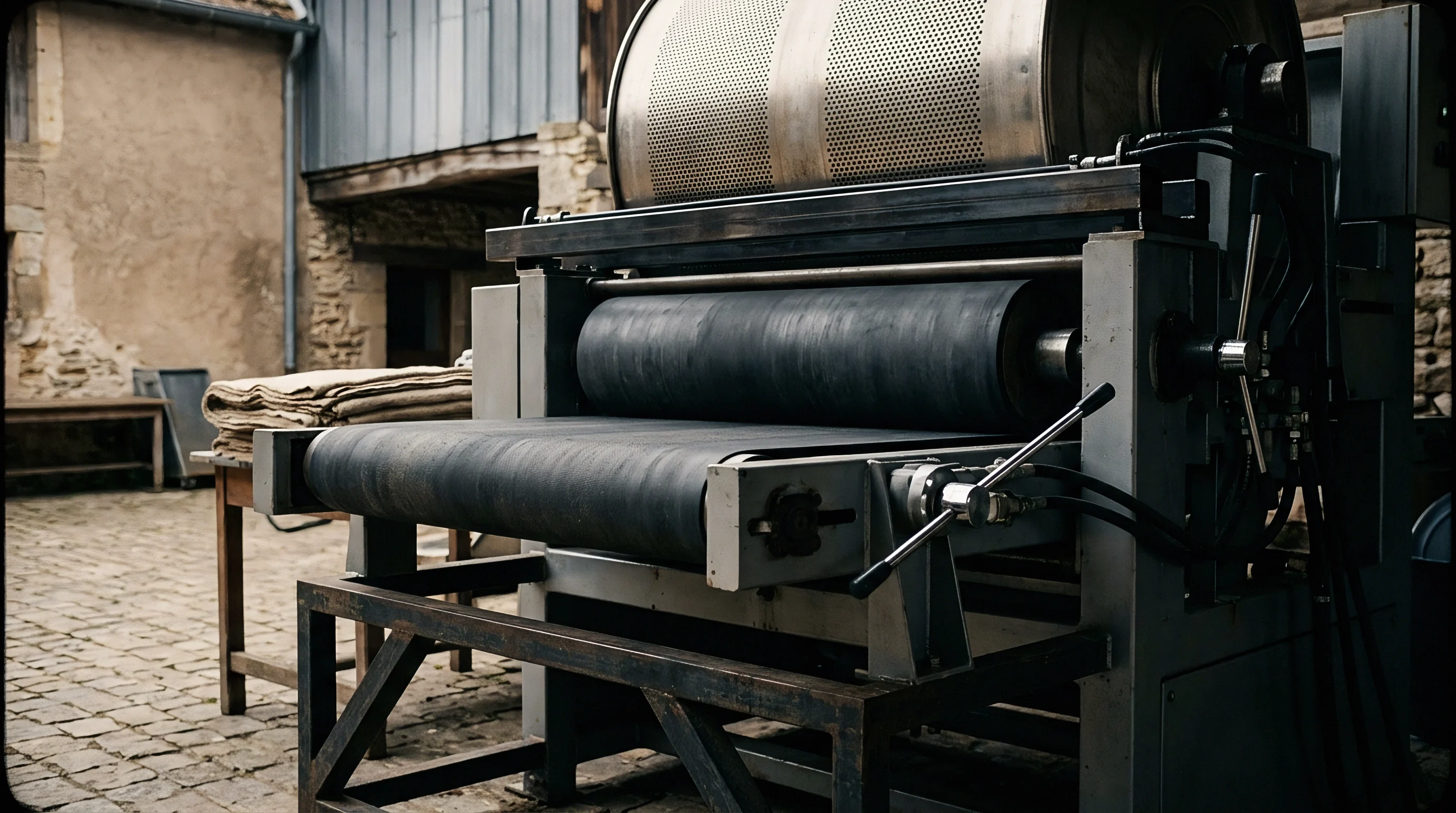

Degumming
Removing non-cellulosic binder substances dictates the ultimate fineness and tenacity of spun flax yarns. Technical fibers consist of elementary filaments measuring 10 to 20 micrometers in diameter, cemented into bundles by middle lamellae. Selective extraction of pectin during trough treatment allows bundles to split into finer sub-units under drafting roller pressure.
Excessive removal strips the structural binder entirely, while under-treatment leaves coarse bundles that yield irregular, low-count yarns.

Fiber Bundle Division and Tenacity Balance
Technical flax fibers require partial matrix preservation to retain mechanical strength during yarn formation. Stelometer testing measures the maximum load a fiber bundle withstands prior to rupture. Controlled pectin loss between 4% and 6% by mass achieves optimal bundle division without compromising single-fiber anchor sites.
Over-extracted fibers look clean under electron microscopy but suffer severe strength loss during ring-spinning drafting.
- Over-Degummed Slub Accumulation Excessive matrix loss separates elementary fibers prematurely, causing lint build-up on drafting aprons and yarn breakage.
- Incomplete Pectin Solubilization Stiff fiber bundles resist drafting pin penetration, creating heavy yarn thick spots that fail visual quality inspection.
- Chelant-Induced Fiber Weakening Excess sequestration of divalent cations weakens structural cell wall layers, lowering bundle tenacity by fifteen percent.
- Surfactant Carryover Contamination Residual wetting agents interfere with dye uptake in downstream wet processing, generating streakiness in finished woven fabric.

Enzymatic and Chemical Trough Additives
Wetting agents accelerate liquid penetration into the dense cuticular layers of roving bundles. Adding endo-polygalacturonase to neutral pH troughs allows targeted cleavage of internal glycosidic bonds without generating caustic waste stream effluents. Alkaline chelating agents such as tetrasodium EDTA sequester calcium ions that bridge adjacent pectate chains, converting insoluble calcium pectates into soluble sodium salts.
Process optimization relies on balancing enzyme dosage against liquor residence time.
Flax bundles drafted with intact middle lamellae yield smooth yarns, whereas over-treated fibers produce hairy surface profiles.
Soft water and uniform bath agitation maintain predictable drafting tensions regardless of raw fiber crop origin.


Dossier
Chain of custody verification for European flax requires rigorous documentation linking raw fibre purchases to trough-processed yarn bobbins. European Flax certification guarantees Western European agricultural origin, covering scutched fiber harvested in France, Belgium, and the Netherlands. Spinners purchasing certified fiber receive Scope Certificates (SC) from accredited testing bodies.
Provenance integrity depends on tracking fiber mass through every wet processing step, including matrix mass loss occurring inside trough equipment.

Scope Certificates and Mass Balance Reconciliation
Auditing mill throughput demands direct comparison of raw scutched fiber inputs against finished yarn output logs. Trough processing strips 4% to 8% of raw fiber mass via soluble carbohydrate loss into wastewater streams. Auditors calculate yield conversion factors to verify whether bobbin output volumes align with certified raw fiber intake.
Mass balance tracking prevents unverified blending claims. Chinese mills processing both certified European flax and domestic fiber must implement physical segregation protocols inside raw material bale stores and spinning preparation lines.
- European Flax Scope Certificate Confirms the growing origin of raw scutched fiber in France, Belgium, or the Netherlands, verified by independent accredited certification bodies.
- Spinning Lot Delivery Note Tracks raw bale identification numbers from the port warehouse into the mill opening room, matching physical weight to invoice claims.
- Trough Mass Loss Logbook Records dry weight entering the wet-spinning frame and bobbin yarn mass exiting, accounting for dissolved pectins and hemicellulose.
- Transaction Certificate Stream Validates every change of ownership along the transformation chain, preventing uncertified fiber substitution during intermediate blending steps.

Spinning Mill Audits in High-Risk Processing Regions
Independent inspectors conduct physical counts of raw fiber bales stored within mill warehouses, checking lot numbers recorded on bale tags. Document verification includes checking weighbridge receipts, customs declaration entries, and wet-spinning machine throughput speed settings. Scope certificates expire after twelve months, after which uncertified lots lose market premium.
An audit trail breaks whenever a mill fails to reconcile spinning room waste factors against recorded trough extraction losses.
A spinning mill operating in Jiangsu Province must segregate certified Western European flax bales on dedicated warehouse racks to prevent cross-contamination with domestic fiber.
Mass balance accounting across shared trough baths renders lot-level physical segregation impractical during high-volume production runs.

Warranties
Commercial contracts for wet-spun linen yarn translate chemical processing parameters into enforceable quality and origin guarantees. Buyers pay a price surcharge ranging from $0.80 to $1.40 per kilogram for certified European Flax yarn compared to standard uncertified material. Technical specifications define strict limits for yarn count unevenness, thin places, thick places, and bundle tenacity.
When improper trough processing causes pectin over-hydrolysis, yarn tenacity drops below contract thresholds, triggering financial penalty clauses or total shipment rejections.

Landed Cost Arithmetic and Pectin Loss Surcharges
Calculating landed costs for certified linen yarn incorporates fiber surcharges, spinning waste factors, and audit costs. Consider a commercial procurement of 20,000 kilograms of certified European scutched flax fiber priced at $6.50 per kilogram. With an expected baseline trough mass loss of 5.5%, total raw material input cost equals $130,000.
Net yarn yield under standard trough processing yields 18,900 kilograms of wet-spun yarn. Landed raw material cost per kilogram of finished yarn measures $6.88 prior to spinning transformation fees.
If unbuffered trough chemistry causes pectin mass loss to jump to 8.2%, finished yarn yield falls to 18,360 kilograms. The 540-kilogram mass shortfall represents a direct loss of $3,715 in fiber value. Furthermore, the lower bundle tenacity increases ring-frame end-breaks by 14%, raising production labor costs.
Sourcing practices account for these chemical processing risks by writing precise metric thresholds into purchasing agreements.
| Defect Mechanism | Physical Test Standard | Contract Tolerance Limit | Commercial Penalty Action |
|---|---|---|---|
| Excess Pectin Loss | Gravimetric Chemical Extraction | Max 6.5% dry weight loss | $0.15/kg discount per 1% excess loss |
| Tenacity Degradation | ISO 3060 Bundle Method | Min 22.0 cN/tex | Rejection of lot if below 19.0 cN/tex |
| Count Irregularity | Uster Tester 5 Evenness | Max 14.5% CV value | Price downgrade to coarse weaving grade |
| Origin Document Void | ISO 17065 Transaction Audit | 100% batch lot matching | Forfeiture of certified origin surcharge |

Contractual Remedy Clauses for Substandard Trough Processing
Sourcing contracts allocate financial risk for physical fiber damage during wet processing. Quality guarantee provisions define exact testing protocols for incoming yarn lot verification. Samples taken from incoming bobbin shipments undergo tensile strength testing and chemical pectin residue analysis in accredited laboratories.
When test results show matrix degradation caused by excessive trough temperatures or improper pH management, buyers enforce penalty deductions against outstanding mill invoices.
Incorporating International Linen and Hemp Confederation arbitration clause section four transfers all financial losses from fiber degradation during wet spinning directly back to the processer upon proof of unbuffered trough pH.