Wet Spun Linen Warp Yarn Tenacity Limits
Wet spun linen warp yarn requires a minimum dry tenacity of 26 cN/tex to run on rapier looms at 85 percent efficiency.

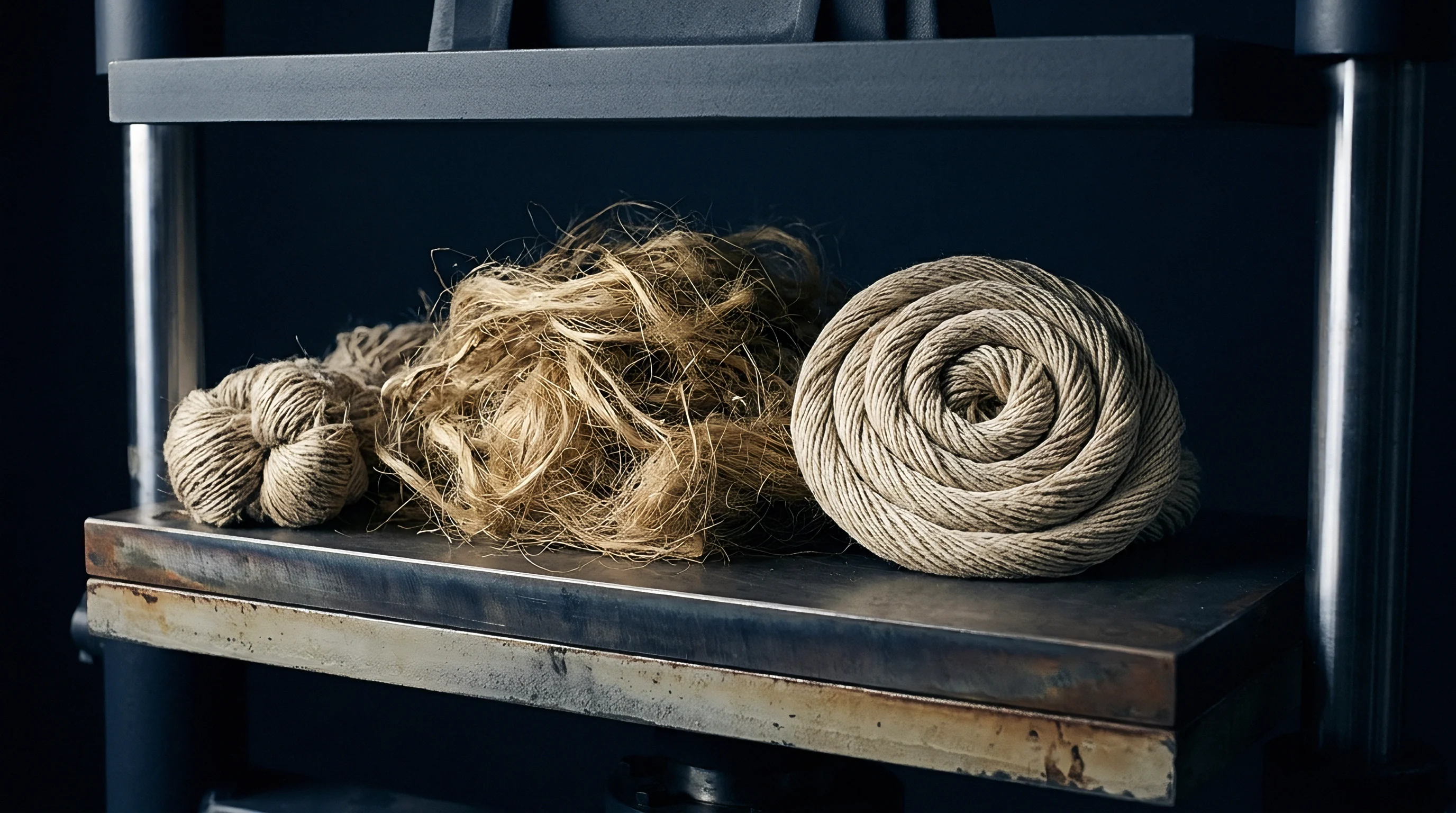
Pectin
Complex natural polysaccharides bond the cellulosic fibers in raw flax filaments into bundles. During wet spinning, hot water baths between 60 and 70 degrees Celsius soften these binder gums so elementary fibers slide during drafting, yielding a compact, smooth yarn profile. The concentration of calcium pectate left across the middle lamellae ultimately sets the baseline mechanical resistance of the spun strand.
Dry tenacity for high-grade wet spun flax warp yarns runs between 26 and 34 centinewtons per tex, whereas dry spinning yields only 14 to 18 centinewtons per tex because of looser fiber entanglement. Wet spinning aligns Ultimate Flax Fibers ~ averaging 20 to 40 millimeters in individual length ~ along the yarn core. If retting removes too much pectin, bundles break down into short fragments that slip under load.
Under-retted flax, by contrast, leaves thick, stiff bundles that resist twist insertion and create localized stress points.
A wet spun 40 Lea flax warp yarn tested under ISO 2062 at 65 percent relative humidity yields a dry tenacity floor of 28.5 cN/tex.
Drawn through a heated water trough before entering the draft zone, flax roving forms hydrogen bonds between parallel cellulose chains as it dries on the bobbin. This cohesion establishes the baseline tensile strength warp threads need to withstand cyclical shedding stresses during weaving.
| Flax Count (Lea) | Linear Density (Tex) | Trough Water Temp (°C) | Draft Ratio | Mean Tenacity (cN/tex) | Elongation at Break (%) |
|---|---|---|---|---|---|
| 25 Lea | 198.4 Tex | 68 | 12.5 | 31.2 | 2.8 |
| 40 Lea | 124.0 Tex | 65 | 14.0 | 29.5 | 2.4 |
| 60 Lea | 82.7 Tex | 62 | 16.2 | 27.1 | 2.1 |
| 80 Lea | 62.0 Tex | 60 | 18.0 | 25.4 | 1.8 |
Accurate tenacity measurements require strict atmospheric control under ISO 139, as wet spun flax gains tensile strength when wet. Testing dry yarn at 65 percent relative humidity reflects actual mechanical resistance under standard weave-room conditions. Incomplete enzymatic retting leaves excess middle lamella material that embrittles the bundles, triggering warp break clusters and costly loom stops during high-speed insertion.
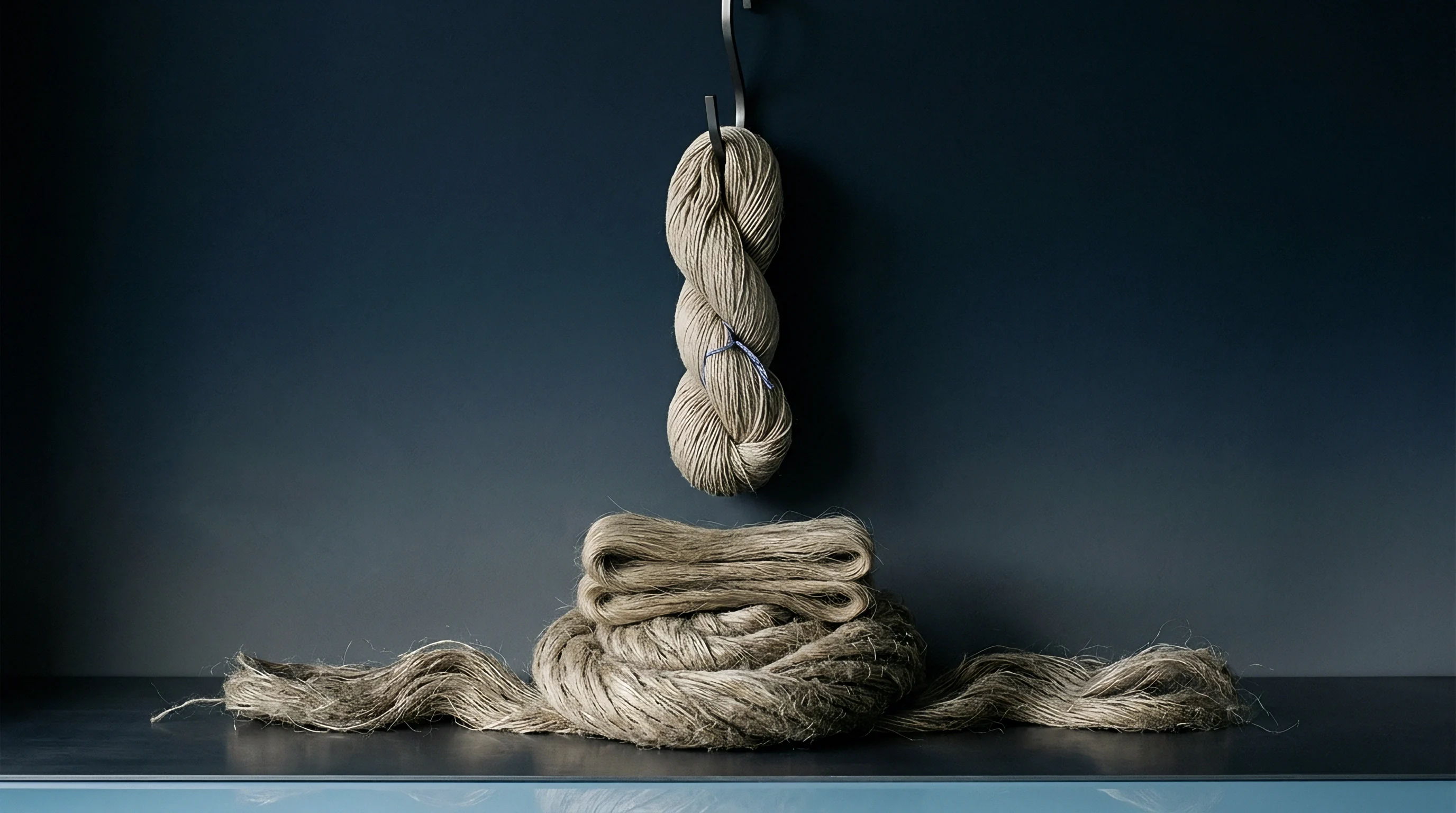
Twist
Helical fiber alignment converts axial pull into lateral compressive force through the core, with spinning frames inserting turns per meter to bind the elementary flax filaments. Flax warp yarns run within a metric twist multiplier range of 45 to 55; drop below 42, and fibers slip past one another rather than fracturing, causing the strand to pull apart prematurely under tension.
Excessive turns per meter generate internal shear stress across the rigid bast structure and increase twist liveliness, promoting snarling during warping. Over-twisting also turns fibers away from the yarn axis, lowering effective axial tenacity as radial pressure builds past critical angles.
- Low Pectin Cohesion results in premature inter-fiber slippage before the ultimate tensile capacity of individual elementary flax fibers is reached.
- Uneven Roving Draft creates localized thin spots where twist concentration fails to compensate for reduced cross-sectional fiber counts.
- Over-Drying at Spinning Spindles embrittles the outer cellulosic walls and reduces wet-flex fatigue resistance during subsequent warping.
- Excessive Ring Rail Speed introduces dynamic tension spikes that cause micro-fractures along the primary cell wall interface.
Increasing twist beyond the critical angle suppresses fiber migration without increasing bundle strength.
Single-yarn strength testing under ISO 2062 relies on pneumatic clamps to avoid jaw breaks on brittle linen strands. Gauging 50 specimen strands per lot establishes standard distribution curves, where commercial wet spun warp requires a tenacity coefficient of variation below 12 percent to prevent weak spots from failing repeatedly during shedding.
Lower turns per meter are often framed as an intentional adjustment to soften hand feel, though reducing twist simultaneously cuts spindle drive times and lowers production costs.
Sizing
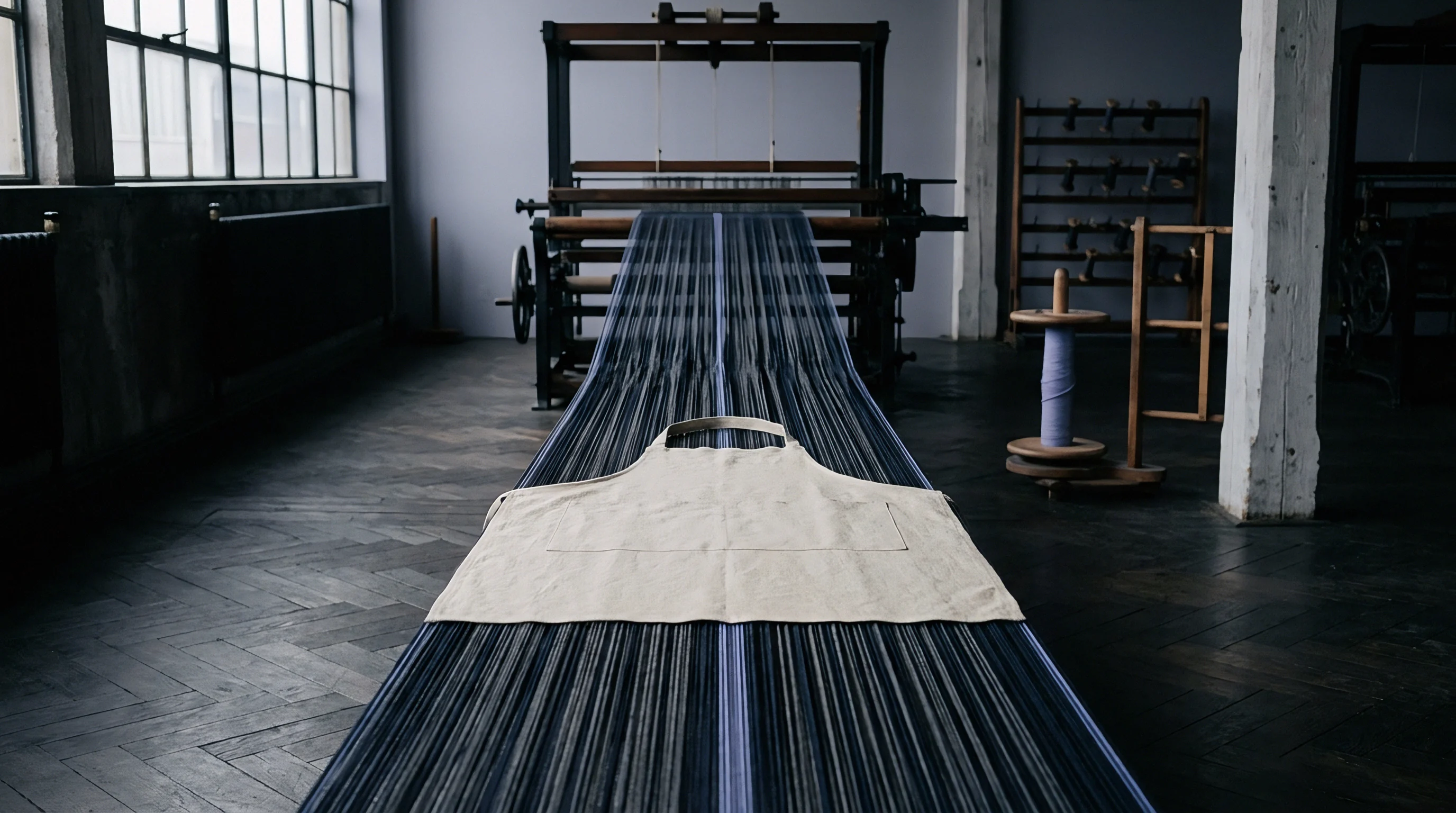
Applying a protective film to spun flax warp ends limits filament peeling under cyclic bending. Native potato starch modified with polyvinyl alcohol forms a resilient sheath that bridges surface voids across wet spun linen strands. Sizing pickup typically runs between 8 and 12 percent dry weight gain, providing enough flexibility to absorb tension spikes during shed formation without rupturing the film mantle.

How Does Sizing Viscosity Alter Tensile Yield?
Sizing viscosity in the dip trough dictates how deeply the liquor penetrates the outer bast layers. High viscosity binds only the surface while leaving core filaments dry, whereas low viscosity floods the bundle without leaving a coherent protective shell. Holding trough temperatures at 85 degrees Celsius ensures consistent flow into the flax structure, avoiding the surface skinning common in colder baths.
- Desize the greige warp sample in an enzymatic bath at 60 degrees Celsius for 45 minutes to remove protective starch films.
- Condition the extracted yarn strands at 20 degrees Celsius and 65 percent relative humidity for 24 hours in accordance with ISO 139.
- Mount individual yarn ends in pneumatic clamps set to a gauge length of 500 millimeters on a constant-rate-of-extension tensile tester.
- Apply pretension equal to 0.5 cN per tex while extending the strand at a constant velocity of 500 millimeters per minute until rupture.
- Record break force in centinewtons and strain percentage to calculate mean tenacity and breaking tenacity coefficient of variation.
Abrasion resistance climbs sharply once sizing penetrates 15 to 20 percent of the yarn radius. This consolidation reduces the surface hairiness index, preventing adjacent warp ends from clinging during shed opening. Sizing solids must be matched to yarn count to keep tensile stiffness from compromising remaining elongation.
Failure to meet the ISO 13934 strip strength minimum triggers immediate mill rejection of the greige warp beam.
| Binder Type | Solids Concentration (%) | Pickup Gain (%) | Tenacity Increase (%) | Abrasion Cycles to Rupture |
|---|---|---|---|---|
| Native Potato Starch | 10.0 | 8.2 | 14.5 | 420 |
| Modified Starch + PVA | 12.0 | 10.5 | 22.0 | 850 |
| Carboxymethyl Cellulose | 8.5 | 7.8 | 11.2 | 310 |
| Synthetics + Lubricant Blend | 11.0 | 9.8 | 18.4 | 690 |
Writing an ISO 13934 minimum tensile strength threshold of 26 cN/tex into supply contracts assigns financial liability for warp-related loom stops directly to the spinner.
Tension
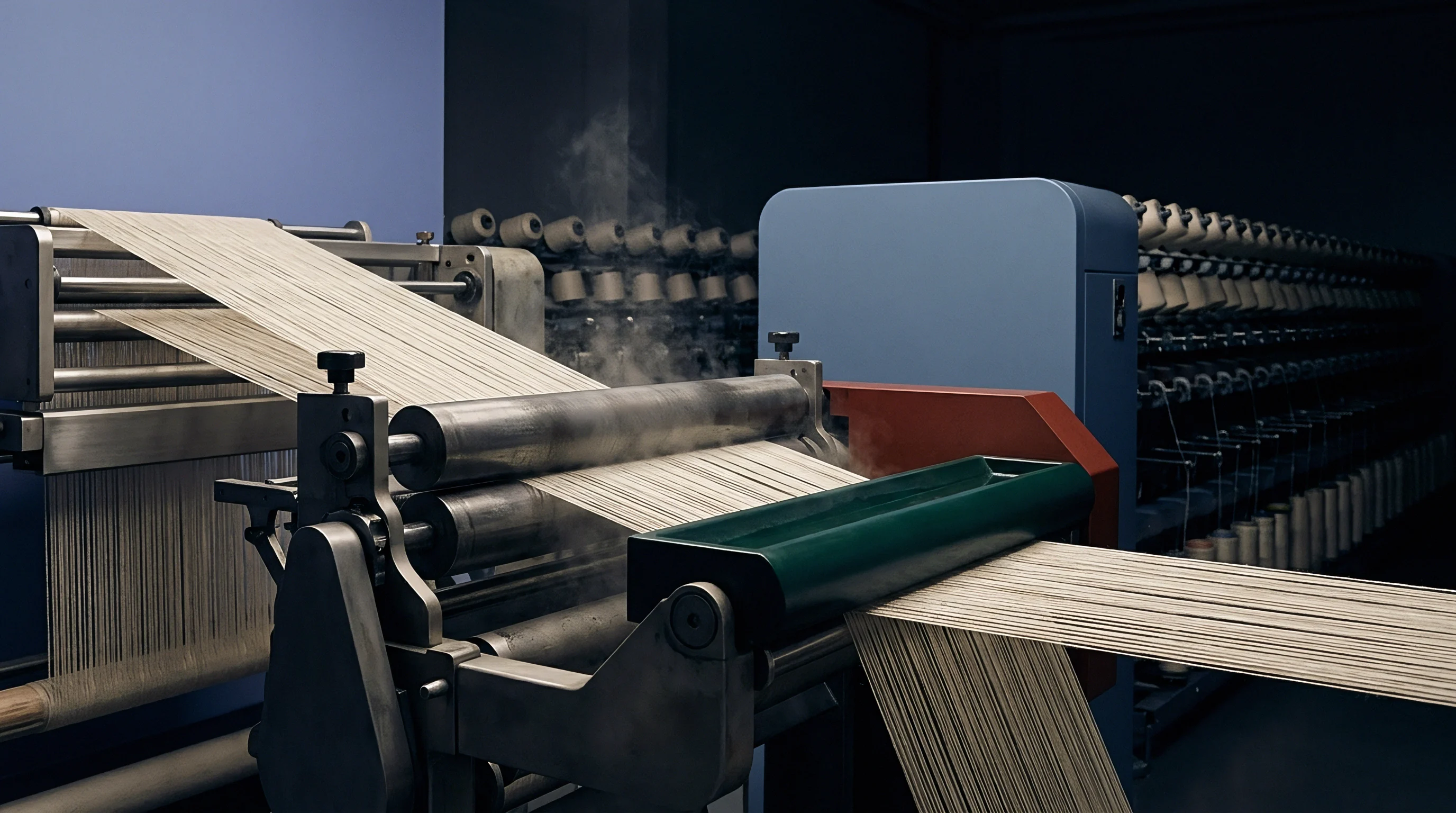
Shedding motion and reed beat-up place heavy dynamic loads on flax warp strands. On rapier looms operating at 450 picks per minute, harness frame lift drives peak dynamic tension to 0.4 to 0.6 centinewtons per tex per end. If static yarn tenacity drops below 24 cN/tex, warp break frequency quickly exceeds operational limits.
Calculating total warp strain involves combining shed geometry with take-up roller advancement. On a 190-centimeter reed width producing plain-weave 100 percent wet spun linen at 22 ends per centimeter with 40 Lea yarn ~ totaling 4,180 warp ends ~ peak dynamic load reaches 2,299 newtons across the entire sheet during shed opening.
Peak warp dynamic load occurs at the moment of reed impact against the cloth fell.
When yarn tenacity falls from 29 cN/tex to 23 cN/tex, warp breaks increase from 0.8 to 4.2 stops per 100,000 picks. With each stop requiring roughly 2.5 minutes of manual intervention, a loom running at 450 picks per minute over a 24-hour shift (648,000 total picks) sees daily stops climb from 5 to 27, dragging operational efficiency down from 91 percent to 78 percent.
- Reed Width Adjustment ensures warp end density aligns with heddle wire distribution across the full loom bed.
- Asymmetric Shed Geometry lowers static strain on top-layer warp ends during shedding phases.
- Backrest Roller Damping absorbs peak dynamic impacts during beat-up cycles.
- Drop Wire Weighting prevents false stops without imparting unnecessary drag to tender yarns.
Applying air-jet insertion to lower peak tension on low-tenacity wet spun flax without inducing excessive yarn hairiness remains an unresolved issue on European weaving floors.
Rebate
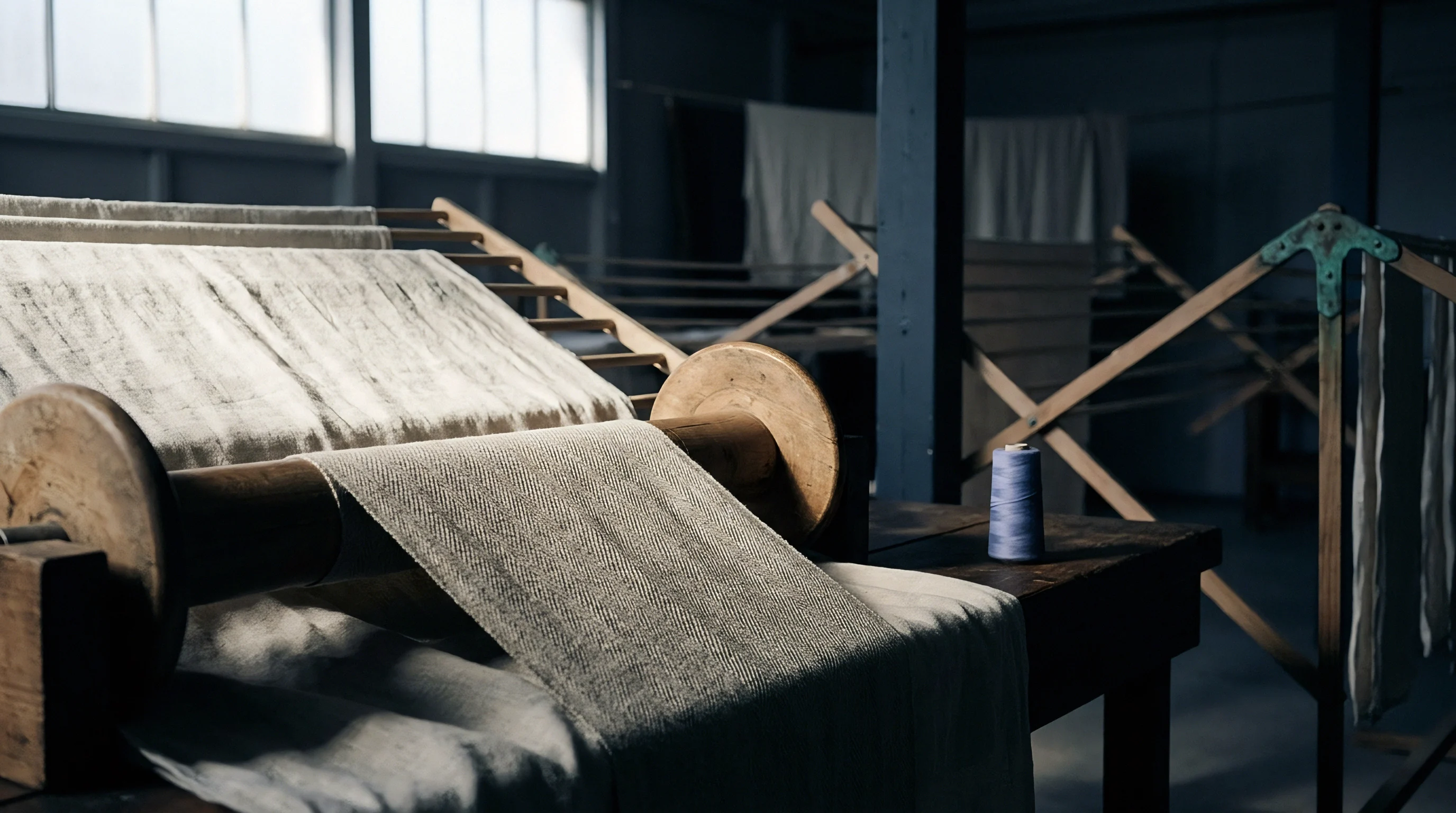
Commercial invoice adjustments compensate the buyer when delivered yarn fails to meet contract tenacity floors. Purchase agreements establish rebate tiers determined by certified laboratory tests prior to warping. When dry tenacity lands in the secondary tolerance band of 24.0 to 25.9 cN/tex, standardized penalty schedules offset the resulting capacity losses and higher greige defect rates.
| Certified Tenacity (cN/tex) | Quality Grade Classification | Price Discount (%) | Loom Hour Allowance (€/m) |
|---|---|---|---|
| > 28.0 | Prime Warp Grade | 0.0 | 0.00 |
| 26.0 – 27.9 | Standard Warp Grade | 0.0 | 0.00 |
| 24.0 – 25.9 | Sub-Standard Warp Grade | 5.0 | 0.45 |
| 22.0 – 23.9 | Weft-Only Grade | 15.0 | 1.20 |
| < 22.0 | Rejected Lot | 100.0 | Full Claim |
| Discounts apply to yarn invoice value; loom hour allowance covers efficiency recovery on rapier shedding frames. | |||
Determining true landed cost requires balancing purchase discounts against weave-room efficiency losses. On a baseline plain-weave grey cloth contract priced at 4.50 Euros per meter running at 90 percent efficiency on a 2.2-meter loom, dropping to sub-standard warp yarn that cuts efficiency to 78 percent adds 0.62 Euros per meter in overhead. Because a 5 percent yarn discount recovers only 0.22 Euros per meter in material cost, the substitution incurs a net loss of 0.40 Euros per finished meter.
The final cost per finished meter reflects both the invoiced yarn price and the efficiency penalties recorded during weaving.