Optimizing High-Speed Electronic Harness Dynamic Tension Distributions for Fine Flax Warp Shedding
Dynamic tension balance in fine flax shedding requires low-mass carbon healds, tuned return springs, and reduced shed lift to keep strain spikes under 50 cN.

Modulus
Bast fibers derived from wet-spun flax exhibit physical behaviors distinct from synthetic continuous filaments and spun cottons. Flax single yarns between Nm 39 (25.6 tex) and Nm 60 (16.6 tex) possess a high Young’s modulus paired with an ultimate elongation at break of 1.5 to 2.2 percent. The absence of elastic crimp reserve in bast fiber bundles converts geometric displacement during shedding directly into transient tension peaks.
High stiffness limits warp elasticity. When an electronic jacquard head lifts a shed at operating speeds exceeding 500 picks per minute, the vertical movement creates rapid, cyclic extensions in every active warp end.
Static warp tension on a linen loom is typically established between 30 cN and 45 cN per end. Dynamic shed movement overlays an additional 35 cN to 55 cN onto this baseline, bringing total peak forces close to the single-strand tensile limit. Flax fibers resist tensile elongation.
Because dry bast structures possess high flexural rigidity, local stress concentrations accumulate rapidly behind the reed and at the drop wires. Fiber splitting and microscopic fibrillar shedding occur when thread tension surpasses sixty percent of mean tensile strength during the shed-opening phase.
Viscoelastic Strain Responses in Fine Linen Yarns
Stress-strain curves obtained from constant-rate-of-extension tensile testing fail to predict yarn behavior under fast shedding cycles. At shedding frequencies between 8 Hz and 12 Hz, the duration of peak strain lasts under forty milliseconds. Wet-spun flax yarns lack the molecular mobility required to relax internal stresses over such short durations.
The mechanical strain energy imposed by the rising heald wire converts into transient surface friction and fiber damage rather than elastic deformation. Peak tension snaps brittle dry yarns.
The structural uniformity of the yarn heavily influences local tension spikes. Thin places in Nm 50 flax, where fiber cross-sections drop by twenty percent relative to the mean, absorb disproportionate amounts of shed extension. The localized strain at a thin spot can exceed three percent while adjacent thicker slubs remain at one percent strain.
This tension concentration causes premature warp breaks long before the average thread load approaches the nominal yarn tenacity. Proper sizing with polyvinyl alcohol and modified starch fills inter-fiber voids, shifting the elastic limit upward while smoothing surface hairiness.
Static warp tension setting of 35 cN per end produces dynamic shed-opening tension spikes exceeding 85 cN at loom speeds above 550 picks per minute.

Mechanical Impact of Asymmetric Shedding Geometry
The physical path length of an individual warp end changes as the shedding motion moves from bottom shed to top shed position. In jacquard installations where the comber board sits close to the back rest roller, the geometric angle created at full lift generates unequal path extensions between front and back warp sheets. Dynamic strain spikes cause end breaks.
When the shed opens, warp ends pulled into the upper shed sheet undergo greater geometric elongation than those remaining in the lower line or middle position. If the electronic jacquard program holds ends elevated across multiple consecutive picks, static tension decays slightly due to slow stress relaxation. Subsequent shed closures and re-openings then re-apply sharp load pulses to previously relaxed fibers, accelerating mechanical fatigue across the warp pattern repeat.
| Yarn Type and Count | Mean Tenacity (cN/tex) | Breaking Elongation (%) | Young’s Modulus (GPa) | Dynamic Stress Spike at 550 PPM (cN) |
|---|---|---|---|---|
| Nm 50 Wet-Spun Flax (20 tex) | 28.5 | 1.8 | 19.5 | 52 |
| Nm 39 Dry-Spun Flax (25.6 tex) | 21.0 | 2.1 | 14.2 | 64 |
| Ne 60/1 Combed Cotton (9.8 tex) | 18.2 | 5.8 | 6.1 | 28 |
| 40 dtex Viscose Filament | 32.0 | 11.5 | 8.8 | 18 |
Failure to align yarn elasticity with shed lift mechanics results in rapid lint accumulation, frequent loom stops, warp end floating, and permanent reed mark streaks in fine damask cloth.


Heald
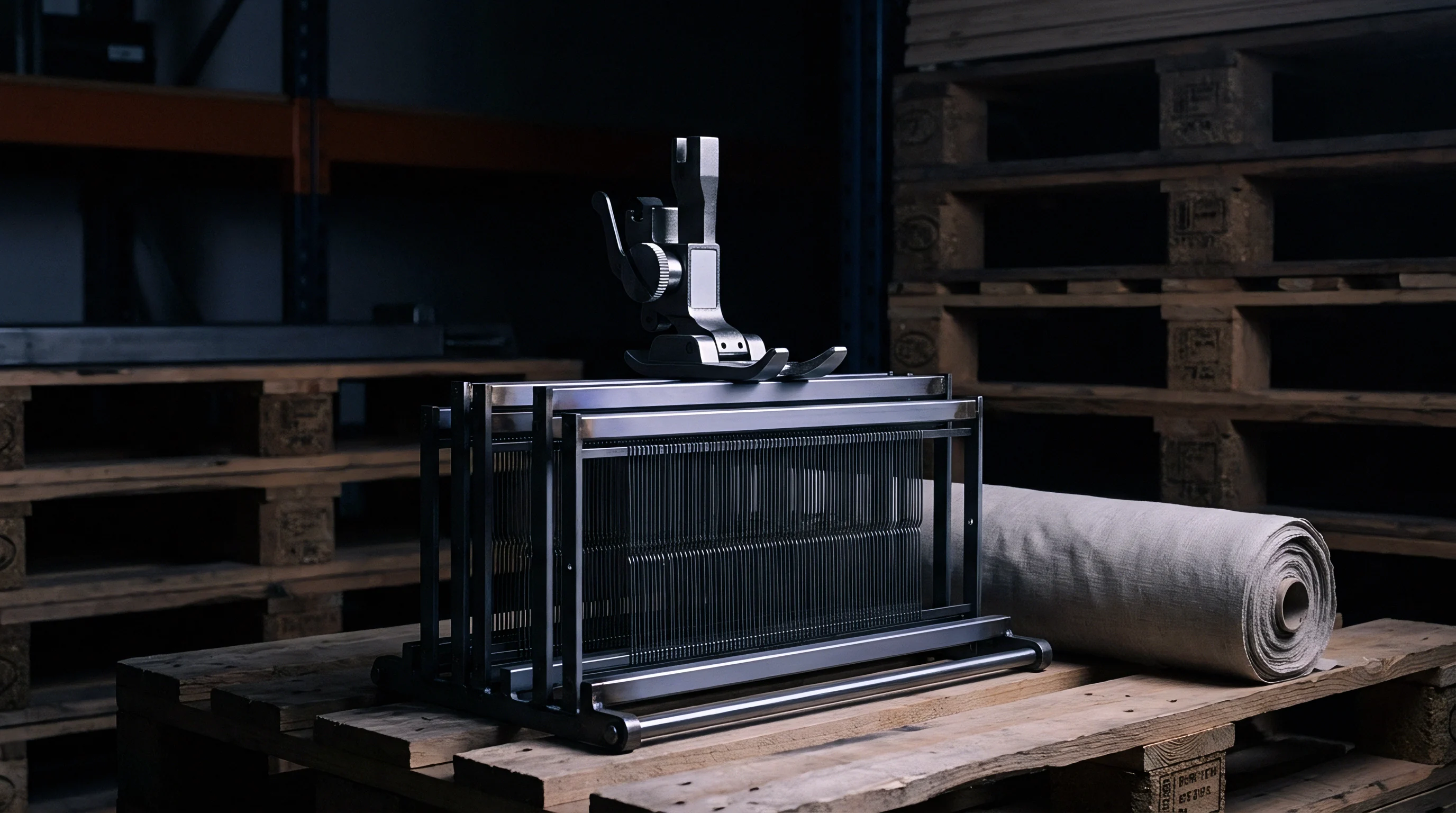
Mass management within the vertical motion components directly dictates thread loading during high-speed jacquard operation. Standard steel heald wires weighing 2.5 grams impose significant inertial resistance when accelerated at rates exceeding 150 metres per second squared. As an electronic solenoid releases or pulls a harness cord, the mass of the connected heald wire and lingo weight causes a lag in motion.
Carbon wires reduce moving mass. This kinetic lag translates into transient slackness followed immediately by a sharp impact load when the harness cord snaps taut at the apex of the shed stroke.
Matching heald wire mass and return spring force to yarn strength eliminates cord whipping. Modern high-speed jacquard systems replacing traditional lead lingo weights with helical spring undersmotions reduce the moving mass per warp end to under 0.8 grams. Lightweight polyamide heald eyes and thin stainless steel ribbon wires allow rapid acceleration without transmitting excessive tension spikes back into fine Nm 50 flax threads.

Mass Reduction in Electronic Jacquard Motion
Individual warp ends in a jacquard set-up experience independent vertical trajectories determined by the weave pattern. When one thread rises while adjacent ends remain static, lateral friction between neighboring heald eyes introduces local shearing forces on fine bast fibers. High stiffness limits strain absorption.
Utilizing offset eyelet arrangements and smooth, polished mail eyes prevents fiber abrading during high-speed lift cycles.
The positioning of the comber board relative to the loom reed governs the horizontal angle of the suspension cords. Steeper angles increase side thrust inside the comber board holes, generating frictional drag that degrades the return motion executed by the undersmotion springs. Upgrading comber boards to low-friction composite plates with mirror-finished ceramic guide inserts stabilizes cord trajectory and prevents erratic tension variations across large pattern repeats.
ISO 13934 tensile test protocols applied to wet-spun Nm 50 flax require dynamic peak warp tension to remain below sixty percent of mean single-yarn breaking force.

Spring Undersmotion Selection and Rate Tuning
Helical return springs located beneath the warp sheet supply the downward force needed to lower healds cleanly as the jacquard solenoids de-energize. Spring rates specified too high pull brittle flax warps excessively during shed opening. Conversely, undersmotion springs with insufficient stiffness fail to pull the heald wire down before the next pick insertion begins, causing shed clear errors.
- Intermittent shedding slackness occurs when spring return speeds fall behind electronic solenoid cycle timing at operating speeds above 520 picks per minute.
- Localized fiber fibrillation results from sharp mechanical deceleration pulses when uncalibrated return springs snap back against bottom stops.
- Asymmetric shed line distortion arises when spring rates vary across the width of the loom due to uneven mechanical fatigue in older spring boxes.
- Comber cord fraying develops when heavy lingo weights swing laterally under fast rotational speeds and rub against adjacent cordage.
Machinery vendors often attribute end breakage spikes on fine linen warps to natural batch variability in spun flax fibers rather than addressing underlying harness inertia and spring rate mismatches.
Resonance
Suspension cord length varies significantly across the width and depth of an electronic jacquard gantry setup. Cords extending from the central hooks to the outer edges of the comber board can exceed three metres in length. These long elastomeric cords act as mechanical transmission lines capable of supporting standing longitudinal waves.
When the shedding frequency approaches the natural fundamental frequency of the suspension cord, acoustic resonance develops along the cord length.
Resonant oscillations create unpredictable, violent fluctuations in instantaneous warp end tension. A thread measured at a stable 35 cN static tension can instantly experience dynamic spikes exceeding 90 cN when standing wave nodes form along its suspension cord. Fine flax warps cannot absorb these sudden spikes without snapping.
Lower speeds reduce shed friction. Damping cord vibration using specialized aramid core cordage with high internal friction dissipates wave energy before resonance builds up.

Harmonic Wave Propagation in Suspension Cords
The phase angle between the electronic solenoid pulse and the actual physical movement of the heald mail shifts when resonance is present. Cord stretch delays the opening of the shed, while trapped strain energy snaps the mail eye upward beyond its designated lift height. This overtravel creates tension shocks that pull the fine warp yarn taut against the top shed boundary.
Systematic mapping of cord lengths across the comber board allows engineers to calculate critical loom operating speeds where harmonic peaks coincide. Modulating loom speed by as little as fifteen picks per minute shifts the excitation frequency away from cord resonance zones, instantly reducing warp break rates across the loom bed. Spring tension regulates thread stress.
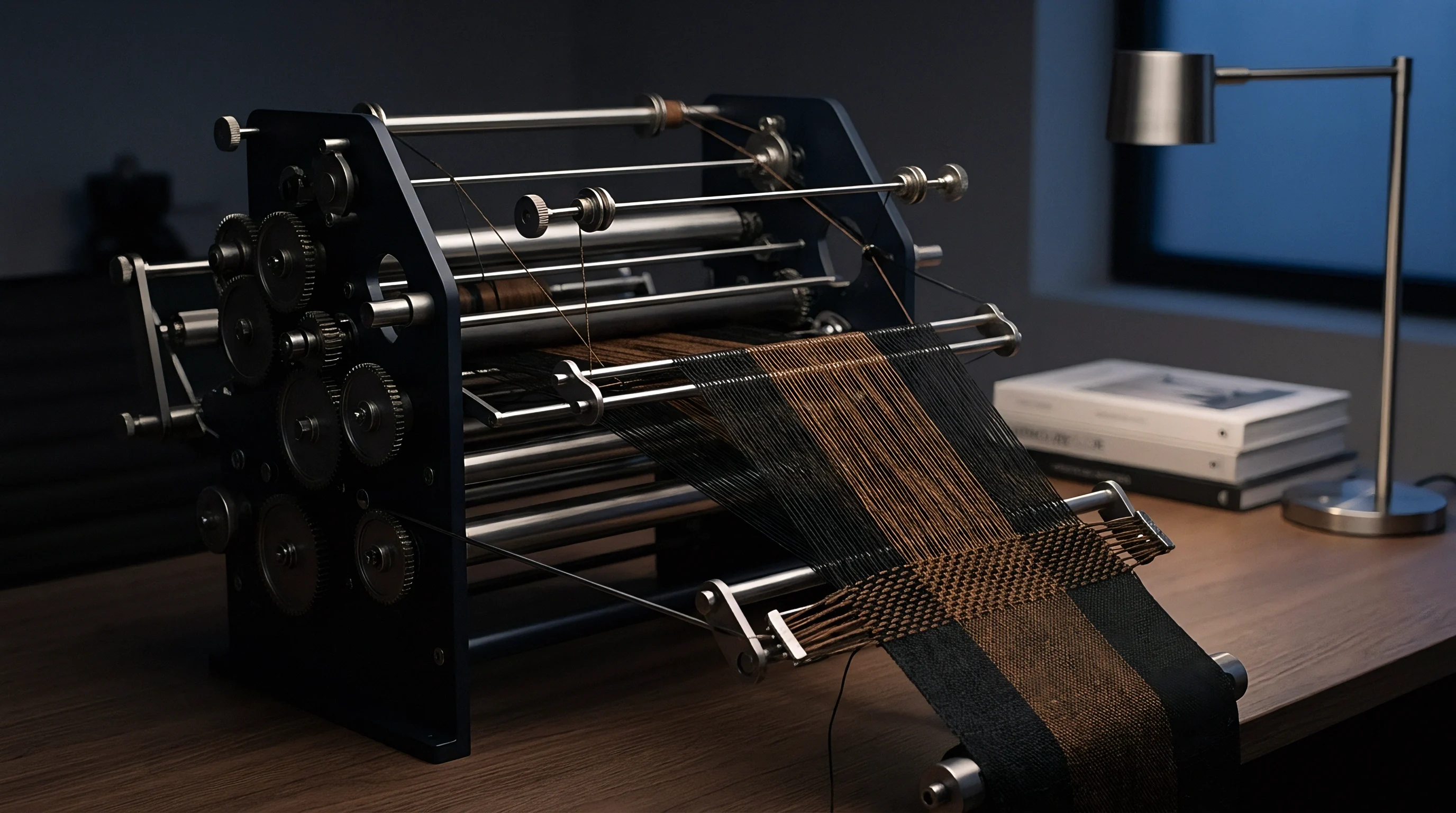
Can Spring Rate Modifications Prevent Flax End Breaks?
Modifying return spring stiffness directly alters the natural resonance frequency of the combined heald-cord system. Installing progressive-rate springs, which stiffen exponentially as they compress, disrupts harmonic standing waves by continuously changing the system’s resonant frequency throughout the stroke. This non-linear behavior prevents energy accumulation within the suspension cords, smoothing out the tension profile transferred to fine flax warps.
| Gantry Zone Position | Mean Cord Length (mm) | Natural Frequency (Hz) | Dynamic Tension Variance (cN) | Observed End Breaks per 10^5 Picks |
|---|---|---|---|---|
| Center Board (Direct Drop) | 1,450 | 24.2 | ± 8.5 | 1.2 |
| Intermediate Zone | 2,100 | 16.8 | ± 14.2 | 3.1 |
| Outer Edge (Maximum Angle) | 2,850 | 12.3 | ± 26.8 | 8.7 |
| Corner Extreme | 3,200 | 10.9 | ± 34.5 | 14.2 |
Reducing the lift stroke by five millimetres cuts dynamic peak warp tension by over fifteen percent on rigid cellulosic yarns.
How much dynamic tension non-uniformity across extreme outer comber board angles can be suppressed before elastomeric cord damping properties degrade permanently under continuous industrial production?

Damping
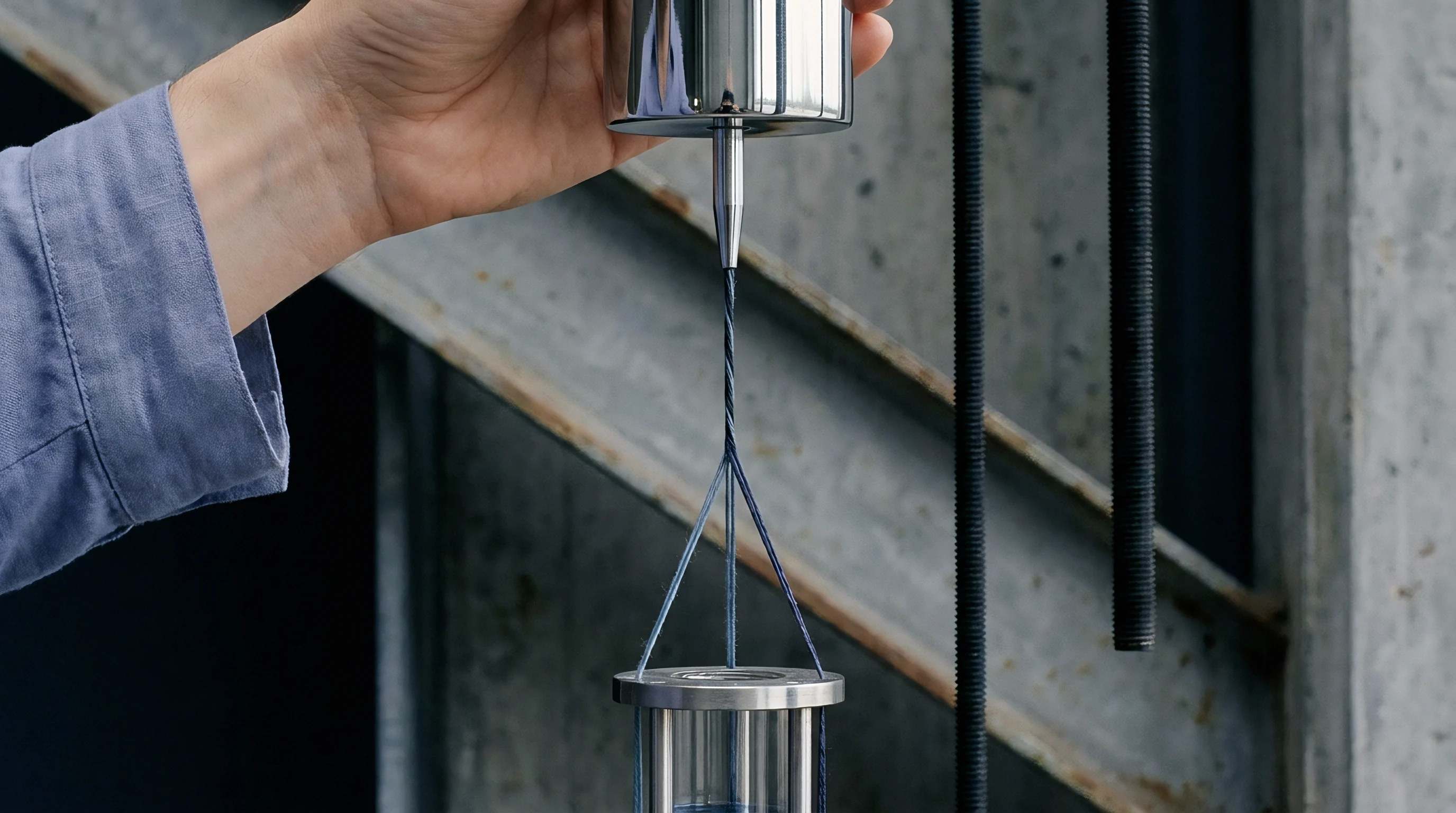
Dynamic force balance during high-speed electronic shedding relies on balancing mechanical spring forces, air drag, cord elasticity, and yarn strain. Predicting the instantaneous tension on a single thread demands continuous evaluation of shed geometry as a function of crank shaft angle. Shed geometry dictates warp extension.
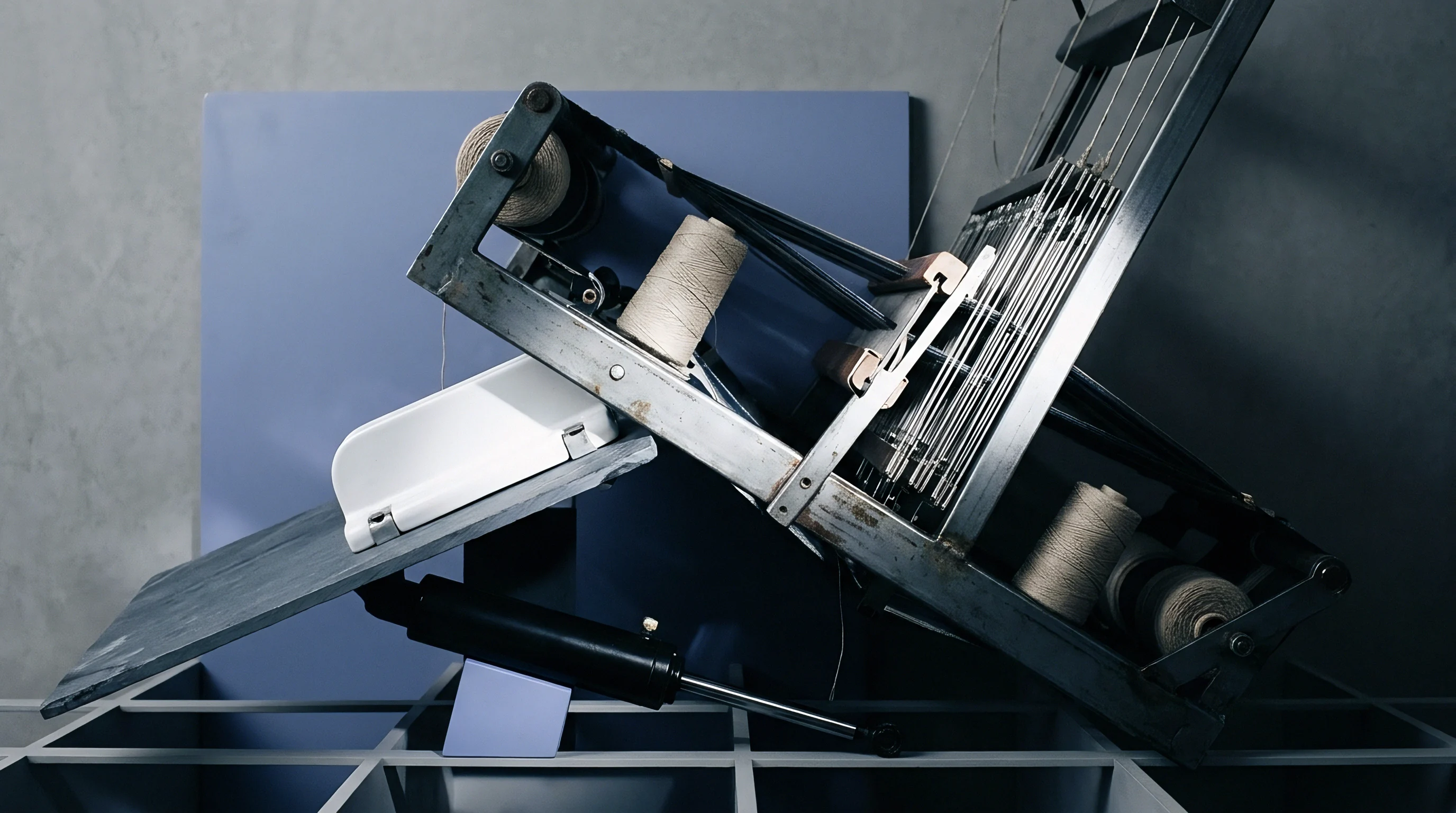
Mathematical calculations for dynamic tension balance model the warp thread as a viscoelastic beam anchored at the back rest roller and cloth fell. The net force acting on a warp end equals the static baseline tension plus the differential strain force generated by heald displacement, minus internal yarn viscous damping forces. When working with Nm 50 wet-spun flax, internal viscous damping is negligible, making external mechanical damping essential to smooth out force curves.
Mathematical Modeling of Dynamic Yarn Tension
Consider a fine flax warp setup running at 580 picks per minute on a 6,144-hook electronic jacquard loom. The baseline static warp tension per end sits at 32 cN. The vertical shed stroke is set to 52 mm, with a comber board distance of 1,800 mm from the back roller.
The yarn exhibits a linear density of 20 tex (Nm 50) and a Young’s modulus of 19.5 GPa. Dynamic stress limits weave productivity.
At a loom speed of 580 PPM, one shaft rotation completes in 103.4 milliseconds. Shed opening occurs across 135 degrees of crank rotation, occupying roughly 38.8 milliseconds. Accelerating the 1.2-gram heald wire assembly over a 52 mm stroke generates an inertial peak force of 18.5 cN.
Adding the geometric elongation strain force of 28.2 cN to the baseline static force yields a peak dynamic load of 78.7 cN on the single flax thread. PVA sizing increases yarn cohesion. Because the single-strand breaking force of Nm 50 flax averages 115 cN, this peak load represents 68.4 percent of ultimate tensile capacity, exceeding safe weaving limits.
To restore safe operating conditions, the lift stroke is reduced from 52 mm to 44 mm, while high-damping progressive return springs are installed. The reduced stroke lowers geometric strain force to 19.1 cN, while low-mass 0.7-gram carbon heald wires drop inertial peak force to 9.2 cN. These modifications pull the maximum dynamic warp load down to 60.3 cN, representing 52.4 percent of ultimate yarn breaking strength.
The process optimization steps proceed sequentially.
- Mount precision tension sensors on select warp ends across front, middle, and rear comber board zones.
- Establish baseline static warp tension at minimum level consistent with clean shed separation and selvedge formation.
- Adjust jacquard shed stroke height down to the lowest setting that allows clear rapier entry without catching warp threads.
- Re-balance spring undersmotion banks to ensure equal return velocity across all gantry suspension lines.
- Verify dynamic peak loads under full operational speed using high-speed telemetry to confirm strain spikes remain below fifty-five percent of yarn strength.
A dynamic tension differential exceeding ten cN between front and back warp sheets causes shed opening haze and end floating.
Matching harness spring dampening to yarn elasticity keeps dynamic force spikes within predictable, safe operating boundaries.


Margin
Loom capacity calculations cannot evaluate machine speed in isolation from yarn failure rates and grey cloth quality. Running a high-speed electronic jacquard loom at 650 picks per minute on fine flax warps may appear commercially attractive, but severe dynamic tension spikes degrade efficiency if end break frequency escalates. Standard beams hold thirty thousand metres.
Loom efficiency drops during yarn failure.
Each warp stop on a high-speed jacquard loom costs between two and four minutes of shed down-time, requiring operator intervention to re-thread fine flax ends through the comber board and reed. If end break rates rise from 1.5 stops per loom hour at 520 PPM to 6.8 stops per loom hour at 620 PPM, overall shed efficiency collapses from 91 percent down to 73 percent. The net cloth output per loom shift actually drops, while labor requirements and fabric defect rates increase.

Commercial Limits on Loom Speed and Shed Efficiency
Financially viable linen weaving requires balancing loom hour costs against fabric yield and second-quality defect downgrades. High tension spikes induce micro-cracks in fine flax yarns, leading to warp floats, broken ends, and uneven pick spacing that trigger price penalties during four-point fabric inspection. Fine flax demands tight tension limits.
Operating fine linen warps within optimized tension limits preserves yarn integrity, maximizing grey cloth recovery rates. Slower loom operating speeds paired with precise dynamic tension control produce higher yardage yields of premium, flawless damask fabrics over extended production runs.
| Loom Speed (PPM) | Dynamic Tension Peak (cN) | Warp Breaks per 10^5 Picks | Shed Efficiency (%) | Shift Output (Metres/12hr) | Landed Cost per Metre (USD) |
|---|---|---|---|---|---|
| 480 | 46 | 0.8 | 94.2 | 148.5 | 4.12 |
| 520 | 52 | 1.2 | 92.5 | 158.0 | 3.88 |
| 560 | 61 | 2.6 | 87.1 | 160.2 | 3.95 |
| 600 | 74 | 5.4 | 78.4 | 154.2 | 4.25 |
| 640 | 89 | 11.2 | 64.0 | 134.8 | 5.10 |
Capacity Allocation and Cost per Finished Metre
Commercial sourcing contracts must explicitly define maximum allowable warp stop frequencies alongside machine operating tolerances. Technical dossier filings should link unit cloth prices directly to defined loom efficiency metrics and tension management protocols.
- Yarn mechanical qualification dossier detailing mean tenacity, elastic modulus, breaking elongation, and coefficient of variation values.
- Electronic shedding set-up protocol specifying comber board drop angles, minimum lift stroke height, and heald mail eye profiles.
- Spring undersmotion calibration sheet logging individual spring rates, pre-tension force settings, and mass specifications.
- Dynamic tension inspection log recording continuous multi-channel strain gauge telemetry taken across production shifts.
Standard procurement agreements state that if woven cloth defect rates exceed four points per one hundred square metres due to dynamic warp end breaks, the mill accepts full financial liability for re-weaving charges and associated production delays.