Sizing Chemical Pick up Uniformity across Long Run Linen Warps on High Speed Rapiers
Uniform chemical size pick-up on long run linen warps requires continuous viscosity control, deflecting-compensated squeeze pressure, and balanced film elasticity.


Viscosity
Running wet-spun flax yarn at eighty metres per minute on a slashing line draws down size bath volume according to warp density and absorption speed. Maintaining uniform chemical pick-up across a continuous run of twenty thousand metres depends on controlling bath viscosity. Because flax fibers feature a central lumen and irregular secondary walls, they absorb water-based sizing differently than uniform cotton or synthetic filaments.
If bath viscosity drifts by more than two centipoise during a shift, dry add-on swings outside the target six-to-eight percent range. That variation destroys yarn elasticity, increases hairiness, and causes heavy shedding at the loom reed during high-speed rapier insertion.

Rheological Shifts in High Temperature Size Baths
Synthetic polymer binders break down when cook box temperatures remain above ninety-five degrees Celsius for extended periods. High-gel starches blended with poly-vinyl alcohol and acrylics suffer thermal shearing under steady mechanical agitation. On long warp runs, fresh sizing feeds into the box continuously, yet heat history inside the box remains uneven.
Liquid near the steam-heated floor stays hotter than sizing at the surface squeeze roller entry. This temperature gradient creates viscosity differences across the box width, resulting in edge-to-center variation in film deposition on the warp sheet.
Dry starch molecules hydrolyze under continuous heat and shear inside the circulation pump. If circulation exceeds five box turns per hour, chemical viscosity drops steadily over a twelve-hour shift. This drop in viscosity lets sizing soak deep into the core of the wet-spun linen bundle rather than forming a thin surface coating.
While core penetration binds internal filaments, it leaves surface fibrils exposed. Those unanchored surface fibrils increase warp hairiness, causing threads to cling together in the loom shed.
The size bath temperature must remain within a two-degree window at ninety-two degrees Celsius to prevent thermal hydrolysis of modified potato starch formulations during multi-shift runs.
Binder selection governs how fluid resistance behaves under high shear. Carboxymethyl cellulose blends retain stable viscosity under shear, whereas unmodified native starches shear-thin rapidly inside the nip entry zone. As the warp sheet passes the immersion roller at seventy metres per minute, shear rates in the liquid film reach five thousand reciprocal seconds.
Formulations that shear-thin excessively lose viscosity at this junction, dropping dynamic pick-up weight below target calculations. Blending stabilized low-viscosity starches with synthetic acrylic co-polymers yields predictable fluid resistance even during line speed changes.
Size Formulation Dynamics for Flax Fibres
Flax yarn structure differs fundamentally from ring-spun cotton. Raw linen carries residual pectins, waxes, and hemicellulose that form a hydrophobic barrier against cold water-based sizing. Heating the size bath to ninety-two degrees Celsius melts plant waxes and opens the fiber bundle to penetration.
Simultaneously, strong capillary forces inside the wet-spun flax bundle pull water from the sizing faster than polymer solids can migrate into the yarn. This selective water loss thickens the remaining bath liquor, raising chemical concentration and fluid resistance over long runs.
| Yarn Count (Nm) | Primary Binder Base | Secondary Polymer | Lubricant Type | Target Viscosity (mPa·s) | Target Dry Add-On (%) |
|---|---|---|---|---|---|
| Nm 26 (38 Tex) | Modified Potato Starch (80%) | Polyvinyl Alcohol (15%) | Hydrogenated Tallow (5%) | 35 at 85°C | 7.5 ± 0.5 |
| Nm 39 (26 Tex) | Modified Tapioca Starch (75%) | Acrylic Co-Polymer (20%) | Synthetic Wax Emulsion (5%) | 28 at 88°C | 8.2 ± 0.5 |
| Nm 52 (19 Tex) | Carboxymethyl Cellulose (70%) | Polyvinyl Alcohol (25%) | Sulfonated Oil (5%) | 22 at 90°C | 9.0 ± 0.4 |
| Nm 68 (15 Tex) | Cold-Water Soluble Starch (65%) | Acrylic Binder (30%) | Microcrystalline Wax (5%) | 18 at 92°C | 10.0 ± 0.4 |
Monitoring size liquor concentration with a refractometer catches bath drift before add-on changes show up on the yarn. Provided bath temperature remains constant, soluble solids percentage correlates directly with fluid resistance. Operators check Brix readings every two hours on an inline optical refractometer calibrated to the specific starch-polymer curve.
Any concentration rise exceeding one degree Brix triggers an automatic dilution water injection into the supply reservoir, preventing size film buildup on extended runs.
Film elasticity determines how yarn performs on high-speed rapier looms. Pure starch forms a brittle shell that fractures under the sudden strain of shed opening. Adding ten to fifteen percent polyvinyl alcohol creates a flexible polymer matrix capable of stretching three percent without cracking.
High-speed shedding cycles impose rapid peak loads that snap brittle starch-coated flax threads; synthetic polymers cushion these dynamic stresses by distributing force along the entire yarn axis.
Universal starch formulations rarely suit both cotton and linen warps without adjustment; off-the-shelf mixes fail on long wet-spun flax runs because viscosity builds up rapidly and the resulting surface film is far too brittle.

Nip
Mechanical contact between the bottom steel roller and elastomeric top roll forms the pressure zone where surplus liquor is squeezed from the bundle. Modern slashers use dual squeeze boxes to process heavy linen warps containing up to six thousand ends. Across a full working width of two hundred and twenty centimetres, pressure in the nip zone must remain uniform.
When pneumatic loading deflects the roller core, squeeze force spikes at the edges relative to the center, creating a wet pick-up gradient across the warp.

Squeeze Roller Mechanics and Pressure Distributions
Variations in hardness across an elastomeric roller surface degrade pick-up consistency over long production runs. Synthetic rubber rollers rated at sixty-five Shore A offer enough elastic deformation to press liquor into coarse linen threads. Over time, friction and heat harden the rubber, pushing Shore A readings to seventy-five or higher.
A harder roll narrows the contact nip, reducing dwell time in the pressure zone and leaving excess liquid on the warp surface.
Deflection-compensating squeeze rollers maintain a parallel contact profile under loads up to forty kilonewtons. They rely on internal hydraulic bladders or crowning geometries engineered to offset core bending. Running fine Nm 52 flax warps under uneven roll pressure leaves center threads holding twelve percent more moisture than selvedge threads.
This moisture imbalance causes uneven dry add-on, leading the middle section of the beam to soft-wind and collapse during unwinding at the loom.
Speed changes alter the hydrodynamic forces generated inside the squeeze nip. Dropping machine speed from seventy metres per minute to crawl speed during beam doffing quadruples nip dwell time. This prolonged pressure squeezes excess size from the bundle, leaving crawl-speed warp segments starved of protection.
Computer-controlled pneumatic valves must reduce squeeze pressure during slowdowns to keep wet pick-up consistent across speed changes.
Impregnation Depth versus Surface Encapsulation
Linen yarns require a balance between internal fiber binding and external film encapsulation. Deep penetration anchors loose internal fibers to prevent inter-fiber slippage under tension, yet complete penetration without a surface film leaves outer fibers vulnerable to metal abrasion from rapier guides and reed dents. Squeeze pressure directly controls this distribution ratio.
Excessive squeeze force pushes size solution directly into the yarn core, leaving no protective surface film. Conversely, insufficient pressure leaves a heavy outer coating that sheds as dust during weaving, clogging sensors and filling rapier drive tracks. Setting squeeze pressure to achieve a penetration ratio between thirty and forty percent of yarn radius delivers optimal performance on high-speed rapiers, a benchmark verified through continuous monitoring across thirty loom sheds running coarse linen counts.
- Roller surface glazing from dried starch buildup creates uneven nip friction, causing local wet pick-up spikes across the warp width.
- Pneumatic cylinder seal wear reduces applied pressure on one side of the squeeze roll, generating a systematic side-to-side pick-up gradient.
- Immersion roll bearing drag creates excessive warp tension prior to the nip zone, stretching the wet flax thread and reducing yarn core absorbency.
- Elastomeric roll thermal expansion changes the contact area geometry during the first two hours of cold machine startup.
Warp end density in the squeeze box dictates minimum nip pressure requirements. High thread-density warps ~ exceeding thirty ends per centimetre ~ form a continuous sheet that traps liquid between adjacent ends. Lower-density warps allow liquid to drain sideways during squeeze compression.
Consequently, dense sheets require five to ten percent higher pneumatic roll pressure to purge liquid trapped between tightly packed ends.
Soft rubber roller covers absorb natural flax slubs without damaging adjacent smooth threads. Hard synthetic covers crush slubs flat, severing individual flax fibers and creating weak points that break under rapier insertion stress. Selecting squeeze roll hardness requires balancing cover durability against fiber preservation.
Rollers with softer elastomeric covers produce uniform wet pick-up profiles across raw, slubby linen warps.

Thermal
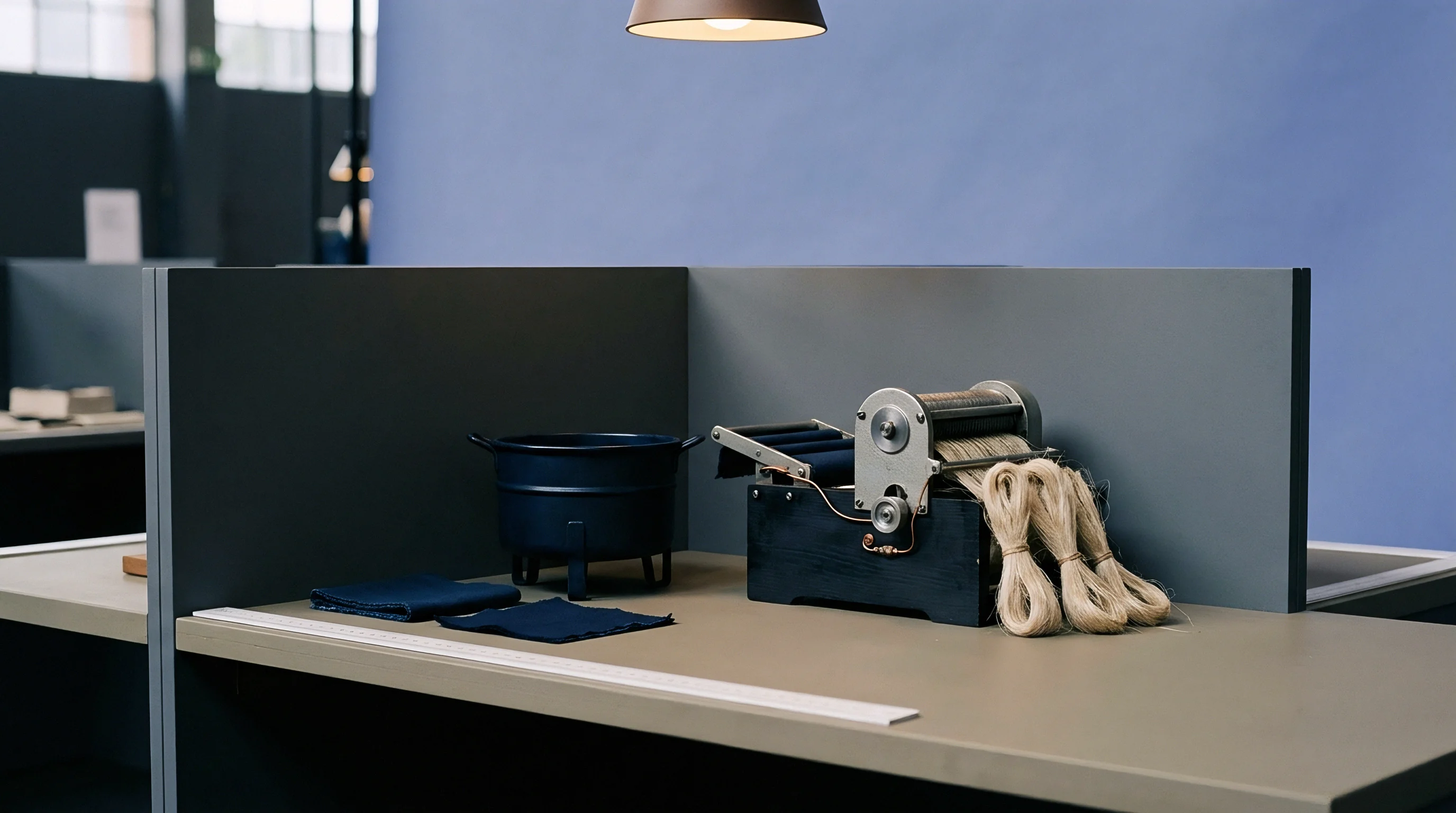
Removing moisture across a battery of steam-heated cylinders requires a progressive temperature gradient to avoid blistering the starch film. Wet flax warps enter the drying section carrying eighty to one hundred percent wet pick-up relative to dry fiber weight. Heating too rapidly at the first cylinder boils moisture inside the size film, creating micro-cavities that destroy film continuity.
A stepped temperature profile across twelve drying cylinders ensures steady evaporation while preserving polymer film alignment.
Multi-Cylinder Temperature Profiles and Moisture Evaporation
Initial drying cylinders run cool, between sixty-five and seventy-five degrees Celsius, sealing wet sizing onto the fiber surface without violent steam generation. Mid-section cylinders operate at peak temperatures up to one hundred and twenty degrees Celsius to drive moisture out of the dense flax core. Final cylinders step back down to eighty degrees Celsius to avoid thermal oxidation of synthetic lubricants and stabilize yarn moisture before dry splitting.
- Pre-heat the first drying zone cylinders to seventy degrees Celsius using low-pressure modulated steam.
- Elevate mid-zone cylinder groups to one hundred and fifteen degrees Celsius to drive off core water content.
- Adjust final cylinder group steam pressure to maintain output yarn moisture at eight point five percent.
- Verify surface temperatures across all cylinders using a calibrated infrared thermal camera during full-speed operation.
- Clean cylinder Teflon coatings using non-abrasive soft scrapers to prevent dried size scale accumulation.
Rapid drying causes size migration as water vapor moves from the yarn core toward the surface. Steam carries dissolved starch molecules to the outer perimeter, forming a thick, brittle shell while leaving the core starved of binder. Controlled, uniform evaporation prevents this migration, maintaining balanced polymer distribution across the yarn cross-section.
Standard purchasing specifications require warps to maintain residual moisture within an eight-to-nine percent band to preserve natural flax fiber toughness during high-speed weaving.
Over-drying flax below six percent moisture permanently embrittles the pectin matrix binding individual ultimate fibers. Dry flax loses up to forty percent of its natural impact strength, making it prone to snapping under rapier beat-up loads. Steam cylinders require precise moisture-monitoring rollers that automatically adjust machine line speed if exit moisture strays from eight point five percent.
Teflon coatings on early drying cylinders prevent wet size from sticking to hot metal surfaces. Worn or damaged Teflon allows sizing liquor to adhere, peel from the yarn, and form hard deposits on cylinder walls. These deposits imprint back onto the wet warp sheet with each revolution, creating thin spots in the film that rupture during shed opening.

Residual Moisture Equilibrium in Slashed Linen Beams
Linen yarns are highly hygroscopic, absorbing up to twelve percent ambient moisture under standard atmospheric conditions of twenty degrees Celsius and sixty-five percent relative humidity. Beams wound directly off hot drying cylinders retain heat within their inner layers. This trapped heat drives residual moisture outward toward the outer layers, creating a moisture gradient within the beam.
Moisture variation inside a beam leads to uneven unwinding tension on high-speed rapiers. Dry core sections exhibit higher friction and brittleness, whereas moist outer layers stretch more and show a lower tensile modulus. Conditioning beams for twenty-four hours in a humidity-controlled room allows internal temperature and moisture to equalize before mounting on the loom.
Doffing a three-thousand-metre warp beam prematurely traps excess heat inside the core, degrading the chemical film and causing fiber brittleness through the bottom five hundred metres of warp.

Tension
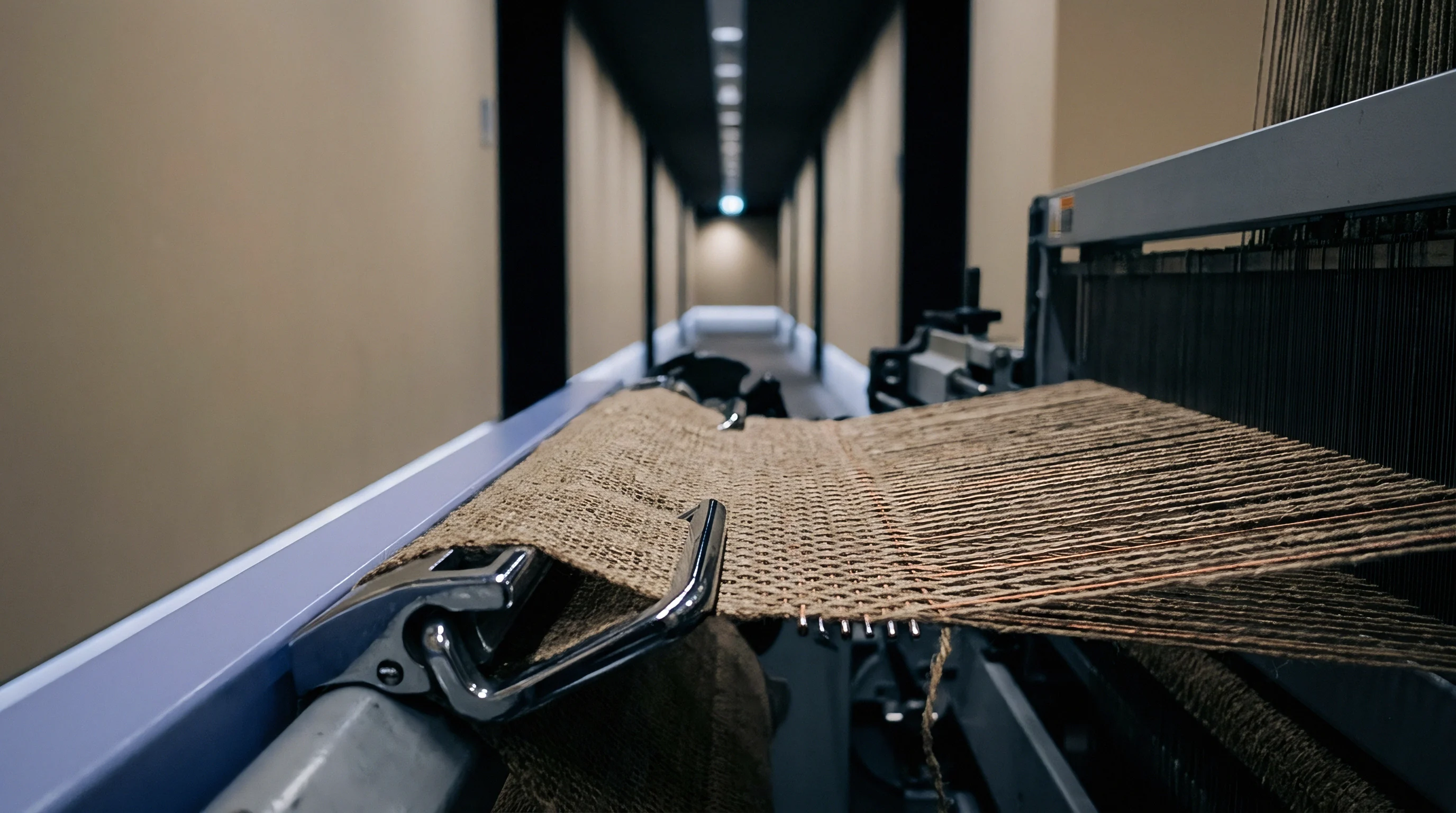
Rapier insertion cycles subject slashed flax threads to peak axial loads during back-rest roller displacement. At six hundred picks per minute, rapier looms accelerate weft components rapidly, requiring clean, precise shed openings. Because linen yarn stretches only two to three percent before breaking, sizing must boost ultimate tensile strength by fifteen to twenty percent while retaining at least seventy percent of baseline elongation to withstand dynamic loom forces.

Flex Fatigue and Abrasion Mechanics in High Speed Shedding
High-speed shedding subjects warp yarns to cyclic bending alongside continuous friction against drop wires, heddle eyes, and reed dents. A single warp segment endures over four thousand flex cycles before reaching the fell of the cloth. Unsized wet-spun flax breaks down quickly under this stress, shedding loose fibrils that form fiber balls.
These fiber balls cling to adjacent ends, obstructing the shed and causing rapier collisions.
Abrasion resistance depends on the toughness of the outer size film. Pure starch films develop micro-cracks after two thousand flex cycles at peak shed angles. Incorporating flexible acrylic binders allows the film to flex repeatedly without micro-fracturing.
A smooth surface reduces friction against the steel reed, lowering heat generation and static charge during high-speed runs.
| Dry Add-On (%) | Penetration Depth (%) | Tensile Gain (%) | Elongation Loss (%) | Abrasion Cycles to Failure | Warp Stops per 100k Picks |
|---|---|---|---|---|---|
| 4.5 | 15 | +6 | -10 | 1,200 | 4.8 |
| 6.5 | 28 | +12 | -18 | 2,800 | 1.9 |
| 8.5 | 35 | +18 | -25 | 4,500 | 0.4 |
| 10.5 | 52 | +22 | -42 | 3,900 | 1.2 |
| 12.5 | 68 | +25 | -58 | 2,100 | 3.5 |
Over-sizing flax degrades weaving performance by making threads excessively stiff. When size add-on exceeds eleven percent, yarn stiffness triples while residual elongation drops below one point two percent. Rigid yarns cannot absorb sudden impact loads during shed opening or heavy beat-up sequences; brittle threads snap cleanly at the harness eye, showing a break profile characteristic of elongation exhaustion rather than abrasive wear.
Dry splitting at the sizing machine lease rods causes initial micro-damage to the size film. Warps leave drying cylinders as a continuous web bound by dried size bridges. Separation lease rods snap these bridges to free individual threads for beam winding.
Severe lease rod angles rupture the size film around individual yarn perimeters, exposing bare fiber to friction inside the loom harness.
When Does Micro-Fibrillation Overcome Film Elasticity under Dynamic Shedding?
Micro-fibrillation begins when repetitive flexing breaks individual ultimate fibers within the linen yarn. Linen consists of composite bundles of ultimate fibers bound by pectin gums. When dynamic loom tension exceeds twenty centinewtons per tex, internal pectin bonds shear before the outer size film fails.
This internal fiber shift causes localized swelling beneath the size film, forcing the polymer coating to bulge, crack, and flake away from the core.
Once the size film flakes away, loose ultimate fibrils protrude through the damaged coating. High-speed rapiers catch these exposed fibrils during transit, causing severe end breaks or full warp floats. Maintaining adequate size film elasticity prevents early cracking, keeping micro-fibrillation contained inside the bundle throughout the run.
A size film must withstand four thousand abrasion cycles against polished stainless steel reed wires without showing surface flaking under microscopic inspection.
Back-rest roller geometry directly affects peak tension on the warp sheet. Pulsating back-rest rollers cushion the shock of shed opening by moving forward in synchronization with the heddle frame. Synchronized tension control systems reduce peak warp stress by up to twenty-five percent, enabling sized flax warps to endure extended, high-speed production runs.
Which chemical combination maintains film integrity when loom shed angles exceed thirty degrees on coarse plain weave constructions?
Assay
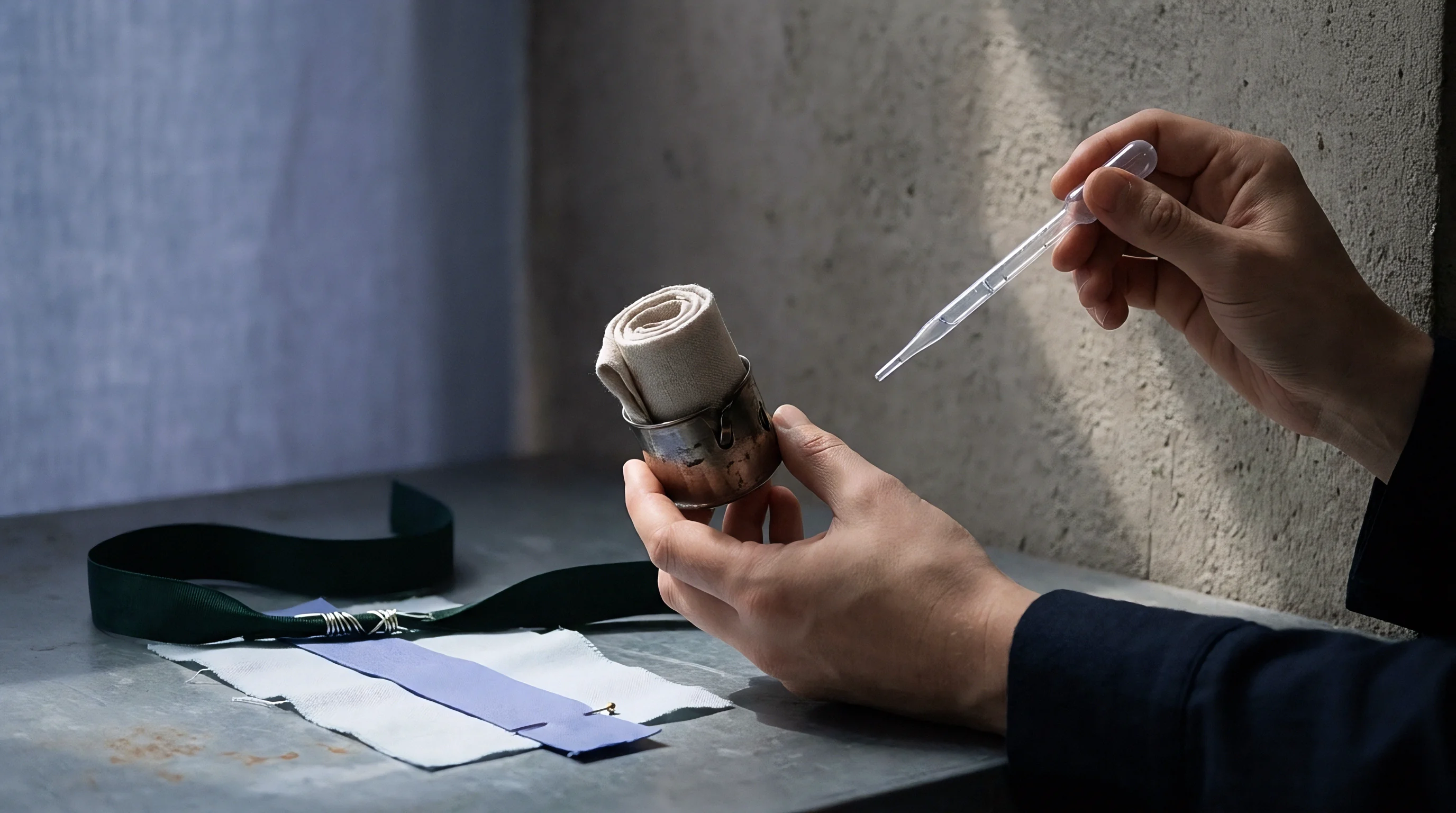
Gravimetric extraction through standardized enzymatic desizing provides an absolute measurement of chemical film weight on greige beams. Slashed warp samples taken from the start, middle, and end of a twenty-thousand-metre run undergo laboratory analysis to verify pick-up uniformity. Samples are washed in an alpha-amylase enzyme solution at seventy degrees Celsius to degrade starch binders, followed by solvent extraction to remove synthetic polymers and wax additives.
Comparing dry weight before and after extraction yields the exact chemical add-on percentage.
Analytical Protocol for Chemical Add-On Distribution
Analytical accuracy requires accounting for natural non-fibrous matter in flax. Raw linen carries up to two percent natural waxes and soluble pectins that extract alongside sizing chemicals during desizing tests. Testing unsized control samples from the same yarn lot establishes a baseline correction factor.
Subtracting natural weight loss from total desized loss isolates the true chemical add-on percentage.
Cross-sectional microtome mapping reveals size penetration depth and film continuity around the yarn perimeter. Yarns embedded in resin are cut into five-micron cross-sections and stained with an iodine-potassium iodide solution. Iodine stains starch-based size dark blue while leaving cellulosic flax fibers pale yellow.
Digital image analysis then calculates the stained area relative to total cross-sectional area, yielding exact penetration ratios across samples.
- Sample collection standard mandates taking five full-width swatches across the warp beam at five-thousand-metre intervals.
- Solvent extraction protocol uses petroleum ether inside a Soxhlet apparatus to isolate hydrophobic wax additives from polymer binders.
- Enzymatic bath digestion runs for sixty minutes at pH 6.5 using thermostable bacterial amylase enzymes.
- Gravimetric drying oven treatment maintains specimens at one hundred and five degrees Celsius until constant dry mass is achieved.
Near-infrared spectroscopy offers real-time, non-destructive measurement of size add-on directly on the slasher. Optical sensors mounted across the yarn sheet measure absorption bands for starch hydroxyl groups and synthetic binder carbonyl groups. Instant feedback allows operators to adjust squeeze roll pneumatic pressure before off-spec warp winds onto the beam.
Cross-Sectional Microscopy and Penetration Metrics
Microscopic analysis reveals three distinct pick-up failure modes on long linen runs. Surface skinning presents as a thick outer ring with zero internal binder penetration, caused by high viscosity or low bath temperatures. Internal saturation exhibits complete core penetration with no outer film, stemming from excessive squeeze pressure or ultra-low viscosity.
Asymmetric coating displays thick size on top of the thread and bare patches underneath, caused by misaligned immersion rollers in the squeeze box.
Standard supply contracts enforce strict tolerances on pick-up variance across long warp shipments. The maximum allowable coefficient of variation for chemical add-on is set at four percent across the full warp length. If lab desizing assays reveal variation exceeding five percent, the contract grants the buyer the explicit right to reject the beam lot or apply a fifteen percent penalty against invoice values.
Acceptance procedures require testing five random warp beams from every sizing lot before loading into the weaving shed.
Margin
Financial variance on long warp contracts tracks directly with loom stoppages caused by weak or abrasive yarn. High-speed rapier looms carry steep hourly operating costs driven by depreciation, power, and facility overhead. A single warp stop on a six-hundred-rpm rapier takes an average of two point five minutes to repair ~ clearing the shed, locating the broken end, tying a weaver’s knot, and re-threading through the heddle eye and reed dent.
Three warp stops per loom hour pull machine efficiency below eighty percent, converting profitable capacity into an operating loss.

Cost Impact of Size Non-Uniformity on High Speed Looms
Pick-up variation across long warp runs causes hidden financial losses throughout the weaving shed. Under-sized segments lead to frequent end breaks that drag down overall efficiency. Over-sized segments make yarn excessively stiff, causing snap breaks and accelerating wear on loom reeds.
Replacing a damaged stainless steel reed on a two-hundred-and-twenty-centimetre rapier loom costs up to eight hundred dollars, in addition to two hours of unscheduled downtime.
| Pick-Up Variance (CV %) | Shed Efficiency (%) | Warp Stops / Hour | Loom Hours per 1,000 Metres | Downtime Cost per Metre ($) | Net Landed Metre Cost ($) |
|---|---|---|---|---|---|
| 2.1 (Controlled) | 92.5 | 0.45 | 21.6 | 0.12 | 4.15 |
| 3.8 (Acceptable) | 88.0 | 0.95 | 22.7 | 0.28 | 4.31 |
| 5.5 (Unstable) | 81.2 | 1.85 | 24.6 | 0.58 | 4.61 |
| 7.2 (Severe Drift) | 72.4 | 3.40 | 27.6 | 1.15 | 5.18 |
Chemical sizing accounts for less than four percent of total greige fabric production costs. Attempting to cut costs with low-grade unmodified starches destroys loom productivity. Saving two cents per metre on formulation can trigger a fifteen percent drop in loom efficiency, adding forty-three cents per metre in downtime overhead and unrecoverable fixed costs.
Premium formulations blending synthetic polymers with modified starches protect financial margins by maximizing shed output.
Loom hour accounting treats machine capacity as a perishable asset. A shed operating one hundred rapier looms loses six hundred operating hours a week when average efficiency drops from ninety to eighty percent. At an operating cost of thirty-five dollars per loom hour, that efficiency loss burns twenty-one thousand dollars a week in unrecovered overhead.
Controlling chemical pick-up during slashing secures the loom productivity required to hit target gross margins on long-run linen orders.
Production scheduling relies on predictable warp beam runout dates. Inconsistent size pick-up causes erratic breakage rates, forcing mills to reallocate weaver labor unpredictably. Standardizing sizing parameters stabilizes warp performance so weavers can handle sixteen rapiers per operator instead of eight, cutting direct labor expense by half.
Sourcing managers protect landed margin sheets by tying sizing verification dossiers directly to warp beam acceptance documentation prior to loom mounting.