Soaking Penetration Depth
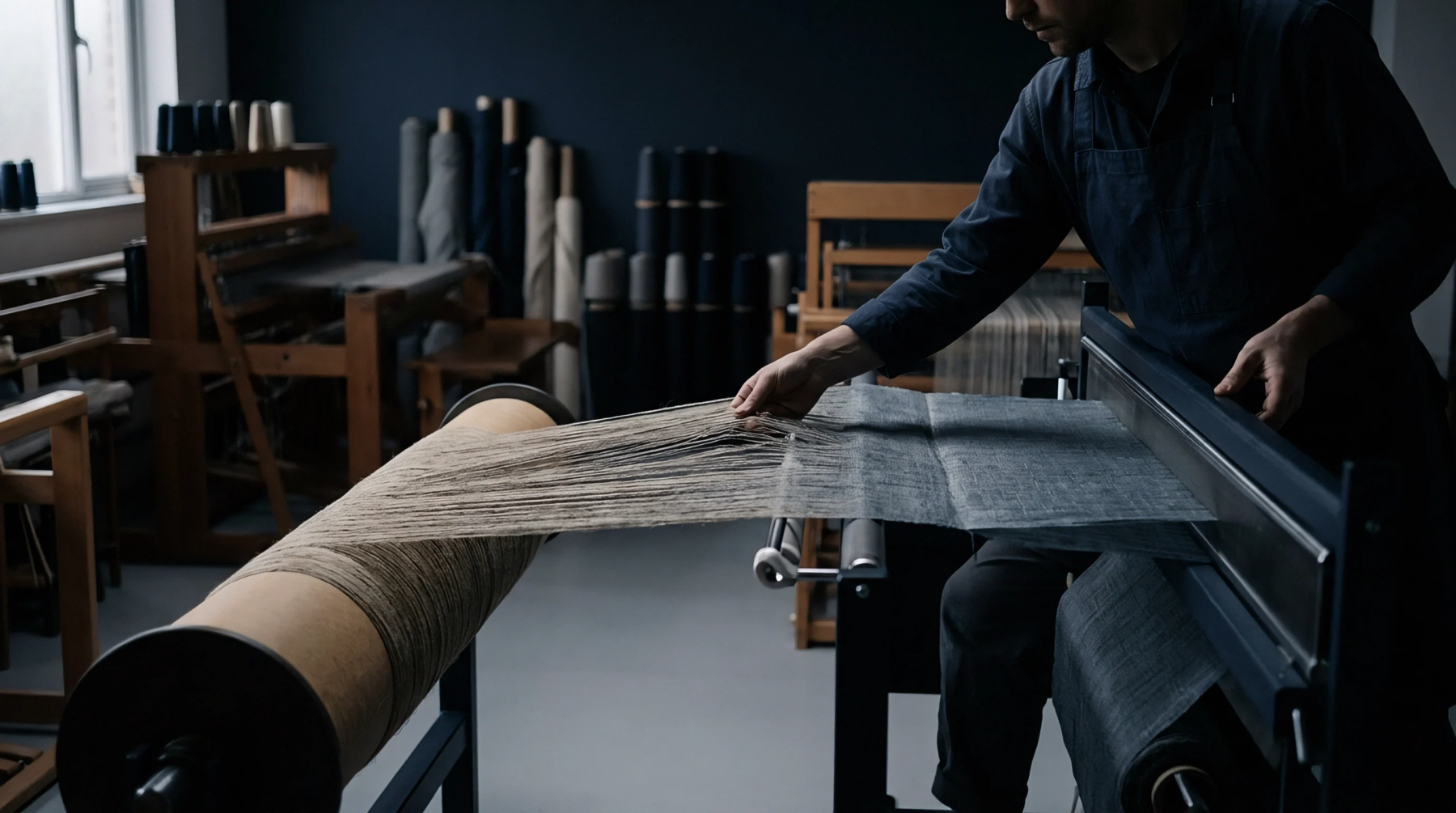
Starch saturation measurement defines the mechanical limit of adhesive fluid absorption during the sizing stage of linen warp preparation in industrial textile mills. Chinese manufacturing facilities record this value in the batch production sheet to verify that potato starch liquor reaches the core of flax yarns prior to high speed loom insertion. Starch penetration depth governs yarn hairiness suppression and abrasion resistance during cyclical shedding motion, stopping permanently at the boundary where excess adhesive fluid forms a brittle exterior crust instead of binding inner cellulose microfibrils.
Adhesive Viscosity
Fluid resistance inside the starch bath controls how deeply liquefied potato polymers travel between individual flax fibres under mechanical pressure from squeeze rollers. Mill technicians adjust temperature parameters to lower the internal friction of the sizing liquor, allowing better capillary action along dry yarn bundles before gelation occurs on hot drying cylinders. High fluid thickness prevents proper core saturation, leaving inner filaments vulnerable to mechanical fatigue during subsequent high speed weft insertion cycles.
Low fluid resistance causes excessive liquor uptake, making warp ends stiff and prone to sudden snapping during harsh reed beatup actions. Laboratory technicians test yam cross sections under microscopic magnification to confirm that adhesive penetration reaches the exact center without bleeding past outer perimeters.
Quality Verification
Export inspectors review finished fabric density reports to verify that internal starch distribution meets overseas buyer specifications before commercial shipment approval. A higher concentration of interior adhesive ensures superior tensile strength during demanding loom operations, whereas surface-only coatings fail under repeated warp tension. Factory managers maintain strict control over squeezing pressure values to prevent batch variations from compromising downstream dyeing uniformity and finishing results.
Laboratory testing procedures differentiate between raw fibre grades and final woven cloth classifications by measuring residual sizing distribution across broken yarn cross sections. This specific numerical indicator establishes the absolute threshold for acceptable sizing quality in heavy industrial flax processing.