Auditing Chinese Spinning Shed Moisture Regain and Processing Mass Shortfalls
Linen yarn buyers eliminate moisture invoice inflation by calculating landed payments on laboratory oven-dry mass plus official 12 percent regain.
Regain
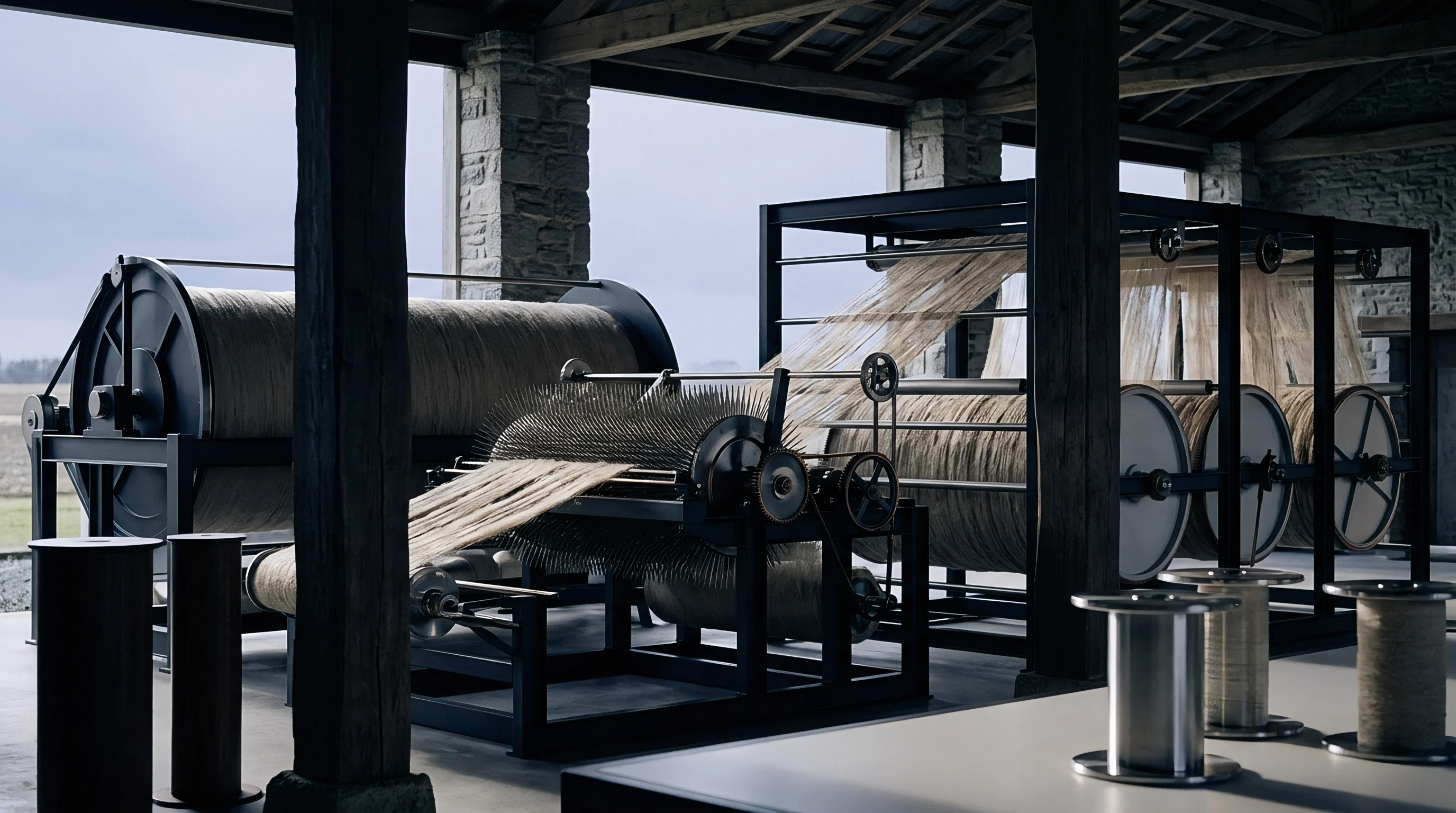
Raw flax arriving at wet spinning facilities in Jiangsu carries an ambient moisture level dictated by transit storage rather than international commercial conventions. Bast fibers absorb and release water vapor seeking thermodynamic equilibrium with surrounding air. Ambient relative humidity during ocean transit and local warehouse storage in Eastern China routinely ranges between 70 percent and 80 percent.
Raw fiber arriving at the mill holds an actual moisture content between 11 percent and 14 percent of its total weight. The commercial invoice rendered by a yarn mill calculates billable weight using standard allowance percentages applied to a calculated oven-dry mass. Discrepancies between actual water content at physical weighing and the standardized allowance distort landed yarn costs before spinning machines process a single kilo.
Atmospheric Equilibrium in Wet Spinning Halls
Relative humidity inside production zones frequently ranges between 75 percent and 85 percent to prevent fiber breakage during drafting. Air temperatures maintained between 24 degrees and 28 degrees Celsius keep natural waxes pliable along the drafting zones. High ambient moisture forces long flax fibers to absorb additional water from room air while sitting on roving bobbins.
Fiber loses water rapidly when moved to drier environments. A 10-tonne bale store lot holding 13.5 percent physical moisture contains 8,810 kilograms of dry plant matter and 1,190 kilograms of water. Selling that same yarn package under a standard commercial regain allowance recalculates the total billable mass using a fixed mathematical addition.
Flax yarn mass measurements vary continuously with ambient humidity until oven-dry desiccation establishes an absolute dry benchmark.

Standard Allowances versus Physical Water Mass
Commercial specifications for linen yarns fixed by international trade bodies assign an arbitrary percentage to calculate invoiced weight from oven-dry fiber. International standards assign pure linen yarn an official commercial moisture regain of 12.00 percent. Raw scutched flax carries an official regain value of 12.00 percent.
Blended linen yarn allowances scale proportionally based on constituent fiber percentages. Mills weighing outgoing yarn packages in humid spinning sheds capture elevated water mass alongside fiber mass. Invoiced weights generated without dry-mass testing charge buyers yarn prices for extra water molecules.
| Fiber Class and Processing Stage | Standard Commercial Regain Rate | Spinning Shed Physical Regain Range | Shed Relative Humidity Conditions |
|---|---|---|---|
| Scutched Long Line Flax | 12.00% | 12.50% to 14.20% | 75% to 80% RH |
| Combed Tow Fiber | 12.00% | 11.80% to 13.80% | 70% to 78% RH |
| Wet-Spun Pure Linen Yarn | 12.00% | 13.00% to 15.50% | 80% to 85% RH |
| Linen and Cotton Blend Yarn (50/50) | 10.25% | 11.00% to 12.80% | 65% to 75% RH |
Yarn loses moisture inside shipping containers during sea freight across dry transit corridors.


Gutter
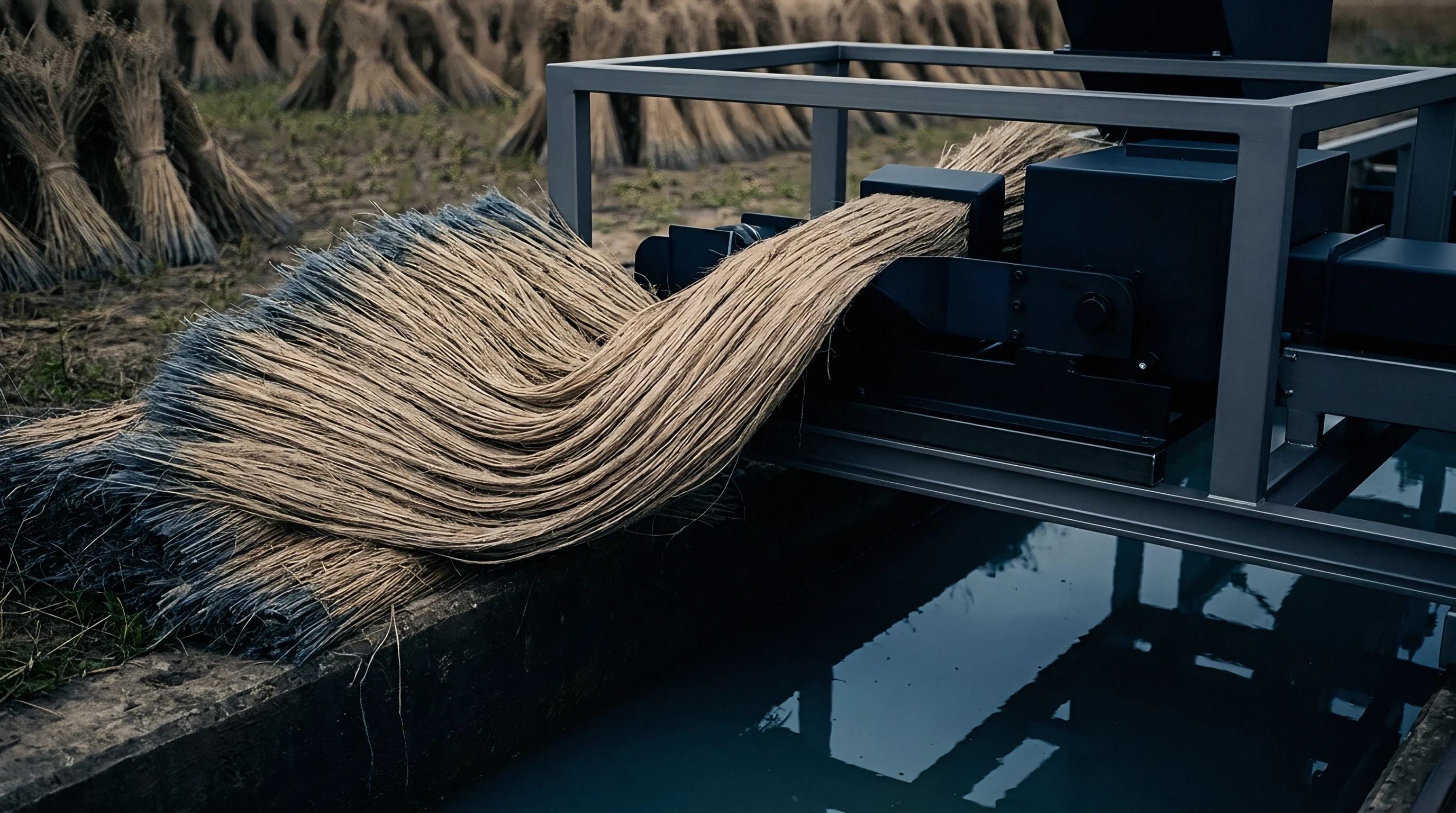
Converting raw hackled line flax into fine count yarn subjects the natural bast fiber to severe mechanical stress and liquid immersion. Mechanical action extracts non-spinable components while hot water baths leach water-soluble matter. Processing loss breaks down into solid fibrous waste and dissolved organic material.
Solid fiber losses collect beneath machine frames or exhaust into filtration dust bags. Liquid losses flow down wastewater channels during roving immersion. Accounting for total mass shortfall demands separating dry mechanical fly from wet basin extraction loss.
Mechanical Separation and Dust Extraction Losses
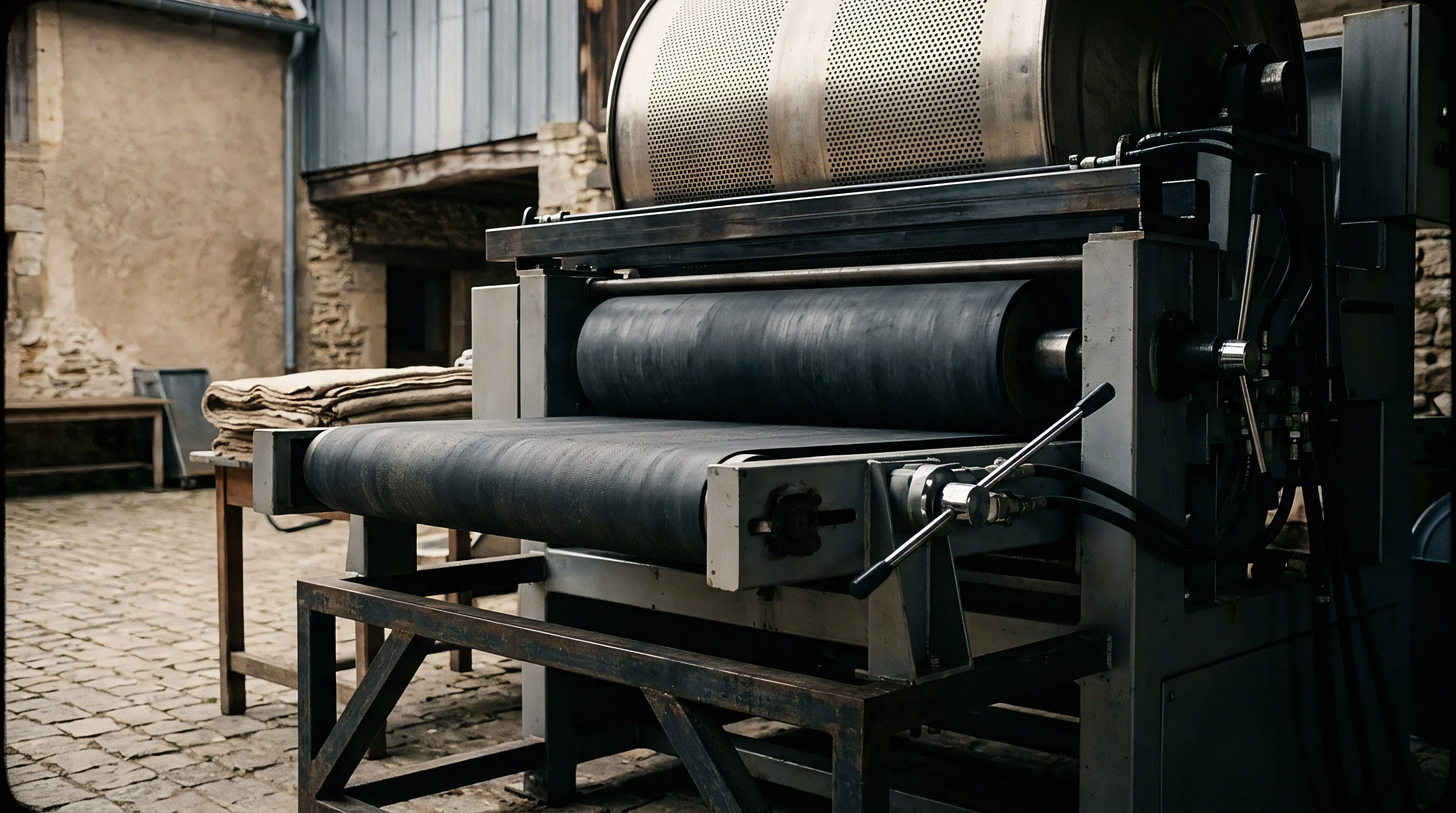
Scutching remnants, short fiber fly, and carding waste continuously escape into collection cyclones during dry preparation. Hackling operations strip short tow fibers from long line stricks to produce uniform ribbons for drafting. Fiber length distributions dictate mechanical waste volume.
Lower grade fiber carrying shive contamination generates up to 18 percent hackling waste. High grade European long flax generates between 8 percent and 12 percent hackling tow. Fiber dust escaping into central collection units accounts for 1.5 percent to 3.0 percent of unrecoverable mass loss across the dry preparation hall.
Dissolved Pectic Substances in Hot Water Basins
Submerging roving bobbins in temperature-controlled water baths softens natural lignin and hemicellulose binders before final drafting. Hot water basins operating between 60 degrees and 70 degrees Celsius extract water-soluble pectins from the fiber bundle structure. Pectin extraction reduces yarn mass while enabling fine yarn counts.
Mass loss in wet trough spinning averages 2.5 percent to 5.0 percent depending on bath temperature, immersion duration, and fiber chemical treatment history. Dissolved matter enters the mill wastewater system without appearing in dry waste hoppers.
- Scutching Shive Loss describes woody stem fragments ejected by mechanical beaters during initial fiber cleaning operations.
- Hackling Tow Extraction isolates short entangled fibers pulled from long line stricks by pin combs to establish uniform alignment.
- Pectic Trough Extraction measures water-soluble hemicellulose and natural pectins dissolved inside wet spinning water baths.
- Shed Fly Accumulation captures microscopic fiber fragments liberated into room air and collected by dust extraction systems.
Processing flax into wet-spun yarn destroys between four and eight percent of starting fiber mass through soluble extraction and airborne fly.
How much total fiber mass disappears into wastewater sludge relative to collected filtration tow across a full spinning shift?


Oven
Desiccated sample testing forms the analytical foundation for every landed yarn mass verification. Laboratory testing strips variable environmental moisture to expose pure oven-dry fiber content. International and national standards regulate drying temperatures, sample container sealing, and balance weighing precision.
Sampling procedures mandate extracting yarn skeins from deep inside packed shipping cartons to prevent surface air exchange from skewing results. Weighing samples prior to desiccation records wet sample mass for regain calculation.
Dry Mass Verification under GB/T 9994
National regulatory codes in China prescribe ventilated heating chambers maintained at 105 degrees Celsius until weight changes cease between consecutive weighings. Standard GB/T 9994 governs conventional moisture regain calculations across textile products within Chinese domestic manufacturing. Testing technicians place unwound skeins inside pre-weighed aluminum weighing bottles inside the drying chamber.
Temperature sensors hold oven interiors within a 2-degree margin. Consecutive weighings taken at 15-minute intervals must show mass variations below 0.05 percent to confirm total moisture removal. Calculating dry mass establishes the immutable baseline for commercial weight adjustments.
ISO 6741 Standard Test Mechanics
Skein sampling protocols mandate taking representative yarn skeins directly from sealed shipping cartons before moisture transfer alters the lot balance. ISO 6741-1 defines commercial mass determination procedures for yarn consignments. Testing teams pull ten random yarn packages from different cartons across a single delivery lot.
Skeins of 100 meters length are reeled off under standard tension controls. Laboratory technicians record initial sample weights on balances reading to 0.001 grams before oven insertion.
- Extract representative yarn packages from minimum ten separate sealed shipping cartons across the delivery lot.
- Wind 100-meter test skeins using a calibrated reel maintaining controlled tension across every sample.
- Weigh fresh test skeins on certified analytical balances to establish accurate initial wet mass figures.
- Place test skeins inside forced-ventilation drying ovens set precisely to 105 degrees Celsius.
- Heat samples continuously until consecutive weighing intervals show zero further moisture loss.
- Record final desiccated dry mass while samples remain inside sealed desiccator containers.
- Calculate commercial mass by adding official statutory regain percentages directly to measured dry mass.
Desiccation testing always reveals lower absolute mass figures than room-temperature scales report in high-humidity manufacturing zones.
Adjustment
Financial discrepancies between gross weighed weight and commercial billed weight emerge whenever mills bill shipments based on nominal weights rather than desiccated calculation. Moisture content variations convert into immediate cash balance shifts upon final invoice settlement. Chinese yarn spinners standardly issue commercial invoices citing scale gross weight minus carton tare weight.
Receiving departments taking delivery in low-humidity destination regions discover scale deficits exceeding 3 percent upon carton opening.
Quantitative Reconciliation for Line Linen Yarns
Calculating commercial invoice mass requires applying official regain percentages to verified dry weight rather than taking weighbridge gross scales at face value. Official commercial mass equals oven-dry fiber mass multiplied by one plus the statutory commercial regain fraction. For pure linen, official regain sits at 0.12.
If a delivery carton weighs 25.00 kilograms on arrival at 14.5 percent physical moisture content, that carton contains 21.83 kilograms of dry linen fiber and 3.17 kilograms of water. Applying the official 12.00 percent regain allowance yields an official commercial weight of 24.45 kilograms. The buyer pays for 0.55 kilograms of excess water if billed on scale weight.
Invoicing a 10-tonne yarn shipment at 14.5 percent physical moisture rather than official 12.00 percent commercial regain overcharges the buyer by 220 kilograms of yarn price.
Mass Balance Sensitivity Analysis
Evaluating a ten-tonne yarn delivery illustrates how subtle deviations in ambient shed humidity cascade into substantial financial liabilities. Take a 10,000-kilogram lot of 36 Lea wet-spun linen yarn priced at 18.50 USD per kilogram landed cost. Assume the spinning shed packages the yarn under 82 percent relative humidity, locking 14.2 percent physical moisture inside yarn cones.
Oven desiccation testing reveals the true dry fiber mass equals 8,756.57 kilograms. Applying the contractual 12.00 percent commercial regain rate produces a correct commercial billed mass of 9,807.36 kilograms. Invoicing on scale weight forces the buyer to pay for 192.64 kilograms of phantom yarn.
The financial overpayment equals 3,563.84 USD on a single container load.
| Actual Physical Regain at Packaging | Verified Oven-Dry Fiber Mass | Statutory Commercial Mass (12% Regain) | Invoiced Mass Shortfall | Monetary Overpayment at $18.50/kg |
|---|---|---|---|---|
| 12.00% (Standard) | 8,928.57 kg | 10,000.00 kg | 0.00 kg | $0.00 |
| 13.00% | 8,849.56 kg | 9,911.50 kg | 88.50 kg | $1,637.25 |
| 14.00% | 8,771.93 kg | 9,824.56 kg | 175.44 kg | $3,245.64 |
| 15.00% | 8,695.65 kg | 9,739.13 kg | 260.87 kg | $4,826.10 |
- Conditioned Weight Base establishes contractually that payment calculation rests exclusively on desiccated oven-dry sample results.
- Tare Mass Verification requires weighing empty cardboard cones, plastic sleeves, and outer cartons independently for every batch.
- Independent Sampling Clause empowers certified third-party testing laboratories to draw core samples at port clearance points.
- Debit Adjustment Protocol outlines auto-deduction mechanisms applied against outstanding invoices upon receipt of certified test reports.
Skipping oven-dry mass testing on incoming mill deliveries leaves sourcing buyers completely exposed to paying yarn prices for ambient Chinese humidity.


Recovery
Enforcing commercial remedies for unacknowledged yarn weight shortfalls depends on establishing bulletproof contractual definitions prior to order placement. Dispute processes fail when purchase orders omit testing references to GB/T 9994 or ISO 6741 standards. Mill sales offices routinely reject weight claims if sampling occurred after container seal breakage without official witness presence.
Documenting container numbers, seal intactness, and accredited lab sampling protocols ensures claim validity during contract negotiations.

Audit Evidence and Verification Dossiers
Claims presented to Chinese mill managers demand third-party laboratory reports matching specific container numbers with sealed sampling tags. Sourcing teams compile dossiers containing weighbridge tickets, laboratory dry-mass reports, cone tare weights, and moisture logs. Certified testing bodies like SGS or ITS perform container core sampling immediately upon customs discharge.
Audit reports specify measured moisture content alongside recalculated commercial mass. Submitting complete verification packages forces spinning mill finance desks to accept invoice corrections.

Contractual Safeguards and Guarantee Clauses
Purchase agreements covering imported linen yarn protect buyer capital by incorporating explicit moisture testing rights at port of entry. Contracts omitting standard commercial regain definitions default to physical weighbridge scales under Chinese domestic trade customs. Sourcing terms must state that final invoice amounts automatically scale based on ISO 6741 test certificate results rendered by an accredited laboratory within fourteen days of port discharge.
- Weighbridge Weight Certificate records gross container mass at customs entry prior to mill warehouse transfer.
- Laboratory Desiccation Audit provides certified oven-dry mass percentage determinations from drawn core skeins.
- Batch Traceability Ledger links physical yarn cone lot numbers directly to starting raw flax bale identifiers.
- Debit Note Calculation Sheet translates measured moisture regain deviations into clear monetary price reductions.
Invoiced weight calculations shall derive exclusively from oven-dry fiber mass determined under ISO 6741-1 testing plus official 12.00 percent commercial regain, superseding all physical scale readings taken at the seller mill site.