Establishing Mass Balance Accounting across Wet Spinning Trough Operations
Mass balance accounting in wet spinning requires dry mass tare calibration and trough dissolution loss tracking to prevent certified claim dilution.

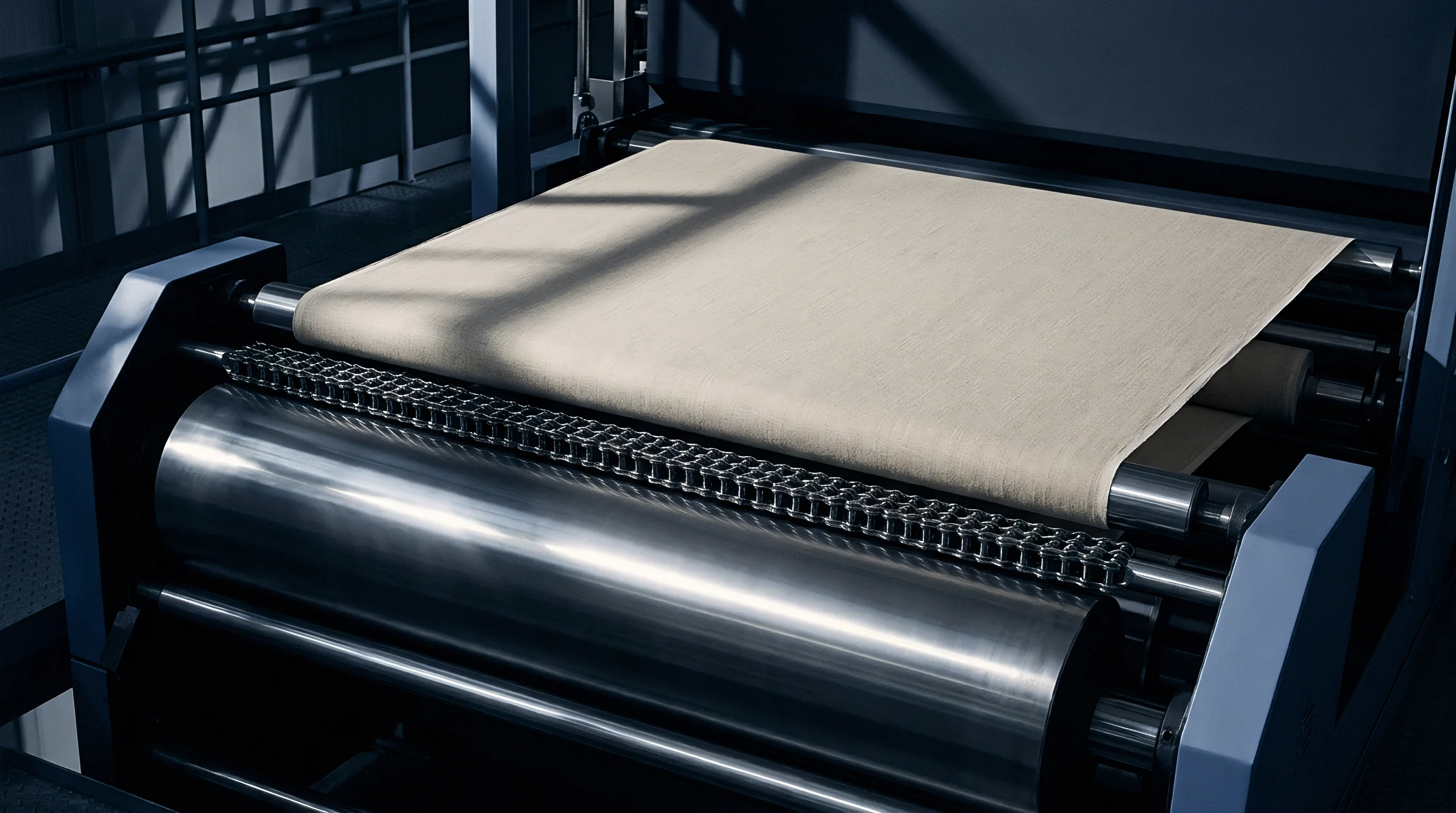
Roving
Unspun flax fiber packages arrive at the spinning mill wound onto plastic bobbins following gilling and drafting operations. Bound together by residual intercellular pectins, these parallelized fiber strands carry a nominal linear density between 0.6 and 2.5 metric count (Nm). Commercial transactions settle on nominal invoice mass, but tracking mass balances across wet spinning frames requires accounting for true dry fiber weight.
Storage conditions introduce further variation, as ambient humidity, fiber wax levels, and package density create sharp moisture gradients across stored creel lots.
Because flax fibers readily absorb moisture, standard commercial regain is set at 12 percent under ISO 6741, though actual warehouse levels range from 8 percent in dry winter months to 16 percent in unconditioned humid environments. Without adjusting for these shifts, mass readings become misleading: if a mill inputs 10,000 kilograms of certified European Flax roving at 15 percent moisture content without correcting for standard regain, the actual dry fiber mass entering production drops by 261 kilograms against the invoice baseline.

Inbound Mass Verification and Regain Calibration
Fluctuations in ambient storage humidity affect delivered package weights, making oven-dry mass testing necessary for every incoming lot. Under ISO 2060, oven drying relies on representative core samples pulled from creel packages, heated at 105°C to constant mass, to calculate absolute dry fiber weight. That baseline figure anchors every downstream mass balance ledger.
Bale tags link lot numbers to certified organic or European Flax shipments, which arrive at the mill gate with scope certificates tied to transaction certificates (TCs) specifying net mass. Any discrepancy between certified transaction mass and the oven-dry scale mass measured at creel loading must be reconciled before roving packages reach the spinning frames.
A systematic inbound inspection routine maintains mass balance integrity before creel loading begins.
- Package Core Sampling extracts five-gram core samples from ten randomly selected bobbins per pallet to measure moisture distribution gradients across outer and inner yarn layers.
- Oven-Dry Tare Weight Calibration checks the exact mass of plastic bobbin tubes, subtracting carrier weight from gross creel package measurements to establish absolute net biomass.
- Transaction Certificate Reconciliation compares net dry mass recorded on supplier scope certificates against physical weighbridge tickets generated at the mill receiving dock.
- Moisture Regain Adjustment converts gross scale mass to commercial target mass using calibrated moisture meter measurements taken immediately before wet trough immersion.
Because allocation depends on dry mass, allowing unadjusted gross weights into accounting systems lets non-certified conventional fiber dilute certified lots during continuous processing.
Commercial regain calculations relying on an unverified 12 percent standard moisture assumption introduce up to four percent error in dry fiber mass balances when ambient store humidity falls below 55 percent relative humidity.
Skipping dry tare calibration credits unearned certified weight to inventory ledgers, leaving buyers vulnerable to regulatory enforcement under destination origin rules.

Trough
Submersion tanks placed just ahead of drafting rollers condition the untwisted fiber strand with heated fluid. The bath softens intercellular pectins binding individual flax ultimates, permitting smooth drafting into fine, uniform linen yarn. While fluid temperature, chemical additives, and dwell time dictate how thoroughly fiber bundles divide, they also cause significant dry mass loss through extraction.
Hot water between 60°C and 75°C leaches water-soluble pectins, hemicelluloses, waxes, and mineral salts from the moving roving. This lost weight represents real biomass that leaves the strand, dissolving into bath liquor or settling out as trough sediment, so yarn yield falls steadily as bath temperature rises.
Thermal Pectin Solubilization and Mass Dissolution Rates
Heating the bath from 60°C to 75°C hydrolyzes glue-like polysaccharides in the middle lamella of bast bundles. Higher temperatures improve fiber draftability for finer thread counts, but speed up organic mass extraction. Bath circulation rates and immersion time determine the exact percentage of dry mass stripped during passage.
Calculating mass balances across wet troughs requires tracking this extracted fraction. Depending on raw fiber origin, retting degree, and bath temperature, dry extraction accounts for 1.5 percent to 3.5 percent of initial dry roving mass. Ignoring this drop inflates recorded yarn yield, generating phantom fiber credits on mass balance balance sheets.
| Bath Temperature (°C) | Dwell Time (Seconds) | Soluble Pectin Loss (%) | Lint Wash-Out Loss (%) | Total Bath Dry Mass Loss (%) |
|---|---|---|---|---|
| 60 | 1.2 | 1.10 | 0.40 | 1.50 |
| 65 | 1.5 | 1.45 | 0.55 | 2.00 |
| 70 | 1.8 | 1.85 | 0.65 | 2.50 |
| 75 | 2.2 | 2.30 | 0.80 | 3.10 |
Beyond chemical dissolution, mechanical fluid drag pulls short, unaligned ultimate fibers from the moving strand. This uncounted lint accumulates in trough fluid as suspended matter or settles to the floor as organic sludge.
Unmeasured extraction inside wet spinning baths systematically converts lost dry mass into phantom spinning yield.
Liquor Bleed and Suspended Debris Separation
Fresh water feeds and continuous bath overflow valves prevent dissolved solids from reaching saturation thresholds during production runs. This bleed-off stream carries dissolved organic matter and suspended fiber debris directly into wastewater pre-treatment plants or settling tanks.
Determining an accurate mass balance requires regular sampling of the bath overflow. Evaporative drying gives total dissolved solids (TDS) per liter, while filtration isolates total suspended solids (TSS). Multiplying these figures by total volumetric bleed rate establishes exact dry fiber loss through liquid discharge.
Ignoring trough extraction dynamics destabilizes inventory control through several distinct operational failure modes.
- Uncalibrated Thermal Spikes occur when bath temperature climbs above 75°C, triggering surges in pectin hydrolysis that dissolve up to 3.5 percent of dry fiber mass if line speeds are not adjusted.
- Continuous Overflow Unmetered Bleed sends dissolved biomass and short lint straight to drain lines without volumetric flow metering or total dissolved solids tracking.
- Surfactant Accumulation speeds up the leaching of natural waxes, boosting mass loss while changing drafted fiber surface friction and yarn breaking force.
- Sludge Sedimentation Sump Blindness hides accumulated short fiber debris on the tank floor, skewing weekly mass balance audits when sumps are flushed without being measured.
Mills frequently blame unmapped dry mass deficits on natural raw material variation instead of accounting for bath dissolution.


Ledger
Chain of custody tracking under ISO 22095 relies on precise credit balancing when processing certified organic or European Flax alongside conventional stock. Running certified and conventional fibers on separate spinning frames guarantees absolute traceability, but equipment utilization often obliges mills to process different inputs through shared trough lines sequentially or via mass balance credit allocation models. Mass balance rules permit assigning certified status to outgoing yarn lots based on documented inputs of certified roving, assuming conversion factors accurately reflect real loss vectors.
Because minor accounting errors compromise origin claims, a solid ledger system treats every wet spinning frame as a conversion node. Inputs record verified net dry roving mass; outputs record dry yarn mass alongside measured physical waste and trough extraction losses. Total mass in must equal total mass out across every defined production lot.

Why Does Batch Mass Balance Drift across Spinning Shifts?
Mid-shift adjustments to fluid settings without corresponding updates to conversion factors create immediate gaps between physical output and registered credits. Fluctuations in line speed, bath temperature, doffing frequency, and creel run-out alter total dry fiber extraction rates. When a shift operates at elevated bath temperatures, extraction loss increases, producing less dry yarn mass per kilogram of creel input.
If the mass balance ledger relies on a fixed, static loss factor, registered certified yarn credits will exceed physical yarn output, invalidating downstream claims.
To eliminate drift, mass accounting systems rely on a dynamic Mass Balance Conversion Factor (CF). This factor converts gross input roving weight to net expected dry yarn mass, incorporating calibrated bath losses and mechanical waste components.
Calculating batch conversion factors follows a four-step analytical sequence.
- Quantify net dry roving mass loaded onto frame creels by adjusting gross package weight for moisture content and bobbin tube tare.
- Measure real-time bath extraction loss by taking continuous liquor sample aliquots to quantify total dissolved and suspended solids per cubic meter of bath bleed.
- Weigh all physical waste streams generated during the run, including creel package tails, frame floor piecing scrap, and pneumatic suction fly.
- Subtract bath extraction loss and physical waste from initial dry roving mass to establish the maximum allowable certified yarn output credit.
Without precise tare measurements for winding bobbins and creel spools, output weights remain untrustworthy, invalidating audit trails and mass credit allocation logs.
Clause 4.2 of ISO 22095 mandates that batch conversion factors incorporate verified process loss fractions updated quarterly to prevent mass credit inflation.

Mass Allocation Ratios for Mixed Production Runs
Mills sharing machinery calculate production volume yields based on dry fiber inputs minus measured losses. When certified European Flax roving and conventional flax roving enter the same wet spinning hall during consecutive production runs, credits must be kept distinct in accounting through a strictly maintained credit ledger.
Much like financial accounts, certified input roving dry mass adds credits to the ledger while dispatched certified dry yarn draws them down. ISO 22095 rules forbid credit overdrafts: a mill cannot dispatch certified European Flax yarn before certified European Flax roving has been physically issued to the creels. Furthermore, mass balance credits expire if unused within a set timeframe, typically 12 months under major textile standard schemes.
Clause 6.3 of ISO 22095 specifies that mass balance balance sheets clear unallocated credits annually, invalidating aged batch surpluses.


Wastage
Physical loss accounting across the mill floor tracks every gram of fiber removed between creel loading and bobbin winding. In wet spinning, losses occur across five distinct physical and chemical channels: package tail scrap, trough soluble extraction, bath sludge sedimentation, ring frame piecing scrap with pneumafil fly, and winding yarn clearings. Quantifying each channel is necessary to reconcile creel inputs against packed yarn outputs.
Consider a worked case tracking a 10,000-kilogram lot of certified European Flax roving processed through wet spinning frames into Nm 26 fine yarn. With inbound roving carrying an actual moisture content of 14.0 percent and standard commercial regain calculated at 12.0 percent, the baseline oven-dry mass of this fiber input is exactly 8,600 kilograms (10,000 kg gross weight minus 1,400 kg moisture content).
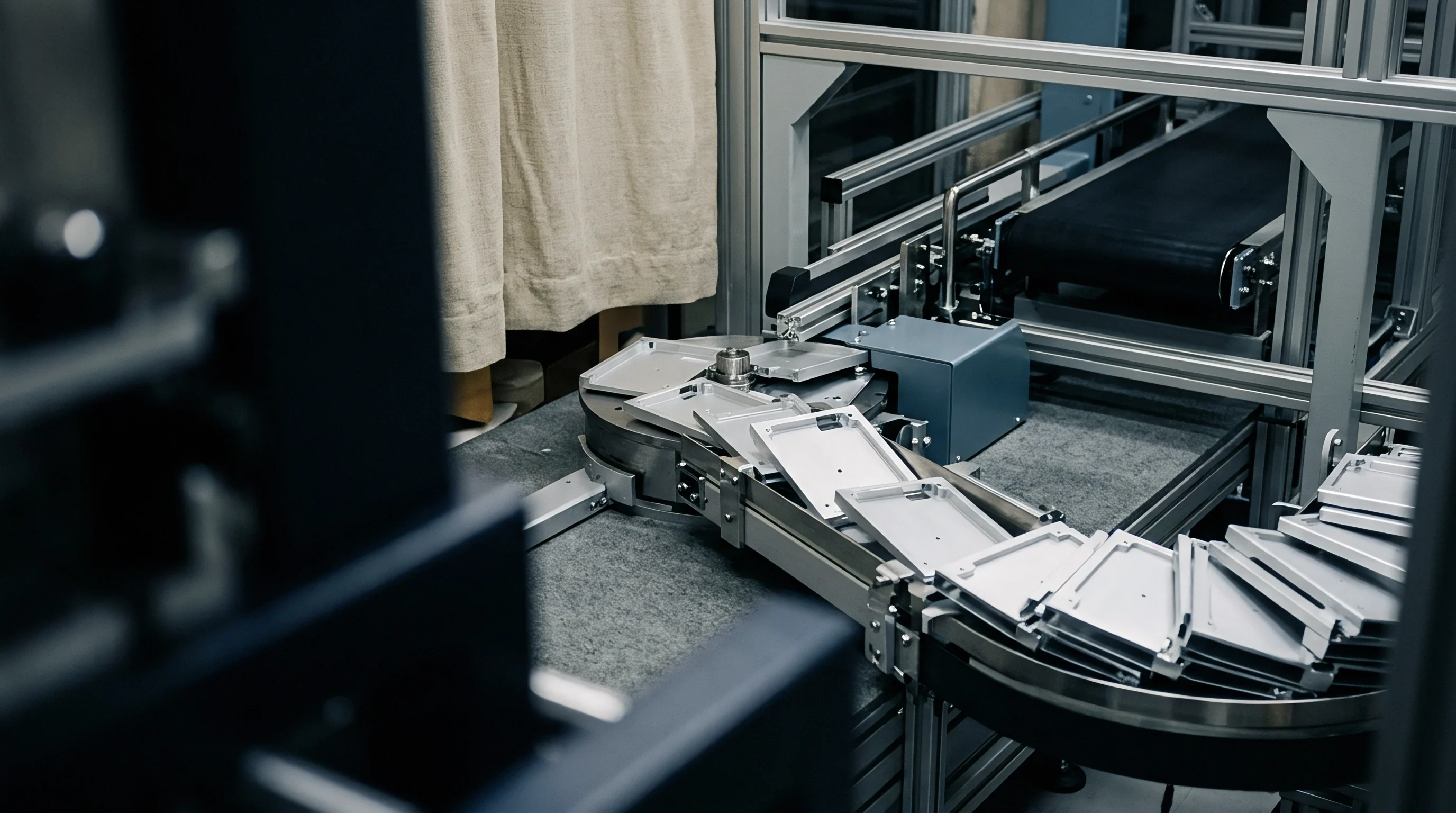
Quantitative Breakdown of Process Loss Vectors
Fiber weight drops through chemical dissolution, mechanical fly generation, and creel scrap during ring frame processing. In our worked 10,000-kilogram lot, creel package tails remaining on discarded bobbin cores account for 0.8 percent of dry mass, totaling 68.8 kilograms. As the roving passes through 70°C water baths, soluble pectin dissolution removes 2.4 percent of dry fiber weight, equal to 206.4 kilograms.
Insoluble lint shed into the trough sumps adds another 0.6 percent (51.6 kilograms) as wet sludge.
During wet drafting and spinning, thread breakages require manual piecing by operators, while suction tubes situated behind drafting rollers draw broken fiber ends into pneumatic collection channels. This pneumafil suction waste, combined with manual piecing scrap, accounts for 2.2 percent of dry mass (189.2 kilograms). Following bobbin drying, yarn passes through electronic slub catchers during high-speed winding, generating 0.5 percent (43.0 kilograms) of yarn clearing scrap.
Total cumulative dry fiber loss across all channels equals 559.0 kilograms, or 6.5 percent of initial dry fiber mass.
| Process Stage / Loss Stream | Physical Stream Description | Dry Mass (kg) | Percentage of Input Dry Mass (%) | Accounting Ledger Destination |
|---|---|---|---|---|
| Inbound Creel Input | Flax Roving (14% Moisture) | 8,600.0 | 100.00 | Input Credit Balance |
| Creel Scrap | Roving Bobbin Package Tails | 68.8 | 0.80 | Physical Scrap Waste Log |
| Trough Bath Extraction | Dissolved Pectins & Solubles | 206.4 | 2.40 | Effluent Mass Loss Log |
| Trough Sump Sediment | Insoluble Lint Sludge | 51.6 | 0.60 | Solid Waste Disposal Log |
| Spinning Frame Scrap | Pneumafil Suction & Piecing Scrap | 189.2 | 2.20 | Recycled Tow Fiber Credit |
| Winding Clearings | Slub Catchers & Yarn Tails | 43.0 | 0.50 | Hard Yarn Waste Log |
| Final Dried Yarn Output | Nm 26 Bobbin Yarn (Oven-Dry) | 8,041.0 | 93.50 | Certified Yarn Output Balance |
| Methodology note: All figures derived from calibrated oven-dry sampling (ISO 2060) and continuous bath liquor evaporation testing. Total input dry mass (8,600.0 kg) equals total output dry mass plus cumulative loss vectors (8,041.0 kg + 559.0 kg = 8,600.0 kg). | ||||
Net dry yarn output available for certification stands at exactly 8,041.0 kilograms. Adjusting this dry mass to standard commercial moisture regain (12.0 percent) yields a final commercial invoice weight of 9,137.5 kilograms of certified wet spun linen yarn, achieving physical mass balance reconciliation as input dry mass equals output dry mass plus documented losses.
Uncollected pneumafil waste from suction tubes recombines short fiber lint with floor debris, preventing accurate re-entry into high-value biomass ledgers.

Sump Sludge Analysis and Solid Debris Logs
Settling basins beneath the spinning frames collect insoluble cell-wall fragments and short ultimate fibers flushed from immersion tanks. Sump sludge represents high-density organic waste that must be extracted, dried, weighed, and logged during routine maintenance downtime.
Solid waste logs provide key evidence during third-party certification audits. Auditors reconcile sludge disposal records against recorded trough extraction loss factors to confirm that physical loss matches ledger deductions.
Valid waste documentation requires specific data fields in mill operational logbooks.
- Batch Identification Code links solid waste collections directly to active roving lot numbers and frame numbers.
- Dried Sludge Mass records the net weight of sump sediment after drying sample aliquots to constant weight at 105°C.
- Disposal Manifest Number provides regulatory chain-of-custody tracking for organic waste transferred to industrial composting or effluent treatment facilities.
- Auditor Tare Sign-Off confirms physical weighing of sludge collection skips using calibrated industrial floor scales.
Whether online optical turbidity sensors can continuously quantify dissolved pectin losses in high-throughput spinning lines remains an open question for mill auditors.

Surcharge
Certified yarn buyers pay elevated price premiums to cover verified origin tracking, rigorous sampling, and mill auditing overhead. Certified European Flax or organic linen roving carries a raw material surcharge ranging from 15 percent to 35 percent over conventional flax biomass. With raw material carrying a high cost premium, unaccounted process loss severely reduces mill margins, forcing spinners to calculate loss factors per yarn count to incorporate conversion losses into selling prices accurately.
Spinning fine thread counts demands elevated trough temperatures and higher draft ratios, causing progressive yield loss. Finer yarns require longer dwell times and higher drafting tension, stripping more short fibers and dissolving greater quantities of pectins per kilogram of output thread.

Commercial Cost Impact across Fine Yarns
High count spinning increases lost dry fiber weight relative to total thread length produced. For coarse yarns like Nm 14, wet trough extraction loss averages 1.8 percent, with total physical process waste remaining below 5.0 percent. Producing fine yarns like Nm 60 requires aggressive pectin softening at 75°C, pushing bath extraction losses to 3.1 percent and total process loss above 9.5 percent.
The financial impact of unmonitored mass loss scales rapidly with yarn count. Unverified loss estimates force mills either to overprice fine yarns, losing market competitiveness, or underprice them, absorbing unrecovered certified biomass surcharges.
| Yarn Count (Nm) | Raw Fiber Certified Surcharge ($/kg) | Total Process Dry Mass Loss (%) | Unadjusted Yield Cost Penalty ($/kg Yarn) | Reconciled Certified Yarn Price ($/kg) |
|---|---|---|---|---|
| Nm 14 | 1.20 | 4.80 | 0.22 | 11.50 |
| Nm 26 | 1.20 | 6.50 | 0.38 | 14.80 |
| Nm 39 | 1.20 | 8.10 | 0.59 | 19.20 |
| Nm 60 | 1.20 | 9.80 | 0.94 | 28.50 |
Without precise loss allocation to protect certified volume, coarse yarn production quietly subsidizes the higher loss fractions of fine yarn lines, skewing internal cost centers.
Contract Warranty Structure for Provenance Mass Claims
Sourcing agreements shift legal liability to the spinner whenever mass balance conversion factors fail third-party reconciliation. Buyers specifying certified European Flax or GOTS linen yarn write strict provenance warranties into purchase orders, requiring suppliers to present complete mass balance ledgers, moisture regain certificates, and trough loss verification logs upon delivery.
When a mill cannot reconcile creel input weights with yarn output quantities within a certified tolerance band (typically ±2.0 percent), the buyer retains contractual rights to reject the consignment or strip certified status, reducing the price to conventional yarn benchmarks. Legal risk multiplies in markets enforcing stringent origin and environmental claims, such as the European Union Green Claims Directive and the US Uyghur Forced Labor Prevention Act, where unbacked mass balance claims expose importers to border seizures and regulatory fines.
Third-party audit costs drop significantly when spinners maintain automated daily mass balance logbooks instead of compiling retrospective batch files.