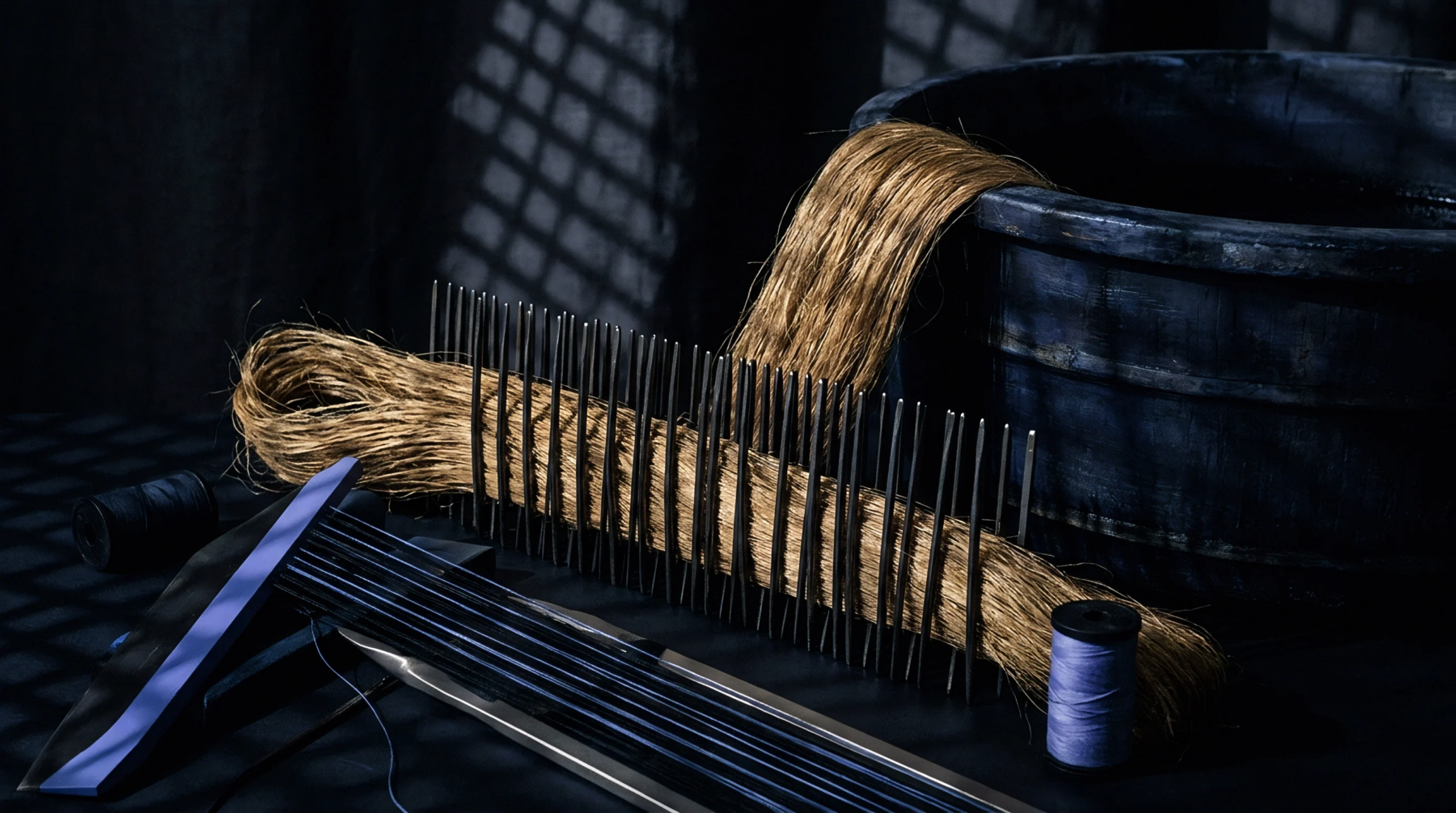
Yarn Classification
Coarse textile yarns spun from the short fibers of the flax plant are characterized by high hairiness, lower strength, and a high concentration of shive. Spinning mills produce tow yarn from the shorter, coarser fibers separated during the scutching and hackling of long-line flax. This product is typically utilized for heavier woven fabrics, home textiles, or industrial applications where fine counts are not required.
Production Method
Manufacturing this yarn utilizes a dry spinning process or a modified wet spinning method designed for short fibers. The short staple lengths require the yarn to be spun with a higher twist than long-line yarns to ensure cohesive strength, which can result in a stiffer yarn handle. Spinning laboratories monitor the tensile strength and twist per meter of the yarn during each shift, recording these parameters in the mill’s laboratory books.
This information is necessary for the weaving department, which adjusts loom tensions to accommodate the lower elasticity of the short-fiber yarn.
Commercial Standard
While long-line linen yarn is graded for high-end apparel due to its smooth surface and uniform diameter, the grading of yarn spun from tow is based on its coarse-weaving performance and budget-friendly pricing. Buyer acceptance criteria for this material focus on the absence of major thick places and excessive hairiness, which can interfere with the operation of projectile looms.