Line against Tow When the Offer Sheet Declares Neither
Specify long-staple line flax and wet spinning in purchase contracts to prevent spinners from substituting short tow fibre into ambiguous metric yarn orders.

Sliver
Flax offer sheets often leave out whether yarn comes from scutched line or combed tow, giving only metric counts or generic purity claims. A quote listing 100% linen yarn Nm 26 without specifying the staple origin leaves buyers blind to differences in strength, lustre, and hairiness. When supplies tighten, mills will price combed hackling tow yarn right up near long-staple line yarn, taking advantage of the missing paperwork detail.
The physical gap between the two streams comes down to how the scutching and hackling machinery extracts them.
Scutched flax produces long, parallel bast bundles between 500 millimetres and over 900 millimetres. Running these strands through finer and finer pins on a hackler yields continuous hackled ribbons, while broken, shorter, and tangled fibres drop below the pins or get pulled into waste bins. Those ribbons are line fibre ~ bundle lengths run 250 millimetres to 450 millimetres, inter-fibre cohesion is high, and residual shive is minimal.
The tangled byproduct is tow fibre, with staple lengths from 30 millimetres to 150 millimetres and significantly more epidermal bark fragments. Without knowing which stream a yarn came from, there is no reliable way to predict how it will draft during spinning or look in finished cloth.
Spinning mills pick their raw material around target yarn count and end-use needs. Line fibre wet-spins into fine counts ~ Nm 60 to Nm 100 (around Lea 105 to Lea 175) ~ because warm-water drafting lets long parallel bundles glide past each other predictably. Tow fibre caps out much lower: roughly Nm 34 (Lea 60) for wet spinning and Nm 18 (Lea 30) for dry.
If a quote offers an intermediate count like Nm 26 (Lea 46) without naming the fibre source, the yarn might be pure line, pure combed tow, or an undisclosed mix. Evaluating flax offer sheets requires forcing explicit identification of staple origin prior to price comparison, preventing lower-grade substitutions from inflating mill margins at the buyer’s expense.
Combed tow yarn spun to Nm 26 exhibits up to 45 percent higher Uster hairiness values than line yarn of identical count tested under ISO 16549.
Telling line from tow in a delivered lot starts with physical yarn structure. Line yarn has aligned, long-staple bundle architecture that reflects light evenly, creating the typical sheen of quality linen. Tow yarn shows frequent fibre ends poking out from the core, leaving a matte finish and higher surface friction.
In the lab, untwisting yarn samples under tension and measuring bundle lengths under ISO 2370 gravimetric procedures settles the matter. A mean staple length exceeding 180 millimetres indicates line stock, whereas a mean length below 90 millimetres confirms a tow origin.
The Ambiguity of Unclassified Flax Quotes
Trading desks often exploit broad product definitions in standard trade nomenclature. Standard commercial documentation routinely collapses bast fibre categories into general headings, allowing sellers to fulfill commitments using whichever raw material inventory offers the highest spot-market margin. Unspecified offer sheets create immediate technical vulnerabilities downstream in the weaving and finishing mills.
Weave rooms encounter higher end-breakage rates when running tow-derived yarns as warp, because short-staple assemblies lack the axial tensile strength required to withstand loom beat-up forces. Finishing plants observe uneven dye uptake when processing fabrics made from unclassified blends, as short tow fibres retain higher residual lignin fractions than fully hackled line bundles.
Structural differences between long line bundles and short tow fragments dictate performance through every downstream process, with long line yielding a smoother yarn. Long line bundles align neatly along the yarn axis, allowing low twist factors during wet spinning while still holding breaking tenacities above 32 centinewtons per tex under ISO 2062 testing. Short tow fibres demand higher twist multipliers to achieve minimum structural integrity, which reduces yarn flexibility and yields a stiffer fabric hand.
The table below outlines the core diagnostic differences that separate line-derived products from tow-derived alternatives across raw fibre, yarn, and processing parameters.
Contractual clarity requires explicit descriptions on all purchasing paperwork. Buyers must insist on exact raw material specifications before issuing letters of credit or approving pro forma invoices. Inserting specific wording regarding staple extraction methods eliminates ambiguous interpretations during customs clearance and quality verification audits.
Every commercial flax purchase contract must include a clause stipulating that all delivered yarn Nm 26 and finer shall be produced exclusively from hackled long-staple line flax, with short-staple tow content certified at zero percent by weight under ISO 2370 staple array testing.
Bale
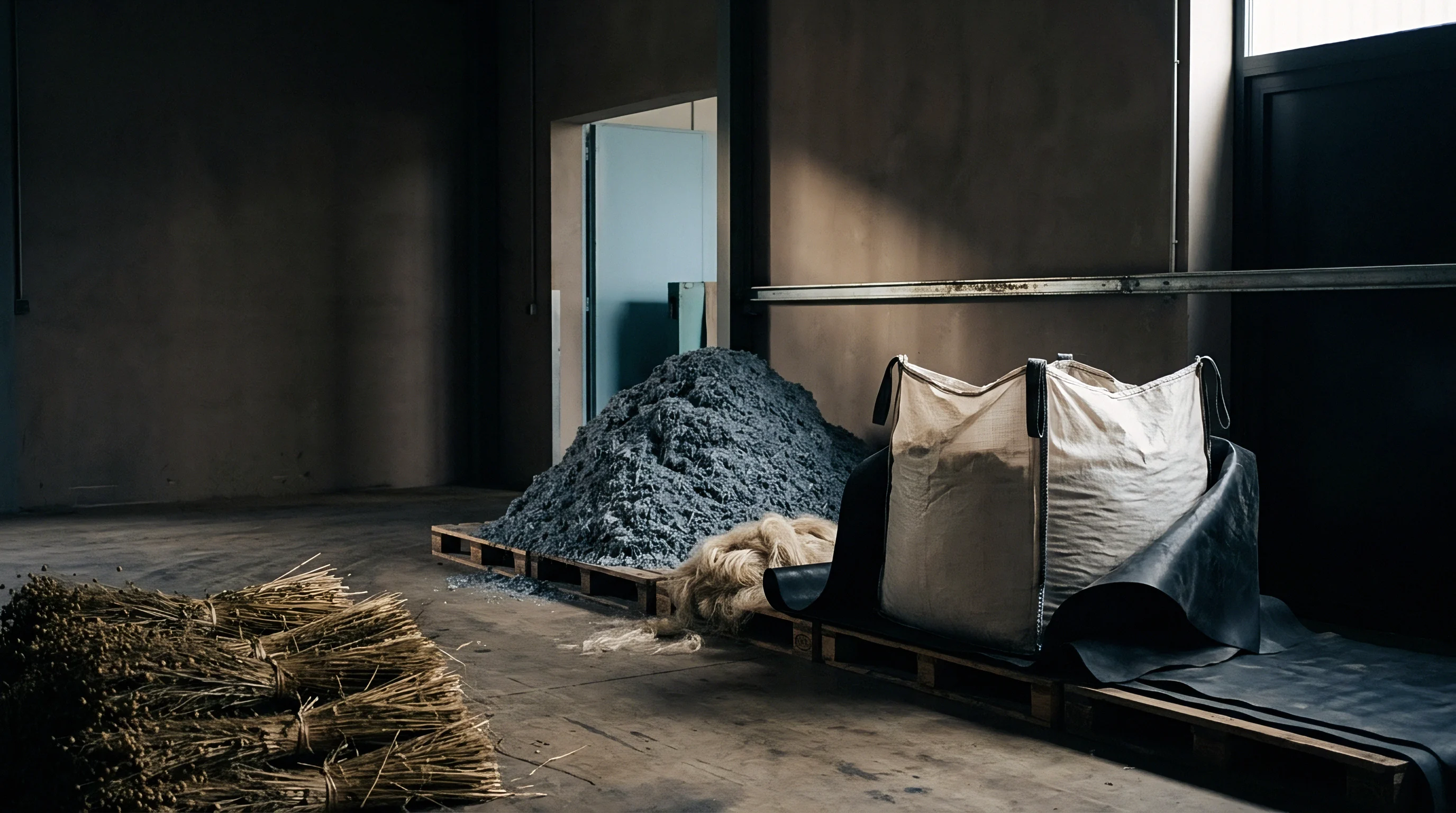
Physical verification starts in the bale store before anything hits the opening line. Bales arriving from retting yards and scutching mills carry distinct physical signatures depending on whether they contain scutched line flax or baled tow. Scutched line arrives as long, neatly folded bundles tied with flax bands, preserving the original orientation of the plant stems.
Scutched tow or hackling comb tow arrives as dense, random masses of interlocked, curly fibre containing variable amounts of shive, dust, and cortical cell debris. Opening a raw fibre bale reveals immediate visual and tactile differences in staple arrangement, bundle cleanliness, and moisture distribution.
Testing labs look at three main physical attributes to grade raw flax: mean staple length distribution, linear density expressed in millitex or metric fibre number, and residual shive content by mass. Long-staple line flax tested under ISO 2370 exhibits a narrow length distribution curve centered between 350 millimetres and 600 millimetres. Scutched tow exhibits a wide, asymmetrical distribution skewed toward short lengths between 20 millimetres and 80 millimetres, with a minor tail extending to 150 millimetres.
Fineness measurements using airflow apparatus or gravimetric bundle weighing show line flax bundles averaging 1.8 to 2.5 tex, whereas tow fibres show coarse, highly variable bundle thicknesses ranging from 2.8 to 5.2 tex due to incomplete bundle division during mechanical scutching.
| Parameter | Hackled Line Flax | Combed Hackling Tow | Scutched Tow | Test Method |
|---|---|---|---|---|
| Mean Staple Length (mm) | 280 to 450 | 80 to 140 | 35 to 90 | ISO 2370 Comb Array |
| Fibre Bundle Fineness (tex) | 1.5 to 2.2 | 2.4 to 3.2 | 3.5 to 5.5 | ISO 1973 Gravimetric |
| Residual Shive Mass (%) | 0.1 to 0.4 | 0.6 to 1.2 | 1.8 to 4.5 | ISO 2370 Manual Separation |
| Bundle Tenacity (cN/tex) | 38.0 to 52.0 | 26.0 to 34.0 | 18.0 to 25.0 | ISO 3060 Pressley / Stelometer |
| Retting Degree (Cellulose %) | 82.0 to 88.0 | 76.0 to 82.0 | 70.0 to 76.0 | Chemical Extraction |
Chemical composition further distinguishes high-grade line flax from lower-grade tow streams. Bast fibres consist of microcrystalline cellulose fibrils embedded in a matrix of hemicellulose, pectins, and lignin. Dew-retting in field environments breaks down middle lamella pectins through fungal action, allowing fibre bundles to separate cleanly from the wooden core (the shive).
Line flax undergoes thorough hackling, removing most of the outer bark and pectin-rich residual tissue, resulting in cellulose purity levels between 82 and 88 percent by dry weight. Tow fibre retains higher proportions of bark, pectin, and lignin, which increases chemical consumption during yarn bleaching and scouring operations downstream.
Retting uniformity directly impacts fibre extraction quality. Under-retted flax yields coarse bundles that resist mechanical separation, producing excessive tow during scutching and hackling. Over-retted flax suffers cellulose degradation from prolonged microbial exposure, resulting in weak, brittle fibres that break during processing, artificially increasing tow yield while lowering line tenacity.
Bundle tenacity measurements using Stelometer or Pressley apparatus under ISO 3060 conditions establish baseline strength metrics before raw lots are accepted into mill inventory.
Scutched line flax exhibits bundle breaking tenacities exceeding 40 centinewtons per tex, whereas scutched tow rarely achieves 25 centinewtons per tex under standard laboratory conditioning at 65 percent relative humidity.
Evaluating raw material quality requires systematic sampling and testing protocols upon bale delivery. Buyers who inspect incoming shipments using physical laboratory diagnostics detect unannounced fibre substitutions before processing begins, avoiding expensive yarn spinning failures and fabric rejection disputes.
- Staple Array Analysis verifies length distribution profiles using comb sorter equipment, identifying short-staple contamination in declared long-staple lots.
- Gravimetric Fineness Testing measures linear density in tex, confirming whether fibre bundles have achieved adequate mechanical division during hackling.
- Shive Content Gravimetry quantifies residual woody stem particles by mass percentage, indicating overall scutching efficiency and raw cleanliness.
- Single Bundle Tenacity Measurement evaluates breaking force per unit linear density under ISO 3060, isolating degraded or over-retted fibre lots.
- Moisture Regain Conditioning calculates dry commercial mass under ISO 6741, ensuring billed weights reflect official moisture allowances of 12.0 percent.
Combed hackling tow is an intermediate stream that often muddies yarn sourcing. As scutched line flax runs through hackling frames, the combing action generates hackling tow. Modern comb-sorting equipment can process high-grade hackling tow into refined slivers that mimic long-staple line performance in coarse yarn counts.
However, microscopic cross-sectional analysis reveals that hackling tow retains higher numbers of broken fibre ends and irregular bundle geometries than genuine line sliver.

Microscopic Identification of Staple Damage
Optical and scanning electron microscopy reveal structural markers that differentiate line flax from comb tow. Line fibres display intact, smooth cell walls with pronounced transverse nodes (cross-markings) spaced regularly along the ultimate fibre cells. Comb tow displays high frequencies of longitudinal splitting, cell wall fibrillation, and blunt fracture zones resulting from intense pin impacts during carding and combing.
These structural micro-fractures serve as stress concentration sites, lowering single-fibre tensile strength and increasing yarn hairiness when spun into high-count yarns.
Colorimetric checks provide another check on fibre origin and retting quality. Well-retted line flax comes out a consistent silvery-grey to pale blonde hue with high natural lustre. Tow fibre frequently presents a darker, yellowish-brown cast caused by accumulated dust, bark particles, and localized micro-flora growth occurring in the lower stem regions near the root.
Spectrometric measurement of L a b color coordinates offers an objective method for assessing raw fibre cleanliness and batch-to-batch consistency prior to blending.
Automated optical sorting systems integrated into modern opening lines detect and quantify shive particles down to 0.2 millimetres in size to flag elevated shive levels. Excess shive content causes immediate mechanical disruptions during spinning, leading to thin places, slubs, and yarn breakages at the drafting rolls. High-grade line sliver contains fewer than 40 shive particles per 100 grams of fibre, whereas raw tow contains between 300 and 1,200 particles per 100 grams depending on scutching efficiency.
Whether modern high-speed rotor and air-jet spinning systems can successfully process chemically modified tow fibres into fine-count yarns without compromising traditional linen tensile durability remains an open industry question.

Draft
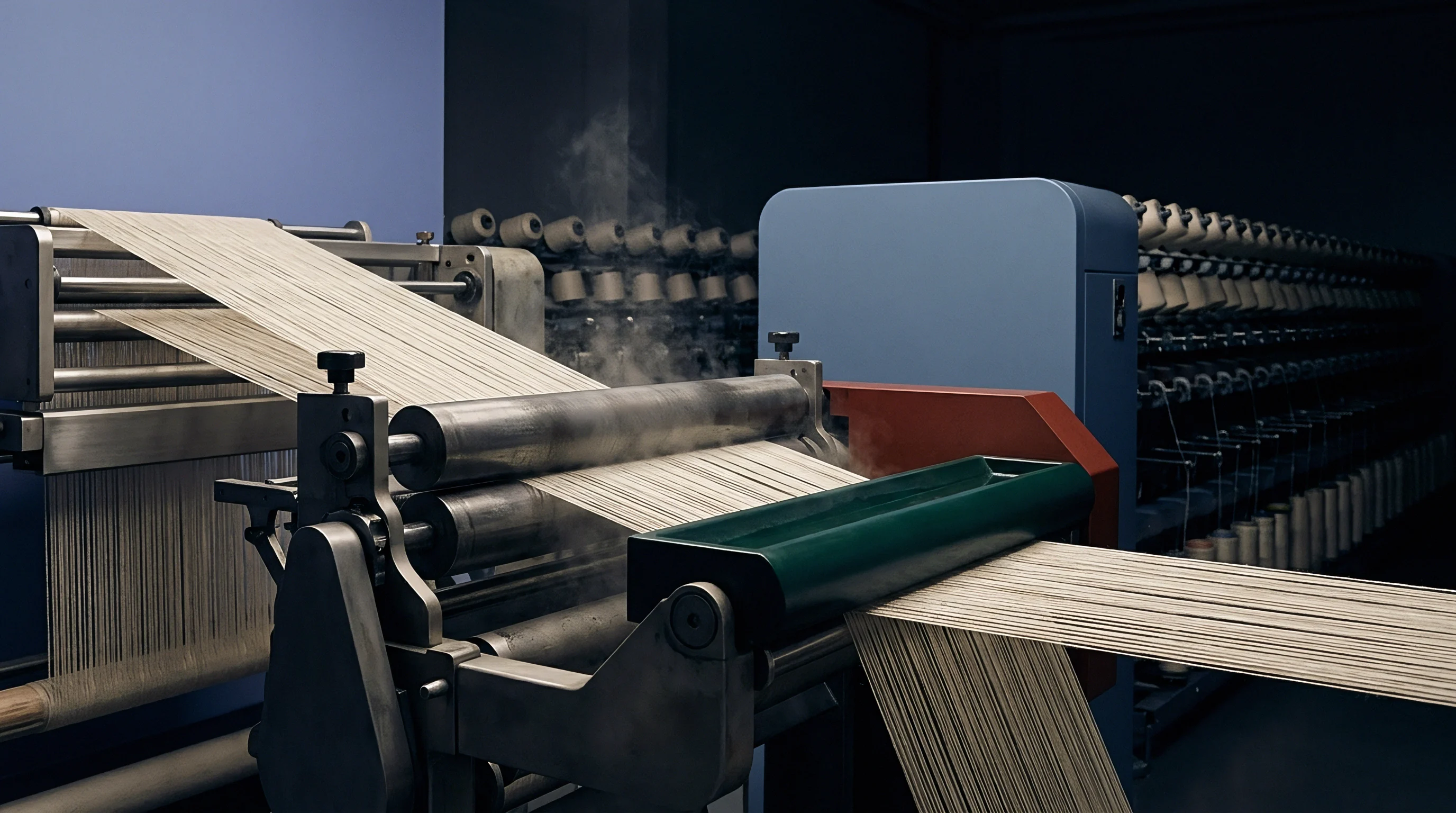
Mill floor conversion of raw flax sliver into finished yarn follows two fundamentally distinct manufacturing pathways: wet spinning and dry spinning. Wet spinning represents the classic route for producing high-quality, high-tenacity linen yarns across fine and medium count ranges. The process relies on passing roving through a hot water bath (typically maintained between 60 degrees Celsius and 70 degrees Celsius) situated directly above the drafting zone on the spinning frame.
Hot water softens the insoluble pectin binders holding individual ultimate fibre cells together within the bast bundle, permitting individual cells to slide past one another during drafting.
That inter-cell sliding is what allows deep drafting, turning coarse slivers into fine, highly uniform yarn structures. As the drafted strand exits the front rollers, high ring-and-traveller twist binds the separated ultimate cells into a dense, smooth core. The softened pectins re-solidify during subsequent drying, cementing the fine cells together and imparting exceptional breaking strength and surface lustre to wet-spun line yarns.
Dry spinning skips the hot water bath entirely, relying purely on mechanical drafting of intact fibre bundles at ambient temperature and humidity.
| Yarn Type | Spinning System | Target Count Range (Nm) | Uster Hairiness (H) | Tenacity (cN/tex) | End-Breakage (per 1000 sp-hr) |
|---|---|---|---|---|---|
| Hackled Line | Wet Spinning | Nm 26 to Nm 100 | 3.2 to 4.5 | 28.0 to 42.0 | 15 to 30 |
| Combed Tow | Wet Spinning | Nm 14 to Nm 36 | 5.2 to 6.8 | 20.0 to 26.0 | 45 to 80 |
| Scutched Tow | Dry Spinning | Nm 2.5 to Nm 14 | 7.5 to 11.5 | 12.0 to 18.0 | 90 to 160 |
| Line/Tow Blend | Wet Spinning | Nm 18 to Nm 40 | 4.8 to 5.9 | 22.0 to 29.0 | 35 to 60 |
Dry spinning cannot separate ultimate cells within fibre bundles, forcing the drafting zone to draw intact bundle structures. Consequently, dry-spun yarns are restricted to coarse count ranges, typically between Nm 2.5 and Nm 14 (Lea 4.2 to Lea 24). Dry-spun yarn exhibits higher cross-sectional irregularity, lower tenacity, and elevated hairiness compared to wet-spun yarn of identical weight.
When an offer sheet fails to state both the fibre stream (line versus tow) and the spinning method (wet versus dry), the buyer risks receiving dry-spun tow yarn where wet-spun line yarn was expected.

Can Dry Frames Spin High Count Line Stock?
Trying to dry-spin long line flax into fine counts does not work on production machinery. Without water bath pectin softening, intact line bundles resist fine drafting, causing massive drafting force spikes that snap the roving bed before twist insertion. Dry spinning frames processing fine counts suffer extreme end-breakage rates exceeding 250 breaks per 1,000 spindle-hours, rendering mill operations commercially unviable.
High-count fine linen production requires the combination of long-staple line sliver and warm-water wet spinning execution.
The temperature and residence time of roving inside the wet-spinning trough dictate drafting consistency and final yarn tenacity by controlling pectin softening. Operating troughs below 55 degrees Celsius leaves pectin binders rigid, leading to irregular drafting, high CVm values, and heavy slub formation. Operating troughs above 75 degrees Celsius hydrolyzes hemicellulose components prematurely, weakening fibre cell walls and causing inter-carrier slippage that lowers final yarn tenacity under ISO 2062 testing.
Yarn unevenness measured on Uster testing equipment provides definitive proof of fibre origin and spinning quality. Line yarns spun on properly adjusted wet frames yield mass CVm values between 11.5 percent and 14.0 percent. Tow yarns spun on identical frames produce mass CVm values between 16.5 percent and 22.0 percent due to the random distribution of short fibre ends along the yarn axis.
Elevated CVm values directly cause thick and thin places in finished woven goods, creating horizontal bar patterns and lowering fabric tearing strength.
Hairiness testing on Uster H or Zellweger optical measurement instruments separates line yarns from tow alternatives. The Uster hairiness index H represents the total length of projecting fibres in centimetres per centimetre of yarn length. Fine wet-spun line yarns maintain H values between 3.0 and 4.2.
Tow-derived yarns of equivalent metric count register H values between 5.5 and 8.0, with high numbers of S3 class hairs (fibres protruding more than 3 millimetres from the yarn core). High hairiness increases warp sizing chemical consumption and creates high lint accumulation during high-speed weaving operations.
Tensile testing performed under ISO 2062 single-end methods establishes clear quality thresholds for contract verification. Testing requires conditioning yarn packages at 20 degrees Celsius and 65 percent relative humidity for 24 hours prior to loading onto constant-rate-of-extension tensile machines. Wet-spun line yarns exhibit high breaking tenacity coupled with low elongation at break (typically 2.0 to 3.2 percent), reflecting the rigid crystalline structure of native flax cellulose.
Tow yarns exhibit lower breaking tenacity and higher elongation variability due to structural bundle slippage within the core.
Wet-spun line yarn exhibits high tenacity. Analyzing tensile load-elongation curves verifies fibre stream origin, checking for characteristic double-peak behavior that indicates unannounced blending of long line fibres with short tow fragments.
A wet-spinning frame running long-staple line stock requires half the twist factor of a dry-spinning frame processing coarse tow to achieve equivalent tensile cohesion.
Dock
Receiving flax yarn or fibre shipments at the factory dock requires systematic administrative and physical verification protocols to confirm contract compliance before freight is unloaded into store. Customs clearance paperwork, bills of lading, and commercial invoices carry specific Harmonized System (HS) codes under Chapter 53 that legally define the tariff classification and material description of imported bast fibres. Discrepancies between declared HS codes and actual delivered goods signal potential quality substitution issues or administrative misclassification.
Chapter 53 of the International Harmonized System establishes clear numeric distinctions separating raw, scutched, hackled, and spun flax materials based on fibre state. Mislabeling scutched tow under line flax codes, or declaring tow yarn as line yarn, constitutes a regulatory violation while obscuring material quality. The table below lists the primary HS tariff classifications applicable to flax sourcing and contract documentation.
| HS Code | Official Tariff Description | Fibre Origin / Stream | Commercial Identification |
|---|---|---|---|
| 5301.10 | Flax, raw or retted | Unscutched Straw | Retted Flax Straw |
| 5301.21 | Flax, broken or scutched | Scutched Stream | Scutched Long Line |
| 5301.29 | Flax, flax tow and waste | Tow / Byproduct Stream | Scutched Tow & Hackling Waste |
| 5301.30 | Flax, tow and waste (combed) | Combed Tow Stream | Combed Hackling Tow Sliver |
| 5306.10 | Flax yarn, single | Spun Single Stream | Single Line or Tow Yarn |
| 5306.20 | Flax yarn, multiple or cabled | Spun Plied Stream | Plied Linen Yarn |
Receiving managers should pull samples across the full depth of the container rather than just testing accessible door-front pallets. Bales and yarn cases must undergo immediate net weight verification, corrected for official moisture regain under ISO 6741 standards. The standard commercial regain allowance for flax fibre and yarn stands at 12.0 percent by dry mass.
Shipments delivered with excess moisture content inflate billed weight and risk mold formation during warehouse storage.
Executing an organized receiving inspection prevents sub-standard material from entering mill production channels. Dock personnel must follow an established sequence of physical verification steps before formal acceptance paperwork is signed and released to the shipping carrier.
- Inspect container seals and verify seal numbers against bill of lading documentation.
- Examine outer bale packaging and yarn case cartons for moisture ingress, oil stains, or physical crush damage.
- Extract core samples from ten percent of delivered packages using a randomized sampling grid across top, middle, and bottom pallet layers.
- Perform rapid moisture content screening using calibrated dielectric moisture meters to verify target 12.0 percent regain levels.
- Draw 500-gram composite fibre or yarn samples from opened test packages for laboratory ISO tensile, count, and staple array testing.
- Quarantine the entire lot in designated holding zones until laboratory test reports confirm compliance with contract purchase specifications.
Commercial paperwork arriving with shipments must match original purchase orders in every technical detail. Inconsistent terminology on certificates of origin, mill test certificates, or packing lists often indicates broker trading activity where material has been re-consigned across intermediate dealers. Auditing incoming documentation sets for mandatory technical declarations before approving vendor payment releases prevents unauthorized substitutions.
Purchase documentation must contain complete specification sets to survive legal dispute procedures. Short-form invoices that list simple commercial terms expose the buyer to grade substitution risks without administrative recourse. The table of mandatory document elements outlines essential inclusions for raw flax and spun yarn procurement contracts.
Fibre lots shipped at 16 percent moisture content cause buyers to pay for four percent excess water weight while suffering storehouse degradation, unless weight adjustments are calculated against oven-dry mass plus official 12.0 percent regain under ISO 6741 procedures.
When disputed lots fail laboratory staple or hairiness tests, suppliers frequently assert that modern mill combing equipment converts high-grade hackling tow into identical long-staple yarn equivalents, claiming the omitted offer sheet designation reflects modern process convergence rather than material downgrade.
Ledger
The financial impact of raw flax grade selection extends directly to landed fabric cost per linear metre. Hackling scutching mills convert raw scutched long flax into hackled line sliver at yields ranging between 55 percent and 65 percent by mass. The remaining 35 percent to 45 percent of input mass converts into lower-value hackling comb tow (25 percent to 35 percent) and unspinnable short waste dust (8 percent to 12 percent).
Line flax commands a premium price per kilogram because it absorbs the mechanical yield losses incurred during intensive pin hackling operations.
When a spinning mill swaps in combed hackling tow for long line flax in an offer sheet declared simply as flax yarn Nm 26, the mill saves significant raw material input costs while pricing the resulting yarn near line yarn market levels. The raw fibre price differential between scutched long line and comb tow ranges between 35 percent and 50 percent depending on European harvest yields and global inventory levels. Unannounced tow substitution allows spinners to capture excessive gross margins while delivering yarn that degrades downstream weaving efficiency and fabric durability.
| Cost Component | Pure Wet-Spun Line (Nm 26) | Combed Wet-Spun Tow (Nm 26) | Unannounced Blend (Nm 26) |
|---|---|---|---|
| Raw Fibre Input Cost ($/kg) | $6.80 | $3.90 | $5.20 |
| Hackling & Combing Yield (%) | 58.0% | 82.0% | 70.0% |
| Spinning Processing Cost ($/kg) | $4.20 | $4.80 | $4.40 |
| Delivered Yarn Price ($/kg) | $11.00 | $8.70 | $9.60 |
| Weaving Efficiency (%) | 94.5% | 86.0% | 90.5% |
| Weaving Waste Allowance (%) | 2.5% | 5.8% | 4.1% |
| Landed Metre Cost (180 g/m²) | $2.88 / metre | $2.52 / metre | $2.68 / metre |
A worked financial model illustrates the total cost dynamics of fabric production across different fibre streams. Processing 1,000 kilograms of single Nm 26 yarn into a standard 180 grams per square metre plain weave linen fabric (150 centimetres finished width) requires evaluating yarn landed price alongside loom efficiency penalties. Wet-spun line yarn runs at high loom speeds with minimal warp breaks (under 1.2 stops per loom-hour), yielding 94.5 percent weaving efficiency and low fabric defect rates.
Combed tow yarn spun to the same metric count causes higher loom stoppage rates (3.8 stops per loom-hour), reducing weaving efficiency to 86.0 percent and increasing waste allowances due to frequent beat-up warp snaps.
The lower initial purchase price of tow yarn ($8.70 per kilogram versus $11.00 per kilogram for line yarn) appears to save $0.36 per linear metre in raw material costs. However, accounting for loom stop labor penalties, higher warp sizing consumption, reduced fabric tensile strength, and second-quality fabric downgrades erodes over 60 percent of the theoretical price savings. In high-performance apparel and contract upholstery applications, the performance defects of tow yarn result in complete lot rejections that eliminate all initial material cost advantages.
Calculating true landed yarn cost requires adding freight, customs duty, moisture regain adjustments, and loom efficiency penalties to the raw invoice price per kilogram.
End-use application dictates correct fibre stream selection. Buyer sourcing practices must evaluate whether the technical and aesthetic demands of the finished product justify the price premium of long-staple line yarn over combed tow options. The decision checklist below provides operational guidelines for selecting appropriate fibre grades based on end-use requirements.
- Fine Apparel Wovens (above Nm 39 / Lea 67) require pure wet-spun line flax to ensure low hairiness, smooth hand, high tensile strength, and skin comfort.
- Heavy Contract Upholstery (Nm 10 to Nm 26) benefits from wet-spun line warp yarns combined with high-grade combed tow weft yarns to balance abrasion resistance with cost optimization.
- Coarse Decorative Drapery (below Nm 14 / Lea 24) effectively utilizes dry-spun scutched tow yarns to achieve pronounced slub textures and relaxed drape at minimal raw material cost.
- High-Speed Air-Jet Weaving Operations require pure wet-spun line yarns with low Uster CVm values to prevent shed blockage and maintain weaving efficiency above 92 percent.
- Industrial Sewing Threads and Cordage demand long-staple line flax wet-spun with high twist factors to satisfy strict ISO 2062 breaking strength specifications.
Unannounced fibre grade substitution represents a structural margin lever used by spinning mills to offset rising raw flax commodity prices. When offer sheets fail to declare staple extraction origin, the buyer absorbs downstream manufacturing risks while paying inflated prices for inferior short-staple material. Establishing clear purchase contract specifications, enforcing strict incoming laboratory testing under ISO standards, and calculating landed cost based on net weaving yield protects procurement budgets and guarantees delivered fabric quality.
Failing to lock raw material staple length and spinning extraction methods into original offer sheets transfers technical performance risk entirely to the buyer, resulting in higher loom downtime, inconsistent fabric hand, and irrecoverable financial losses across the finishing line.