Gravimetric Verification Protocols for Flax Line Fibre Linear Density
Conditioned middle-cut bundle weighing under ISO 2370 delivers precise flax line fibre linear density data for wet-spinning count calculations.


Mass
Determining the linear density of flax line fibre requires weighing cut bundles at strict moisture equilibrium. This value dictates the finest spinnable yarn count, governs drafting resistance during wet spinning, and sets expected yarn tenacity. Bast fibres lack the uniformity of synthetic filaments or single-cell cotton hairs; flax filaments are multicellular bundles held together by a non-cellulosic matrix of pectin, lignin, and hemicellulose.
Within a raw hackled strick, fibre diameters range from individual ultimates at 10 to 20 micrometres across to coarse technical bundles exceeding 100 micrometres. Gravimetric testing provides a repeatable mass-per-unit-length baseline for commercial valuation, replacing subjective hand-grading and indirect airflow measurements.

Linear Density Metrics in Long Bast Fibres
Fineness is expressed directly in the tex system as grams per kilometer. Trade contracts also reference decitex (dtex, decigrams per kilometer) or metric fibre number (Nm, meters per gram), which invert directly: an Nm 2000 bundle corresponds to 0.5 tex or 5 dtex. Bundle density sets hard boundaries on spinnable yarn count because wet-spun yarns require at least 25 to 30 continuous fibres across their cross-section to survive spinning tension.
Consequently, a hackled line lot averaging 1.8 tex cannot reliably exceed a count of Nm 60 (16.6 tex), whereas a fine long-staple lot averaging 1.0 tex reaches Nm 100 (10 tex) without excessive end breakage.
Spinners calibrate baseline gravimetric tables across multiple harvest seasons. Reports that state mean bundle fineness without the coefficient of variation (CV%) obscure severe drafting hazards. Two lots sharing an identical average linear density of 1.5 tex behave entirely differently on the draw frame when Lot A carries a CV% of 18 percent and Lot B reaches 34 percent.
The wider variance in Lot B generates dense clusters that resist attenuation alongside thin sections prone to snapping under roving tension. Thorough characterization therefore pairs mean linear density with distribution width across repeated bundle extractions.
Bundle Cut Mechanics and Extraction Protocols
Technicians sample the middle segments of hackled stricks to avoid root and tip anomalies. Flax fibres taper substantially from base to apex: root sections have thicker cell walls and higher lignin concentrations, while tips taper into weak, slender terminals. Evaluating an intact strick yields an aggregate linear density that distorts the true dimensions of the central drafting zone.
Under ISO 2370, technicians excise a 100-millimetre or 50-millimetre specimen from the precise midpoint of a combed bundle, isolating the uniform section that governs behavior on the drawing frame.
Precision cutting requires dedicated tooling, typically a double-bladed rotary cutter or a rigid steel template fitted with parallel razor guides. A deviation of merely 0.5 millimetres on a 50-millimetre cut introduces a 1 percent systematic error into linear density calculations. Operators must align fibres strictly parallel before clamping; oblique filament alignment results in bias cuts, which artificially elongates pieces within the specimen and depresses calculated tex values.
- Select ten representative stricks from across five opened sampling bales using a random grid sampling scheme.
- Comb selected stricks manually using a laboratory hackle with 12 pins per centimetre to remove loose short fibres, neps, and residual shives.
- Align the parallel fibre strick across the anvil of a precision double-bladed specimen cutter set to exactly 100 millimetres separation.
- Apply 50 Newtons of clamping force across the central holder to prevent fibre slipping during blade penetration.
- Execute a swift single-pass shear to extract the central 100-millimetre bundle specimen.

Filament Separation and Micro-Balance Protocols
Establishing filament-level mass involves subdividing the cut bundle into smaller sub-bundles or individual technical filaments under a stereo magnifier. Counting filaments in a weighed lot connects gross specimen mass directly to average single-fibre linear density. For example, 500 cut filaments weighing 75.0 milligrams yield an average piece mass of 0.15 milligrams over a 100-millimetre length, corresponding to 1.5 tex.
Non-magnetic brass forceps prevent electrostatic charging and minimize mechanical fibre breakage during separation.
Middle-cut 100-millimetre specimens tested under ISO 2370 must maintain a length tolerance within 0.1 millimetres to prevent linear density distortion exceeding 0.2 tex.
Electrostatic charge represents a major disruption in micro-weighing environments. Dry bast fibres charge rapidly when manipulated with steel implements, causing filaments to repel, cling to draft shields, or drift off balance pans under electrostatic attraction. Positioning ionization bars above the bench or installing anti-static alpha-source strips inside the draft chamber neutralizes surface charge.
Equipment for single-bundle evaluations requires 0.001 milligrams (1 microgram) resolution to maintain narrow confidence intervals on sub-milligram cuts.
Unadjusted bundle cuts from poorly conditioned lots inflate mill raw material waste allowances by 4.2 percent at the drafting frame.


Moisture
Bast fibres continuously exchange moisture with the surrounding atmosphere. The abundant hydroxyl groups along flax’s crystalline cellulose fibrils and throughout its amorphous pectosan matrix render it highly hygroscopic. Shifting relative humidity from 45 percent to 75 percent drives raw hackled flax moisture content from roughly 7 percent to beyond 12 percent of dry mass.
Because linear density measures mass per unit length, uncorrected moisture results in buying water at raw fibre rates and miscalculating draft gearing on the spinning frame.

Conditioning Regimes and Standard Atmosphere
Accurate gravimetric testing requires strict atmospheric conditioning before specimens reach the balance pan. Under ISO 139, the standard testing atmosphere is set at 20.0 degrees Celsius plus or minus 2.0 degrees and 65.0 percent relative humidity plus or minus 4.0 percent, with tropical testing permitted at 27.0 degrees Celsius and 65.0 percent relative humidity. To ensure equilibrium is approached strictly through absorption, dry samples require pre-conditioning at 10 to 25 percent relative humidity and 50 degrees Celsius.
Hysteresis causes flax brought down to 65 percent relative humidity from a saturated state to retain 0.5 to 1.2 percent more moisture than material conditioned upwards from a dry baseline.
Reaching true equilibrium requires confirming mass stability over time. Technicians distribute stricks across perforated wire trays in circulating air, reweighing control lots every two hours until successive measurements shift by less than 0.1 percent. Densely bundled hackled stricks often require up to 24 hours to balance fully.
Incomplete exposure leaves the bundle core under-conditioned, creating spurious density gradients between internal fibres and outer layers.
Oven-Dry Mass Determination and Regain Formulae
Oven drying reduces conditioned or wet specimens to absolute bone-dry mass. Forced-draft ovens operate at 105.0 degrees Celsius plus or minus 2.0 degrees until all non-structural moisture is driven off. Temperatures above 110 degrees Celsius volatilize low-molecular-weight hemicelluloses and pectins, falsely depressing dry mass measurements, whereas runs held below 100 degrees Celsius fail to liberate water trapped within crystalline cellulose regions.
Commercial linear density relies on standardized moisture regain figures rather than transient ambient moisture. In international commerce, the statutory regain allowance for flax line fibre is fixed at 12.0 percent. Calculating commercial mass involves multiplying oven-dry mass by 1.12.
Dividing this standardized mass by measured cut length produces the certified linear density, insulating technical contracts and trade valuations from seasonal atmospheric swings.
| Ambient Relative Humidity (%) | Equilibrium Moisture Regain (%) | Raw Uncorrected Linear Density (tex) | Commercial Corrected Linear Density (tex) | Draft Variance Risk Level |
|---|---|---|---|---|
| 45.0 | 7.2 | 1.52 | 1.59 | High (Under-weight draft) |
| 55.0 | 9.1 | 1.55 | 1.59 | Moderate (Minor thin spots) |
| 65.0 (Standard) | 12.0 | 1.59 | 1.59 | Baseline (Target specification) |
| 75.0 | 14.8 | 1.63 | 1.59 | Moderate (Over-weight draft) |
| 85.0 | 18.4 | 1.68 | 1.59 | Severe (Sliver slipping) |

Non-Cellulosic Encrustants and Volatile Losses
Retting efficiency dictates the ratio of structural alpha-cellulose to non-cellulosic matrix components. Dew-retted flax processed in wet autumn conditions carries an encrustant load ~ pectin, lignin, and residual fungal hyphae ~ distinct from tank- or enzyme-retted material. Amorphous pectins and hemicelluloses hydrate more readily than crystalline cellulose: under-retted flax carrying 8 percent residual pectin absorbs up to 2 percent more moisture in standard atmosphere than well-retted fibre with 2 percent pectin.
Gravimetric comparisons between retting lots must isolate this encrustant-bound water fraction.
Raw flax fibre line orders specified without explicit moisture regain correction clauses expose buyers to financial losses exceeding 35000 Euros per 20-tonne shipping container.
While dry mass governs transaction pricing, cuticle waxes and lipophilic fats also contribute dead weight. Laboratory verification employs petroleum ether or dichloromethane extraction in a Soxhlet condenser prior to micro-weighing. This degreasing step removes 1.2 to 2.2 percent of raw bundle mass, revealing the true cellulosic linear density.
Unextracted surface wax inflates measured mass without contributing tensile load capacity, distorting tenacity ratings stated in centiNewtons per tex.
Port-of-entry inspection showed an eight percent weight gain resulting from humidity spikes inside the transpacific container.
Specimen
Testing validity rests entirely on sampling discipline. Flax arrives in compressed bales weighing between 100 and 200 kilograms. Because stricks packed into a single bale originate from disparate field sections and hackling channels, intra-bale variance is pronounced.
Pulling an isolated strick from the bale cap produces skewed figures. A defensible protocol draws material across varying depths in multiple bales, compounding subsamples into a blended composite that genuinely represents the shipment.
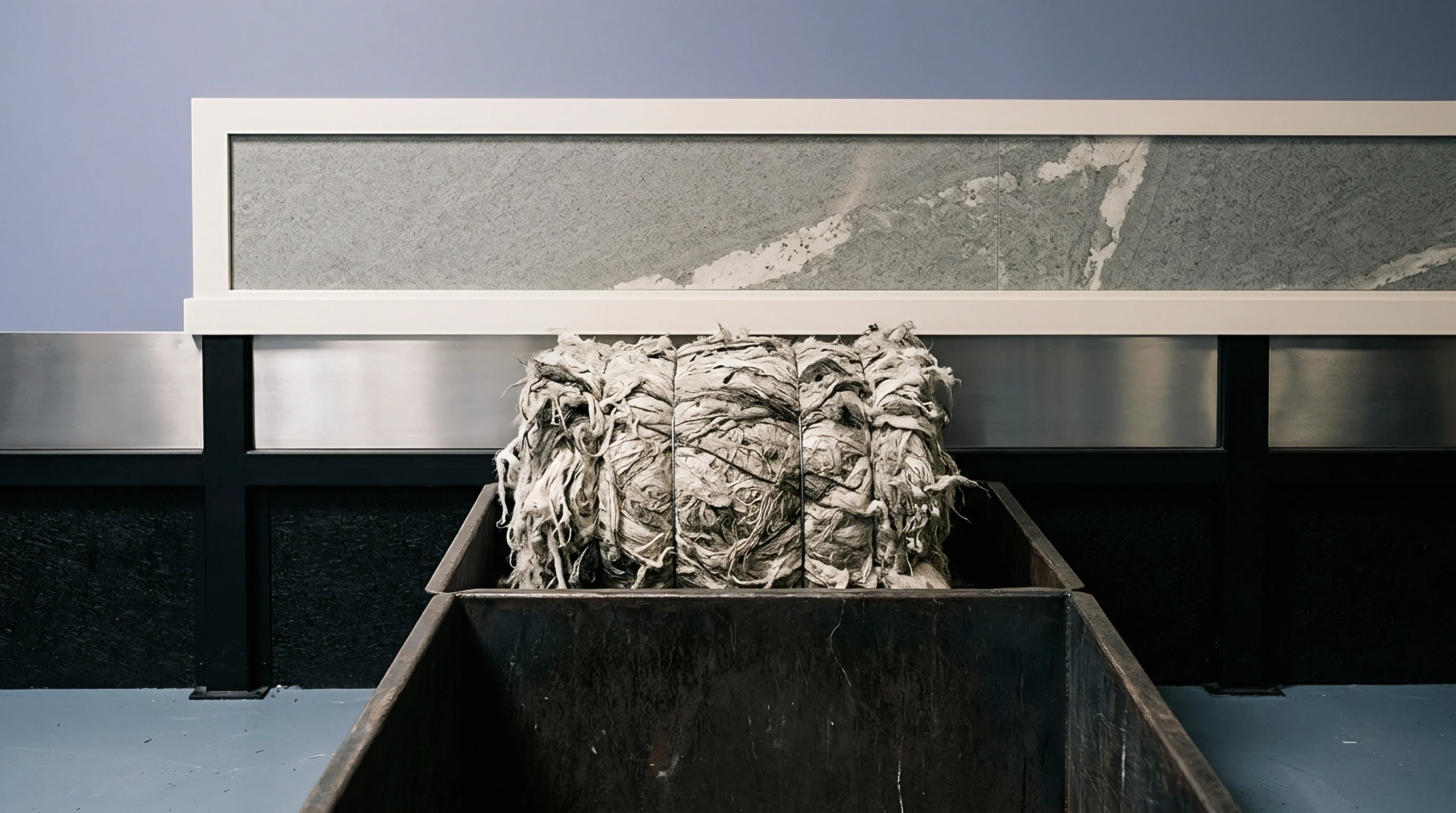
Bale Store Sampling and Laboratory Sub-Sampling
Primary sampling isolates 5 percent of bales across an incoming delivery. Technicians open these units to extract stricks from three distinct zones: the outer top, the geometric core, and the bottom face. Stricks are opened carefully along their original folds; pulling fibres apart laterally breaks technical filaments, generating fragments that compromise length-dependent density figures.
Together, these primary extractions form a composite bulk sample of roughly 2 kilograms.
Secondary reduction pares this bulk sample down to working test specimens using manual zoning and mechanical blending. Technicians draw slender ribbons from the midsection of each primary strick, assembling them into a continuous sliver. Three passes through a hand hackle or miniature pin gill align filaments into a uniform parallel web.
Precision cutting templates then extract test bundles from this web, yielding a final 500 milligram specimen that reflects every sampled bale across the lot.

What Drives Linear Density Errors during Gravimetric Bundle Cuts?
Bundle-cutting errors stem from four main mechanisms: clamp slippage, non-parallel filament alignment, blade wear, and unregulated tension. When clamps slip, filaments pull through the jaws under the blade, producing cuts that exceed nominal template gauge. Misaligned fibres suffer diagonal shearing, leaving individual pieces longer than intended.
Dull cutting edges crush the bundle cross-section rather than parting it cleanly, pulling filaments sideways and distorting sample geometry.
Cutting tension exerts an immediate effect on gravimetric results because of the viscoelastic behavior of cellulosic bast fibres. Excessive manual tension applied prior to clamping elongates filaments before the blades engage. Once severed, the released segments contract below nominal template span; calculating linear density from nominal rather than relaxed length overstates the tex value.
Mounting the web in a preparation frame under a controlled pre-tension of 0.05 centiNewtons per tex before clamping eliminates this artifact.
Testing requires systematic tracking of preparation variables to isolate operational error sources.
- Template Edge Wear degrades cutting accuracy by dragging individual filaments past shearing planes, yielding erratic cut length distributions.
- Manual Pre-Tension Variance alters relaxed specimen length through elastic recovery, distorting tex calculations by up to 4.5 percent.
- Cross-Ribbon Density Overload prevents complete blade penetration across thick stricks, causing jagged, incomplete terminal shears.
- Impurities and Residual Shives contribute non-fibrous mass to specimens, falsely inflating structural fibre linear density metrics.
- Static-Induced Filament Spread creates chaotic geometry within balance chambers, destabilizing precision balance pan settle times.

Methodology Variations across Standards
International testing standards diverge in how they address bast fibre linear density. ISO 2370 specifies mid-bundle cuts from combed stricks, prioritizing throughput and repeatability for trade contracts. ISO 1973 governs single-filament gravimetric and vibroscopic resonance protocols, delivering the granular fineness distributions needed for high-count wet spinning.
ASTM D1577 accommodates both cut-bundle arrays and individual filament testing.
| Standard Designation | Specimen Preparation Type | Nominal Cut Length (mm) | Balance Precision (mg) | Primary Application Domain |
|---|---|---|---|---|
| ISO 2370 | Comb-aligned middle bundle cut | 50.0 or 100.0 | 0.01 | Commercial lot valuation and trading |
| ISO 1973 (Gravimetric) | Isolating single filaments | 10.0 or 20.0 | 0.001 | Fundamental research and spinning limits |
| ASTM D1577 (Option 1) | Cut bundle array specimen | 25.4 or 50.8 | 0.005 | North American industrial sourcing |
| GB/T 5882 | Refined bast bundle cut | 50.0 | 0.01 | Domestic Chinese spinning qualification |
Protocol selection follows spinning mill requirements. Operations wet-spinning fine yarns (Nm 80 to Nm 120) require single-filament profiling under ISO 1973 to isolate coarse-bundle outliers. Coarse dry spinners producing Nm 10 to Nm 26 yarns operate reliably using ISO 2370 bundle averages, which provide sufficient resolution for heavy drafting.
Relying solely on ISO 2370 bundle means for fine wet spinning risks frequent spinning breaks triggered by undetected coarse clusters.
The physical threshold where manual pectin extraction damages the primary cell wall and alters dry fibre mass remains undetermined across commercial enzyme retting lines.

Balance
Gravimetric precision hinges on balance calibration, draft suppression, and vibration isolation. Weighing milligram-scale specimens requires microbalances resolving to six decimal places in grams (0.001 mg). In this range, laboratory air turbulence, technician movement, and internal convection generate forces comparable to the sample’s own weight.
Facility controls must isolate weighing equipment from these ambient disturbances.
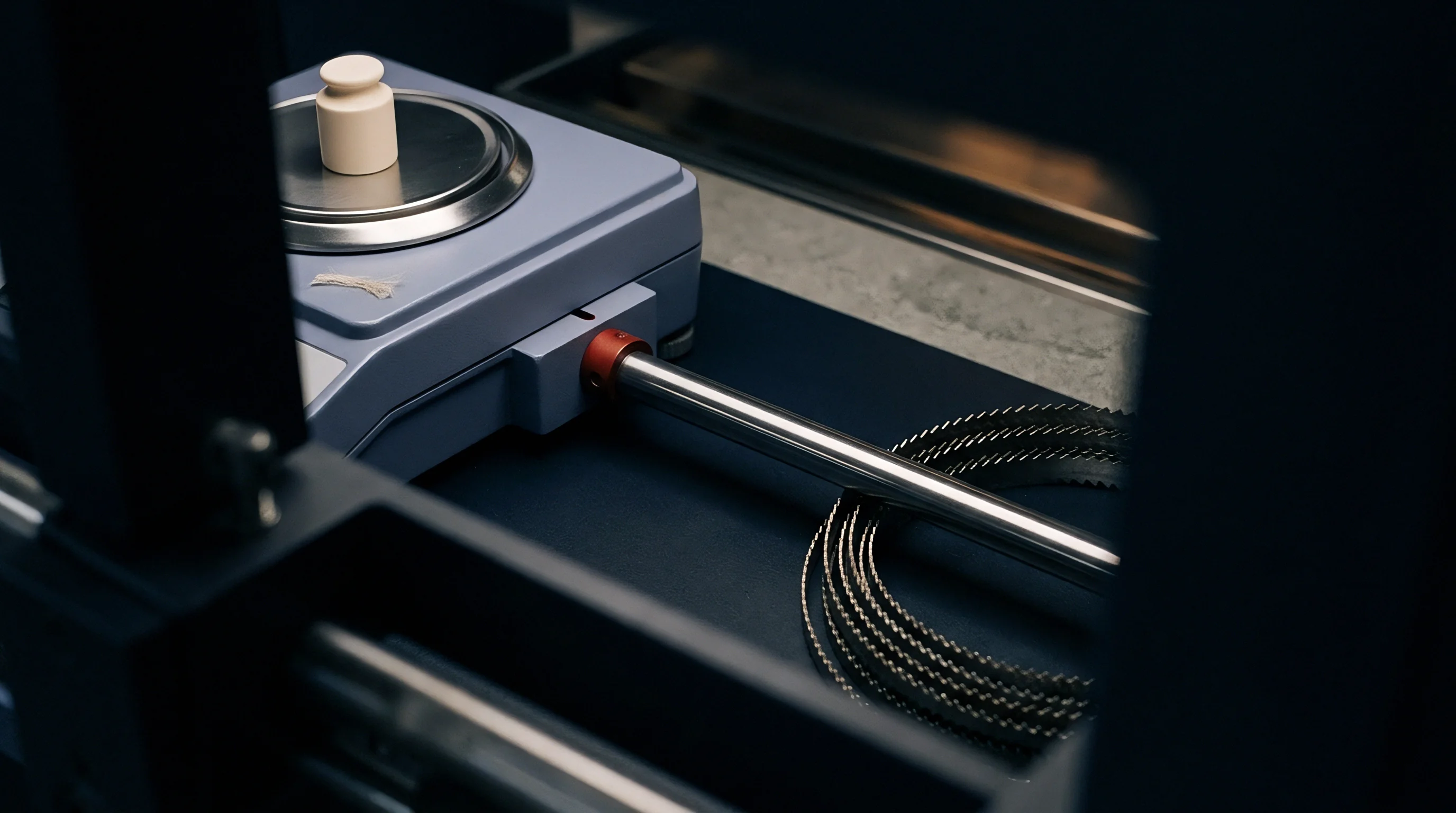
Microbalance Calibration and Environmental Controls
Weighing rooms demand tight physical isolation. Analytical microbalances rest on granite isolation tables weighing at least 150 kilograms, positioned clear of structural walls. HVAC ducting supplies air through low-velocity laminar diffusers directed away from draft shields.
Room temperature shifts must not exceed 0.5 degrees Celsius per hour to avoid convection currents within the weighing chamber that exert apparent lift on the pan.
Calibration relies on certified Class E2 stainless steel weights traceable to national metrology standards. Daily operational checks verify response across three key increments: 1 milligram, 10 milligrams, and 100 milligrams, confirming linear tracking throughout the working range. Draft doors remain shut during taring and recording, with integration times extended to 8 seconds to allow chamber air currents to subside.
- Thermal Drift Errors shift microbalance zero baselines when room ambient temperatures fluctuate beyond designated 0.5 degree hourly thresholds.
- Convection Uplift Forces occur when heated samples sit inside cool balance chambers, creating upward airflow that reduces apparent mass.
- Hygroscopic Mass Gains cause progressive weight creep while dry specimens sit on open balance pans absorbing room air moisture.
- Airflow Turbulence Interference disrupts micro-gram balance pan stability when laboratory HVAC systems cycle at high velocity.
- Gravimetric Handling Contamination adds human skin oils to dry specimens when technicians touch fibres with bare fingers instead of forceps.
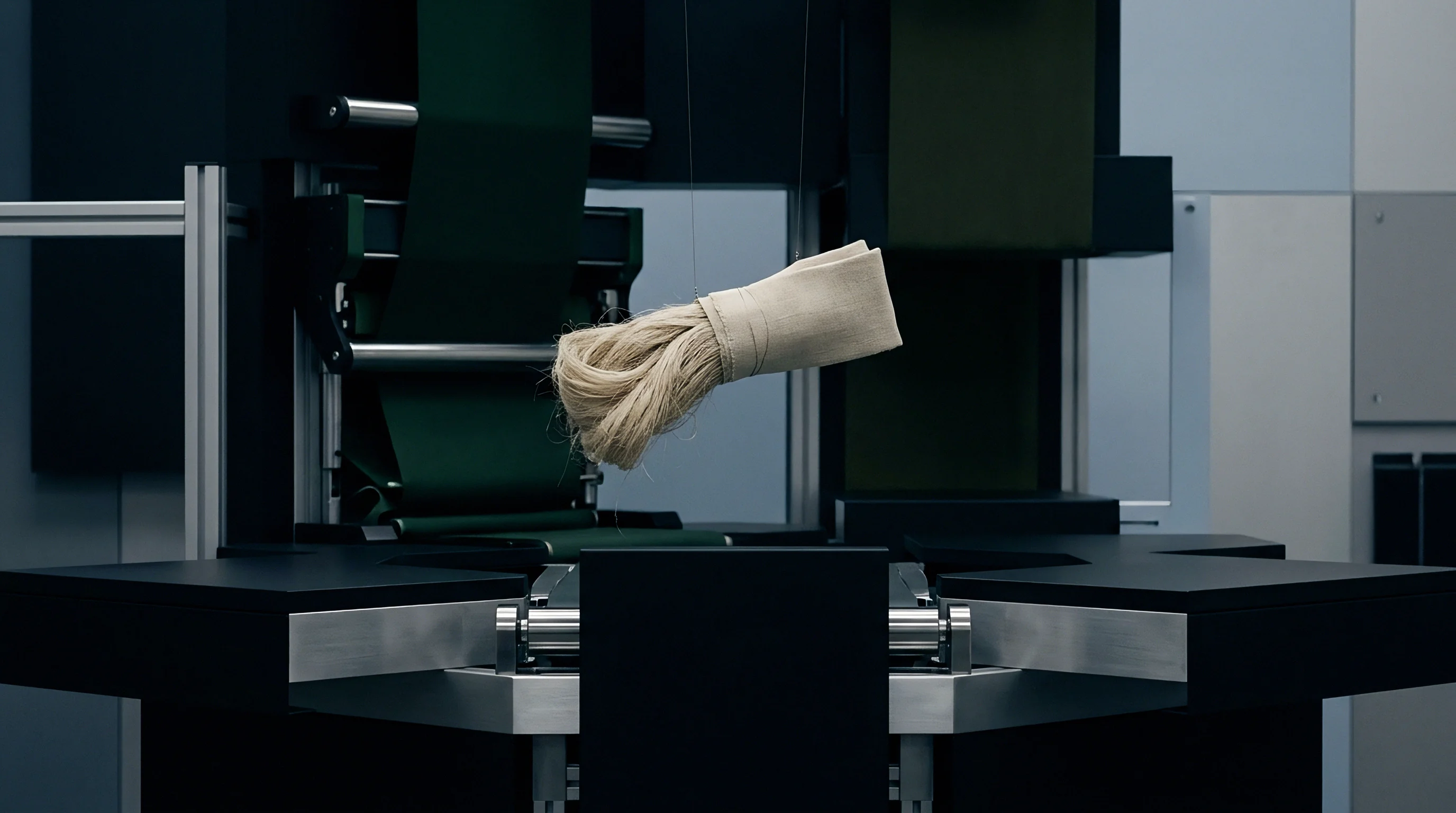
Sample Size Calculations and Statistical Power
Establishing a dependable mean linear density requires enough replication to narrow statistical confidence intervals. Biological variance among stems, crops, and hackled stricks means single-bundle evaluations yield unacceptably wide confidence bands, rendering them useless for contractual verification. Determining sample size requires balancing historical population variance against permissible error limits.
Microbalance sampling protocols specify sixty bundles per lot to maintain a statistical margin within two percent. The sample size equation incorporates Student’s t-value for the selected confidence level (typically 95 percent), anticipated standard deviation, and the maximum allowable error band. When historical lot CV runs at 20 percent and permissible testing error is capped at 2.5 percent, the standard demands at least 62 bundle specimens.
Truncating sample counts to lower testing costs broadens confidence intervals and exposes buyers to off-spec deliveries.
Moisture shifts distort recorded mass and compound linear density errors, which directly alters linen yields at the spinning frame.
Applying a sample size below thirty bundle cuts increases linear density estimation error margins beyond five percent, invalidating mill drafting calculations.
During a commercial dispute over imported French line flax, testing isolated residual pectin mass to evaluate distortions in tex calculations. Laboratory analysis showed un-retted residual gums had inflated reported fineness by 0.18 tex. Extracting pectin prior to gravimetric weighing brought true cellulosic linear density back within contract specifications, settling a 48000 Euro shipment claim without arbitration and demonstrating why encrustant mass must be accounted for during baseline verification.
When evaluating raw line flax for high-count wet spinning, bundle uniformity across stricks carries far greater commercial weight than mean fineness alone.

Variance
Linear density variance dictates spinning performance across every conversion stage. Flax fibre possesses no single dimension; bundle calibers span a broad continuum. The fineness distribution within hackled slivers determines draw frame stability, roving regularity, and wet-spinning tension.
Wide dispersion in raw linear density produces localized surges in drafting resistance, generating slubs and thin places while elevating end-breakage rates at the spindle.

Drafting Force Dynamics and Spinnable Limits
Draw frames attenuate sliver weight through differential surface speeds between back and front roller nips. During drafting, individual fibre bundles slide past one another against inter-fibre frictional resistance, which varies with bundle surface area and linear density. Slender bundles provide greater specific surface area per unit mass, raising cohesive friction, whereas coarse bundles present less contact area and slide under lower drafting resistance.
When sliver exhibiting wide density variance reaches the drafting zone, coarse bundle clusters provoke sharp spikes in drafting force. These load surges force drafting rollers apart, temporarily compromising nip control so unattenuated fibres surge through to create slubs. Conversely, when fine bundles enter a drafting zone weighted for coarse stock, excessive cohesion resists drafting, breaking filaments and causing thin spots.
Maintaining tight linear density distributions ensures predictable drafting forces and uniform sliver attenuation.
Drafting force monitoring in mills processing dew-retted Normandy flax reveals that force fluctuations exceeding 15 percent above baseline correlate directly with thin-place defects in finished wet-spun yarns. Increasing roller loading suppresses coarse bundle surges, but it pulverizes fine filaments into debris that fouls wet-spinning troughs. Aligning raw fibre fineness distributions with roller gauge settings maximizes running efficiency.

Worked Sensitivity Analysis: Raw Fineness to Delivered Metre Cost
Commercial viability balances raw linear density against target yarn count, hackling yield, and spindle productivity. Fine, uniform hackled line flax demands a substantial purchase premium but supports high-count spinning at minimal breakage rates. Coarser, irregular fibre costs less per kilogram, but limits production to lower counts and sheds more hackling waste.
The following sensitivity model traces three commercial flax grades through processing into finished yarns.
Drafting force rises with raw bundle thickness, while filament fineness dictates ultimate yarn strength at a given cut length.
| Grade Parameter / Commercial Metric | Grade A (Fine Long-Stap Line) | Grade B (Standard Medium Line) | Grade C (Coarse Variable Line) |
|---|---|---|---|
| Mean Raw Bundle Linear Density (tex) | 1.15 | 1.65 | 2.40 |
| Linear Density CV% across Stricks | 14.2% | 22.5% | 35.8% |
| Hackling Yield (% Clean Line Fibre) | 68.5% | 61.0% | 52.0% |
| Raw Fibre Cost (EUR / kg landed) | 5.80 | 4.20 | 2.90 |
| Maximum Spinnable Wet-Spun Count (Nm) | Nm 80 (12.5 tex) | Nm 50 (20.0 tex) | Nm 26 (38.5 tex) |
| Frame End-Breakage Rate (per 1000 spindle hrs) | 18 | 32 | 85 |
| Spinning Efficiency (% Real Output) | 94.5% | 91.0% | 78.5% |
| Effective Fibre Net Cost in Yarn (EUR / kg) | 8.47 | 6.88 | 5.58 |
| Processing & Spinning Conversion Cost (EUR / kg) | 12.50 | 8.20 | 5.10 |
| Finished Single Yarn Cost (EUR / kg) | 20.97 | 15.08 | 10.68 |
| Target Fabric Weight (g / sq metre) | 110 (Plain weave) | 160 (Plain weave) | 240 (Huckaback/Canvas) |
| Delivered Metre Raw Material & Yarn Cost (EUR / m) | 2.31 | 2.41 | 2.56 |
The sensitivity matrix outlines clear commercial trade-offs. Although Grade A raw fibre costs 100 percent more per raw kilogram than Grade C (5.80 EUR against 2.90 EUR), its hackling yield (68.5% versus 52.0%) and spinning efficiency (94.5% versus 78.5%) curb processing penalties. In lightweight apparel fabrics (110 g/m²), Grade A yields a lower raw yarn cost per square metre (2.31 EUR) than Grade C deployed in heavy canvas (2.56 EUR).
Procuring coarse, variable raw material for fine spinning drives substantial margin losses via downtime and combing scrap.
Defect Modes Driven by Density Off-Spec
An excess of coarse bundles introduces specific structural faults that emerge during weaving and finishing. Identifying these defect patterns allows sourcing engineers to trace fabric flaws directly back to gravimetric non-compliance in raw stock.
Final delivered invoices directly reflect realized line yield and downstream defect rates.
Stipulating explicit linear density tolerances in purchasing contracts safeguards spinning mills against off-spec raw fibre deliveries.
- Slub and Thick-Place Accumulation occurs when high-tex bundle clusters bypass drafting zones intact, producing prominent localized yarn diameter surges.
- Periodic Thin-Spot Generation results from localized drafting force spikes that break adjacent fine filaments, causing structural fabric weak points.
- Wet-Spinning Trough Hairiness develops when coarse stiff fibre ends refuse to embed into the twisting yarn core during wet trough passage.
- Dye Uptake Striations arise from uneven non-cellulosic lignin distributions in coarse bundle cores, causing streakiness across dyed fabric faces.
- Spinning Frame End-Breakage Spikes occur when thin-place linear density drops below the critical 25-filament cross-sectional threshold under frame winding tension.
Inserting ISO 2370 annex B tolerance limits into the bill of lading protects buyers from liability for spinning frame end-breakage spikes caused by linear density variance over twelve percent.

Margin
Flax line pricing settles against gravimetric validation. Although market indices post base rates for standard origins like French Water-Retted Flax or Normandy Dew-Retted Line, final settlement balances on certified linear density, moisture regain, hackling yield, and encrustant content. Commercial buyers integrate graduated premium and penalty schedules directly into supply agreements to protect operating margins against substandard lots.
Contractual Penalty Structures and Tolerance Bands
Procurement contracts define baseline linear density values alongside neutral tolerance windows. A typical specification for fine wet spinning sets a target mean of 1.40 tex, with a neutral band of plus or minus 5.0 percent (1.33 tex to 1.47 tex) accepted without discount. If intake verification returns averages between 1.48 tex and 1.60 tex, penalty clauses apply a 2.5 percent invoice deduction per 0.1 tex over nominal.
Deliveries exceeding 1.60 tex trigger rejection rights at the seller’s expense.
Moisture reconciliation proceeds in parallel with linear density adjustments. Cargo arriving drier than the statutory 12.0 percent regain baseline receives an upward mass adjustment to compensate the supplier for absolute dry matter. Consignments testing above 12.0 percent incur discounts that deduct surplus water weight.
Where moisture surpasses 16.0 percent, contract terms mandate immediate unpacking and active drying at the supplier’s charge to prevent microbiological decay and mould growth in storage.

Hackling Yield and Tow Reclassification Economics
Raw scutched flax passes through hackling machinery to parallelize long line fibres and separate short, unaligned tow. Hackling yield ~ the percentage of dressed line fibre recovered from raw input ~ depends on bundle cohesion and incoming linear density. Coarse or insufficiently retted bundles resist the comb pins, breaking under draft and shedding excessive mass into lower-value tow channels.
Processing economics hinge on the price spread between line fibre and tow. Dressed line flax commands between 4.20 and 6.50 Euros per kilogram, whereas hackled tow realizes only 1.10 to 1.80 Euros depending on shive contamination. A 5 percent drop in combing yield, caused by coarse bundles breaking across the pins, transfers 50 kilograms per tonne from prime line into tow, forfeiting roughly 200 Euros in net value for every tonne processed.
Sourcing teams rely on gravimetric testing of raw stricks to model yield prior to booking forward volume.
Verification Dossiers for Freight and Duty Compliance
Cross-border tariff classification relies on certified laboratory dossiers under Harmonized System (HS) Chapter 53. Scutched flax, hackled line, and tow occupy separate customs headings carrying distinct duty rates and quota ceilings. HS Code 5301.21 covers broken or scutched material, HS Code 5301.29 applies to hackled line fibre, and HS Code 5301.30 governs tow and processing waste.
Customs authorities deploy gravimetric and morphological verification to curb fraudulent tariff misdeclaration. Declaring dressed line flax as scutched fibre or tow to avoid higher duty thresholds invites confiscation, punitive fines, and revocation of import status. Filing an independent inspection dossier ~ comprising ISO 2370 certificates, certified moisture regain records, and yield analyses ~ alongside the bill of lading prevents administrative delays at border checkpoints.
Settling raw fibre contracts on dry gravimetric mass corrected for actual non-cellulosic content secures predictable spinning economics before the first bale enters the mill.