Verifying Farm Level Lot Segregation Protocols during Dew Retting Operations
Verifying farm-level lot segregation during dew retting links cadastral parcel boundaries to mechanically steered swaths, physical buffers, and baler telemetry.

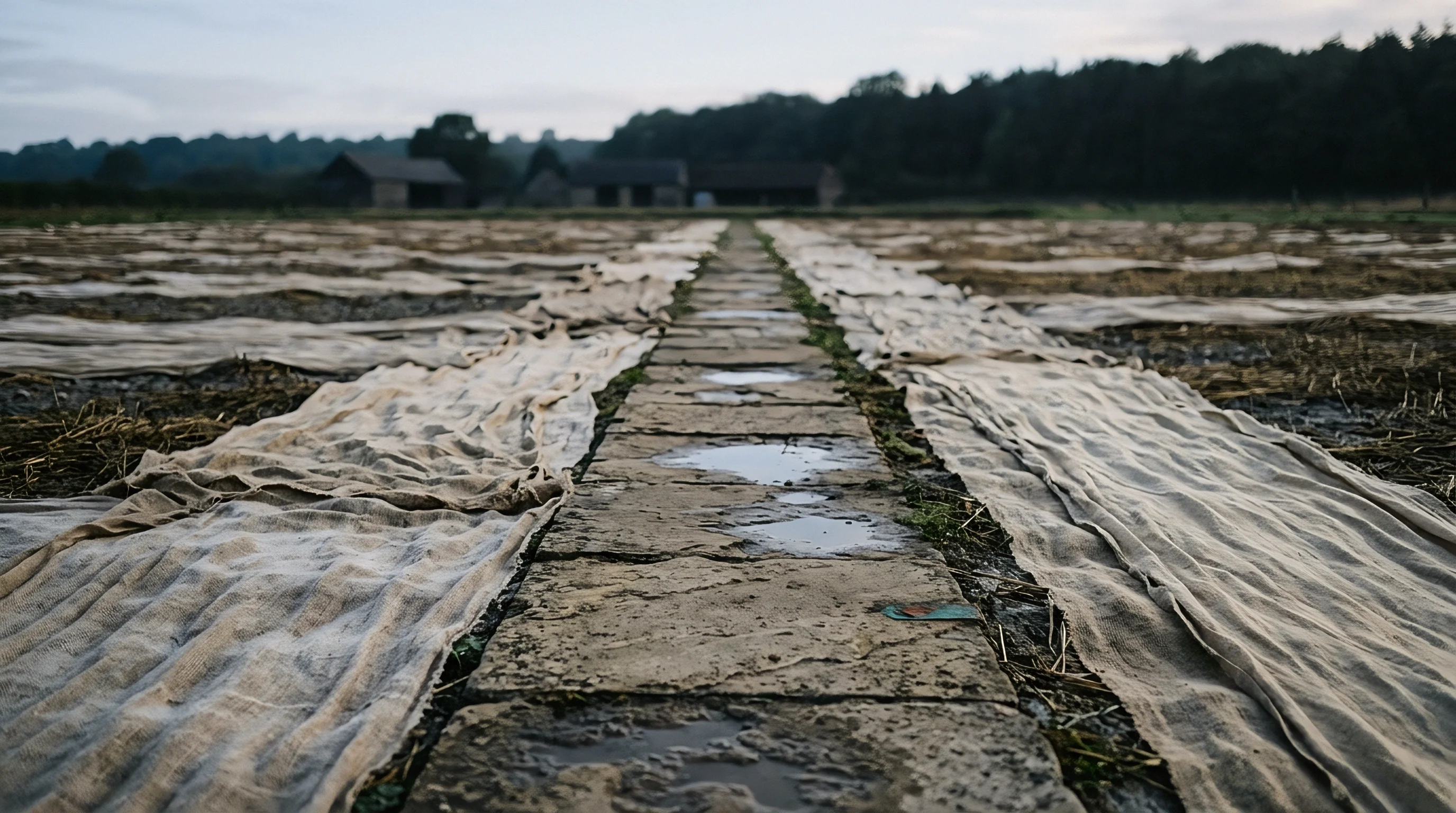
Cadastre
Field registration establishes the formal provenance of a flax lot long before pulling equipment enters the field. The dossier ties the cultivated area to geographic coordinates, seed receipts, and the grower’s registered identity. Across Normandy, Picardy, and Flanders, the cadastral boundary forms the baseline for certification under the European Flax standard run by the Alliance for European Flax-Linen and Hemp.
During dew retting, the cut straw sits on that exact ground for six to ten weeks. For cross-border auditors verifying origin, reconciling the harvest declaration’s coordinates against national agricultural databases is always step one.
Every parcel has a unique identifier in the European Union Integrated Administration and Control System, which tracks land use via the Land Parcel Identification System using digital vector boundaries. An auditor checking origin asks for the field block’s graphical reference alongside the single application declaration filed for farm subsidies. Declared acreage on those filings sets the biological ceiling for the lot.
A claim of thirty metric tons of retted straw from a four-hectare plot works out to 7.5 tons per hectare, square within Western European norms. If declared yields creep past nine tons per hectare, straw has almost certainly been brought in from uncertified ground outside the boundary.
European Flax Standard Section 4.2 invalidates whole-farm certification when unmapped acreage enters the communal retting pool.
Seed invoices confirm what was put into the ground within each cadastral boundary. Receipts link certified lot numbers to specific varieties ~ such as Alizée, Bolchoï, or Dandy ~ and show the rate sown per hectare. Commercial plantings typically take 110 to 130 kilograms of certified seed per hectare to establish 1,800 to 2,000 seedlings per square metre.
Where drill rigs carry satellite telemetry, machine passes log the exact distribution path across the parcel.
- Field Block Declaration links the national cadastral parcel reference directly to the European Flax grower certificate, anchoring geographic provenance.
- Certified Seed Invoices record purchase dates, variety names, and certified lot numbers to substantiate seeding rates for the mapped area.
- Sowing Telemetry Logs record equipment tracks across the field, verifying the physical perimeter of the planted area.
- Pulling Notice Records date the start of mechanical harvest, fixing the timeline for dew retting on the ground.
Gaps between seed volumes and registered acreage quickly point to off-record planting. Auditors also check whether fields farmed by uncertified operations run right up against the flax parcel. If a grower plants multiple cultivars side by side within one continuous field, cadastral boundaries alone cannot prove separation; the internal dividing line inside the polygon needs recorded GPS coordinates before the pullers start work.
Standard supply contracts make this clear: any straw harvested from unmapped field additions faces immediate rejection at scutching intake.
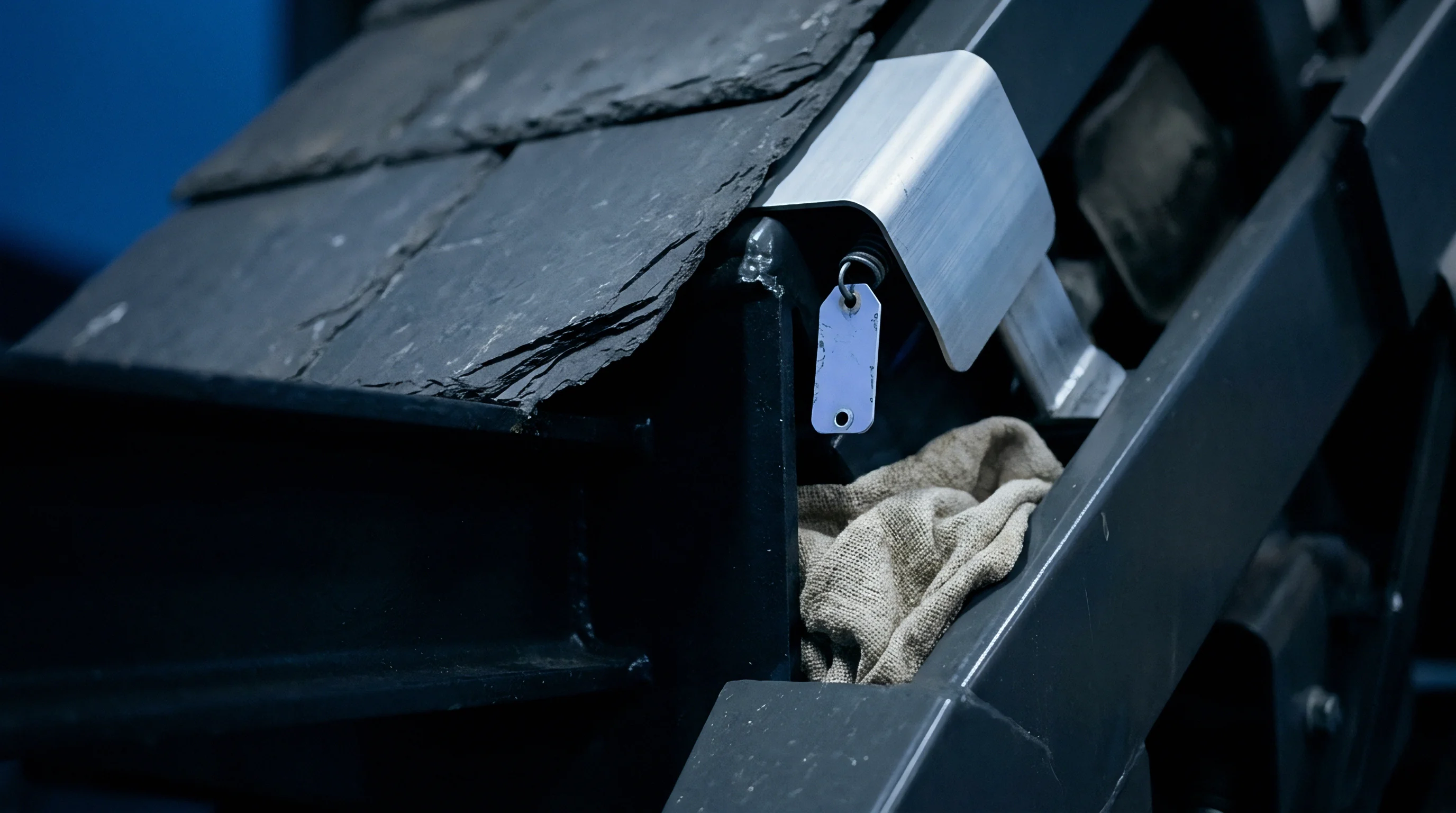
Swath
Flax harvest requires pulling the entire plant out by the roots so the bast fibre bundles remain unbroken and full-length. Dedicated pullers lay the stems flat across the field in neat, parallel swaths roughly one metre wide, oriented crosswise to machine travel. Retting then relies on native soil fungi ~ chiefly Cladosporium herbarum, Epicoccum nigrum, and Fusarium species ~ which take hold as morning dew alternates with daytime sun.
Their pectinases and hemicellulases break down the pectin middle lamella cementing the fibre bundles to the inner woody shive.
Keeping lots distinct while straw lies in the open is difficult. Wind can shift swaths, and machinery can scramble them. Where a farm runs several cultivars or divides organic ground from conventional acreage, swaths need genuine physical separation.
Headlands are the worst hazard: when pullers make ninety-degree turns, stems twist into tangled windrows that ruin parallel alignment and blend adjacent lots beyond sorting.
Cross-contamination reaches fourteen percent along unbuffered plot margins when heavy wind events roll unanchored stalks across field furrows.
Buffers between cultivars must be deliberate. Commercial growers leave an unplanted or cleared strip of at least four metres between different varieties. Autumn winds over fifty kilometres per hour can push loose swaths straight across bare stubble.
Wheel ruts and furrow lines catch some of it, but as fungi digest the lower stems, top layers lose grip and wander.
- Headland Entanglement happens during tight turns, twisting distinct straw lots into scrambled, cross-laid windrows along parcel borders.
- Lateral Wind Drift blows dry stalks across parcel boundaries during autumn gales, mixing neighboring cultivars over furrow lines.
- Root Ball Overlap occurs when pulling widths waver, tangling root systems from adjacent passes into the boundary windrow.
- Uneven Ground Clearance suspends stems over depressions in the dirt, leading to patchy fungal colonization across the swath.
Auditors cross-reference harvest-day field maps with satellite imagery. Stakes or georeferenced virtual boundaries mark where one variety ends and the next begins. Straw gathered within the four-metre transition strip goes into quarantined buffer bales marked strictly for non-pedigree processing.
| Boundary Configuration | Separation Distance (m) | Buffer Management Protocol | Physical Mixing Risk | Lot Integrity Status |
|---|---|---|---|---|
| Unseparated Adjacent Stalks | 0.00 | Direct planting boundary | High (25% to 40%) | Rejected for Single-Lot Claims |
| Tractor Wheel Furrow | 1.50 to 2.00 | Compacted soil track separation | Moderate (10% to 15%) | Conditional Mass Balance Downgrade |
| Mown Grass Buffer Margin | 3.00 to 4.00 | Short-cut vegetation strip | Low (2% to 5%) | Approved with Buffer Straw Quarantine |
| Tilled Fallow Divide | 5.00 or greater | Deep-furrowed tilled earth | Negligible (under 0.5%) | Approved for Full Pedigree Claim |
| Methods note: Risk percentages evaluate stem displacement measured over 45 days of field exposure under Western European autumn wind regimes. | ||||
Without documented buffer strips between adjacent plots, single-cultivar provenance claims fall away, and the lot drops into communal scutching blends.


Turning
Turning the swath is necessary because retting is inherently lopsided. Stems on top dry out in the sun where fungi stall, while the damp underside in contact with the soil rets fast. Inverters travel down the rows, picking up the ribbon on rotating tines, flipping it 180 degrees, and laying it back onto the stubble.
Most fields need two to three turnings between August and October, depending on rain, heat, and morning dew.
Every pass nudges the swath sideways. Pick-up tines and delivery belts throw the ribbon ten to thirty centimetres off its previous track each time. Over three turning cycles, that cumulative crawl can move a swath nearly one metre from where the puller dropped it.
Without wide buffers, turning machines gradually roll edge rows from one parcel right into the boundary rows of the next.

Does Mechanical Turning Displace Windrow Boundary Markers?
Flags and wooden stakes rarely stay where they are put. Operators give tractor wheels wide berth and routinely pull stakes so pick-up reels do not chew them up. Once markers are pulled, parcel borders survive only in driver memory unless cab systems use real-time kinematic satellite guidance.
The tractor GPS must log the exact point where a lot terminates and record when the inversion drum disengages.
Retting proceeds faster along field headlands where air circulation accelerates dew evaporation.
Retting speeds vary considerably across a single field depending on tree cover, soil drainage, and elevation. Interior rows rarely dry at the same rate as exposed headlands. Growers often turn soggier sections while leaving drier strips alone, splitting a uniform field into sub-lots at different stages of breakdown.
Traceability protocols account for this by recording machine timestamps against individual swath lines.
Even when drivers follow tractor wheel ruts to hold parallel lines, mechanical throw inevitably displaces windrows across plot boundaries over successive passes.

Press
Baling packs open-field straw into dense, shippable units. Round balers roll the stems into cylinders of 250 to 350 kilograms, tied with polypropylene twine or netting. Big square balers compress rectangular bales up to 450 kilograms to maximize flatbed trailer loads.
Pressing is the last point in the field where handlers can keep lots strictly separated before deliveries merge in scutching sheds.
Pick-up reels and intake channels hold onto residual straw. If a baler runs straight from one parcel into another without clearing, stems from the first lot end up rolled into the first bale of the next. Rollers and chambers hold fifteen to twenty-five kilograms of loose fiber.
Purging between lots means running the pick-up clean on bare headland dirt until the previous run empties entirely into its final bale.
Field grit grinds identification barcodes off polypropylene bale wraps during dry autumn collection runs.
Identification tags pinned to the baling twine preserve traceability through transport and warehousing. Standard tags carry printed lot numbers, farm identifiers, and scannable 2D data matrix codes, while RFID chips woven into twine ties allow passive scanning at storage bay doors. Any bale that drops its tag loses pedigree immediately and moves to bulk uncertified stock.

Do Bale Tags Survive Field Storage Weathering?
Rain, sun, and rough handling along field edges make short work of poor labels. Paper-faced adhesives fall apart after hours in damp air. Synthetic tags printed by thermal transfer on high-density polyethylene or polyolefin resist water and tearing.
Scanners log the barcode at three points: as the bale leaves the field, when it is loaded onto trailers, and at scutching mill intake.
| Tag Substrate Material | Fastening Mechanism | Outdoor Exposure Limit (Days) | Barcode Legibility Rate (%) | Gate Acceptance Status |
|---|---|---|---|---|
| Coated Thermal Paper | Pressure-sensitive adhesive | 3 to 5 | 42.0% | Prohibited for Dew-Retted Storage |
| Direct Thermal Polypropylene | Plastic clip to twine | 30 to 45 | 88.5% | Conditional Indoor Staging Only |
| Thermal-Transfer Polyolefin | Braided steel or nylon wire tie | 120 to 180 | 99.2% | Approved for Open Field-Edge Storage |
| Encapsulated UHF RFID Tag | Twine-integrated woven loop | 365 | 99.9% | Approved for Automated Yard Tracking |
Moisture checks run alongside pressing. Straw baled above sixteen percent moisture continues to rot inside, heating the core and degrading cellulose polymers. Trapped condensation causes mold patches that rot silver-grey fiber into brittle, dark tow.
Probes 50-centimetre long check eight spots across each bale. Batches testing between twelve and fifteen percent moisture get transit clearance; anything wetter is diverted to ventilated drying sheds under quarantine.
- Chamber Purge Verification confirms the baling chamber was run empty between parcels to prevent cross-lot carryover.
- Electronic Tag Correlation matches the bale identifier against the cadastral block listed on digital dispatch manifests.
- Core Moisture Compliance confirms moisture levels remain below sixteen percent across all probe depths.
- Tarping and Stacking Clearance checks that field-edge stacks rest on pallets off bare ground under breathable, water-shedding tarps.
Straw baled dry and held under even tension preserves fiber bundle integrity through winter storage.

Assay
Audit trails culminate at the weighbridge and scutching line, where field documentation meets physical yield reconciliation. Scutching breaks the woody core ~ the shive ~ away from long line fiber and short tow using fluted rollers and beating turbines. Dew-retted straw breaks down into known ratios, allowing mass balance calculations to balance incoming straw tonnage against the shift’s output of long fiber, tow, shive, and dust.
Standard dew-retted straw at fourteen percent moisture yields sixteen to twenty percent scutched long flax and eight to twelve percent scutched tow. A single-origin lot cannot break those mechanical realities. If a mill reports eight metric tons of long fiber from twenty metric tons of delivered straw, a forty percent yield is physically impossible.
Discrepancies of that scale indicate unrecorded straw entered the turbine line.
| Fibre Fraction Component | Typical Yield (kg/t) | Permissible Tolerance Range (kg/t) | Measurement Method | Reconciliation Status |
|---|---|---|---|---|
| Scutched Long Flax | 175.0 | 140.0 to 210.0 | Inline scale weighment per bale | Primary Origin Mass Claim |
| Scutched Tow (Short Fibre) | 105.0 | 80.0 to 135.0 | Continuous press bale scale | Secondary Coproduct Ledger |
| Shive (Woody Core) | 510.0 | 460.0 to 560.0 | Cyclonic dust collector weighbridge | Industrial Biomass Outflow |
| Field Dust and Inert Soil | 70.0 | 40.0 to 110.0 | Filtration hopper tare weight | Process Loss Ledger |
| Evaporative Moisture Loss | 140.0 | 100.0 to 170.0 | Differential core sensor assay | Environmental Loss Factor |
Contract pricing hinges on verifiable origin. Certified European Flax long fiber earns a premium of 0.35 to 0.65 EUR per kilogram over uncertified or disputed lots. When an audit reveals field-level mixing during retting or baling, the lot is downgraded to generic grade.
Spinners in Zhejiang or Jiangsu provinces take the loss if customs authorities reject goods declared under non-preferential origin rules. Proof requires a documented chain running from export containers through spinning lots, mill tickets, and bale tags back to the cadastral plot where the straw lay.
Auditors reconcile intake scale slips against finished bale tags. The weight of finished line fiber, factored through the extraction coefficient, must square with the gross straw recorded on field delivery dockets. Buyers routinely enforce contract clauses that pass audit and testing costs to the scutcher whenever mass reconciliation drifts past two percent.
Whether satellite logging and DNA markers can ever fully prevent lot mixing between adjacent field strips remains an open argument between certifiers and growers.