Defect Avoidance
Loom restart control protocols prevent pick density variations caused by cloth fell movement during weaver stoppages. Warp yarn relaxation during loom dwell periods shifts the fell line away from the reed beat-up position. Start mark prevention incorporates mechanical and electronic control sequences that adjust warp tension and fell position before re-initiating weaving.
Loom setting manuals detail fell offset parameters for various linen fabric constructions and yarn counts. Effective restart compensation ensures uniform pick density across fabric stop boundaries.
Fell Compensation
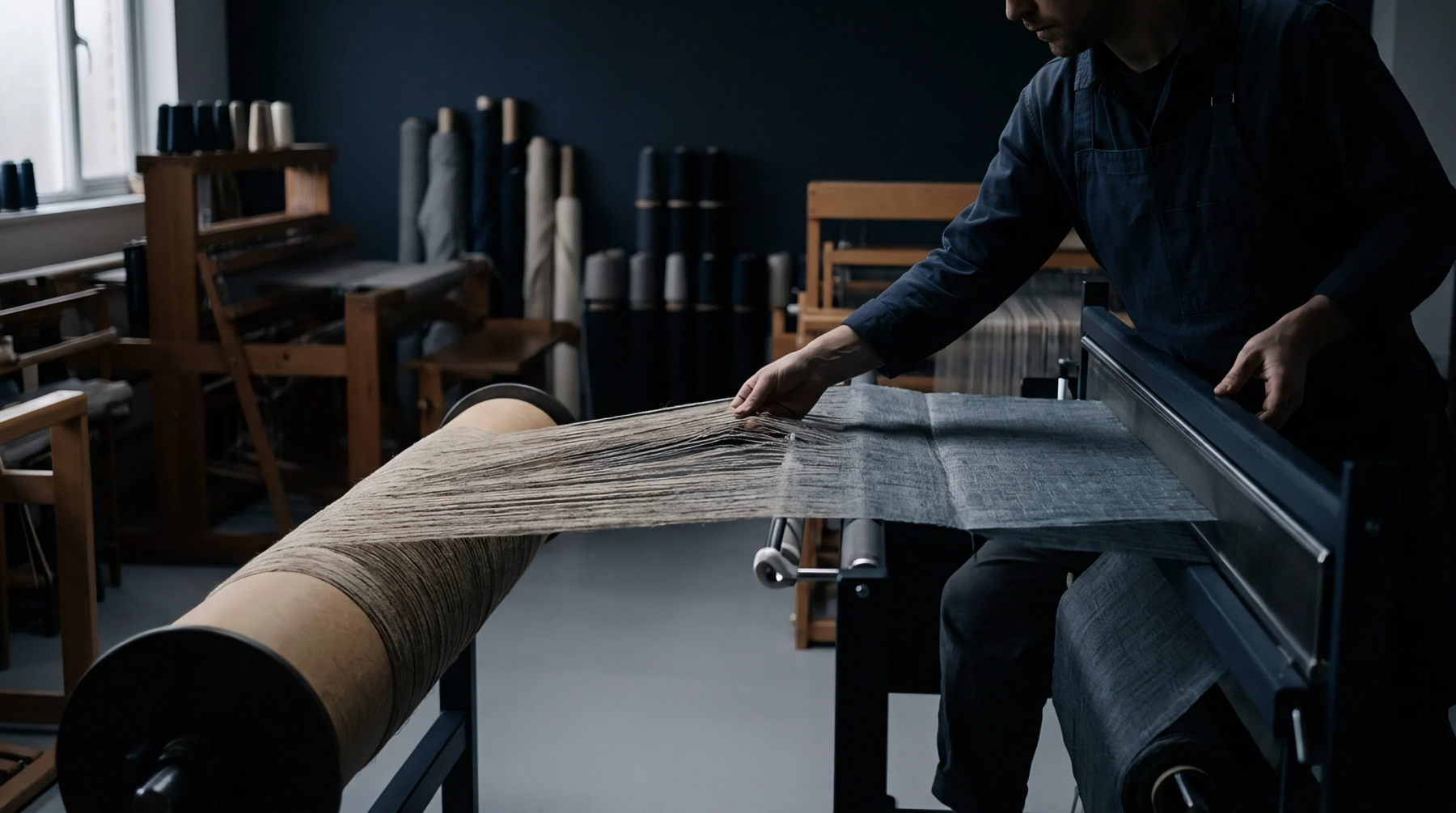
When a loom stops to fix a broken warp or weft yarn, elastic recovery in flax warp yarns draws the cloth fell backward toward the back rest. Restarting the loom without position correction results in a thick bar or thin bar defect across the fabric width. Modern electronic let-off and take-up systems drive the warp beam and cloth roll in reverse or forward increments before the first beat-up pick.
Sensors calculate dwell duration and adjust fell displacement distance dynamically to match measured yarn relaxation rates. Stiff linen warp yarns exhibit minimal elasticity, making fell repositioning highly sensitive to fractional millimeter errors. Automated fell correction routines eliminate manual wheel adjustments by weaving operators.
Quality Assurance
Cloth room inspection reports track start mark frequency per hundred meters of woven linen fabric. Uncorrected stop marks cause fabric downgrading and financial claims during buyer final inspections. Electronic restart controls ensure that pick spacing across stop boundaries remains within two percent of standard pick density.
Quality certification documents confirm that zero visible start marks exist in first-grade linen rolls exported to international buyers.