
Viscoelastic Stress Relaxation and Anti-Mark Settings in Rapier Weaving
Viscoelastic tension decay shifts the cloth fell during loom stops; precision anti-mark settings offset let-off and take-up steps to prevent start marks.
Viscoelastic tension decay shifts the cloth fell during loom stops; precision anti-mark settings offset let-off and take-up steps to prevent start marks.

High-speed flax weaving requires asymmetric shed geometry and synchronized oscillating backrests to absorb rigid bast strain and suppress starting marks.
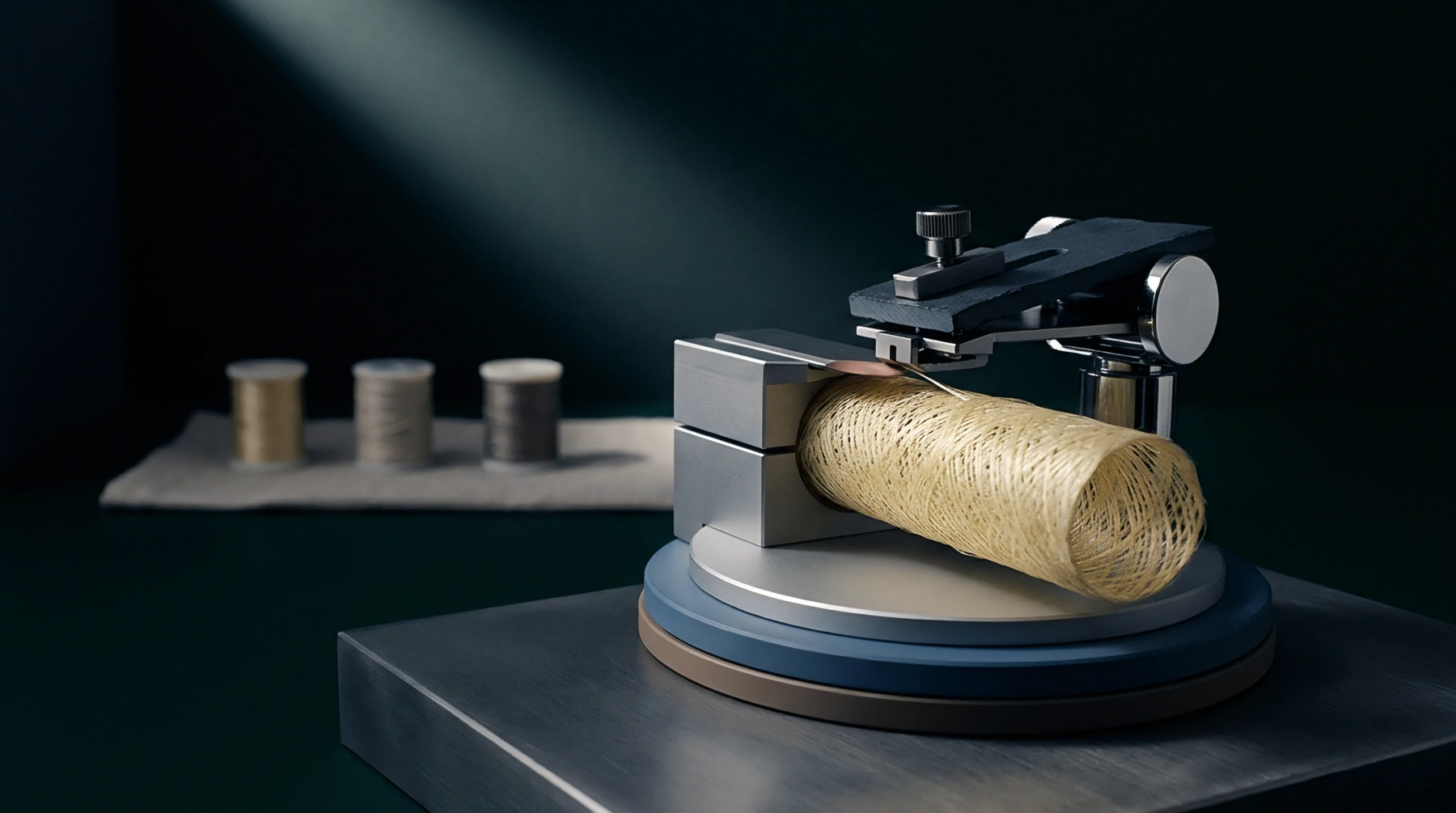
Dynamic beat-up cycles at modern loom speeds induce moisture-dependent anisotropic creep in flax, requiring speed reductions to stabilize pick uniformity.

Optimize high-density flax by offsetting shed geometry and setting early heddle crossing to stagger beat-up force before cover limits induce fiber rupture.

Calculated reed width compensates for linen weft crimp and lateral contraction by matching localized float floatation to edge temple holding capacity.

Calibrating let-off PID loops eliminates linen stop marks by pairing load-cell dampening with millisecond take-up reverse steps to arrest cloth fell migration.

Dynamic beat-up force in high-sett bast textiles scales with yarn bending modulus and crimp resistance, dictating loom warp stoppage rates.

Rapier crimp exchange calculations incorporate velocity-induced yarn flattening and transient shed tension to prevent off-loom greige width shortfalls.

Asymmetric shed geometry and early crossover timing reduce flax peak tension, preventing end breakage on high-density linen warps without sacrificing speed.
Expertise is a utility, not a secret. sentiention™ publishes its working knowledge as open reference: intelligence layer covering the materials it sources, the markets it enters, and the reference that serves both.