Greige Cloth Inspection Station Geometry and Setup
Optimal greige cloth inspection requires a 45-60 degree bed tilt, 1500-2100 lux illumination, and closed-loop tension to enforce ASTM D5430 grading standards.

Bed
Off-loom inspection stations angle the cloth between forty-five and sixty degrees from the horizontal to keep sightlines perpendicular. Fresh off high-speed air-jet or rapier looms, greige goods still hold residual tension, twist imbalances, and surface lint. A single operator stands between 0.8 and 1.0 metre back, scanning a sweep that should not exceed 1.8 metres.
Beyond that width, tracking edge to edge without optical drift requires two synchronized inspectors or split-drive transport mechanisms.
Extruded aluminium frames dampen the constant floor vibration thrown off by nearby shedding motions. Machined raceways with steel roller bearings support the main inspection plane, keeping surface runout below 0.05 millimetres across the entire traverse. If rolls run over a flat horizontal table instead, cervical spine fatigue sets in within ninety minutes, and defect catch rates drop by more than a third.
Tilted inspection planes set between forty-five and sixty degrees sustain defect pick rates above ninety percent across eight-hour shifts.
Table depth dictates whether long floats, reed marks, and starting marks actually register while the cloth is moving. To give the eye enough dwell time at speeds between fifteen and twenty metres per minute, the viewing window needs at least 750 millimetres along the warp direction. Standard station dimensions are built around these mechanical limits.
| Station Class | Bed Tilt Angle | Viewing Window Depth | Maximum Cloth Width | Optimal Eye Distance | Transport Velocity |
|---|---|---|---|---|---|
| Narrow Rapier | 60 degrees | 600 mm | 1400 mm | 750 mm | 20 m/min |
| Standard Industrial | 50 degrees | 750 mm | 1900 mm | 900 mm | 18 m/min |
| Wide Sheeting | 45 degrees | 900 mm | 3400 mm | 1000 mm | 12 m/min |
| Heavy Technical | 55 degrees | 800 mm | 2200 mm | 850 mm | 15 m/min |
Drive rollers just past the tilted bed pull the web upward so it cannot sag over the aperture. Any unsupported span over two metres bows in the center under its own weight, distorting the reflection angle from overhead fixtures. High-twist linen warps curl hard at the selvedges if left alone, and curled edges hide temple cuts, drop wires, and broken picks along the outer three centimetres of the reed line.
Mechanical decurlers sitting right before the bed press the selvedges flat against the guide plate. Opposing left- and right-hand helical scroll rollers turn against the cloth feed, pushing slack out to the edges. Operators dial in scroll engagement with position-indicated handwheels.
Without driven edge expanders, selvedge defects slip straight through to finishing, where stenter pins snag and rip the loose loops, leaving scrap yardage at the batch opener.

Illumination
Suspended fixtures over the viewing bed hold surface illumination between 1500 and 2100 lux. Cantilever brackets let technicians aim the light straight into the scanning zone without throwing glare in the inspector’s face. Solid-state LED arrays have fully replaced fluorescents here, running at a correlated colour temperature of 6500 Kelvin with colour rendering indexes above 92 Ra. Daylight filtering through roof monitors simply introduces too much drift between morning and evening shifts.
Overhead lighting reveals surface soil, harness oil, warp stops, and erratic slub distributions. Beneath the web, an opal acrylic diffuser set flush into the steel frame backlights the cloth to expose internal voids and displaced yarns. For standard apparel weights, overhead downlights and under-bed transmission lamps balance at roughly a four-to-one ratio.
ASTM D5430 specifies surface illumination levels between 1075 and 2150 lux across the entire evaluated aperture.
Different linen constructions ~ like a 14 lea plain weave versus a 28 lea fine cambric ~ call for entirely different lighting setups. Dense plain goods block transmitted light, so grazing illumination angled at fifteen degrees to the bed is needed to throw distinct shadows behind yarn irregularities or trapped foreign matter. Fine batistes, on the other hand, show missed picks and doubled warp ends clearly under full backlighting.
Does Polarized Backlighting Expose Hidden Starting Marks?
When a loom stops, the warp sheet relaxes locally, thinning out the cover factor over three to eight picks. Diffused light tends to wash over these density shifts without enough contrast for an inspector to spot them at twenty metres per minute. Polarized backlighting, however, catches optical path variations inside the cellulosic cell walls, making stressed flax fibers show up as sharp birefringence fringes.
Cross-polarizing the filter at ninety degrees to the overhead array turns uniform fabric neutral grey while displaced yarns stand out as bright white lines. Starting marks that vanish under ordinary white backlighting become obvious, so inspectors can penalize the roll before chemical bleaching sets the defect permanently. Automated line-scan cameras rely on this same cross-polar setup to flag defects in production logs.
Angle Adjustment and Lux Calibration Protocols
Dual worm gears control the height and angle of the overhead fixtures relative to the cloth plane. Dropping the lamps closer raises lux levels sharply, which helps cut through the hazy, lint-heavy air typical of unsized greige staging areas. Handing over a station between shifts calls for a set calibration sequence:
- Clean acrylic panels with antistatic solvent to eliminate lint buildup that skews subsurface light transmission.
- Verify central illuminance using a calibrated digital lux meter positioned flush against the central table plane.
- Check boundary uniformity by taking four quadrant measurements, verifying that edge brightness remains within ten percent of center.
- Adjust grazing bar angles to sixteen degrees off the cloth surface to highlight pick distortions on heavy twill lots.
- Inspect overhead diffusers for yellowing or diode failures that depress the correlated colour temperature below 6000 Kelvin.
Inconsistent lighting ruins grading repeatability between the weaving mill and the receiving dock. Under standard purchase contracts governed by ISO 8498, an illuminance difference of more than 300 lux between stations invalidates the mill certificate and puts re-inspection costs on the seller.
Feed
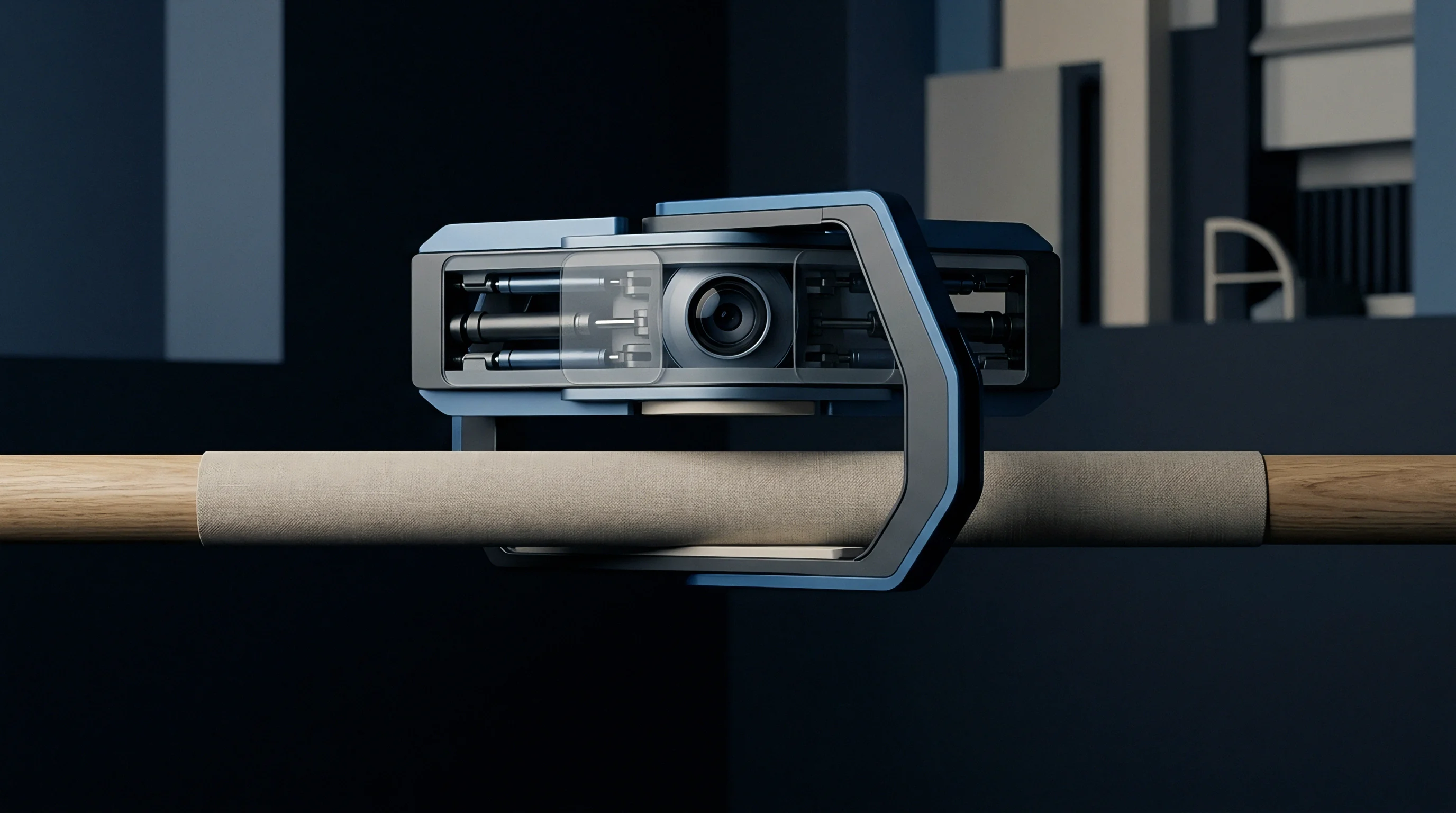
Cloth transport pulls the greige web from an off-end cradle, carries it across the lighted bed, and winds it onto a driven surface take-up. Spikes in tension stretch the structure, distorting pick spacing and masking loose ends or starting marks under temporary elongation. Closed-loop vector inverters regulate the feed motors to hold web tension strictly between 0.3 and 0.8 Newtons per centimetre of width.
Motorized belt cradles unroll fabric by its surface rather than pulling axially on the core, avoiding the width necking that center-driven stands cause when spinning up 400-kilogram rolls. Load cells beneath the primary deflector roller feed millivolt signals back to the controller, trimming rewind speed in millisecond increments. An uneven let-off creates optical banding that wavers across the bed, tiring the inspector and inducing motion sickness.
A slack transport cradle hides skew faults while excessive tension masks thin places.
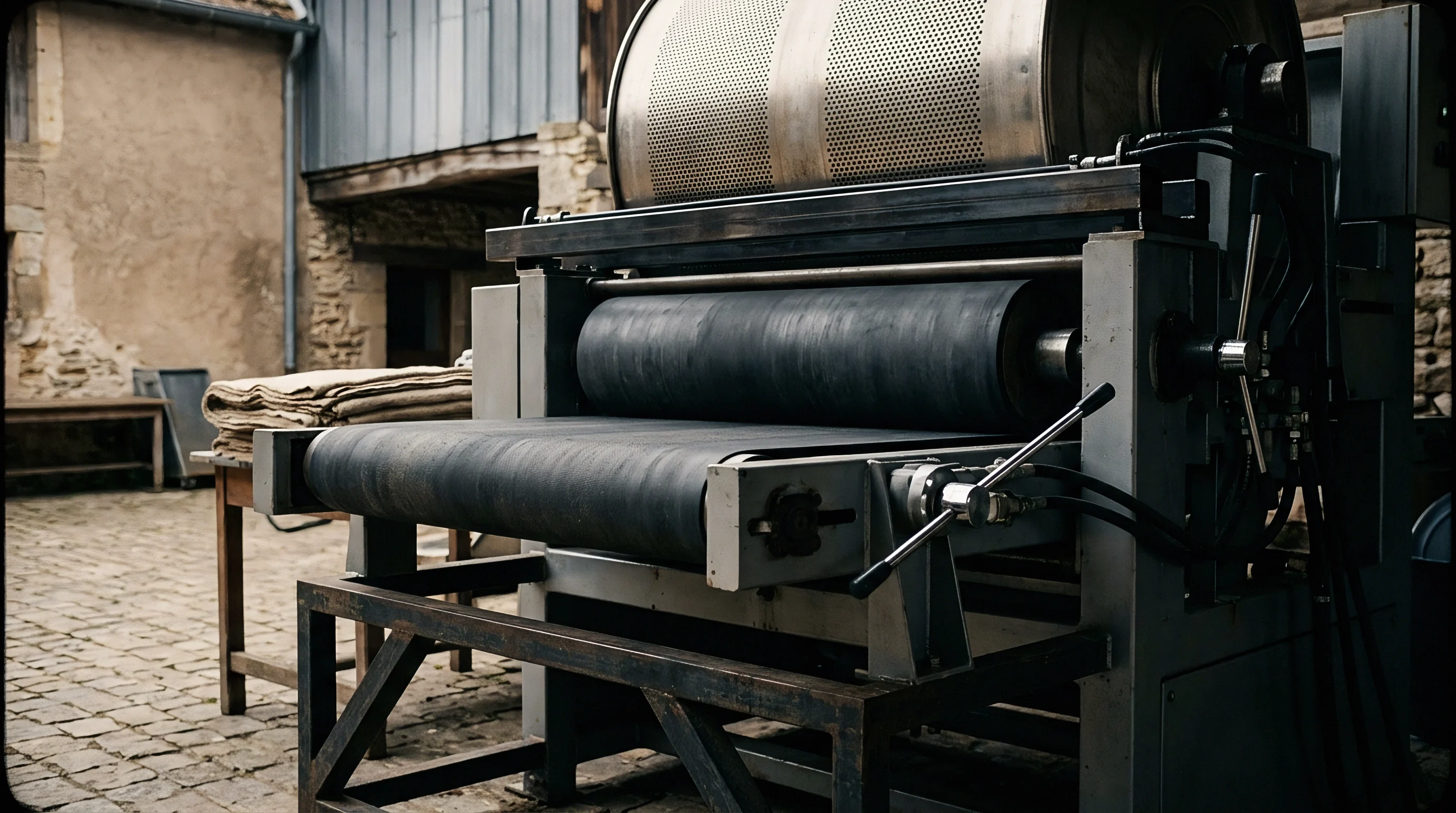
The rewind section must build tight, square rolls that feed cleanly into preparation ranges without telescoping. Pneumatic expanding mandrels lock the core tubes, and paired pneumatic rider arms maintain constant down-pressure on the growing roll. Telescoped edges crush easily in ocean containers, breaking selvedge yarns and forcing finishers to trim off billable width.
| Cloth Construction | Ends × Picks per cm | Mass (g/m²) | Loom Time per 1000m (Hours) | Rewind Speed | Inspection Speed |
|---|---|---|---|---|---|
| Coarse Rustic Plain | 12 × 11 | 285 | 38.5 | 45 m/min | 12 m/min |
| Standard Shirting Dobby | 22 × 20 | 160 | 70.0 | 60 m/min | 18 m/min |
| Fine Table Damask Jacquard | 32 × 28 | 210 | 98.0 | 40 m/min | 14 m/min |
| Dense Twill Suiting | 26 × 24 | 245 | 84.0 | 50 m/min | 16 m/min |
A single station serving modern air-jet sheds has to keep pace with dozens of active looms. To prevent stepped packages, the rewinder uses electromechanical actuators tied to continuous edge-tracking sensors that shift the take-up carriage side to side. Ultrasonic or infrared heads monitor the selvedge line, holding roll edge drift under two millimetres across an entire 800-metre piece.
Worn guide bushings introduce harmonic chatter into the running web, creating rhythmic cross-streaks that look deceptively like barre or irregular beat-up. Maintaining a clean web path requires true roller parallelism, dynamically balanced guide bars, and rigid machine footings bolted directly into structural concrete floors.
Scoring
Greige grading relies on standard penalty scales to settle lot acceptance prior to wet processing. Under the ASTM D5430 four-point system, defect length dictates the penalty: faults up to three inches receive one point; those between three and six inches take two; six to nine inches takes three; and anything over nine inches incurs four points.
Each greige defect traces back to a mechanical hiccup in shedding, weft insertion, or warp let-off. Inspectors log the defect code against the running linear metre mark using console keypads. True structural faults degrade tensile performance and commercial value far more severely than surface dirt or loose sizing that washes out during preparation.
- Starting marks stem from loom stoppages where relaxed warp ends shift pick density on restart, producing full-width dense or sheer bands.
- Reed marks show as warp-way streaks caused by bent, worn, or unevenly spaced reed wires that bunch or spread adjacent ends.
- Mispicks happen when weft insertion drops a pick or leaves a partial yarn across the shed.
- Broken ends occur where a snapped warp yarn leaves an empty dent before the drop wire trips the loom stop motion.
- Temple marks leave pinholes or torn yarns near the selvedges from aggressive ring grips on the breast beam.
- Oil stains deposit dark spots from leaking harness cams, rapier slides, or overhead blowers.
Points are tallied across the roll and normalized to one hundred square metres: total points are multiplied by ten thousand, then divided by inspected linear metres multiplied by cuttable width in centimetres. Lots that exceed agreed point ceilings trigger commercial debits or outright return to the mill.
Which Defect Deductions Trigger Immediate Roll Rejection?
Certain critical faults scrap a roll regardless of its total point count. A continuous defect running more than three linear metres triggers automatic rejection even if the normalized score stays within acceptable limits; missing warp ends that run uninterrupted across multiple metres fall squarely into this category.
Selvedge cuts deeper than ten millimetres also condemn a roll immediately. Such tears catch on guide rollers during scouring, ripping the web across its width and shutting down continuous ranges. Similarly, any hole or tear exceeding twenty-five millimetres in any direction is an automatic reject, as cutters cannot lay out garment patterns around structural breaks without generating unacceptable scrap.
Small structural flaws rarely relax and disappear during wet finishing and tensionless drying; instead, desizing and caustic boiling lock displaced greige yarns in place, turning minor loom mispicks into permanent visible blemishes across finished garments.
Recovery
Greige audit scores tie directly into contract settlement terms, dictating yardage allowances, debit notes, or replacement orders. Because greige represents banked loom capacity, defective rolls leave buyers absorbing dyehouse and printing delays unless financial debits offset the schedule disruption. First-quality apparel contracts typically cap allowable defects between twenty and twenty-eight points per one hundred square metres.
Settlements follow a graduated scale. Rolls under eighteen points clear at full invoice value. Pieces scoring nineteen to twenty-six points take mandatory yardage allowances, usually credited as two billable metres per four-point fault.
Between twenty-eight and thirty-five points, the buyer generally holds the right to divert goods into utility lines at a discount of at least thirty percent.
Rolls exceeding forty points per hundred square metres reject back to the loom-shed floor at the supplier account.
Determining actual financial exposure means factoring in loom hours, raw yarn loss, and freight. Running 18 lea linen plain weave at 420 picks per minute, a 220-centimetre rapier loom yields around 11.2 metres an hour at eighty-five percent efficiency. Rejecting an 800-metre roll scraps seventy-one point four hours of consumed shed capacity that cannot be recovered.
On tight weaving calendars, re-beaming and re-weaving that yardage inevitably blows past the shipping window.
| Point Band (pts/100m²) | Quality Classification | Settlement Action | Invoice Adjustment | Secondary Processing Risk |
|---|---|---|---|---|
| 0 to 18 | First Quality Premium | Accept with immediate payment | Full invoice value | Zero risk for uniform piece dyeing |
| 19 to 24 | First Quality Standard | Accept with yardage credit | Deduct 2 metres per major fault | Minor risk; suitable for dark prints |
| 25 to 32 | Second Quality Industrial | Mandatory commercial debit | 15 to 25 percent debit note | High risk; streaking under pale dyeings |
| 33 to 40 | Sub-Standard Commercial | Buyer discretionary diversion | 35 percent markdown minimum | Severe risk; cut around panels only |
| Over 40 | Mill Reject Scrap | Total roll return at mill cost | Full credit or replacement warp | Unprocessable; destructive to ranges |
Inspection logs provide the clearest technical audit of any weaving plant. Repeated reed marks or recurrent oil lines point straight to misaligned harness motions and sloppy shed maintenance. Experienced sourcing teams log defects by individual loom number, pulling troublesome frames out of the weaving plan until mechanics service the rapier drives and replace worn drop wires.
Whether automated camera systems will fully displace human inspectors remains doubtful in low-speed linen production, where natural slubs and yarn irregularities constantly trigger false-positive defect alarms.