Optimizing Relative Humidity Settings for Flax Warp Sizing Efficiency
Maintaining weaving shed relative humidity strictly at 70 percent prevents flax warp embrittlement, cutting warp breaks to under one per 100k picks.
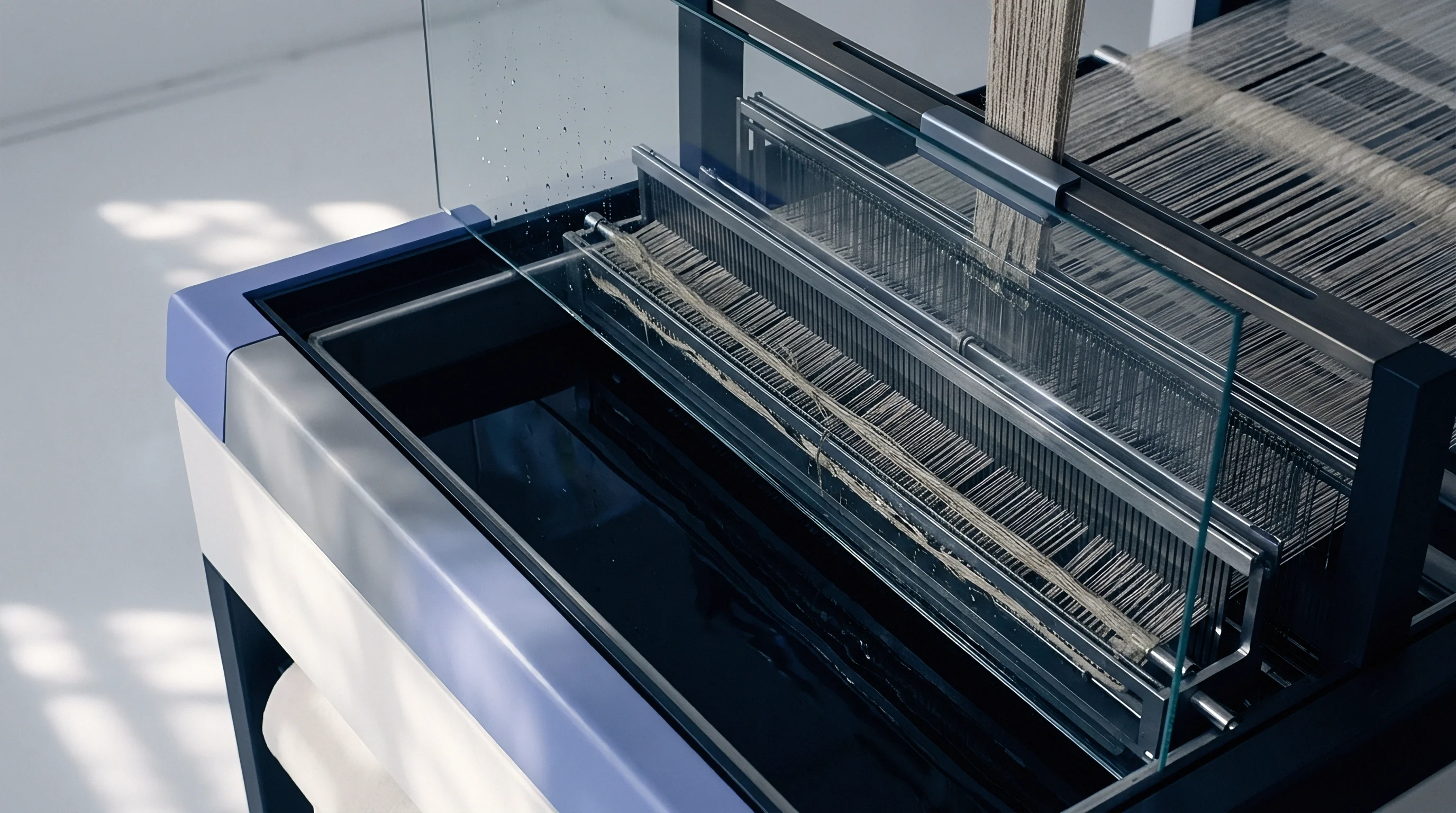
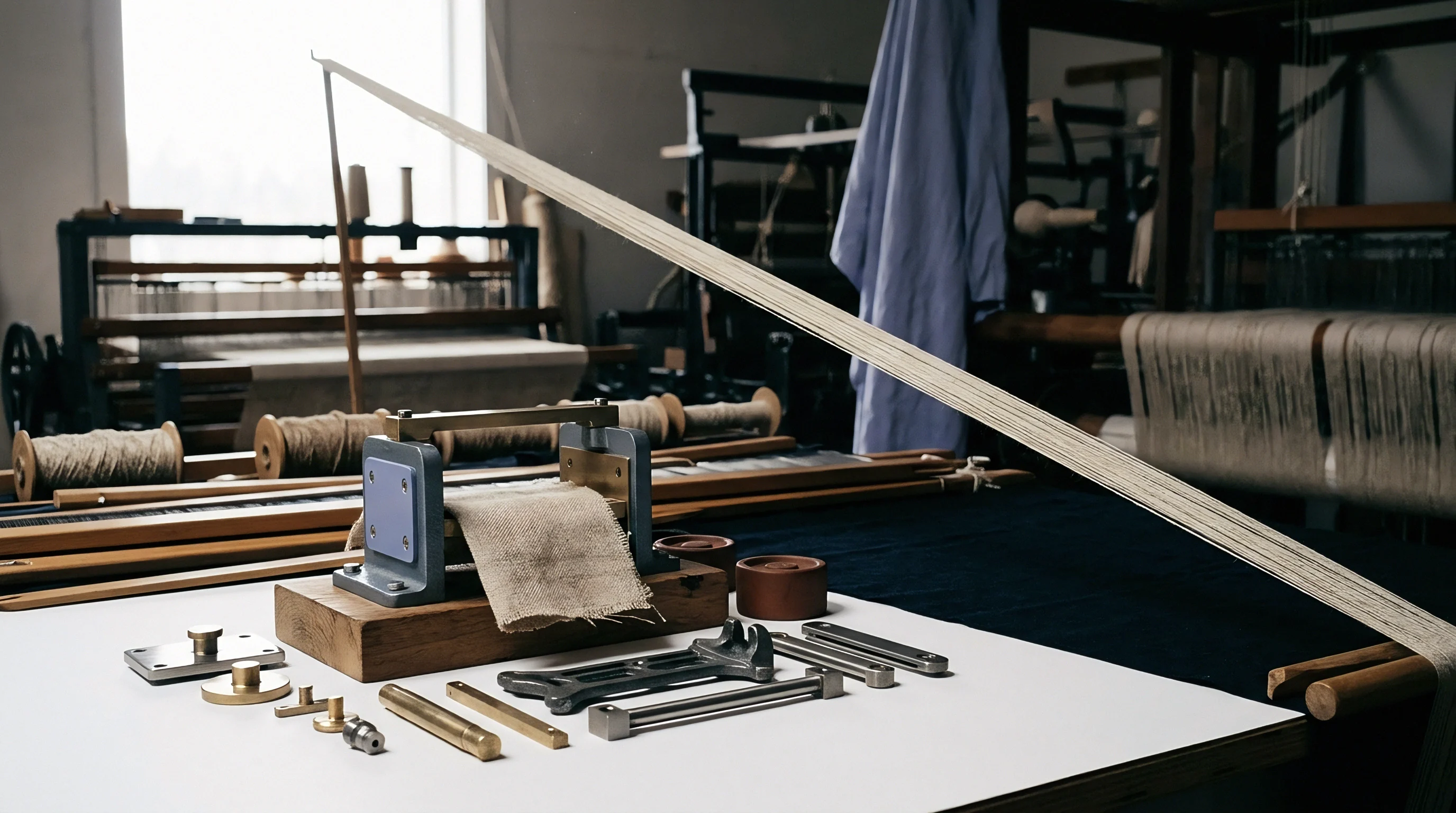
Hydration
A wet-spun flax warp beam entering the slasher bay carries an initial internal moisture equilibrium dictated by raw yarn storage history and environmental exposure. Flax fiber consists of highly oriented crystalline cellulose microfibrils bound within a complex matrix of non-cellulosic pectins, hemicellulose, and lignin. Unlike cotton, which possesses a relatively uniform cross-section and a smooth spiral structure, flax features an irregular, polygonal cross-section with a central lumen and pronounced nodes along its axis.
This physical geometry creates distinct moisture absorption dynamics. Under standard industrial conditions, dry flax exhibits an equilibrium moisture regain of approximately 12.0 percent, substantially higher than the 8.5 percent baseline observed in upland cotton. Moisture acts as a natural plasticizer within the pectin matrix.
When water content drops below critical thresholds, flax fibers become stiff, unyielding, and susceptible to brittle fracture under dynamic tensile loading.
Flax fiber shatters under tension. Tensile extension at break for high-quality wet-spun flax yarn ranges between 1.5 percent and 2.5 percent. This narrow elastic domain leaves negligible room for error during high-speed warping and shedding.
Sizing must apply a protective starch coating while preserving the intrinsic toughness of the bast core. Regulate ambient atmospheric moisture during warp preparation to preserve internal fiber hydration. Dry air strips moisture from the yarn core faster than the sizing liquid can penetrate, causing localized embrittlement.
Conversely, excessive ambient moisture prevents the evaporative removal of water from the applied size film, resulting in tacky beams and irregular film formation across adjacent warp ends.
| Relative Humidity (%) | Yarn Moisture Regain (%) | Tensile Strength (cN/tex) | Elongation at Break (%) | Abrasion Resistance (Cycles) |
|---|---|---|---|---|
| 45 | 8.2 | 24.5 | 1.4 | 310 |
| 55 | 9.8 | 26.8 | 1.7 | 480 |
| 65 | 12.2 | 29.4 | 2.2 | 850 |
| 75 | 14.5 | 31.1 | 2.5 | 920 |
| 85 | 17.1 | 28.3 | 2.1 | 610 |
Proper atmospheric control begins in the creel hall before the yarn ever touches the size box. When relative humidity in the creel area drops below 60 percent, micro-cracks form within the outer pectin layers as single fibers contract at differential rates. These micro-cracks reduce the yarn bundle integrity before chemical bonding agents apply.
The mechanical property changes detailed above show that optimal tensile strength and elongation coincide within a narrow relative humidity window centered between 65 percent and 75 percent. Operating outside this band degrades yarn performance, increasing warp end breakage rates on modern high-speed rapier and air-jet looms.
At 65 percent relative humidity and 20 degrees Celsius, native flax fiber reaches an equilibrium moisture regain of exactly 12.2 percent.
Improper moisture balance during initial yarn preparation triggers specific mechanical failure modes during subsequent slasher and loom processing. The structural vulnerability of flax demands rigorous control over incoming environmental conditions. The primary structural defects originating from unmanaged atmospheric humidity include:
- Core embrittlement occurs when dry yarn absorbs water selectively from the size paste, rapidly depleting the boundary layer moisture and causing internal stress fractures under beam tension.
- Hairiness proliferation results from dry fiber ends lifting away from the yarn core before the size film dries, creating micro-loops that snag inside heddle eyes.
- Uneven size coat penetration develops when dry fibers swell rapidly upon box immersion, blocking starch granule migration into the inner yarn core channels.
- Differential crimp distribution arises when individual warp ends absorb environmental moisture unequally, generating loose ends and uneven warp tension across the loom beam.
When sizing operations ignore fiber equilibrium, embrittled warps shatter under warp shed opening forces, stranding high-speed looms and inflating greige repair overheads.
Viscosity
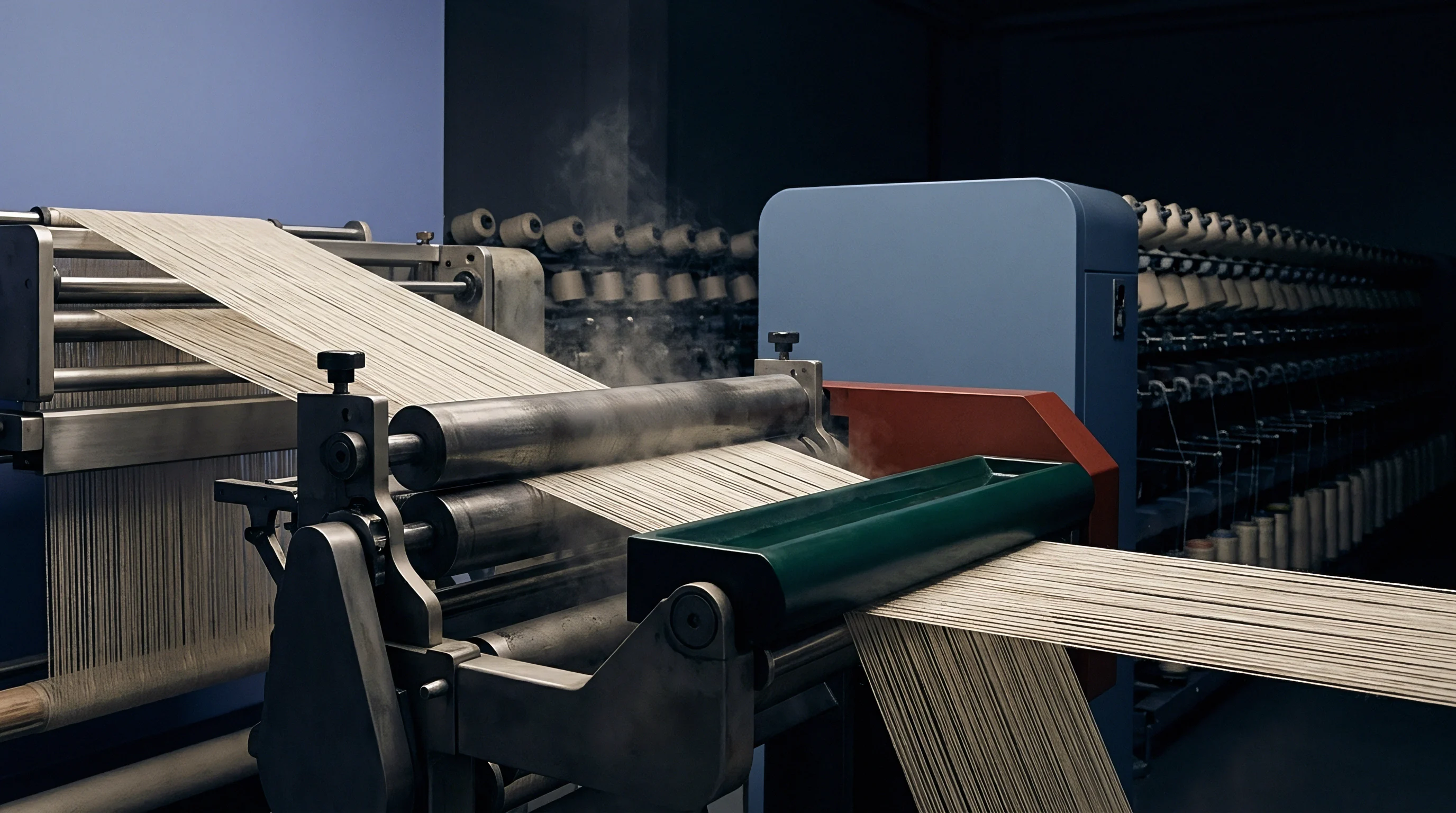
The interaction between applied size liquor and flax substrate depends directly on liquid viscosity and the surrounding atmospheric drying profile. Native potato starch, modified corn starch, and polyvinyl alcohol (PVA) formulations behave as non-Newtonian, shear-thinning fluids within the size box. Size box temperature maintained at 85 degrees Celsius to 90 degrees Celsius ensures consistent liquor fluidity.
However, the immediate zone surrounding the slasher drying cylinders demands precise relative humidity management to control film formation. Slasher box enclosures operating at low relative humidity experience rapid surface evaporation from the wet yarn sheet. This premature evaporation skinning creates a brittle surface crust before the starch paste can flow evenly around the fiber bundle exterior.
Heat fixes the size film. Rapid drying breaks the coat. If the drying section relative humidity drops below 55 percent, the rapid moisture loss causes thermal shock within the newly applied starch film.
Starch molecules contract prematurely, pulling away from the cellulosic substrate and producing low surface adhesion. Maintaining the slasher drying bay relative humidity between 68 percent and 72 percent slows the initial rate of water evaporation. This controlled drying phase permits starch molecules to align and form hydrogen bonds with the outer flax microfibrils, establishing a tenacious, elastic surface sheath.
ISO 139 specifies standard atmospheric conditions of 20 degrees Celsius and 65 percent relative humidity for conditioning textile samples prior to physical mechanical testing.
Executing precise relative humidity control across the slasher range requires a rigorous sequence of operational adjustments during beam processing:
- Calibrate the slasher size box refractometer to establish a dry solids density of 8 to 11 percent prior to beam immersion.
- Set squeeze roll pressures between 15 and 22 kilonewtons to restrict size pick-up to 10 percent of dry yarn weight.
- Regulate pre-drying cylinder temperatures to 105 degrees Celsius to fix film encapsulation without scorching outer pectin layers.
- Adjust slasher enclosure relative humidity to 70 percent to prevent premature skinning of the wet starch film before splitting.
- Pass yarn sheets over leased rods at 68 percent ambient humidity to preserve coat continuity across high-density reed dents.
The rate of moisture loss during the lease rod splitting phase determines whether individual warp ends retain their continuous chemical coat. When sized flax yarns pass over the lease rods under overly dry ambient conditions, the brittle starch bridges between adjacent yarns tear jaggedly. This tearing exposes raw, unprotected flax fibers along the yarn flanks.
If relative humidity around the lease deck holds strictly at 68 percent, the semi-plasticized starch coat yields cleanly without micro-fracturing the outer film layer. Wet spinning locks the structure. Starch forms a hard shell.
The combination of uniform chemical penetration and intact surface encapsulation provides the ultimate protection against mechanical abrasion during loom shedding cycles.
Machinery vendors often attribute recurring size film shedding on the loom to improper yarn spinning grease levels rather than acknowledging poor humidity retention across the slasher drying cylinders.

Vapor
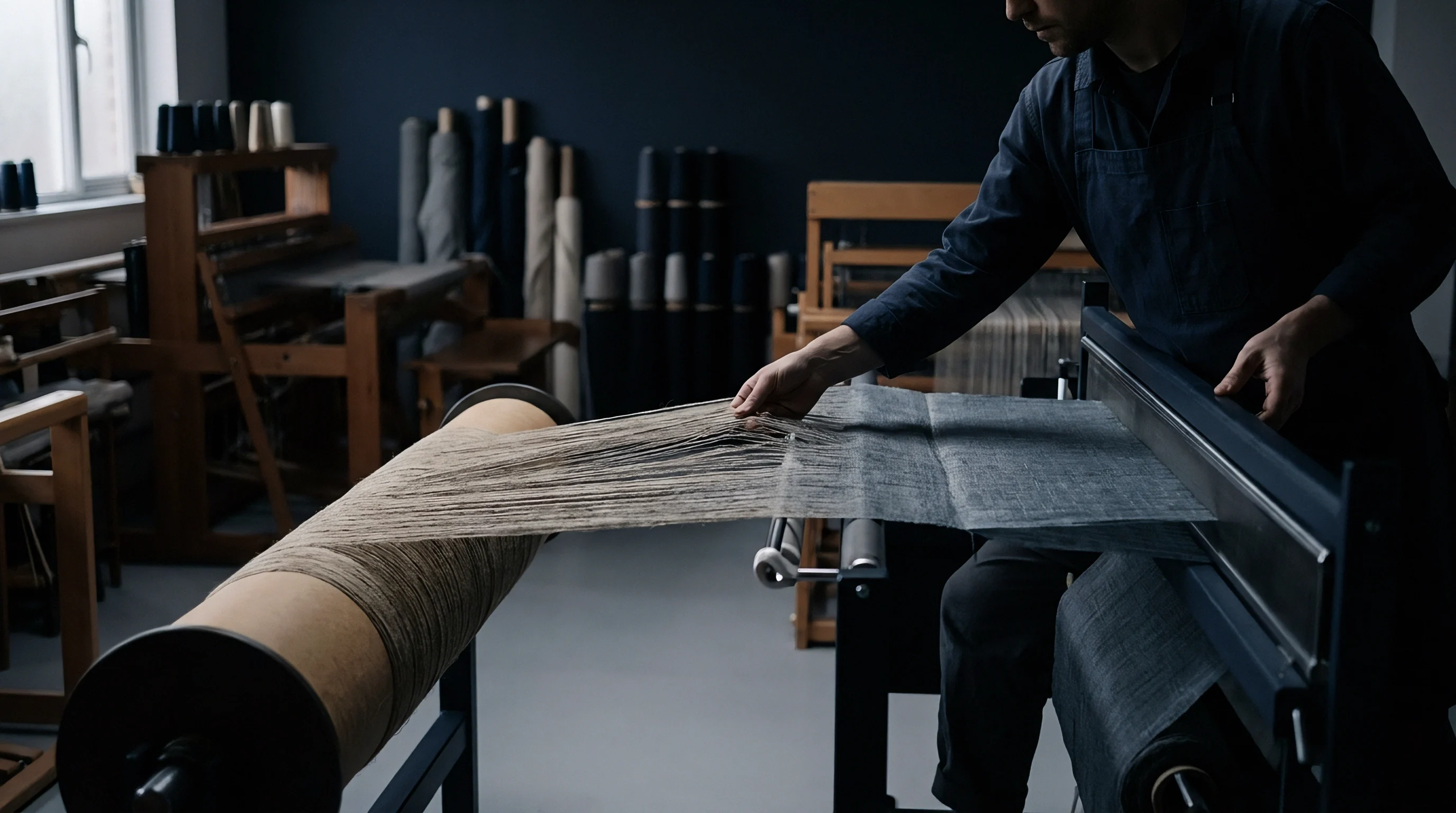
Controlling moisture transfer inside the weaving shed requires continuous monitoring of partial vapor pressure gradients between the ambient room atmosphere and the sized flax warp. A sized flax yarn entering the loom room at 12 percent moisture regain exchanges water molecules constantly with surrounding air. If the ambient relative humidity falls below the yarn equilibrium point, water vapor diffuses outward from the yarn core into the room atmosphere.
This moisture loss alters the physical elasticity of both the internal flax fibers and the external starch encapsulation coat. Air-jet and rapier looms operating at speeds exceeding 400 picks per minute subject the warp to cyclic peak tensions occurring up to seven times per second during harness movement and beat-up.
How Do Ambient Room Temperatures Alter the Target Moisture Equilibrium of Sized Flax Yarn?
Room temperature directly governs the absolute moisture-holding capacity of air, shifting the relative humidity threshold required to maintain yarn hydration. A weaving shed operating at 24 degrees Celsius requires a higher relative humidity setting than a shed at 20 degrees Celsius to maintain identical yarn regain levels. As ambient temperature rises, water vapor pressure increases, driving moisture rapidly out of the bast fiber core.
Raising the room temperature without adjusting relative humidity upward accelerates yarn drying, causing the starch coat to crystallize and lose impact resistance under loom stop-and-start cycles.
| Yarn Count (Nm) | Slasher Box Temp (°C) | Slasher Zone RH (%) | Loom Shed Temp (°C) | Loom Shed RH Target (%) | Target Yarn Regain (%) |
|---|---|---|---|---|---|
| Nm 14 (Coarse) | 88 | 72 | 21 | 74 – 76 | 13.5 |
| Nm 26 (Medium) | 86 | 70 | 20 | 70 – 72 | 12.5 |
| Nm 39 (Fine) | 84 | 68 | 20 | 66 – 68 | 11.8 |
Coarser flax yarns feature thicker fiber bundles with higher internal pectin volumes, requiring higher ambient humidity levels to maintain mechanical flex resistance. Fine flax yarns present smaller diameters and lower total water mass per unit length, reaching moisture equilibrium far faster than coarse counts. Sizing schedules must compensate for these thermodynamic differences.
When processing fine flax warps on high-density dobby looms, slight drops in room relative humidity trigger immediate shedding drop-wire failures. Damp starch becomes sticky. Over-drying causes embrittlement.
Moisture acts as a natural plasticizer. Maintaining precise psychrometric control across the shed floor prevents localized atmospheric pockets that compromise yarn stability.
Maintaining the weaving shed two percent higher in relative humidity than the slasher delivery zone stops warp sheet moisture loss.
Air-handling systems servicing flax weaving sheds must deliver uniform laminar airflow to eliminate dry micro-climates around loom warp beams. Ultrasonic atomizers and high-pressure water fogging systems must distribute vapor without leaving liquid water droplets on the mechanical drop-wires or harness frames. Standing water droplets cause rust formation on steel heddles and promote localized bacterial mold growth on sized flax warps during weekend shed shutdowns.
Warps held in equilibrium from sizing to shedding yield stable beat-up points and consistent pick densities.
Friction
The friction coefficient between sized flax yarn and metal loom components varies directly with ambient moisture levels. Drop-wires, heddle eyes, and reed dents apply relentless sliding contact against warp ends. When weaving shed relative humidity drops below 65 percent, the coefficient of friction between raw starch coats and polished steel increases significantly.
Dry starch surfaces develop abrasive micro-textures that scrub away against the heddle eye edges during shed formation. Dust-off clogs the drop-wires. Smooth yarn passes clean dents.
Friction generates localized heat. The combination of dry friction and cyclic tension causes the outer size film to peel back, forming small abrasive balls known as slubs behind the reed.
Conversely, operating a weaving shed above 78 percent relative humidity introduces severe viscous drag. High moisture levels soften the starch film excessively, creating a tacky surface that adheres to metal guides and adjacent warp threads. Tacky warp ends fail to separate cleanly during harness movement, generating unclear shed openings.
Unclear sheds cause rapier entry collisions and air-jet blow-outs, leading to machine stoppages and fabric structural faults such as broken picks and float defects. The optimal frictional balance sits firmly within a narrow relative humidity corridor.
Preventing frictional degradation during high-speed weaving demands systematic verification of mechanical settings and environmental controls. Shed management protocols rely on clear operational directives to maintain target performance:
- Dropper box calibration ensures heavy drop-wires fall cleanly without clinging to damp outer fiber hairs.
- Heddle eye alignment prevents localized abrasive sawing against brittle starch shells under tension peaks.
- Reed dent inspection eliminates sharp burrs that strip plasticized size coatings during rapid beat-up cycles.
- Shedding harness geometry distributes peak mechanical stress evenly across the full warp shed depth.
Loom stoppages destroy shed productivity. Unscheduled stops raise cloth cost. Moisture balance protects profits.
Monitoring shedding residue beneath the harness frame provides an immediate visual assessment of size coating durability. Excessive powder accumulation under the drop-wires indicates undersized yarn or under-hydrated room conditions. Fiber lint accumulation mixed with gummy residue indicates over-hydration and starch softening.
Whether ultrasonic humidification nozzles installed directly above the loom harness can completely offset ambient moisture losses in arid regional climates remains a subject of ongoing shed verification.
Settlement
Loom capacity is calculated in available machine operating hours and realized in high-quality woven meters. Every unscheduled loom stoppage caused by a warp break destroys efficiency percentage and directly increases the landed cost per meter. On high-speed rapier looms running a standard 220 centimeter plain weave flax construction at 380 picks per minute, loom overhead costs average between 18.00 and 24.00 USD per operating hour.
Atmospheric relative humidity variations exert a direct, measurable financial impact on these shed run-rates by modulating warp break frequencies.
| Shed Relative Humidity (%) | Warp Breaks per 100k Picks | Loom Efficiency (%) | Daily Output per Loom (m) | Loom Cost per Meter (USD) |
|---|---|---|---|---|
| 50 (Uncontrolled Dry) | 4.8 | 71.2 | 182.4 | 2.89 |
| 60 (Sub-Optimal) | 2.9 | 81.5 | 208.8 | 2.53 |
| 70 (Optimized Target) | 0.8 | 93.4 | 239.3 | 2.21 |
| 80 (Over-Hydrated) | 2.2 | 84.8 | 217.2 | 2.43 |
The operational metrics detailed above show that shifting a weaving shed from an uncontrolled dry state of 50 percent relative humidity to an optimized 70 percent setting reduces warp breaks by more than 80 percent. This reduction raises total loom efficiency from 71.2 percent to 93.4 percent on identical yarn lots. The resulting gain in daily finished meter output drops the direct loom operating cost from 2.89 USD per meter down to 2.21 USD per meter.
Over a standard production run of 50,000 meters, this single environmental adjustment saves 34,000 USD in pure machine capacity costs while eliminating hundreds of hours of manual weaver knotting intervention.
Loom efficiency drops sharply once warp stop frequencies surpass two breaks per loom hour.
Commercial sourcing contracts must incorporate strict atmospheric processing specifications when commissioning flax warp preparation and weaving time. A mill operating without real-time, automated psychrometric monitoring around the slasher zone and loom shed floor carries inherent operational risk. Sourcing practices must demand certified humidity log dossiers alongside physical greige inspection reports to guarantee that delivered cloth density, cover factor, and tensile strengths meet international trade requirements.
Standard sourcing agreements specify a maximum threshold of two percent warp yarn size dust-off loss measured at the loom frame to trigger financial rebate claims against the warp preparation unit.