Mass Balance Weight Verification between European Scutchers and Asian Spinning Mills
Mass balance weight verification between European scutchers and Asian mills requires normalizing scale weights to absolute dry mass plus twelve percent regain.


Shed
Primary weight records for Western European long flax fibre originate at scutching facilities across Normandy, Picardy, and Flanders immediately following mechanical decortication. Bales exit the turbine at moisture levels that vary with retting weather and warehouse relative humidity. As a result, scale weight at the bale press rarely equals commercial billable mass, which the international linen trade governs through standardized dry mass calculations rather than gross scale measurements.
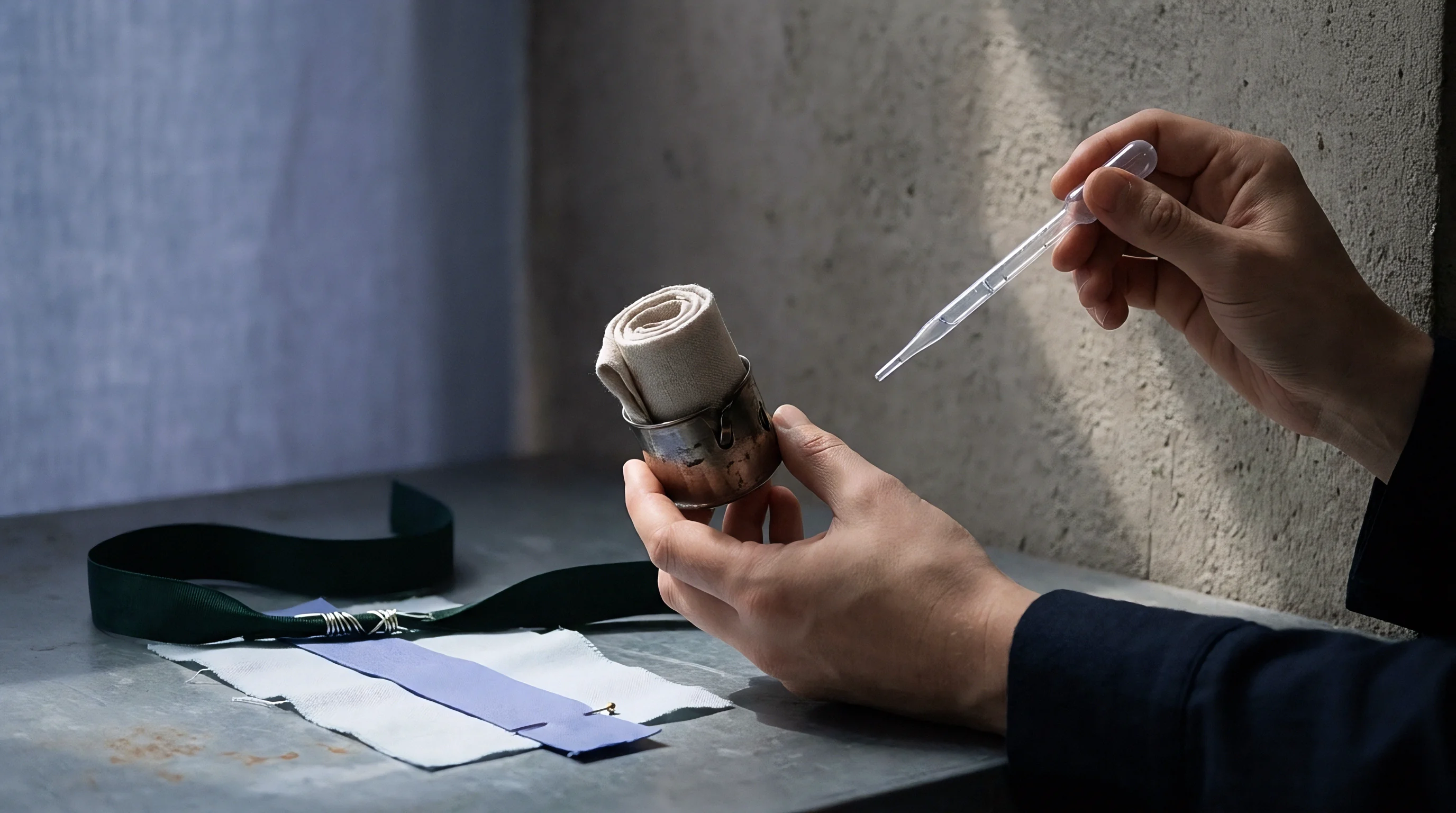
Flax fibre holds water. Under ISO 6741 and traditional BISFA rules, the official commercial mass relies on the batch’s oven-dry mass plus a standardized commercial moisture regain allowance of 12.0 percent. Automated or manual core sampling probes extract test specimens at the scutcher to measure actual moisture content.
At 14.5 percent moisture, a physical bale weighs more than its billable mass; if dry summer storage pulls fibre moisture down to 9.5 percent, physical scale weight falls below the billable figure.
| Bale Parameter | Physical Measurement Range | Commercial Standard Basis | Mass Balance Impact |
|---|---|---|---|
| Bale Gross Weight | 100 kg to 220 kg per unit | Weighbridge physical reading | Includes packaging tare and variable water mass |
| Moisture Regain Allowance | 8.0% to 15.0% actual range | 12.0% official commercial regain | Normalizes financial billing across climate shifts |
| Packaging Steel Strapping | 0.8 kg to 1.4 kg per bale | Full tare deduction required | Non-fibrous mass excluded from origin certificates |
| Polypropylene / Burlap Wrap | 0.3 kg to 0.7 kg per bale | Full tare deduction required | Prevents synthetic contamination in dry yield math |

Commercial Weight Calculation and Moisture Regain Standardisation
To fix official invoice weight, testing technicians take core samples, weigh them immediately on site, and dry them in ventilated ovens at 105 degrees Celsius until mass stabilizes. Because dry fibre content governs commercial value, this oven-dry weight establishes the absolute dry fiber mass of the shipment.
Applying the standard 12.0 percent regain formula converts physical dry mass into official invoice mass. For example, a 20,000 kilogram lot sampled at 14.0 percent moisture contains 17,200 kilograms of absolute dry flax fibre and 2,800 kilograms of water. Multiplying those 17,200 kilograms of dry mass by 1.12 gives an official commercial invoice weight of 19,264 kilograms, ensuring the buyer pays for 19,264 kilograms and strips the 736 kilograms of excess water from the billing.

Tare Deductions and Bale Pressing Variances
Inconsistent tare deductions introduce immediate systematic errors into mass balance accounting. Scutched flax bales need high-density pressing and metallic wire binding to maintain fibre alignment during ocean transit, and high-capacity baling equipment adds steel wire straps and protective end caps that must be weighed and deducted from every pallet ticket.
Discrepancies arise when European scutching plants rely on flat tare averages rather than weighing individual packaging materials. Steel strapping weight varies with wire gauge and strap count: a five-wire configuration carries more non-fibrous mass than a four-wire setup. Deducting a generic 1.5 kilogram tare across a 100-bale container load when packaging actually weighs 2.1 kilograms inserts 60 kilograms of non-flax mass into origin documents, distorting the weight baseline all the way to the destination spinning mill.
Ambient warehouse draft variations during autumn baling make minor moisture weight dropoffs inevitable before container seal placement.

Transit
Cross-ocean shipping from North Sea ports to East Asian terminals subjects sealed freight containers to sustained thermodynamic fluctuations. A container loaded in Antwerp during a humid European autumn passes through equatorial sea lanes before reaching Ningbo, Qingdao, or Shanghai. Over transit times of 30 to 50 days, distinct microclimates form inside these sealed steel boxes.
Relative humidity inside a sealed container tracks ambient ocean temperatures directly. Tropical heat forces surface moisture from outer bale layers into the container’s internal air space, where it condenses on cool steel walls ~ causing top-layer dripping ~ or vents through pressure relief valves. Bales lose physical weight during transit through passive desorption without losing actual textile fibre.
Official invoice weight for scutched flax relies on dry mass multiplied by one plus the standardized 0.12 regain factor rather than physical scale mass recorded at container discharge.

Why Do Humidity Gradients Distort Ocean Container Weighbridge Records?
Even with container seals intact, marine port weighbridges measuring gross truck mass upon discharge will show a net weight shortfall if severe moisture desorption occurred in transit. Uninformed mill receiving departments frequently misinterpret this drop in scale mass relative to the European exit ticket as fraudulent material diversion or missing bales.
Because air shifts through container vents, physical scale loss does not mean flax fibre is missing so long as absolute dry mass remains unchanged. Discrepancies between European exit tickets and Asian port entry tickets require core-sample oven testing before unbaling to confirm whether weight loss stems from evaporated moisture or missing bales.
- Inspect container door seals, matching bolt numbers against the bill of lading manifest before unhooking chassis locks.
- Weigh the full chassis load on a calibrated weighbridge, uncouple the tractor, and record gross container arrival mass.
- Unseal container doors inside a temperature-controlled receiving warehouse to prevent rapid ambient moisture absorption.
- Extract three probe core samples per pallet across front, middle, and rear bale stacks using an airtight core drill.
- Seal core samples into vapor-proof glass vials and execute ISO 6741 oven-drying protocols within two hours of sampling.

Container Sweat and Moisture Desorption Mechanics
Hyper-dry container environments pull bound moisture from internal bundle structures. Long flax fibres hold water inside cell walls through hydrogen bonding in the crystalline cellulose structure, but when ocean transit drives container humidity below 45 percent, moisture moves out of the cell walls and into the void space between bales.
Re-equilibrating dense flax bales takes weeks. Asian spinning mills that process dry bales immediately upon opening experience elevated fibre breakage during hackling from brittle strands, and scale weight taken right after unsealing reads artificially low. Allowing bales to acclimate in conditioned storage rooms restores moisture regain to 12.0 percent, bringing physical bale mass back in line with origin invoice declarations.
Skipping official moisture regain testing upon discharge forces the buyer to pay full contract tariffs on lost water weight.


Trash
Non-lint components, shives, and short fibres drop out of the material stream during mechanical hackling and carding at the spinning mill. Scutched flax delivered to Asian mills remains uncombed raw material. In the hackling room, progressive pin combs split the long fibre bundles and strip away residual woody shives that survived European scutching.
Mass balance tracking through the mill requires exact accounting of incoming scutched fibre against outgoing hackled line sliver, hackling tow, and unrecoverable trash. Because mechanical processing breaks input mass into commercial co-products and non-spinable waste, scutched flax never converts to combed yarn on a one-to-one mass basis.
| Process Stage | Input Fibre Class | Output Product Fraction | Yield Percentage Range | Mass Balance Allocation Status |
|---|---|---|---|---|
| Hackling (Peignage) | Scutched Long Flax | Combed Line Sliver (Peigné) | 62.0% to 74.0% | Primary Certified Yarn Stream |
| Hackling Comb Extraction | Scutched Long Flax | Hackling Tow (Étoupe) | 18.0% to 28.0% | Secondary Co-product Stream |
| Mechanical Shive Drop | Scutched Long Flax | Woody Shive Dust | 3.0% to 6.0% | Uncertified Solid Waste Fraction |
| Carding & Drafting | Hackling Tow | Carded Tow Sliver | 82.0% to 88.0% | Secondary Certified Yarn Stream |
| Fly Waste & Micro-dust | Raw Fibre Stream | Unrecoverable Air Fly | 1.5% to 3.0% | Process Mass Loss Allocation |

Fibre Yield Ratios during Hackling and Combing Operations
Because shives carry no textile value, scutched long flax with high shive content yields less combed line sliver during hackling. If a European scutcher delivers fibre containing 5.0 percent woody shives, those shives fall into the waste hopper on the first combing pass, permanently leaving the textile chain.
Mass balance accounting under certified schemes like European Flax permits input weight to be distributed between primary yarn and secondary tow production. For example, 1000 kilograms of certified scutched long flax input at 12.0 percent standard regain yields roughly 680 kilograms of certified combed line sliver and 240 kilograms of certified hackling tow. The remaining 80 kilograms represents unrecoverable shive trash and fly waste, which auditors accept as legitimate processing loss if mill waste logs confirm the volume.
Unprocessed shive content remaining in scutched fibre inflates arrival scale weight while reducing final hackling yarn yield.
Mass Balance Credit Allocation for Byproduct Tow Fractions
Mass balance leakage occurs when mills misallocate co-product tow weights to inflate primary line yarn volume. Hackling tow extracted during long flax combing retains full organic or geographic origin status. Asian mills operating both long-staple line spinning and short-staple tow carding units must therefore maintain separate inventory ledgers for each stream.
- Uncertified fibre dilution occurs when uncertified short flax or cotton tow is blended into certified hackling tow lots without adjusting mass balance ledgers.
- Shive weight inflation happens when dirty scutched flax with excessive woody cortical tissue is booked at full fibre weight, skewing downstream yield conversion math.
- Fly waste misdeclaration involves claiming normal processing fly waste as certified co-product tow to artificially generate certification volume credits for subsequent orders.
- Double-counting co-products arises when hackling tow is sold to third-party non-woven manufacturers while its certification credit is simultaneously retained in mill spinning ledgers.
A sudden rise in short-fibre comb extraction indicates unrecorded low-grade fibre blending rather than scutcher decortication defects.

Dossier
Chain of custody verification across international jurisdictions depends on matching European Flax or GOTS Scope Certificates with batch-level Transaction Certificates. These documents bridge physical container shipments and digital mass balance accounting software, creating a complete provenance file from the European scutching lot number through maritime bills of lading to Asian mill receiving ledgers.
Customs authorities and third-party certification bodies verify mass balance claims by matching physical net dry weights across customs commodity codes. Flax fibre shifts Harmonised System codes as it moves through mechanical conversion stages: long scutched flax enters under HS 5301.21, hackled tow shifts to HS 5301.29, and finished single flax yarns exit under HS 5306.10. Tracking models must account for these yield conversion losses when verifying whether yarn exports match incoming raw fibre certificates.
European Flax certificate rules demand that transaction records declare both gross invoice weight and calculated dry mass for every physical shipment.

Transaction Certificate Reconciliation across Border Inspections
Transaction Certificates issued by accredited certifiers validate that a specific mass of certified fibre was transferred from a European scutcher to an Asian spinner. Discrepancies emerge when the gross invoice weight on the Transaction Certificate reflects European origin moisture levels while the spinner’s receiving ledger logs arrival weights altered by ocean drying.
Because invoices reflect commercial weight, certification auditors eliminate false volume discrepancies by requiring mass balance reconciliations to run exclusively on standard dry mass figures. Converting origin transaction certificates and destination receiving logs back to 0.0 percent moisture mass prevents ocean transport weight loss from triggering audit non-conformities.
- Scutcher Scope Certificate confirming valid operator qualification under ISO 17065 framework at time of physical decortication.
- Origin Transaction Certificate specifying exact batch lot numbers, dry fibre mass, and 12.0 percent standard regain invoice mass.
- Ocean Bill of Lading establishing container seal numbers, gross container weighbridge mass, and ocean vessel routing details.
- Destination Entry Record detailing container unsealing dates, core-sample moisture testing reports, and net received dry mass.
- Mill Hackling Production Log documenting input lot conversion ratios, hackled sliver output mass, and extracted tow co-product mass.
Harmonised System Code Transitions and Conversion Mass Audits
Customs declarations provide an independent check on mass balance validity. Because tariff codes dictate physical processing requirements, an Asian spinning mill importing 50,000 kilograms of scutched flax under HS code 5301.21 cannot export yarn under HS code 5306.10 beyond physical line sliver yield limits plus allowable regain adjustments.
Audit discrepancies arise when mills declare higher yarn export volumes than input raw fibre mass permits. An auditor calculates the theoretical maximum yarn output by multiplying imported raw dry mass by the facility’s verified hackling yield factor. If a mill ledger shows 45,000 kilograms of certified yarn produced from 50,000 kilograms of imported scutched flax, the conversion ratio reads 90.0 percent.
Because mechanical hackling cannot exceed a 78.0 percent line sliver yield, this reveals an immediate mass balance violation caused by mixing uncertified local fibre into the certified production run.
Standardized European Flax transaction terms stipulate that mass discrepancies exceeding one percent trigger a mandatory third-party audit of the mill input ledger.
Settlement
Commercial reconciliation of weight shortfalls between European sellers and Asian spinning mills relies on clear contractual tolerance thresholds. Financial settlement protocols must distinguish between moisture-induced scale variances and true physical mass deficits before issuing debit notes or price adjustments.
Trade contracts executed under Confederation Internationale du Lin et du Chanvre guidelines standardise allowable mass variances at plus or minus 1.0 percent of total invoice commercial weight to avoid minor claims. When arrival core testing reveals that dry fibre mass sits within 1.0 percent of origin dry mass declarations, the buyer accepts the invoice as issued; discrepancies exceeding 1.0 percent activate formal re-testing procedures and financial adjustments.

Contractual Weight Adjustment Formulas and Tolerance Margins
Contract clauses define exact mathematical adjustment steps when arrival dry mass falls below specified tolerance limits. Consider a 20,000 kilogram commercial invoice shipment sent from an Antwerp scutching house at 12.0 percent standard regain. At a contract price of 5.20 Euros per kilogram, the baseline invoice value is 104,000 Euros, with an original declared oven-dry fiber mass of 17,857 kilograms.
Upon arrival in Qingdao, core sampling reveals an actual moisture content of 8.0 percent against an arrival gross scale weight of 19,000 kilograms, yielding 17,480 kilograms of absolute dry flax fibre. Comparing arrival dry mass to origin dry mass shows a dry fiber shortfall of 377 kilograms ~ a 2.11 percent physical deficit. Because this deficit exceeds the 1.0 percent contract tolerance, the financial settlement clause triggers a mandatory debit note.
Calculating the financial adjustment requires re-pricing the shipment based on actual delivered dry mass converted back to 12.0 percent standard commercial regain. Multiplying the delivered 17,480 kilograms of dry mass by 1.12 establishes an adjusted billable weight of 19,577.6 kilograms. At the contract rate of 5.20 Euros per kilogram, the revised shipment value comes to 101,803.52 Euros.
The buyer then issues a debit note against the European seller for 2,196.48 Euros, resolving the mass discrepancy strictly on verified dry fibre content.

Neutral Laboratory Retest Protocols for Disputed Consignments
When buyers and sellers dispute destination weighbridge readings or moisture test results, trade agreements require joint sampling by an accredited independent testing body operating under ISO 17025 standards.
Independent inspectors enter the receiving warehouse to draw composite core samples from unopened bales representing at least 10.0 percent of the total container shipment. Sample cores are placed into hermetically sealed glass containers, with ambient temperature and humidity recorded at extraction. Dual samples undergo simultaneous testing in two independent accredited laboratories; if results align within a 0.5 percent moisture range, the average dry mass reading becomes the binding baseline for final invoice settlement.
Whether ocean freight container telemetry sensors can replace destination laboratory core sampling for moisture regain adjustments remains an open technical debate across cross-border trade groups.