Quantifying Hot Water Trough Extraction Rates in Flax Spinning
Wet spinning trough extraction rates between 2.2% and 3.5% dry mass optimize yarn cohesion while maintaining European Flax mass-balance compliance.


Steam
Thermal management in wet flax processing governs how rapidly non-cellulosic matter dissolves in the spinning trough. Before reaching the drafting zone, flax roving passes through a heated bath where hot water softens the calcium-pectate matrix binding technical fiber bundles together. This softening allows the bundles to slide apart during drafting, drawing coarse roving down into fine counts without tearing filaments.
Controlling heat input into the trough sets the baseline mass loss for the entire wet spinning run.
Industrial ring frames run trough temperatures between 60°C and 85°C, depending on fiber grade and target count. Water temperature dictates the solubility of hemicellulose, low-molecular-weight polysaccharides, and pectin fragments. Below 65°C, pectin dissolution slows markedly, increasing drafting resistance, causing uneven bundle slippage, and raising end-break frequency.
Above 82°C, the bath strips away too much pectin along with natural surface waxes, leaving the spun yarn brittle.

Thermal Delivery and Temperature Control Dynamics
Holding the bath at an even 75°C across every spindle position prevents localized differences in bundle softness. On a 400-spindle frame, temperature drift along the trough causes measurable swings in yarn tenacity and linear density. Modern frames use external recirculating heat exchangers or modulated direct steam injection to keep thermal variation under 1.5°C across the full trough length.

Energy Input and Heat Exchanger Sizing
Direct steam injection introduces live condensate that continually dilutes bath solids. External plate heat exchangers avoid this imbalance by transferring thermal energy through stainless steel surfaces. Sizing these units requires calculating surface evaporation losses, heat absorbed by incoming dry roving, and the energy needed to warm incoming makeup water.
Stable operating temperatures depend on balancing boiler delivery against evaporative loss across the frame.
| Trough Temperature (°C) | Dwell Time (s) | Pectin Extraction Rate (%) | Energy Consumption (kWh/kg Yarn) | Drafting Force (N) |
|---|---|---|---|---|
| 60 | 6.5 | 1.2 | 0.45 | 4.8 |
| 70 | 6.5 | 2.1 | 0.62 | 3.2 |
| 75 | 6.5 | 2.8 | 0.71 | 2.4 |
| 80 | 6.5 | 3.6 | 0.83 | 1.9 |
| 85 | 6.5 | 4.4 | 0.98 | 1.5 |
Pectin dissolves under heat.
Thermal drift down the trough creates uneven drafting tension and mass variations along the yarn. Morning drift often reflects line pressure drops in the steam supply rather than faulty bath sensors.

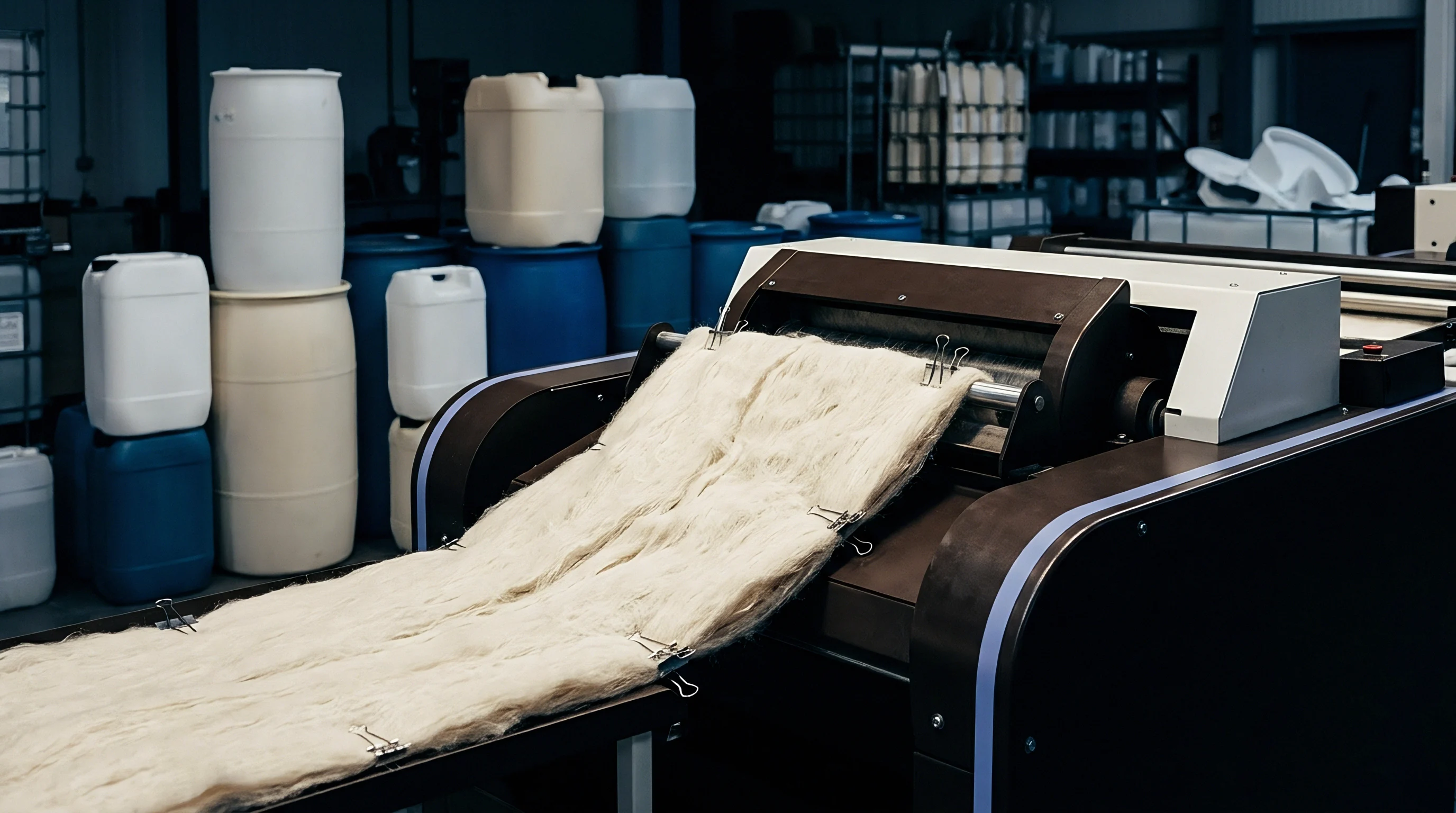
Liquor
Trough chemistry controls how fast water-soluble fractions leave the roving. The bath liquor contains soft water, dissolved plant matter, retting residues, and occasionally wetting agents. Moving through the trough at 12 to 25 meters per minute, the traveling strand leaches soluble polymers into the liquor until the bath nears saturation or fresh water refreshes the concentration gradient.
This balance of dissolved solids dictates whether non-cellulosic material keeps migrating out of the fiber core. Continuous overflow coupled with fresh makeup water maintains the concentration gradient required for steady extraction. A stagnant bath quickly loads with dissolved organics, increasing liquor viscosity and depositing tacky residue across drawing rollers and yarn guides.
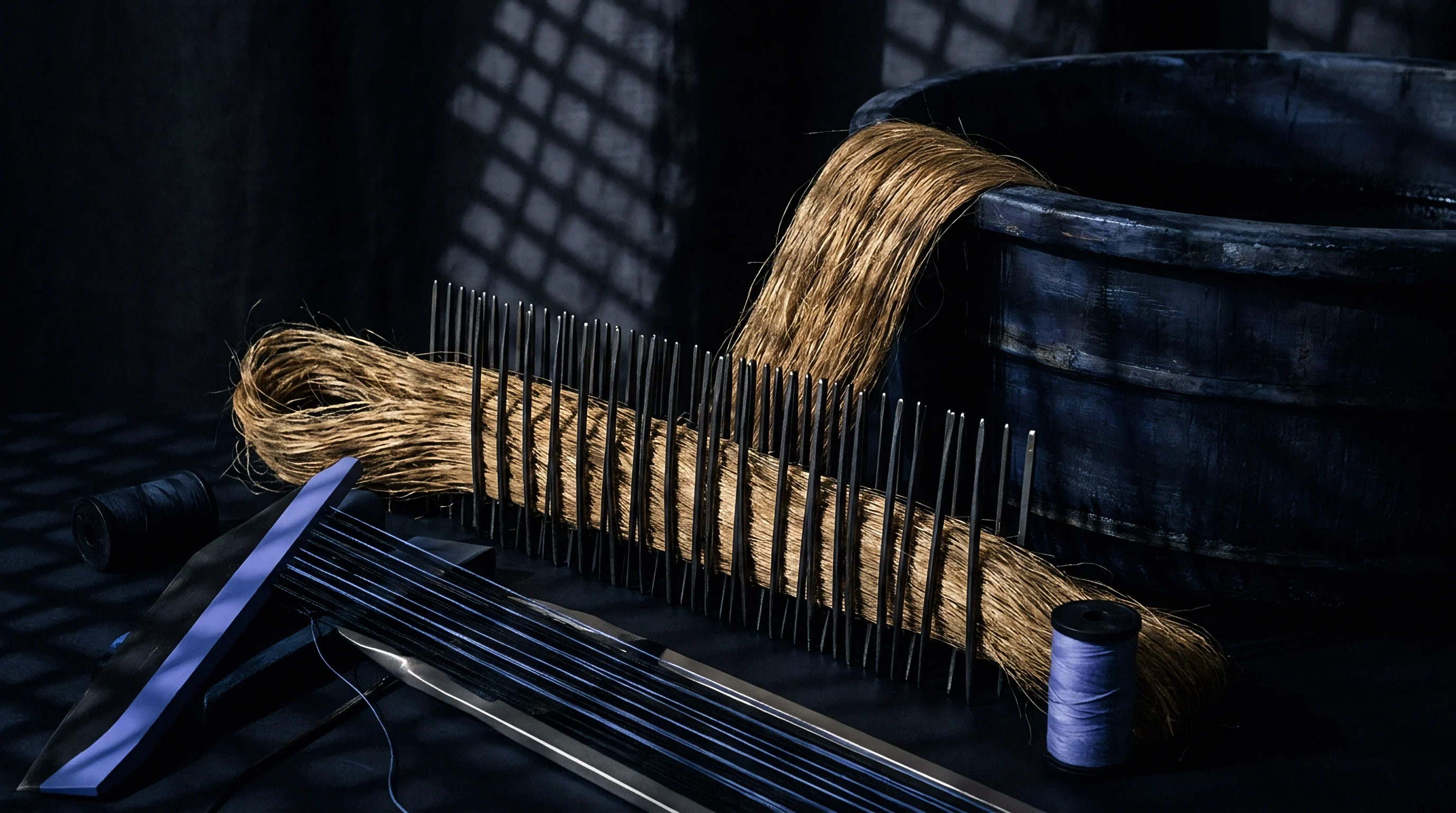
Fluid Turnover and Soluble Concentration Saturation
Metering in fresh water maintains the chemical gradient needed to draw calcium pectate out of the bundle interior. Replacement rates, tracked in liters per kilogram of processed fiber, govern the steady-state concentration of dissolved solids. Water quality dictates liquor stability.
Ph Calibration and Surfactant Interactions
A mildly alkaline bath accelerates the breakdown of insoluble intercellular cements. Keeping trough pH between 7.2 and 7.8 protects cellulose chains from acid hydrolysis while aiding pectin removal. Non-ionic surfactants dosed at 0.5 to 1.2 grams per liter lower surface tension so water penetrates dense roving bundles immediately.
Sub-target bath temperatures slow fiber core swelling and halt chemical diffusion.
- Pectin Saturation Plateau occurs when dissolved organic content exceeds 12 grams per liter, preventing further non-cellulosic extraction and causing drafting slippage on rubber apron rolls.
- Thermal Stratification arises from inadequate circulation, causing cold spots near trough inlets that produce unsoftened roving segments and yarn thick places.
- Surfactant Carryover Degradation stems from over-dosing wetting additives, resulting in excessive foam generation that disrupts optical thread inspectors and leaves chemical spots on grey cloth.
- Acidity Spike Depolymerization happens when stagnating liquor undergoes anaerobic bacterial fermentation overnight, dropping pH below 5.5 and damaging copper trough components.
Discharged bath liquor exceeding 15 grams per liter total solids content reduces fiber bundle cohesion below acceptable spinning thresholds.
Inadequate liquor turnover allows dissolved solids to re-precipitate onto bobbins during drying, resulting in a harsh fabric hand and uneven dye uptake in finishing.
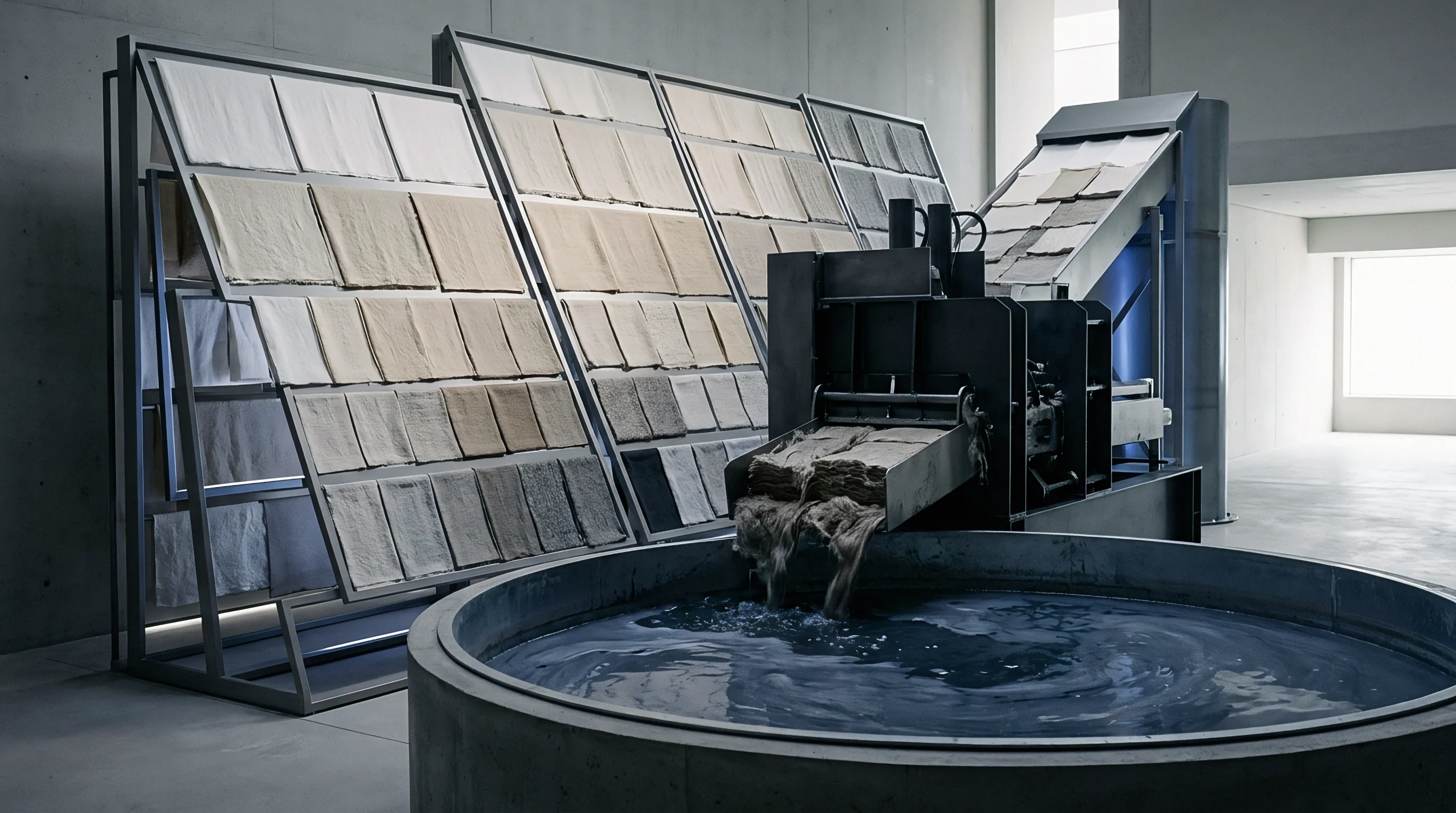
Pectin
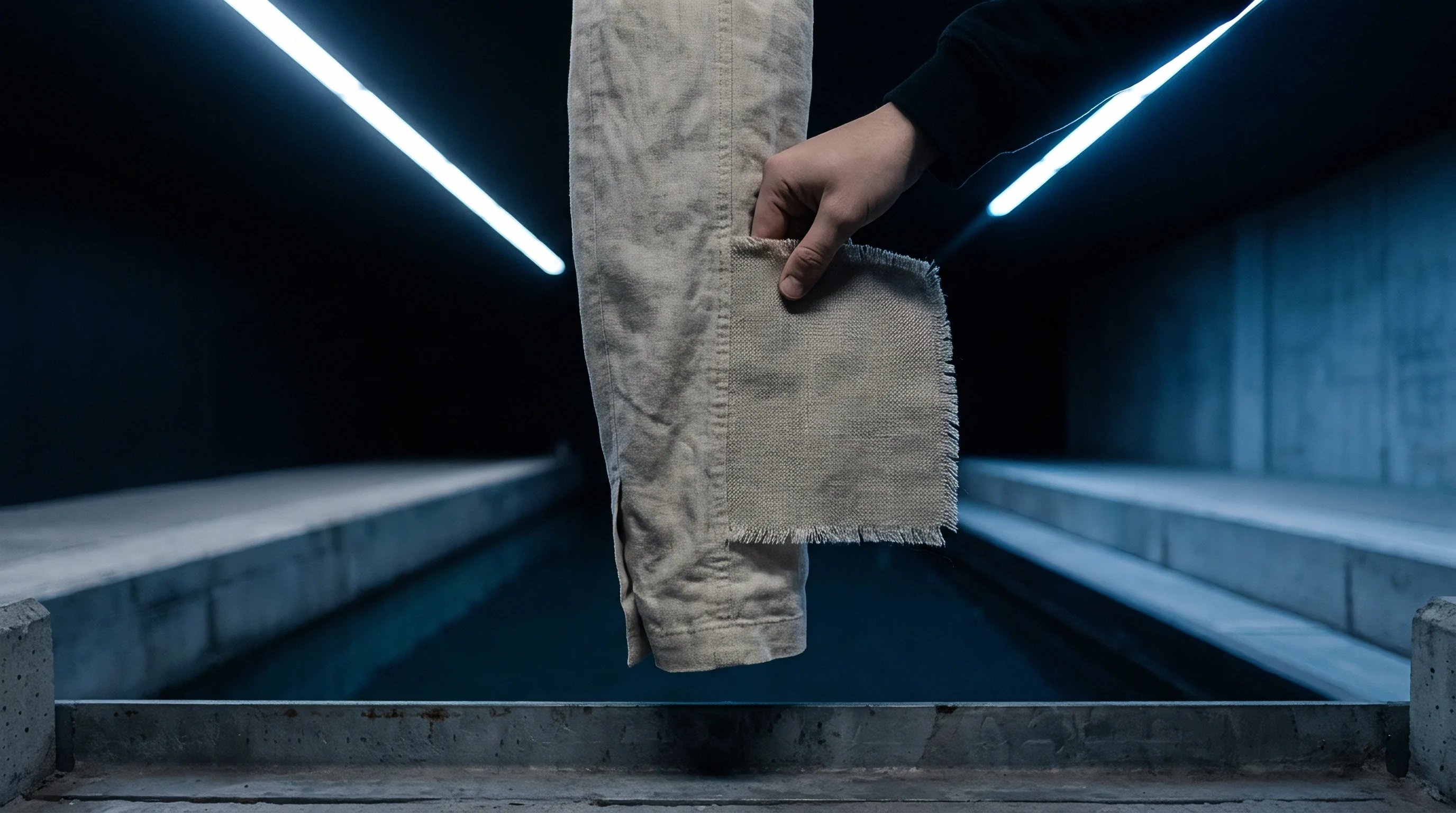
The middle lamella holding elementary flax fibers together consists largely of complex polysaccharide networks. Polygalacturonic acid chains cross-linked by divalent calcium ions create the rigid matrix characteristic of raw flax. Wet spinning targets this matrix, dissolving a deliberate fraction of pectin and hemicellulose so fibers can slide past one another without sacrificing strand cohesion.
Tracking extraction rates requires comparing dry fiber weights across the frame. Raw roving contains 4.5% to 7.0% pectin by dry mass. Hot-water processing dissolves part of this fraction, producing mass loss rates between 1.8% and 4.2% on dry input.
This loss rate directly influences the fineness, tensile strength, and surface smoothness of the finished yarn.
Polysaccharide Dissolution Kinetics in Technical Bundles
During the six-second trough immersion, heat disrupts calcium cross-links and releases polygalacturonic chains into the bath. Dissolution follows pseudo-first-order kinetics driven by bath temperature, liquor flow relative to roving speed, and the initial degree of pectin esterification. Highly esterified flax requires higher temperatures and longer dwell times to reach the same level of bundle attenuation as low-esterification stock.

Mass Balance Calculations across the Spinning Frame
Determining true weight loss requires dry-mass measurements of roving at the creel and finished yarn at the winder. This calculation isolates volatile moisture changes from organic extraction losses.
Moisture uptake alters raw roving mass the moment it enters the liquor.

Worked Extraction Analysis for Commercial Wet Spinning Batches
Under industrial conditions, consider a 10,000 kg lot of dry flax roving entering the spinning room at 12% moisture content, representing 8,800 kg of bone-dry fiber. Scenario A runs at a 70°C trough temperature with low turnover, extracting 2.0% dry mass. Scenario B operates at 80°C with high turnover, extracting 3.8% dry mass.
Under Scenario A, 176 kg of organic solids leach into the bath (8,800 kg x 0.020), leaving 8,624 kg of dry yarn. After standard 12% commercial moisture conditioning on the bobbin, delivered yarn weight equals 9,658.88 kg, with 176 kg lost to effluent.
Under Scenario B, higher heat and turnover extract 334.4 kg of dry solids (8,800 kg x 0.038), reducing dry yarn mass to 8,465.6 kg. Reconditioned to 12% moisture, final yarn weight reaches 9,481.47 kg. The yield difference between the two runs is 177.41 kg of conditioned yarn per 10,000 kg batch.
At a baseline yarn valuation of 14.50 EUR per kg, Scenario A yields 140,053.76 EUR in billable yarn compared to 137,481.32 EUR for Scenario B. The 1.8% higher extraction reduces gross batch revenue by 2,572.44 EUR. However, Scenario B yields finer, stronger yarn with lower hairiness, running cleaner on high-speed air-jet looms and offsetting the raw material yield penalty.
Comparing dry yarn weights against dry roving input exposes the true chemical extraction loss.
A 1.8 percent shift in trough mass extraction alters billable yarn batch weight by over 170 kilograms per ten-metric-ton production lot.
Roving with high initial pectin esterification demands elevated extraction regimes to reach target yarn softness.


Retention
Residual binder levels in the spun yarn dictate drafting stability on the frame and performance in the weaving shed. Remaining non-cellulosic material provides cohesion, locking elementary fibers into the twisted strand. Stripping too much binder produces hairy, weak yarn susceptible to abrasion breaks, while retaining too much yields stiff yarn with poor elongation and irregular diameter.

How Does Liquor Turnover Rate Control Pectin Extraction?
Circulation rates through the trough determine whether dissolved matter re-precipitates onto the passing strand. When turnover drops below 3.5 liters per kilogram of fiber, dissolved polymers build up in the fluid boundary layer along the roving. This saturation weakens the concentration gradient, locking non-cellulosic compounds inside the core and raising residual binder in the finished yarn.
When fresh liquor turnover stalls, extraction rates drop almost immediately.

Physical Cohesion and Drafting Tension Adjustments
Losing excessive intercellular cement weakens the strand, requiring lower draft ratios in the drafting zone. Drafting tension must balance inter-fiber friction against the mechanical strength of the twisting strand. Adjusting nip roller pressure compensates for shifts in bundle cohesion caused by variable trough extraction.
| Trough Extraction Rate (%) | Residual Pectin Content (%) | Yarn Tenacity (cN/tex) | Hairiness Index (H) | Weaving Warp Stops per 10^5 m |
|---|---|---|---|---|
| 1.5 | 4.8 | 14.2 | 6.8 | 12.4 |
| 2.2 | 4.1 | 16.8 | 5.2 | 6.1 |
| 3.0 | 3.3 | 19.5 | 4.1 | 2.3 |
| 3.8 | 2.5 | 17.1 | 3.8 | 4.5 |
| 4.5 | 1.8 | 13.8 | 4.5 | 9.8 |
Warm liquor penetrates the bundle to soften the middle lamella before drafting.
Standard supply agreements mandate yarn residual pectin levels between 3.0 and 3.5 percent to guarantee high-speed weaving compatibility without excessive warp sizing.
Determining the precise chemical boundary where residual binder loss transitions from beneficial bundle division to irreversible structural fiber degradation remains an active area of investigation among mill technical directors.

Effluent
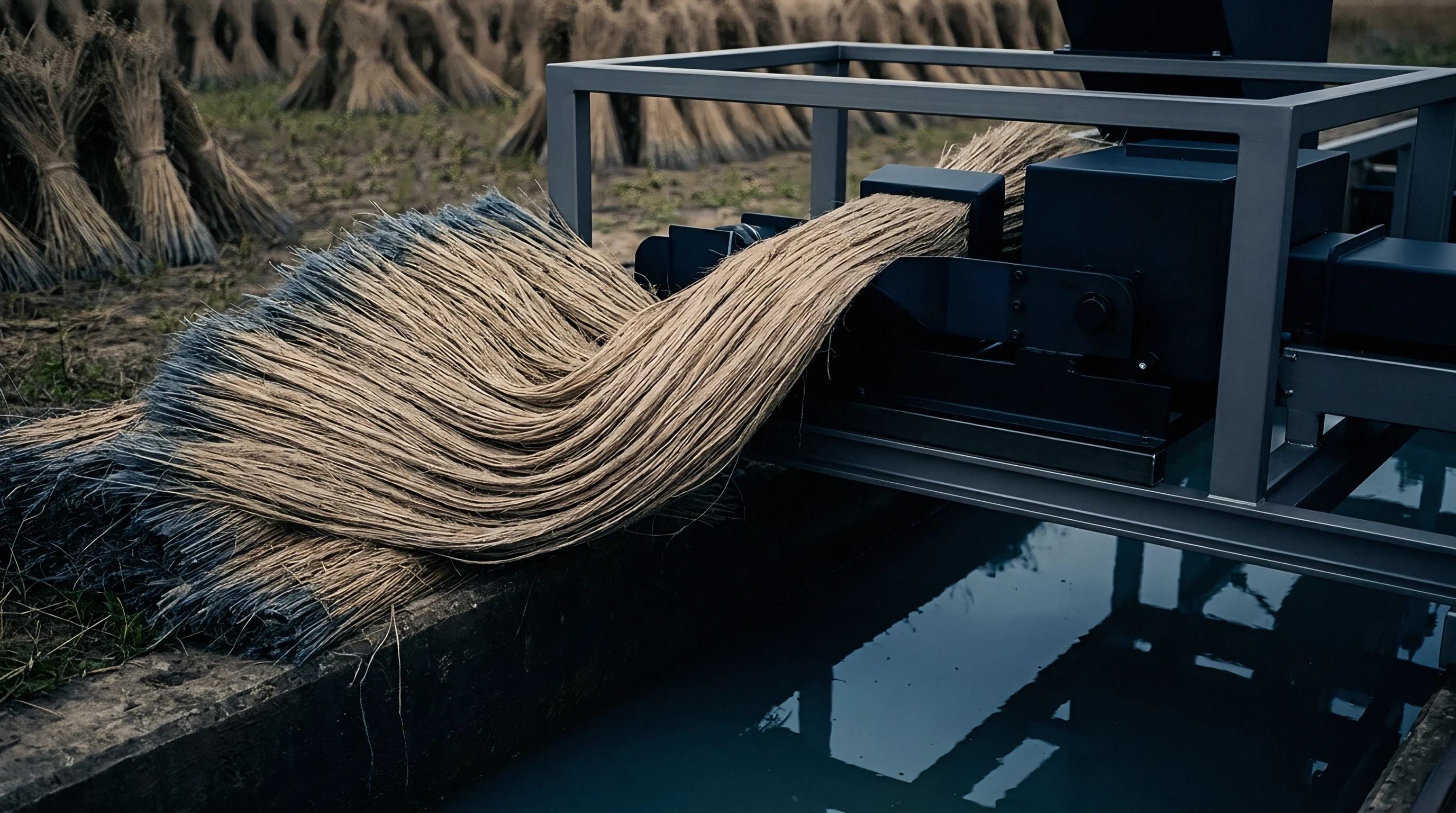
Discharged trough water carries high chemical oxygen demand from dissolved plant sugars, hemicellulose, and proteins. Wet spinning plants produce continuous wastewater streams requiring treatment before discharge or reuse. Discharge permits impose strict limits on organic load, making extraction management directly relevant to wastewater treatment costs.
Closed-loop water treatment is becoming standard practice. Higher extraction rates increase the biological load on effluent systems, driving up aeration energy and sludge volumes. Membrane units can recover both heat and treated water from trough discharge, returning warm permeate directly to the spinning frame supply line.

Chemical Oxygen Demand and Organic Waste Loads
Plant sugars dissolved at 80°C elevate oxygen demand in mill effluent lines, with COD levels in raw trough wastewater routinely reaching 2,500 to 5,000 milligrams of oxygen per liter. Treating this stream requires multi-stage aerobic digestion and flocculation to drop out suspended plant solids.
Trough overflow lines run continuously during active spinning shifts.

Filtration Systems and Closed Loop Water Recovery
Membrane systems separate dissolved solids to reclaim hot water for reuse. Ceramic ultrafiltration membranes operate continuously at 80°C without degrading, filtering out suspended matter and high-molecular-weight pectins while sending hot permeate back to the frame distribution manifold.
Over-extracting pectin weakens bundle cohesion and compromises yarn strength.
- Divert high-temperature trough overflow streams through an inline microfiltration screen to capture macro-fibers and debris.
- Pass screened fluid into a primary equalization tank equipped with mechanical agitation to balance thermal and chemical surges.
- Pump balanced fluid through multi-channel ceramic ultrafiltration modules operating at trans-membrane pressures between 2.5 and 4.0 bar.
- Collect clean permeate in an insulated thermal recovery reservoir for immediate re-routing to frame water supply manifolds.
- Transfer concentrated retentate to anaerobic sludge digesters for biogas generation and solid waste stabilization.
Wastewater discharge records link back directly to each processed production batch.
Under ISO 14001 environmental management provisions, textile mills must document total organic carbon discharge per metric ton of spun yarn, establishing direct legal liability for unmonitored trough extraction losses.


Audit
Verifying extraction figures across wet spinning operations protects buyers against yield manipulation and uncertified blending. Mass balance audits match raw scutched flax inputs against finished grey yarn output. Abnormally high spinning losses frequently mask the unauthorized addition of short tow or synthetic fibers into the roving blend.
Certification standards like European Flax and Masters of Linen enforce strict mass balance reconciliation. Unexplained mass loss exceeding 5.0% across the wet spinning stage triggers mandatory site audits and potential loss of origin certification. Documentation must align weighbridge tickets, spinning logs, and effluent test reports to confirm actual extraction rates.

Mass Balance Verification and Ledger Reconciliation
Comparing raw flax bale receipts with yarn delivery manifests highlights unauthorized fiber substitutions. Auditors calculate expected yarn yields using standard moisture regain and verified trough extraction ranges. Any gap between theoretical dry yield and delivered weight flags possible chain-of-custody violations.
Independent audit logs verify material movement across every production stage.
Origin Scope Certificates and Commercial Risk Management
Discrepancies in dry weight yields trigger automatic site inspections under European Flax chain of custody guidelines. Chinese spinning mills processing European flax fibre must maintain segregated batch records linking specific bale lot numbers to wet spinning frame assignments. Tracing extraction rates across specific mill production runs ensures that certified premium fiber has not been diluted with uncertified domestic stocks.
| Document Type | Issuing Authority | Key Verification Parameter | Audit Failure Indicator |
|---|---|---|---|
| Scope Certificate | Third-Party Certifier | Certified facility processing capacity | Output volume exceeding certified limits |
| Transaction Certificate | Scheme Administrator | Lot-specific mass balance mapping | Discrepancy between raw and yarn weights |
| Spinning Lot Sheet | Mill Production Manager | Trough temperature and speed logs | Missing thermal records or mass loss gaps |
| Wastewater Test Report | ISO 17025 Accredited Lab | Effluent COD and dissolved solids | COD figures inconsistent with declared yield |
| Audit guidelines require documentation retention for a minimum of five years across all European Flax certified spinning streams. | |||
Final invoice pricing reflects the net yield after chemical extraction losses.
Discrepancies exceeding two percent between raw fiber input and certified yarn output invalidate the transaction certificate for that production lot.
Rigorous mass balance accounting protects certified supply chains from undocumented substitution.
Tight traceability requires feeding real-time trough telemetry into digital chain-of-custody ledgers. Linking wet spinning extraction data directly to transaction certificates gives buyers verifiable proof of origin compliance and structural yarn quality before shipments clear customs.