Fibre Cleavage Metric
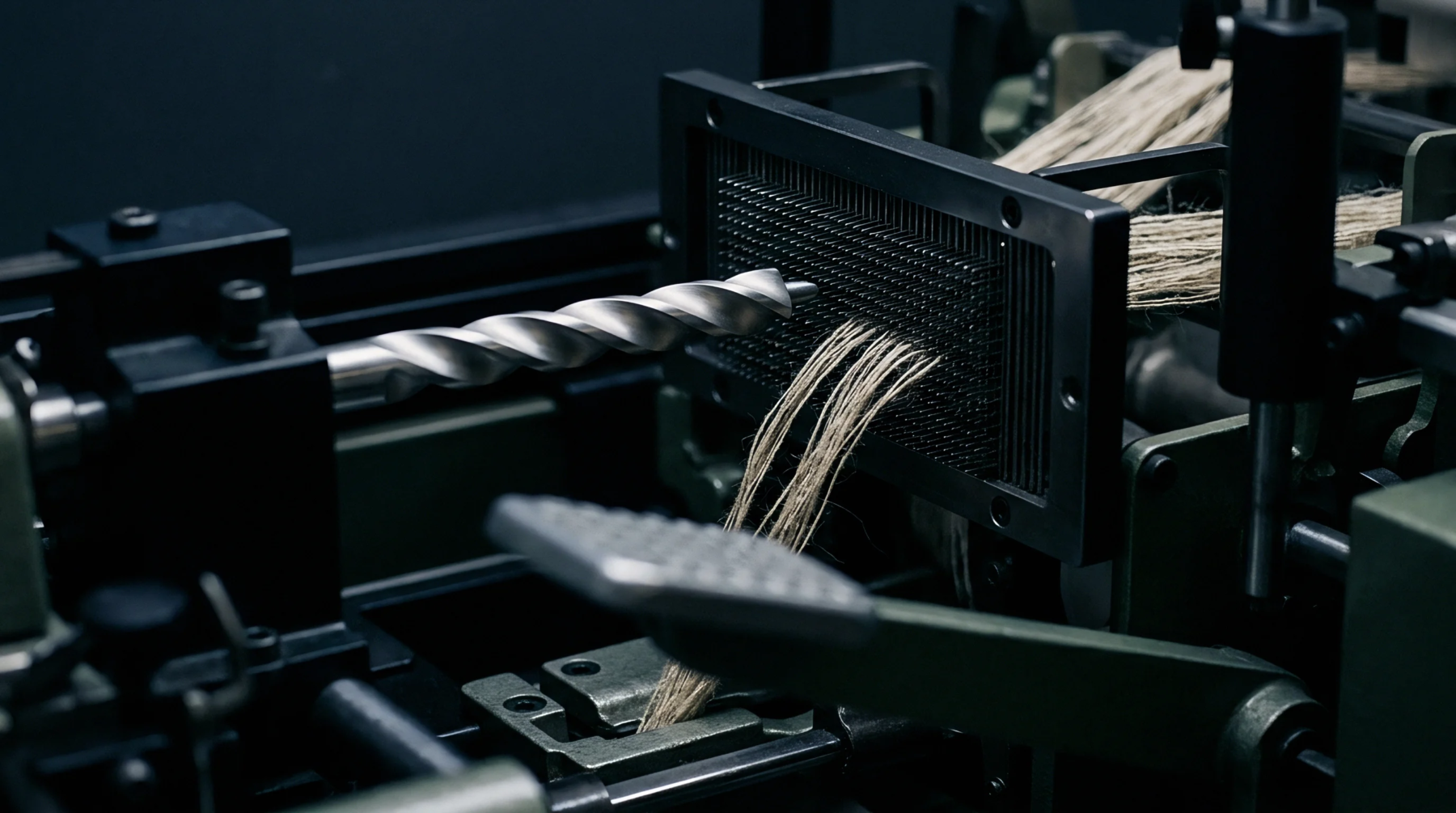
Physical separation of composite bast strands into finer technical units governs the limit of yarn fineness during wet flax preparation. Mechanical bundle division splits the pectin-cemented agglomerates that survive field retting into isolated filaments capable of sliding during drafting. This mechanical attenuation takes place across hackling pins and gill box fallers before roving formation.
When the splitting action fails to penetrate coarse stricks, downstream spinning limits stall at coarse counts.
Mechanical Attenuation
Pinned surfaces strike clamped stricks of scutched flax to divide cohesive rib structures longitudinally without snapping individual ultimate cells. Effective bundle division depends on pin density, progressive pitch reduction and controlled nip pressures across successive hackling fields. Coarser pins open the strick heads, while fine pins down the line divide inner technical bundles into flexible fibrils.
Insufficient pinned penetration leaves stiff, gummy shives bound to the fibre core. Conversely, excessive pinned impact breaks sound fibres into short noils, shifting mass from line yield into tow waste. The resulting sliver must exhibit uniform linear density across its width.
Spinning Limit Boundary
Downstream yarn count capacity rests directly on the final cross-sectional fibril population achieved during preparation. Highly divided bundles permit wet spinning frames to draw rovings past metric count sixty without generating structural voids. Unsplit bast strands drag unevenly through hot water baths, producing thick-and-thin faults that fail standard single-end tensile checks.
Mill lot sheets register bundle division efficiency through post-hackling sliver linear density checks and sorting yield percentages. Coarse technical bundles stop yielding drafting gains once the biological boundary of ultimate flax cells is reached.