Establishing Physical Verification Criteria for Linen Greige Substrate Authenticity
Authenticating greige linen requires verifying polygonal bast morphology, S-twist dry rotation, and shive lignin against physical mill balance records.
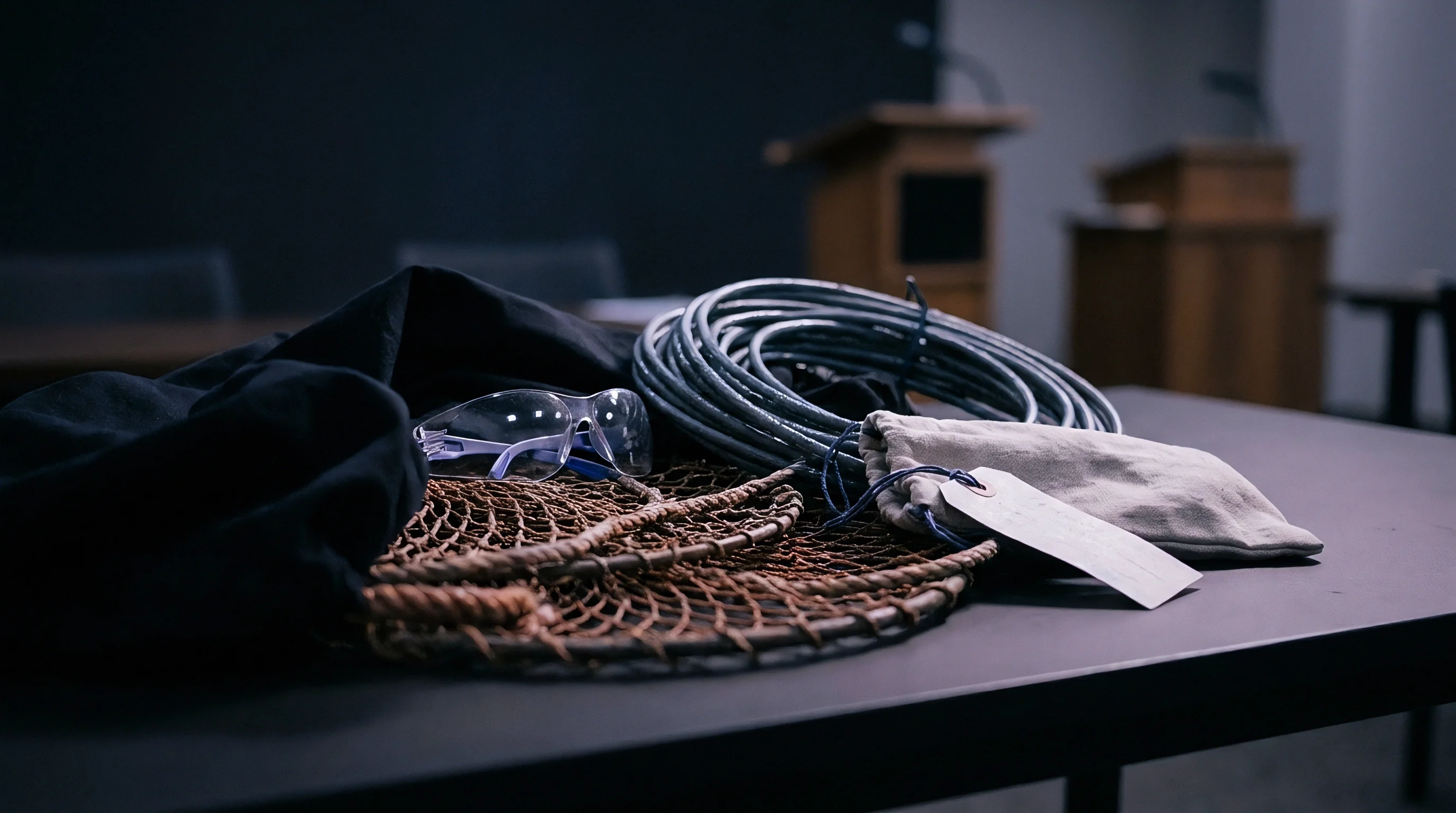
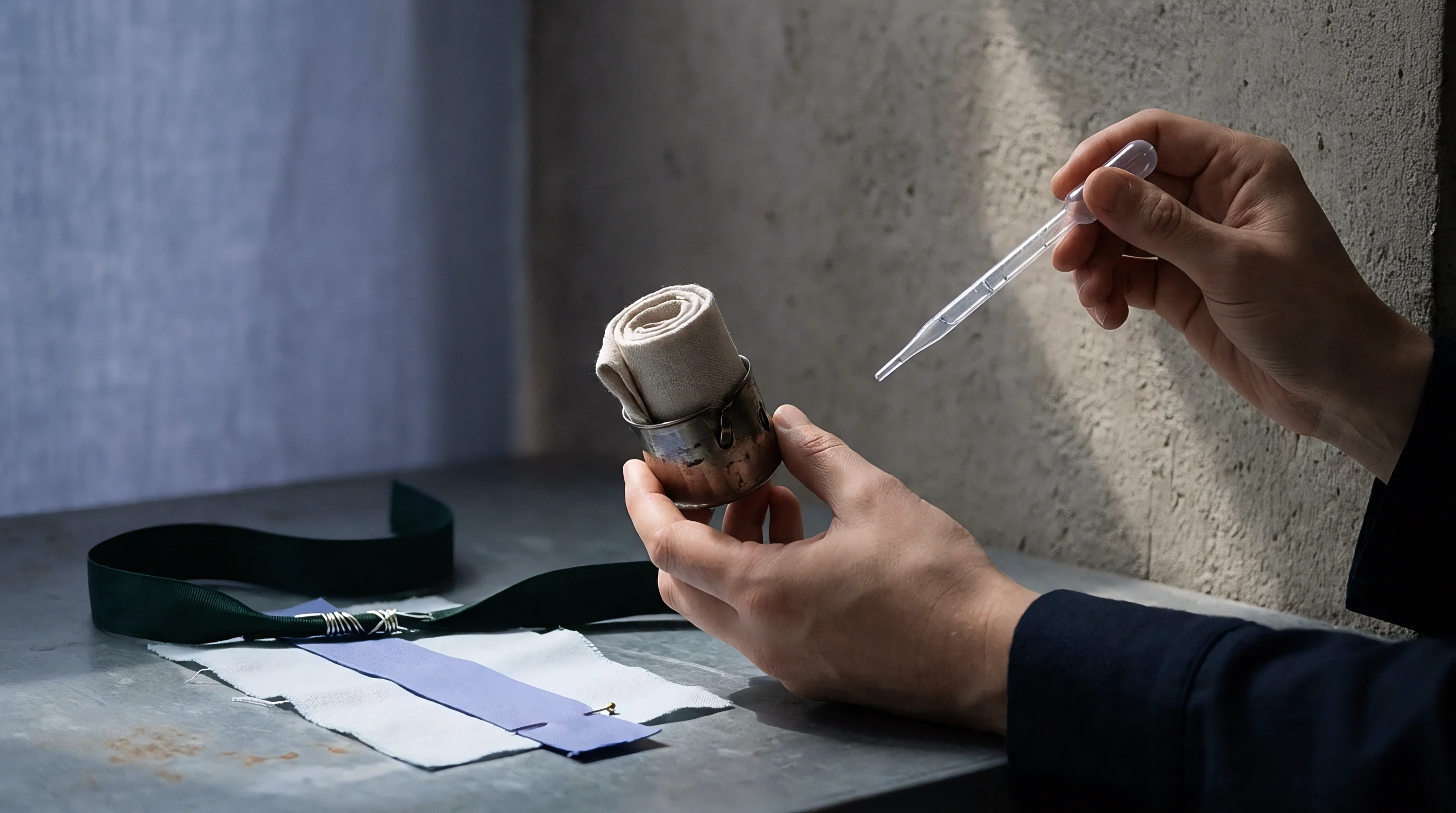
Shive
Unprocessed greige woven substrate retains raw botanical fragments from the flax plant stem tissue. When Linum usitatissimum undergoes field pulling, dew retting, and mechanical scutching, the woody core breaks into small, brittle particles termed shives. In greige goods, these fragments stay trapped within the warp and weft yarns alongside non-cellulosic encrusting matters such as pectins, hemicellulose, and waxes.
An authentic linen greige substrate displays an uneven dispersion of these fragments directly visible under low-power stereomicroscopy. The presence of these woody residues distinguishes field-retted, mechanically prepared bast fiber from cottonized flax or chemical pulp substitutions that chemical processing strips clean before spinning.
The cellular morphology of the bast fiber itself serves as the primary qualification gate. Flax fibers show distinctive nodes ~ transversal dislocations and cross-markings resembling X-shaped fissures or swollen transverse bands that form naturally as the plant sways in the field and undergoes mechanical decortication. Under 400x optical magnification, genuine flax filaments appear as long, cylindrical, polygonal tubes with sharp cell corners, uniform wall thickness, and an exceptionally narrow, centralized cavity.
This internal capillary diameter measures between one-tenth and one-fifth of the total fiber breadth, whereas immature or secondary fibers exhibit flattened, erratic cross sections.
Genuine unretted woody fragments trapped between greige filaments exhibit dark red coloration upon contact with acidified phloroglucinol.
Cottonized bast fibers and synthetic adulterants present entirely different microscopic profiles. When an overseas spinner blends chemically softened flax with upland cotton or regenerated rayon to lower spinning costs, the cross-sectional geometry shifts immediately. Cotton single-cell seed hairs exhibit continuous helical twists, ribbon reversals, broad collapsed lumens, and kidney-shaped transverse sections without transverse nodes.
Viscose filaments display deeply serrated, striate cross sections with uniform cylindrical perimeters. Intake technicians isolate these markers before the greige substrate proceeds to scouring, bleaching, or mercerization, which obliterate cuticular markers and strip residual epidermal fragments.
Botanical Anatomy and Cross Sectional Markers
Individual Linum usitatissimum bast fibers form compact polygonal bundles along the plant stem cortex. The individual ultimate cells, measuring between 10 and 40 millimeters in length with a mean diameter of 15 to 25 micrometers, are bound together by an intercellular middle lamella composed predominantly of polygalacturonic acid pectins. In unbleached greige yarn, these bundles remain partially intact, yielding the irregular slub architecture characteristic of authentic linen spinning.
Cross-sectional preparation using paraffin embedding or thin-plate microtome sectioning reveals polygonal bast cells arranged in clusters of five to thirty ultimates whose outer walls show distinct straight facets where neighboring fibers pressed against each other during growth.
Substitutions using mechanically treated hemp (Cannabis sativa) create documented inspection disputes because hemp shares bast bundle characteristics with flax. Hemp cells possess broader, rounded polygonal cross sections, occasionally showing blunt or fork-ended fiber tips under longitudinal examination, whereas flax exhibits pointed, tapered terminations. The lumen of hemp shows an oval or slit shape with significant internal breadth, contrasting with the pinpoint, circular lumen of flax.
Furthermore, uncleaned hemp bundles carry greater quantities of calcium oxalate crystals, recognizable as distinct cluster crystals or druses under polarized cross-polar illumination, while flax exhibits solitary, elongated prismatic crystals embedded within the parenchymatous sheath tissue.

Epidermal Cellular Remnants in Unbleached Looms
Microscopic inspection of raw warp and weft yarns detects residual cuticular waxes adhering to the cell wall perimeter. In unbleached greige cloth straight from the shuttle or rapier loom shed, these residual waxes reach between 1.5 and 2.5 percent of total substrate dry weight. High-magnification scanning electron observation of the greige surface captures intact stomata and pavement epidermal cells from the outer stem sheath, proving mechanical decortication rather than severe alkaline extraction.
Dark woody specks of unprocessed shives react instantly to chemical spot testing for lignin, exposing fraudulent fiber blending before lot acceptance.
- Cotton Fiber Intermixing introduces flat, ribbon-like filaments with wide lumens and frequent directional reversals along the fiber axis.
- Chemical Pulp Adulteration deposits uniform wood-cellulose fibers showing bordered pits, short fiber lengths under three millimeters, and artificial cross-sectional serration.
- Ramie Bast Substitution adds exceptionally coarse, irregular fibers exceeding fifty micrometers in diameter with prominent longitudinal fissures and thick cell walls.
- Regenerated Viscose Extenders produce perfectly consistent filament diameters lacking transverse nodes, natural slubs, or residual stem shives.
Laboratory intake technicians isolate individual shive particles using fine dissection needles for microchemical confirmation. When saturated with a five percent solution of phloroglucinol in concentrated hydrochloric acid, lignified bast shives immediately turn an intense, bright carmine red due to coniferyl aldehyde residues within the lignin complex. True flax bast ultimate cells contain less than four percent structural lignin, producing negligible red staining along the primary fiber bundle, while the trapped shive fragments display deep pigmentation.
If the yarn itself turns uniformly pink across all filaments, the substrate incorporates ground wood fiber or poorly scotched bast varieties.
Stain
Microchemical identification separates true Linum usitatissimum from regenerated cellulose, raw cotton, and bast fiber substitutes. Solvents, dyes, and swelling reagents exploit subtle differences in cell wall microfibrillar orientation, degree of polymerization, and residual non-cellulosic constituents. When evaluating greige substrate authenticity, staining tests provide rapid, conclusive verification at minimal testing cost per roll.
Preparing the substrate requires mechanical dewaxing using petroleum ether or dichloromethane extraction to allow aqueous reagent penetration into the unbleached bast bundles. Once cleared of external processing oils and surface sizing, individual fiber bundles react uniformly to specific chemical agents.
Herzberg reagent, consisting of zinc chloro-iodide in aqueous potassium iodide solution, acts as the standard colorimetric indicator for cellulosic differentiation. Cotton fibers swell rapidly into an intense reddish-violet or deep purple due to high pure cellulose concentration and open amorphous regions, whereas highly lignified mechanical fibers turn yellow. Authentic flax bast fibers display a variable blue-violet coloration, with darker blue tones localized around mechanical dislocation nodes where amorphous cellulose permits rapid reagent entry.
Residual shive particles within the greige yarn turn brilliant lemon yellow, confirming the presence of unbleached vascular bundles from the plant stem.
A boiling extraction in one percent sodium hydroxide clears commercial potato starch sizing without dissolving the underlying bast cell wall pectins.
Cuprammonium hydroxide solution serves as an indispensable swelling agent for verifying transverse fiber architecture. Under optical microscopy, introducing a dropsheet of freshly prepared cuprammonium hydroxide creates a distinct swelling sequence along the longitudinal axis of the fiber. True flax bast expands slowly and unevenly into an undulating, barrel-shaped profile before dissolution, as its primary wall ~ containing residual pectic substances and cuticular residues ~ tears into separate rings or bands that constrict the expanding inner cellulose core.
Cotton balloons violently along its axis, leaving twisted cuticle remnants, while regenerated viscose dissolves instantaneously without structural swelling or annular constrictions.
Reagent Selectivity and Swelling Behavior
Application of zinc chloro-iodide delivers specific colorimetric responses across differing cell wall chemistries. In authentic greige linen, the intensity of the blue reaction correlates directly with the degree of retting the stalks received prior to mechanical scutching. Over-retted fiber displays deeper blue tones approaching the color of bleached cotton, while under-retted fiber retains a dull olive-grey cast owing to unremoved pectin and hemicellulose compounds.
Evaluating the greige substrate across both warp and weft yarns prevents mills from weaving an authentic linen warp with a blended cotton-linen or viscose weft to compromise technical specifications.
Sulfuric acid dilution tests provide another layer of analytical differentiation between bast families. Applying seventy-five percent cold sulfuric acid to a dry fiber specimen on a glass slide causes rapid swelling of flax, leading to complete structural dissolution within sixty seconds. Raw hemp bast resists dissolution significantly longer due to higher intercellular lignin concentrations, retaining fiber outlines up to five minutes, while jute and coir fibers remain intact with dark brown or black carbonization rings.
These dissolution kinetics permit precise separation of bast components in blended greige fabrics where physical appearance alone creates commercial ambiguity.
| Fiber Substrate | Herzberg Reagent | Acidified Phloroglucinol | Cuprammonium Swelling | 75% H2SO4 Dissolution |
|---|---|---|---|---|
| Authentic Flax Greige | Blue-violet with dark nodes | Clear bundle, red shives | Barrel swelling, annular bands | Dissolves within 60 seconds |
| Upland Raw Cotton | Uniform reddish-purple | Negative (pale yellow) | Violent ballooning, shreds | Dissolves within 30 seconds |
| Mechanized Raw Hemp | Dull greenish-blue | Faint pink along bundle | Uniform dilation, faint rings | Resists dissolution > 180 seconds |
| Bright Viscose Rayon | Blue to pale violet | Negative (colorless) | Immediate dissolution | Dissolves instantaneously |
| Raw Decorticated Jute | Intense golden yellow | Brilliant dark red | Minimal swelling, intact | Insoluble, carbonizes dark |

Polarized Light and Dry Twist Rotation
Fibrillar orientation governs the directional rotation of bast cells during moisture loss. In Linum usitatissimum, the secondary cell wall comprises crystalline cellulose microfibrils wound in a steep helical path following an S-twist orientation, meaning the spiral follows a left-handed direction at an angle of roughly six to ten degrees relative to the fiber axis. Cannabis sativa hemp microfibrils follow a Z-twist, or right-handed spiral, oriented at a steeper angle of eighteen to thirty degrees.
This structural divergence provides a definitive, non-destructive optical identification test that separates authentic flax from hemp adulteration regardless of chemical retting condition.
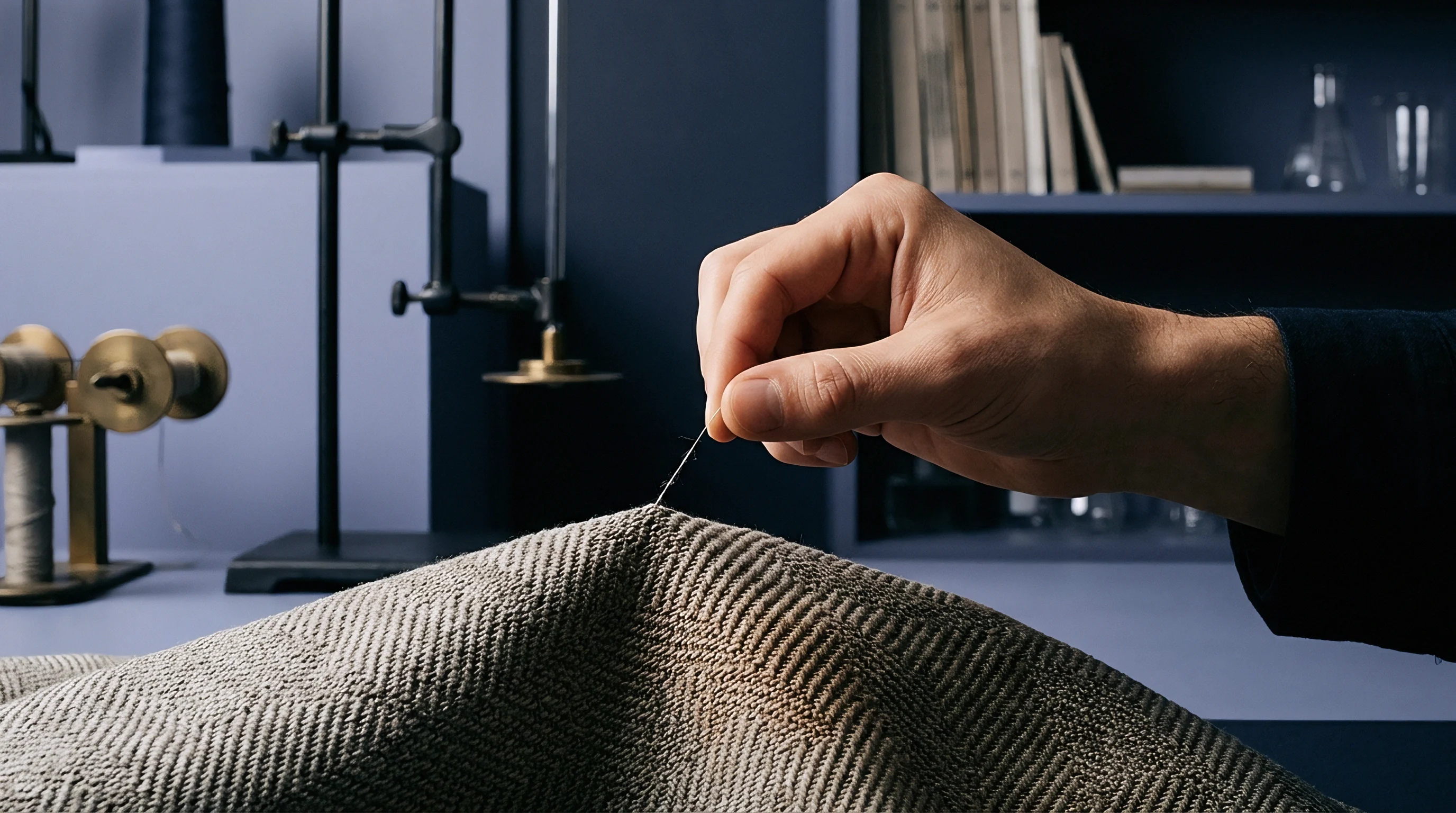
Executing the drying twist verification requires isolating individual single ultimate fibers from the greige yarn bundle. The technician immerses the fiber segment in distilled water until saturated, mounts one end in an inverted specimen clamp under a stereo microscope, and directs a warm air stream toward the free, suspended tip. As the wet fiber dries and the cellulose lattice contracts, the free end rotates rapidly around its long axis ~ flax twisting counter-clockwise on drying.
When viewed from above looking down toward the root end, the drying flax tip rotates consistently in a clockwise motion, corresponding to the unwinding of an S-spiral, whereas the unwinding of hemp’s Z-spiral produces a counter-clockwise tip rotation that establishes an absolute verification benchmark surviving sizing and mechanical scouring.
- Immerse greige yarn specimens in boiling petroleum ether for twenty minutes to eliminate processing spinning lubricants.
- Boil the dewaxed substrate in five percent aqueous ammonium oxalate solution to dissolve middle lamella pectins and release individual ultimate bast fibers.
- Rinse the isolated fibers thoroughly in warm deionized water and blot on laboratory filter paper.
- Mount a single damp fiber tip under polarized light with cross-polarizers oriented at forty-five degrees to observe birefringence extinction angles.
- Subject the suspended fiber specimen to controlled hot air flow while recording the rotational direction under twenty-power magnification.
Polarized light microscopy confirms this fibrillar angle without requiring moisture rotation. Under crossed nicols with a first-order red tint plate inserted, true flax bast fibers oriented parallel to the optical axis exhibit second-order yellow, red, and blue interference colors. Rotating the stage ninety degrees yields distinctive extinction patterns along the longitudinal cell wall that match the S-twist fibrillar angle.
Raw cotton fibers yield chaotic extinction zones due to bilateral cell wall reversals, while synthetic cellulose filaments show uniform, unvarying extinction bands throughout their length. Greige yarns yielding mixed rotational directions across a single bundle indicate mechanical fiber blending at the drawing frame.


Crimp
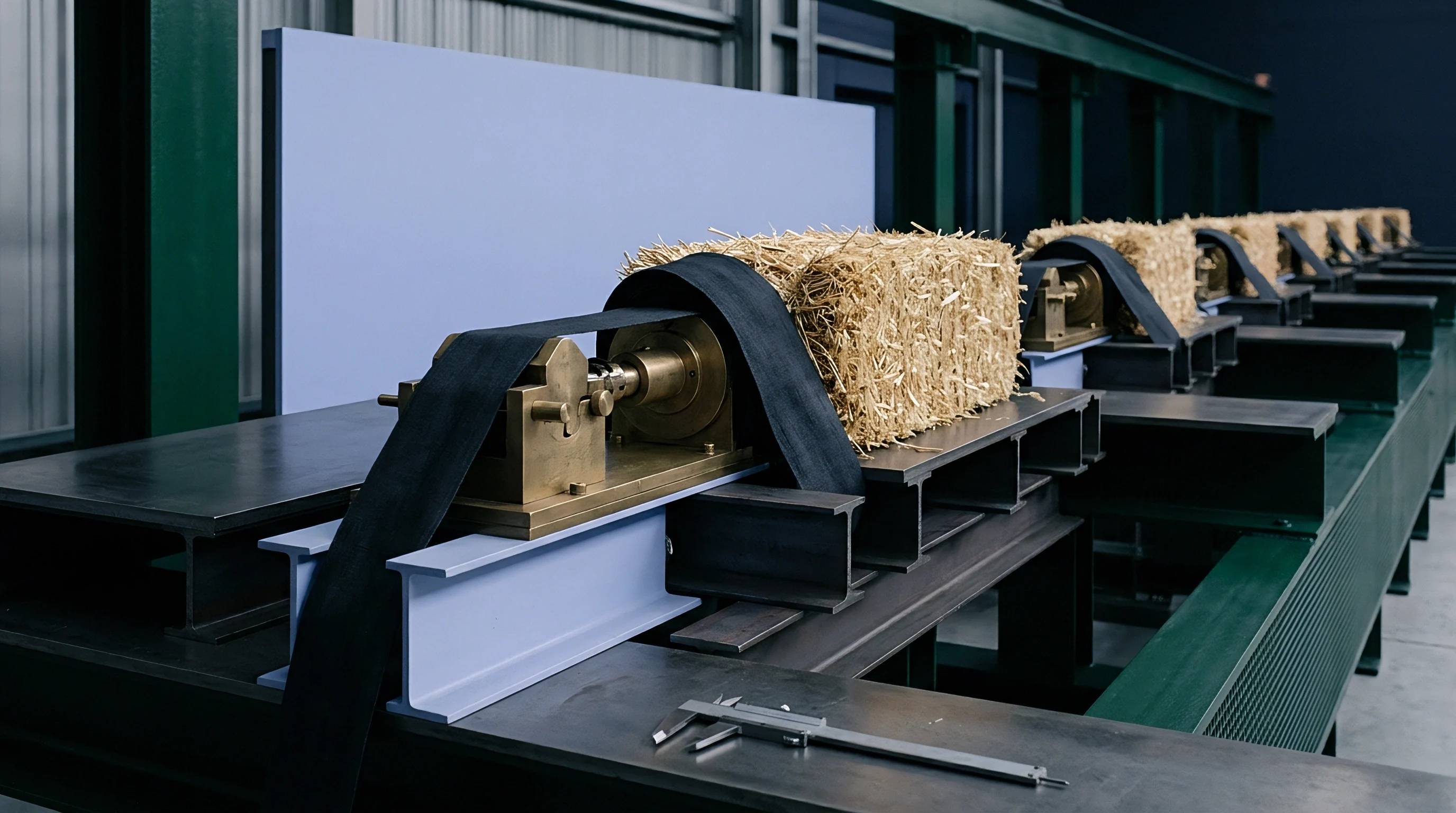
Greige substrate architecture governs dimensional stability before any scouring, desizing, or wet processing occurs. In a flat loom shed, the tension applied to the warp sheet during shedding and beat-up forces the warp yarns to remain relatively straight, while the inserted weft yarn undulates around them, creating significant crimp asymmetry. When the greige roll drops from the loom take-up roll, tension relaxes, and structural rebalancing begins.
The natural stiffness and high flexural modulus of pure unbleached linen yield lower mechanical crimp percentages compared to cotton or wool, which alters the balance of warp-to-weft yarn contraction upon fabric relaxation.
Accurate fabric characterization demands strict separation between nominal greige construction and finished fabric targets. Linen greige must be delivered at specific thread densities, yarn lea counts, and fabric aerial weights to ensure that wet processing shrinkage will hit final commercial specifications without distorting the weave. A greige plain-weave linen destined for an eighty-five gram per square meter apparel cloth enters the loom room at a lower density and wider reed width, compensating for warp crimp relaxation and wet shrinkage.
To withstand abrasive reed friction, greige warp yarns carry five to eight percent potato or modified maize starch sizing, adding temporary mass that testing laboratories must extract prior to thread count and yarn weight evaluation.
A greige linen substrate exhibiting warp crimp exceeding eight percent indicates over-tensioned weaving beams that induce catastrophic dimensional instability during finishing.
Evaluating crimp requires dissecting standard five-hundred-millimeter yarn segments from both directions of a conditioned greige swatch according to ISO 7211-3. The technician removes ten warp yarns and ten weft picks, straightens each thread under a calibrated tension clamp to eliminate weave undulations without stretching the bast fibers, and records the straightened length. The crimp percentage equals the difference between straightened length and unraveled fabric length divided by the unraveled fabric length, multiplied by one hundred.
Authentic plain weave linen greige typically displays a warp crimp of three to six percent and a weft crimp of eight to twelve percent, reflecting classical rapier insertion dynamics.

Yarn Count Lea Verification and Linear Mass
The traditional linen count system measures the length of three hundred yards per pound of yarn. Denoted as the lea number, higher values indicate progressively finer yarns, with a 14-lea yarn representing coarse upholstery or canvas warp, and a 60-lea yarn denoting fine apparel cambric. In metric designation, the lea translates directly to the metric count (Nm) by multiplying the lea by 0.6053, or into the international Tex system by dividing 1653.5 by the lea count.
Verifying yarn linear density on greige goods requires removing sizing agents via standardized desizing washes, conditioning the skeins at twenty degrees Celsius and sixty-five percent relative humidity, and weighing on an analytical balance accurate to four decimal places.
Unscoured, unbleached linen yarns retain higher moisture regain than standard fibers. Greige linen operates with an official commercial moisture regain allowance of twelve percent, reflecting the substantial water absorption capacity of amorphous hemicelluloses and pectic compounds within the raw bast walls. If an unconditioned sample is weighed straight from dry warehouse storage, the resulting lea calculation will read artificially fine, falsely passing a lighter, lower-value yarn as premium construction.
Calculating linear density without desizing similarly distorts the calculation, mistaking added starch weight for dense bast fiber packing.
| Standard Weave Quality | Warp Lea (Nm) | Weft Lea (Nm) | Greige Sett (Ends/cm) | Greige Pick (Picks/cm) | Greige Mass (g/m²) |
|---|---|---|---|---|---|
| Fine Handkerchief Cambric | 60 lea (Nm 36.3) | 60 lea (Nm 36.3) | 24.0 | 22.0 | 135 |
| Medium Apparel Plain Weave | 38 lea (Nm 23.0) | 38 lea (Nm 23.0) | 18.5 | 17.0 | 170 |
| Heavy Suiting / Shirting | 26 lea (Nm 15.7) | 26 lea (Nm 15.7) | 16.0 | 15.0 | 215 |
| Coarse Upholstery Duck | 14 lea (Nm 8.5) | 14 lea (Nm 8.5) | 12.5 | 11.5 | 310 |
| Greige Sheeting Weave | 44 lea (Nm 26.6) | 40 lea (Nm 24.2) | 20.0 | 18.5 | 160 |
Loom Construction Sett Density and Crimp Ratios
A pick glass isolates ends and picks per centimeter directly off the intake roll, measured at least one hundred millimeters inward from the unclipped selvage to avoid edge distortion caused by temple grips during weaving. In authentic greige linen, pick counts fluctuate slightly across five-centimeter increments due to the natural diameter variation of wet-spun flax yarn. Unlike open-end synthetic yarns that hold a fixed cross section, wet-spun bast yarns exhibit subtle slubbing and natural tapering along their length.
A greige fabric exhibiting zero diameter deviation across ten meters of yarn indicates ring-spun cotton blends or core-spun filament adulteration.
- Ends Per Centimeter Tolerance permits a maximum deviation of plus or minus two percent from specified contract construction.
- Weft Pick Variation Limits enforce a tight plus or minus three percent band across fifty linear meters of greige cloth.
- Desized Aerial Mass Deviation restricts allowable greige weight loss to a range of five to eight percent post-solvent extraction.
- Tensile Strength Anisotropy Ratio ensures warp-to-weft breaking force conforms to expected plain weave load distributions.
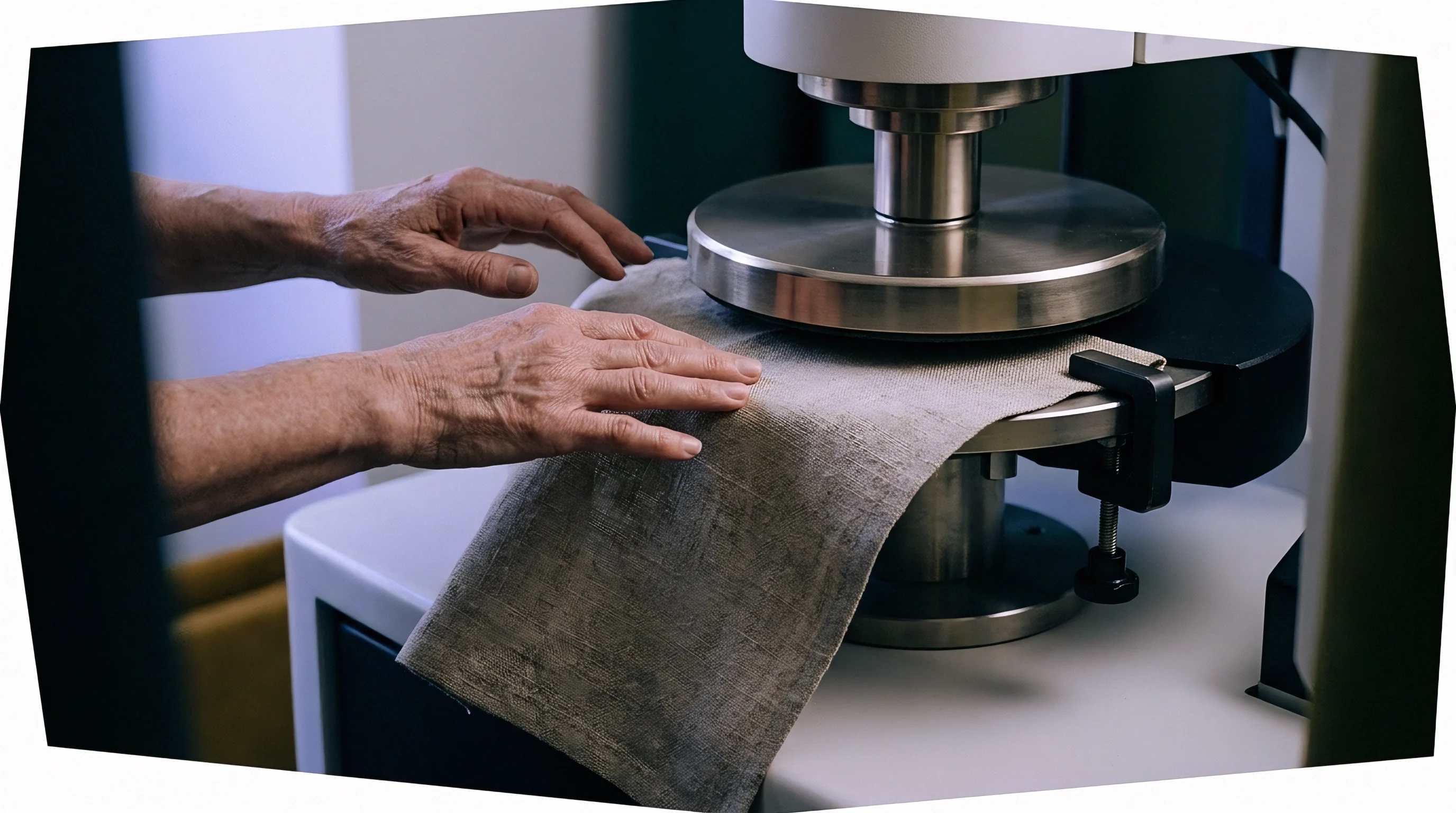
Tensile testing provides the final mechanical proof of authentic greige construction. Flax fibers display high tensile strength that increases when wet, possessing an elongation at break of merely two to three percent. Greige fabric strips tested on an instron constant-rate-of-extension machine under ASTM D5034 show sharp, steep stress-strain curves with negligible plastic deformation prior to brittle failure.
Blended fabrics containing polyester, nylon, or low-grade cotton display elongated yielding zones with failure elongations exceeding eight to fifteen percent. Accepting a greige roll with excessive elongation yields downstream apparel products that sag, bag at stress points, and fail dimensional stability tests during commercial laundering.

Trace
Reconciling physical laboratory findings against mill intake ledgers confirms whether certified European fiber entered the production run. European Flax and Masters of Linen certification programs establish chain-of-custody rules that track natural fiber from farm cooperatives in France, Belgium, and the Netherlands through scutchers, spinners, and weaving mills. However, an authentic scope certificate alone does not guarantee that a specific container of greige fabric contains the certified fiber lot.
Auditing requires matching Transaction Certificates to individual bill of lading entries, lot numbers on yarn package cones, and internal loom ticket production runs.
A major vulnerability exists when Chinese mills purchase certified European flax tow or scutched line fiber, import it through coastal ports, and blend it with non-certified local fiber or cotton inside open-end spinning lines. Scutched line fiber commands a substantial premium over domestic short bast tow, driving mills to substitute inferior short fibers while utilizing the valid European Flax certificate to market the finished greige cloth as pure continental linen. Independent inspectors audit the mill’s raw material warehouse, comparing incoming customs declarations against inventory bin tallies and monthly production logs.
A mass-balance audit cross-referenced against weighbridge tickets reconciles the physical mass of certified raw fiber entering the mill’s blending room against total spun yarn output and residual spinning waste. During mechanical preparation, hackling, drawing, and roving, flax processing generates significant waste fractions. Hackling coarse line flax into fine sliver generates roughly thirty-five to forty-five percent hackled tow waste, which spinners divert into coarser yarns or nonwoven applications.
A reported ninety percent yield from raw scutched line flax to fine lea yarn reveals fraudulent fiber substitution.
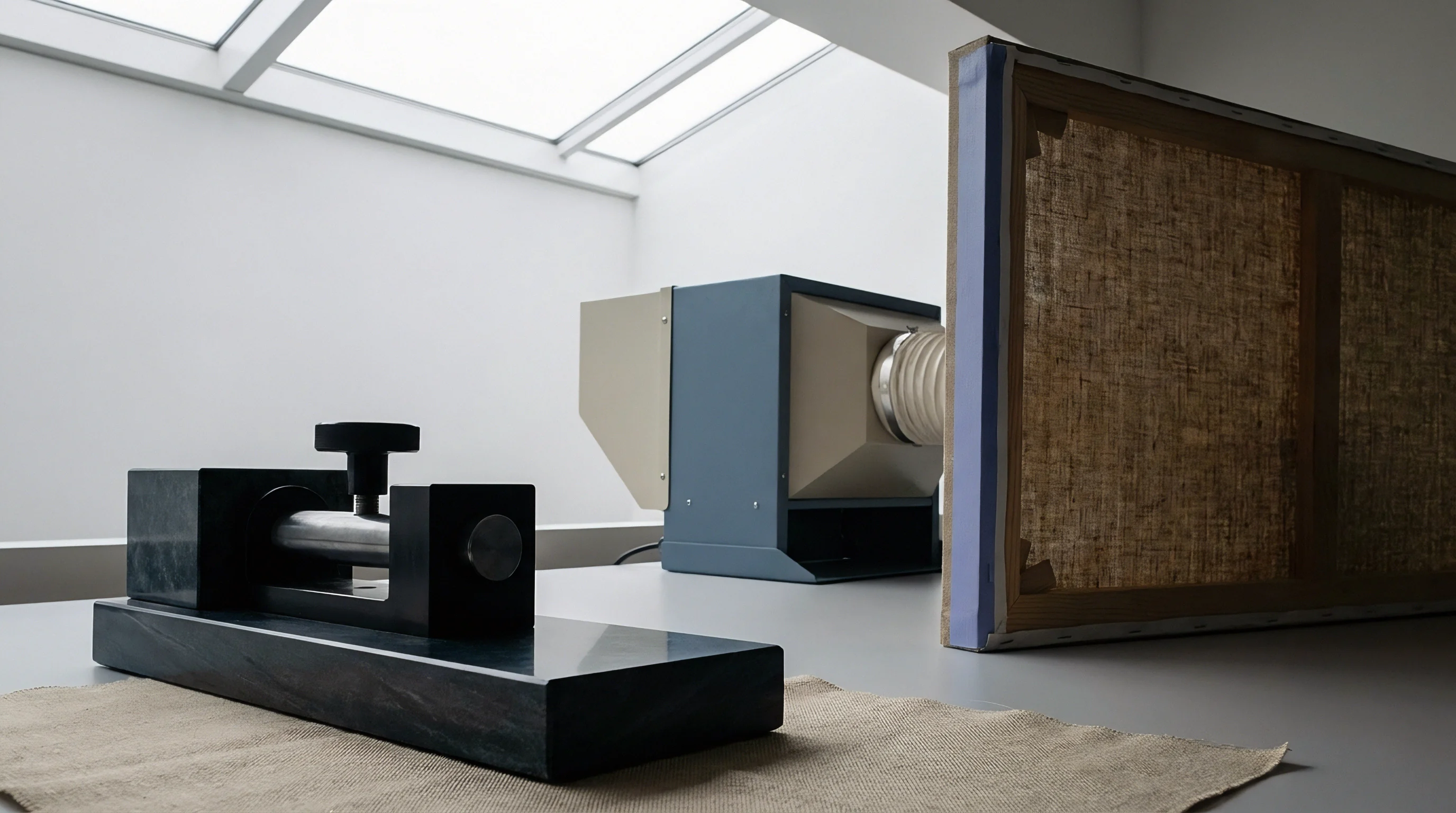
Mass Balance Reconciliation at the Spinning Shed
The physical audit cross-references scutching output delivery weight against total spun yarn output. Take a forty-metric-ton consignment of certified French dew-retted line flax entering an integrated spinning and weaving mill in Jiangsu Province. The incoming invoice lists forty tons of scutched line fiber supported by a Bureau Veritas European Flax Transaction Certificate.
The spinning room processes this mass into a nominal 38-lea wet-spun yarn destined for a plain-weave apparel order. Standard wet spinning lines achieve a line fiber conversion yield between fifty-two and fifty-eight percent, with the balance distributed across short tow, carding drop waste, and wet-spinning sludge.
When the auditor calculates total greige yardage produced from this lot, forty tons of line flax can yield at most twenty-two metric tons of authentic 38-lea warp and weft yarn. Factoring in a four percent sizing add-on and two percent weaving fly waste, the maximum verifiable yield of greige cloth equals approximately twenty-one metric tons. If the mill delivers twenty-eight metric tons of greige fabric carrying the certified transaction code, the excess seven tons represents uncertified fiber adulteration.
The mass discrepancy proves the mill introduced uncertified fiber into the drawing frames to expand production margins while billing for European authenticity.
| Processing Stage | Input Mass (kg) | Stage Yield (%) | Output Mass (kg) | Cumulative Loss (kg) |
|---|---|---|---|---|
| Bale Opening & Hackling | 40,000 | 55.0% | 22,000 (Line Sliver) | 18,000 (Hackled Tow) |
| Drawing & Roving System | 22,000 | 96.0% | 21,120 (Roving Bobbins) | 18,880 |
| Wet Spinning & Winding | 21,120 | 95.5% | 20,170 (Yarn Cones) | 19,830 |
| Warp Sizing & Slashing | 10,085 (50% Warp) | 106.0% (Net Add-on) | 10,690 (Sized Beam) | 19,225 |
| Weaving Shed Insertion | 20,775 (Total Yarn) | 97.5% | 20,255 (Greige Fabric) | 19,745 |

Lot Linkage across Weaving Shed Declarations
Weave room production tallies record individual warp beam identification codes alongside supplier batch tickets. In a properly managed weaving shed, each loom carries a traveling job ticket pinned directly to the frame or recorded on an electronic data terminal. This ticket details the warp yarn lot number, the spinner code, the sizing recipe number, the date the beam was mounted, and the cone lot numbers supplying the weft insertion accumulators.
When inspecting rolls at the greige inspection perches, the auditor tracks the roll piece numbers back to these physical loom logs to confirm continuous lot identity.
Discrepancies often emerge during cone changes on high-speed rapier looms. Operating twenty-four hours a day, weaving sheds run through weft cones rapidly; when certified yarn inventory runs low, floor operators may load uncertified yarn packages from adjacent racks to prevent loom stoppages. This creates intermittent bands of uncertified or blended fiber across a single woven piece, known in the trade as weft stripiness or shading.
Physical bench sampling of five consecutive greige rolls from a single loom run catches this variation through the drying twist and chemical dissolution tests detailed in preceding protocols. Whether international certifiers will implement mandatory microchemical verification to prevent paper-only scope compliance remains an unanswered challenge for the global bast trade.

Seal
Commercial acceptance hinges on enforceable laboratory tolerance thresholds incorporated directly into the purchasing agreement. Without precise physical metrics defined in the supply contract, buyers hold no legal standing to reject off-spec, adulterated, or unauthentic greige deliveries. Mills operating in unregulated markets capitalize on ambiguous specifications such as pure linen or standard commercial quality to ship substandard substrates.
A robust commercial purchase order binds the physical verification criteria, defining acceptable test methods, sampling frequencies, and clear pass/fail thresholds for incoming container inspection.
Sampling protocols must obey ISO 2859-1 normal single sampling plans with an Acceptable Quality Limit (AQL) of 1.5 for critical fiber content defects. The testing protocol requires pulling full-width swatches, one meter in length, from five percent of the rolls in any incoming lot, taken from both ends of the selected rolls. The testing laboratory executes fiber identification via transverse section microscopy (ASTM D276), drying twist evaluation, and quantitative chemical analysis (ISO 1833-11).
Any trace of non-flax fiber exceeding zero percent tolerance triggers an immediate, non-negotiable quarantine of the entire shipment at the port warehouse.

Defect Classification and Rejection Thresholds
Technical delivery specifications assign point penalties to foreign fiber contamination and uneven yarn diameter bands. In addition to fiber purity, the greige substrate must conform to strict physical stability requirements before release to wet processing plants. Sizing content must fall between four and seven percent by dry fabric weight; sizing levels exceeding eight percent indicate poor slashing control that blinds dyeing equipment and inflates fabric landed weight.
Moisture content must register within ten to twelve percent under standard atmospheric testing. Greige lots showing moisture levels exceeding thirteen percent risk internal mildew, bacterial decay, and fiber degradation during container transit.
Penalties attach to undocumented blends. When physical testing uncovers cotton or synthetic blending in a declared 100% linen substrate, the financial recourse must be automatic and punitive. The buyer exercises immediate chargebacks covering testing laboratory fees, container demurrage charges, return ocean freight, and replacement order surcharges.
If the contract permits lot acceptance at a discounted rate for non-critical end uses, the price penalty reflects the raw material delta between authentic scutched flax and low-cost cotton or synthetic fiber, typically resulting in a forty to sixty percent reduction from the gross invoice value.
Inspection Sign off and Commercial Recourse
The certified testing laboratory files the final inspection record before the buyer authorizes payment releases. In international trade transactions governed by documentary letters of credit, incorporating physical test certificate requirements into the presentation documents ensures full financial control. The letter of credit specifies that payment release requires an independent inspection certificate issued by a nominated testing agency, confirming zero percent non-bast fiber content, compliant thread counts, and authentic European Flax chain-of-custody lot verification matching the commercial invoice.
The standard procurement warranty specifies that the seller warrants the substrate to comprise one hundred percent genuine Linum usitatissimum bast fibers, free from chemical pulp, cottonized fibers, or uncertified blends, with any failure under ASTM D276 or ISO 1833-11 testing triggering immediate full refund and seller assumption of all consequential testing, storage, and disposal liabilities.