Quantifying Structural Inter-Fibril Lamella Splitting Limits under Micro-Scale High-Density Hackle Mechanical Shear
Optimizing hackle pin shear stress below 18 MPa splits pectin lamellae cleanly, maximizing fine line yield while preventing elementary fibre micro-fractures.
Matrix
Flax technical fibres exist as composite multi-cellular bundles bound by an inter-cellular layer. These bundles, harvested from the phloem tissue of Linum usitatissimum, range from 100 to 300 microns in diameter in their raw scutched state. Individual elementary fibres inside the bundle measure between 10 and 30 microns in diameter with lengths spanning 20 to 50 millimeters.
The physical bridge holding these elementary cells together is the middle lamella, an amorphous matrix composed primarily of highly esterified pectins, hemicelluloses, structural proteins, and ionic calcium cross-links. Achieving fine, high-tenacity yarn requires splitting these coarse technical bundles down to fine sub-bundles containing only three to six elementary cells without destroying the individual cell walls.

Morphology of Inter-Fibril Bonding Layers
The structural adhesion between adjacent elementary cells relies on high-molecular-weight pectins, calcium pectates, and complex hemicelluloses. Pectin governs cell adhesion. In dew-retted or water-retted flax, enzymes partially degrade this pectic network, reducing the transverse shear modulus of the middle lamella from an unretted value of approximately 45 Megapascals down to an optimal processing window between 12 and 18 Megapascals.
If retting is incomplete, the pectin matrix remains rigid, forcing mechanical combing tools to fracture the crystalline cellulose of the elementary cell walls rather than shearing the inter-cellular boundary. Conversely, over-retting degrades the pectin matrix below 8 Megapascals, causing uncontrolled fibre slippage and excessive short tow production during mechanical dressing.
Water-retted flax bundles exhibit middle lamella shear strength between 12 and 18 Megapascals at 65 percent relative humidity.
Elementary cell walls consist of a primary wall layer encasing a thick, highly oriented secondary wall. The secondary wall contains cellulose microfibrils aligned at a narrow spiral angle of 8 to 10 degrees relative to the fibre axis. This steep alignment imparts high tensile tenacity, frequently exceeding 60 to 80 centinewtons per tex in well-retted long line fibre.
Mechanical force balances fibre division. When mechanical force is applied during hackling, the applied shear stress must exceed the cohesive yield limit of the middle lamella while remaining strictly below the critical transverse tear strength of the primary and secondary cell walls. Reaching this specific boundary splits the technical bundle longitudinally along the natural pectin lamellae.

Rheological Behavior under Applied Strain
Deformation of the middle lamella under micro-scale force follows a viscoelastic rate-dependent progression. At low strain rates, the pectic matrix undergoes plastic creep, allowing individual elementary fibres to slide past one another without clean separation. At extremely high strain rates, the middle lamella behaves as a brittle solid, transmitting energy directly into the secondary cell wall and inducing transverse micro-cracks.
Moisture content modulates this rheological response. Moisture content alters pectin rigidity. At a standard moisture regain of 12 percent, plasticization of the hemicellulose fraction reduces the energy required to initiate longitudinal cleavage along the inter-fibril lamella.
Laboratory testing using micro-tensile shear rigs confirms that the shear strength of the middle lamella drops by 35 percent when relative humidity increases from 45 percent to 70 percent. Hackling operations operating outside controlled atmospheric conditions suffer variable splitting efficacy. Fine counts require split lamellae.
Quantifying the precise mechanical shear limit demands tracking both the applied pin penetration force and the instantaneous transverse displacement of the fibre bundle within the hackle field.
A remaining uncertainty in fibre mechanics is whether the enzymatic removal of specific rhamnogalacturonan-I side chains alters the ultimate shear limit of the middle lamella independently of total pectin content.
Pin
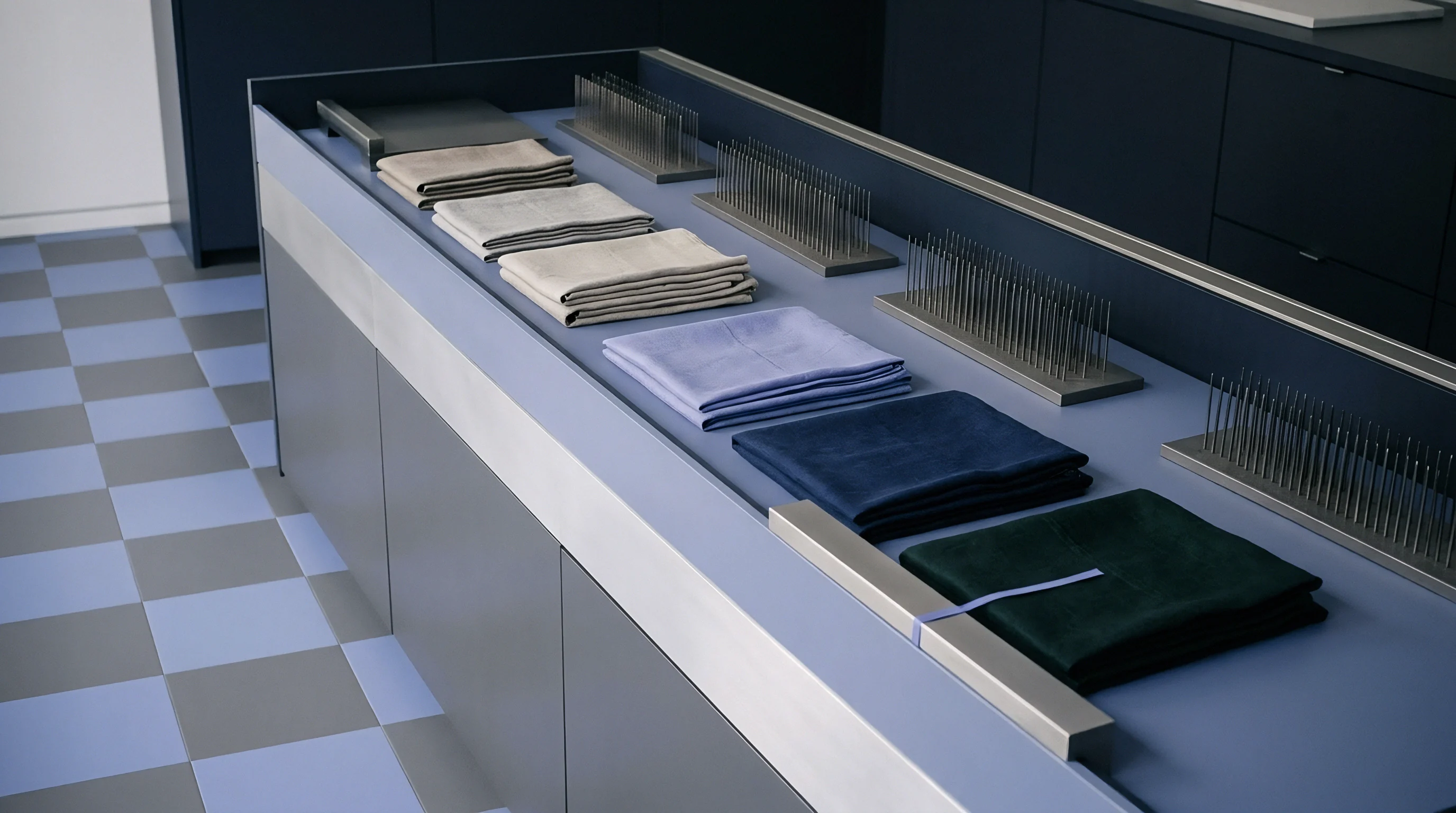
High-density combing frames rely on rows of tapered steel needles to separate technical flax bundles into finer sub-units. Modern industrial hackling machines pass scutched flax stricks through a series of progressive pin beds, beginning with coarse densities of 2 to 4 pins per centimeter and finishing with fine high-density fields containing 20 to 28 pins per centimeter. As the strick enters the high-density zone, the mechanical engagement shifts from simple bundle opening and shive removal to true micro-scale shear splitting of the inter-fibril lamellae.
The geometric configuration of the pin field defines the spatial resolution of the applied mechanical force.
Micro-Scale Needle Density and Penetration Forces
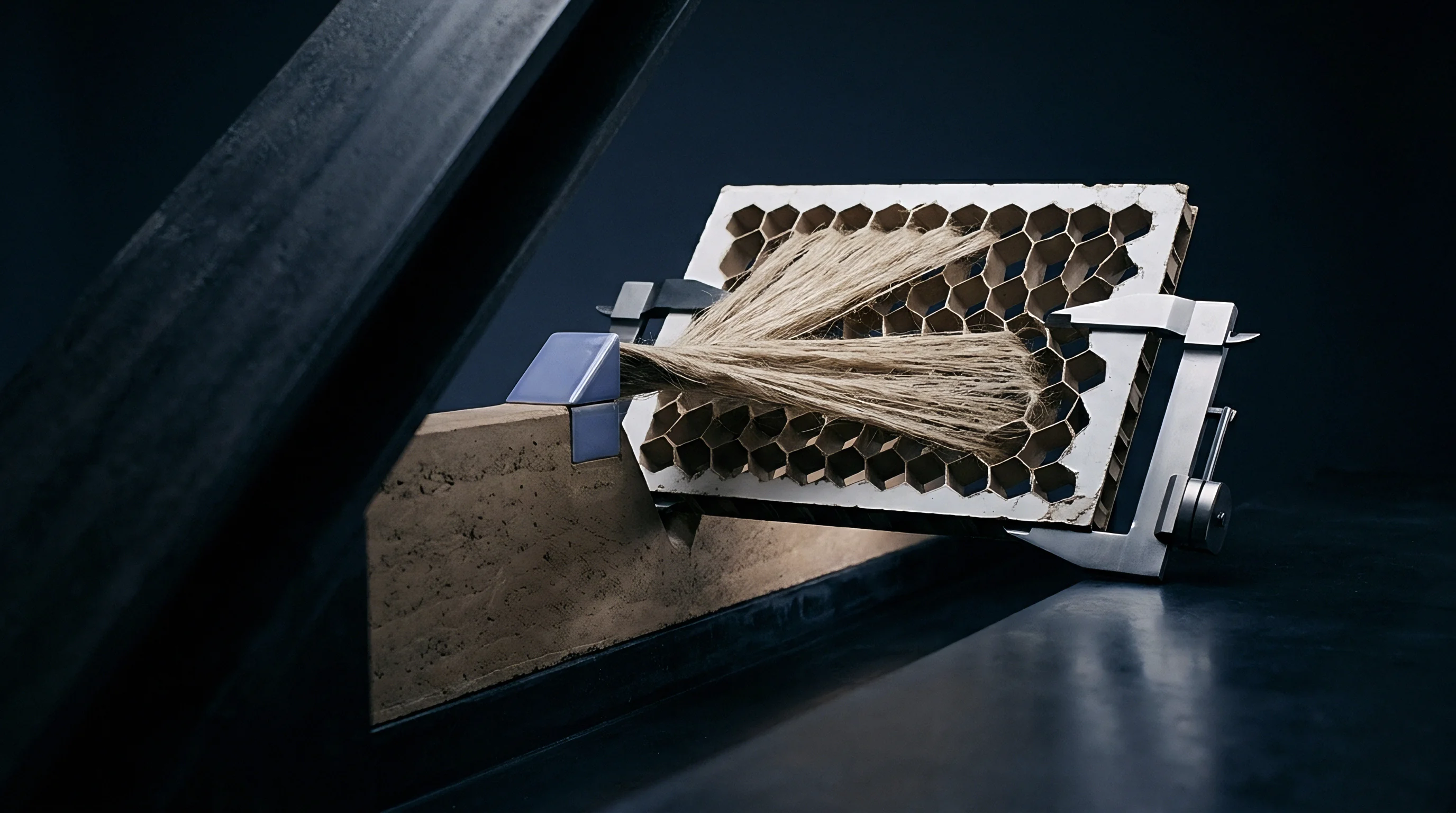
Graduated comb beds increase needle concentration from two points per centimeter up to twenty-eight points per centimeter along the dressing line. Steel pins penetrate the strick. As needle pitch contracts down to 0.35 millimeters in high-density fields, the clearance between adjacent pin surfaces approaches the dimension of intermediate technical fibre bundles.
Mechanical penetration force increases non-linearly with pin density. When a bundle strick of 100 grams per meter enters a field with 24 pins per centimeter, total transverse penetration force reaches 140 to 180 Newtons per centimeter of comb width.
| Hackle Stage | Pin Density (pins/cm) | Pin Tip Radius (μm) | Linear Velocity (m/min) | Applied Shear Stress (MPa) | Target Fibre Fineness (dtex) |
|---|---|---|---|---|---|
| Coarse Breaker | 2.5 | 250 | 120 | 4.2 | 120 – 180 |
| Intermediate Dressing | 8.0 | 150 | 90 | 9.5 | 60 – 90 |
| Fine Finishing | 18.0 | 80 | 60 | 14.8 | 25 – 40 |
| High-Density Ultra-Fine | 26.0 | 45 | 40 | 17.5 | 12 – 18 |
Tip geometry governs the initial penetration mechanics. Tapered needle tips with a radius between 45 and 60 microns displace elementary fibres laterally into the inter-pin channels. A blunt pin tip exceeding 100 microns radius causes compressive impact rather than lateral displacement, driving localized compression stresses beyond 50 Megapascals.
This compressive impact crushes the hollow lumen of elementary fibres, inducing longitudinal micro-fractures that drastically reduce yarn tenacity in later wet spinning.
Stress Distribution across Bundle Interfaces
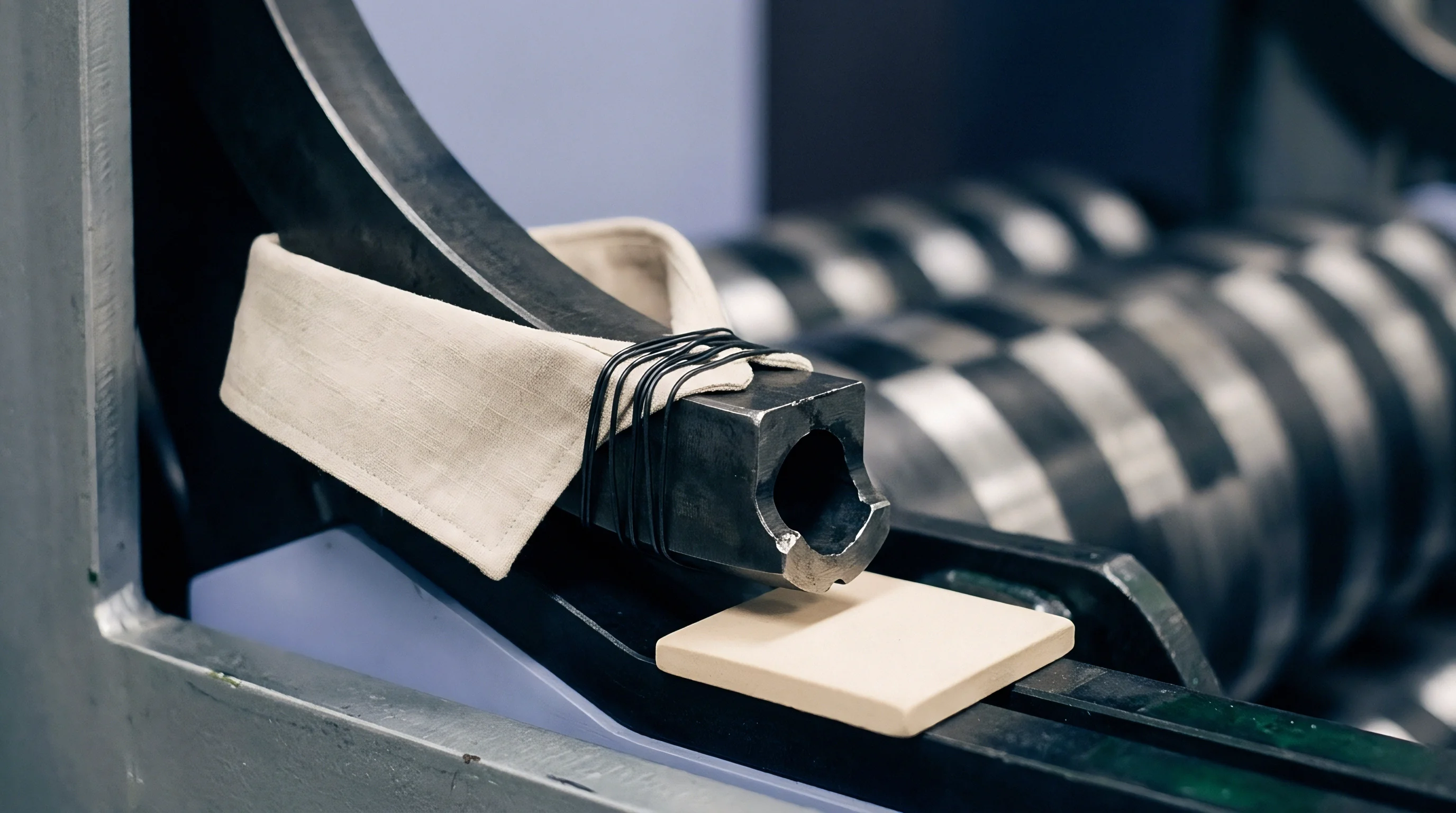
Transverse drag forces applied by moving comb bars concentrate force along the structural interface between individual elementary cells. The total shear stress acting on an engaged flax bundle is mathematically defined by the drag coefficient of the steel-flax interface, the pin density, the strick tension, and the relative velocity between comb bar and strick clamp. Combing density drives separation limits.
To split the pectin lamella without damaging individual cell walls, peak localized shear stress must stay within the calculated boundary layer of 12.0 to 17.8 Megapascals.
The mechanical parameters governing pin-induced inter-fibril shear separation include:
- Pin Tip Radius dictates the wedge penetration force and initial transverse displacement of technical fibre bundles upon comb entry.
- Pin Bed Pitch establishes the minimum physical volume available for fibre movement during the active combing stroke.
- Strick Clamp Tension holds long line fibres in axial alignment, preventing bundle deflection under high transverse needle shear.
- Relative Engagement Speed determines the viscoelastic rate of deformation within the middle lamella pectin matrix.
Exceeding the upper mechanical shear limit on a fine hackle field instantly increases the short tow fraction by converting long line fibre into broken tow fragments, raising raw material waste costs on the spinning floor by 12 to 18 percent per processed tonne.

Friction
Contact resistance between steel needles and bast fibre surfaces converts kinetic movement into lateral shear force. When high-density hackle bars travel through the stationary clamp-held flax strick, surface friction generates the shear stress required to cleave the inter-fibril middle lamella. The coefficient of dynamic friction between polished high-carbon steel pins and un-lubricated flax fibres ranges from 0.22 to 0.28 under standard testing conditions.
This friction coefficient varies dynamically as natural plant waxes transfer from the fibre cuticle onto the pin surfaces during continuous production runs.
Why Does Mechanical Shear Cause Inter-Fibril Separation?
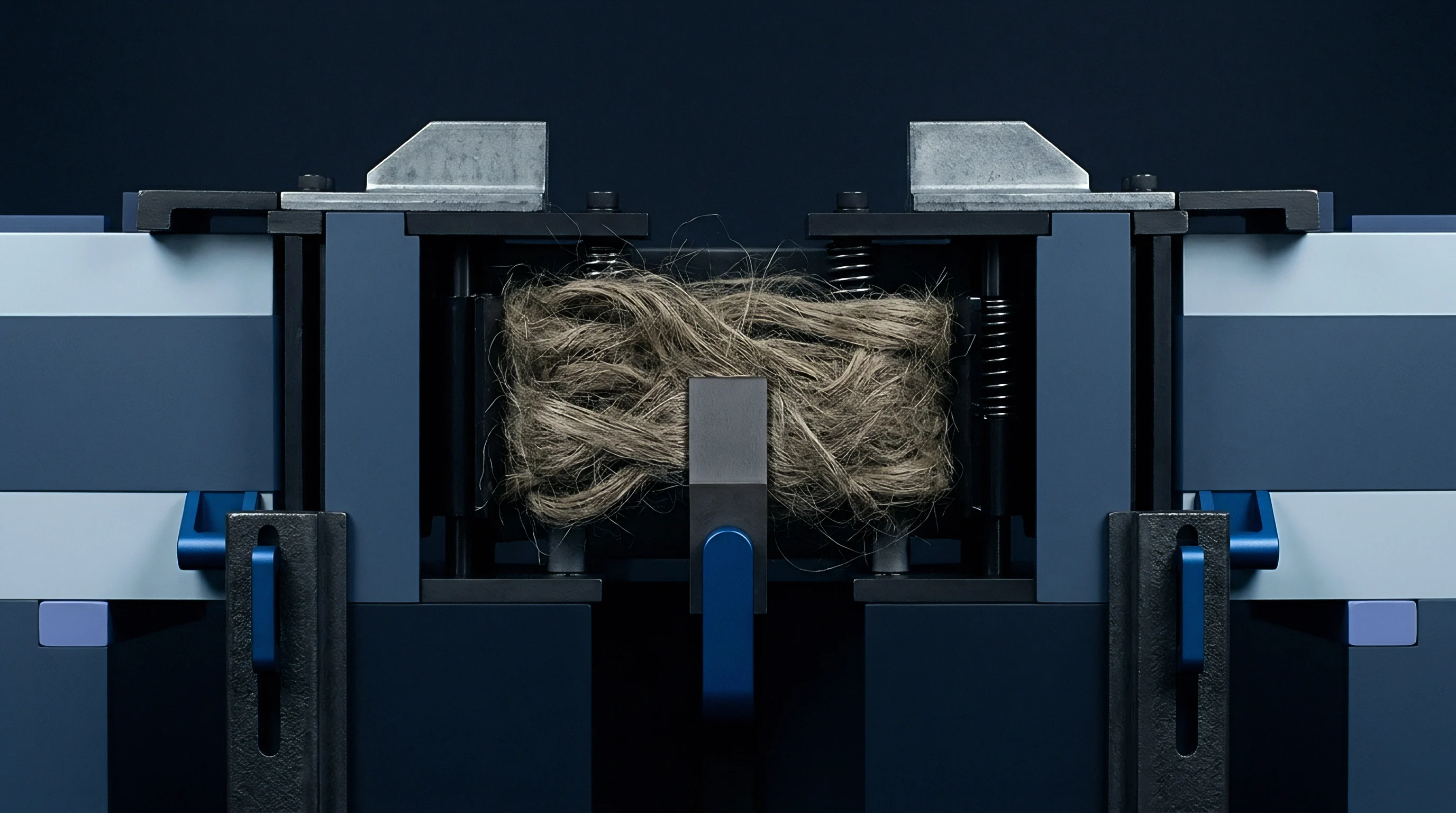
Applied force overcomes the cohesive tensile threshold of the non-cellulosic middle lamella long before the crystalline secondary cell wall breaks. The mechanical force transmitted by friction acts parallel to the long axis of the technical bundle. Because the middle lamella possesses a shear modulus significantly lower than the axial tensile modulus of the crystalline cellulose microfibrils (18 Megapascals versus 70 Gigapascals), friction force preferentially deforms the soft pectin interface.
This preferential deformation initiates longitudinal micro-cracks that propagate along the middle lamella, dividing coarse bundles into fine, individual sub-units.
Excessive comb velocity fractures the crystalline primary wall before the soft pectin binder yields.
Friction generates localized thermal energy. Linear speed dictates force distribution. Operating high-density hackle fields at linear speeds above 80 meters per minute causes friction heating at the pin contact point.
Surface temperatures at the pin-fibre interface can momentarily spike above 65 degrees Celsius, drying out residual moisture within the middle lamella and increasing pectin brittleness.
- Mount the scutched flax strick in the pneumatic clamp assembly at a uniform density of 120 grams per meter width.
- Adjust the relative comb velocity to an initial baseline speed of 35 meters per minute across the final high-density pin bed.
- Set the pin penetration depth to 1.2 millimeters using the micrometer eccentric adjustment dial on the comb track.
- Measure the dynamic tension force using inline load cells positioned on the clamp holding frame during active comb engagement.
- Check the extracted sliver linear density using standard ISO 1973 gravimetric cut-and-weigh methods across ten test samples.
- Increase comb speed in increments of 5 meters per minute until the measured short tow fraction exceeds the 8 percent quality threshold.
Thermal Dissipation and Moisture Sensitivity
Local energy loss at needle contact points increases temperature within the passing flax strick during high-speed dressing cycles. At temperatures exceeding 55 degrees Celsius, the moisture content inside the middle lamella rapidly evaporates, shifting the pectin matrix from a tough viscoelastic state into an unyielding glassy state. In this dry, glassy state, mechanical shear forces can no longer induce smooth inter-lamellar sliding.
Instead, pins cause transverse brittle fractures across the elementary cells. Maintain relative humidity in the hackling hall between 68 and 72 percent to dissipate localized frictional heating and preserve middle lamella ductility.
Machinery vendors frequently maintain that elevated pin comb speeds improve output without altering fibre quality, omitting the reality that high linear velocities increase frictional contact temperatures and elevate the short tow waste fraction.

Splint
Structural breakage occurs when mechanical forces exceed the cohesive strength of the intercellular bonding pectin. When the local shear stress generated by high-density hackle pins surpasses 18.5 Megapascals, failure shifts from the middle lamella into the elementary fibre cell walls. The resulting structural breakdown manifests as longitudinal splints, wall peeling, micro-fibrillation, and axial snap.
Over-sheared stock loses tensile force. The presence of internal cell wall fractures directly degrades the tensile strength of the drawn sliver and creates severe counts variation during subsequent spinning.

Micro-Fibrillation and Secondary Wall Degradation
Exceeding the shear boundary tears the crystalline cellulose layers within the secondary cell wall of individual elementary fibres. Secondary cell walls consist of concentric lamellae of cellulose microfibrils embedded in a hemicellulose-lignin matrix. Micro-cracks reduce yarn tenacity.
When excessive pin shear forces penetrate these cell walls, outer microfibrils detach from the cell body, forming microscopic ribbons or hair-like splints projecting from the fibre surface.
| Applied Shear Level | Mean Fibre Fineness (Nm) | Elementary Fibre Integrity (%) | Sliver Tenacity (cN/tex) | Nep Content (neps/g) | Short Tow Yield (%) |
|---|---|---|---|---|---|
| Sub-Critical (< 12 MPa) | 18.5 | 98.2 | 42.5 | 12 | 4.5 |
| Optimal (12 – 18 MPa) | 38.2 | 94.6 | 58.1 | 18 | 6.2 |
| Over-Sheared (18 – 22 MPa) | 44.0 | 72.1 | 38.4 | 85 | 14.8 |
| Severe Damage (> 22 MPa) | 46.5 | 41.3 | 21.0 | 240 | 28.5 |
Elementary fibres average twenty microns. When micro-fibrillation occurs, individual single cells lose their structural structural integrity. These loose surface fibrils tangle during drafting, creating dense structural knots known as neps.
Sliver density modulates pin drag. In wet spinning, neps prevent uniform draft distribution, leading to thin places and frequent end-breaks on the spinning frame.

Defect Classification in High-Density Processing
Exceeded structural limits generate measurable internal imperfections, including surface peeling, neps, and shortened fibre fragments. Improper shear increases short tow. Structural defects produced during high-density combing fall into four primary physical categories:
- Longitudinal Splints represent partial cell wall splits running parallel to the lumen, reducing individual fibre flexural rigidity.
- Transverse Wall Ruptures occur when blunt pins impact fibres directly, creating complete cross-sectional wall fractures.
- Micro-Fibrillar Peeling involves the stripping of S1 and S2 cell wall layers, resulting in surface fuzz and high nep propensity.
- Axial Node Crushing concentrates mechanical damage at natural fibre knees or cross-markings, causing catastrophic tensile failure under load.
Combing parameters that preserve elementary cell wall integrity maintain sliver tensile strength above 50 centinewtons per tex.
Outturn
Hackling room performance governs the ratio of valuable long line fibre to lower-value tow fraction. Scutched flax entering the dressing hall represents a high-capital raw material input. Optimizing pin density and mechanical shear parameters allows spinners to maximize the yield of hackled long line flax while achieving the target fibre fineness required for high-count wet-spun yarns.
Miscalibrating the hackle pin shear limit alters the operational economics of the entire mill.
Yield Ratios and Line Fibre Retention
Strick dressing efficiency determines how much raw scutched flax converts into continuous sliver suitable for high-count wet spinning. Line yield drops rapidly. When hackle pin shear forces stay within the optimal 12 to 18 Megapascal window, typical long line yields reach 55 to 62 percent of input scutched mass.
Pushing hackle shear forces beyond 18.5 Megapascals to force finer bundle separation degrades long line yield down to 42 percent, converting prime line fibre into low-value hackling tow.
| Process Parameter | Conservative Shear Strategy | Optimized Shear Strategy | Aggressive Over-Shear Strategy |
|---|---|---|---|
| Target Bundle Fineness (Nm) | 24 | 36 | 42 |
| Long Line Yield (%) | 62.5 | 57.0 | 41.2 |
| Hackling Tow Yield (%) | 31.0 | 36.5 | 52.0 |
| Maximum Spinnable Count (Nm) | 39 | 60 | 80 (High Breakage) |
| Spinning Frame End-Breaks (/1000 sp hr) | 18 | 24 | 145 |
| Finished Fabric Cost (EUR/m) | 4.15 | 3.85 | 5.60 |
Consider a 10-tonne lot of scutched flax priced at 5,200 EUR per tonne. Operating at an optimized shear limit yields 5.7 tonnes of long line sliver worth 8,500 EUR per tonne and 3.65 tonnes of hackling tow worth 2,100 EUR per tonne, generating a total output material value of 56,115 EUR. Operating the same lot under aggressive over-shearing conditions yields only 4.12 tonnes of long line sliver and 5.2 tonnes of tow, generating an output value of 45,940 EUR.
The mechanical miscalibration incurs a direct material loss of 10,175 EUR per 10-tonne batch.
Commercial Metric Impact on Spinnable Counts
Fibre bundle linear density sets the ultimate limit on yarn fineness and end-breakage rate during wet spinning operations. Splitting technical bundles cleanly down to Nm 36 or finer enables the mill to wet-spin fine yarns up to Nm 60 (16.6 tex). Fine counts require split lamellae.
Attempting to spin high-count yarns from under-hackled, coarse bundles results in insufficient fibres per yarn cross-section, causing instant end-breaks at the spinning frame. Conversely, spinning yarn from over-sheared stock containing micro-fibrillated elementary cells causes continuous end-breakages due to low fibre tenacity.
Contractual limits governing tow-to-line ratio enforce strict penalties when pin shear forces degrade technical fibre length below thirty centimeters.
Standard commercial supply agreements specify that delivered long line sliver must contain no more than 8 percent short fibre content below 150 millimeters, with a minimum bundle tenacity of 45 centinewtons per tex measured according to ISO 2370. Slivers failing these structural metrics trigger quality rejection clauses under standard international flax trading rules, allowing the buyer to apply a price markdown or reject the shipment entirely.